You think you know everything about your feline companion. You’ve watched them nap for hours, witnessed their dramatic zoomies at three in the morning, and cleaned up countless knocked-over cups from your countertop. Yet there’s something you might be overlooking entirely. Your cat possesses a remarkable talent that rivals secret agents and elite spies. It’s happening right under your nose, literally, and you’re probably missing all the clues.
Have you ever searched frantically for your cat, only to find them sitting in plain sight? That’s no accident. Your furry friend is employing ancient survival tactics refined over millions of years. Let’s explore the fascinating ways your cat transforms into a master of disguise every single day.
The Art of Blending Into Your Furniture
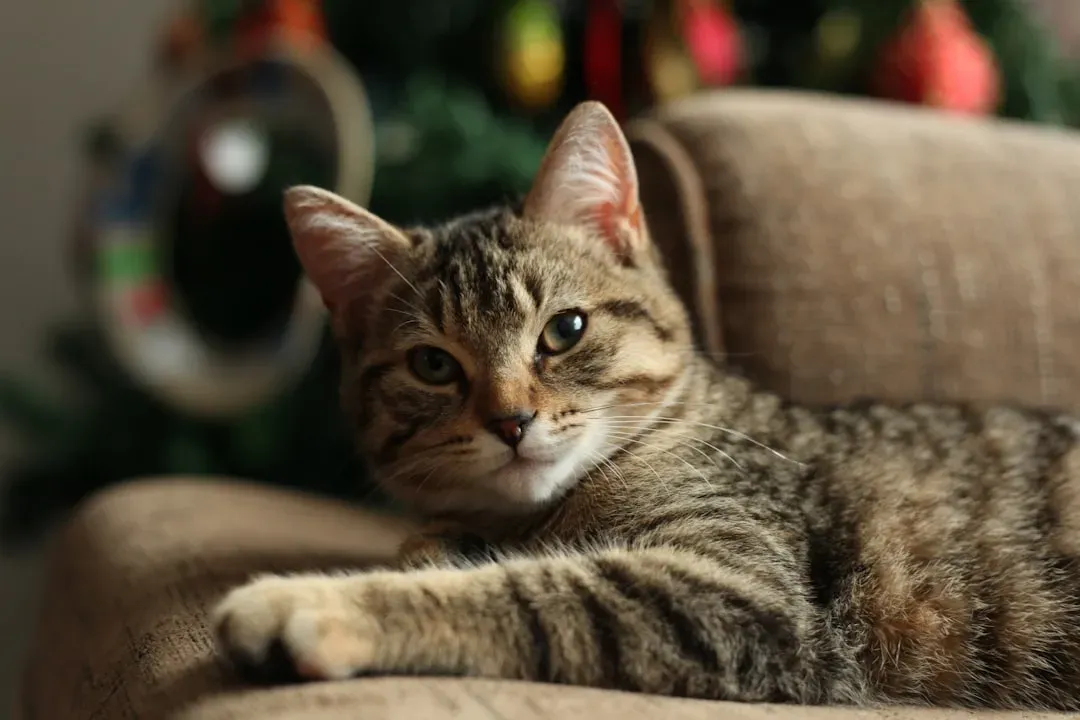
Your cat has an uncanny ability to hide in plain sight, using their surroundings to their advantage. Think about it. How many times have you nearly sat on your cat because they’ve somehow morphed into a decorative pillow on your couch? Cats are hunters by nature, which means they enjoy being able to observe everything around them while being safely hidden. On top of that, those covert spaces are perfect for taking a nap.
The most impressive part isn’t just finding a hiding spot. Your cat actually considers the color and texture of their surroundings before settling in for a nap. Cats come in a wide range of colors and patterns, each suited to specific environments. For example, cats with gray or brown coats blend in well with urban and suburban settings, while cats with more colorful coats excel in outdoor environments. It’s no coincidence when your orange tabby chooses the rust-colored blanket or your gray cat vanishes into the shadows of your dark bedroom closet.
Their Coat Patterns Are Natural Camouflage Tools
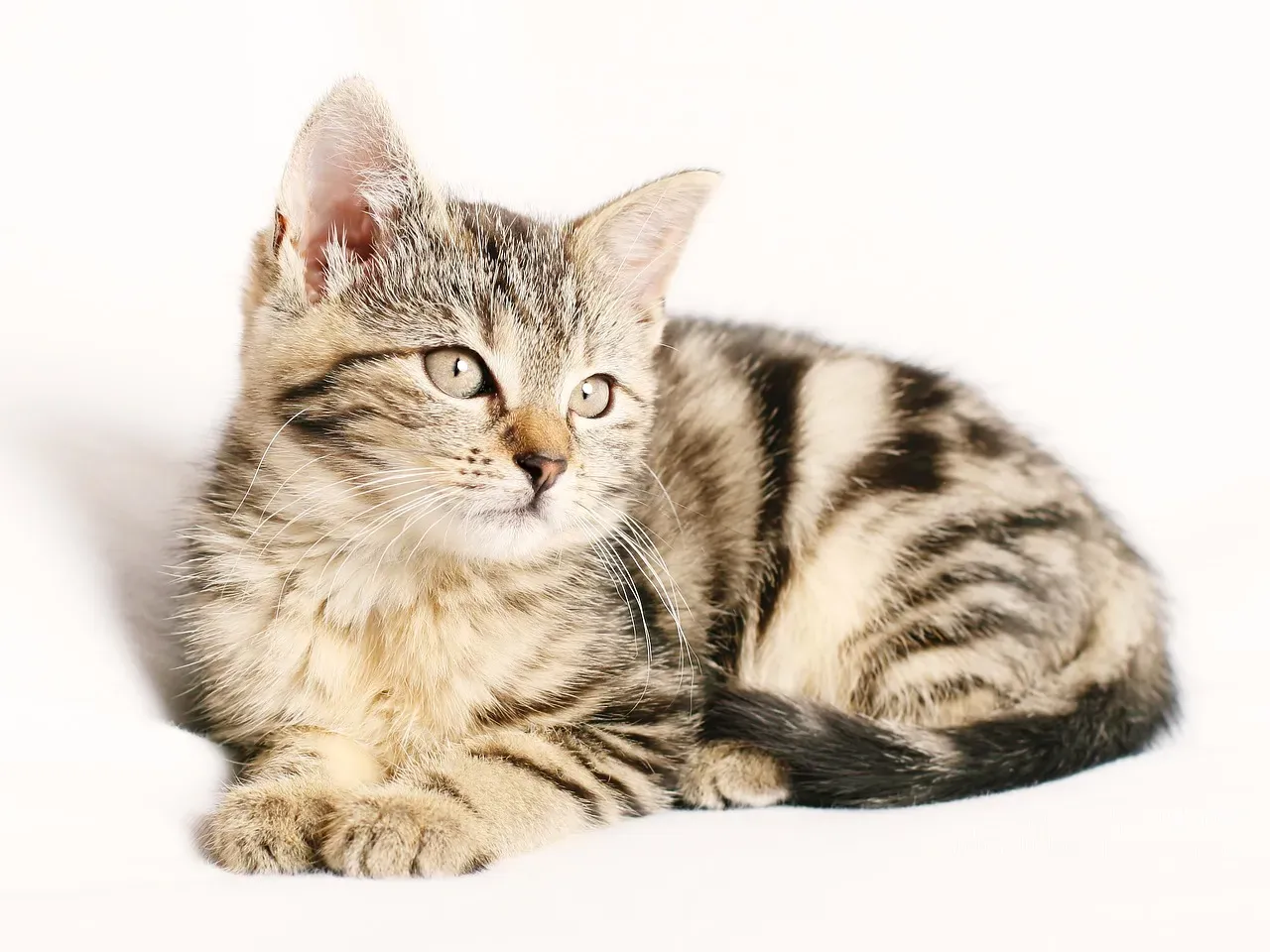
House cats’ camouflage abilities are rooted in evolutionary adaptations for survival and hunting. Physical traits like coat patterns and stealthy behaviors aid both wild and domestic cats in blending into their environment. That beautiful tabby pattern your cat sports isn’t just for show. This tabby pattern is especially beneficial in woodland and grassland habitats, where the interplay of light and shadow makes it harder for both predators and prey to spot them.
Even the most pampered indoor cats retain these incredible instincts. Despite their domestication, house cats still exhibit camouflage instincts that are a vestige of their wild past. These instincts were crucial for their ancestor’s survival against natural predators. In the wild, felines are both predators and prey, and their camouflaging abilities helped them avoid larger predators while also sneaking up on their own prey. So when your cat positions themselves perfectly against that patterned rug, they’re channeling thousands of years of survival programming.
The Silent Stalker Move You’re Missing
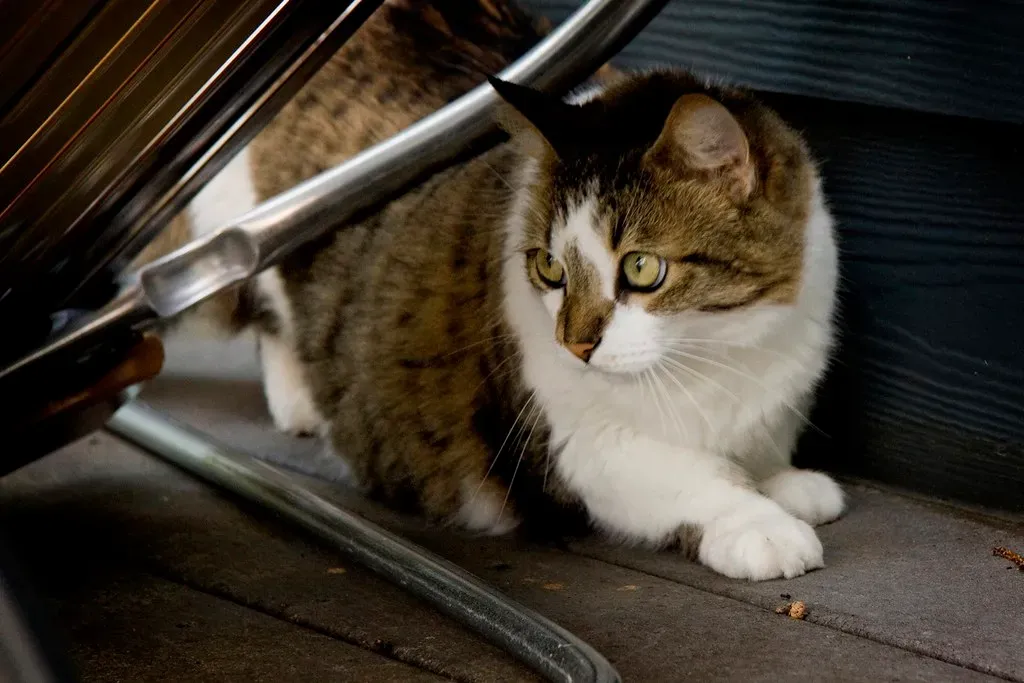
Ever notice how your cat can seemingly teleport from one room to another without making a sound? That’s deliberate. They tiptoe around the house with near-silent paws, making it easy for them to sneak up on anything – or anyone. You might not even realize they’re right behind you until you feel a soft brush against your leg.
Cats are effective stealth hunters thanks to their flexible spine, strong hind legs, and ability to retract their claws, allowing them to sneak up silently and strike powerfully. Their retractable claws are basically nature’s stealth mode, allowing them to move without the clicking sound that dog claws make. When your cat finds her target, she lowers her body, almost hugging the ground, and slowly inches towards her target. This stealthy leopard crawl move helps the hunter avoid detection, blending in with their surroundings. Indoor cats do this constantly, treating your hallways like jungle trails and your furniture like cover in the wild.
They Create Distraction Tactics
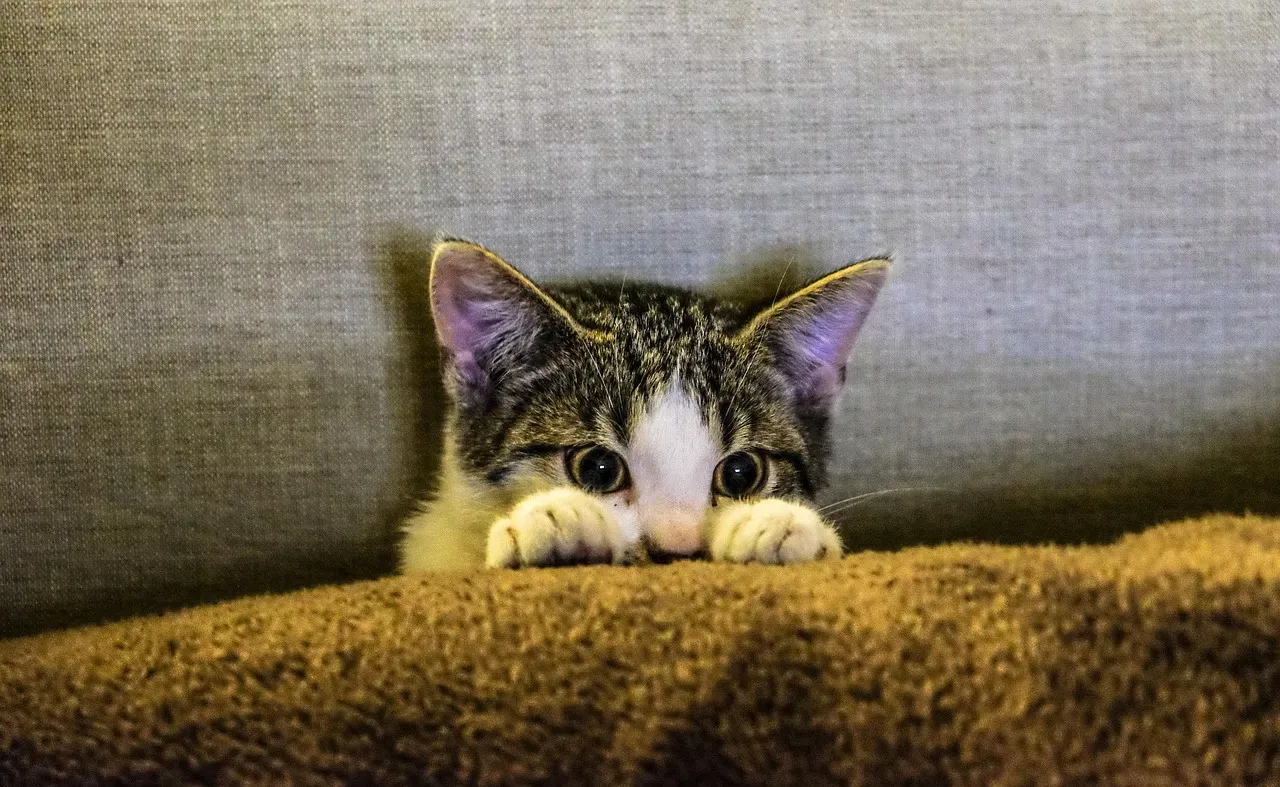
Here’s something you definitely haven’t considered. Some cats place their toys around the house to divert your attention so they can slip away unnoticed. By scattering bits of yarn or plush mice, they create miniature distractions that keep you guessing about their real location. Honestly, this feels like spy-level behavior.
Your cat might also use vertical spaces to stay hidden from your direct line of sight. Instead of walking through the middle of a room, they’ll hop onto countertops, weave between furniture, or climb bookshelves. Their creative route ensures they stay hidden from direct view, moving above or around your usual line of sight. It’s an expert navigation skill that keeps them under the radar while exploring every inch of their domain. Next time you can’t find your cat, look up. They’re probably watching you search from the top of your bookshelf, silently judging your detective skills.
The Blanket Disappearing Act
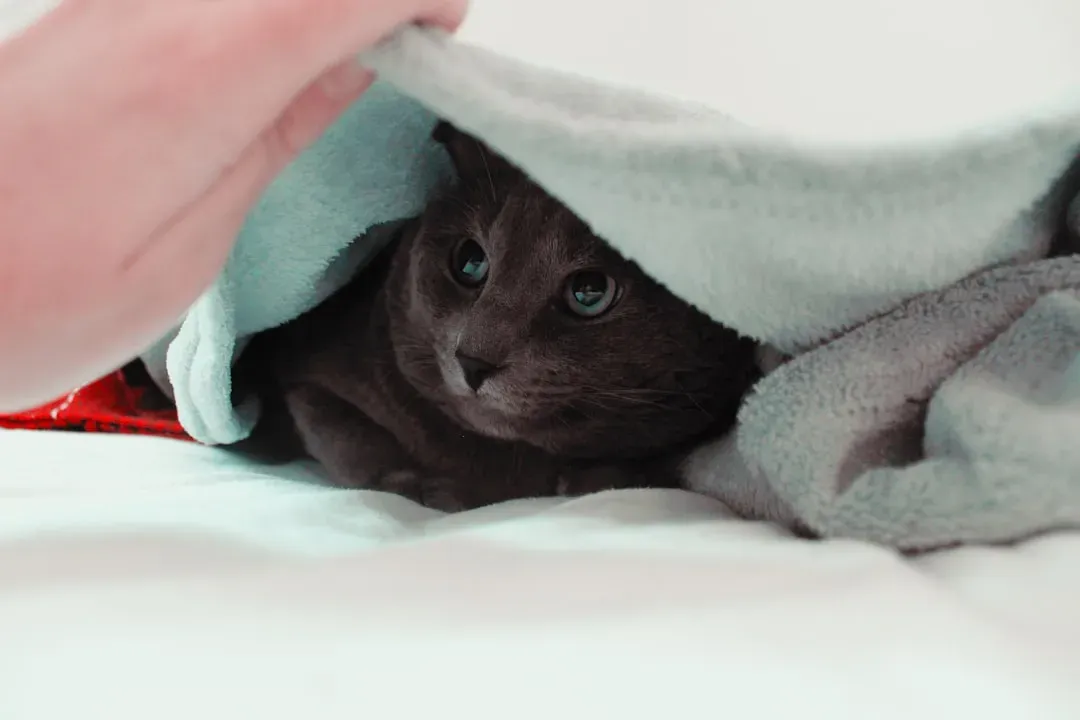
There’s nothing like seeing a sudden movement beneath a blanket, only for it to go still just as quickly. Your cat might quietly crawl underneath for warmth or to observe the world from a snug hiding spot. This classic move combines comfort with concealment. Your cat gets to stay warm while maintaining complete surveillance of their domain.
What makes this disguise particularly effective is the confusion it creates. You see a lump under the blanket, but is it a pillow? A discarded sweater? Your cat knows you’re guessing. A house cat that has access to hiding spots or materials that allow them to camouflage may show reduced signs of stress, as the ability to hide provides a sense of security and control over their environment. The blanket technique isn’t just about hiding from you. It’s about creating a safe space where your cat feels invisible to any perceived threat, whether that’s the vacuum cleaner or the neighbor’s dog barking outside.
The Freeze and Observe Technique
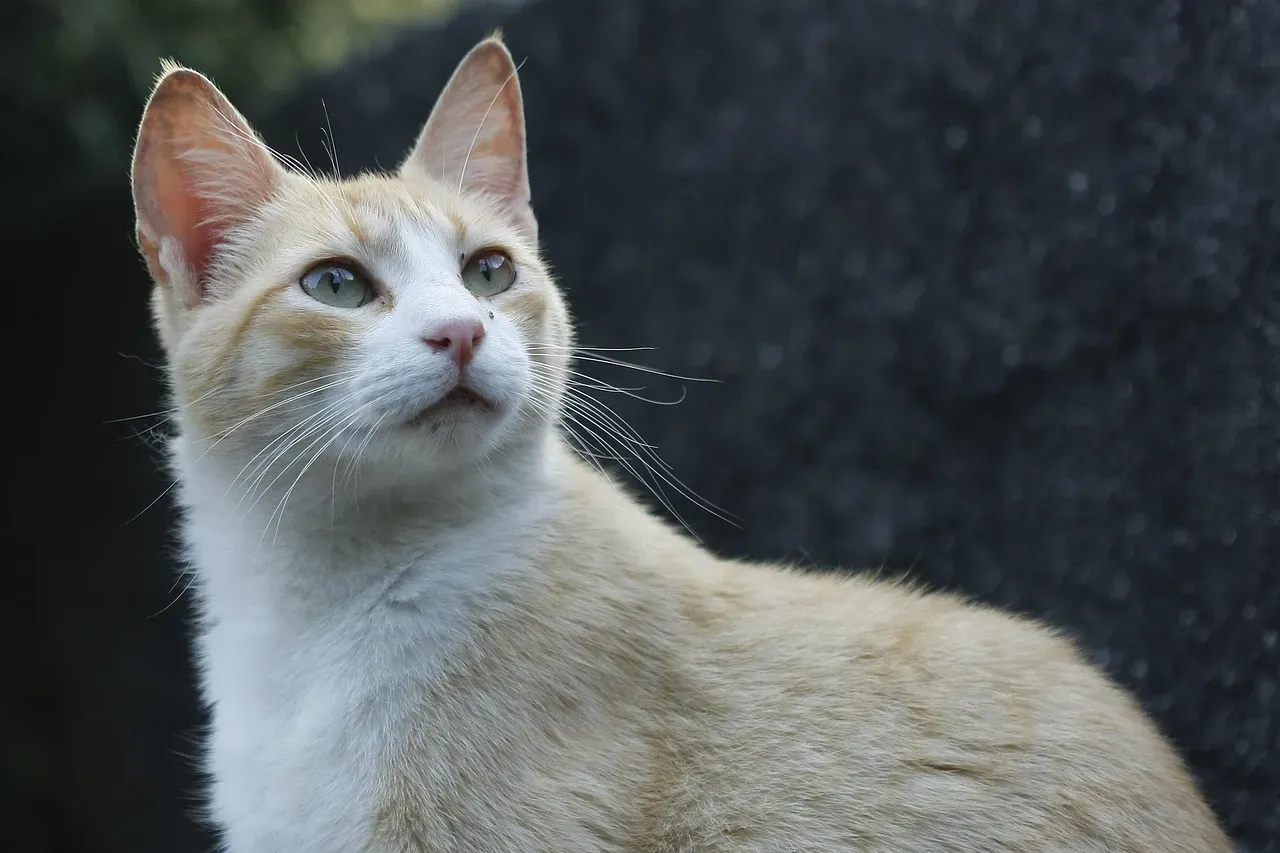
Cats possess inherent tendencies to hide in plain sight, which are rooted in their survival instincts. These instinctual behaviors are observable in both domestic cats and their wild counterparts, where remaining unseen can be the difference between life and death. Sometimes the best disguise isn’t finding a clever hiding spot. It’s simply becoming so still that you fade into the background.
Watch your cat when they hear an unfamiliar sound. They don’t always run and hide. Sometimes they simply freeze in place, becoming statuesque. Big cats couple their natural camouflage with behavioral tactics, such as stalking and remaining downwind, to approach their prey stealthily. Their slow, deliberate movements and the ability to remain motionless for long periods reduce the chance of detection. Your domestic cat employs the exact same tactic. That moment when your cat sits perfectly still on the windowsill? They’re not just watching birds. They’re practicing the ancient art of becoming invisible through absolute stillness.
Seasonal Camouflage Switching
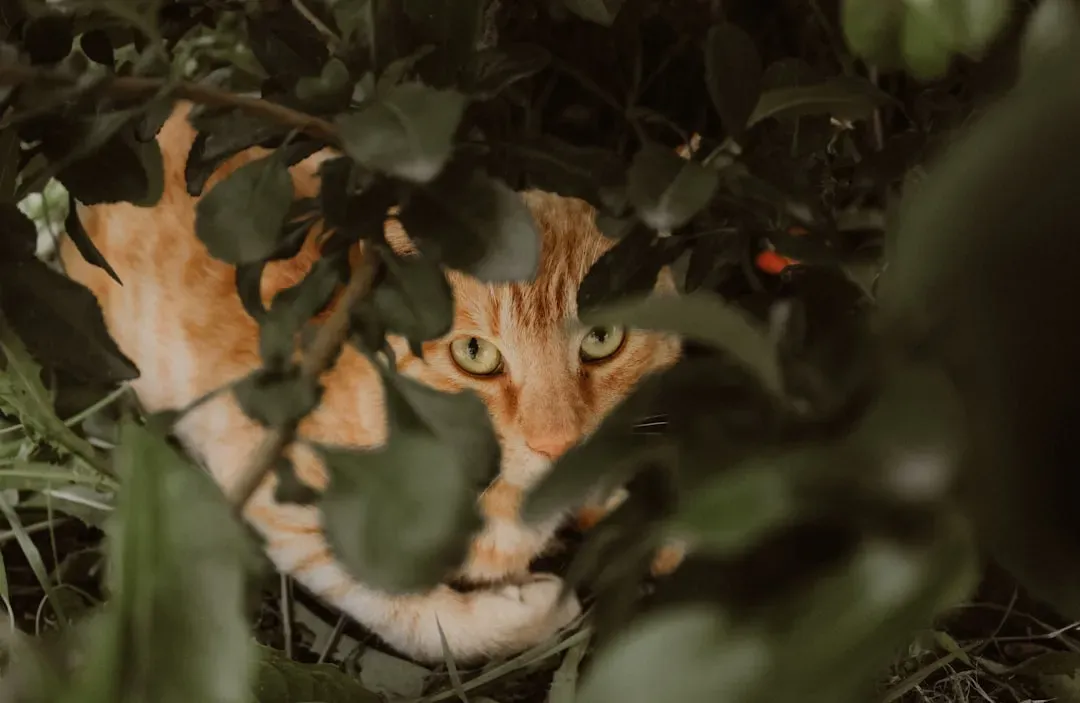
Your cat might actually adjust their favorite hiding spots based on the seasons. You might notice that your cats hide more frequently during specific times of the year, or even during the day. Pattern hiding behavior likely depends on where you live, your home environment, and your cat’s preferences. In winter, they might favor dark corners near heating vents where shadows help them disappear.
Some cats even have coats that change color depending on the season, allowing them to adapt to their environment throughout the year. While this is more subtle in domestic cats than in their wild cousins, you might notice your cat’s coat looking slightly different in summer versus winter. They’re literally adapting their natural disguise to match seasonal changes in their environment. It’s like having a wardrobe that automatically updates based on the weather.
The Territory Patrol Stealth Mode
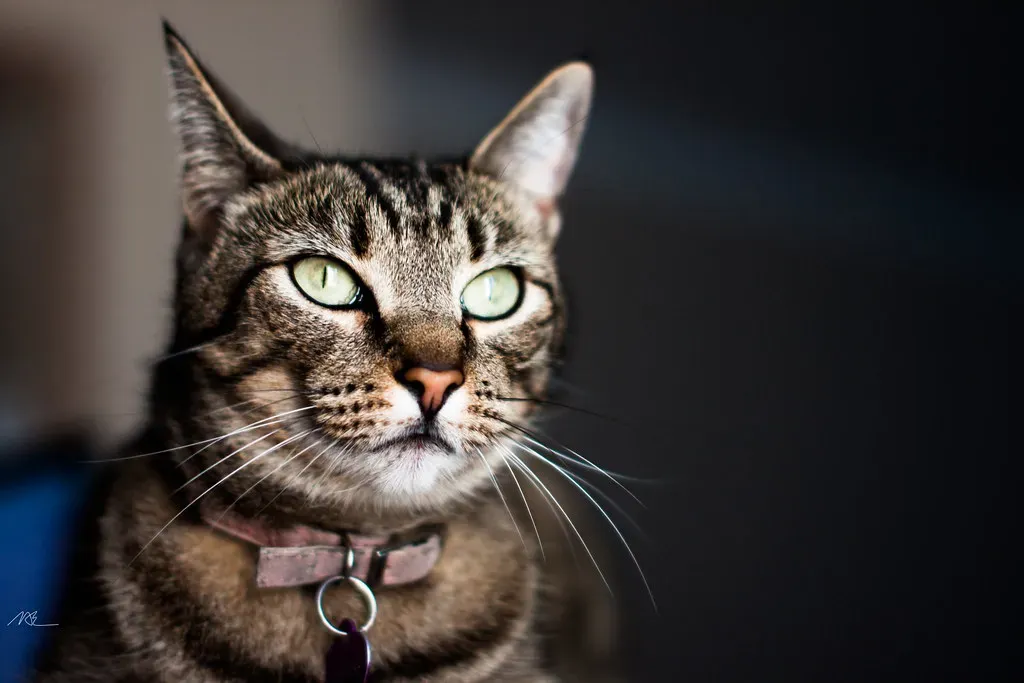
Cats are territorial, growing very attached to their homes even if they’ve never lived in the wild a day in their lives. This manifests in a stealthy patrol routine where your cat checks all the exits to the outdoors, the windows, and even the tiny gaps at floor level you don’t know about. This is a common cat behavior that you’ll see from time to time.
During these patrols, your cat employs full stealth mode. They’re not just walking around. The most common reason for cat stealth is hunting. Cats are one of the most accomplished sneaks in the animal kingdom, and both their body and mind have been sharpened over millions of years to be a nigh-undefeatable hunter. Even in your warm, cozy home where they don’t have to hunt, your cat is driven by instinct to slink, stalk, and pounce. They’re checking every corner, every window, every potential entry point, all while remaining virtually undetectable. You probably walk right past your cat during these security checks without even noticing them.
Strategic Use of Shadows and Light
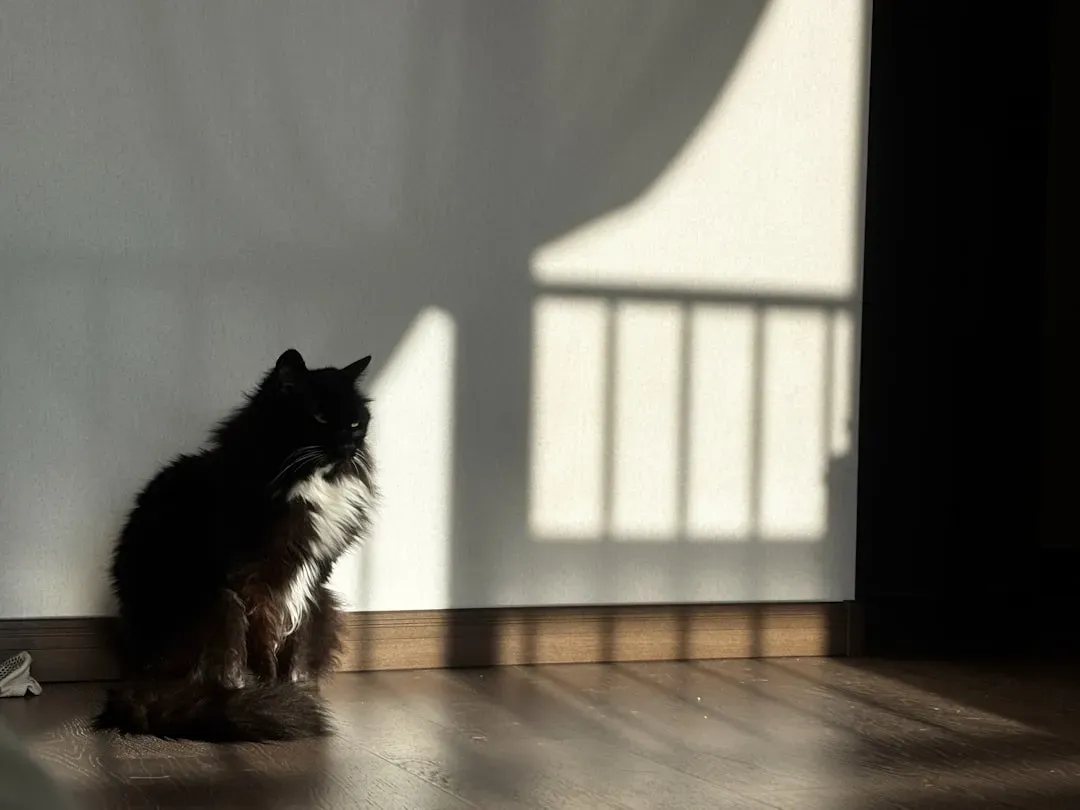
Your cat understands something fundamental about visibility. Light and shadow determine whether you’re seen or unseen. The color of a big cat’s coat is typically reflective of the dominant color or pattern of its natural habitat, providing an essential aspect of its camouflage. This coloration allows the cat to blend seamlessly with the environment, concealing it from both prey and potential threats.
Indoor cats apply this same principle. They position themselves in doorways where backlighting makes them appear as dark silhouettes. They curl up in shadowy corners where the contrast makes their form blend into darkness. Diurnal predators, like the cheetah, rely heavily on camouflage, as it plays a vital role in their hunts being successful. Your cat might not be hunting gazelles, but they’re using the exact same visual deception techniques to observe you undetected. That’s why you sometimes get startled when you “suddenly” notice your cat has been sitting in the corner watching you for the past twenty minutes.
The Fake Sleep Surveillance Tactic
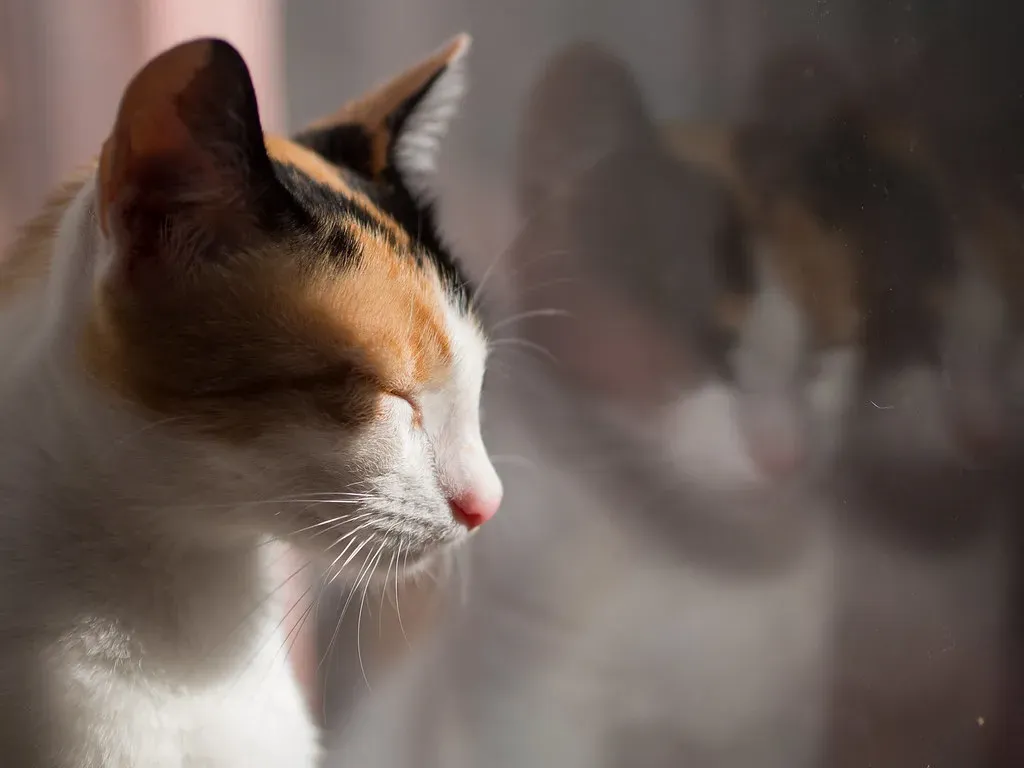
Let’s be real. Your cat isn’t always sleeping when their eyes are closed. Cats are hunters by nature, which means they enjoy being able to observe everything around them while being safely hidden. Sometimes they’re feigning sleep while actually monitoring everything happening around them through their other senses.
Your cat’s senses are fine-tuned hunting instruments. Her whiskers detect even the slightest air currents, alerting her to the movement and breathing of nearby prey; her ears swivel independently, catching the faintest rustle. And those piercing eyes? They’re adept at sensing even the tiniest movements, especially during dusk and dawn. So even with eyes half-closed or fully shut, your cat is gathering intelligence about their environment. They know when you’re about to open a can of food before you’ve even reached the kitchen. That’s not psychic ability. It’s advanced sensory surveillance disguised as a nap.
Body Language Disguise Signals
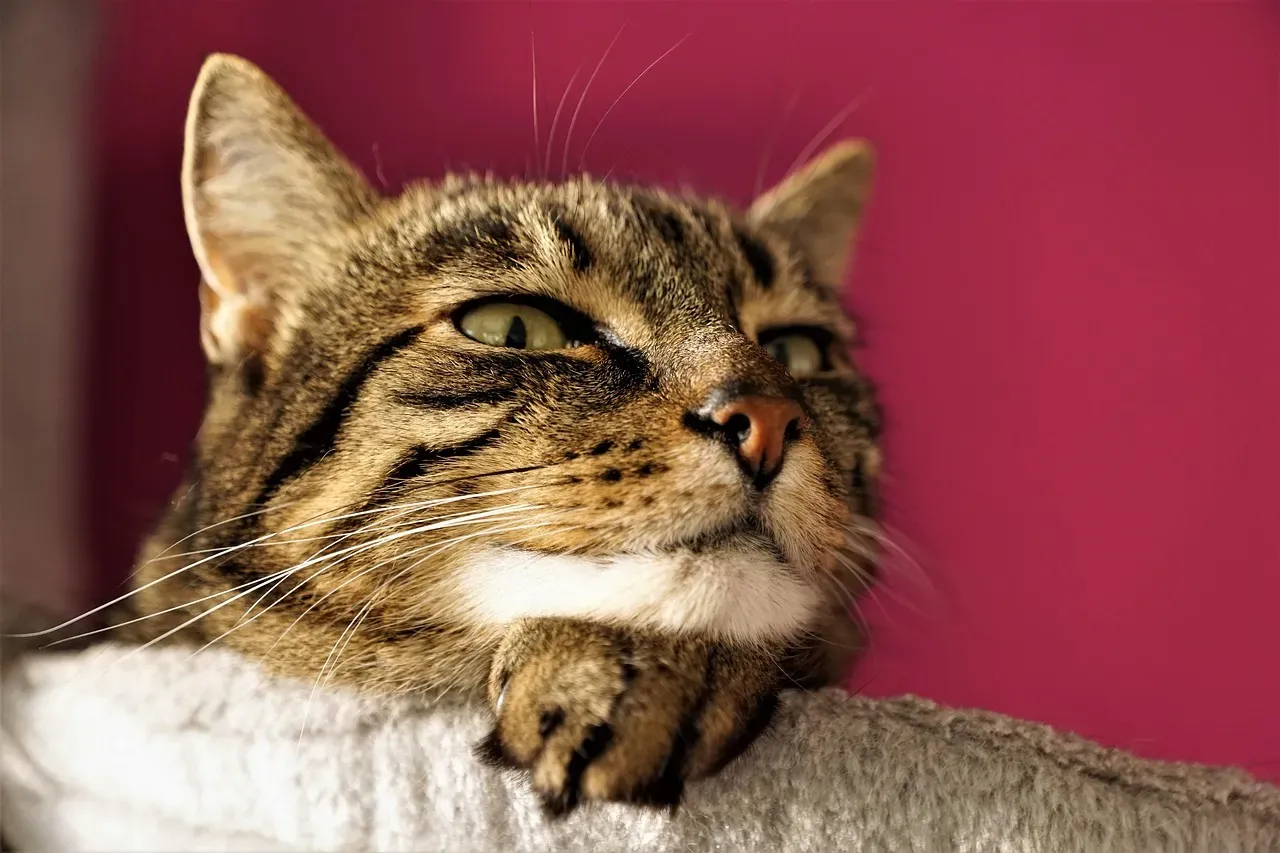
Here’s where things get really interesting. Your cat doesn’t just hide physically. They disguise their intentions through subtle body language that most people completely miss. Cats have earned a reputation for being hard to read, but it’s not their fault – they just communicate differently than humans. With their posture, tails, ears, eyes, whiskers, and vocalizations, they’ll tell you whether they’re comfortable or not.
Cats are subtle and complicated in the way they communicate but taking time to learn their body language can help to strengthen the relationship with your cat. Learning the signs that they are happy, or when they just want to be left alone, can be a big help to you both. It’s important to recognise even the smallest signs and changes in their body language because although they seem small, they say an awful lot. When your cat slowly blinks at you, appears relaxed, then suddenly springs into action, they’ve been disguising their readiness to pounce. When they seem calm but their tail is twitching ever so slightly, they’re not as relaxed as they want you to believe. Your cat is a master at controlling the narrative of their emotional state, revealing only what they want you to see.
Conclusion: Living With a Covert Agent
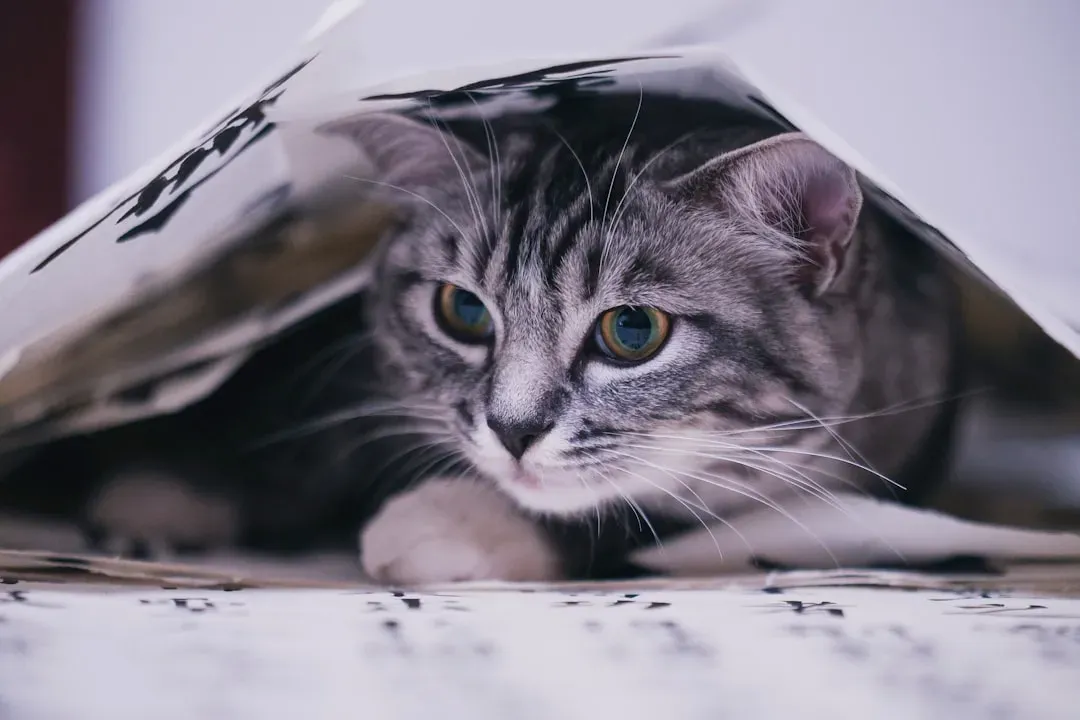
Cats are both predators and prey in the wild – they are instinctually driven to hide and conceal themselves when they are sneaking up on a prospective prey item, and avoiding being prey for other predators. This dual nature means your cat is constantly practicing the art of invisibility, whether they need it or not. Cats continue to hide away to feel safe, despite no longer being vulnerable out in the wild.
Every day, your cat demonstrates skills that would make professional spies envious. They use camouflage, distraction, stealth movement, strategic positioning, and behavioral disguises to navigate their world. The next time you can’t find your cat, remember they’re not lost. They’re exactly where they want to be, watching you search with quiet amusement. Your home isn’t just a house. It’s a training ground for an elite master of disguise who just happens to demand treats and belly rubs.
Did you realize your cat had this many tricks up their furry sleeves? What sneaky behavior has your cat pulled off recently? Share your stories in the comments.