It sounds like the kind of story someone made up – a wild bobcat kitten, barely clinging to life in a California garden, saved by the blood of an ordinary house cat. Yet that’s exactly what happened. This remarkable tale of survival wove together the efforts of a sharp-eyed gardener, a team of dedicated veterinary professionals, a generous domestic feline donor, and months of painstaking wildlife rehabilitation. The result? One very healthy bobcat, back where she belongs.
There’s something deeply moving about the fact that the line between wild and domestic blurred just enough to keep this little predator alive. So let’s dive in.
A Gardener’s Shocking Discovery in San Clemente
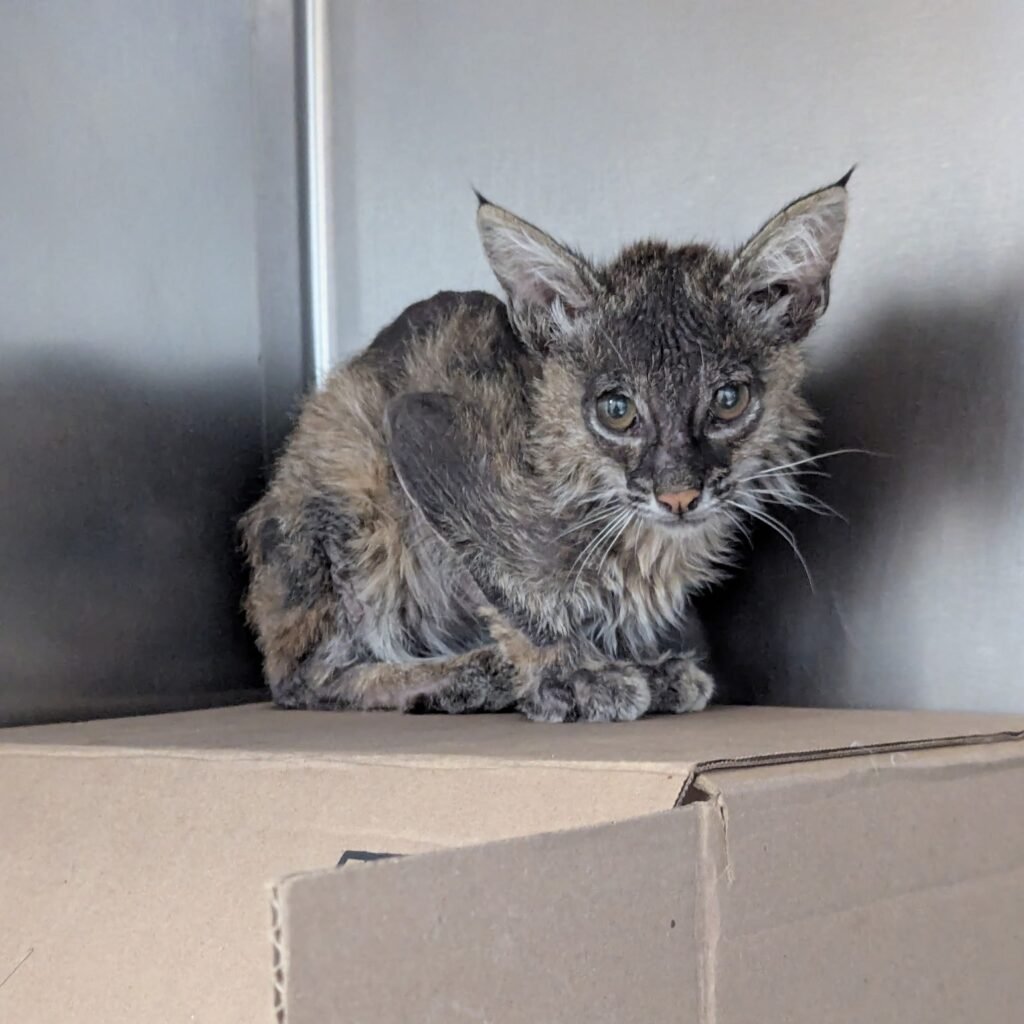
Most people who go to work expecting a routine day don’t end up saving a life. But that’s precisely what happened on October 14, 2025, in San Clemente, California. A gardener found the kitten in bushes in San Clemente, and what appeared to be a stray kitten turned out to be something far wilder and far more endangered.
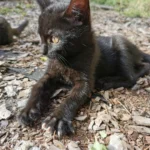
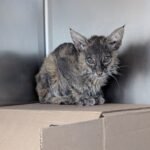
At the time the animal was discovered, it was “unresponsive and in critical condition.” The organization later shared images of the small cat from when they first found her, with matted and patchy fur and a malnourished body. This was no ordinary sick kitten. This was a bobcat, and she was on the edge of death.
Concerned, the gardener took the animal to a local animal shelter, from where she was immediately transferred to a veterinary clinic. She was emaciated, anemic, and suffering from mange – a brutal combination for any animal, let alone a young wild predator that had yet to develop her full strength.
Emergency Room for a Wild Cat: CPR and a Critical Transfusion
When the kitten arrived at the Serrano Animal and Bird Hospital in Lake Forest, California, staff had to act fast. She was initially treated at the Serrano Animal and Bird Hospital in Orange County, where she arrived unresponsive and required CPR. Think about that for a second – CPR on a bobcat kitten. The medical team didn’t hesitate.
Medical staff performed CPR on the unresponsive kitten and administered a blood transfusion from a domestic cat to stabilize her. This is where the story takes its most extraordinary turn. The kitten received a lifesaving blood transfusion from a domestic cat – a rare but effective emergency measure that helped stabilize her condition. The donor? The kitten survived thanks to a blood transfusion from a vet assistant’s cat.
Honestly, I find it astonishing that something so unconventional could be so medically sound. But here’s the thing – bobcats and domestic cats are both felines, sharing enough biological compatibility to make this kind of cross-species donation possible in critical emergencies. A blood transfusion provides an immediate supply of red blood cells, which are essential for carrying oxygen around the body, meaning it can be life-saving in severely anemic cats.
Why Cross-Species Feline Blood Transfusions Actually Work
It might sound wild, but the science behind using a house cat’s blood to save a wild feline is more grounded than you’d think. Whether you’re a domestic cat or a bobcat, it’s still feline, and they have similar blood types, making it a compatible match – at least under the right circumstances. Blood typing is still a crucial step, and compatibility must be confirmed before any transfusion proceeds.
Cats given a blood transfusion of a different blood group can develop a severe life-threatening transfusion reaction. Cats can have naturally occurring antibodies in their blood against red blood cells of the wrong type. The incompatibilities and risk of severe transfusion reactions mean cats should only ever receive a matched blood transfusion. So while it’s not as simple as just pulling blood from any random cat, a properly matched feline donor can genuinely be a lifesaver.
A red blood cell transfusion is recommended for critically ill cats if the blood cell count falls dangerously low. Even more important is the general condition of the patient – parameters like weak pulse, prolonged capillary refill time, lethargy, and weakness are indicators for the need of a transfusion. This little bobcat clearly checked every one of those boxes on the day she was found.
Transferred to Ramona: A Specialized Sanctuary for Predators
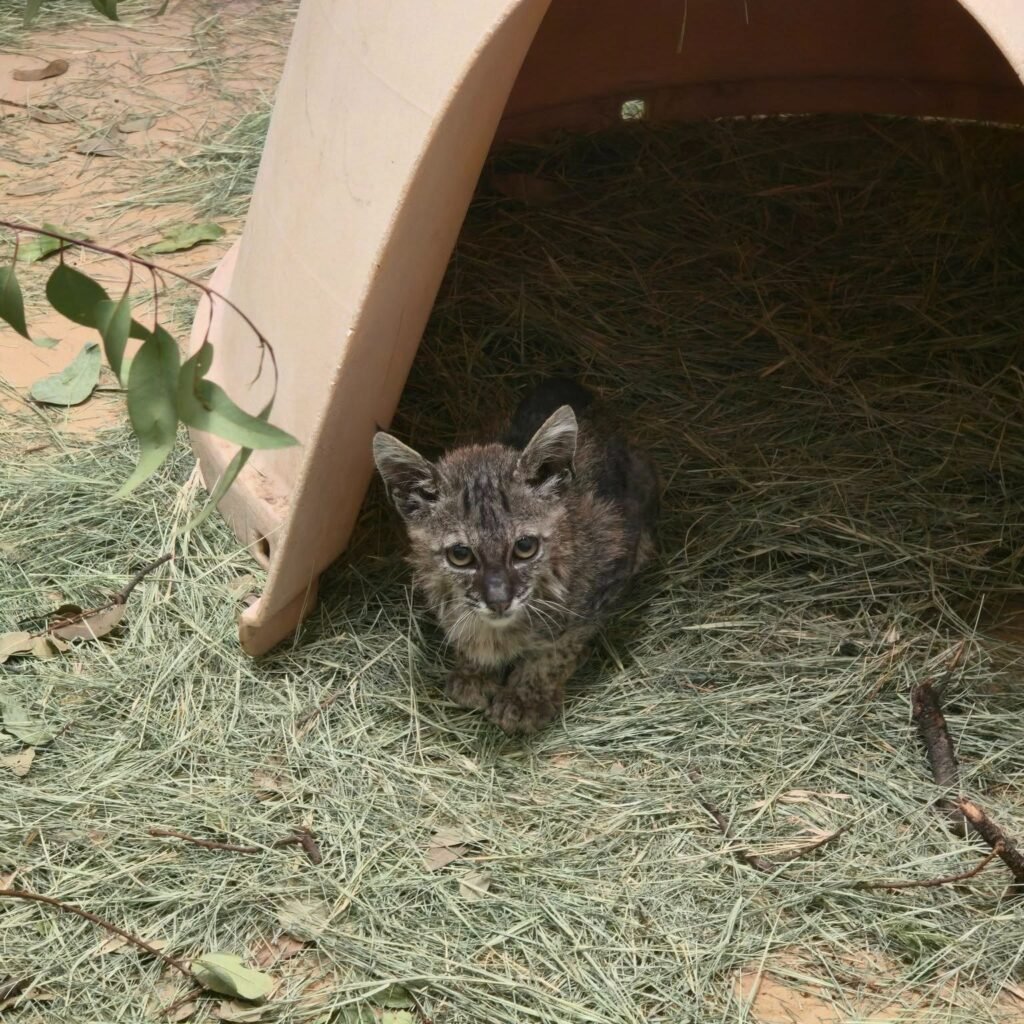
After stabilizing, the fragile animal was transported by the California Department of Fish and Wildlife to Ramona on October 18 for specialized care. This wasn’t just any facility. The Ramona Wildlife Center specializes in caring for apex predators and large mammals, including bobcats, bears, and mountain lions. This was exactly the right environment for a wild predator to begin a long road to recovery.
During her stay in Ramona, the kitten was housed in an outdoor enclosure designed to mimic its natural environment. This allowed the bobcat to build the necessary strength and hunting skills, while recovering her full coat of fur. It’s a delicate balance in wildlife rehabilitation – you want to care for the animal enough to help it survive, but not so much that it loses its wildness.
The veterinary team provided a rigorous course of treatments, including iron supplements, fluids, and anti-parasitic medicine to clear infections. Alexis Wohl, DVM, wildlife veterinary manager at San Diego Humane Society, noted that the kitten “arrived in incredibly poor shape, battling everything from parasites to extreme malnutrition.” That description gives you a real sense of how close this animal came to not making it.
Project Wildlife: The Organization Behind the Miracle
San Diego Humane Society’s Project Wildlife program is the primary resource for wild animal rehabilitation in the region. This isn’t a small operation. As a nonprofit, San Diego Humane Society relies entirely on donations for its rehabilitation work of more than 13,000 wild animals each year. That’s a staggering number – roughly 13,000 wild lives touched annually by the work of this single program.
Let’s be real: without a dedicated, well-funded organization like this, the bobcat kitten’s story ends in that garden in San Clemente. San Diego Humane Society’s Project Wildlife program serves as a primary resource for wildlife rehabilitation in the region, while the Ramona Wildlife Center specializes in caring for apex predators and large mammals, including bobcats, bears, and mountain lions. The fact that this level of care exists for wild animals is something worth celebrating.
A Full Recovery and Freedom at Last
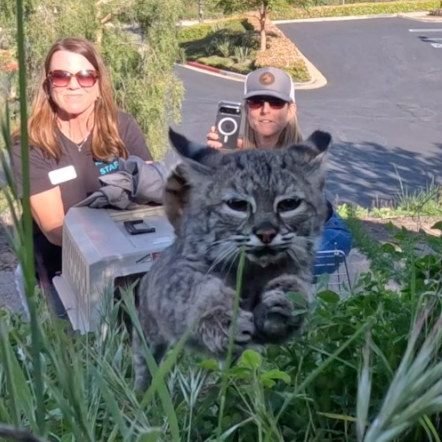
After four intense months of care, the moment everyone was working toward finally arrived. After four months of intensive rehabilitation at San Diego Humane Society’s Ramona Wildlife Center, the kitten was released back into its native habitat on February 22, 2026. The transformation from the helpless, nearly hairless animal found in that San Clemente garden to a fully recovered wild predator is almost impossible to imagine without seeing the before-and-after photos.
She was placed in a large outdoor enclosure designed to resemble her natural habitat, allowing her to climb, explore, and rebuild essential survival skills as her health improved and her fur gradually grew back. Other images included in the post showed the kitten looking much healthier, with thicker fur and the energy to leap and play in her makeshift environment. That imagery alone says everything.
Alexis Wohl noted, “Seeing this patient transform from an emaciated kitten with little fur, into a healthy, powerful bobcat ready for the wild is the ultimate reward for our team.” Wildlife staff released her back into her native habitat, completing what rescuers described as a full-circle moment. It’s hard to argue with that description.
This story is a quiet reminder of what’s possible when humans – and even their pets – step up at the right moment. A gardener who paused to look twice. A vet assistant whose cat gave a little blood. A team of wildlife professionals who spent months rebuilding one small predator’s strength and wildness. None of those individual acts seem monumental on their own. Together, they returned a bobcat to the California wilderness.
It’s also a reminder of what organizations like San Diego Humane Society’s Project Wildlife make possible every single day, across thousands of wild animals that most of us will never hear about. This particular bobcat happened to go viral. The others deserve the same care regardless.
What do you think – did you ever imagine a house cat could help save a wild predator? Drop your thoughts in the comments below.