When Potter Park Zoo in Lansing, Michigan, shared the news on March 9, 2026, it landed with the kind of quiet sadness that only animal lovers will truly understand. A powerful, majestic big cat – one that had become a genuine favorite among visitors and staff alike – was gone. The announcement was brief, but the grief behind it was unmistakable.
The story of Vikentii, a 16-year-old Amur tiger, is one that touches on aging, compassion, conservation, and the very real stakes of losing an animal from one of the world’s most endangered species. There is more to his story than just a sad ending. Let’s dive in.
A Beloved Tiger Comes to Lansing
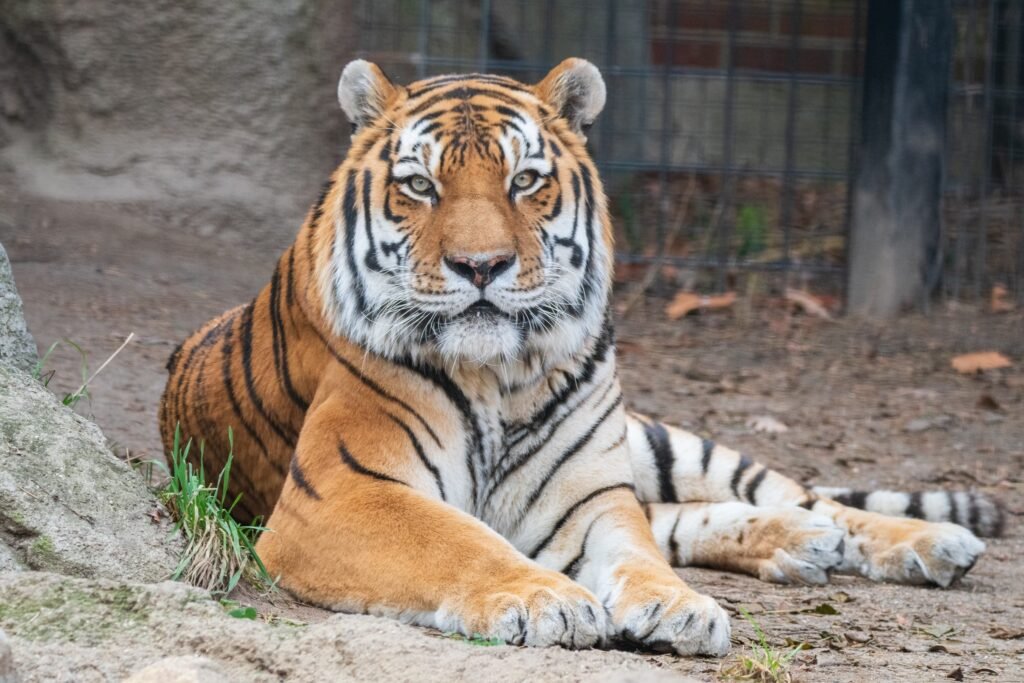
Vikentii was transferred from the Louisville Zoo in November 2023, stepping into his new home at Potter Park Zoo with what can only be described as quiet authority. Since arriving at Potter Park Zoo in 2023, Vikentii quickly captured the attention of guests and staff alike with his powerful presence, quiet confidence, and calm personality.
It didn’t take long for him to make his mark. He was a 300-pound Amur tiger – a creature built for the cold Russian wilderness and, as it turned out, perfectly suited to Michigan winters. Amur tigers are adapted for cold climates, so Vikentii quickly took a liking to Michigan’s winters and loved playing in the snow.
If you wanted to see Vikentii at his best, winter was the perfect time, as he loved the snow and would be outside more often during the cold seasons. For a zoo staff used to coaxing animals out of heated enclosures on cold Michigan days, Vikentii was a refreshing exception. He thrived precisely when others retreated.
The Sudden and Shocking Health Decline
What made Vikentii’s death hit so hard was how swiftly things changed. Before the recent neurological issues, he was being treated by the zoo’s medical staff for age-related arthritis. That in itself was manageable. Arthritis in aging big cats is not uncommon, and teams were actively working to keep him comfortable.
Then came the turn that nobody wanted. “Last week, he experienced a sudden decline in mobility, determined to be related to neurological factors,” the zoo shared. It was rapid and it was severe. Earlier this month, Vikentii experienced a sharp decline in mobility due to his brain function. Think of it like a storm arriving without any real warning – one day manageable, the next, devastating.
The zoo’s veterinary and animal care teams decided to euthanize Vikentii after further treatments were unsuccessful in improving his condition, with officials stating that maintaining the tiger’s quality of life was the top priority for the staff during the medical process. Honestly, that kind of decision never gets easier, no matter how many times a dedicated animal care team has faced it.
The Difficult Decision to Euthanize

There is a kind of quiet courage in knowing when to let go. “After further treatments were unsuccessful in improving his condition and with his quality of life as the top priority, our veterinary and animal care teams made the very difficult decision to humanely euthanize him.” Those words, posted to social media, struck a chord with thousands of followers who had followed Vikentii’s story.
The 16-year-old Vikentii was already older than the typical median life expectancy for Amur tigers living in human care. Male cats can live to about 16.3 years, while females average 14.3 years. In that sense, Vikentii had already defied the odds. He had lived a full life, but the neurological deterioration left no room for a dignified recovery.
It’s a brutal reality that comes with caring for aging animals. The zoo didn’t hide behind vague language or spare the public from the truth. They communicated honestly, and that transparency resonated deeply with everyone who cared about this tiger.
Vikentii’s Age and What It Tells Us About Amur Tigers
Vikentii was 16 years old, which the zoo said is beyond the median life expectancy for Amur tigers in human care. That’s no small thing. Reaching 16 as an Amur tiger in a zoo setting represents both a testament to dedicated veterinary care and the species’ inherent resilience.
Amur tigers can grow to be up to 12 feet in length from their nose to the tip of their tail, and they can weigh in at a massive 700 pounds. They are, in every measurable sense, extraordinary animals. The Amur tiger is the largest of all wild cats, with orange coloring that is paler than that of other tigers, and its stripes are brown rather than black and are widely spaced compared to those of other tigers.
The tigers have a white chest and belly and a thick, white ruff of fur around the neck, and in the winter, their coat grows long and shaggy to adapt to the change in temperature. It is hard not to feel a deep sense of awe thinking about an animal this magnificent roaming the snowy grounds of a Lansing zoo, thriving in Michigan winters just as he would have in the Russian Far East.
An Endangered Species With a Critical Mission

Here’s the thing – Vikentii’s death is not just a personal loss for Potter Park Zoo. It carries genuine weight for conservation. As poaching and habitat destruction take their toll, it’s estimated that only 400 to 500 Amur tigers remain in the wild. That number is staggeringly small for a species that once roamed across vast stretches of eastern Asia.
Amur and Siberian tigers are the same subspecies of tiger, and the name “Siberian tiger” was historically used because they were found across a wider range in Siberia, but their current habitat is primarily the Amur River region – making “Amur tiger” the more scientifically accurate and commonly used name today. It’s a small but meaningful distinction, and one that reflects how much has changed for this species over the past century.
Zoo officials said animals like Vikentii play an important role in connecting people with conservation efforts. According to the zoo, animals like Vikentii serve as ambassadors to help connect the community with wildlife and inspire the protection of wild spaces. That ambassadorial role is something that cannot be easily replaced, and it underscores why each individual animal matters so much.
How the Zoo and Community Are Remembering Vikentii
The tributes came swiftly and sincerely. The announcement was made on the zoo’s Facebook page Monday morning, March 9, 2026. The response from the community was immediate, with thousands of comments from people sharing memories of seeing Vikentii on visits, children pressing their faces to the glass, adults moved by his sheer presence.
Outside of his conservation role, staff also remembered Vikentii for his playful personality, sharing that he especially enjoyed enrichment activities, swimming and running through the snow, earning him a reputation as a “true Michigander.” That description is both charming and fitting for a tiger who seemed born for the cold.
The Potter Park Zoo confirmed that “he was an excellent ambassador for his species and will be greatly missed by our staff, volunteers and the many guests who came to admire him.” I think it’s that word – ambassador – that captures it best. Vikentii didn’t just live at the zoo. He made a case for why his species deserves to survive.
Vikentii’s story is one worth telling fully and honestly. A 16-year-old Amur tiger, already past the expected age for his kind, fought through arthritis until neurological decline took that fight away from him. The team at Potter Park Zoo made the hardest call in animal care, guided entirely by compassion.
His passing is a reminder that every single Amur tiger matters. It’s believed that about 500 or fewer Amur tigers remain in the wild. Every animal that carries the story of this species into the public consciousness is irreplaceable. Concerted conservation efforts help protect these endangered animals from the persistent threats of poaching and habitat loss.
Vikentii romped through Michigan snow, swam, played, and connected thousands of people to a species teetering on the edge. That legacy doesn’t disappear with his passing. What do you think zoos can do to continue honoring animals like Vikentii and the conservation missions they represent? Share your thoughts in the comments.