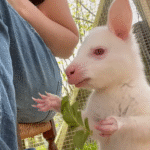
In a bond that’s capturing hearts worldwide today, Lindsay Clarity of Lindsay’s Animal School stepped up as surrogate mum to a tiny, orphaned wallaby joey named Blossom. Found rejected or motherless at a local wallaby garden, the pink, furless infant faced grim odds without immediate intervention. Wildlife carers know these macropods rarely survive alone, yet Lindsay’s ingenuity turned desperation into devotion. Here’s the thing: her story reveals the raw commitment behind every successful animal rescue.
What started as a routine check evolved into a year-long vigil, with Lindsay crafting a breathable pouch to mimic nature’s design. Carrying Blossom everywhere – from daily chores to educational sessions – proved transformative for both. Let’s dive into the details of this remarkable journey.
The Urgent Rescue Mission
Lindsay discovered Blossom as a minuscule newborn, weighing less than a gram, abandoned amid the wallabies at Leonard’s Lee Gardens in the UK. Joeys this young rely utterly on their mother’s pouch for warmth, milk, and protection; without it, predators and exposure claim most within days. Acting fast, Lindsay fashioned a soft, secure pouch from specialized fabric and strapped it to her waist, providing the constant motion and heartbeat the joey craved. Round-the-clock feeds of kangaroo milk formula kept dehydration at bay during those first precarious hours. Her experience as a rehabilitator shone through, drawing on protocols from wildlife groups that emphasize pouch rearing for optimal survival. By night’s end, Blossom had latched on, signaling the start of a fighting chance.
Integrating a Joey into Daily Life
Blossom quickly became Lindsay’s constant companion, tucked securely during work at the Animal School, errands, and even sleep. Nights involved placing the pouch close, simulating maternal rhythms to soothe the joey through developmental leaps. Lindsay described it like raising a furry baby with a tail, blending exhaustion with pure joy in interviews. The setup allowed Blossom to grow amid natural stimuli, from gentle bounces to ambient sounds, fostering healthy behaviors early. Remarkably, hygiene routines kept infections at bay despite constant closeness. This seamless integration highlighted why pouch methods outperform cages for marsupials.
Navigating Rehabilitation Hurdles
Challenges piled up fast: precise nutrition to avoid imbalances, pouch cleaning to prevent sores, and monitoring for stress signals unique to joeys. Veterinary check-ins ensured tailored diets as Blossom transitioned from formula to solids around six months. Over-dependence loomed as a risk, but Lindsay balanced bonding with gentle independence nudges. Infections threaten up to half of orphans without vigilant care, yet Blossom dodged major setbacks. Drawing from established guidelines by groups like the Australian Wildlife Conservancy – adapted for UK contexts – Lindsay boosted survival odds dramatically. Triumphs, like the joey’s first peeks from the pouch, made every obstacle worthwhile.
From Tiny Infant to Robust Juvenile
Over 12 months, Blossom morphed from a blind, hairless scrap into a sleek albino wallaby with strong legs and boundless curiosity. Milestones rolled in: fur sprouting by week four, eyes opening at two months, weaning near half a year. Lindsay documented it all on @lindsays_animal_school, teaching followers about marsupial growth stages that mirror wild timelines of up to 10 months pouch-bound. Weight gain was steady, hitting juvenile benchmarks by year’s end. Exploratory hops inside the pouch built confidence without full separation. This progression underscored the pouch’s role in natural development.
Shaping a Future Beyond the Pouch
As Blossom neared maturity, Lindsay introduced controlled freedoms, like short out-of-pouch times at the Animal School to hone skills. Avoiding imprinting remained key, with expert oversight from rehab networks ensuring best outcomes. Her albino traits complicate full wild release, steering toward sanctuary life or educational roles. Lindsay’s platform now inspires donations and awareness, spotlighting threats like habitat loss and road strikes orphaning thousands yearly. Collaborations amplify impact, turning one rescue into broader conservation momentum. The duo’s story proves dedicated care can rewrite fragile fates.
Lindsay’s year with Blossom stands as a blueprint for marsupial rehab, blending empathy with science for real results. It spotlights how everyday heroes sustain wildlife amid rising orphan crises. Survival rates for joeys can climb with methods like hers, offering hope where odds seem stacked. What rescue story has moved you lately? Share in the comments.
Source: Original YouTube Video