In a remarkable glimpse into prehistoric Southeast Asia, paleontologists have uncovered fossil remains of a massive fish-eating dinosaur that prowled riverbanks in what is now Thailand during the early Cretaceous period. This predator, exceeding the length of a modern pickup truck, adds compelling new evidence to the understanding of spinosaurid dinosaurs in Asia — a group of unusual, semi-aquatic hunters best known from fossils in Africa. The discovery not only broadens the known geographic range of these long-snouted carnivores but also paints a more vivid picture of the ecosystems that thrived in this part of the world more than 125 million years ago.
Unearthing an Ancient River Predator
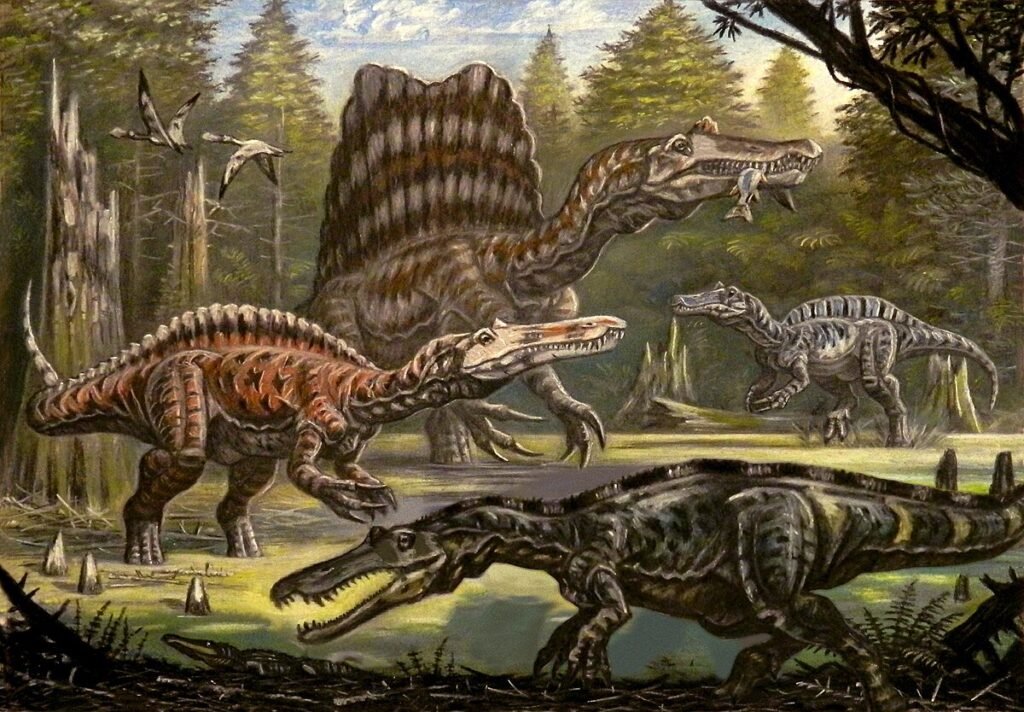
Most of what scientists know about this dinosaur comes from fossil material unearthed in northeastern Thailand’s Khok Kruat Formation, a sedimentary rock layer dating back about 125 million years. The remains include parts of the spine, pelvis and tail of a spinosaurid — a member of the same family as Spinosaurus, the iconic African meat-eater with a sail-like back structure. The size of the fossil suggests this Thai relative reached lengths of roughly 7 to 8 meters (about 23 to 26 feet), making it longer than many modern pickup trucks.
Researchers have yet to give this particular dinosaur a formal scientific name. For now, it is informally dubbed the “Sam Ran spinosaurid” after the locality where its bones were found. The specimen was first identified in 2004, but only recently has enough of its anatomy been studied in detail to reconstruct its significance.
What Makes a Spinosaurid?
Spinosaurids are a unique branch of the theropod dinosaur family tree. They are distinguished by their elongated skulls lined with conical, non-serrated teeth — ideal for catching fish — and in many species, tall neural spines that may have supported a sail or hump along the back. These traits point to a lifestyle adapted to hunting in and around water.
The Thai spinosaurid shows classic features of the group, but with its own twist. For instance, its spinal spines were tall yet shorter than those of Spinosaurus, and had a slightly broader, paddle-like structure compared to some relatives. These anatomical details suggest variation in form even among closely related dinosaurs, and hint at a diversity of ecological roles within the spinosaurid family in Cretaceous Asia.
Thriving Along Ancient Waterways

Life in the early Cretaceous of what is present-day Thailand was dominated by dynamic river systems winding through semi-arid landscapes. These waterways supported vibrant ecosystems teeming with aquatic life, including freshwater sharks, bony fish and turtles, and provided hunting grounds for semi-aquatic predators like the Sam Ran spinosaurid.
The discovery site has also yielded fossils of other dinosaur groups, such as sauropods (long-necked herbivores) and iguanodontians (ornithopods), underscoring the region’s ecological richness. The spinosaurid likely used these rivers as its primary hunting ground, wading along banks and snatching fish and other prey with its long jaws, although evidence for full aquatic habits remains debated among scientists.
Early Cretaceous Asia: A Spinosaurid Hotspot?
Spinosaurid fossils in Asia have been rare compared to finds in Europe and Africa, making this Thai discovery especially significant. Previous finds in nearby regions include Siamosaurus, a spinosaurid known mainly from teeth, and Ichthyovenator from neighboring Laos — both believed to have shared fish-eating habits.
The Sam Ran specimen’s relative completeness allows paleontologists to refine models of how these dinosaurs diversified across continents. It suggests that spinosaurids were more widespread and varied in body form than earlier evidence alone had indicated. This in turn helps fill gaps in the fossil record and reinforces the idea that Asia’s early Cretaceous ecosystems were rich and complex environments.
Implications for Dinosaur Evolution
The Thai spinosaurid underscores how dynamic dinosaur evolution was during the Cretaceous. Its combination of familiar spinosaurid features and distinct anatomical traits points to regional adaptation and evolutionary experimentation within the group. Such discoveries challenge assumptions about how widespread and uniform dinosaur lineages were across ancient landscapes.
Researchers involved in the study presented their findings at the Society of Vertebrate Paleontology’s 2025 annual meeting, and they are preparing detailed descriptions for peer-reviewed publication. Once more comprehensive analyses are completed, scientists hope to better place this species within the broader spinosaurid family tree and explore how it interacted with its contemporaries.
What the Future Holds
The Sam Ran spinosaurid discovery opens new avenues for paleontological work in Southeast Asia. Continued excavation and study could reveal more about the behavior, diversity and evolution of spinosaurids and other dinosaurs in the region. These fossils not only inform scientists about ancient life but also help reconstruct the environments that sustained such fascinating creatures.
The uncovering of a spinosaurid longer than a pickup truck along the riverbanks of ancient Thailand marks a milestone in dinosaur research. More than just a spectacular fossil find, it enriches our understanding of how these impressive predators evolved and thrived in diverse ecosystems across the globe. As scientists continue to study this remarkable specimen, the story of Asia’s dinosaurs promises to become even more vivid and nuanced.