Los Angeles — A small puppy endured painful injuries from toxic paint dye before finding solace and healing through dedicated rescuers.
A Startling Sight on the Streets
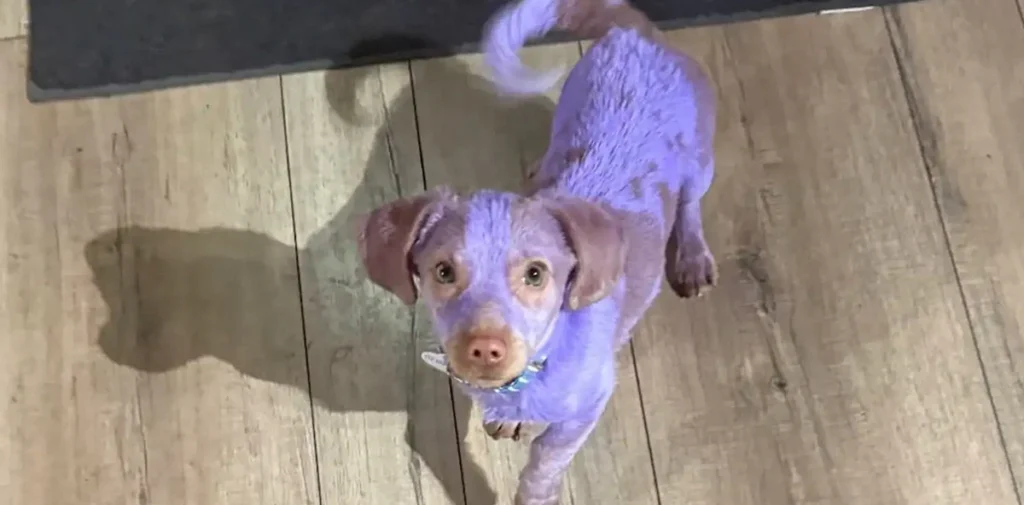
Rescuers encountered Benny, estimated at six months old and possibly a dachshund or Chihuahua mix, after a family spotted him in distress. The puppy’s fur glowed electric purple, a result of harmful dye that clung tightly despite efforts to wash it away. Beneath the vivid color, hints of his light tan coat emerged faintly. His floppy ears bore scabs on the tips, and one eye suffered from ulcers, signs of the dye’s corrosive impact.
Ellen Ballon Dante, cofounder and CEO of Deity Animal Rescue, received word from a vet tech who had treated the puppy initially. The family had provided vaccinations but could not commit long-term. Dante welcomed Benny into the Los Angeles-based nonprofit in early January, where he immediately sought comfort in her arms, nuzzling her cheek despite his subdued state.
The Dangers Hidden Beneath the Color
The toxic paint caused more than cosmetic changes. Scabbing on Benny’s ear tips indicated burns, while the eye ulcer likely stemmed from irritation that prompted scratching. Dante observed that the dye had infiltrated sensitive areas, exacerbating the harm. Even multiple baths failed to remove the stubborn purple hue completely.
Experts note such dyes pose severe risks to animals, leading to skin irritation, infections, and emotional trauma. Benny’s case underscored how seemingly playful alterations can turn deadly. His gentle nature persisted amid the ordeal, revealing remarkable resilience from the start.
Healing Steps at the Rescue
Treatment began promptly upon arrival at Deity Animal Rescue. Veterinarians administered eye drops to address the ulcer and conducted thorough baths to mitigate the dye’s effects. Benny responded well physically, with improvements in his eyes and ears over time.
- Initial veterinary exam confirmed burns and ulcers.
- Eye drops and medications targeted infections.
- Multiple baths reduced but did not eliminate the dye.
- Daily care fostered emotional recovery through human interaction.
- Monitoring ensured no lingering complications arose.
Dante praised his trusting demeanor. “He was a little scared. He was pretty subdued. But that is basically who he is. Like, the sweetest, most cuddliest, kindest puppy,” she said. His openness to affection amazed those around him, given his traumatic beginnings.
Finding a Forever Home
Benny’s progress paved the way for adoption. A woman who had previously rescued two dogs through Deity Animal Rescue stepped forward. She brought experience with traumatized pets and, curiously, had dyed her own hair bright purple around the time she began fostering.
Today, Benny thrives in his new environment, growing stronger alongside his family. The persistent lilac tint in his fur serves as a reminder of his past, yet his joyful spirit shines through. Deity Animal Rescue facilitated this match, exemplifying their mission.
Why Stories Like Benny’s Matter
Incidents of animal mistreatment highlight the vital role of nonprofits like Deity Animal Rescue, an organization aiding vulnerable pets. These groups provide medical care, rehabilitation, and placement into loving homes. Benny’s transformation from a scared, injured stray to a confident companion demonstrates animals’ capacity for recovery with proper support.
Key Takeaways:
- Toxic dyes cause burns, ulcers, and distress in pets.
- Quick veterinary intervention prevents long-term damage.
- Rescue organizations bridge the gap to forever homes.
Potential owners must prioritize pet safety, avoiding harmful substances. Support local shelters to amplify such successes.
Benny’s tale reminds us that compassion can rewrite even the darkest starts. What steps can communities take to prevent such cruelty? Share your thoughts in the comments.