When a school teacher spotted what was dubbed the “saddest looking” shelter cat, something about his forlorn eyes and flattened posture simply wouldn’t let her walk away. But what happened next surprised not just her, but thousands of online viewers—and revealed how profoundly environment can shape an animal’s demeanor.
The feline, photographed at the shelter sprawled awkwardly on the floor of his cage and appearing utterly dejected, captured attention on Reddit when his new owner shared side-by-side images of him before and after adoption. At home, the same cat looked like an entirely different animal—alert, playful, and altogether energized, eagerly chasing a catnip toy in his new living space.
Seeing Sadness That Wasn’t Essential
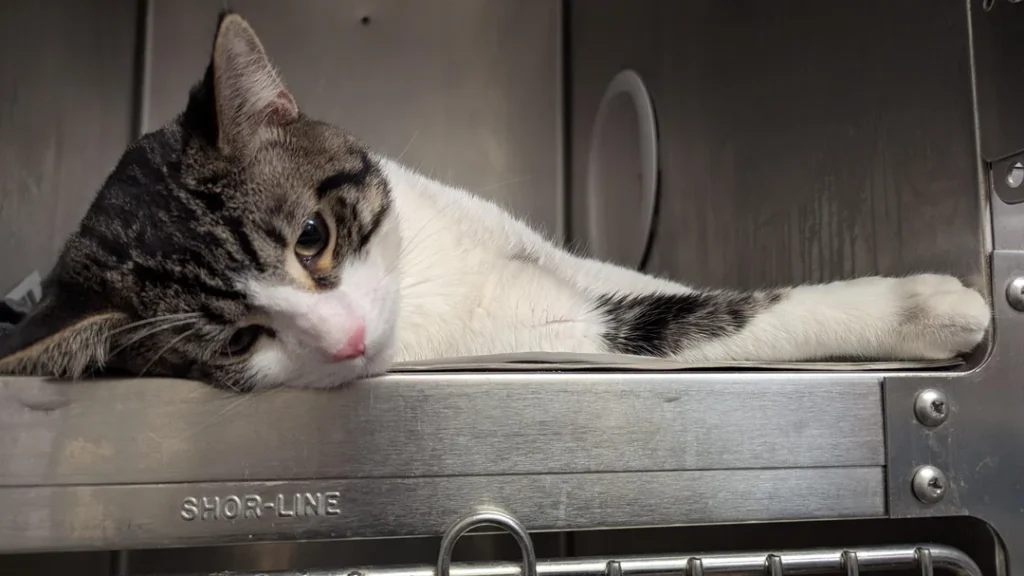
At the shelter, the cat seemed withdrawn and disinterested in interaction. In a post that quickly gained traction online, his adopter joked that she had been “catfished,” expecting a gloomy companion only to bring home a vibrant, affectionate pet.
This dramatic shift is not unique. Many animals display subdued or distressed behavior in high-stress environments like shelters. These settings, though necessary, can overwhelm with unfamiliar sounds, smells and constant activity.
How Shelters Affect Behavior
Experts explain that when cats are confined, exposed to constant stimuli, and unable to retreat to a safe corner as they would at home, stress responses such as fear, anxiety, and withdrawal are common. These reactions can mask an animal’s true personality, making them seem lonelier or more lethargic than they truly are.
In stable home environments, with predictable routines and gentle human companionship, many pets begin to relax and display traits that were hidden behind their shelter stress.
A Viral Story Resonates
The Reddit post documenting this cat’s transformation struck a chord, collecting thousands of upvotes and dozens of heartfelt comments. Many users celebrated the cat’s newfound joy, noting how quickly he seemed “relieved” to be in a comfortable home.
One commenter captured the sentiment well: now that he is finally at home, “he is now a glad cat!” — a playful yet meaningful nod to a turnaround many adopters hope for.
Stress Doesn’t Define Them
This story highlights an important lesson for potential adopters: a quiet, withdrawn animal at a shelter may simply be reacting to stress rather than exhibiting its true nature. With patience, space, and kindness, a shy or seemingly sad pet can blossom into a lively, loving companion.
The tale of this once-“saddest” shelter cat serves as a reminder that first impressions—especially under stressful circumstances—don’t always tell the whole story. For many rescue animals, a stable home doesn’t just change their behavior; it reveals who they have always been beneath the stress.
If you’ve ever walked past a quiet, withdrawn animal at a shelter and thought it wasn’t worth the effort, this cat’s transformation might just change your mind. The saddest cat in the room isn’t always the most broken one. Sometimes, it’s just the one still waiting for its moment.
What would you have done if you’d seen a cat behind that glass? Tell us in the comments.