Sarasota, Florida – An ordinary fishing expedition turned into an extraordinary act of compassion when two local men discovered a disoriented owl perched precariously on their rod, far from any land.
A Feathered Surprise on the Open Water
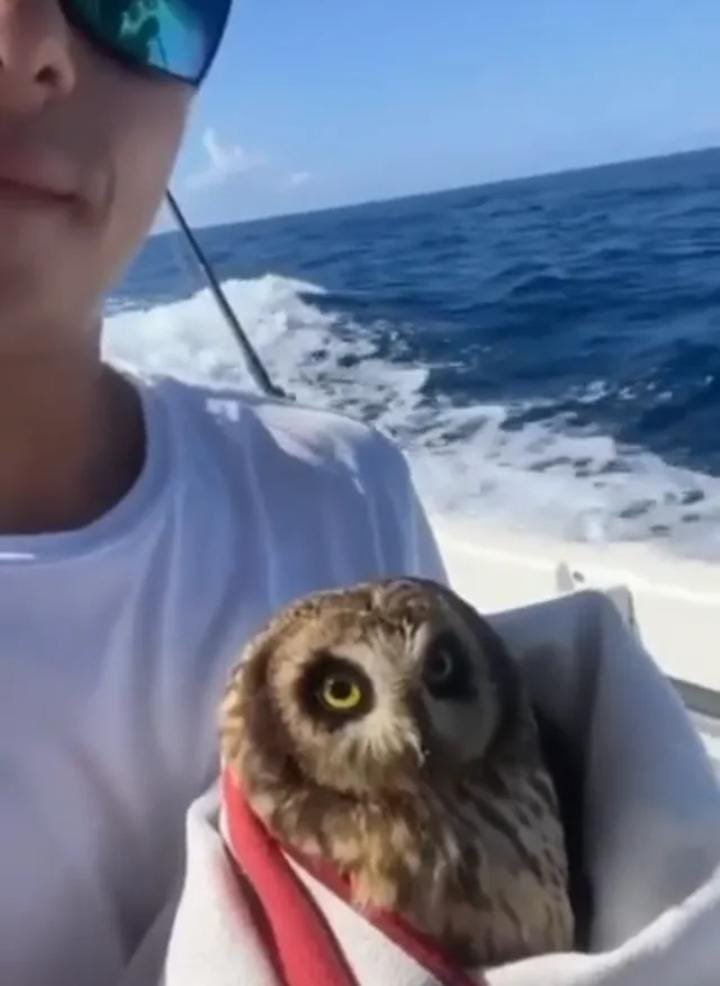
Out in the Gulf of Mexico, approximately 20 miles from the Sarasota coastline, the fishermen spotted the unexpected visitor during what promised to be a routine day on the waves.
The bird, likely a barred owl, had somehow ventured far beyond its typical habitat of wooded areas and swamps. Experts later suggested strong winds or disorientation during migration might have carried it offshore. The men watched in amazement as the owl clung tightly to the fishing line, its wide eyes reflecting the vast blue expanse around it.
This rare encounter underscored the unpredictable paths wildlife can take, even for nocturnal hunters like owls that rarely venture over open water. The fishermen paused their efforts, recognizing the urgency of the situation.
Swift Action Amid the Swells
With calm precision, the duo approached the owl, careful not to startle it further. They gently coaxed the bird onto a safer perch aboard their vessel, wrapping it in a soft towel to provide warmth and stability against the sea spray.
Throughout the journey back to shore, the owl remained remarkably composed, occasionally hooting softly as if acknowledging its saviors. The men shared light moments, capturing the event on video that later spread across social media, drawing widespread admiration for their quick thinking.
Upon docking, they contacted local wildlife authorities, ensuring the owl received professional care. This hands-on rescue highlighted how everyday people can bridge the gap between human activities and nature’s vulnerabilities.
The Owl’s Path to Recovery
Handed over to a nearby rehabilitation center, the owl underwent a thorough examination. Staff noted minor dehydration and exhaustion but no severe injuries, attributing its survival to the timely intervention.
After a short period of rest and feeding, the bird regained its strength. Reintroduction to its natural environment followed soon after, allowing it to resume hunting in familiar mangrove forests along Florida’s coast.
Such incidents remind observers of the resilience in wildlife, yet also the perils posed by environmental factors like storms that push animals into unfamiliar territories.
Broader Implications for Coastal Encounters
Stories like this one illustrate the intersection of maritime life and wildlife conservation in Florida’s busy waters. Fishermen often serve as first responders in these scenarios, spotting distressed animals amid their daily routines.
Local experts emphasize the importance of reporting such sightings promptly to avoid unintended harm. In recent years, similar rescues have involved seabirds and even small mammals washed out by tides.
To prepare for these moments, coastal communities promote awareness through workshops on safe handling techniques. The event also sparked discussions on how climate patterns might increase such displacements.
- Strong offshore winds can disorient birds, leading them miles from shore.
- Immediate shelter and minimal stress aid in successful rescues.
- Collaboration with wildlife centers ensures long-term animal welfare.
- Public sharing of encounters educates others on conservation efforts.
- Protective gear like towels prevents injury during transport.
Key Takeaways
- Compassionate actions by individuals can make a profound difference in wildlife survival.
- Awareness of local animal behaviors helps in recognizing distress signals at sea.
- Supporting rehabilitation programs strengthens community ties to nature.
In a world where human expansion meets wild frontiers, this rescue stands as a testament to the enduring bond between people and the creatures they share the planet with. Simple choices, like extending a hand to a stranded owl, ripple outward to foster greater environmental stewardship. What wildlife encounters have you witnessed? Share your stories in the comments below.