You’re sitting on the couch, minding your own business, maybe scrolling through your phone or watching TV. Then you feel it. That eerie, magnetic pull. You look up, and there it is – your cat, eyes locked onto you like a tiny, furry surveillance camera with absolutely no intention of looking away. It’s intense. A little unsettling. Honestly, kind of hilarious.
Most people brush it off as one of those inexplicable cat things. But here’s what’s actually surprising: that stare is language. Real, layered, intentional communication. Your cat isn’t glitching. They’re talking to you.
From silent hunger demands to profound expressions of trust, every gaze your cat gives you carries meaning – if you know how to read it. So let’s dive in, because once you understand what those eyes are saying, your entire relationship with your cat is going to shift in the most wonderful way.
Cats Are Natural-Born Observers – And That’s Where It All Starts
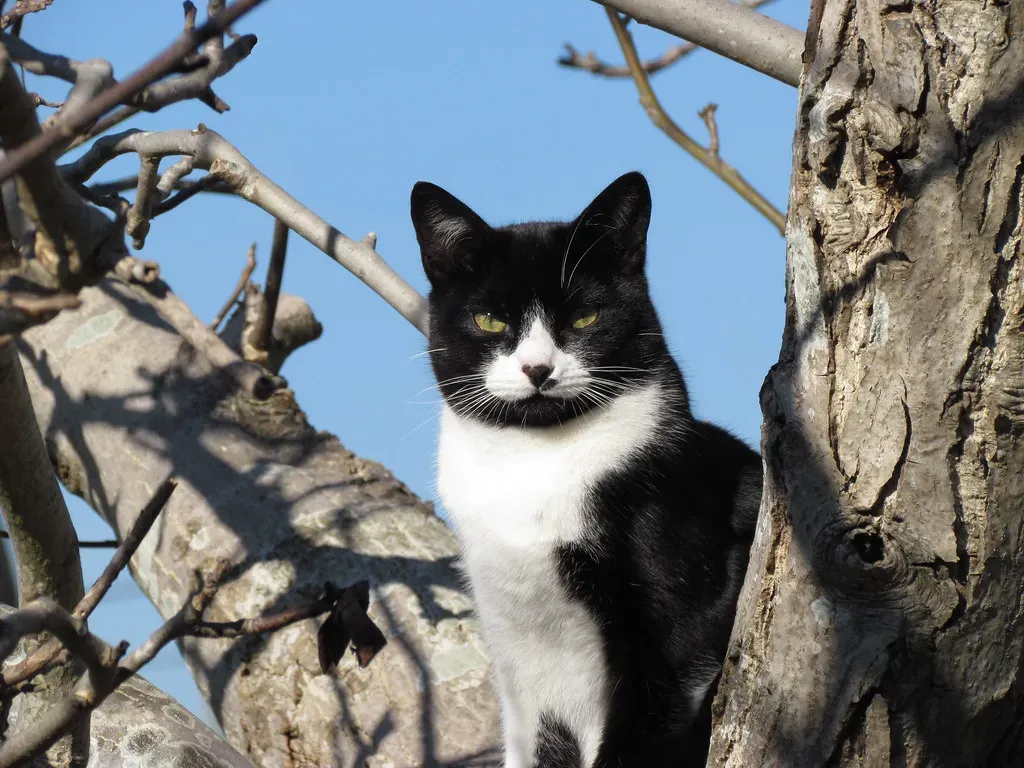
Think about it from an evolutionary angle. Cats evolved as observant hunters and cautious survivors, relying on their eyes to track motion, judge distance, and evaluate safety. That same sharp instinct doesn’t just switch off when your cat is lounging in a heated apartment with a full food bowl nearby. Their biology is still wired for it.
Staring is a natural feline behavior that stems from their instincts. In the wild, cats stare intently to assess their surroundings, monitor prey, or identify potential threats. So when your cat fixes that unblinking gaze on you, they’re essentially running a scan. You are their environment. Their person. Their everything. Of course they’re going to watch you closely.
It is perfectly normal for cats to stare at you. Staring is one of a cat’s primary ways of communicating with humans, observing their surroundings, and expressing themselves. Cats make eye contact for many different reasons, and most of the time, it is simply a natural part of how they interact with us. Once you accept that, everything else starts to make sense.
The Slow Blink: Your Cat’s Version of “I Love You”
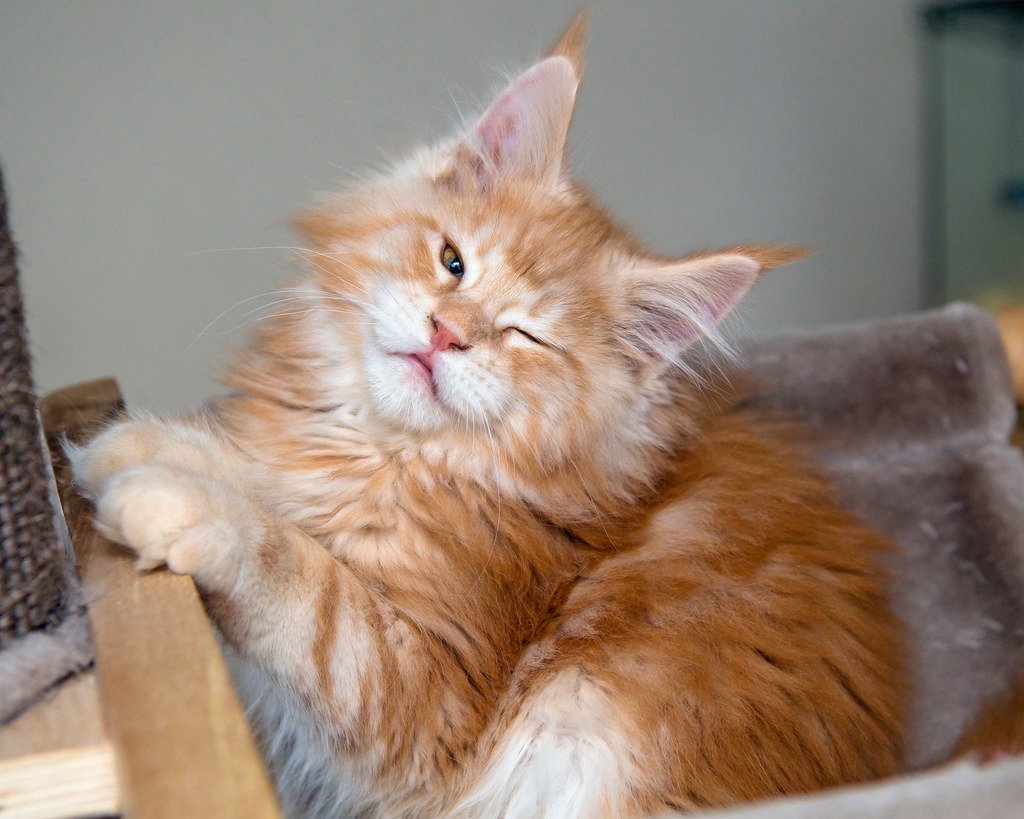
If you’ve never tried slow-blinking back at your cat, you are genuinely missing out on one of the sweetest interactions you can have with them. One of the most heartwarming ways cats communicate through their eyes is the slow blink, often referred to as a “cat kiss.” Studies have shown that this is a sign of affection and trust, as cats typically avoid eye contact with those they perceive as threats.
Here’s the wild part – science actually confirms this. Research examines the communicatory significance of the slow blink sequence, which typically involves a series of half-blinks followed by either a prolonged eye narrow or an eye closure. One experiment revealed that cat half-blinks and eye narrowing occurred more frequently in response to owners’ slow blink stimuli toward their cats. Your cat literally responds to your blink. That’s a real conversation happening, no words needed.
In the wild, cats rely on body language to communicate, and closing their eyes, even momentarily, makes them vulnerable. So when your cat looks at you and slowly blinks, it’s essentially saying, “I trust you enough to let my guard down.” That is deeply touching if you think about it. A predator, choosing vulnerability with you. That’s love.
When the Stare Means “Feed Me, Right Now”
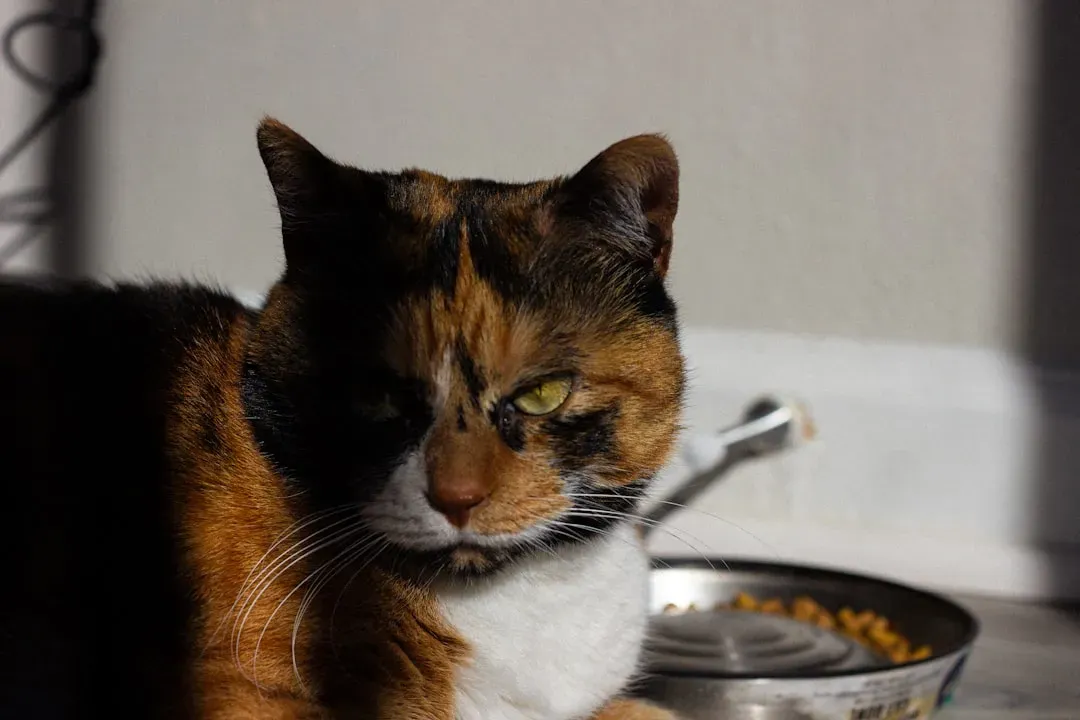
Let’s be real – sometimes the message is not poetic at all. Sometimes it’s just breakfast. Your kitty knows when it’s time to eat. As mealtime approaches, many kitties spring into action with a routine: they sit next to their food bowls, make direct eye contact with their humans, and unleash a relentless stream of meows and purrs. You know exactly what I’m talking about.
This behavior isn’t just cute or annoying – it’s calculated. Cats are intelligent and observant animals. Over time, they learn what actions lead to results, and staring at their humans without blinking has proven to be remarkably effective. Honestly, you have to respect the strategy. No words, no tantrums. Just that unwavering gaze until you crack.
Some cats stare at their pet parents specifically when it is feeding time. Once you make eye contact, the cat may vocalize and rub on you. Some cats may then walk toward their food bowl or the location where the food is kept. It’s a full performance, and you are always the intended audience.
Curiosity Is a Huge Driver – Never Underestimate It
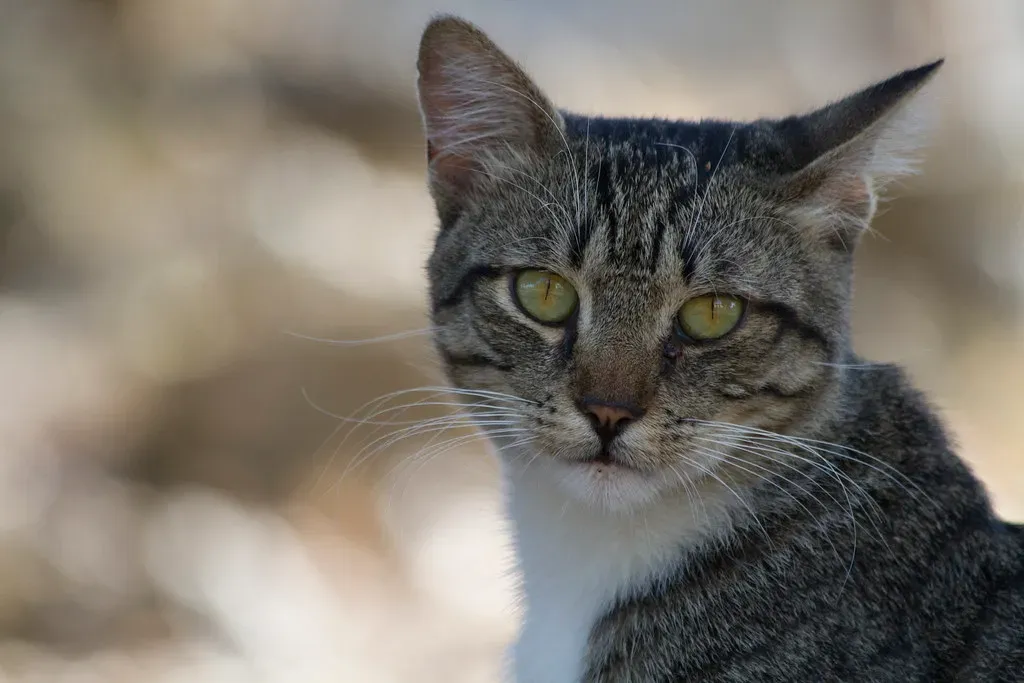
Your cat finds you genuinely fascinating. Think about how strange you must look from their perspective – this enormous, upright creature who makes unpredictable noises, moves furniture around, and disappears through a door for hours at a time. Cats are naturally observant animals. They may stare simply because they’re taking in what you’re doing. They may even be trying to anticipate if what you’re doing will impact them, such as walking near the treat drawer or getting ready to leave.
If you’re sitting quietly and your cat is watching you, it could simply be curiosity – they’re observing your behavior, much like we enjoy watching animals in nature. That’s a fascinating little flip, isn’t it? You watch nature documentaries. Your cat watches you. Same energy, different species.
Pupil Size Speaks Volumes – Here’s How to Read It
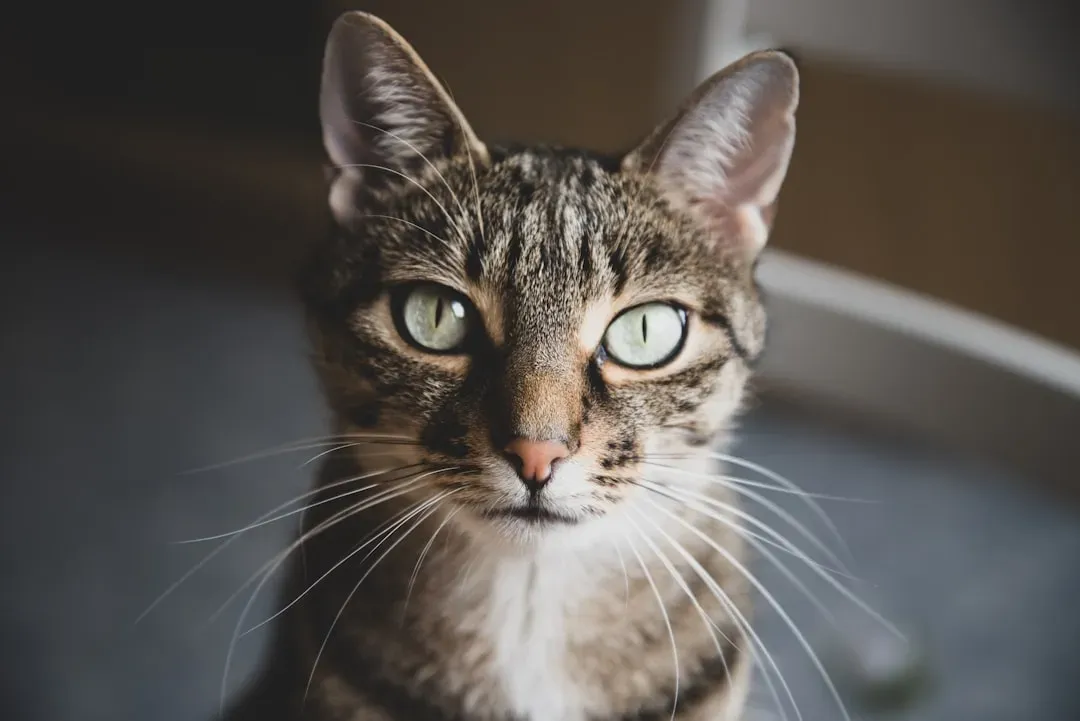
The stare itself is only half the message. The pupils are the fine print. Cats’ pupils are highly expressive and can tell you a lot about their emotional state. Dilated pupils may indicate excitement or anxiety. Narrow pupils often mean your cat is focused or possibly agitated. Changing pupil size can be a response to changing light, but it is also a good indicator of their mood.
If their eyes are wide open, they tend to be more alert, focused, and spirited. Their attention is on something, and their emotions might be running hot. They may be focused on the object of their desire, whatever that desire may be at the time. Wide-open eyes plus dilated pupils? Your cat is either thrilled or on high alert. Context is everything here.
Narrow pupils or partially closed eyes can indicate that a cat is confident, relaxed, sleepy, or calm. Cats that feel safe in an environment may have their eyes half-closed. Their muscles will be relaxed, and they may even lay around with their belly exposed. Half-closed eyes are basically the feline version of a contented sigh. Pure bliss.
The Territorial Stare: When Your Cat Is Asserting Dominance
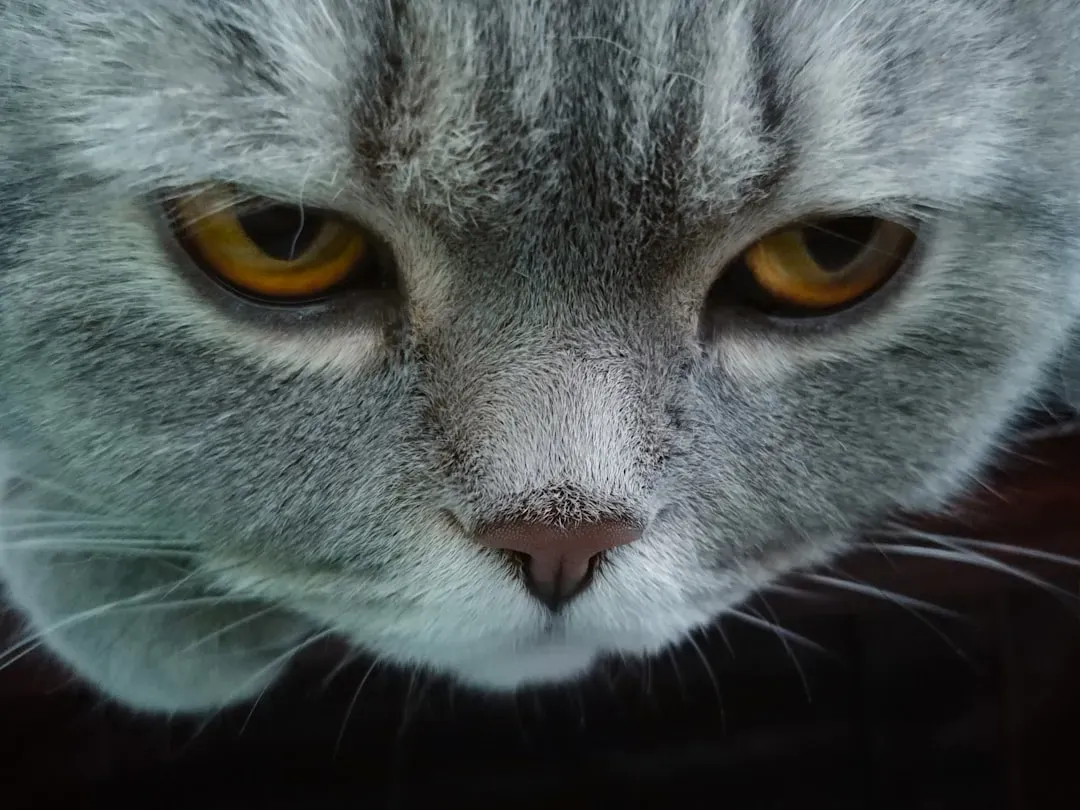
Here’s a side of the stare that many owners don’t think about. Sometimes that gaze isn’t affectionate or curious. Cats that feel threatened or territorial may stare you down. Maintaining eye contact could be a way for them to establish dominance. In these circumstances, you should also look for signs of aggression, such as hissing, vocalization, and dilated pupils.
When a cat gives a hard, unblinking stare paired with stiff body language, he is telling the other party that if they do not back off, there will be a confrontation. The hard, unblinking gaze is a threat. The other party needs to retreat and give the cat distance; otherwise the cat may attack. It’s a warning sign you genuinely should not ignore. This is your cat being crystal clear.
The Fear Stare: Understanding Anxiety Through Eye Contact
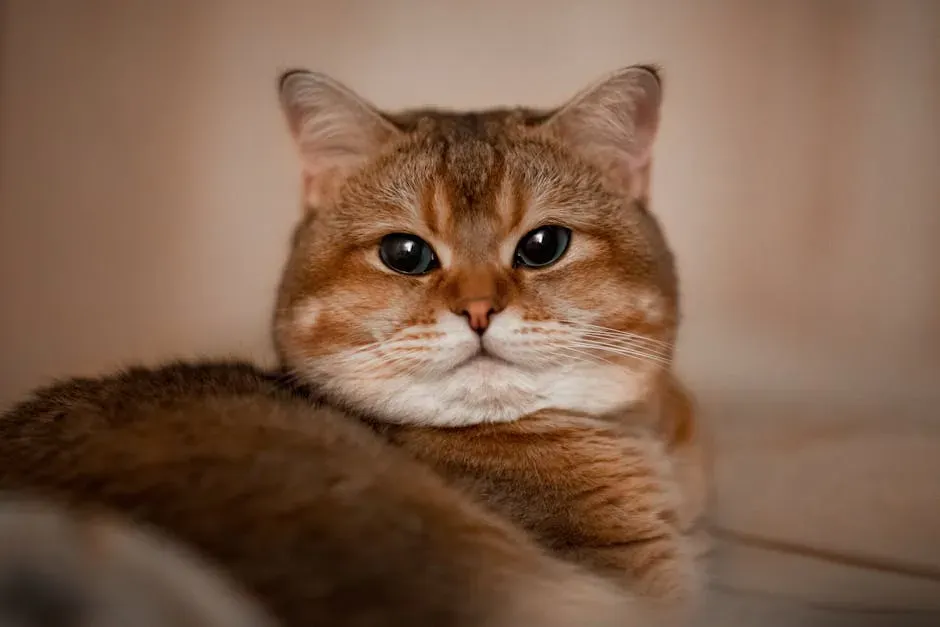
Not every intense gaze is about dominance or dinner. Sometimes your cat is simply scared. Sometimes a cat stares at a person, another animal, or an object out of fear. The cat is staring to keep their eyes on the stimulus they’re worried about. Maybe you made a loud noise or a quick movement that startled them. Fear freezes cats into a fixed, watching state.
If your cat pairs staring with tense posture, flattened ears, or hiding, the behavior may reflect unease. Cats sometimes observe closely when they feel unsure about a situation or a change in their environment. In these cases, the stare is not meant to communicate affection. Instead, it allows the cat to evaluate potential threats or unfamiliar routines. A new person in the house, a rearranged living room, even a new smell – all of these can trigger the anxiety stare.
The Hunting Stare: When You’re Not the Target, But Something Near You Is
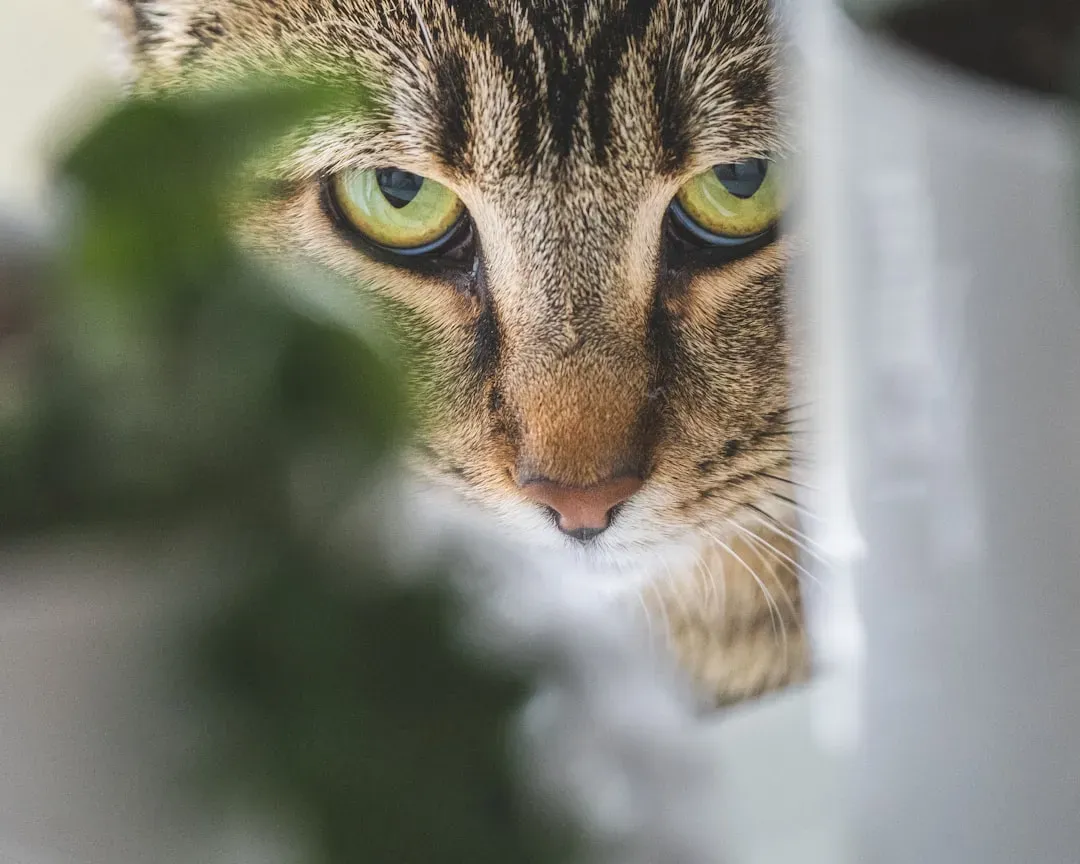
I know it sounds crazy, but your cat might not actually be staring at you at all. Staring is part of your cat’s natural hunting behavior. They may fixate on a bug, toy, or even something invisible to you, tracking even the tiniest movement. It’s their way of prepping for a pounce. That “invisible ghost” your cat seems obsessed with? Probably a dust particle or a shadow you haven’t noticed.
It’s possible that your cat is actually staring at something specific in the room. Cats see and hear much better than we do, so they may just be noticing something that our eyes and ears simply cannot detect. This is normal cat behavior and not a cause for concern. Think of your cat as having a sensory upgrade you didn’t receive. Their world is literally richer in detail than yours, and their eyes are constantly processing it all.
The Zoning-Out Stare: Sometimes It Really Is Nothing
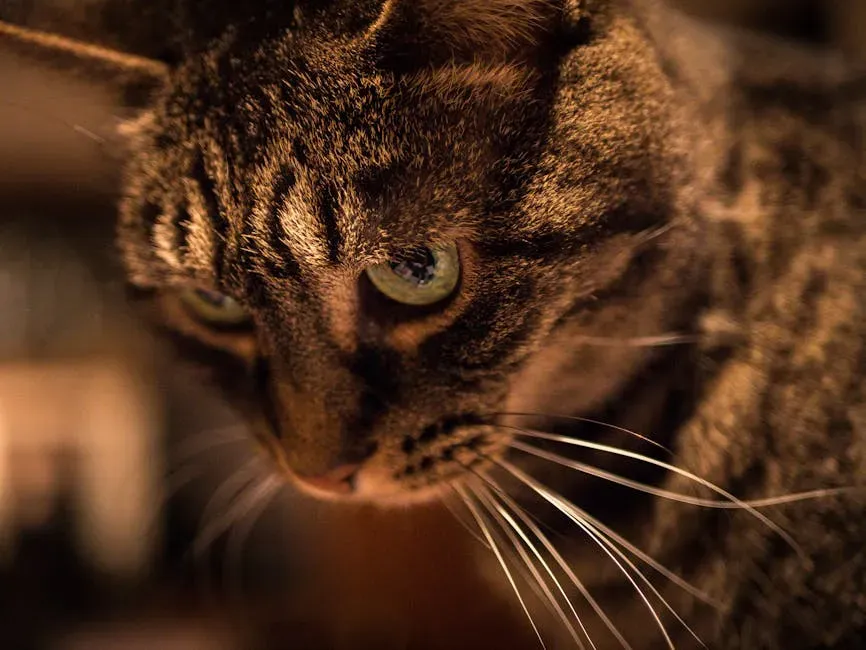
Occasionally, the stare means absolutely zero. Your cat isn’t hungry, isn’t afraid, isn’t hunting. They’re just… sitting there. Sometimes a cat’s stare is just them spacing out. Whether lounging on their window perch or the couch, a vacant look often means they feel safe and relaxed. It’s the feline equivalent of staring blankly out of a car window.
Sometimes, there’s no deep, scientific reason behind your cat’s unblinking stare. The truth is that cats are wonderfully eccentric creatures, and their behavior often walks the line between mystifying and hilarious. That intense eye contact might not be a plea for food, a display of dominance, or a sign of distress – it might just be one of those quirky things cats do. Not everything needs a grand explanation. Sometimes a cat is just being a cat.
How You Should Respond to a Staring Cat
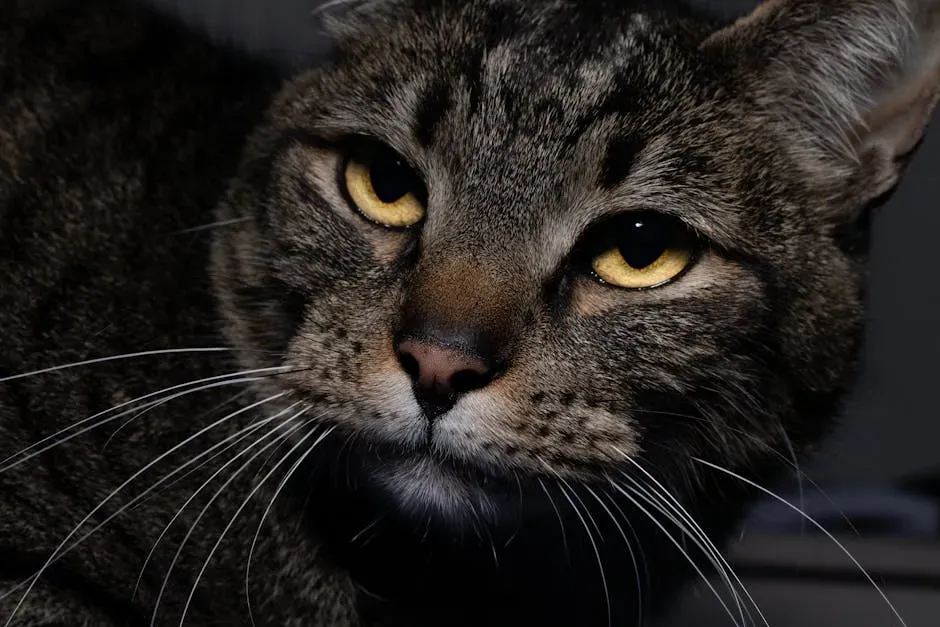
Your reaction matters more than you might think. How you respond to a staring cat depends on their body language. Once eye contact is made, determine what the rest of their body is telling you. You’re reading a full paragraph, not just one word. The stare is the headline. Their posture, ears, and tail are the rest of the story.
Cat behaviorists agree it’s best not to hold prolonged eye contact with a cat, as they may interpret it as a threat or challenge. A slow blink, on the other hand, is often interpreted as friendly and affectionate. So spare yourself the staring contest. Blink softly and slowly instead. It sends exactly the right message.
You can return a slow blink, speak softly, or offer brief interaction if your cat seems interested. These responses support bonding without overstimulation. Avoid forcing contact if your cat remains still and observant. Cats prefer to choose their level of engagement. Letting them approach on their own terms builds trust and confidence. It’s a relationship built on patience, and the rewards are absolutely worth it.
When a Stare Signals a Health Concern
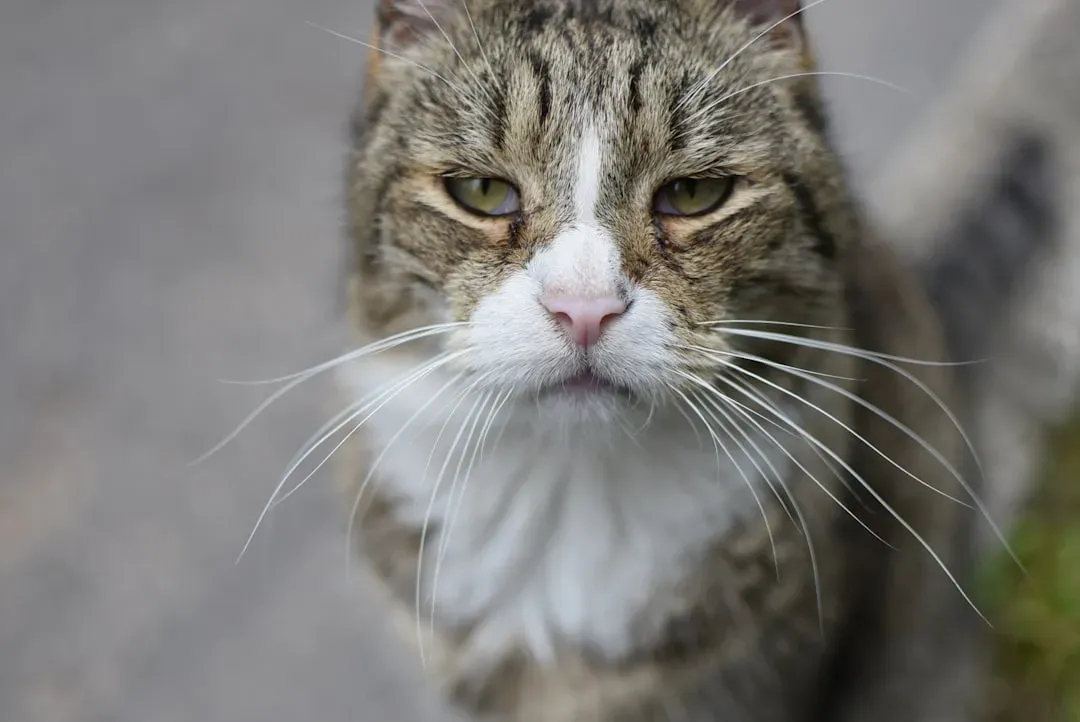
Most stares are harmless. But it’s worth knowing when to pay closer attention. An important consideration is to differentiate between your cat occasionally staring at you and your cat having a wide-eyed fixed look more than they used to, with dilated pupils even in adequate light conditions. This may indicate several health issues, particularly in middle-aged or older cats, such as ocular issues and high blood pressure, and warrants prompt veterinary attention.
While rare, cat staring can indicate a problem, especially if it’s paired with aggression, excessive vocalizing, or signs of pain. If something about the stare just feels off – trust that instinct. Watch for other unusual behaviors, such as hiding, limping, aggressive behavior, or avoiding touch, which could mean it’s time to call the vet. Your cat can’t use words, but their body is constantly sending signals. Your job is to listen.
Conclusion: Your Cat’s Eyes Are an Open Book – If You’re Willing to Read
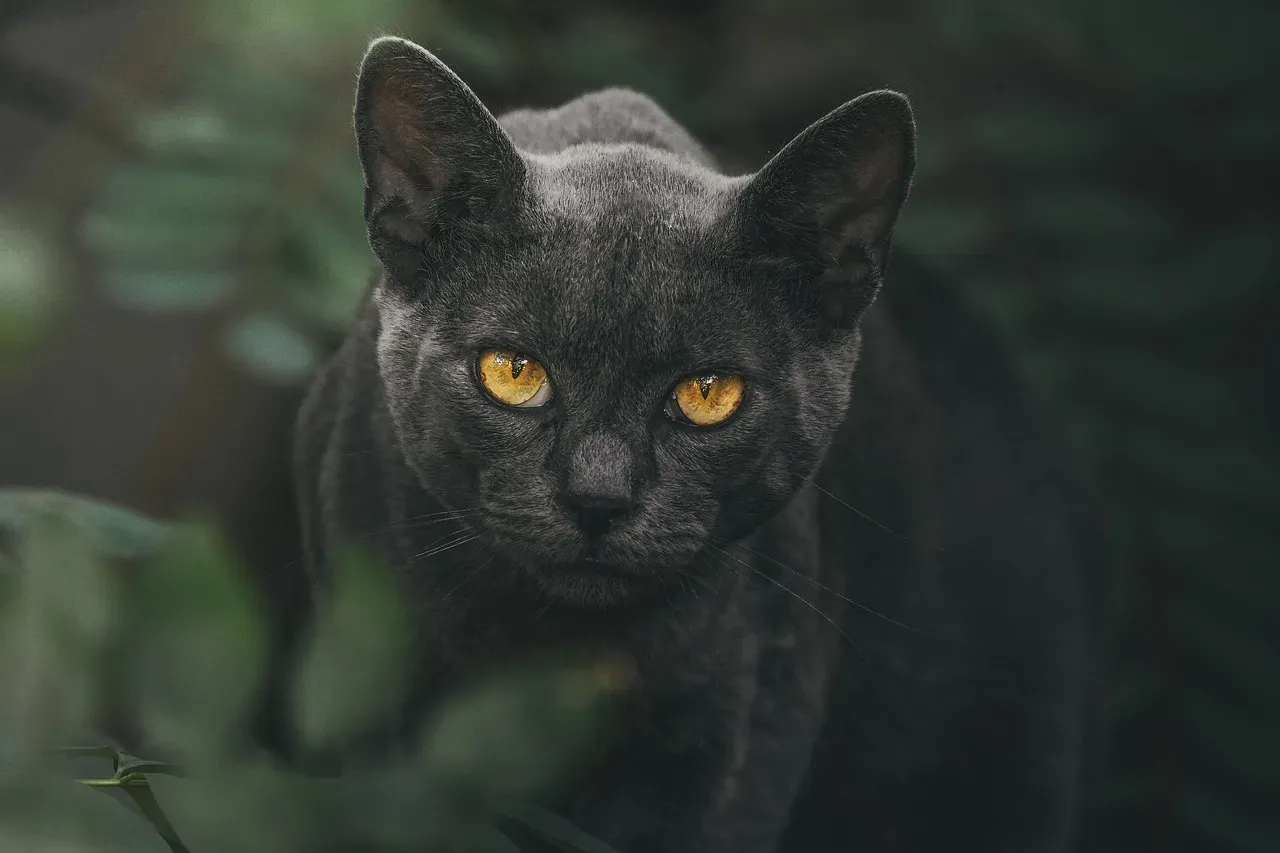
Here’s the thing about cats: they’re not distant. They’re not aloof. They’re not the emotionally unavailable creatures pop culture made them out to be. They’re communicators. Deeply intentional ones. Understanding why your cat stares at you deepens the connection between you. Whether they’re curious, seeking attention, or communicating their feelings, paying attention to these cues can make your relationship even stronger.
Every stare carries a message. Every blink is a sentence. Once you start paying attention, you’ll realize the conversation has been going on all along – you just didn’t know the language. Now you do. The next time those eyes lock onto yours from across the room, don’t look away in confusion. Look back, blink slowly, and say something back.
After all, your cat has been trying to talk to you this whole time. Isn’t it about time you started truly listening? Share your thoughts in the comments – has your cat’s stare ever surprised you with what it was actually saying?