The 13 Signs Your Graying Cat Is Happier Now Than It Has Ever Been
Most people look at their graying cat and feel a quiet ache - like watching the best years slip away one nap at a time. But flip that assumption on its head, because vets and cat behaviorists say something very different is actually happening under all that silver fur.
The slower mornings, the extra hour in a sunbeam, the sudden urge to sit on your lap like it's reserved seating - none of that is decline. It's often the opposite. Here are the 13 signs that your graying cat isn't fading out. She might be living her happiest chapter yet.
#1 - They Give You the Slow Blink
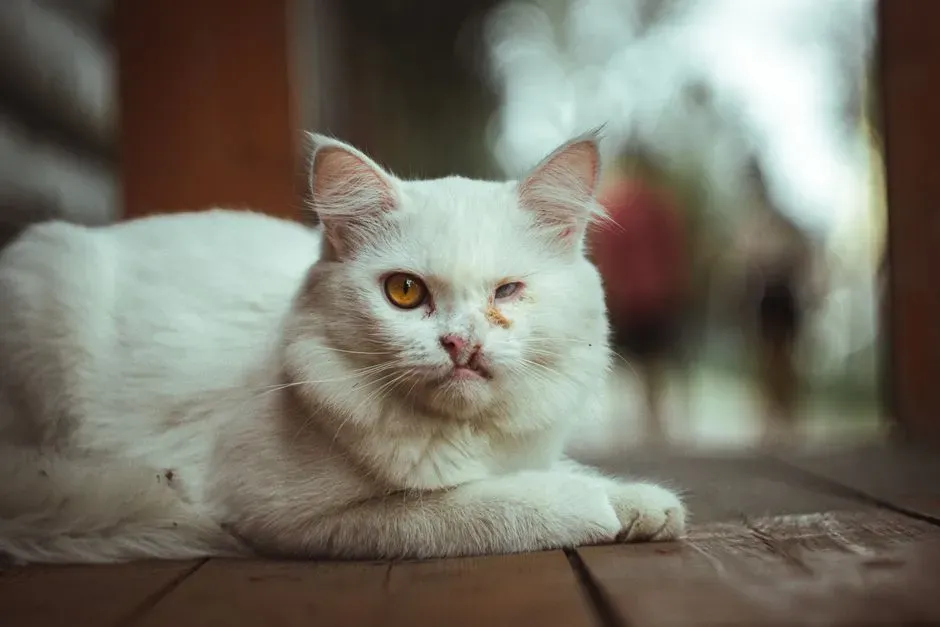
Your graying cat is handing you something most owners completely miss - a real, deliberate declaration of love. The slow blink isn't a sleepy reflex you can chalk up to old age. It's a conscious choice, and a cat who has lived long enough to know the difference between danger and safety is choosing to close her eyes in front of you anyway.
Vets call it the "cat kiss" for a reason. Shutting your eyes in front of another creature is one of the most vulnerable things an animal can do, so when your older, wiser cat still offers it - or offers it more than ever - the message is unmistakable. Try blinking back slowly next time. You might be surprised by what you get in return.
#2 - They've Claimed Your Lap Like It's a Throne
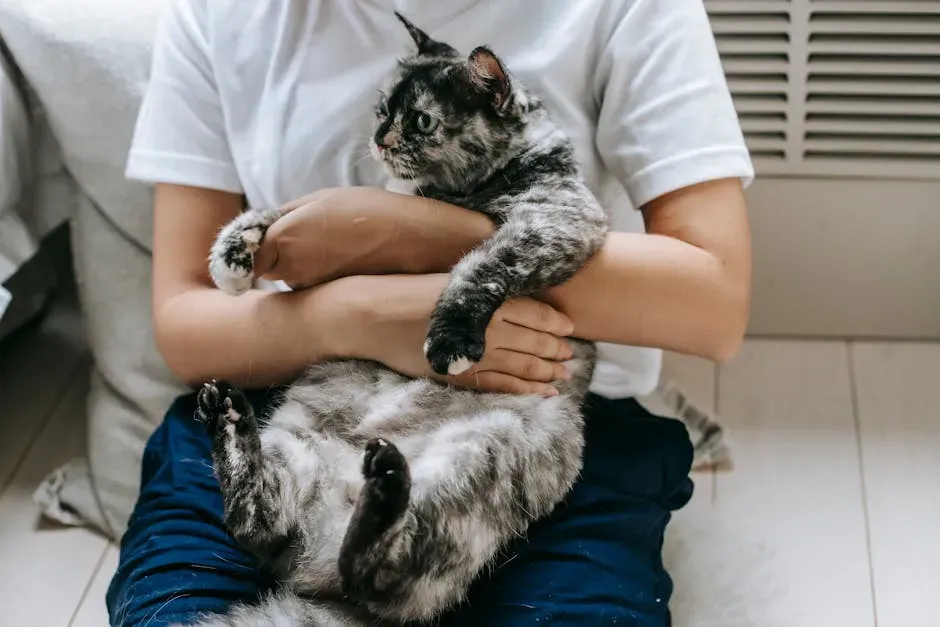
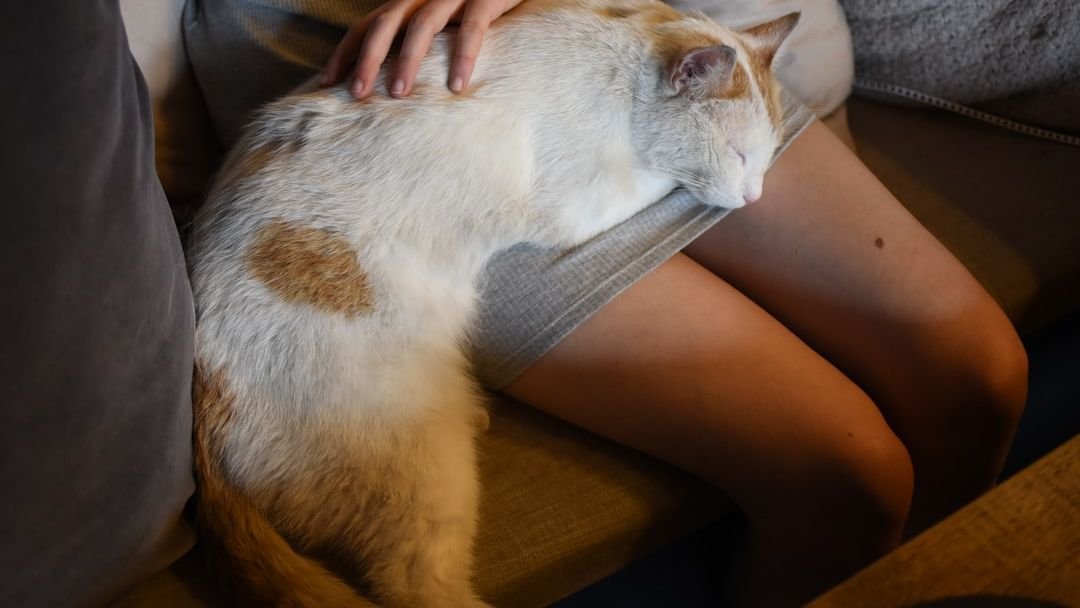
A senior cat who treats your lap as personal property isn't being needy. She's being deliberate. Cats are famously selective about where they spend their time, which makes choosing you, every single evening, a quiet but powerful sign of attachment.
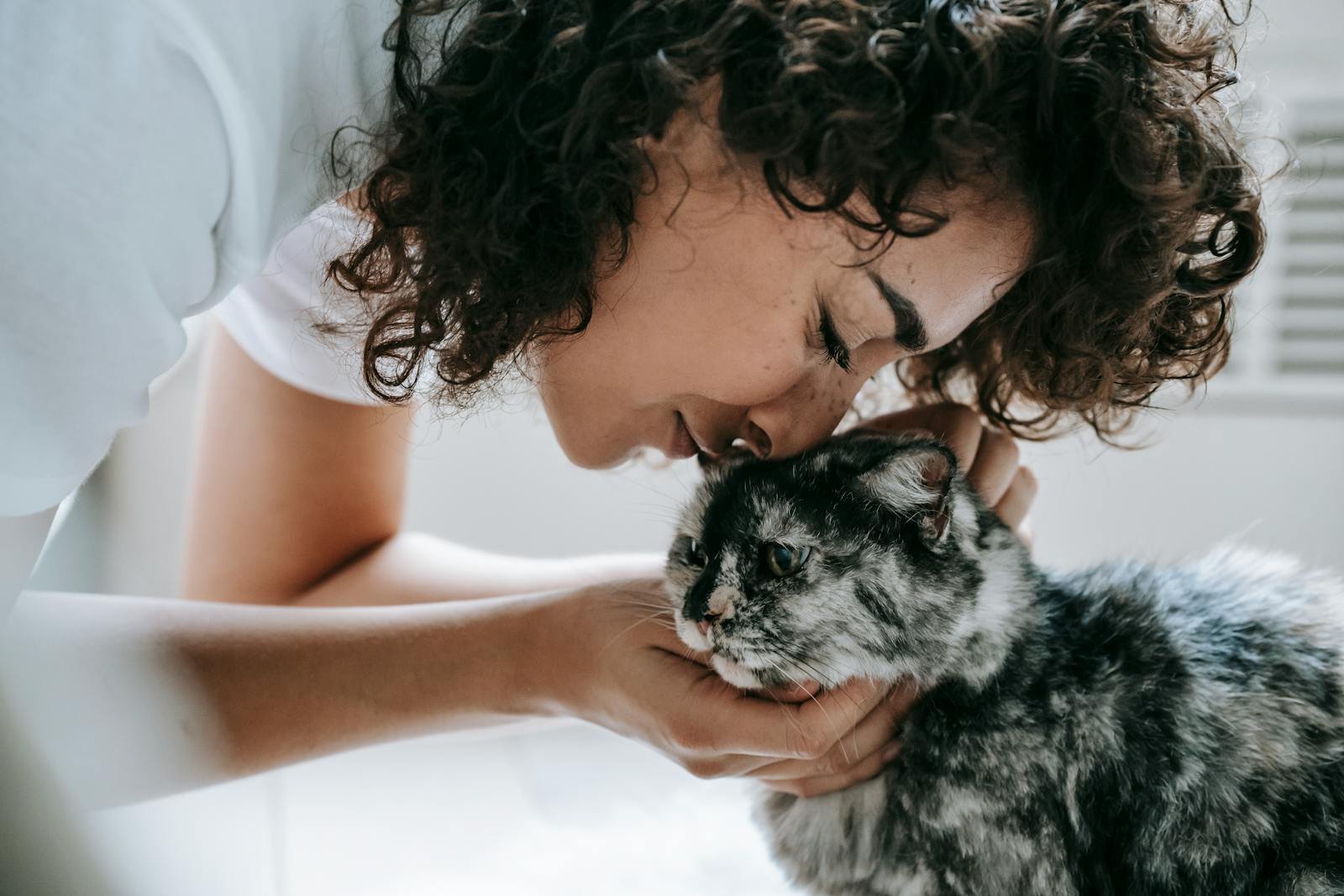
Older cats often become noticeably clingier than they were in their younger years, following you room to room and demanding cuddles they once ignored. Owners mistake this for anxiety, but more often it's simply a cat finally showing what she's felt for years and never bothered to display. She's decided you're worth the vulnerability - gray whiskers and all.
#3 - Their Purring Has Gotten Deeper and More Frequent
You've noticed the motor running more often lately, and that's one of the most reassuring sounds a cat can make. Purring starts as a kitten's way of communicating with its mother, and cats carry that same signal into adulthood - and into old age - whenever they feel completely safe.
A relaxed, curled-up senior cat who starts rumbling isn't just making noise. She's narrating exactly how good her life feels in the only language she has. Context matters here - a loose, comfortable posture paired with that familiar hum means your graying companion is genuinely, thoroughly at peace.
Fast Facts
- Cat purrs typically vibrate between 25 and 150 Hz, a frequency range some researchers associate with bone and tissue healing.
- Kittens begin purring within days of birth, using the sound to signal their location to their mother.
- Cats sometimes purr when anxious or in pain too, so a loose, relaxed body is the real giveaway - not the sound alone.
#4 - They're "Making Biscuits" on Your Blanket
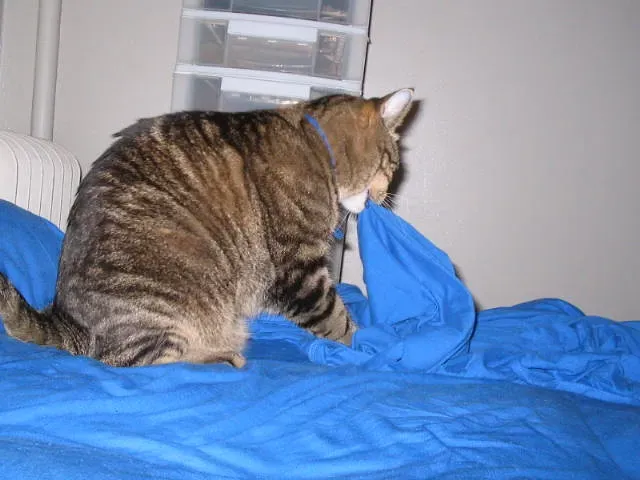
If your older cat has recently taken up enthusiastic paw-kneading on your lap, your blanket, or your stomach at 6 a.m., congratulations - you've officially been chosen. Kneading traces back to kittenhood, when cats worked their paws against their mother to stimulate milk flow. Doing it as a senior means she feels every bit as safe with you now as she did with her mother decades ago.
Stress, illness, and general unhappiness all tend to shut this behavior down fast. So when you see those gray-flecked paws working away on your favorite hoodie, you're not watching a quirky old habit. You're watching pure, unguarded joy play out in real time.
#5 - They've Developed a Signature Sunbeam Spot
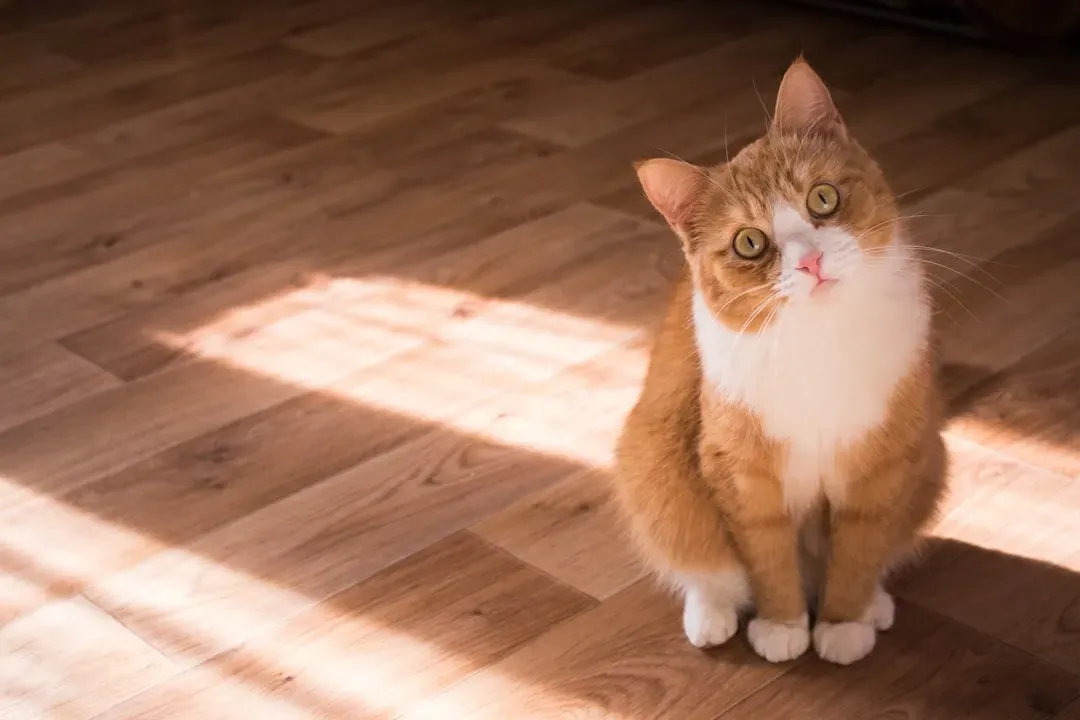
Every genuinely happy senior cat has one: a specific patch of floor, a certain windowsill, a cushion that catches the afternoon light just right. That's not laziness. That's luxury, earned.
Older cats naturally sleep more, sometimes up to 20 hours a day, and that's a normal part of aging rather than a red flag. The real tell isn't how much she sleeps - it's how she gets there. A cat who eases into her spot with a slow stretch, a few kneads, and a long contented sigh is announcing, in her own way, that life is very good right now.
#6 - They Still Show Bursts of Curiosity
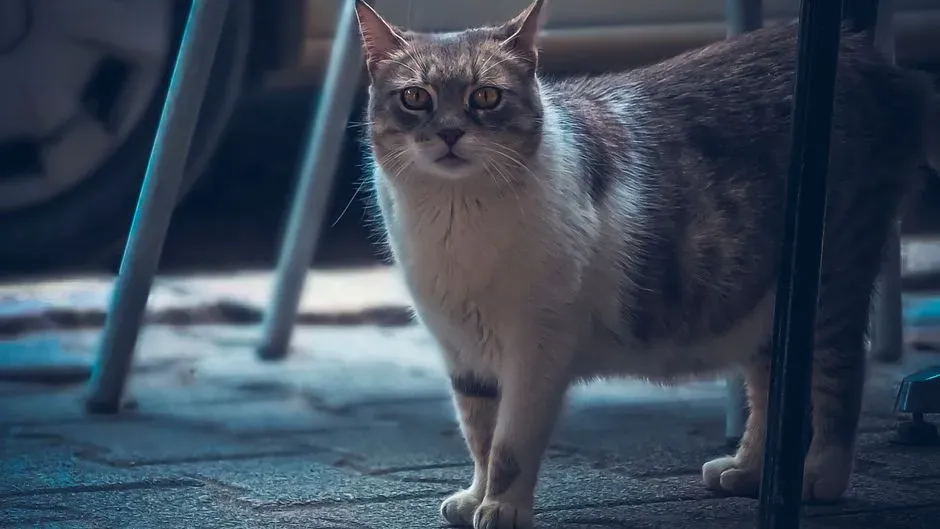
Here's a sign that catches most owners off guard - a senior cat who still perks up at a strange sound, trots after you into the kitchen, or locks eyes on a bird outside the window isn't acting young. She's acting happy. Curiosity is one of the clearest indicators that an older cat is feeling genuinely well, both physically and mentally.
A mentally engaged cat is a content cat, regardless of how many gray hairs frame that inquisitive little face. Age slows the body plenty, but it doesn't have to dim the mind - and the day your graying cat still turns her head when a sparrow lands on the sill is a day worth quietly celebrating.
#7 - Their Meow Has Become a Whole Conversation
If your senior cat has gotten noticeably more vocal - chattering at you in the morning, offering commentary while you cook dinner, greeting you at the door with a soft trill - don't read that as distress. That's dialogue. Cats with a soft, melodic meow are typically comfortable and secure, using their voice more freely because they've learned humans respond to it.
Some cats even pick up chirruping, a short warbling sound learned from their mothers as kittens, and carry it into adulthood as a greeting. A graying cat who chirps or trills when you walk in isn't just making noise - she's expressing genuine enthusiasm about your presence. Sudden, distressed yowling is a different story and worth a vet visit, but a warm, chatty meow is simply gold.
Quick Compare
- Happy senior cat: loose posture, soft chirps, steady eating, deep sleep.
- Stressed or unwell senior cat: hunched back, sudden yowling, skipped meals, restless dozing.
- Happy senior cat: approaches you first, tail up with a gentle curve.
- Stressed or unwell senior cat: hides away, tail tucked low or thumping against the floor.
#8 - They're Grooming Regularly and With Care
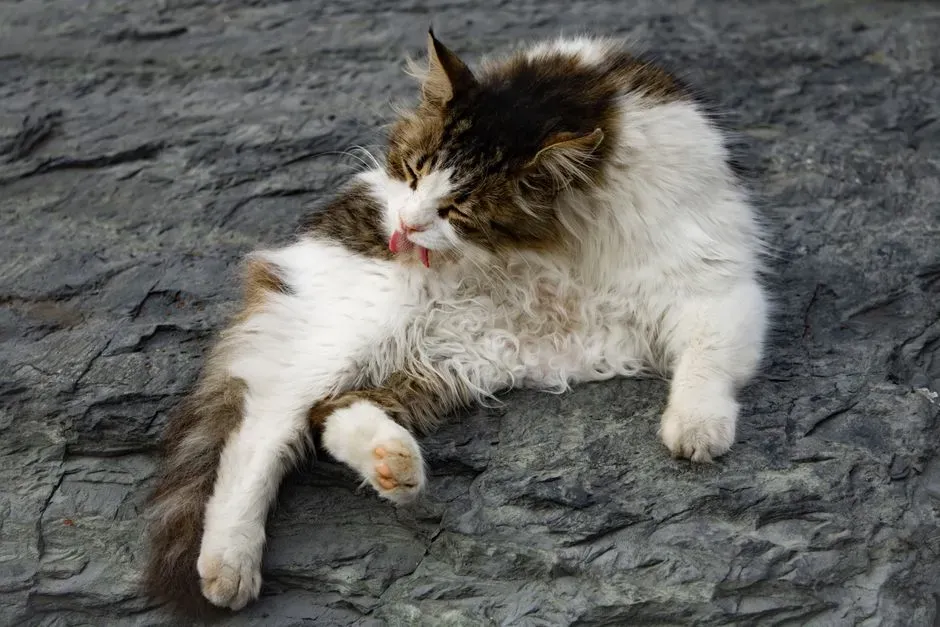
Most people assume a senior cat that still grooms herself is just doing basic upkeep. In reality, steady, unhurried self-grooming in an older cat is one of the clearest signs of contentment you'll ever observe. Grooming takes flexibility, effort, and a settled state of mind, and cats in pain or distress often stop doing it altogether.
So when your silver-muzzled senior sits down for a slow, methodical, head-to-tail grooming session after breakfast, she's telling you her world feels orderly and safe. It's an ancient ritual, one that traces back to wild ancestors cleaning off the scent of prey, and watching your cat still perform it, unbothered and thorough, is watching contentment in its most primal form.
#9 - They're Sleeping Deeply, Not Just Lying Still
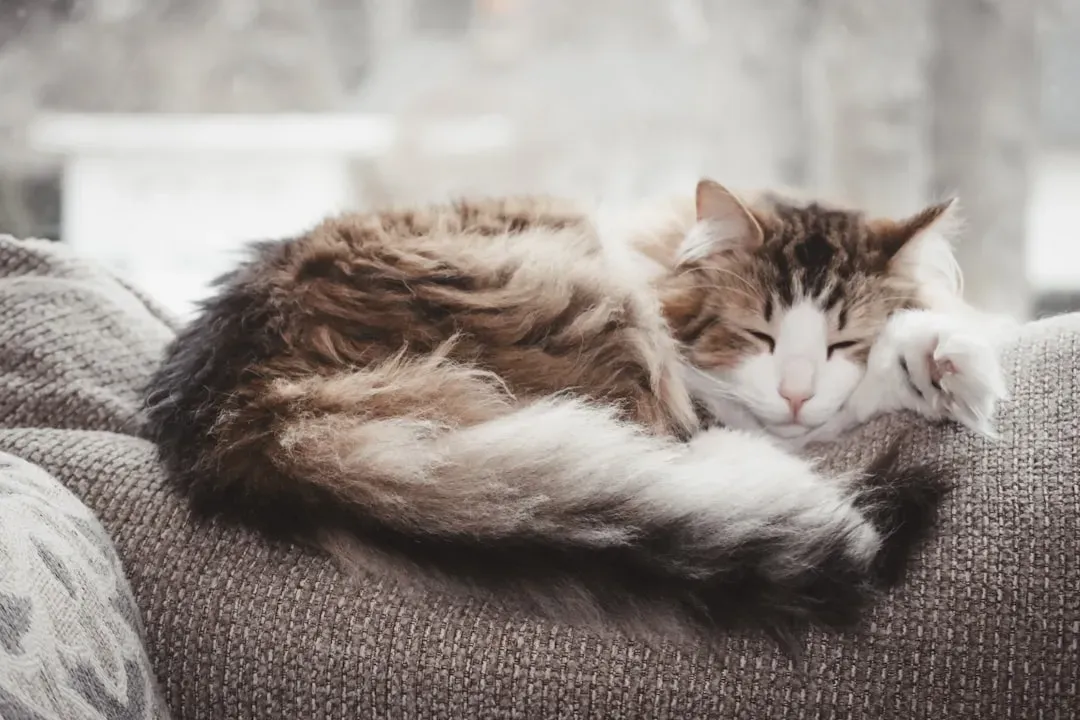
There's a real difference between a cat who sleeps deeply and one who simply lies still because moving hurts. A genuinely happy senior cat sleeps like the world has been switched off - belly exposed, paws fully limp, maybe even the tiny twitches of a dream. That posture is the physical signature of total psychological security.
Senior cats often sleep 16 to 18 hours a day, and that number alone tells you nothing about happiness. What matters is the quality. If your gray-eared cat is regularly stretched out, belly-up, in the middle of a sunny floor, she isn't sick or slowing down in a worrying way. She's blissfully, thoroughly relaxed.
#10 - They've Accepted a Settled, Predictable Routine
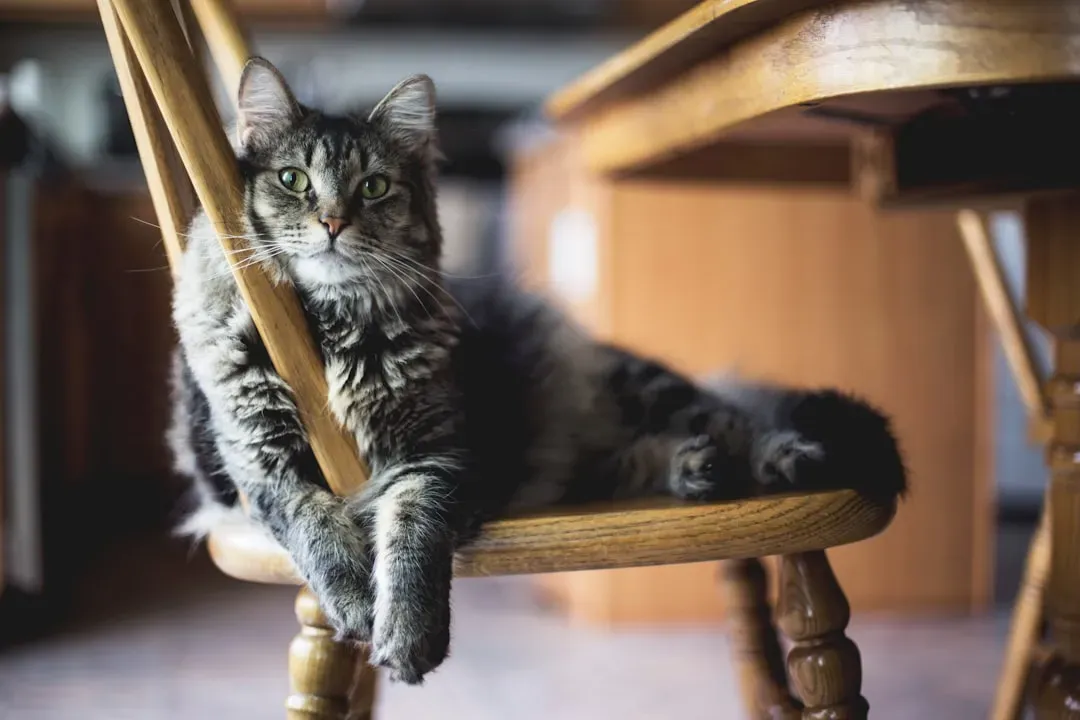
Your senior cat knows exactly when you wake up, when you eat, when you finally settle onto the couch, and she's built her entire day around it. That's not boring. That's earned, deep contentment. Older cats hold onto predictable routines even more tightly than younger ones do.
Just as we become set in our ways as we get older, cats do too.
Cornell University College of Veterinary Medicine
Routine isn't a trap for a senior cat - it's the architecture of her happiness. A cat who knows what to expect and when to expect it carries almost no ambient anxiety, and that's genuinely rare. The senior cat who plants herself on the armrest at exactly 8 p.m. every night isn't dull. She's deeply, quietly loyal, and cats that are stressed or unwell tend to abandon routines like this one entirely.
#11 - Their Body Language Is Loose and Open
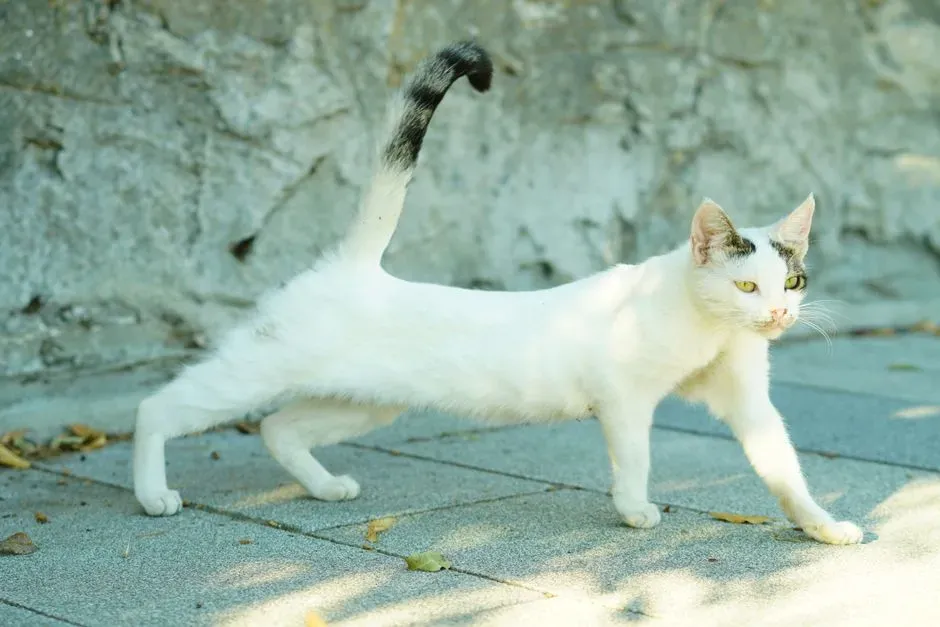
You can read a senior cat's happiness in the way she carries herself, and a relaxed, open posture is something worth actively noticing. A happy cat typically has a raised tail, upright ears, and an easy, unhurried way of moving through a room - almost a kind of leisurely authority.
Watch for the tail specifically. When it's held upright with the tip gently curved, almost like a question mark, that's one of the most underrated signs of feline happiness there is. When your graying cat approaches you with that question-mark tail, she's not just walking over. She's greeting you, and after everything you've built together, that greeting means something.
At a Glance
- Upright tail with a soft curve at the tip: relaxed and happy.
- Puffed-up tail: startled or alarmed.
- Tail tucked low or wrapped tight around the body: anxious or in pain.
- Slow, gentle swishing while lounging: content, not agitated.
#12 - They Seek You Out Without Being Prompted
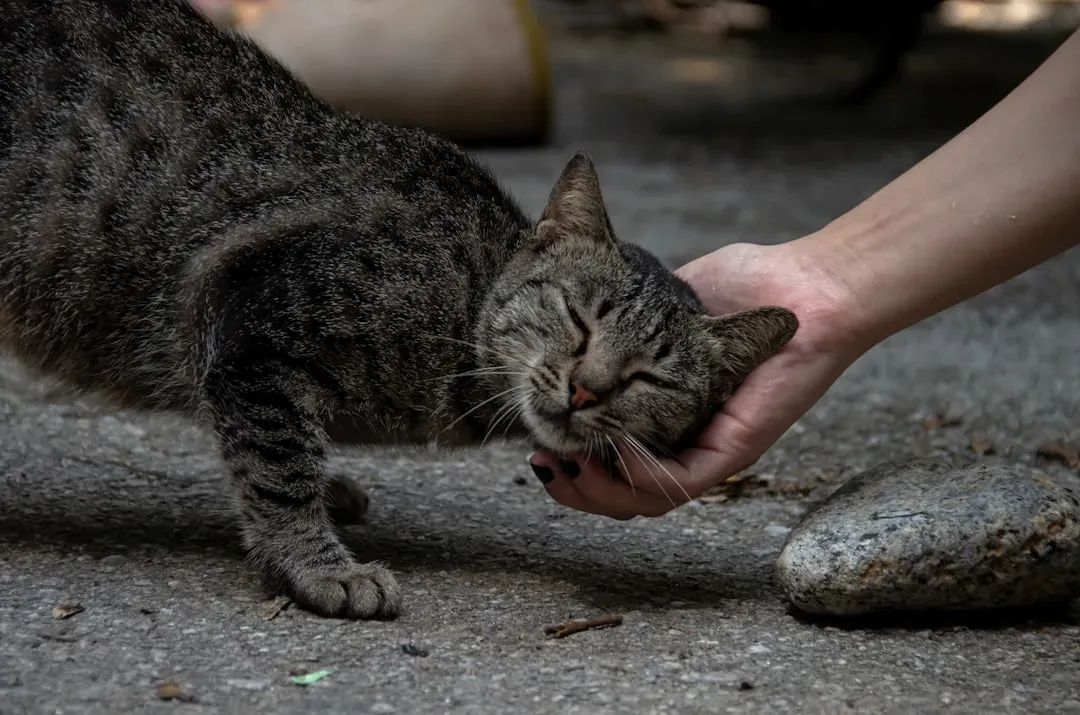
Here's the one that matters most to most owners, even if they never quite put it into words: your senior cat chooses you. Repeatedly. Without being called, without food on the line, just because. Cats aren't obligate companions - they don't have to follow you from room to room, and every time an older cat with aching joints and a slower gait gets up anyway to come find you, that's a deliberate, effortful act of affection.
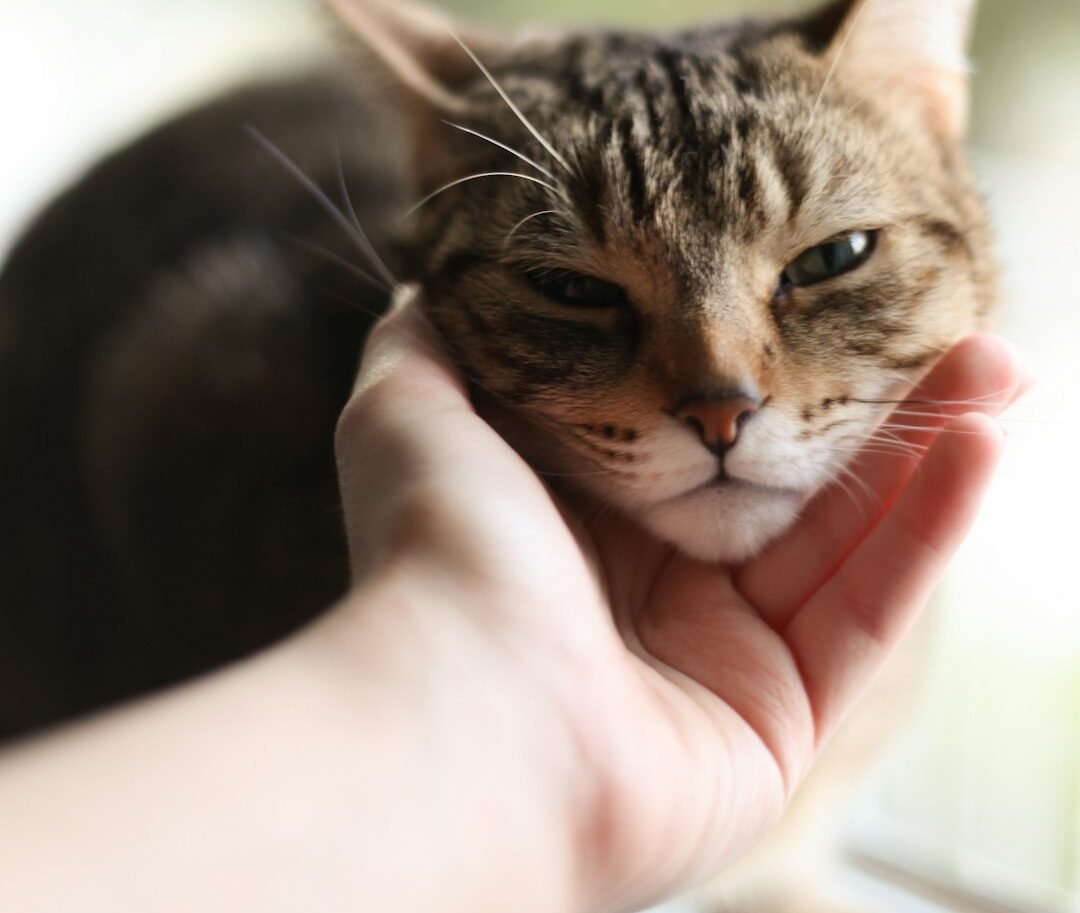
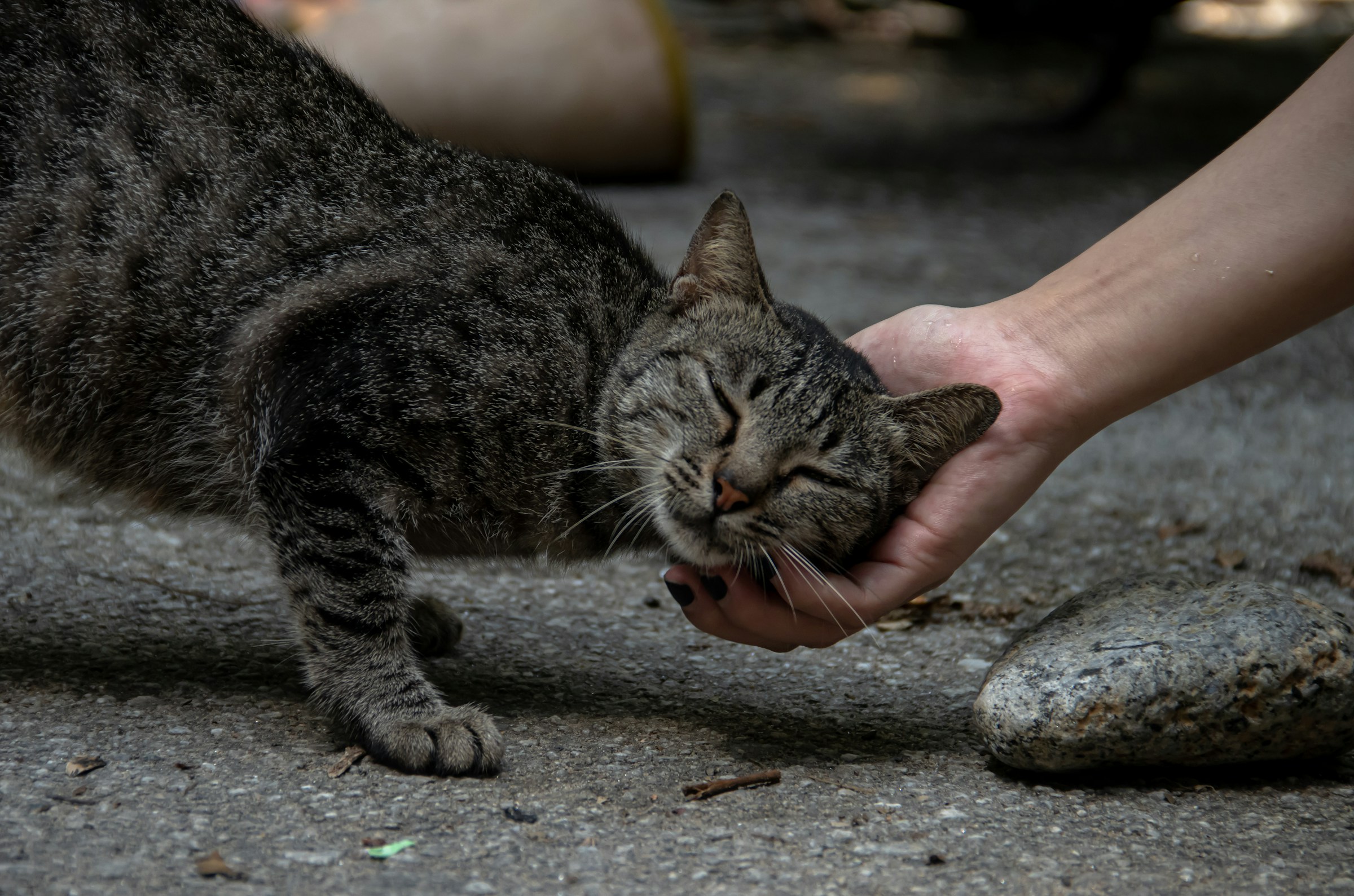
Watch for the small stuff - the headbutt against your hand, the rub along your leg when you walk in, the attempt to groom your hair while you're on the couch. A graying cat who still does all of that isn't fading away. She's more bonded to you than she's ever been. The gray just makes her look distinguished while she does it.
#13 - They're Eating With Calm, Consistent Interest
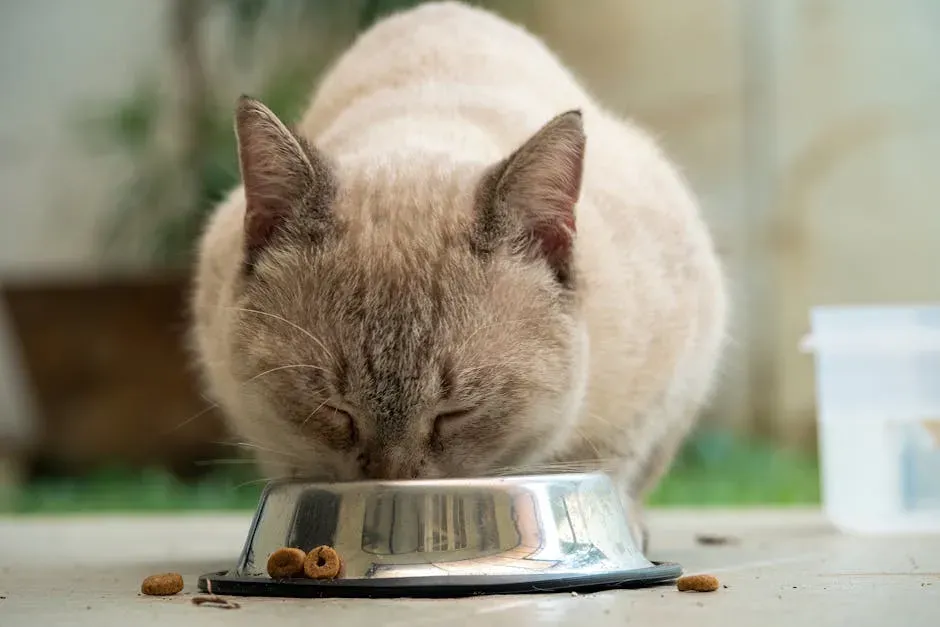
This is the sign that ties everything else together, and it's the one most likely to get overlooked because it seems so ordinary. If your cat is eating and drinking roughly the same amounts she always has, and doing it without fuss, that's one of the strongest wellness signals there is.
A happy cat will have a normal appetite and thirst.
Dr. MacMillan
A content senior cat approaches her bowl with calm purpose, eats steadily, and wanders off satisfied, often straight into a grooming session. Sudden pickiness, frantic eating, or skipped meals can point to stress or dental pain, but the cat who eats without drama has no significant unmet need. It sounds almost too simple, but it's often the very first thing a vet checks, and for good reason.
Worth Knowing
- Senior cats generally need roughly 3.5 to 4.5 ounces of water per 5 pounds of body weight each day.
- Wet food adds extra hydration, which matters more as cats age and kidney function naturally declines.
- A cat who eats steadily but is still losing weight deserves a vet check, even without other symptoms.
The Bottom Line
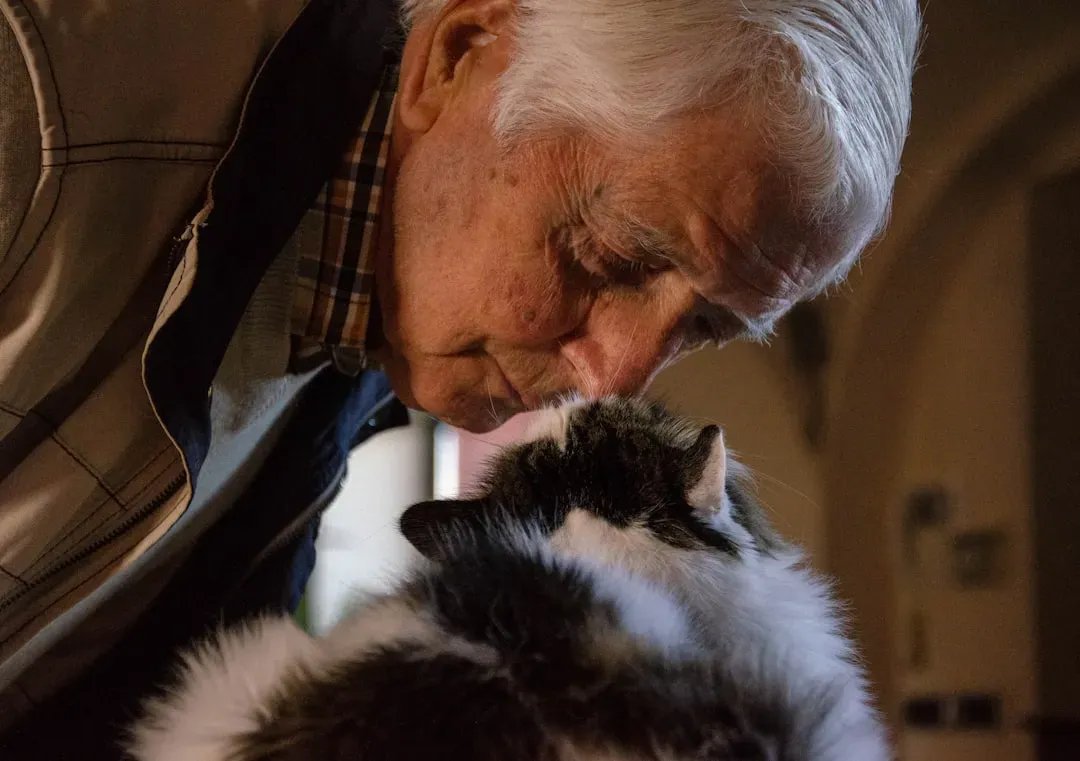
Here's the uncomfortable truth most people won't say out loud: we project our own fear of aging onto our cats, and in doing so, we miss what's actually sitting right in front of us. Senior cats can stay comfortable, confident, and deeply happy for years, and the signs are all there once you know how to read them.
The slow blinks, the deep purring, the lap-claiming, the question-mark tail - none of that is a consolation prize for growing old. It's the fullest expression of an animal who has finally figured out exactly what she wants, exactly who she trusts, and exactly where she belongs.
The gray hairs aren't a warning sign. They're proof of a life well-lived, built one slow blink and one sunbeam at a time, with you. So the next time your senior cat curls into your lap and starts purring like a tiny, contented engine, slow-blink right back at her. She's earned that moment. Honestly, so have you.