Think about the majestic lion you’ve seen prowling across the African savanna in documentaries. Now imagine those prehistoric giants with saber teeth as long as your forearm. You might assume these fierce felines are closely related. Here’s the thing: the connection between modern lions and saber-toothed cats is far more intricate than most people realize.
The evolutionary paths of these two legendary predators split around 20 million years ago, yet they share a fascinating ancestral bond that scientists are only now beginning to fully understand. What links these spectacular hunters goes beyond their membership in the cat family. It’s a story written in ancient DNA, fossilized bones, and the relentless march of evolution across continents and epochs.
A Shared Ancestor From the Miocene
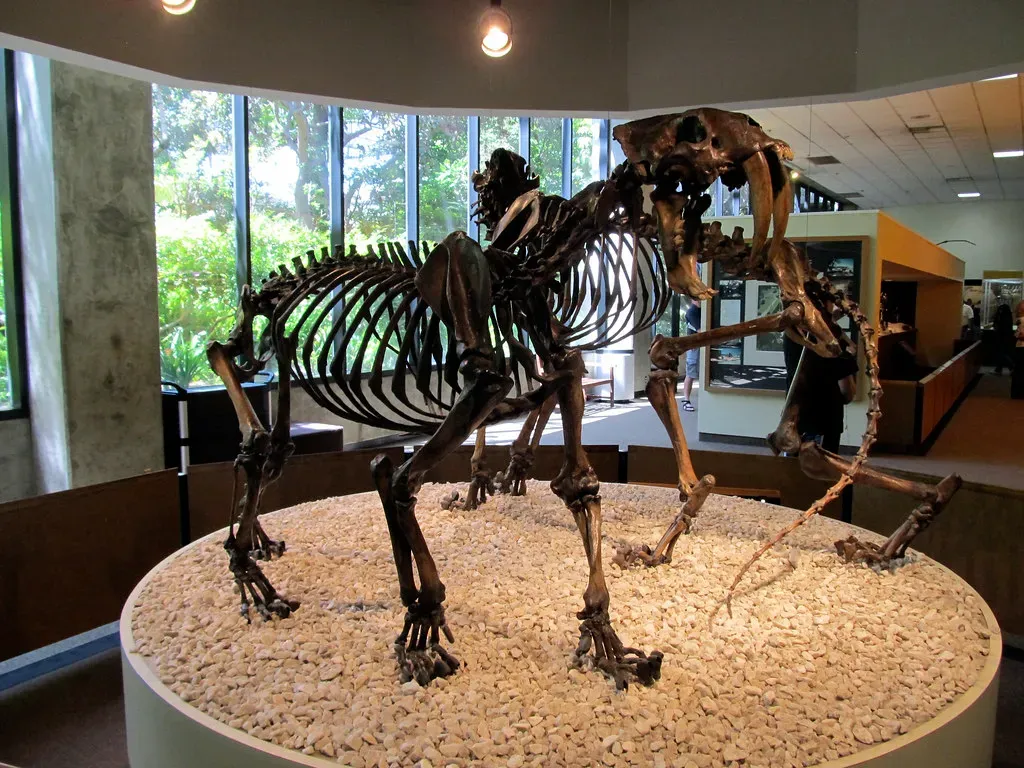
The first cats emerged during the Oligocene about 25 million years ago, with the appearance of Proailurus and Pseudaelurus, the latter being ancestral to both modern cats and saber-toothed cats. Picture Southeast Asia during the Miocene epoch, roughly 20 million years back. A pantherlike predator living in this region would become the common ancestor of all living cats.
This ancient feline was neither as massive as a lion nor equipped with the iconic elongated canines of saber-toothed species. Machairodontinae, the subfamily containing saber-toothed cats, represents the earliest diverging major branch of the cat family Felidae. Think of it as the original blueprint from which nature would craft two dramatically different yet fundamentally related lineages of apex predators.
The Great Divergence: Two Paths From One Root
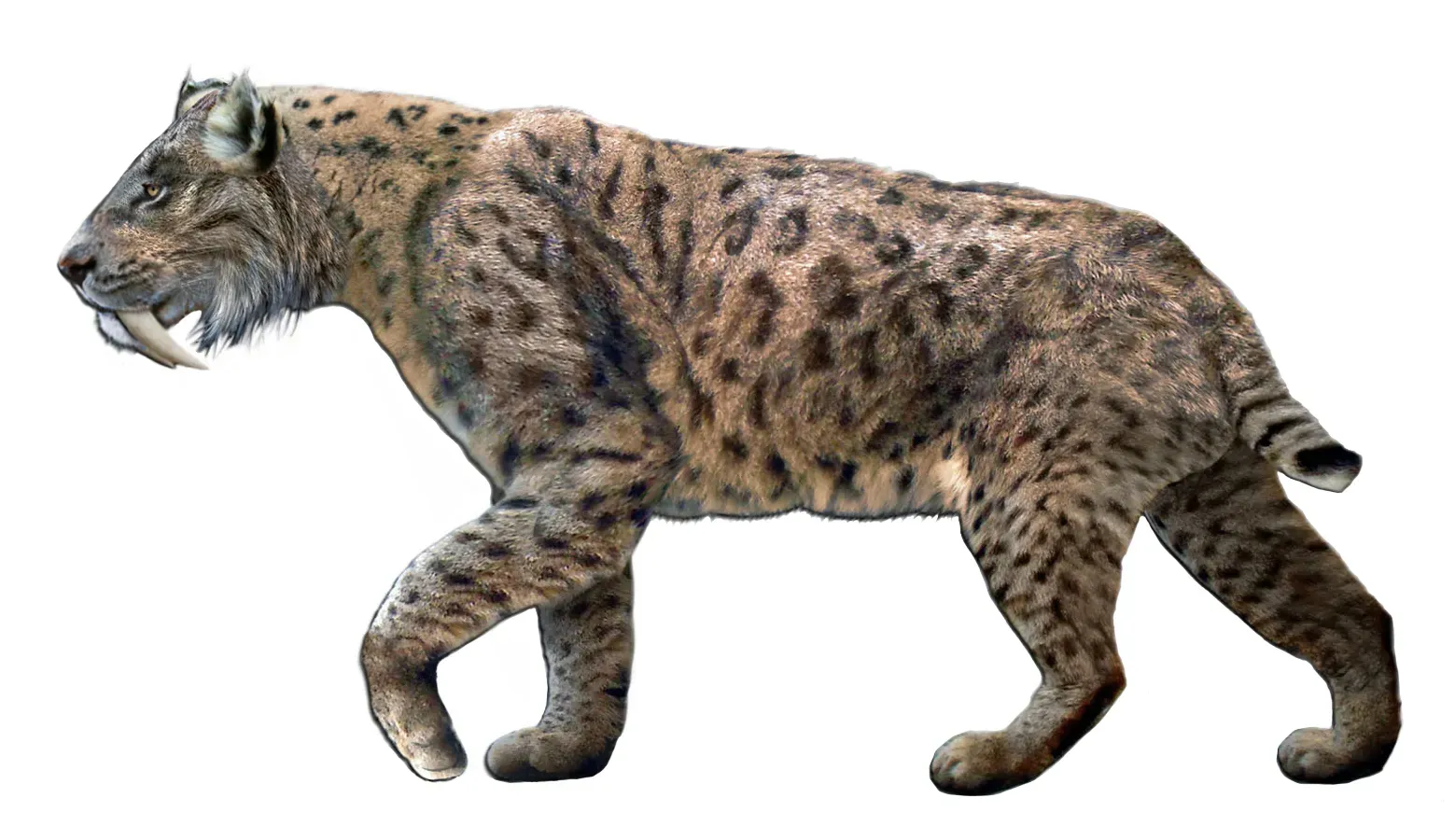
A study published in 2006 confirmed that Machairodontinae diverged early from the ancestors of living cats and were not closely related to any living species. This split wasn’t sudden or dramatic in geological terms. Rather, it unfolded over millennia as different environmental pressures shaped distinct evolutionary strategies.
DNA analysis confirmed that the Machairodontinae diverged early from the ancestors of modern cats and are not closely related to any living feline species. One branch would eventually lead to the saber-toothed specialists, masters of ambush hunting with their signature elongated canines. The other branch continued down a more generalized path, ultimately giving rise to all modern cats, including your favorite tabby and the roaring lions of today.
Let’s be real: the DNA doesn’t lie. Saber-tooth cats and modern house cats shared a common ancestor about 20 million years ago, and house cats are actually more closely related to tigers and pumas than to saber-toothed cats.
Understanding the Machairodontinae Subfamily
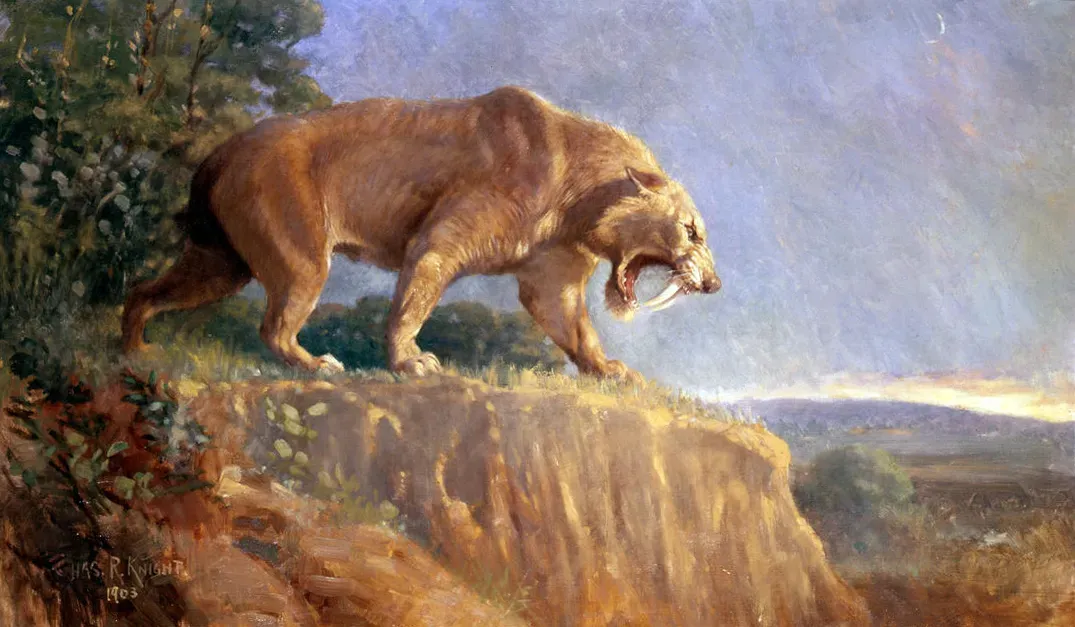
Sabre-toothed cats belong to either the extinct family Nimravidae or the subfamily Machairodontinae of the cat family Felidae. Not all creatures with saber teeth were true cats. Some belonged to entirely different families, showcasing convergent evolution.
The Machairodontinae contain many extinct predators commonly known as saber-toothed cats, including those with greatly elongated upper canines such as Smilodon and Megantereon. Within this subfamily, you’d find fascinating diversity. Some possessed dirk-like teeth for deep stabbing wounds. Others had scimitar-shaped canines better suited for slashing attacks. Research confirms a deep divergence within sabre-toothed cats, dated to around 20.65 million years ago.
The Modern Lion’s Evolutionary Journey
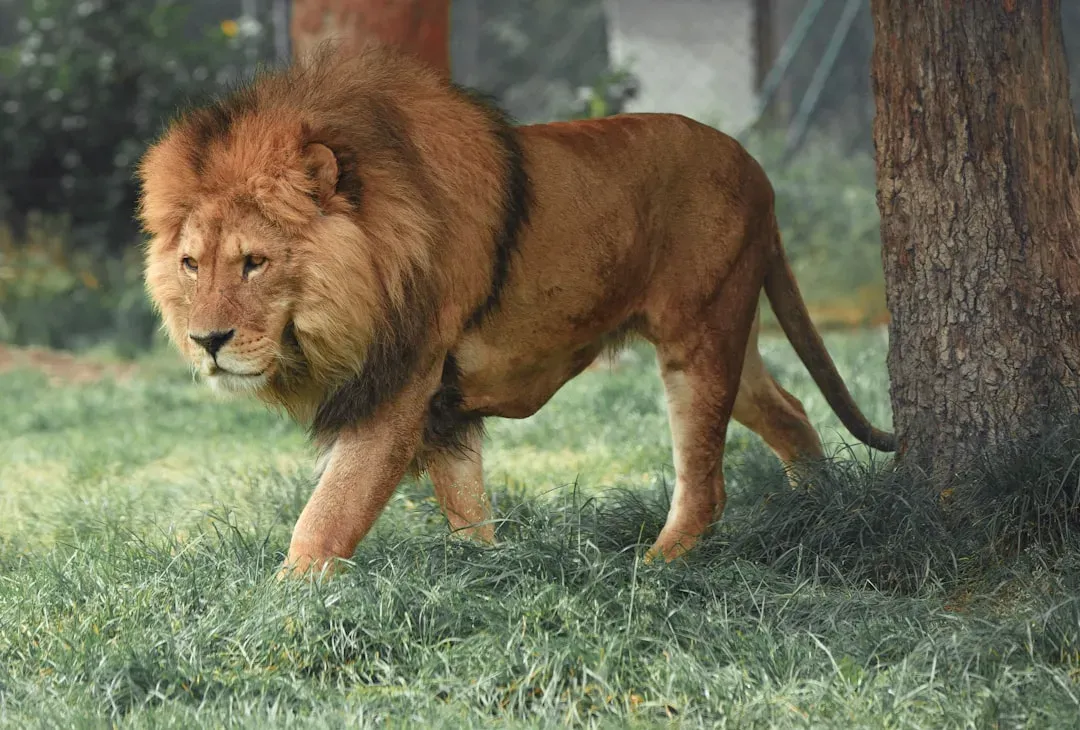
The Panthera lineage is estimated to have genetically diverged from the common ancestor of Felidae around 10.8 million years ago, with hybridisation between lion and snow leopard ancestors possibly continuing until about 2.1 million years ago. Lions belong to the genus Panthera, which branched off separately from the saber-toothed lineage.
Ancient DNA analyses suggest that sub-Saharan Africa, with a focal point in eastern-southern Africa, was the likely evolutionary cradle of the modern lion. These magnificent cats we see today emerged relatively recently in evolutionary terms. The lion lineage is thought to have originated in Africa, with ancestors of Panthera fossilis migrating out during the Early-Middle Pleistocene transition around 1-0.8 million years ago.
Today’s lions are actually quite different from their Pleistocene relatives. Honestly, if you saw a cave lion from half a million years ago, you’d notice the size difference immediately.
Saber-Toothed Specialists: Built for a Different World
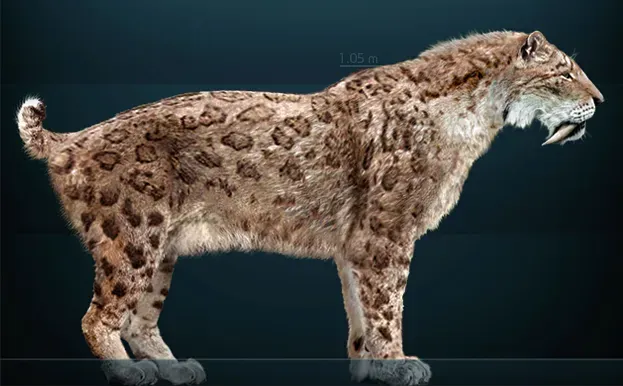
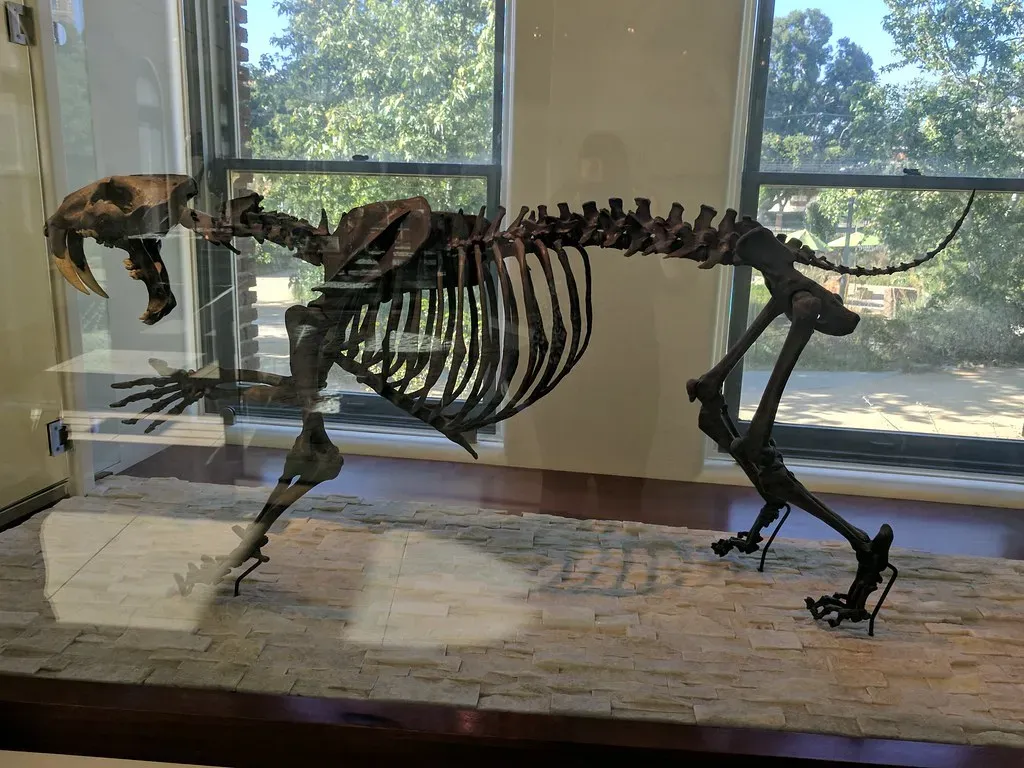
Smilodon lived in North and South America during the Pleistocene Epoch, was about the size of the modern African lion, and had immense upper canine teeth up to 20 cm long probably used for stabbing and slashing attacks. These weren’t just lions with bigger teeth. Their entire skeletal structure reflected specialized adaptations.
Smilodon’s skull was modified to accommodate the attachment of strong neck muscles for bringing the head down, the lower canines were reduced, and the molars formed shearing blades. The jaw could open extraordinarily wide to deploy those impressive weapons. Analysis indicates Smilodon could produce a bite only about one-third as strong as that of a lion. It’s hard to say for sure, but this suggests a fundamentally different hunting technique than modern big cats employ.
When Worlds Collided: Competition in the Pleistocene
Following the arrival of Panthera fossilis, the lion-sized sabertooth cat Homotherium and the European jaguar became much rarer, ultimately becoming extinct in the late Middle Pleistocene, with competition with lions suggested to be a likely important factor. Picture the Pleistocene landscape: multiple apex predators competing for the same prey.
North America supported other saber-toothed cats such as Homotherium and Xenosmilus, as well as other large carnivores including dire wolves, short-faced bears, and the American lion. This wasn’t a harmonious coexistence. Lions and saber-toothed cats may have competed intensely, with Machairodontines beginning to decline during the Pleistocene, perhaps due to environmental change and competition with large living cat lineages such as the pantherins.
DNA Evidence Reveals Hidden Connections
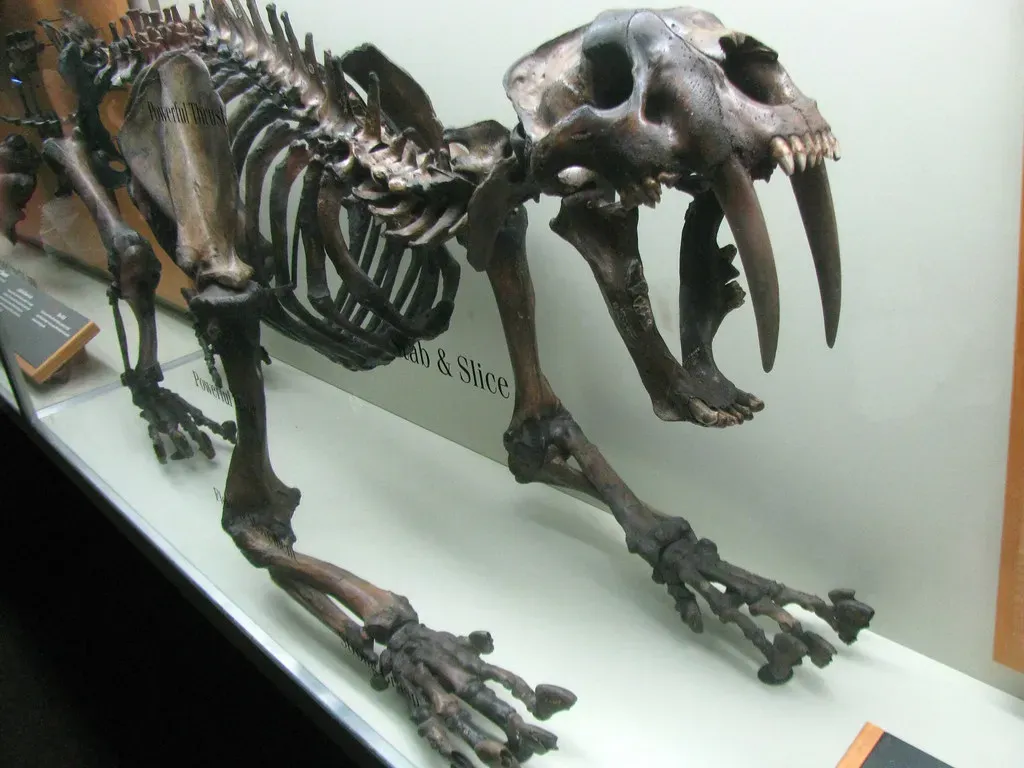
Scientists sequenced a draft nuclear genome of Smilodon populator dated to 13,182 years before present, making it the oldest palaeogenome from South America to date. Modern genetic technology has revolutionized our understanding of these ancient relationships. Analysis shows a lack of gene flow between Smilodon and contemporary Felidae, confirming these lineages kept to themselves after their split.
Within the Machairodontinae, researchers found a deep divergence between Smilodon and Homotherium of approximately 18 million years. Even within the saber-toothed subfamily, you’d find remarkable diversity. Sabre-toothed and extant cats are very divergent from one another, but there were also highly divergent species within sabre-toothed cats.
The Timeline of Extinction and Survival
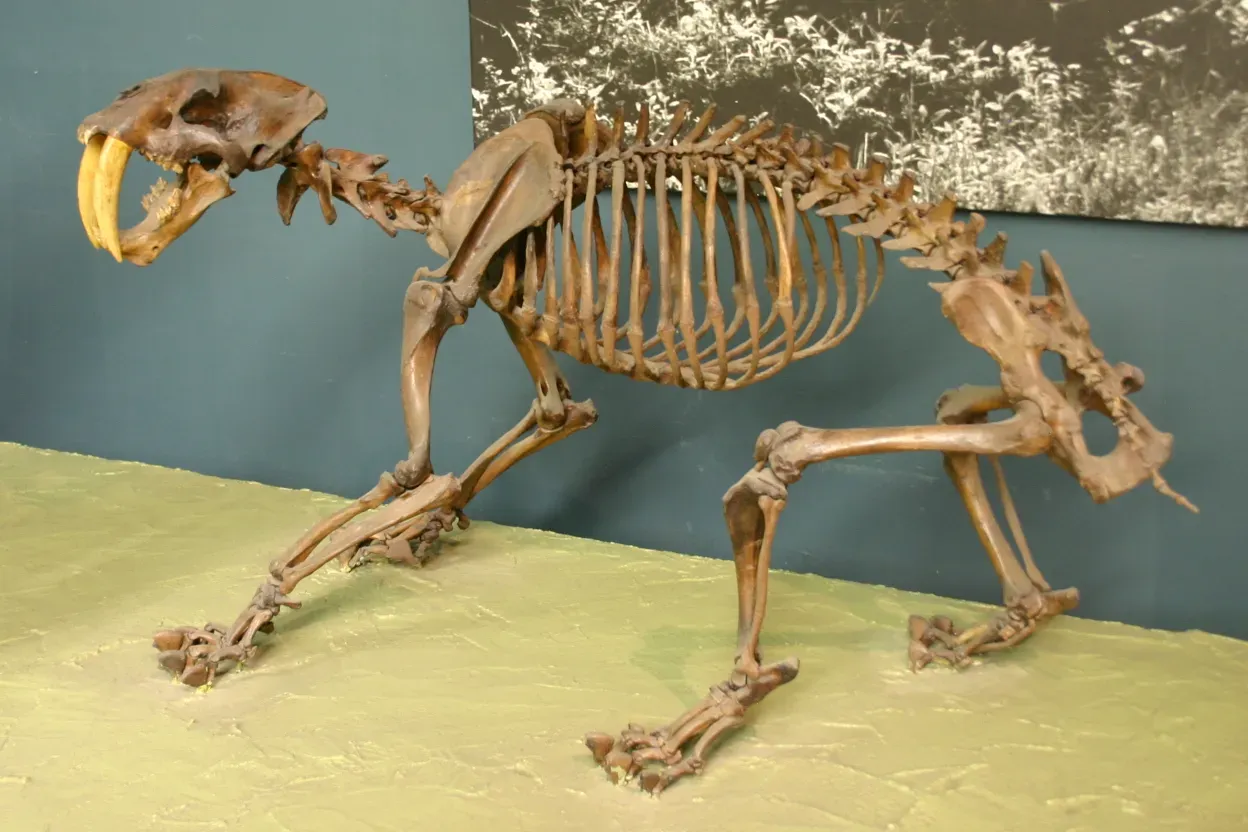
Sabre-toothed cats existed from the Miocene through the Pleistocene Epoch, spanning roughly 23 million to 10,000 years ago. While saber-toothed cats dominated their ecosystems for millions of years, they eventually vanished. The sabretooth cat went extinct about 10,000-12,000 years ago during the Quaternary extinction at the end of the late Pleistocene period when the last Ice Age ended.
Lions, meanwhile, adapted and persisted. Whatever killed off the saber-tooth cat, it wasn’t starvation, and tooth wear studies found no evidence these cats were limited by food resources. The extinction likely resulted from multiple factors: climate change, human arrival in the Americas, and the disappearance of megafauna prey. Lions survived because they proved more adaptable to changing conditions.
Anatomical Clues to Their Relationship
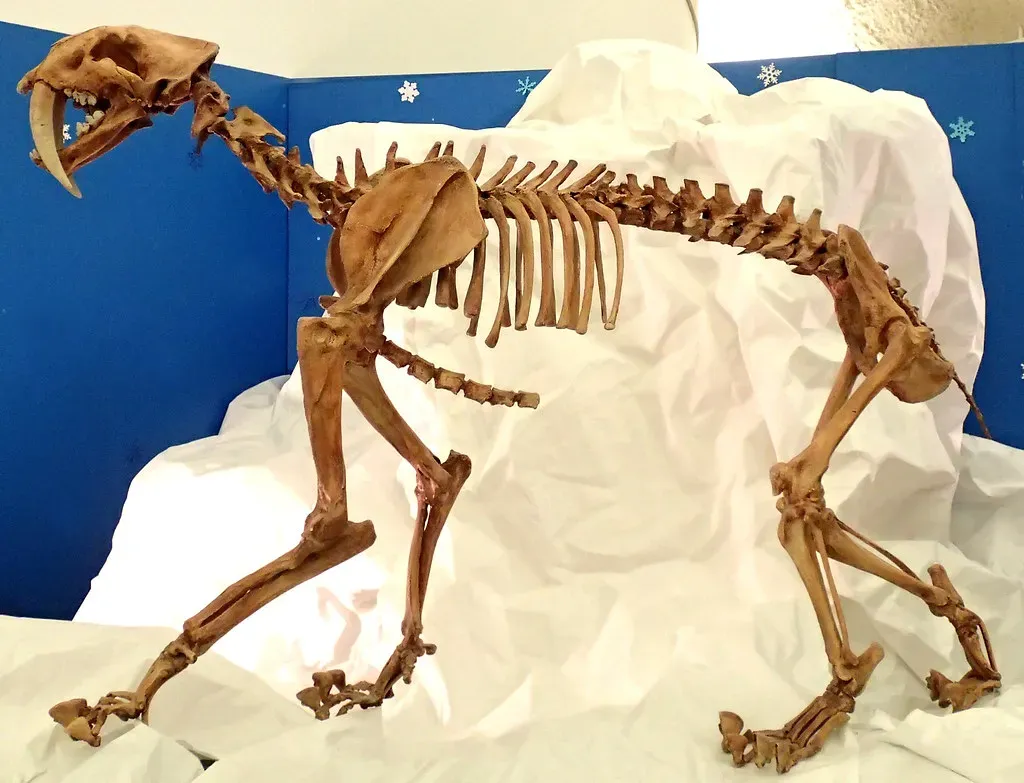
Scientists found similar fossilized throat bones belonging to Smilodon fatalis that suggest it may have roared, with the adaptation allowing roaring evolving separately in ancestors of both Smilodon and living pantherine cats. Here’s where things get interesting: despite their separation, convergent evolution created similar features.
Roaring cats have five bones in their hyoid arch, with an elastic ligament that stretches, allowing a lion to widen its throat and make a deeper tone. Both lineages independently developed similar throat structures, suggesting roaring offered survival advantages. Machairodonts as a clade are characterized not by saberteeth but by small lower canines and small molars, with true saberteeth being a synapomorphy of the later Eumachairodontia.
What the Fossil Record Tells Us
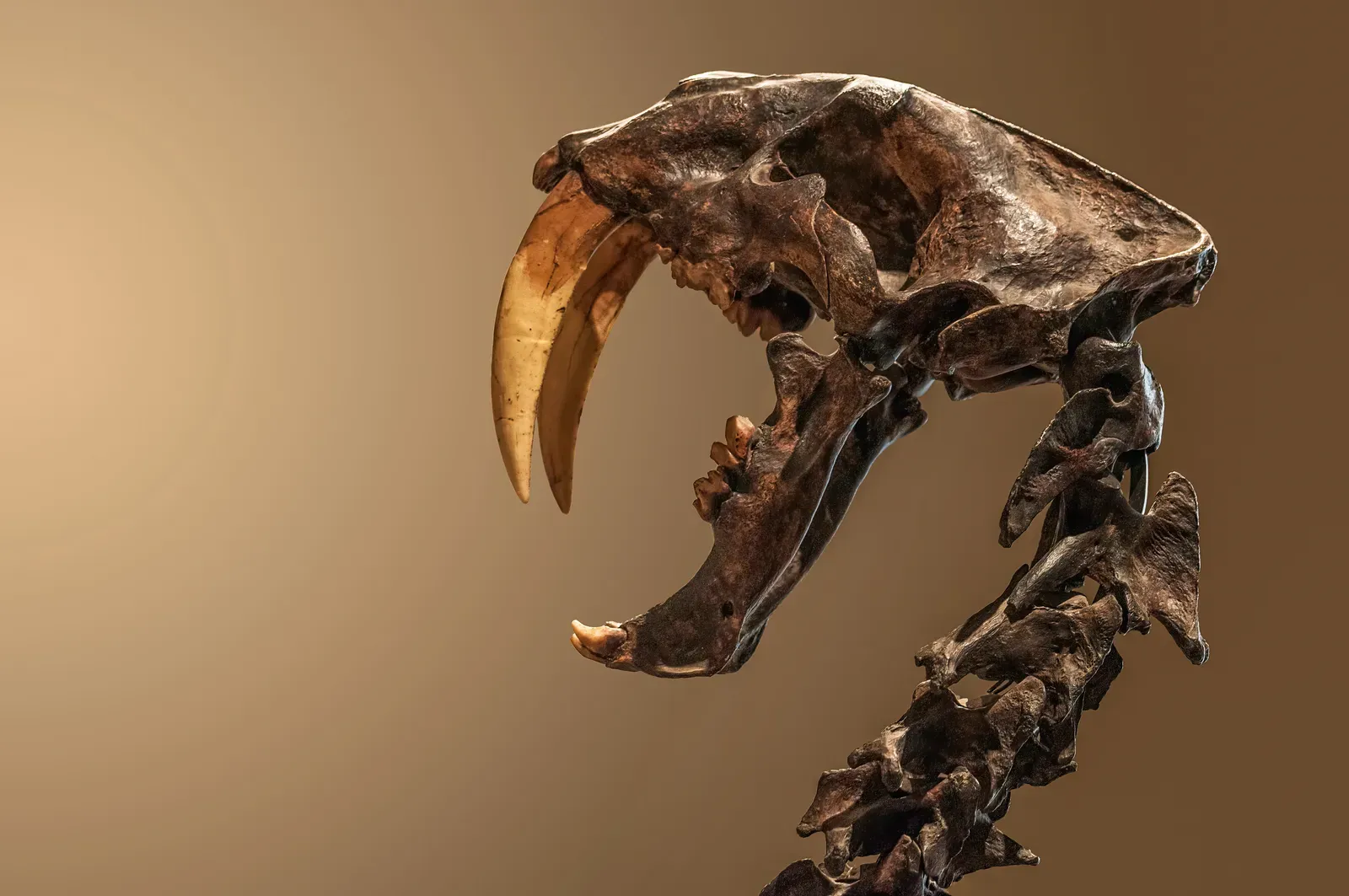
In the La Brea tar pits of California, scientists have recovered over a million bones, including one of the largest and best-preserved collections of sabertooth bones in the world. These remarkable deposits provide unprecedented insights into saber-toothed life and death. Thousands upon thousands of predators became trapped while hunting prey already mired in the sticky asphalt.
In the Early Miocene about 20 to 16.6 million years ago, Pseudaelurus lived in Africa, with fossil jaws excavated in geological formations across Europe, Asia, and North America. The fossil record traces these cats’ dispersal across continents. Sea level changes opened and closed migration routes, allowing ancestral populations to spread, evolve in isolation, and sometimes reconnect.
You might wonder how scientists piece together millions of years from scattered bones. Each fossil represents a snapshot, a single moment preserved in stone, yet collectively they tell an epic story of adaptation and survival.
The Legacy Lives On in Modern Felines
The evolution of the Felidae cat family began about 25 million years ago, with ancient cats evolving into eight main lineages, and most modern cats appearing in the past five million years. Every housecat purring on your lap carries genetic echoes of this ancient divergence. Living Felidae are divided into two subfamilies: Pantherinae includes five Panthera and two Neofelis species, while Felinae includes the other 34 species in 12 genera.
Lions represent one endpoint of feline evolution, optimized for social hunting and taking down large prey through cooperation and raw power. Saber-toothed cats represented another strategy entirely, specialized ambush predators built for delivering devastating single strikes. Though saber-toothed cats vanished, their evolutionary innovations weren’t failures. They thrived for millions of years, far longer than humans have existed.
What do you think about it? These ancient connections remind us that evolution isn’t a straight line but a branching tree with countless experiments, some successful for eons before circumstances change. The roar of a modern lion carries echoes of a shared heritage stretching back to when their ancestors and the ancestors of saber-toothed giants walked the same primordial forests.