Imagine a creature so silent, so perfectly engineered by millions of years of evolution, that it can drift through a village at midnight, snatch its prey, and vanish without a single soul noticing. That’s not fiction – that is the leopard. It’s a predator that makes other big cats look almost clumsy by comparison. Flexible, secretive, and impossibly beautiful, the leopard has managed to survive on two continents, across every kind of terrain you can think of, from scorching desert floors to freezing mountain peaks.
Yet, here’s the hard truth: survival does not equal thriving. Right now, in 2026, this incredible animal is quietly slipping toward a future far more uncertain than its ghost-like presence might suggest. There’s a legacy at stake – and it belongs to all of us. Let’s dive in.
A Cat of a Thousand Landscapes
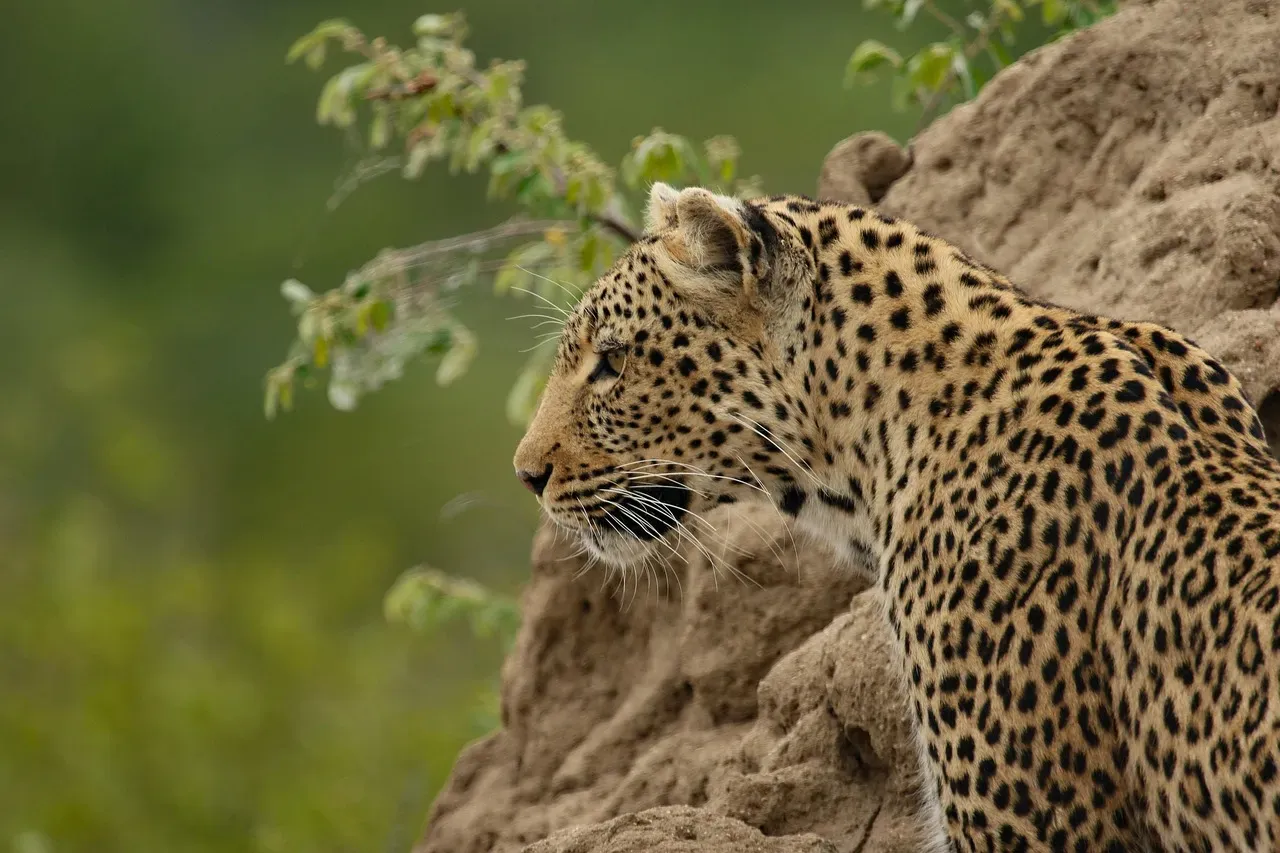
Honestly, no other big cat on Earth comes close to matching the leopard’s sheer range of adaptability. Leopards are incredibly adaptable, which has helped them survive in various habitats, including dense tropical rainforests, dry deserts, savannahs, grasslands, and even mountainous regions up to 5,200 metres in elevation. Think about that for a moment – that’s the equivalent of surviving in both the Sahara Desert and the frozen slopes of a Himalayan ridge. No cheetah, no tiger, no lion can claim that.
They stalk prey in the grassy plains of the Serengeti and the woodlands of Kruger, but they are just as much at home in the thick rainforests of Indonesia or the rugged mountains of Central Asia. You could almost call the leopard the ultimate opportunist – where other predators see obstacles, it sees options. Leopards have the widest distribution of any big cat species. They are found across sub-Saharan Africa, northeast Africa, Central Asia, India, China, and Southeast Asia, thriving in various environments, including rainforests, grasslands, savannas, mountains, and semi-desert areas.
Built for Stealth: The Perfect Predator’s Body
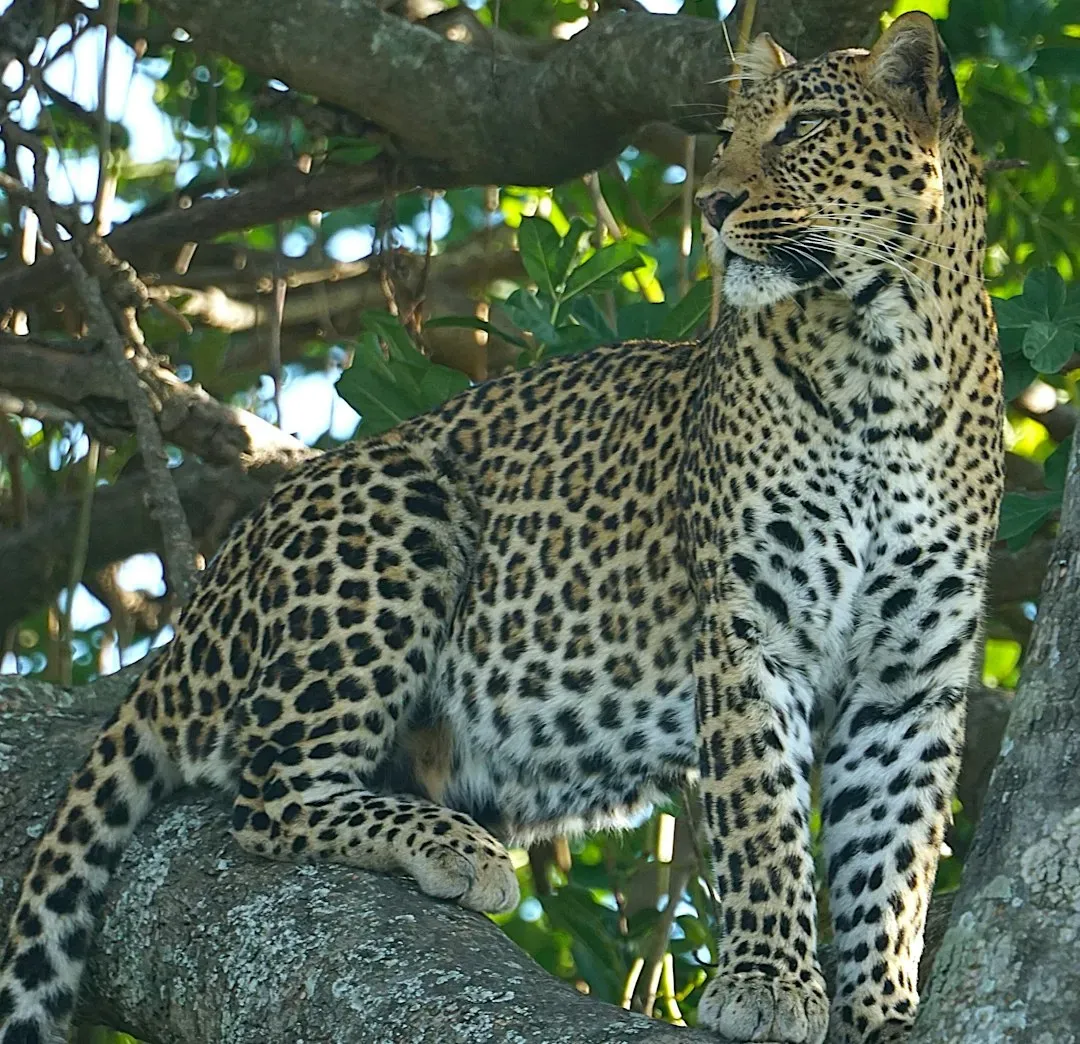
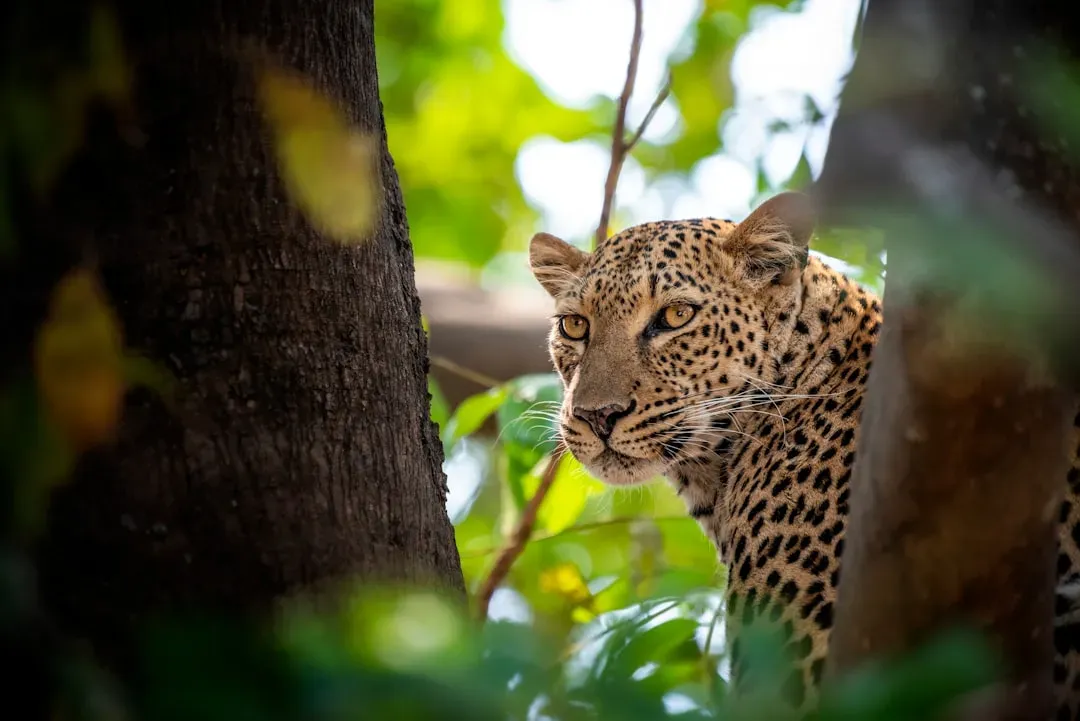
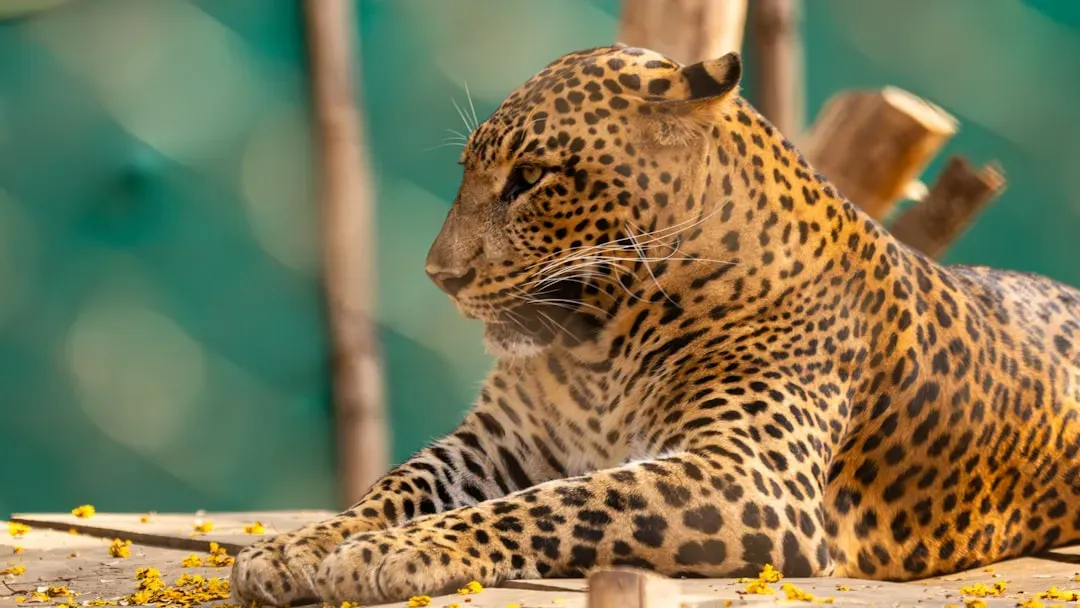
The leopard’s fur is generally soft and thick, notably softer on the belly than on the back. Its skin colour varies between individuals from pale yellowish to dark golden with dark spots grouped in rosettes, and its ringed tail is shorter than its body. Those rosettes are not just beautiful – they are functional masterpieces. Rosette patterns are unique in each individual, and this pattern is thought to be an adaptation to dense vegetation with patchy shadows, where it serves as camouflage.
Leopards possess a range of adaptations that enhance their skills as predators: their spotted fur helps them blend into their surroundings, rendering them almost invisible; powerful jaw and claws enable them to capture and transport sizable prey; strong limbs allow them to climb trees and jump impressive distances; exceptional night vision allows them to hunt efficiently in low light; and the padding on their paws facilitates quiet stalking. Put all of that together, and you have an animal that is essentially a living, breathing stealth machine.
The Art of the Ambush: How Leopards Hunt
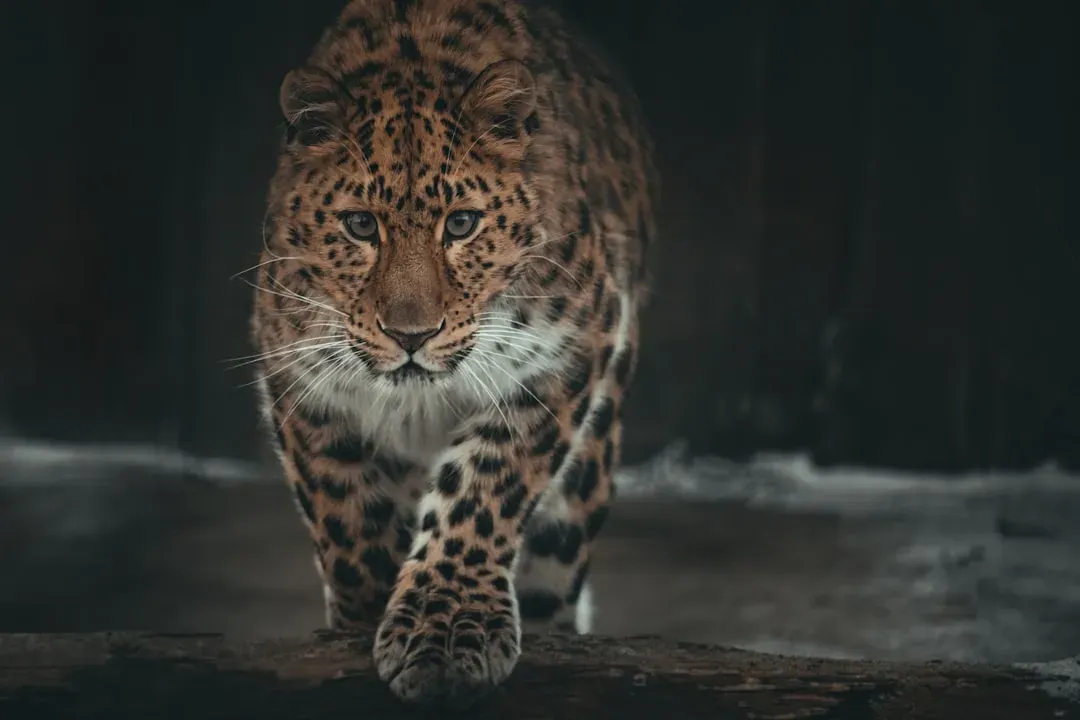
Unlike a cheetah, which relies on a sprinting speed to run prey down, a leopard relies on stealth and cover. It often stalks within a few meters before exploding into a brief ambush. This ghostly approach has earned leopards a reputation as the most silent stalkers among big cats. I think what makes this so astonishing is the patience involved – we’re talking about a cat that might inch forward for an hour, motionless, before a single explosive second decides everything.
When the moment is right, the leopard springs with a burst of controlled power, usually aiming a bite to the throat of its prey to swiftly suffocate it. The drama is over within seconds, often without other nearby animals even realizing what happened. This combination of camouflage, silence, and sudden force makes the leopard’s hunting strategy extraordinarily effective and difficult to detect. This adaptability extends to their diet – they are opportunistic hunters and feed on anything from antelope and deer to birds, reptiles, and fish.
Secrets in the Trees: The Genius of Kill Hoisting
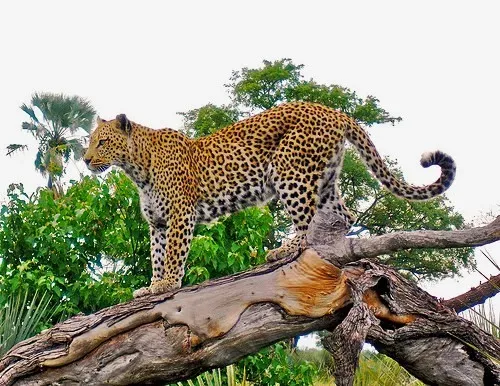
Here’s something that never fails to amaze people when they hear it for the first time. Leopards often haul their kills up into a tree, out of reach of other carnivores, few of which can match a leopard’s climbing agility. They then leave the carcass and return at their leisure, safely enjoying a prolonged meal high up in a tree. Imagine carrying your groceries up a five-story building with your teeth. That’s roughly the leopard equivalent.
A study done by Panthera in the Sabi Sands Game Reserve in South Africa found that leopards hoisted just over 50 percent of their kills. Leopards tended to hoist kills that weighed between 40 percent and 140 percent of their body mass – presumably because smaller kills could be eaten in a single sitting, and larger kills were often too heavy or just too big to be hoisted. While hoisting deters hyenas, it also makes the kill more visible, attracting another formidable competitor: other leopards. Male leopards, which can be 60% larger than females, are particularly prone to stealing hoisted kills from females and younger leopards. This visibility risk explains why not all kills are hoisted, especially by smaller female leopards who are more vulnerable to theft by larger males.
The Solitary Life: Territory, Cubs, and Communication
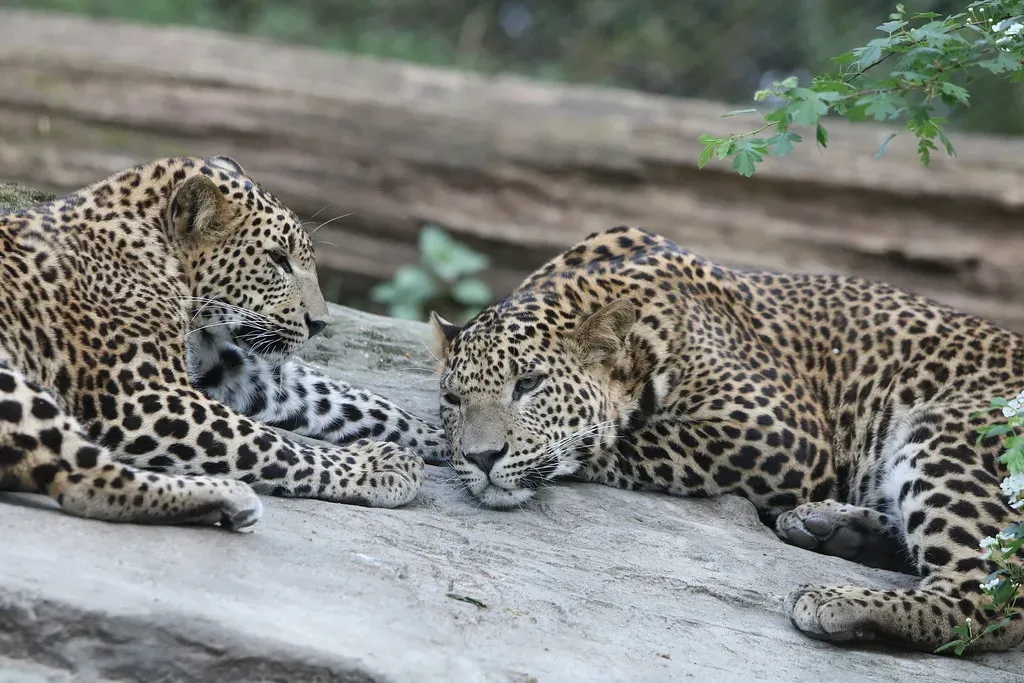
Unlike lions, leopards are solitary and prefer to live alone, marking their territories with scent to keep others away. They only come together to mate, and after a gestation period of about three months, a female will give birth to two or three cubs. The cubs stay with their mother for about two years, learning survival skills before venturing off on their own. Two years. That’s a long time in the wild, where every day is a gamble. Think of it as a very intense, very dangerous form of home schooling.
Each adult leopard stakes out a large territory and marks it with urine, claw scratches on trees, and even a raspy territorial call that sounds like a saw cutting wood. Unique white spots on the backs of their ears and tail tip help leopards spot each other in tall grass or low light without giving away their position. Cubs follow the white tip of a mother’s tail through dense brush, and a flick of that tail can signal a message to stay put or keep close. Nature’s own set of traffic signals, built right into the animal’s body.
A Species Under Siege: Threats Closing In
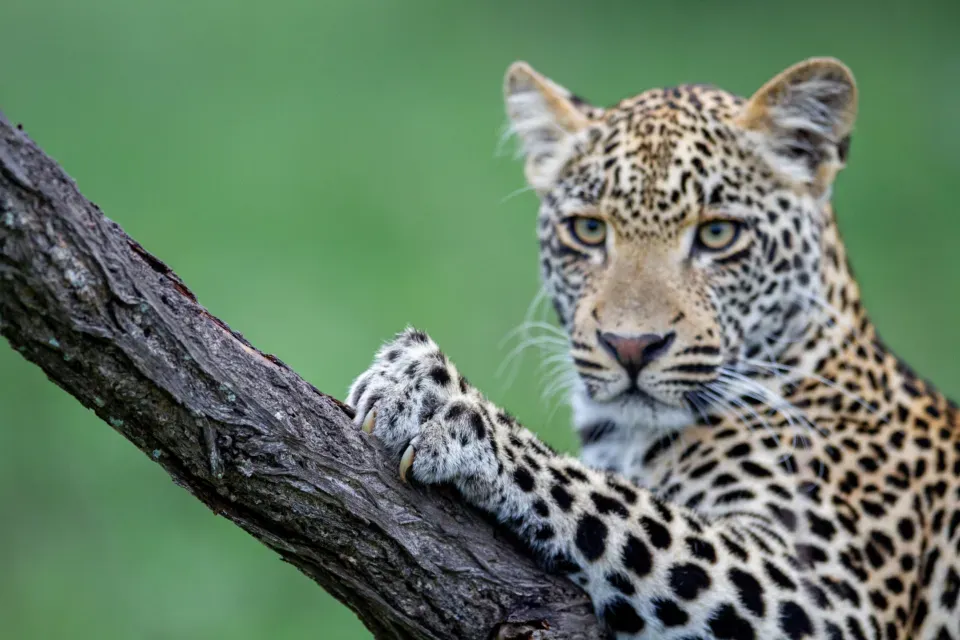
Let’s be real – the numbers are troubling. Though leopards are the most resilient big cat, they have declined by more than 30 percent over the last 22 years – which is three generations. They have disappeared from entire swathes of their historic range and may now be extinct in 26 countries that they formerly roamed. That isn’t a slow fade – that’s a crash in slow motion.
Leopards are threatened by habitat loss and fragmentation, human persecution, illegal wildlife trade, ceremonial use of skins, prey base declines and poorly managed trophy hunting. Leopard habitat is disappearing at an alarming rate: since 2016, their range has declined by 11%, with significant losses in Africa, the Middle East, and Southeast Asia. Expanding agriculture, deforestation, and urban development have all contributed to this decline. The pressures are relentless, coming from every direction at once, like walls closing in on an animal that has nowhere left to run.
Subspecies on the Brink: The Most Endangered Populations
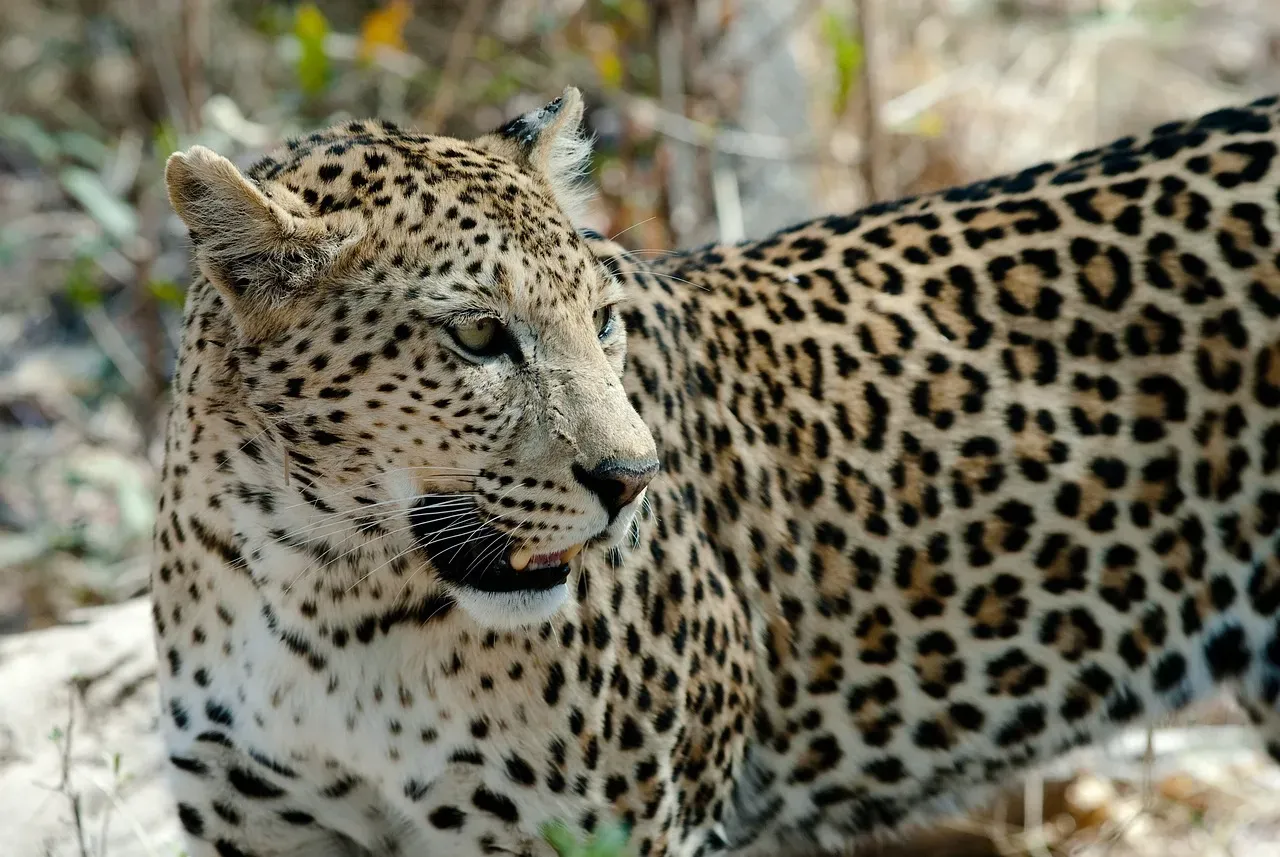
You might be surprised to learn that “leopard” is not one single uniform species. The Amur leopard is “Critically Endangered,” with around 100 individuals remaining in the wild, primarily in the Russian Far East and Northeast China. Similarly, the Arabian leopard, the smallest leopard subspecies, is also “Critically Endangered,” with fewer than 200 individuals believed to exist across Oman and Yemen. Those are not just small numbers – those are populations teetering on the absolute edge of extinction.
The International Union for Conservation of Nature reclassified the West African leopard from Vulnerable to Endangered on the Red List of Threatened Species. This update is far more than a re-labeling – it signals a critical wake-up call for governments, conservationists, and communities across West Africa. An Endangered status recognizes the steep decline and grave risks this leopard population faces, underscoring the urgent need for stronger protections and focused, on-the-ground conservation actions. It’s hard to say for sure how much time remains for some of these populations without urgent, coordinated action.
Living With Leopards: The Human-Wildlife Conflict Challenge
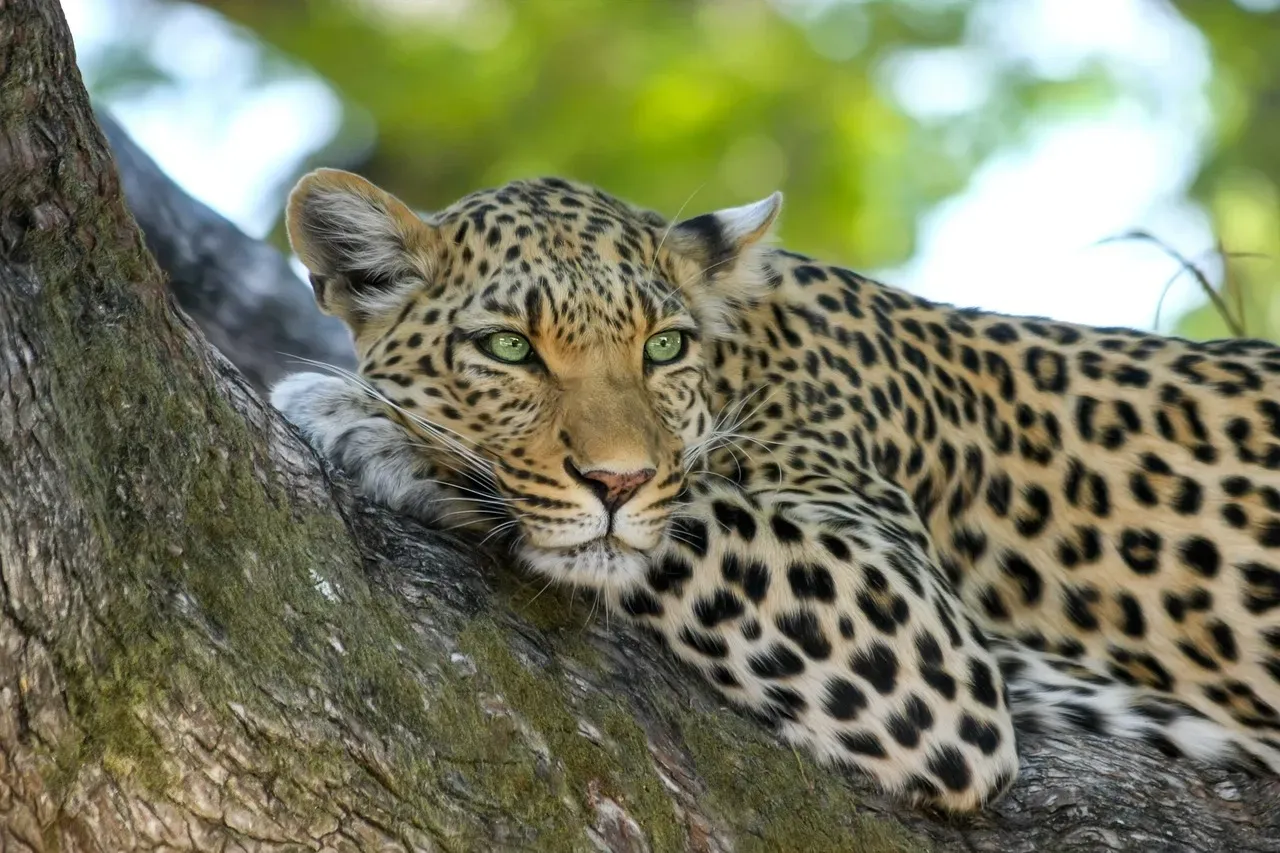
As human settlements expand into natural habitats, leopards often find themselves venturing into agricultural areas and even urban peripheries. This encroachment can lead to unfortunate encounters, where leopards prey on livestock, causing significant economic losses for farmers. These incidents often provoke retaliatory killings, further endangering already vulnerable leopard populations. It’s a devastating cycle – a farmer loses livestock, retaliates, and the leopard population shrinks just a little more.
Sri Lanka launched its first-ever livestock insurance scheme to address human-wildlife conflict and protect the endangered Sri Lankan Leopard. This is the kind of creative thinking that actually moves the needle. To reduce human-leopard conflict, integrated conservation strategies, including public awareness campaigns, training in livestock protection, government-supported compensation programs, and stricter enforcement of wildlife protection laws are recommended. Getting communities on the leopard’s side is arguably the single most important conservation step of all.
Hope on the Horizon: Conservation That Actually Works
Leopards are not just apex predators; they are vital indicators of ecosystem health. Protecting them means preserving the forests and savannas that countless other species – and people – rely on. As apex predators, leopards play a crucial role in maintaining the balance of their ecosystems. By controlling the populations of herbivores, they help prevent overgrazing and promote biodiversity. Furthermore, their presence indicates a healthy environment, while their decline can have significant repercussions for the entire ecosystem.
Community-based conservation programs engage local populations in protection efforts. These programs focus on reducing human-wildlife conflict by promoting coexistence strategies, such as predator-proof enclosures for livestock and providing compensation for losses. By involving communities, these initiatives foster a shared responsibility for conservation and improve local attitudes toward leopards. Thankfully, some conservation efforts have paid off in protecting leopard habitats, with slight range increases in India and the Russian Far East. Progress is real – slow, hard-won, but real.
Conclusion
The leopard’s story is one of extraordinary resilience meeting extraordinary pressure. You are looking at an animal that has survived ice ages, continental shifts, and the rise of human civilization – only to face its most serious test right now, in the 21st century. The good news is that the science is clear, the solutions exist, and communities around the world are beginning to choose coexistence over conflict.
What you do with that knowledge matters. Whether it’s supporting wildlife conservation organizations, choosing sustainable products, or simply sharing accurate information about why these animals deserve protection, every action ripples outward. The leopard has spent millions of years adapting to a changing world. The question now is whether we are willing to adapt alongside it.
What do you think it will take to truly secure the leopard’s future? Share your thoughts in the comments below.