There are wild cats that command the night with a kind of ghostly elegance. You don’t hear them coming. You rarely see them go. The ocelot is exactly that kind of creature – a mid-sized spotted cat draped in a coat so breathtaking that it nearly caused its own extinction. Somewhere between the towering Amazon canopy and the thorny scrublands of South Texas, this elusive feline has been quietly surviving for thousands of years, shaped by jungles, rivers, and the relentless pressure of the human world.
The story of the ocelot is part natural wonder, part urgent conservation alarm. It stretches from ancient Aztec mythology all the way to cutting-edge captive breeding programs happening right now in 2026. If you’ve never given this animal much thought, prepare to be genuinely surprised. Let’s dive in.
What Exactly Is an Ocelot? Getting to Know the Basics

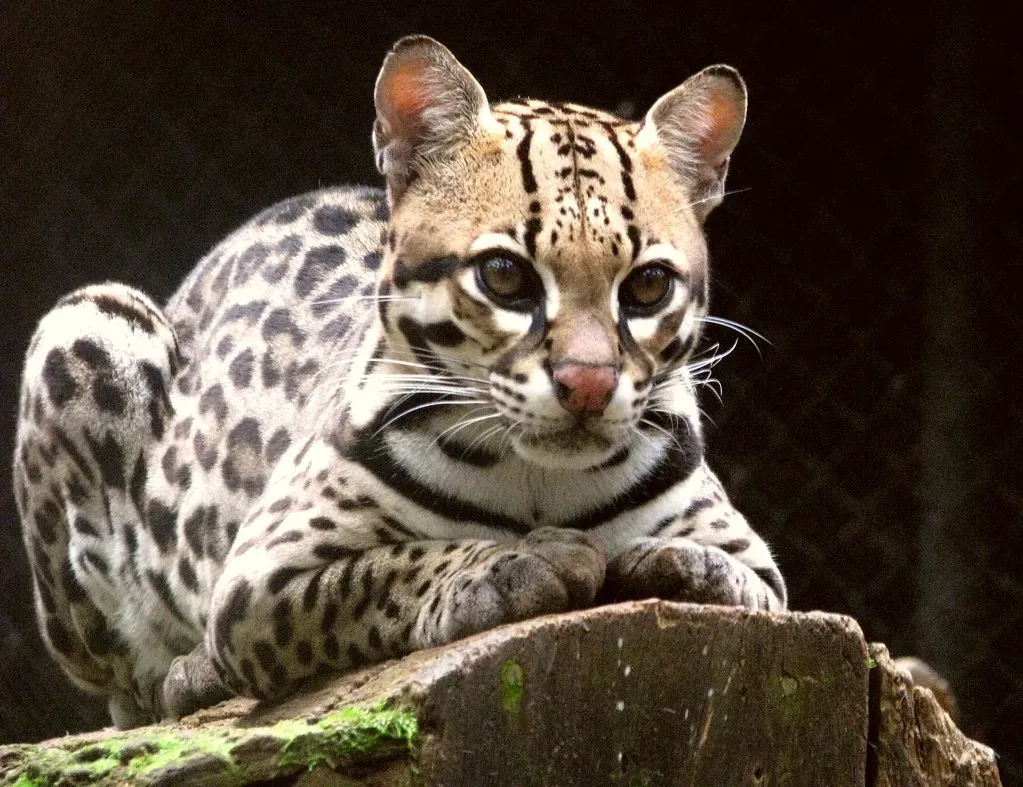
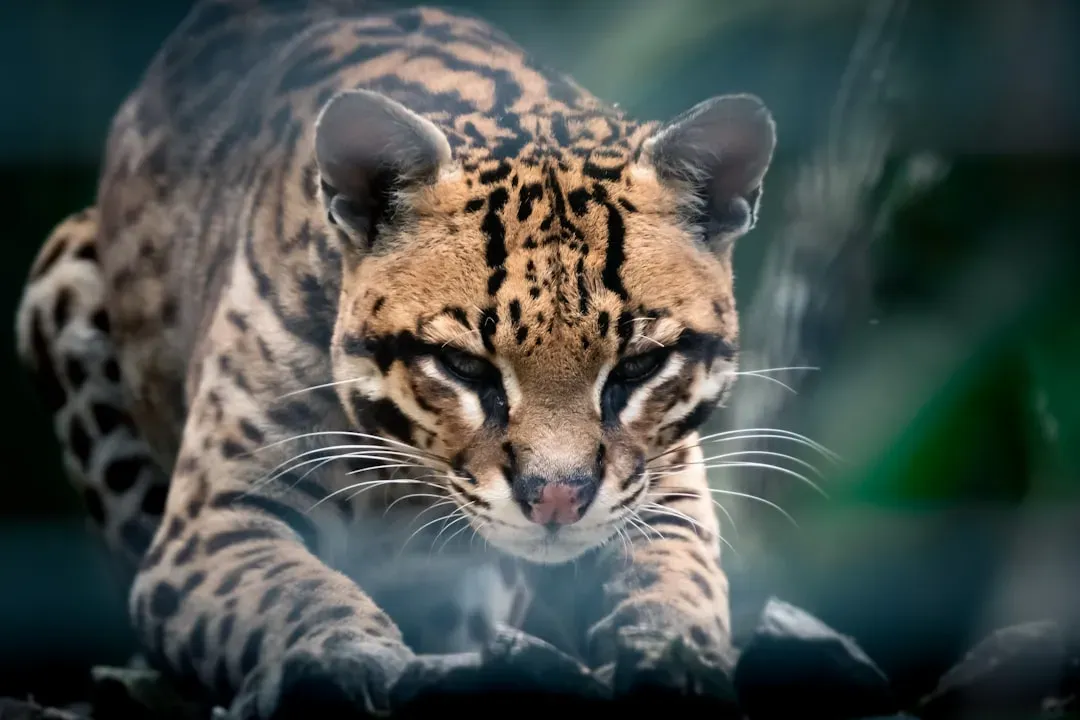
Picture a house cat. Now double it in size, drape it in a coat that looks like a master painter spent weeks on it, and place it somewhere deep inside a tropical forest at midnight. That’s roughly the ocelot. The ocelot (Leopardus pardalis) is a medium-sized spotted wild cat that reaches 40 to 50 centimeters at the shoulders and weighs between 7 and 15.5 kilograms on average. It is not a jaguar, and it’s not a leopard – though you could absolutely forgive someone for thinking otherwise at first glance.
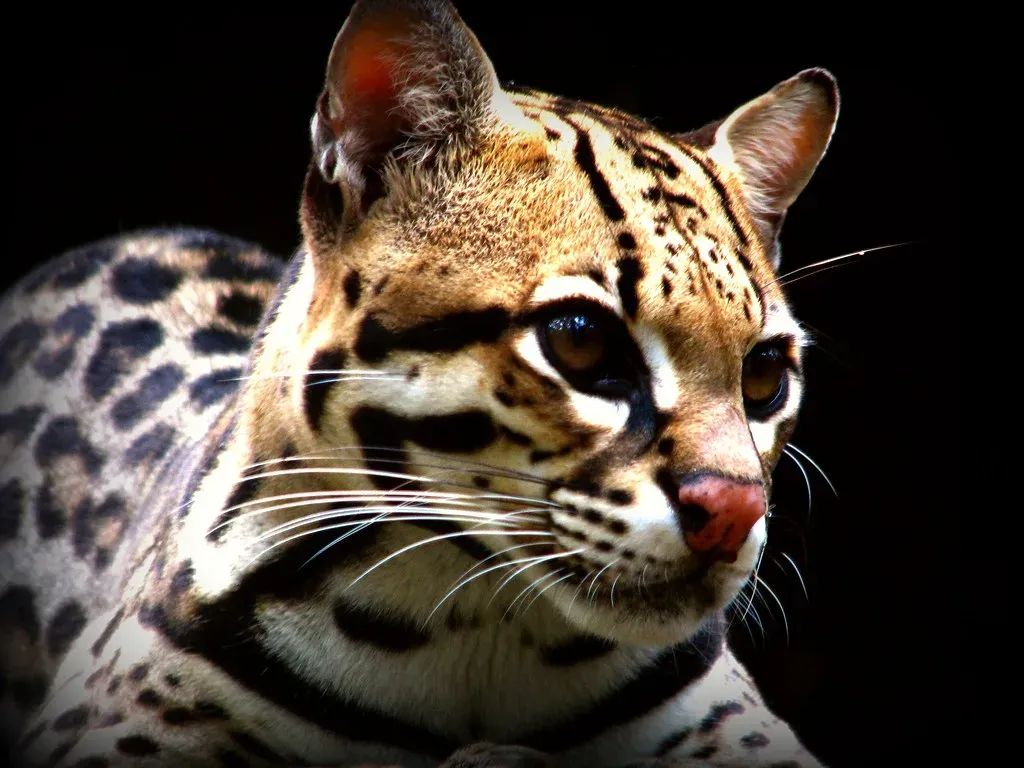
Closely related to other Latin American wildcats including the oncilla and the margay, the ocelot is the largest of the trio. They are robust in shape with thick limbs and a relatively short tail, with blocky muzzles and black rounded ears adorned with white spots. Its coat is essentially a masterpiece of natural camouflage, featuring a base color that ranges from creamy white and tawny yellow to reddish-gray, overlaid with striking “chain-like” blotches and spots outlined in black with lighter centers.
A Name Rooted in Ancient Culture
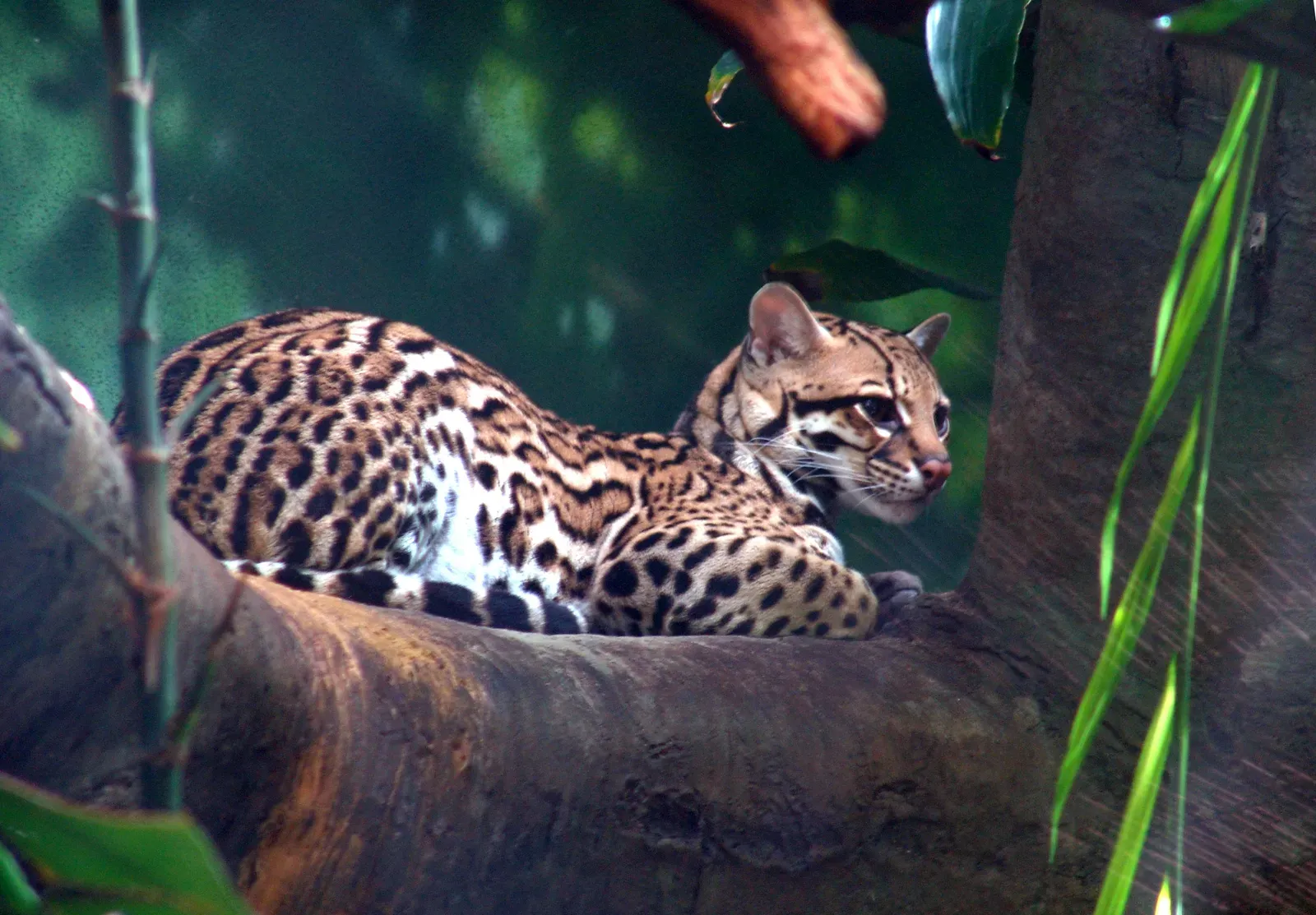
The word “ocelot” isn’t just a label – it carries centuries of history inside it. The origin of the name reflects the convergence of Indigenous and European cultures during colonization. Tlalocelot is the name for ocelots in the Aztecs’ Nahuatl language, while ōcēlōtl is a related Nahuatl word for jaguars. Europeans frequently assigned animals of the Western Hemisphere names similar to animals they knew from the Eastern Hemisphere, translating tlalocelot as “field tiger” – it’s believed colonists misinterpreted and misassigned these terms entirely.
The association of the ocelot with humans stretches back to the Aztec and Incan civilizations, and it has occasionally been kept as a pet. Honestly, you can understand the temptation – this animal is strikingly beautiful. Still, the history of ocelots in human culture is more complicated than admiration alone, and as you’ll soon discover, that relationship has caused lasting damage.
Where in the Americas You’ll Find Them
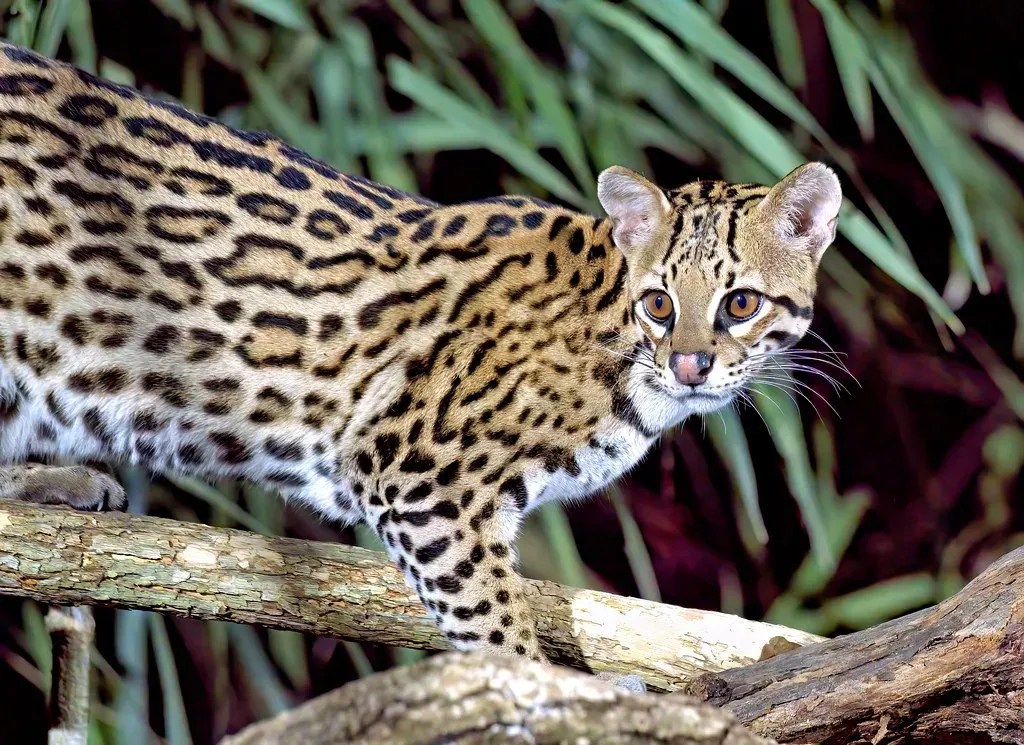
The ocelot is native to the southwestern United States, Mexico, Central and South America, and the Caribbean islands of Trinidad and Margarita. That’s an enormous stretch of geography, almost like saying a creature lives everywhere from a Texas ranch to a Peruvian rainforest. Its distribution currently spans from southern Texas in the U.S. to Mexico throughout Central and South America, south to northeastern Argentina, southern Brazil and occasionally into northwestern Uruguay – notably, it does not occur in Chile.
They have been known to live in a wide variety of habitats including savanna grasslands, woodlands, mangroves, swamps, and various types of dense forests, and have also been spotted in more open habitats such as pastures and grasslands during hunting excursions. Think of the ocelot as a highly adaptable tenant. It will live in many neighborhoods – but there is one thing it always needs: cover. These cats are highly adaptable but share one non-negotiable requirement: dense, well-structured vegetative cover.
The Art of the Hunt: How Ocelots Feed Themselves
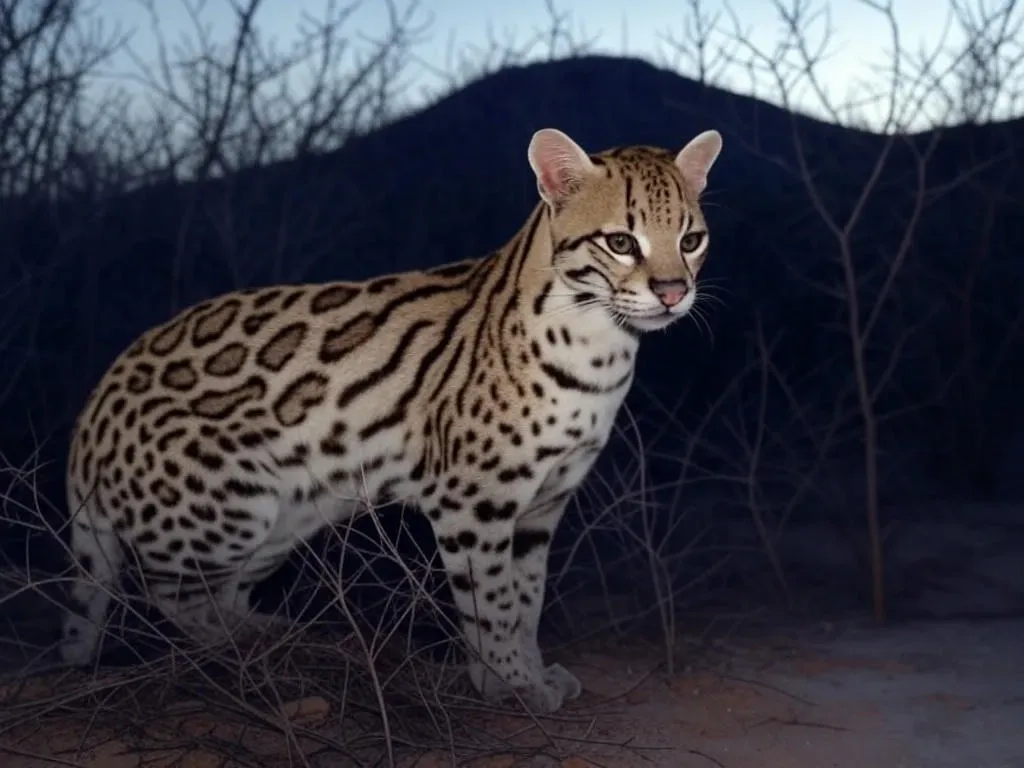
Ocelots are nocturnal, meaning they’re most active at night, using their sharp vision and hearing to hunt rabbits, rodents, iguanas, fish, frogs, monkeys, and birds. They are not picky eaters, which is one reason they’ve survived across so many different environments. They are well-adapted for nocturnal behavior, as their eyes have a layer that reflects light, giving them excellent night vision. That reflective layer is called the tapetum lucidum – the same feature that makes cat eyes glow eerily in headlights.
Ocelots have been observed to follow scent trails in search of prey, walking at a speed of roughly 0.3 km per hour. Alternatively, an ocelot may wait for prey for 30 to 60 minutes at a particular site before moving to another if unsuccessful. That level of patience is almost eerie. When they’re ready to eat, the wild cats don’t chew their food – instead they use their teeth to tear meat into pieces and swallow it whole. Efficient, ruthless, and utterly fascinating.
Territory, Solitude, and the Rules of Ocelot Society
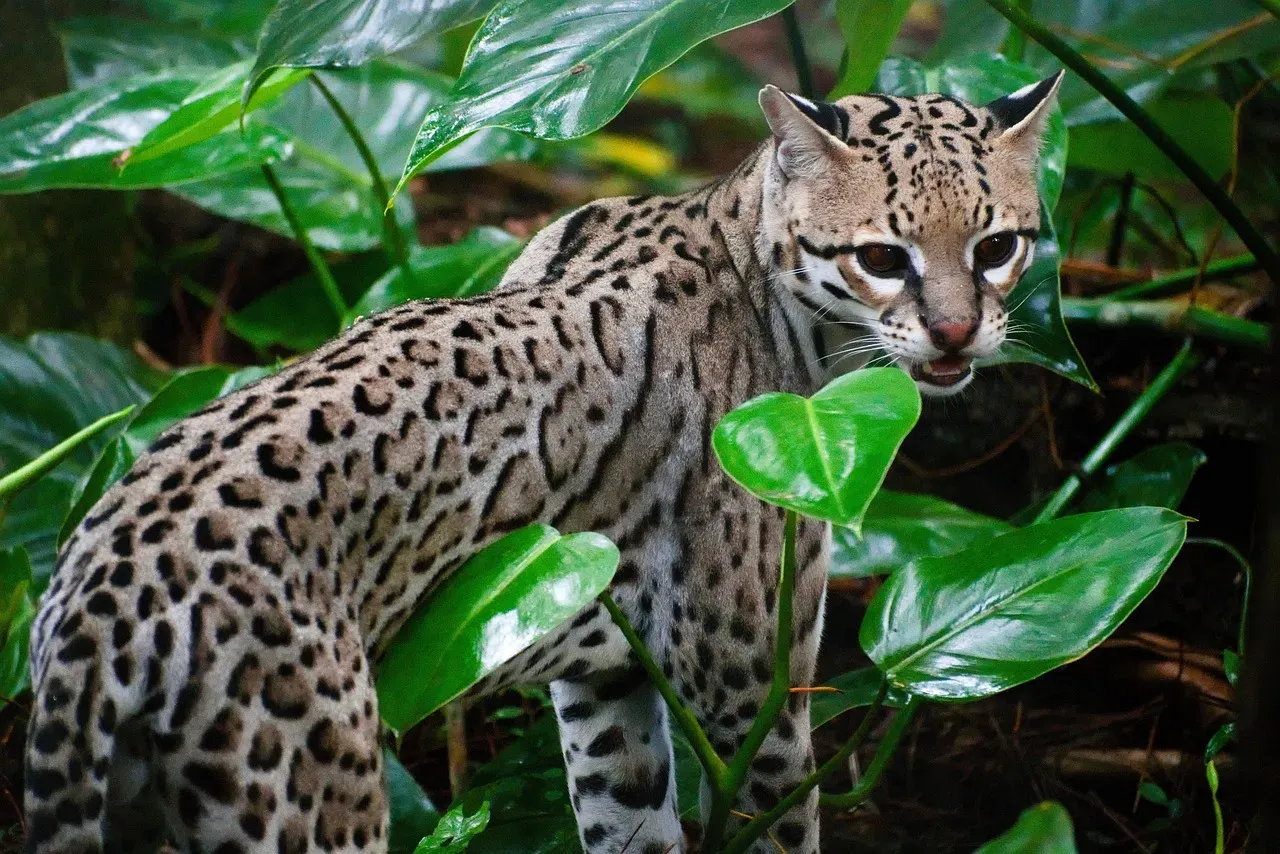
Ocelots are not the social butterflies of the cat world. Far from it. They are typically active during twilight and at night and tend to be solitary and territorial. Each individual essentially runs its own kingdom with defined borders and strict rules. A male ocelot keeps a territory that overlaps four or five females’ territories so he can easily find a mate. Males are territorial and unfriendly toward male neighbors, marking territory by clawing logs, spraying vegetation with urine, and leaving feces prominently on trails.
The territories of males are roughly between 3.5 and 46 square kilometers, while those of females cover a smaller range of 0.8 to 15 square kilometers. Territories of females rarely overlap, whereas the territory of a male typically includes those of two to three females. Camera trapping studies confirm that several ocelot individuals deposit scat in shared communal sites called latrines, and ocelots can be aggressive in defending their territory, fighting even to death. For such a strikingly beautiful animal, they have a surprisingly fierce streak.
Reproduction and Raising the Next Generation
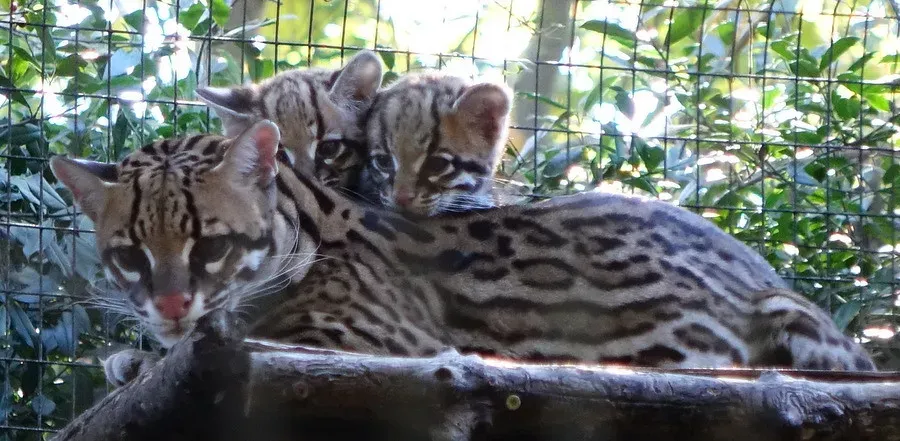
Both sexes become sexually mature at around two years of age and can breed throughout the year, with peak mating season varying geographically. There’s something almost poetic about that flexibility – nature built the ocelot’s reproductive calendar around the landscape it lives in. After breeding, the male and female ocelots go their separate ways. Following a gestation period of two to three months, the female gives birth to a litter of one to four kittens in a den, which can be a hollow tree, rocky bluff, cave, or secluded thicket. The mother raises the kittens entirely by herself, protecting them, feeding them, and moving them from den to den for protection.
When an ocelot kitten is around five months old, the mother teaches it how to hunt. The young ocelots stay with their mother for up to two years, during which they learn essential survival skills before becoming independent. Ocelot kittens are born with blue eyes that eventually change to golden brown around three months of age. I think that detail alone is enough to make anyone want to dedicate their life to protecting these cats. It’s hard not to feel something when you picture a tiny blue-eyed kitten learning to stalk prey through the brush.
The Fur Trade Catastrophe That Nearly Wiped Them Out
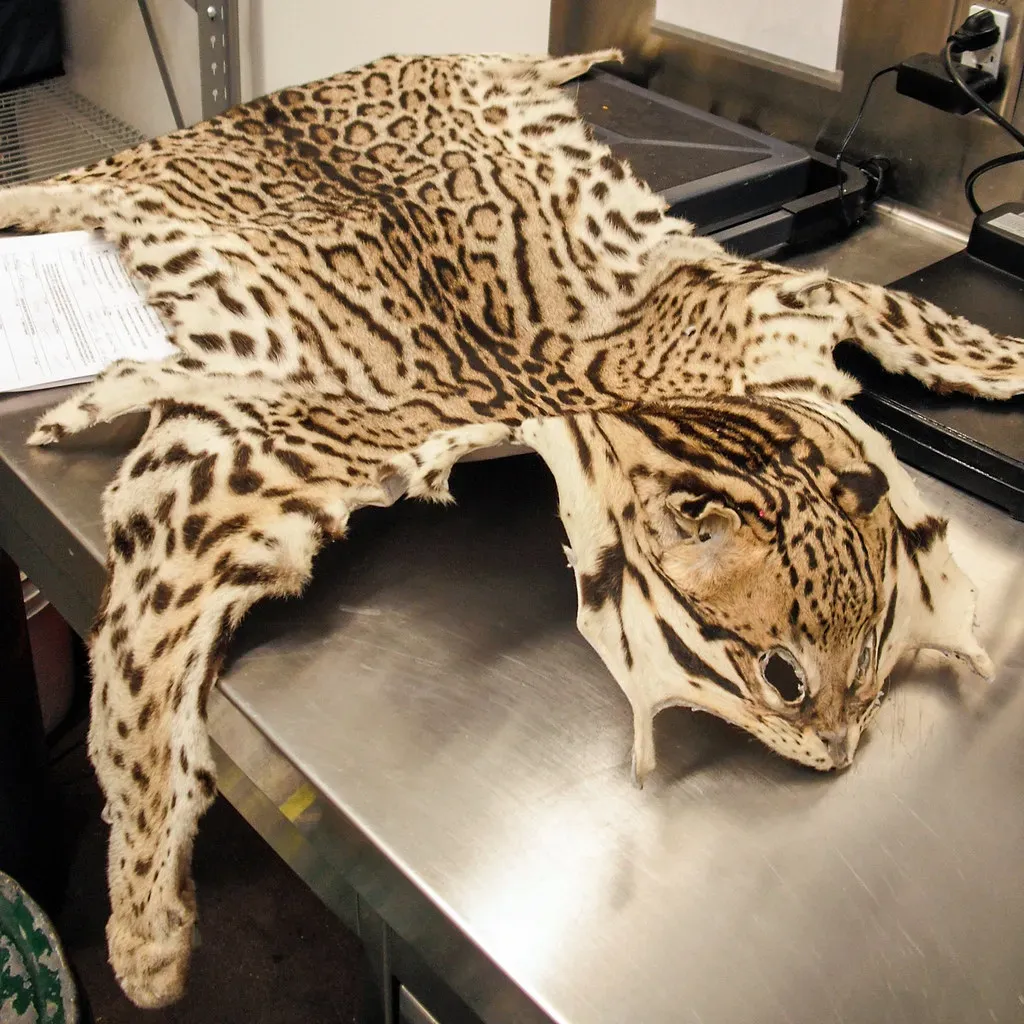
Here’s the thing – the ocelot’s most beautiful feature very nearly killed it. The fur trade was a flourishing business in the 1960s and 1970s that resulted in severe exploitation of felids such as the ocelot and the jaguar. In the 1960s, ocelot skins were among the most highly preferred in the United States, reaching an all-time high of 140,000 skins traded in 1970. That number is staggering. Imagine roughly 140,000 individual animals killed in a single year, solely for fashion.
This was followed by prohibitions on commercial trade of spotted cat skins in several range states such as Brazil and the United States, causing ocelot skins in trade to plummet. In 1986, the European Economic Community banned the import of ocelot skins, and in 1989, the ocelot was included in Appendix I of the Convention on International Trade in Endangered Species. The ocelot is now protected under CITES Appendix I, the highest level of international trade protection. The legal protections arrived, but the damage was already deep – and for some regional populations, potentially irreversible.
The Crisis at the Northern Edge: Ocelots in the United States
If you live in the United States, the ocelot’s story is particularly sobering. Today, the only breeding population of ocelots in the U.S. is in Texas, where fewer than 60 ocelots remain in two small populations near the Mexican border. Occasionally, dispersing male ocelots from Mexico also migrate into southern Arizona. Two populations. Fewer than 60 individuals. That’s the kind of number that should be alarming to everyone. In the United States, ocelots have been classified as federally endangered under the Endangered Species Act since 1982.
Ocelots attempting to find territories away from their crowded core habitat are often killed crossing roads. Meanwhile, farmers and developers have cleared roughly 95 percent of their thornscrub habitat in the U.S., and thornscrub in the Rio Grande Valley – one of the cat’s last American strongholds – is disappearing at an alarming rate. Industrial development, including liquid natural gas export facilities along the Gulf Coast and SpaceX launch operations, also cause significant disturbances and destruction of the ocelot’s preferred habitat. It’s a genuinely dire situation, made worse by the sheer diversity of threats bearing down simultaneously.
Conservation Efforts and a Fragile Sense of Hope
It would be easy to end on a bleak note, but the conservation world is fighting back with real intensity. Partners broke ground on a $20 million ocelot conservation facility in 2024 at the Caesar Kleberg Wildlife Research Center located at Texas A&M University-Kingsville – the first in the nation dedicated to housing ocelots for breeding purposes. It will feature an environment for young ocelots to learn natural behaviors so they can be released onto lands enrolled in habitat protection agreements. That is genuinely exciting progress.
Conservation groups found a further sign of hope when DNA from a male ocelot killed in 2021 by a motorist in Hidalgo County suggested a previously unknown population of the animals. Researchers suggested that this cat possibly occupied a region of South Texas not yet known to ocelot scientists, with Hidalgo County possibly harboring more ocelots in its more remote sections where appropriate habitat and prey exist. Protection, maintenance, and restoration of forest fragments and wetlands across agricultural landscapes is essential to maintain suitable habitat for the ocelot and connectivity between populations. You can also play a small but meaningful role – if you’re ever driving in South Texas ocelot country, slow down. Vehicular collisions are the leading cause of death for these cats in Texas.
Conclusion: The Ocelot’s Tale Is Still Being Written
The ocelot is more than just a beautiful cat. It is a living measure of how wild and whole the Americas remain. Where ocelots thrive, ecosystems are healthy. As predators, ocelots play a role in keeping prey populations like small and medium-sized rodents in check and ensuring healthy forest regeneration. Lose the ocelot, and you lose something far bigger than one species – you lose a thread woven deeply into the ecological fabric of the entire Western Hemisphere.
From the dense Amazon rainforest to the scraggly thornscrub of the Rio Grande Valley, this spotted cat has endured millennia of change. It survived the fur trade. It is surviving habitat loss. Whether it survives the pressures of 2026 and beyond depends entirely on human choices – land use policies, road design, conservation funding, and perhaps most of all, whether people care enough to pay attention. The ocelot cannot vote or speak or advocate for itself. It can only survive, or not. What happens next is largely up to you.