There is something quietly astonishing about sharing your home with a creature that has an entire language you may have never really learned to read. Most people assume that if their cat isn’t meowing, it isn’t communicating. That assumption, honestly, could not be more wrong.
Cats are conversationalists of the highest order. They carry on rich, layered dialogues using their bodies, their scents, their eyes, and even the way they choose to position themselves in a room. The fascinating truth is that the meow, in many ways, is the least interesting part of the story. Ready to discover what your cat has really been saying all along? Let’s dive in.
Why Meowing Is Actually a Human Thing
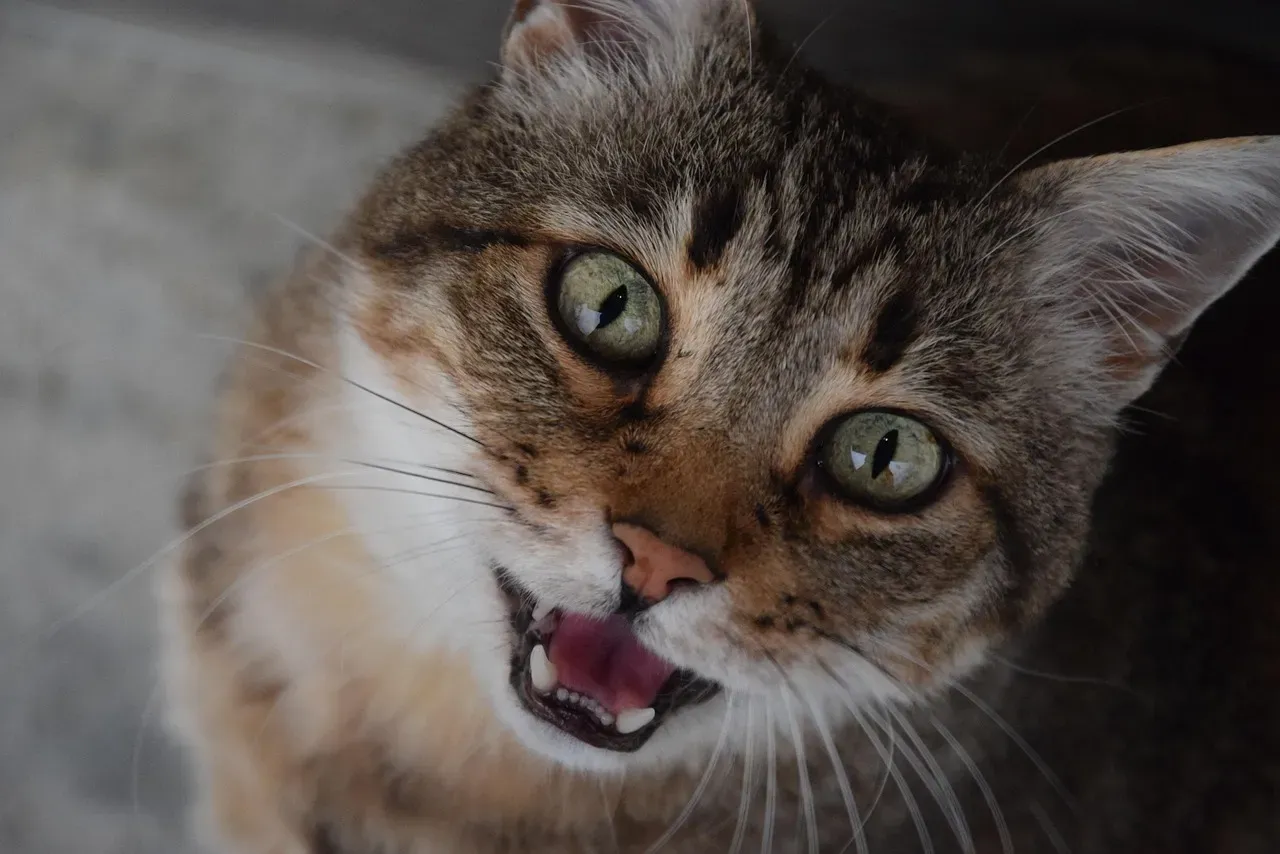
Here’s the thing that will probably surprise you: your cat’s meow was never really meant for other cats. Studies have shown that domestic cats tend to meow much more than feral cats, and they rarely meow to communicate with fellow cats or other animals. Think about that for a moment. The sound we most associate with cats is essentially a trick they developed specifically for us.
Research shows that cats developed their vocal meowing primarily to communicate with humans, but among themselves, they rely almost exclusively on non-verbal cues. It’s a bit like someone learning just enough of a second language to order coffee. The communication is real, but it barely scratches the surface of what they’re actually capable of expressing.
The Tail: Your Cat’s Personal Mood Barometer
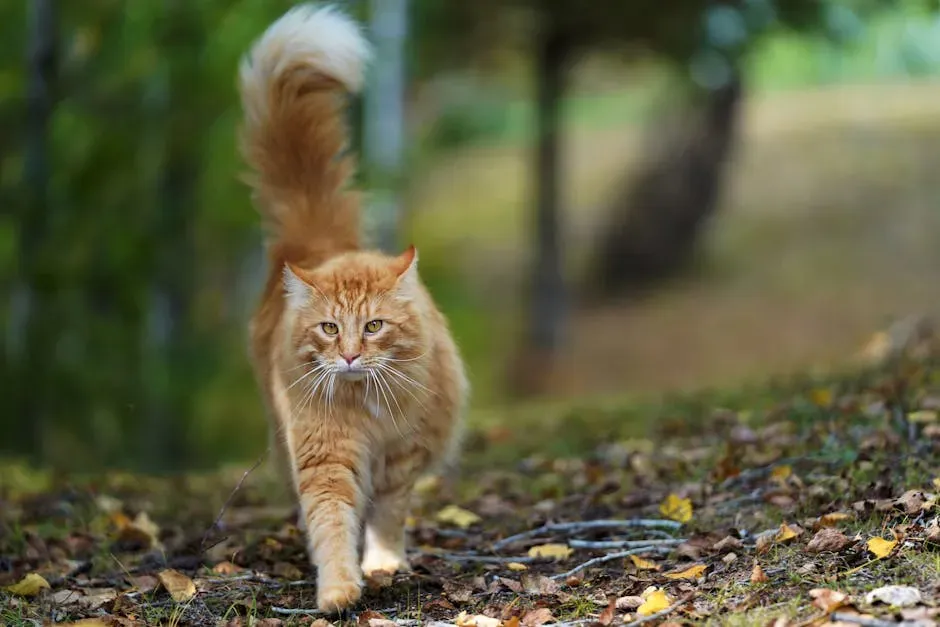
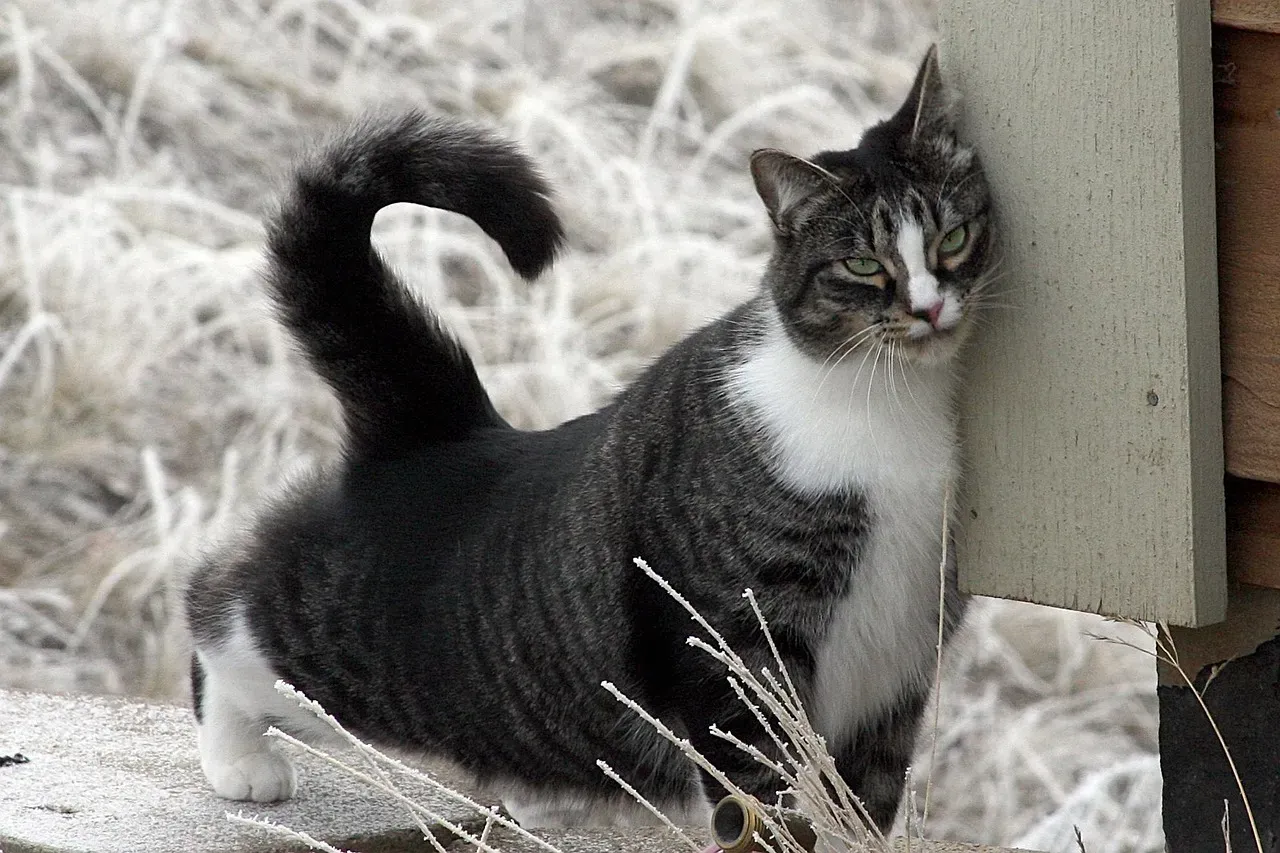
The tail position is a well-known way that cats communicate visually. Generally, the “tail up” position, where the tail is held vertically in the air at a right angle to the ground, signals friendly intent when a cat approaches another cat, animal, or person. So when your cat struts toward you with their tail held high like a flag, that is a warm welcome. It’s the feline equivalent of a cheerful wave.
A tail tucked between the back legs is often a sign that a cat is anxious or fearful, whereas a tail held out and moving slowly side-to-side may signal frustration. In more extreme cases, the tail may be held up and puffed out to make the cat’s silhouette appear larger. Understanding these signals is honestly the fastest shortcut to reading your cat’s emotional state at any given moment. A thrashing tail is not a wagging tail.
The Eyes: Where the Real Conversations Happen
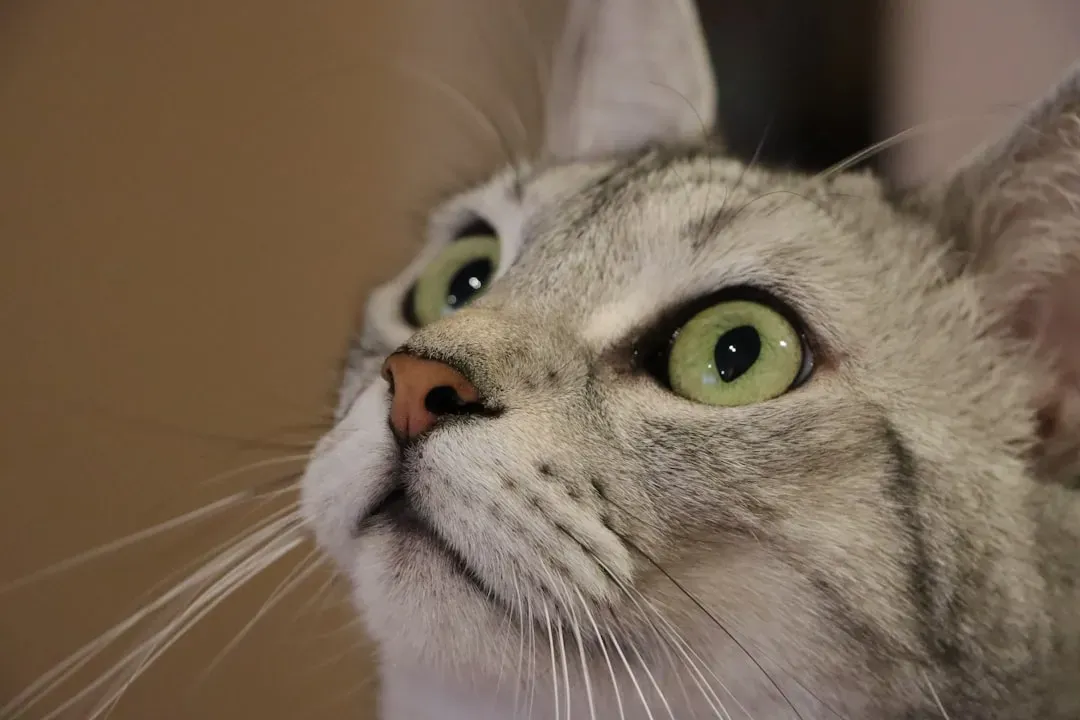
A widely reported cat behavior involves eye narrowing, referred to as the slow blink sequence. Slow blink sequences typically involve a series of half-blinks followed by either a prolonged eye narrow or an eye closure. You’ve probably seen this and thought your cat was just drowsy. Nope. They were telling you something deeply personal.
For the most part, slow blinking is your cat’s way of telling you that they trust and are comfortable around you. Slow blinking is one of the ultimate signs of trust that your cat can give you. Research has backed this up beautifully. One experiment revealed that cat half-blinks and eye narrowing occurred more frequently in response to owners’ slow blink stimuli, and in a second experiment, cats had a higher propensity to approach an experimenter after a slow blink interaction than when they had adopted a neutral expression. You can literally smile at your cat with your eyes and they will smile back.
Ear Positions: The Overlooked Emotional Antenna
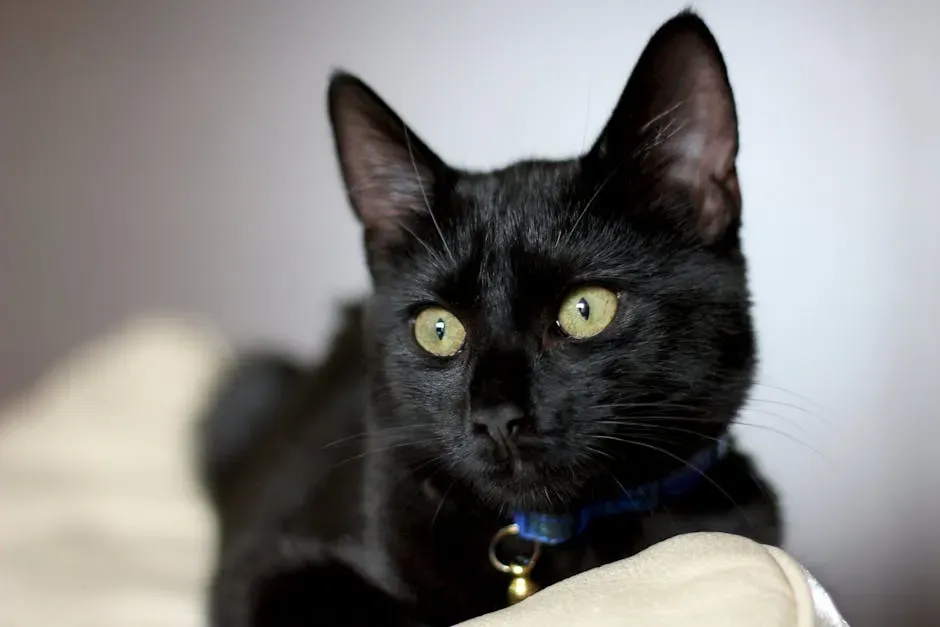
Ears that are erect and rotated out along with narrow pupils are usually a signal of frustration, whereas dilated pupils with ears held flat against the head are often a sign of fear. Relaxed cats tend to have their ears facing forward in the normal position. Think of a cat’s ears as emotionally honest antennas that simply can’t lie. They’re always broadcasting something.
Incredibly, research suggests ears may be even more revealing than you’d expect. Although the tail is a conspicuous feature for human observers, ear positions of the cats in dyadic interactions with other cats are the best predictor of the outcomes of these interactions. When both partners held their ears erect, the outcome was significantly positive, such as rubbing or close proximity. In all other cases of ear positions in both cats, the outcome was negative, with increased distance between the partners. Ears up means all is well. Ears down means stand back.
Scent Marking: The Invisible Message Board
A cat’s sense of smell is far more powerful than ours, with about 200 million scent receptors in its nose compared to our mere 5 million. This heightened ability allows them to detect and interpret an incredible range of odours, making scent one of their primary means of communication. Imagine walking into a room and being able to read every message, every mood marker, and every identity tag left by every creature that ever passed through it. That’s your cat’s daily experience.
Cats have scent glands located in multiple areas, including their cheeks, forehead, paws, flanks, and the base of their tail. When a cat rubs its face against furniture, doorways, or even people, it deposits pheromones that signal ownership and familiarity. When your cat rubs their face on your laptop, your couch corner, or your knee, they’re not being clingy. They’re curating a home that smells like belonging.
Bunting and Head Rubbing: When Your Cat Claims You
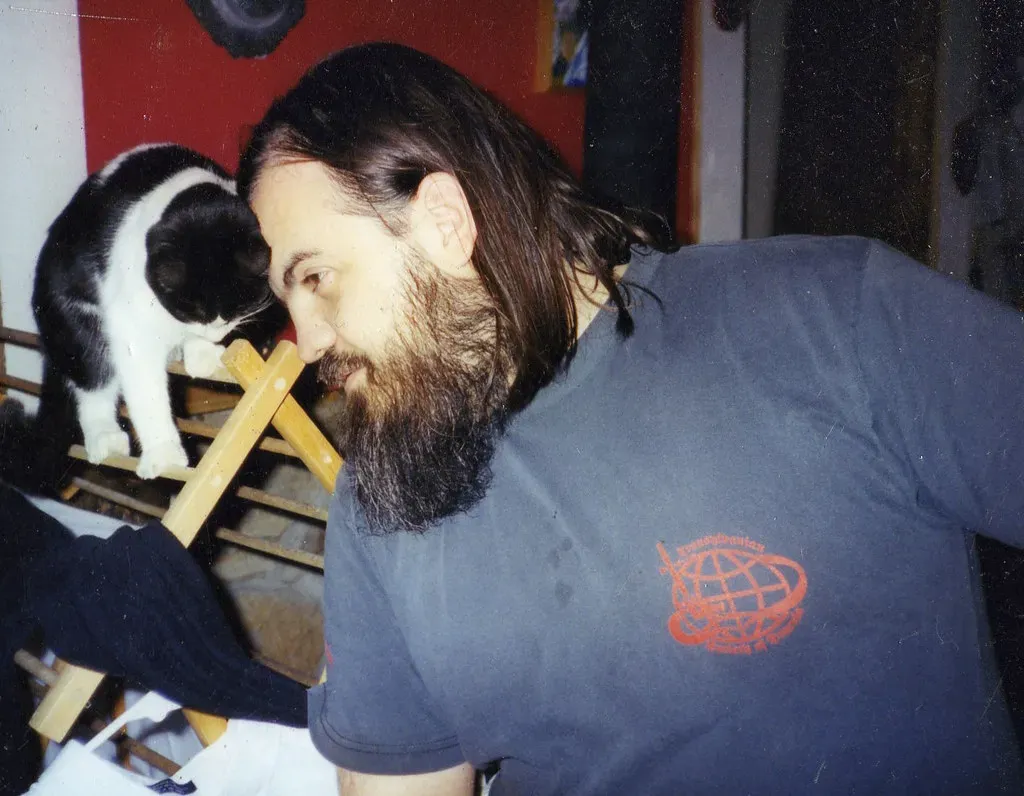
This behavior, identified as “bunting,” occurs when a cat rubs up against a person to deposit scent. This might be a way for cats to display social status or social dominance. Let’s be real though, when your cat headbutts your face at midnight, it feels less like a dominance display and more like an act of pure adoration. The science suggests it’s actually both.
Head bunting is a behavior cats engage in toward another cat, dog, or human with whom they have a friendly relationship. Head bunting is not displayed toward inanimate objects; it’s a behavior reserved as a bonding gesture. The pheromones help establish a “colony odor” or group scent shared by all family members and objects in the home, making the environment feel secure and helping the cat identify unknown scents or potential intruders. In short, you being marked by your cat is the highest compliment in their entire social vocabulary.
Body Posture: The Full-Body Broadcast
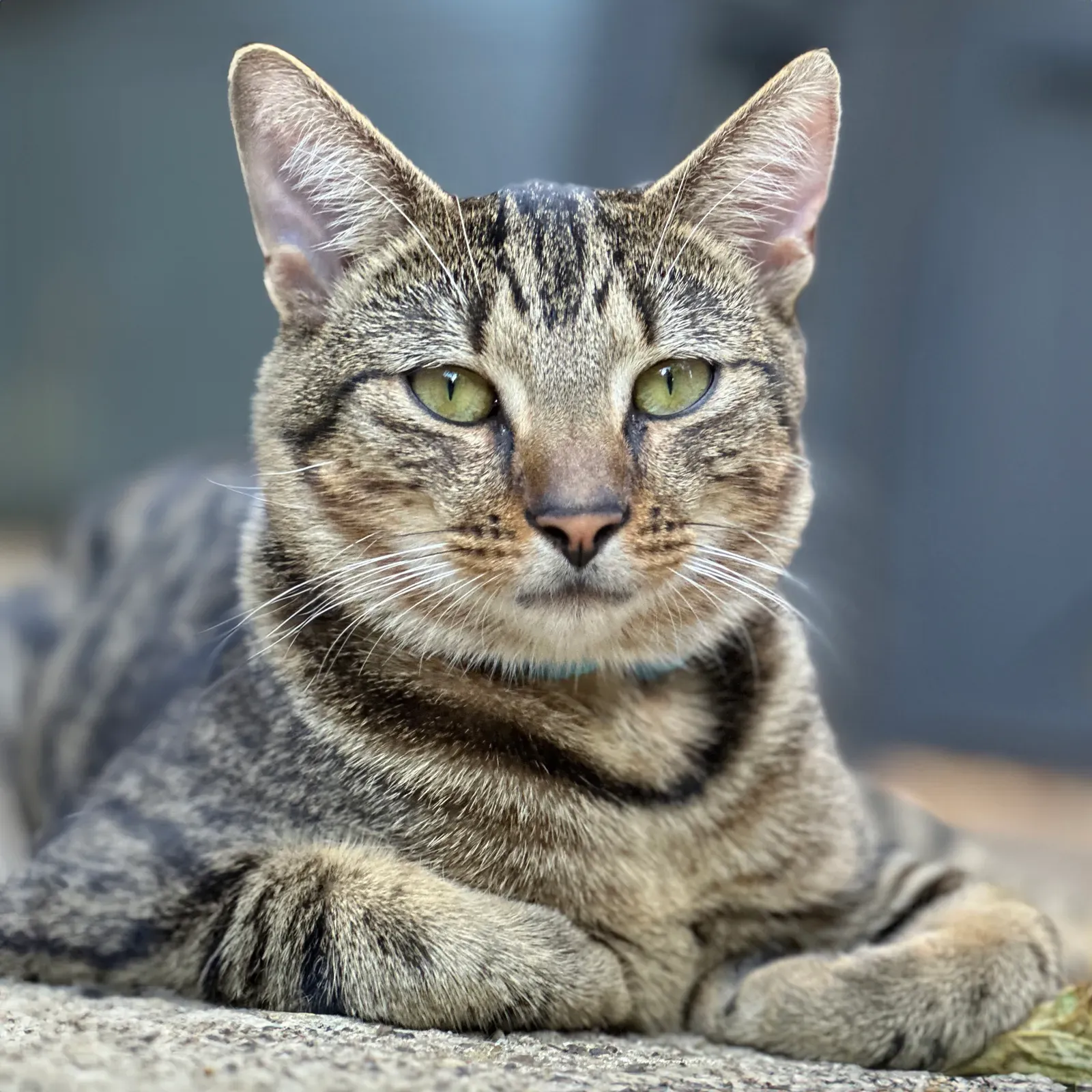
A stretched-out, tense and forward-facing body may show confidence, or in some cases that a cat is ready to attack, whereas an anxious or fearful cat will pull their head and neck in to look small, hold their body close to the ground and place four paws firmly on the floor in case they need to flee quickly. Posture is the broadest canvas a cat paints on. When you learn to read the full-body picture, individual signals like ears or tail suddenly make a lot more sense in context.
When cats roll over and show their bellies, they’re displaying ultimate trust. However, unlike dogs, this doesn’t always mean they want belly rubs. Many cats will grab and kick if you touch their exposed belly, as it’s a natural defensive response to protect their vital organs. I think this is probably the single most misread cat signal on the planet. It’s trust, not an invitation. Respecting that boundary matters enormously to the relationship you build with your cat.
Paw Actions and Kneading: Messages Sent Through Touch
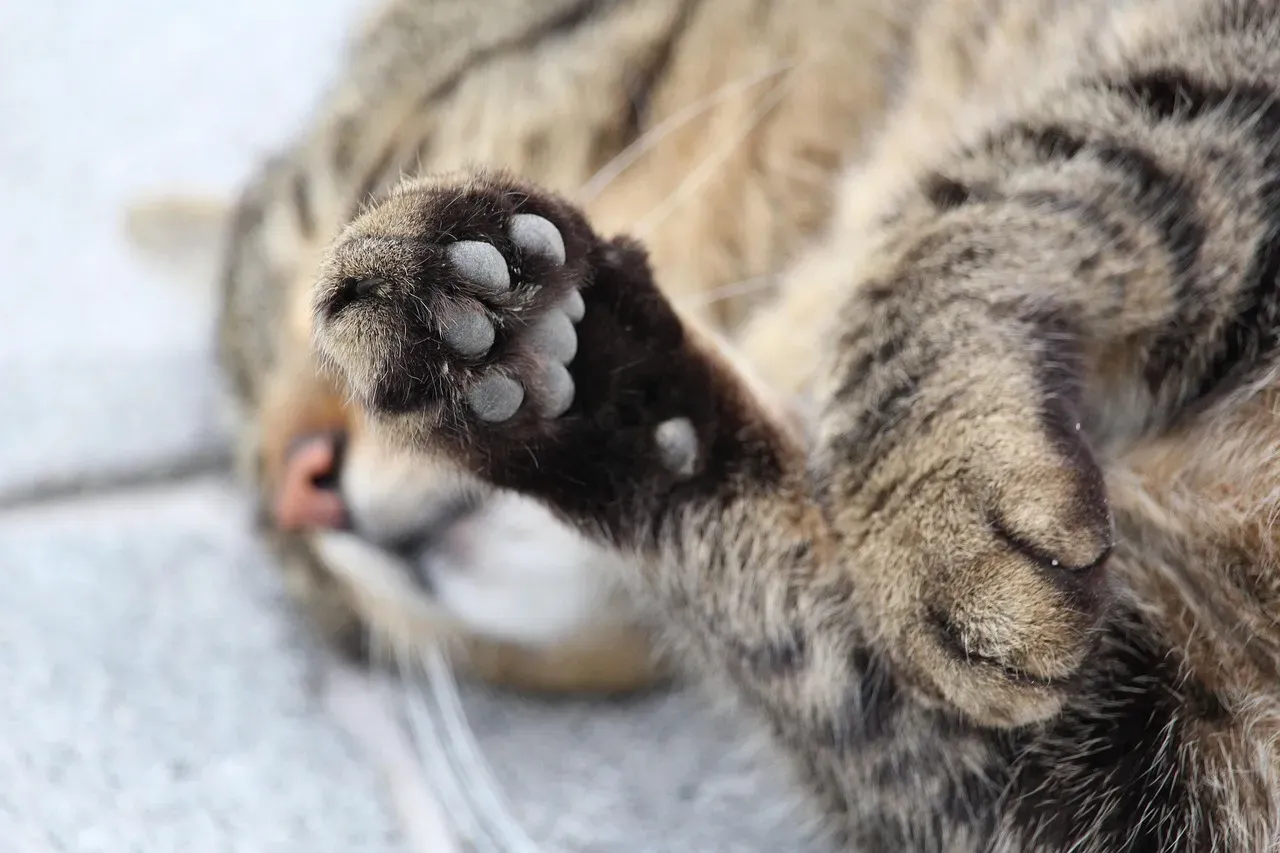
Kneading, often called “making biscuits,” signals comfort and contentment. Clawing or scratching is a natural behavior used to mark territory and stretch muscles, while gentle paw taps are a way of getting your attention. That rhythmic pushing motion your cat does on your lap? It traces back to kittenhood, when kittens knead their mother while nursing. Your cat essentially sees you as a source of the same deep security.
Cheek rubbing and scratching are also forms of marking. When a cat scratches a surface, the glands in the feet release pheromones and, in addition, the claw marks serve as long-lasting visual communication. So your sofa is not just a scratching post. It’s a notice board that says, clearly and confidently: “I live here.” Having both a visual and olfactory mark is important for safety. The visual mark allows other cats to see the scratch marks from a distance so they know they’re entering another cat’s area.
How Cats Communicate With Each Other in Social Groups
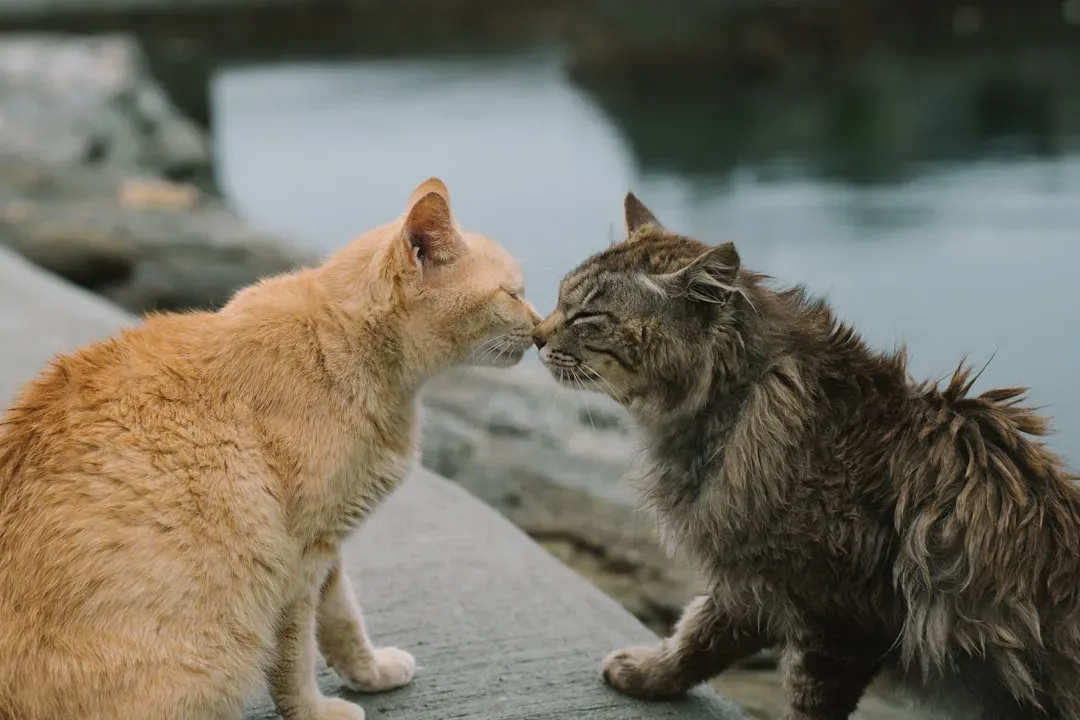
Cats often greet each other by intertwining their upright tails together or touching noses, a gesture that involves olfactory communication. They may also rub their faces or bodies together to exchange scents and confirm familiarity. It’s a full sensory greeting ritual that makes a human handshake look incredibly basic by comparison. Every detail carries information the other cat can read in an instant.
Cats that live together often develop a communal scent, which helps them recognise and bond with each other. This is why cats that are close companions will frequently rub against one another or engage in mutual grooming. This behaviour, known as allogrooming, helps reinforce social bonds and spread familiar scents among a group. It’s a deeply social system, more nuanced than most people ever give cats credit for. Cats can socialize with each other and are known to form “social ladders,” where a dominant cat leads a few lesser cats. This is common in multi-cat households.
Conclusion: Learning to Listen Without Words

Your cat has been having full conversations with you every single day. The language just doesn’t use sound. It lives in the angle of a tail, the softness of a blink, the deliberate press of a forehead against your cheek, or the quiet act of sitting close to you without touching you. All of it means something.
The beautiful thing is that this is a two-way street. Cats are masters of communication and our job is to pay attention. If you learn to accurately read body language signals and respect what your cat is telling you, it will create trust and strengthen the bond you share. Once you start tuning into this silent language, you’ll realize your cat was never distant or mysterious at all. They were simply waiting for you to learn their alphabet.
Honestly, the most rewarding thing you can do for your relationship with your cat is sit quietly with them, watch, and truly observe. You’ve been living with a master communicator all along. What message have you been missing? Tell us your thoughts in the comments below.