You’ve probably watched your cat pause mid-stretch, lick a paw, and then methodically scrub their face with the sort of focused calm that looks almost meditative. It’s easy to dismiss this as routine. After all, cats are famous for their cleanliness. Yet what’s happening beneath all that licking and pawing is far more nuanced than simple hygiene.
The timing and intensity of your cat’s grooming can provide genuine insights into their emotional state. Once you start reading the signals correctly, you’ll realize your cat is communicating quite clearly. You just need to know the language.
Grooming in Contentment: What a Truly Relaxed Cat Looks Like
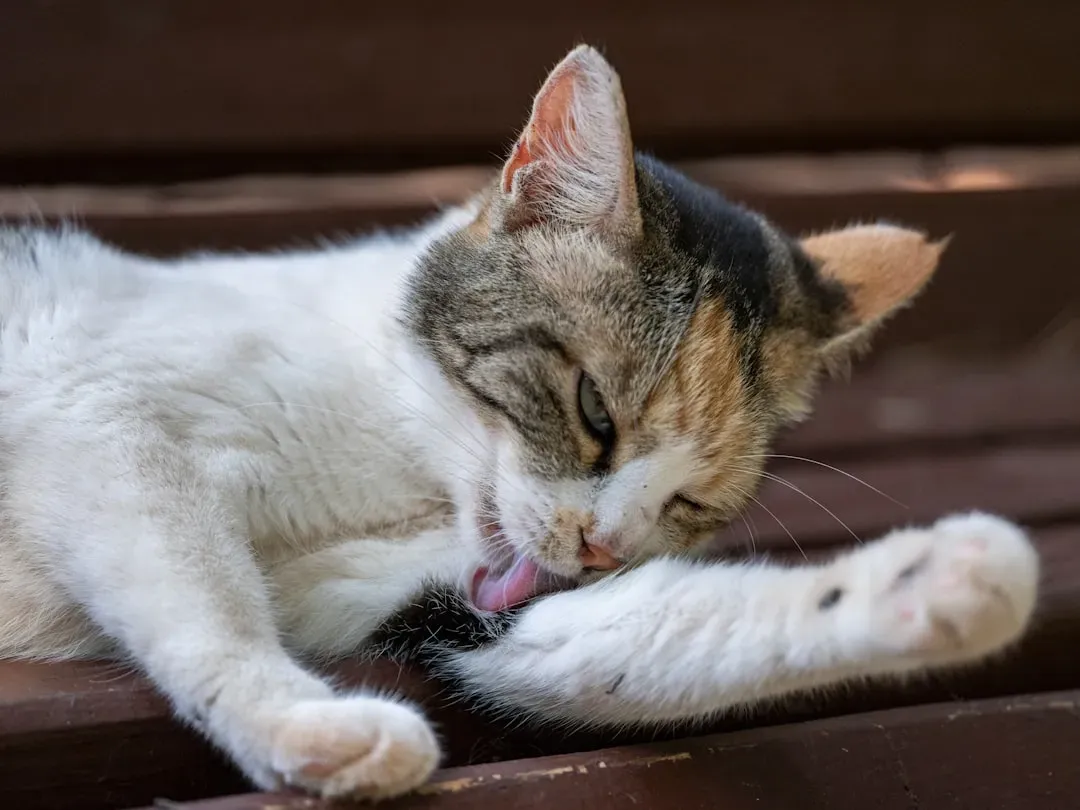
When your cat stretches out in a sunny spot and begins grooming with slow, unhurried strokes, that’s not just cleanliness at work. A cat who comes out into the middle of the room, throws up a leg, and begins grooming in front of you feels comfortable and at ease, and regular grooming is a sign of a happy, healthy feline friend.
Cats are naturally very clean, and grooming behavior after moments of rest or a meal helps them feel relaxed and content, similar to a ritual after an important activity. It’s a sign that your cat feels safe and comfortable. If you see your cat grooming openly in your presence, take it as a quiet compliment.
Post-Meal Grooming: The Contentment Ritual You Might Be Misreading
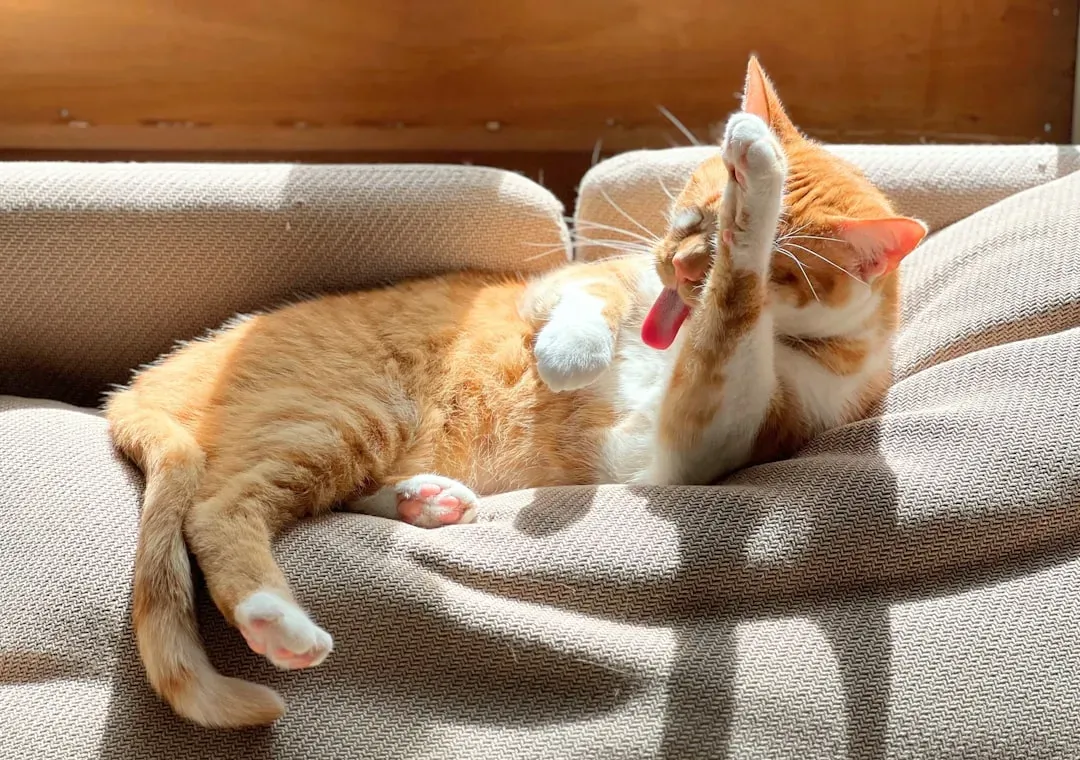
Right after eating, most cats will transition seamlessly into a face-washing session. It might look random, but it’s deeply instinctive. It’s completely normal for cats to groom after a meal, and in fact it’s a common feline behavior rooted in natural instincts and daily self-care.
Grooming is also a calming ritual for cats, and after a meal, licking their fur helps them relax. Some experts believe that grooming may play a role in helping the cat relax and stimulate digestion, much like stretching after a meal as part of their natural rhythm. If your cat grooms calmly and thoroughly after eating, it’s generally a very good sign.
Displacement Grooming: When Stress Hides Behind a Clean Coat
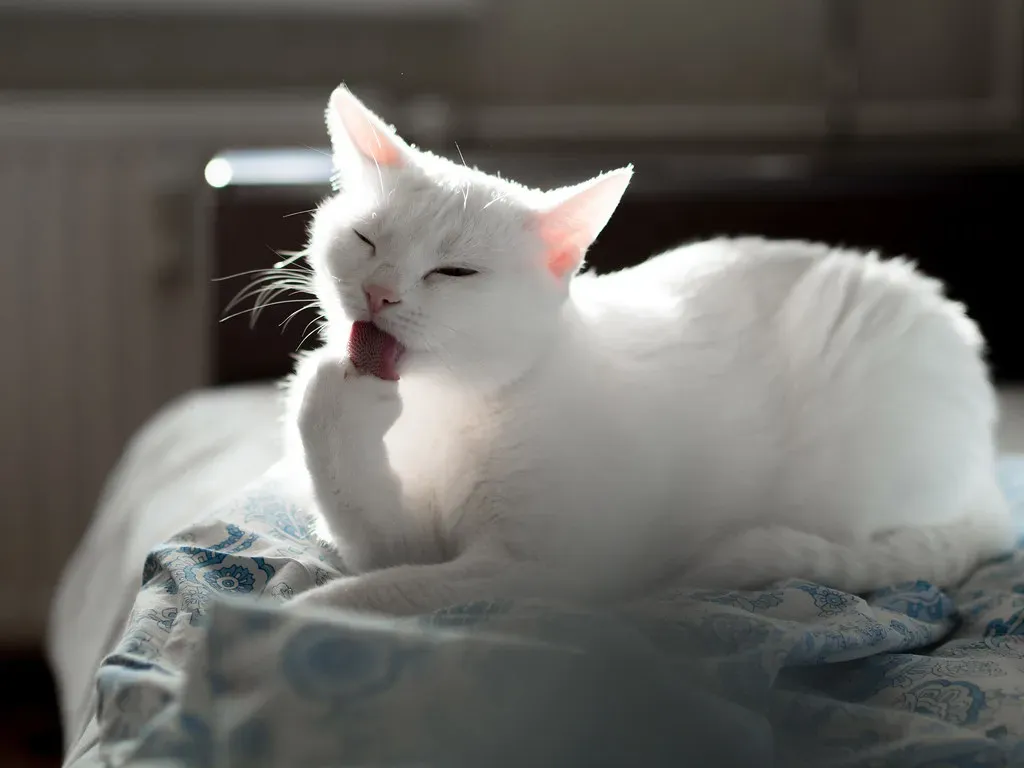
Cats use grooming to make themselves feel better emotionally and as a self-calming mechanism. This is called “displacement grooming,” and a cat may suddenly groom itself to relieve tension when feeling fearful or uncertain how to react to an odd situation. A good example is a cat that misjudges a leap, falls down, and then begins to furiously groom as though embarrassed.
This type of activity is performed out of context as a result of conflict, frustration, or anxiety in response to social or environmental stressors. Displacement grooming can distract an animal from stressors, lower its level of arousal, or deflect social conflict. When you see your cat grooming suddenly in the middle of a tense situation, they’re not ignoring the problem. They’re actively trying to manage it.
Overgrooming: A Sign Something Deeper May Be Wrong
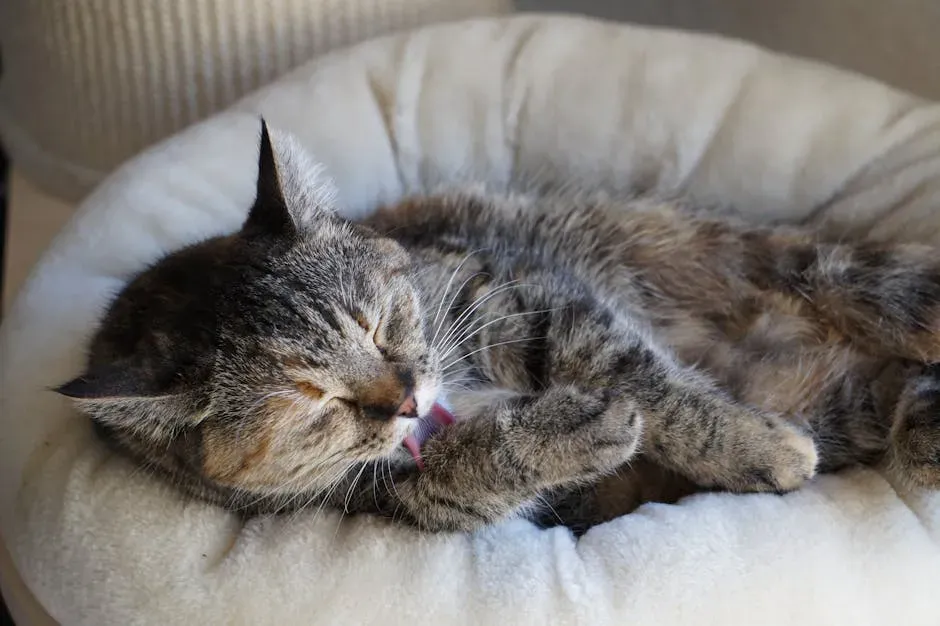
Overgrooming is the term used when a cat’s grooming behavior goes beyond normal coat maintenance, and it may even seem obsessive, with actions like licking, chewing, plucking, or biting areas of hair or skin. It’s often difficult to get the cat to stop, and the result can be damaged fur shafts, hair loss, and sometimes even skin sores. This behavior can also interfere with a cat’s daily functions like eating, playing, and sleeping.
Behavioral and emotional causes of overgrooming are often given the name “psychogenic alopecia,” a diagnosis reached after medical issues have been ruled out, where the overgrooming is assumed to be caused by a mental or emotional issue. The types of stress that cause this are usually chronic and consistent, and since cats are especially sensitive to change, anything new, moved, or altered in their environment or routine could be the culprit.
Allogrooming: What It Means When Your Cat Grooms Another Cat or You
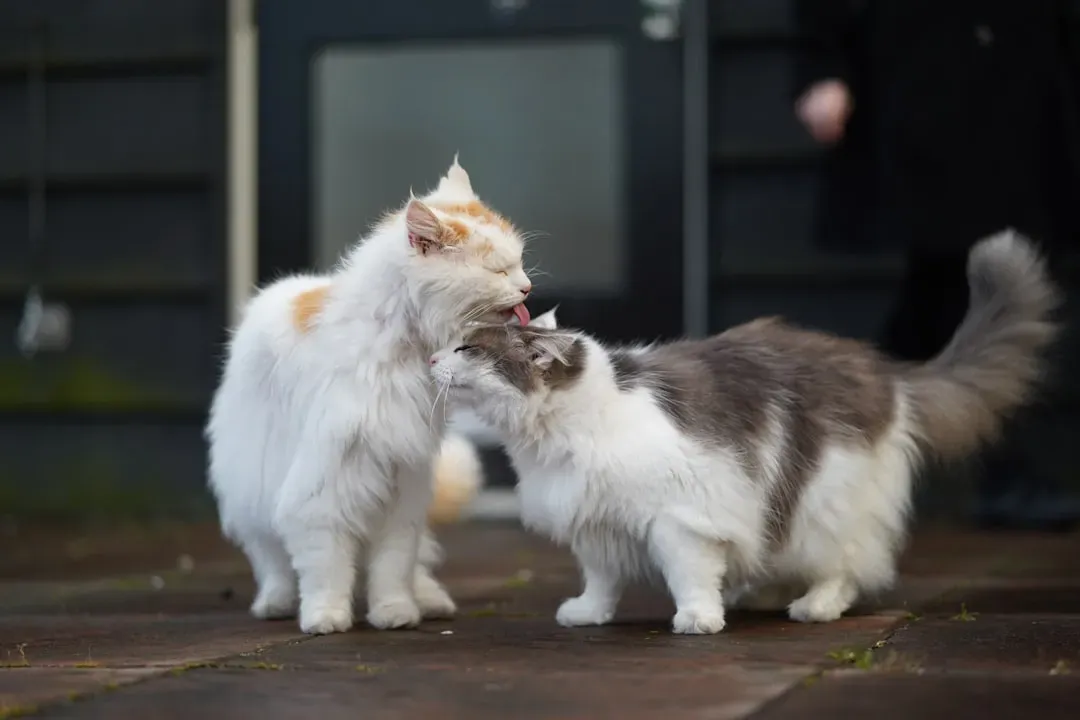
Cats often groom each other as a way to establish and strengthen social bonds. This behavior, known as allogrooming, is a sign of affection and trust between cats. When cats groom each other, they are not just cleaning; they are sharing scents, which helps to create a unified group smell. This group scent is important for cats living together, as it fosters a sense of community and reduces aggression.
Research shows that cats groomed human caregivers more frequently than strangers, highlighting selective social bonding based on familiarity and trust. The act releases oxytocin in both cats and humans during close interactions like grooming or petting. This hormonal release strengthens emotional connections between species and explains why both parties often feel relaxed and happy after such interactions.
Social Hierarchy and Grooming: Who Grooms Whom Tells You Something
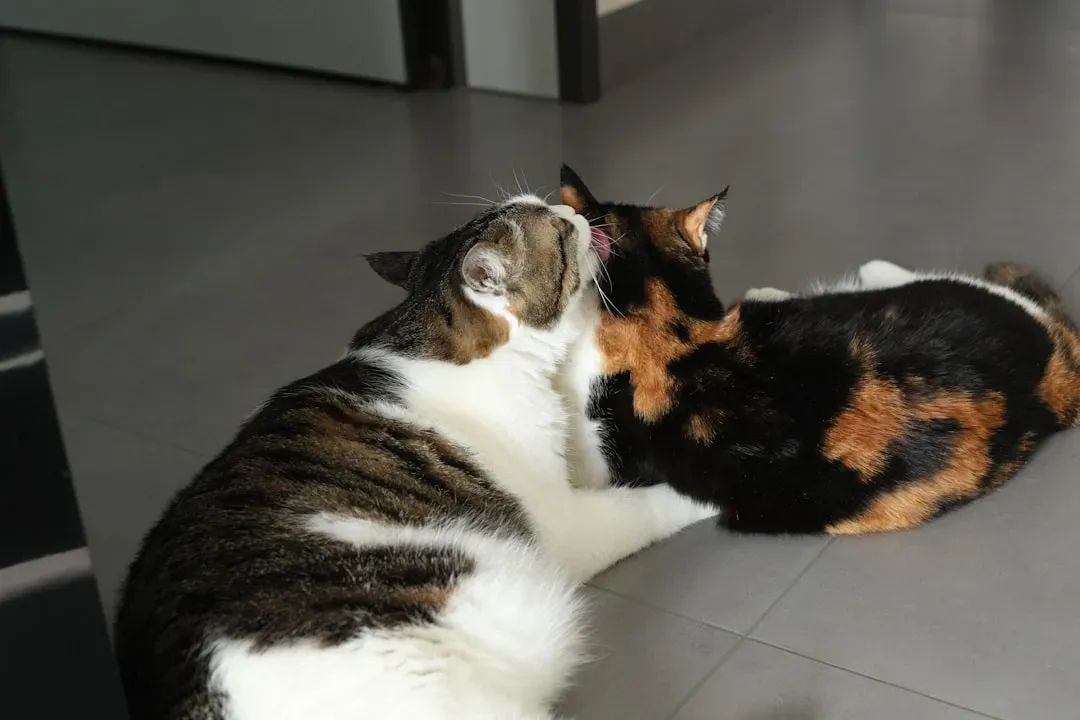
In some cases, grooming can serve as a way to establish or reinforce social hierarchy within a group of cats. Dominant cats might groom subordinate cats to assert their status, while submissive cats might allow themselves to be groomed as a sign of respect and acceptance of their lower rank. This hierarchical grooming is usually gentle and consensual, unlike aggressive grooming, which can involve biting and rough handling. If you observe your cats grooming each other in a calm and gentle manner, it indicates a stable social structure within the group.
In multi-cat households, you might notice that cats groom each other more frequently during times of stress or after a conflict. This behavior helps to diffuse tension and restore peace among the cats. If your cats are grooming each other regularly, it’s a good sign that they feel safe and comfortable in their environment. The dynamics between who initiates and who receives grooming can tell you a great deal about the emotional climate in your home.
When Grooming Stops: Depression, Illness, and Emotional Withdrawal
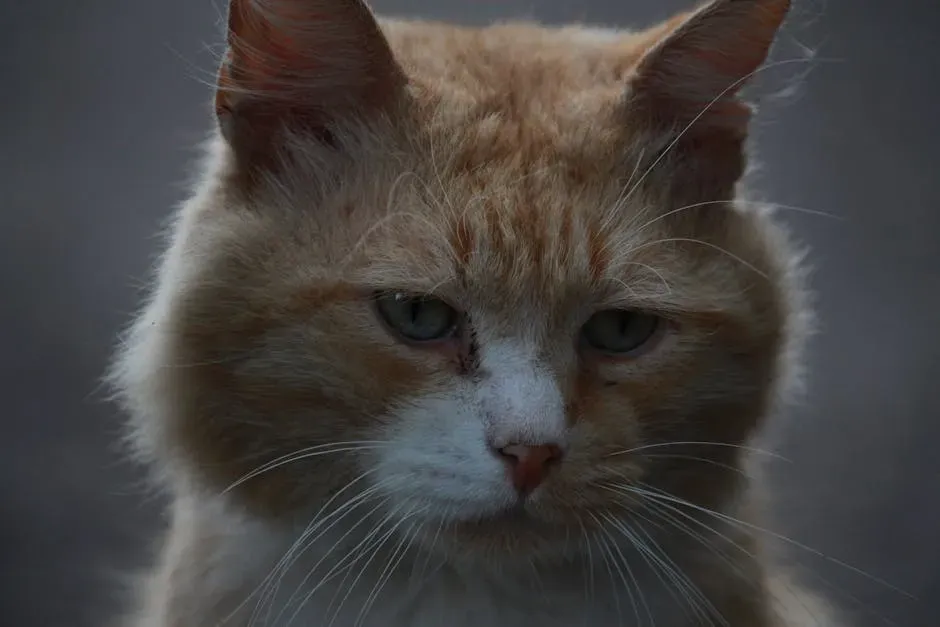
The various grooming behaviors are important to a normal healthy cat, and the lack of these behaviors can indicate depression or ill health. Their absence may also signal the potential for ectoparasite infestation or secondary conditions. Cats are notoriously clean animals, so if you spot your cat’s grooming routine being neglected, this may be a sign that they are suffering from a low mood, anxiety, or stress. Cats that suffer from depression can neglect themselves when it comes to grooming, which can lead them to look untidy and messy.
Depressed cats may stop grooming themselves or groom less effectively, and you may notice that your cat’s coat has become matted or dull. Your cat’s coat may also become oily, develop dandruff, or become knotted. A very common reason cats stop grooming is that it’s too painful for them to do so, and like illnesses, cats are very good at hiding when they’re in pain. Cats do this because it’s instinctual for them to hide their pain to remain vigilant and not be seen as vulnerable by potential predators.
Environmental Changes and Stress-Related Grooming Shifts
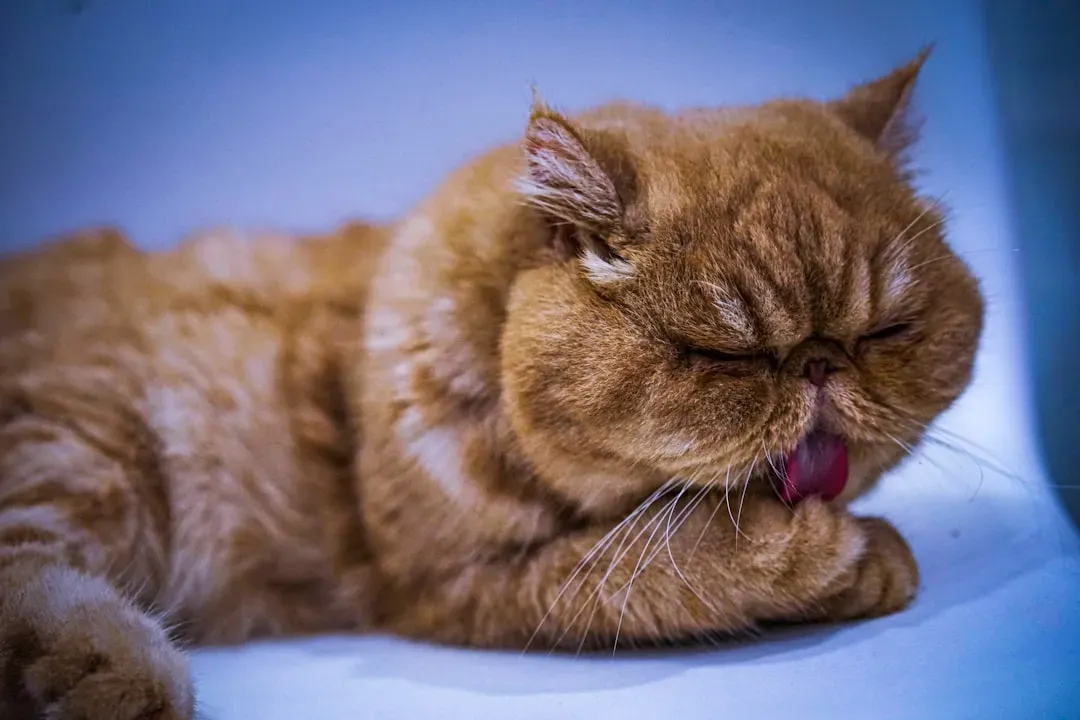
Excessive licking does not always stem from a physical health problem and can occasionally have a psychological cause. Cats like consistency and predictability, and change can be stressful. A recent move, the addition or loss of another pet in the home, or even a change of schedule can cause anxiety in cats. Licking, considered in such cases a “displacement behavior,” may calm and comfort a cat, but it can sometimes become habitual if the source of the problem is not properly identified and addressed.
Excessive licking can be a displacement behavior and a coping mechanism for stress. Licking releases endorphins that help an anxious cat self-soothe, but it can become a habit if the source of the problem persists. Changes such as a recent move, the addition or loss of another pet, or a change of schedule can cause anxiety in cats. You can help by maintaining predictable routines and providing quiet, elevated spaces where your cat can feel secure.
When to See a Vet: Reading the Line Between Normal and Concerning
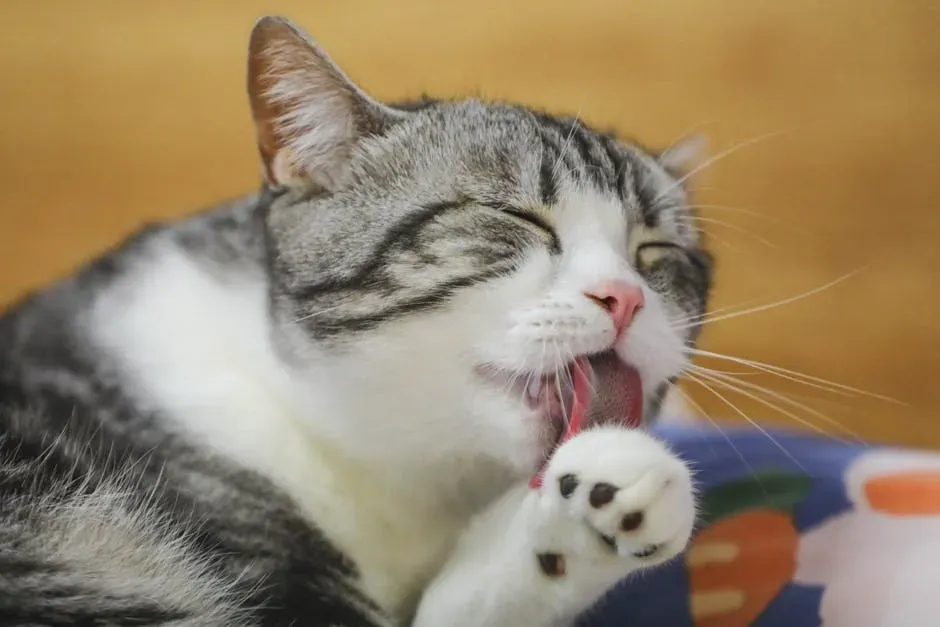
Grooming behavior is an important indicator of health in feline companions. Cats spend roughly thirty to fifty percent of their day in grooming activities. A sick cat may stop or reduce grooming, resulting in a harsh or greasy hair coat, mats, staining on the fur, or a foul smell. Other conditions such as parasites, allergies, or behavioral issues may result in over-grooming.
A change in grooming behavior should prompt cat owners to consider a visit to the veterinarian. If you cannot find a trigger and resolve the overgrooming on your own, consider working with a certified feline training and behavior consultant or veterinary behaviorist. They can help you track down those potential triggers and develop a plan to ease overall stress and anxiety. Trust your instincts as a pet owner. You know your cat’s rhythms better than anyone.
Conclusion
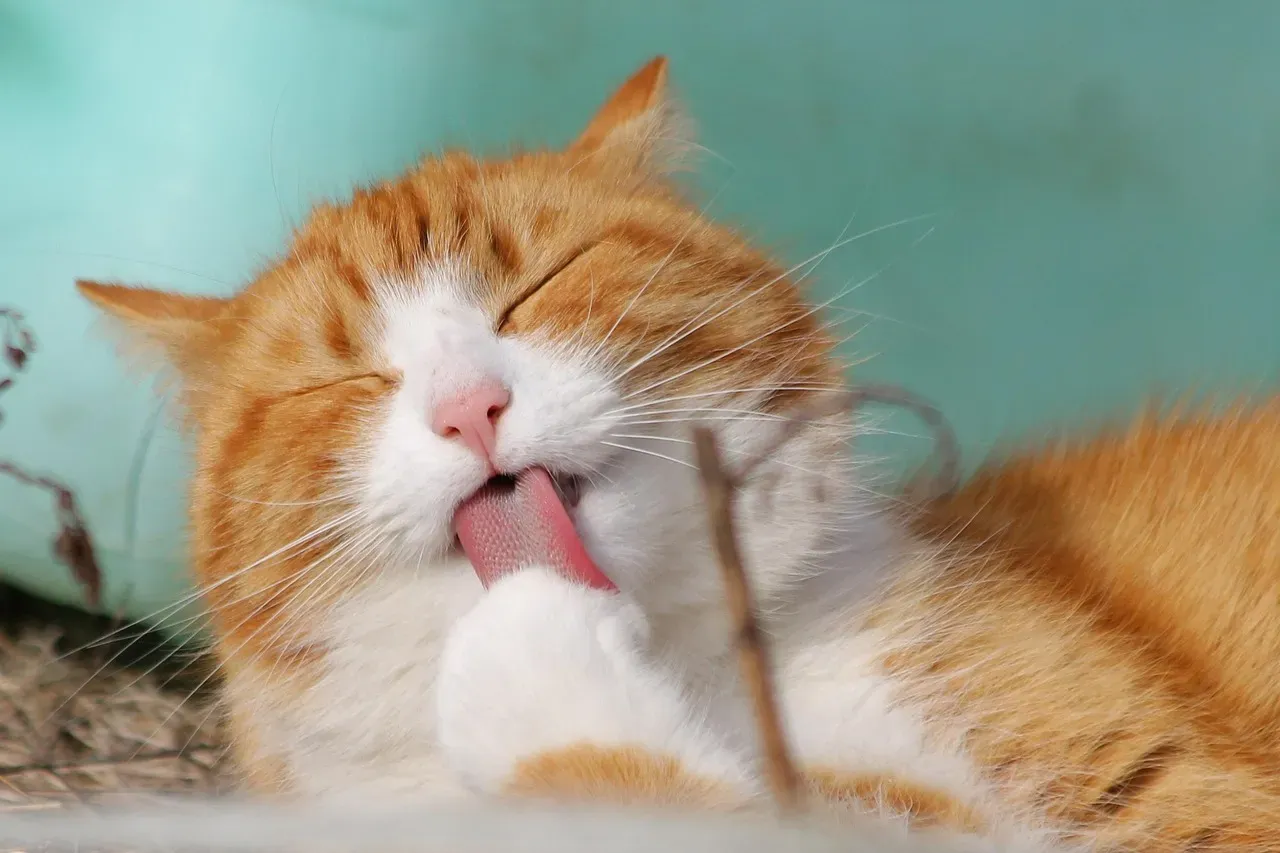
Your cat’s grooming habits are one of the most honest windows into how they’re actually feeling. A slow, deliberate wash after a meal signals peace and security. A sudden frantic lick in a tense moment is a subtle cry for calm. An unkempt coat that appears overnight is worth taking seriously.
The good news is that once you start paying attention to the nuances, the language becomes surprisingly readable. Your cat isn’t being mysterious for the sake of it. They’re communicating through the only vocabulary they have. Learning to listen through observation, rather than words, is what deepens the bond between you and makes you a genuinely attuned companion.