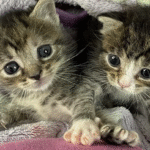
Two one-week-old kittens, each weighing less than 50 grams, arrived at an emergency vet clinic on the brink of death. Hypothermic and barely moving, Hiccups and Iris faced overwhelming odds from the moment they were brought in. Emergency veterinarian Anna took on their care with unwavering determination.
What started as a desperate intervention has blossomed into a tale of triumph. These runts, smaller than many expect even at birth, required immediate and intense medical attention. As details emerge, animal lovers everywhere are celebrating their fighting spirit.
The Perilous Arrival: Hypothermic and Near Death
Hiccups and Iris entered the emergency room in critical condition, their tiny bodies chilled to dangerous levels. At just one week old, their weights hovered around 50 grams each, making them exceptionally vulnerable to hypothermia. They trembled and shook uncontrollably, signs of severe weakness and dehydration. Both kittens suffered from necrotic hind legs, a complication that threatened their survival without swift action. Emergency vet Anna recognized the urgency, knowing that such neonates often succumb quickly without intervention. Their faint signs of life hinted at a hidden resilience waiting to be nurtured.
Critical Surgery Saves Hiccups from Certain Doom
Hiccups’ hind leg presented the most severe infection among the pair, leaving amputation as the only viable option to prevent death. Board-certified surgeon Dr. Culp performed the procedure in under 15 minutes, a testament to precise expertise under pressure. The surgery addressed the necrosis that had set in rapidly due to their immature immune systems. Iris’ leg, though also necrotic, received supportive care that avoided similar extremes initially. This bold decision marked the turning point, stabilizing Hiccups and buying precious time for recovery. Veterinary teams note that such interventions in micro-preemies demand split-second judgments.
Round-the-Clock Care in Anna’s Home
Anna, the emergency veterinarian, brought the kittens into her home for nonstop monitoring and nurturing. Their initial fragility meant constant warmth and stimulation to combat ongoing chills and weakness. She managed their needs meticulously, fostering gradual strength in their shaky forms. Iris formed a special bond, often curling up with Anna’s newborn baby in the crib or against its head. This unique companionship seemed to accelerate her emotional and physical growth. Anna’s dedication blurred the lines of professional care and personal investment.
From Trembling Survivors to Cherished Family Members
Over time, Hiccups and Iris transformed from quivering infants into robust, playful kittens. The amputation did not hinder Hiccups’ spirit, allowing him to adapt seamlessly to his new reality. Iris’ gentle attachment to the baby highlighted her budding personality amid the recovery. Both gained the stability needed through Anna’s vigilant oversight. Ultimately, the family chose to keep them, turning a foster arrangement into a permanent home. Their journey underscores how targeted care can rewrite dire prognoses for the tiniest lives.
Stories like Hiccups and Iris remind us that even the smallest creatures pack mighty punches when given a fighting chance. What interventions have you seen make the biggest difference in animal rescues? Share your thoughts below.
Source: Original YouTube Video