A captivating social media clip captured a young cat navigating a narrow beachside fence with remarkable poise, leashed yet leading the way. The moment, shared widely online, underscored a playful yet profound distinction in pet behaviors that pet owners quickly recognized. What began as a spontaneous feline choice turned into a viral sensation, drawing millions of views and sparking conversations about the unique adventures possible with cats.
A Kitten’s Bold Beachside Choice
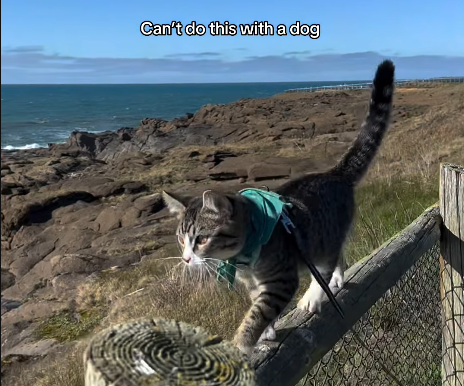
The video featured a six-month-old kitten named Noca, who climbed onto the fence entirely on her own during a walk. Her owner walked alongside, holding the leash as Noca padded confidently along the top, high above the sand. Text in the clip declared the feat impossible for dogs, a nod to cats’ innate sense of balance and love for elevated paths.
This wasn’t a staged trick but a natural extension of Noca’s curiosity. Cats often seek high perches for security and observation, a trait that shone through in this seaside setting. The owner noted that Noca’s comfort stemmed from consistent exposure to new environments.
Harness Training from Kittenhood Pays Off
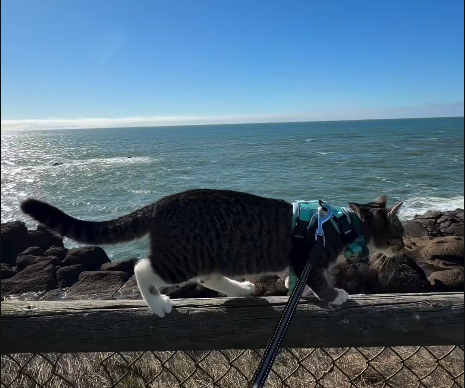
Noca’s owner, Kimbrell Kunz from Utah, began harness and leash training when the kitten was just three months old. This early start allowed Noca to embrace outdoor explorations without fear. Kunz explained to reporters, “We’ve been harness/leash training her since she was 3 months.”
By introducing the gear young, owners can build trust and prevent resistance later. Noca’s progress enabled moments like the fence walk, where she initiated the climb herself. Kunz shared, “In the clip, we are walking her on a fence, which she climbed up on all by herself.” Such training opens doors to safe adventures, especially for indoor cats craving stimulation.
Why Cats Excel Where Dogs Hesitate
Cats possess superior agility and a low center of gravity, making narrow surfaces like fences ideal playgrounds. Dogs, with their build and gait, rarely attempt such heights voluntarily. Kunz highlighted this in the post’s caption: “We love dogs but walking a cat is a very unique experience!”
The video teased, “Cats prefer high vantage points so I decided to make a post teasing the fact that dogs typically don’t walk on fences like cats do!” This contrast resonated because it captured everyday truths about pet personalities. While dogs thrive on open runs, cats claim vertical territory with ease.
- Superior balance allows cats to traverse narrow ledges effortlessly.
- Leash training amplifies confidence in adventurous settings.
- Early exposure fosters independence during outings.
- Feline curiosity drives self-initiated explorations like fence climbs.
- Owners gain peace of mind with secure harnesses.
Social Media Buzz Builds Momentum
Posted on March 30 by @nocas.world on Instagram, the reel amassed over 33,200 views and 2,700 likes within days. Viewers flooded the comments with admiration for Noca’s fearlessness. One remarked on the owner’s potential worry: “I think I’ll be the cat mom that’s afraid of him failing off.”
Others celebrated the joy: “Amazing. Just enjoying life and having an adventure as cats should,” wrote one fan. Another noted, “No fear there, that’s for sure!!” The clip’s lighthearted comparison fueled shares, reminding audiences of cats’ hidden athleticism. Watch the original Instagram reel to see Noca in action.
Reactions extended beyond laughs, inspiring some to consider harness training for their own pets. The post aligned with a growing trend of adventure cats, blending van life and pet travel.
Key Takeaways
- Start harness training early – at three months – for best results.
- Let cats lead to build their confidence on unique paths.
- Celebrate differences: cats conquer heights, dogs own the ground.
This viral moment reminded pet lovers that cats offer distinct joys, from gravity-defying strolls to independent spirits. As more owners share similar stories, the line between “dog person” and “cat person” blurs in appreciation for each species’ strengths. What unique adventures have you tried with your cat? Tell us in the comments.