You’ve seen it countless times. A delivery arrives at your doorstep, and before you can even remove the packaging, your cat has already claimed the cardboard box as their personal fortress. They squeeze themselves into impossibly small containers, ignore the expensive cat bed you purchased, and instead curl up in a shoebox that looks three sizes too small. What drives this bizarre behavior? Is your feline friend simply quirky, or is there something deeper happening beneath those whiskers?
The truth is, your cat’s fascination with boxes isn’t just a cute internet meme. It’s rooted in ancient survival instincts, psychological comfort mechanisms, and even temperature preferences that might surprise you. Let’s explore the science behind why your furry companion treats every cardboard container like the ultimate prize.
Why Does Security Matter So Much to Your Cat?
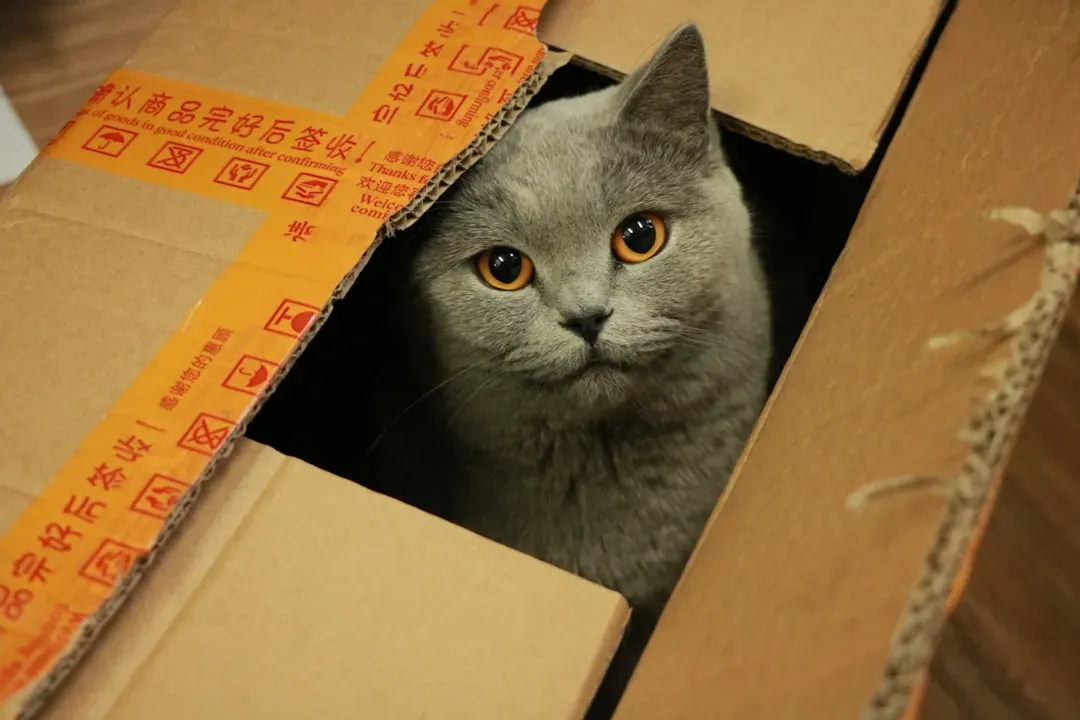
When your cat dives into a box, they’re not just being adorable. They’re responding to a primal need for protection. Cats by nature seek out small, confined spaces where they can hide from potential threats, a behavior that stems from their instincts shaped in the wild where staying out of sight helps them avoid predators or pounce on unsuspecting prey.
Think about it from your cat’s perspective. In the wild, felines are both hunters and hunted. They need safe spots to rest between hunting sessions, places where nothing can sneak up from behind. A box provides exactly that kind of sanctuary. A box is a secure, enclosed environment that triggers a cat’s natural instinct to find a safe den, allowing a cat to keep watch while feeling hidden and safe. The walls create a barrier that protects vulnerable flanks and rear, while the open top lets them monitor their surroundings.
This isn’t paranoia. It’s survival programming that’s been fine-tuned over thousands of years. Even though your pampered house cat faces no real danger from predators in your living room, their brain still operates on these ancient protocols.
Could Boxes Actually Reduce Your Cat’s Stress Levels?
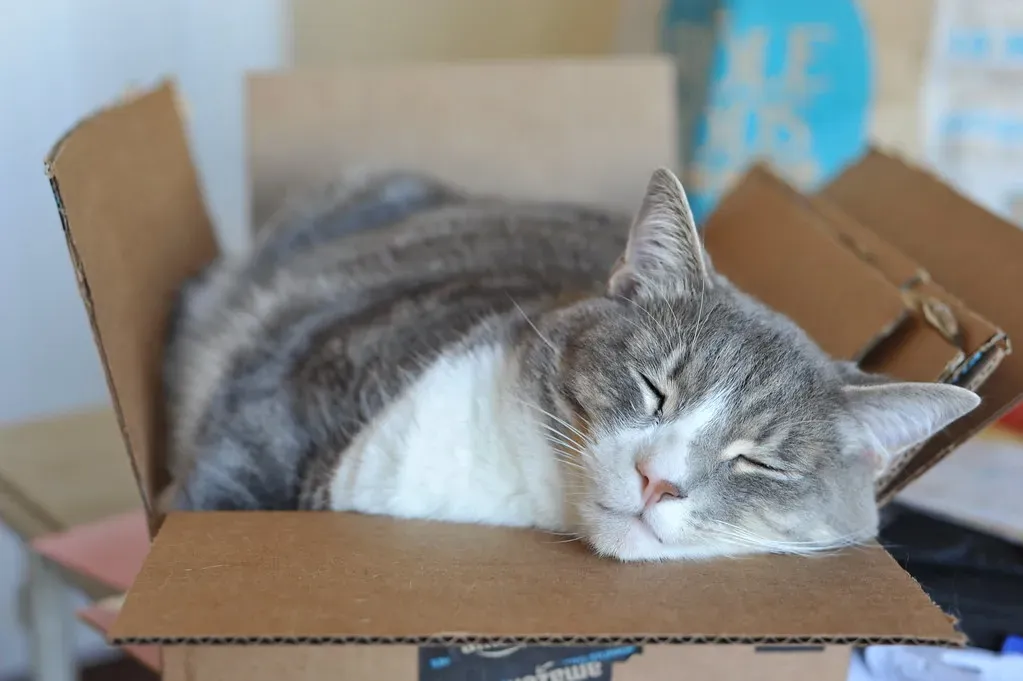
Here’s where it gets really interesting. Scientists have actually studied this phenomenon, and the results are pretty remarkable. Multiple studies have shown that stress hormones like cortisol are reduced in newly rescued cats when they are given access to a box.
Researchers at the University of Utrecht conducted a fascinating experiment with shelter cats. A study from the University of Utrecht in the Netherlands showed that newly arrived shelter cats who had access to boxes recovered faster and adapted quicker to their new environment compared to cats who did not have access to boxes, because boxes offer an opportunity to hide, they provide comfort and security, which are crucial when cats are feeling stressed or anxious.
The implications are significant. Your cat might retreat to their box hideout during stressful situations like thunderstorms, when guests visit, or when the household gets too chaotic. That cardboard container becomes their emotional safe room, a place where they can decompress and regulate their anxiety without interference.
Is Your Cat Just Trying to Stay Warm in That Box?
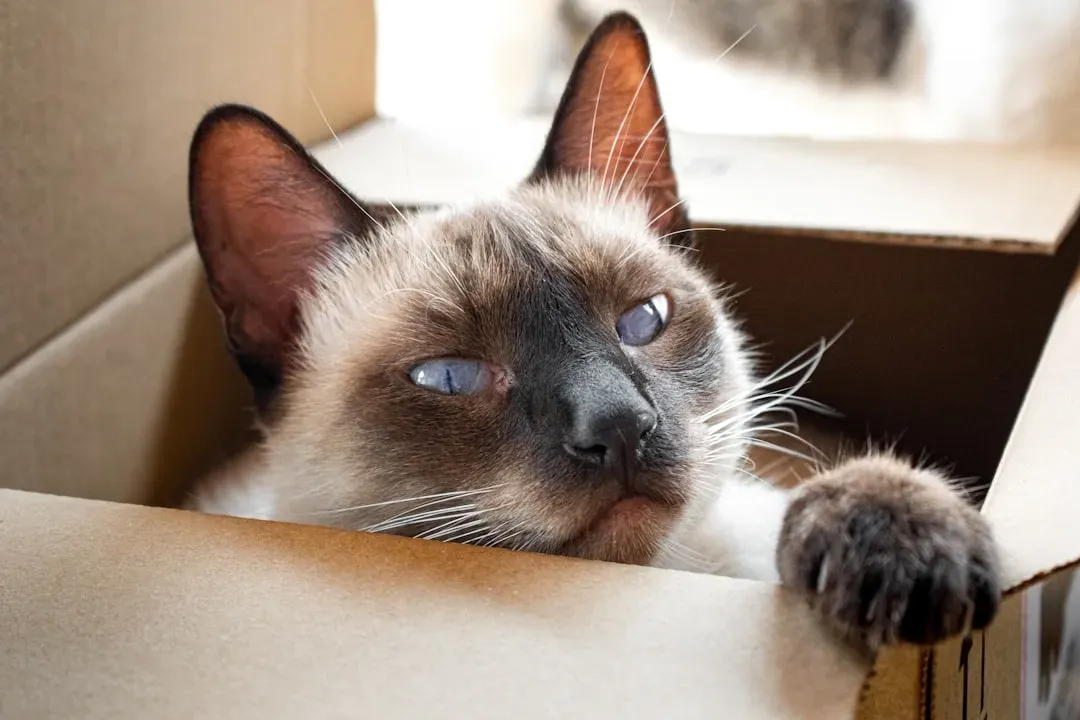
You might think your home is comfortable, but your cat probably disagrees. According to a 2006 study by the National Research Council, cats are most comfortable in temperatures between 86–97 F. The same group also found that most cats live in environments maintained at about 72 degrees, which is significantly cooler than their preferred temperature zone.
That’s a temperature gap of roughly fifteen degrees! No wonder your cat seeks out warm spots constantly. Boxes act as insulators and trap body heat so our cats can enjoy tropical temperatures without an expensive heating bill. Cardboard is particularly effective at this because of its corrugated structure, which creates air pockets that retain warmth.
When your cat curls up in a snug box, they’re essentially creating their own microclimate. The confined space of a box forces a cat to curl up into a ball, which also helps to preserve body heat. It’s like wearing a cozy sweater made of cardboard walls, except way more efficient.
Does Hiding in Boxes Satisfy Your Cat’s Hunting Instincts?
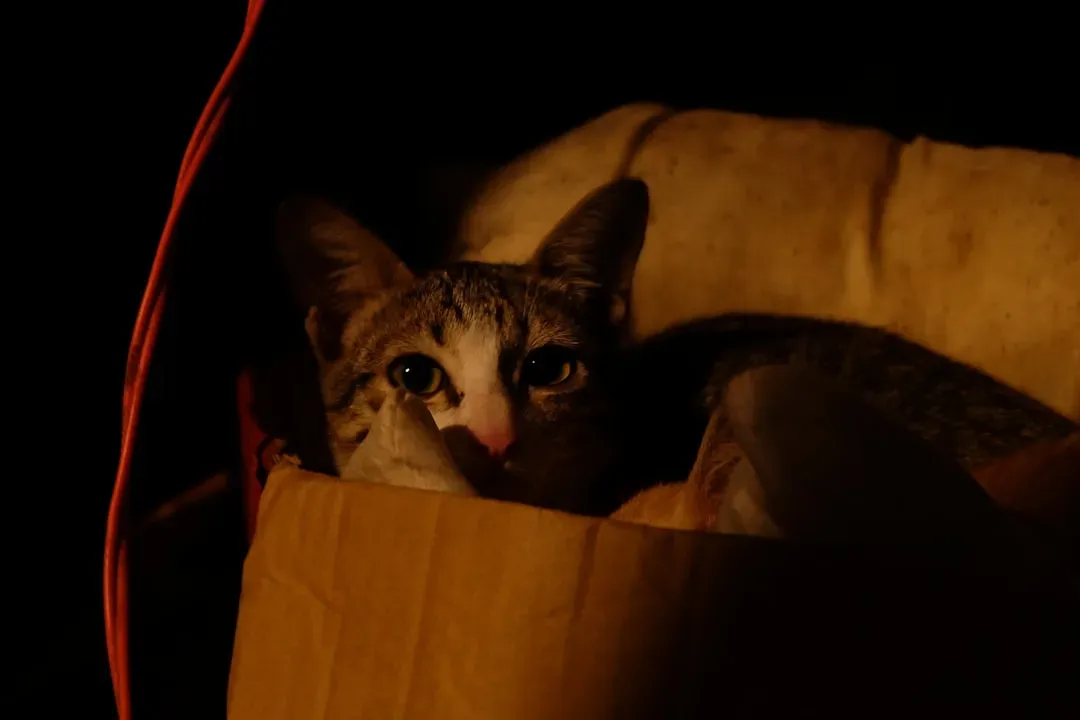
Your domesticated fluffball might never need to catch their own dinner, but their predatory programming remains sharp. In the wild, cats are predators. They have to be stealthy to catch their next meal, which often involves hiding in small spaces where they can’t be seen. This is crucial for survival because it helps them sneak up on unsuspecting prey.
Boxes provide the perfect ambush point. Have you ever walked past a box only to have your cat’s paw shoot out and grab your ankle? That’s not mischief for its own sake. Even though companion cats don’t need to hunt for survival, boxes provide a confined place where they can pretend they are in the wild, hiding while they prepare to pounce on their prey (which may be our feet or their feline housemate passing by!).
This behavior keeps their hunting skills sharp, even in a domestic environment. The box becomes a strategic vantage point where they can observe, wait, and launch surprise attacks on toys or unsuspecting household members. It’s mental and physical exercise wrapped into one cardboard package.
What Role Does Territory Play in Your Cat’s Box Obsession?
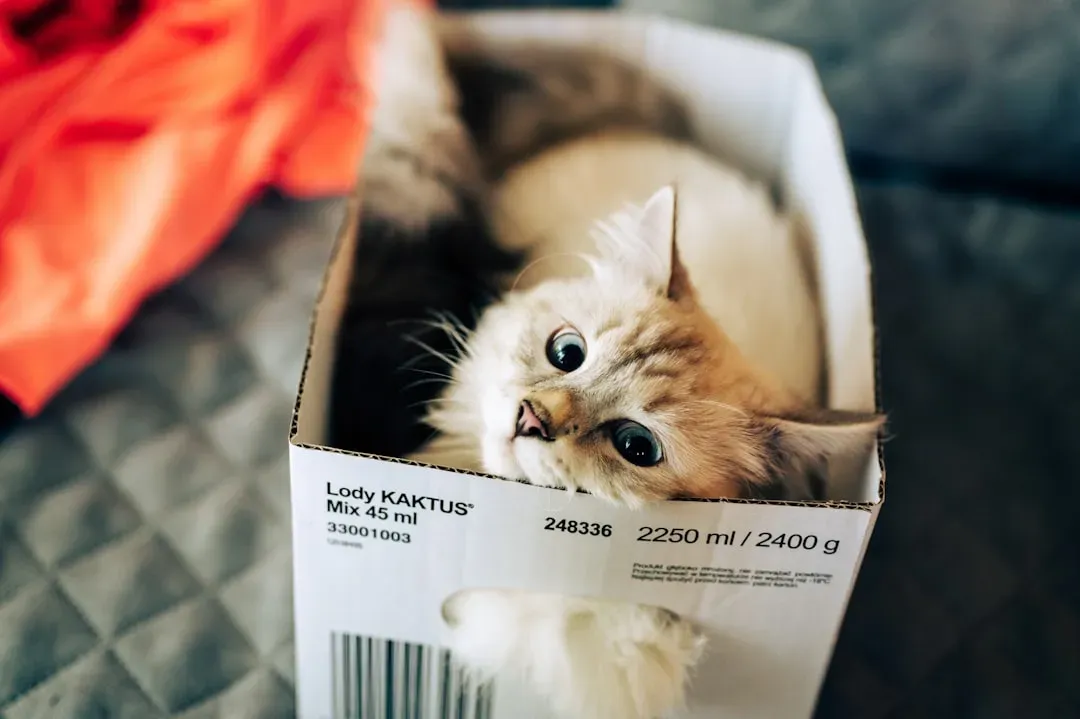
Cats are notoriously territorial creatures, and boxes offer them a way to claim space within your shared home. When your cat enters a box and settles in, they’re doing more than just relaxing. The very first thing most curious cats do when they see a cardboard box is rub up against it. Kitties have scent glands on the sides of their face, which is why they love rubbing their cheeks against everything. This action leaves its scent on the object, like a feline “Property of Whiskers” sign.
This scent marking serves multiple purposes. It makes the box smell familiar and safe, which reduces anxiety. It also sends a message to other pets in the household that this particular spot has been claimed.
In multi-cat homes, boxes can become especially important territorial markers. Each cat can establish their own private kingdom within the larger shared space. It’s not about being antisocial; it’s about having personal space where they feel completely in control.
Why Do Boxes Feel Like a Hug to Your Cat?
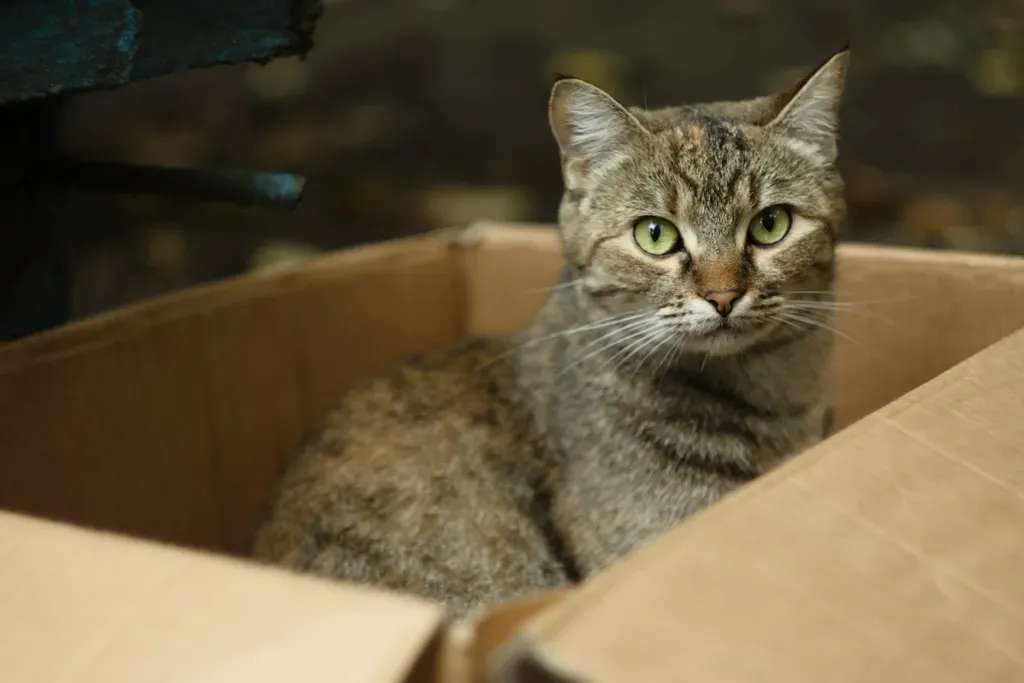
There’s a psychological component that often gets overlooked. The snug fit of a box mimics the comfort cats experienced as kittens cuddled with their mother and littermates, offering a form of ‘swaddling.’ Researchers suggest that the confined space of a box mimics the warmth and security a kitten feels when cuddled up with their mother and littermates. This swaddling effect is not just comforting; it’s ingrained in their behavior from kittenhood.
Just as human babies feel calmer when swaddled in blankets, cats experience similar comfort from the gentle pressure of box walls against their bodies. It has been proven in both humans and dogs that body compression can lead to a release of endorphins, which can help calm anxiety and result in feelings of calmness and happiness.
The confined space triggers memories of early safety and nurturing. When your adult cat squeezes into a tight box, they’re essentially giving themselves a comforting hug that takes them back to those earliest feelings of security. It’s self-soothing behavior at its finest.
Are Boxes Just Plain Fun for Your Cat?
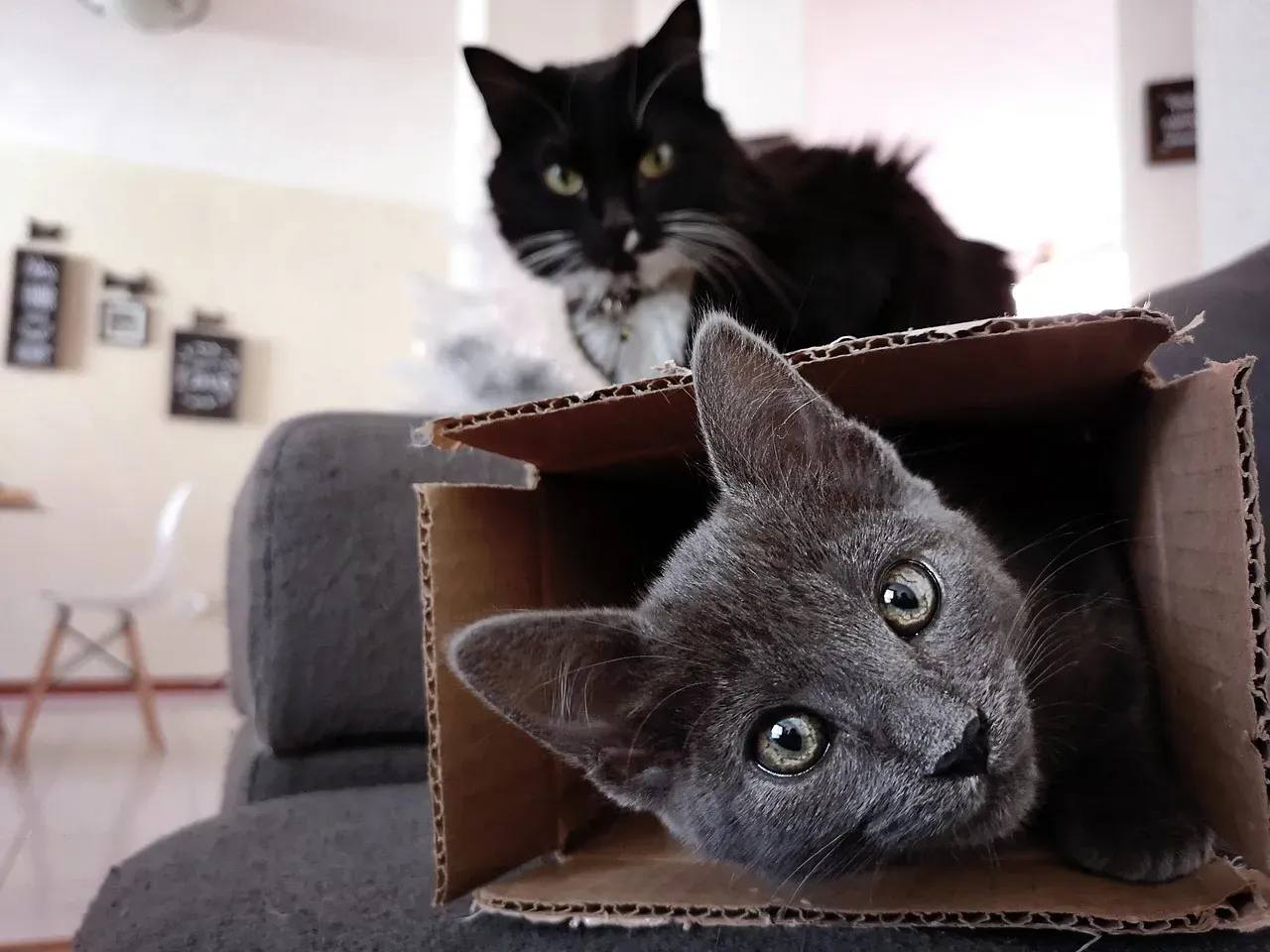
Let’s not overthink everything. Sometimes a box is simply entertaining. Cats are curious creatures, and boxes present an exciting world of exploration. Cats love investigating new things, and a new box, with its smells and textures, represents a new puzzle that must be unraveled.
Every delivery represents a new adventure. The box might smell different, have interesting flaps to bat around, or offer a fresh texture to scratch. Cats thrive on novelty, and boxes provide endless variations on a theme they already love.
There’s also the playful aspect of boxes as toys themselves. Cats will jump in and out repeatedly, attack the corners, peek through openings, and generally treat the box as an interactive playground. The cardboard texture is perfect for scratching, which helps maintain their claws while also providing another way to mark territory through scent glands in their paws.
What Happens When Your Cat Can’t Find a Hiding Spot?
Cats lack refined conflict resolution skills, so they prefer to avoid negative interactions by avoiding others or hiding away. Without adequate hiding spaces, your cat may experience increased stress that manifests in various unwanted behaviors.
When tensions arise with other pets or even humans in the household, boxes offer an escape route. When tensions arise with family members – be that with humans or fellow pets – the refuge of a box offers the cat a chance to recalibrate and de-stress. It’s their way of taking a timeout without having to engage in direct confrontation.
Honestly, I think we humans could learn something from this approach. Rather than forcing interactions when stressed, cats instinctively know to retreat to a safe space until they feel ready to engage again. The availability of hiding spots like boxes can actually prevent behavioral problems by giving cats this crucial coping mechanism.
Should You Be Concerned About Your Cat Hiding Too Much?
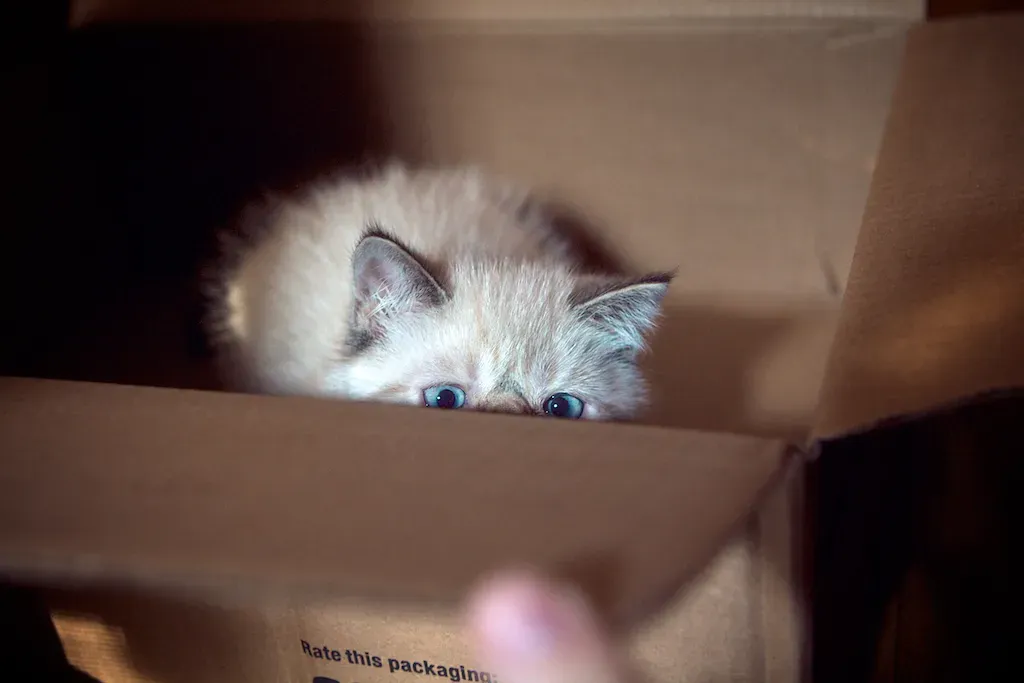
While box-seeking behavior is normal and healthy, excessive hiding can signal problems. Hiding can also be a sign your cat is sick or in pain – especially if the behavior is new or comes with other symptoms like not eating or avoiding the litter box.
Pay attention to patterns. Does your usually social cat suddenly spend all day hidden? Are they avoiding food or water? Hiding and not eating is often a red flag. Cats are masters at masking discomfort, so a loss of appetite plus hiding could mean your cat is in pain or sick.
In these cases, the box isn’t providing comfort so much as concealment. Cats will hide if they are not feeling well or are ill. This could be a protective survival instinct, as animals who are perceived as weak in the wild are easier prey for predators. If you notice dramatic changes in hiding behavior accompanied by other symptoms, a veterinary visit is warranted.
How Can You Use This Knowledge to Make Your Cat Happier?
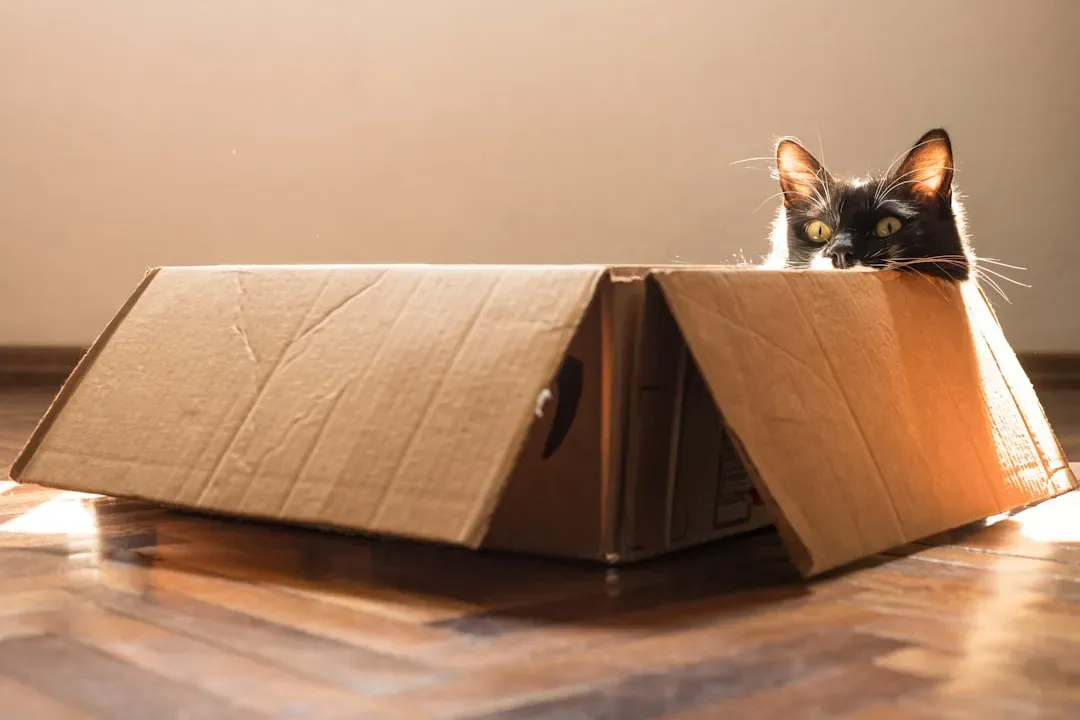
Understanding why cats love boxes opens up opportunities to enhance your cat’s environment. The solution is refreshingly simple and inexpensive. Leave out clean cardboard boxes in various sizes around your home. Rotate them occasionally to maintain novelty. Position boxes in quiet areas away from high-traffic zones. Your cat will appreciate having options in different locations. Some cats prefer ground-level hideouts, while others enjoy elevated boxes on furniture or cat trees.
You can also experiment with different types of enclosed spaces. This can be as simple as a cardboard box with a blanket, or you can buy covered cat beds or cat trees and condos. The key is providing options that allow your cat to choose their preferred hiding style.
In multi-cat households, ensure there are enough boxes and hiding spots for everyone. Competition for prime real estate can create tension, so abundance is better than scarcity when it comes to safe spaces.
Conclusion: The Simple Secret to Feline Contentment
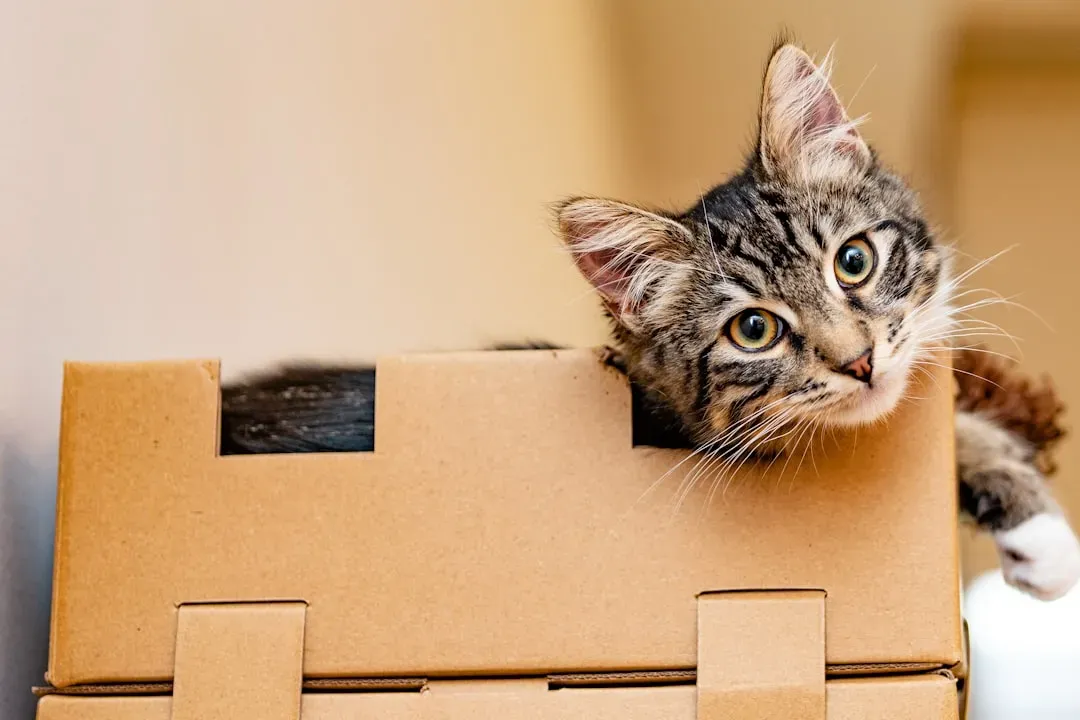
Your cat’s obsession with boxes isn’t weird or random. It’s a perfectly logical response driven by evolutionary programming, thermal comfort needs, stress management instincts, and playful curiosity. That humble cardboard container addresses multiple feline needs simultaneously, making it perhaps the most perfect cat accessory ever invented.
The beauty lies in the simplicity. You don’t need expensive cat furniture or elaborate entertainment systems. A free shipping box can provide security, warmth, stress relief, territorial satisfaction, and entertainment all in one corrugated package.
Next time you receive a delivery, resist the urge to immediately break down that box. Let it sit for a few days and watch your cat’s reaction. You’re not just offering them a toy; you’re providing a multi-functional tool that taps into their deepest instincts and needs.
Did your cat surprise you by choosing an unusual box today? Sometimes the smallest things bring the greatest joy to our feline friends.