You’ve probably noticed how your cat transforms the moment that little red dot appears on the floor. One second they’re lounging peacefully, the next they’re sprinting across the room like their life depends on it. This isn’t just random behavior or your cat being silly. There’s something deeply wired into your feline friend that makes that tiny speck of light absolutely irresistible.
The truth is, your cat isn’t chasing a toy. In their mind, they’re hunting prey. Their wild ancestors depended on catching small, fast-moving creatures to survive, and even though your pampered house cat has never missed a meal, those ancient instincts remain as sharp as ever. When that laser dot zips across the carpet, it triggers something primal. Let’s explore what’s really happening when your cat goes wild for that elusive red dot.
The Hunting Instinct Never Left Your Cat

Despite being domesticated, many house cats still have a natural hunting instinct lurking deep within their DNA, and before domestication, a cat’s survival hinged upon hunting ability. Your indoor cat may never need to catch a mouse to eat, but that doesn’t mean the drive has disappeared. Cats like lasers because they are predators and like to chase or hunt anything that moves fast around them, with the zipping red light having similar motion to a mouse or other critter.
Think about it this way: hunting isn’t just about food for cats. It’s about staying sharp, staying active, and fulfilling a biological need that goes back thousands of years. A moving laser light stimulates their stalking and pouncing instincts, and in the wild, cats will typically chase prey up to ten times a day, with the behavior hardwired into your pet. The laser pointer accidentally became the perfect hunting simulator.
What Makes That Red Dot So Special?
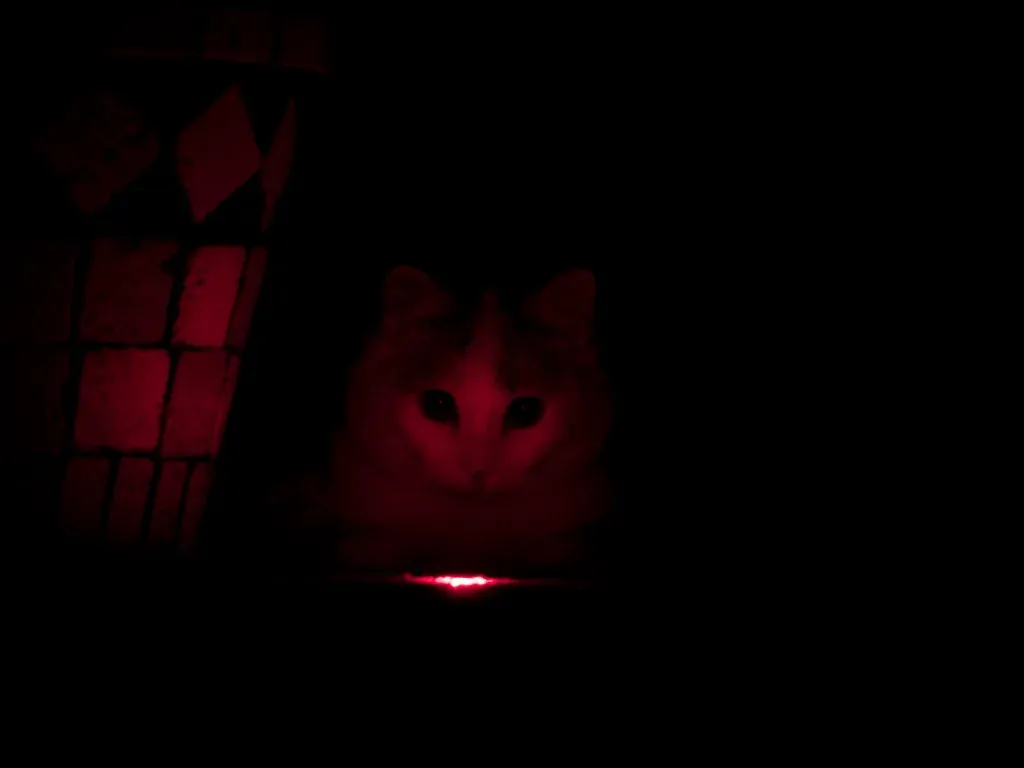
When a laser pointer dot zigzags across a floor, or stops and darts away, it resembles the movements of feline prey and provides an outlet for cooped-up cats. The unpredictable pattern is key here. Real prey doesn’t move in straight lines. It darts, pauses, changes direction suddenly. Biologists might call the laser a kind of superstimuli that really draws in the animal’s attention because it’s so different from anything else going on in its environment, and unlike smart prey in nature who camouflage, the red laser point stands out.
Your cat’s eyes are built differently than yours. Cats have more rods in their retinas, which makes them exceptionally sensitive to even the slightest movements, and the moment you turn on a laser pointer, a cat can detect it even in their peripheral vision. Honestly, it’s like comparing standard definition to ultra-high definition when it comes to detecting motion. That tiny moving dot? Your cat sees it in ways we simply can’t.
Your Cat’s Brain on Laser Pointers
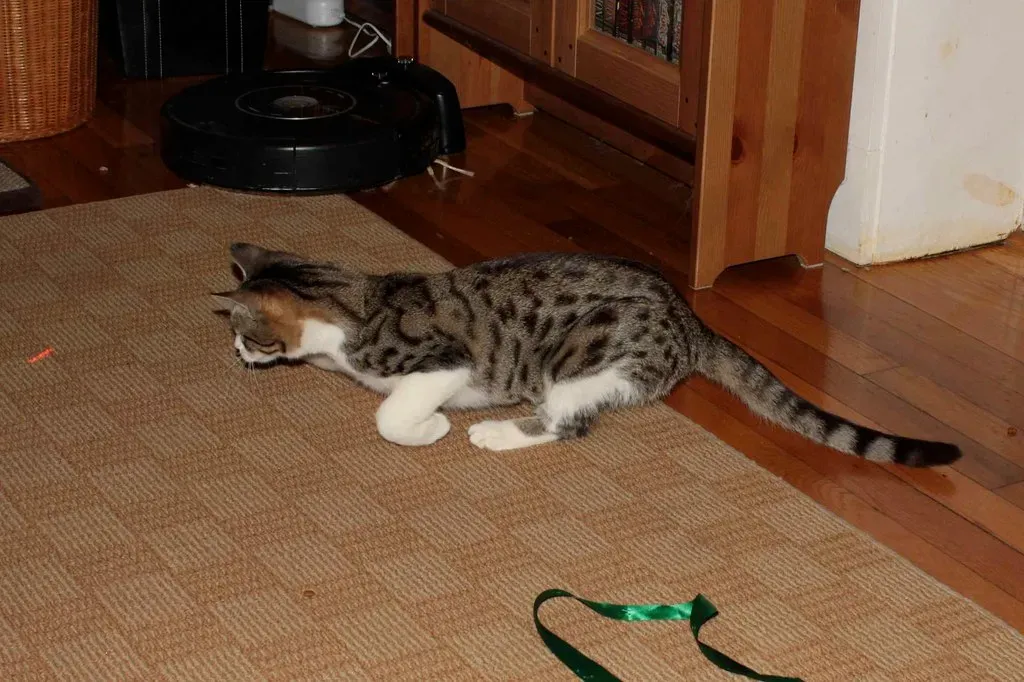
Hunting, stalking and pouncing all release neurotransmitters such as dopamine, which is thought to contribute to feelings of pleasure, and for a cat, hunting is a pleasurable experience. So when your cat chases that laser dot, they’re getting a natural high from their own brain chemistry. It’s not just exercise. It’s genuinely thrilling for them.
Cats have a strong prey drive that causes them to seek out and kill prey aggressively, and when cats actively engage in what they believe to be predation, they feel the most excited and confident. This explains why your usually calm cat suddenly becomes an acrobatic ninja when the laser appears. They’re tapping into their most confident, capable self. The problem is, there’s a catch to this excitement that many cat owners don’t realize.
The Frustration Factor You Need to Know About

Here’s where things get a bit complicated. Unlike other toys, cats can never actually catch a laser dot, which creates an incomplete hunting cycle that can lead to frustration and stress. Imagine playing a game where you can never, ever win. That’s essentially what laser pointer play is for your cat.
Because your cat can’t catch and kill the laser pointer light, she can’t complete the predatory sequence, which could leave your cat feeling unsatisfied. In nature, successful hunts end with a capture. The cat gets that moment of triumph. With laser pointers? Never. Laser light play alone does not allow cats to complete the hunting sequence, and it has been suggested that this may trigger frustration and stress, common contributors to compulsive behaviors. Some cats handle this better than others, but it’s worth paying attention to.
Can Laser Pointers Actually Cause Problems?
Let’s be real here. Some cats develop serious issues from laser pointer play. Significant associations exist between the frequency of laser light play and the occurrence of all surveyed abnormal repetitive behaviors apart from overgrooming, with the more frequently laser toys being used, the more likely guardians were to report these behaviors in their cats. That’s not just anecdotal observation. That’s actual research.
Laser pointers can result in obsessive behavior in your feline buddy, as an unattainable goal triggers a never-ending pursuit, and they may become fixated on chasing and stalking shadows and reflection, even without a laser pointer. Some cats start seeing every light reflection or shadow as potential prey. They can’t relax. They’re always on high alert, scanning for that dot. That’s not healthy play anymore – that’s stress.
Physical Risks Beyond the Frustration
Shining a laser light into your cat’s eyes may harm its eyesight or cause it to become permanently blind, because the eye’s natural defensive systems, such as the blink reflex, are ineffective against lasers with output above five milliwatts. This is serious. You need to be extremely careful never to point the laser at your cat’s face or eyes. Even brief exposure can damage their retinas permanently.
There’s also the risk of physical injury during play. While chasing the laser light around the room, your cat might run into a wall or a piece of furniture and injure itself or cause property damage. When cats are in full predator mode, they’re not thinking about that coffee table or the edge of the stairs. They’re 100 percent focused on the “prey,” and accidents happen. I’ve seen cats take some pretty hard falls trying to catch laser dots on walls.
How Your Cat’s Vision Makes Lasers Extra Tempting
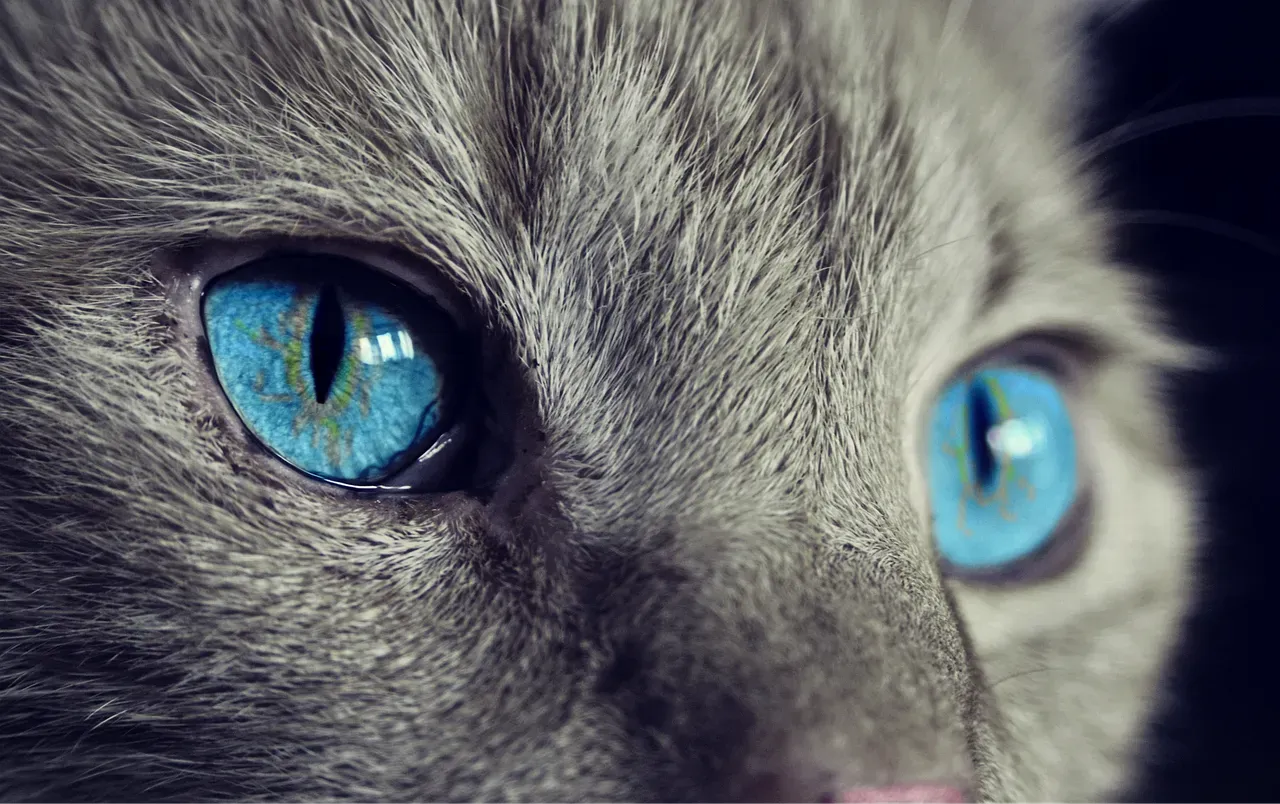
Although cats react strongly to the red dot produced by a laser pointer, it almost certainly doesn’t have anything to do with the color, as cat eyes are not sensitive to the color red, so they most likely see the dot of light as white or yellow. Interesting, right? It’s not the red that gets them. It’s the movement and the brightness contrast.
Retinas are made of cones and rods, with cones assisting with color detection and rods supporting limited visibility vision, and cats have more rods in their eyes while humans have more cones, which is why cats are described as color blind yet have enhanced vision at night, and the additional rods also make the laser visually more attractive and prey-like. Your cat’s eyes are basically motion-detection machines. That laser dot is practically screaming “prey!” in a language only their visual system understands.
The Mental Stimulation Benefits
It’s not all doom and gloom with laser pointers. The laser light stimulates your cat’s brain, and according to some experts, if a cat cannot hunt, track, pursue, pounce on, trap, or manipulate its prey, their mental health may suffer, as many cats spend their whole waking lives inside with no fresh air, exercise, or cerebral stimulation, but laser pointers may benefit cats by providing mental stimulation.
Laser light is a great form of exercise because indoor cats typically aren’t very active, as outdoor cats get to run around in the grass and climb trees, while their indoor counterparts usually take it easy the vast majority of the day, but when they chase that dot of light, they get an excellent workout. For cats who would otherwise spend all day napping, a few minutes of laser play can provide much-needed activity. The key is using it responsibly.
The Right Way to Use Laser Pointers
Keep laser pointer play sessions short (no more than 5 minutes) and mimic natural prey movements to engage your cat’s instincts, and always let your cat catch the laser on a physical object at the end, followed by a reward to prevent frustration. This is crucial advice. You need to give your cat some sense of accomplishment.
If you always follow laser pointer time with wand toy time, your cat will be able to physically catch the prey they’ve been hunting and feel satisfied, and another little trick is aiming the laser at a treat at the end of playtime so they can eat their prey. That’s actually brilliant. You’re giving them the complete hunting experience: chase, capture, consume. It satisfies that biological need properly instead of leaving them hanging.
Better Alternatives to Consider
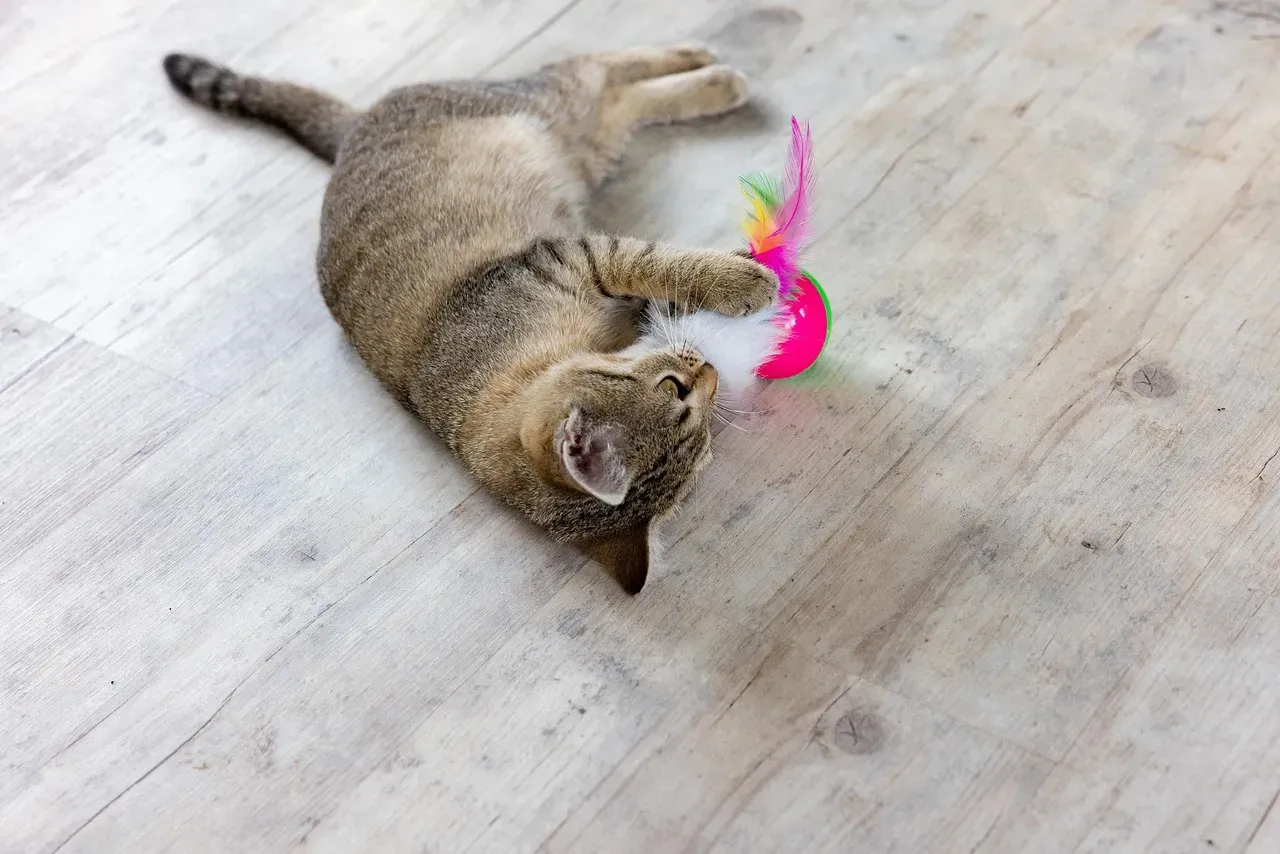
Interactive toys like feather wands, motorized mice, or puzzle feeders provide similar exercise and mental stimulation while allowing your cat to complete their hunting sequence successfully. These toys give your cat something real to grab onto. They can sink their claws and teeth into it. That tactile feedback matters more than you might think.
Wand toys are particularly good because you control the movement, making it as realistic as possible. You can make the toy move like a bird taking off, or a mouse scurrying under furniture. Experts recommend following playtime with mealtime, which helps complete the predatory cycle of hunt, catch, kill, eat and helps them feel as satisfied as they can be. This mirrors what happens in nature and gives your cat psychological closure.
What Laser Obsession Looks Like
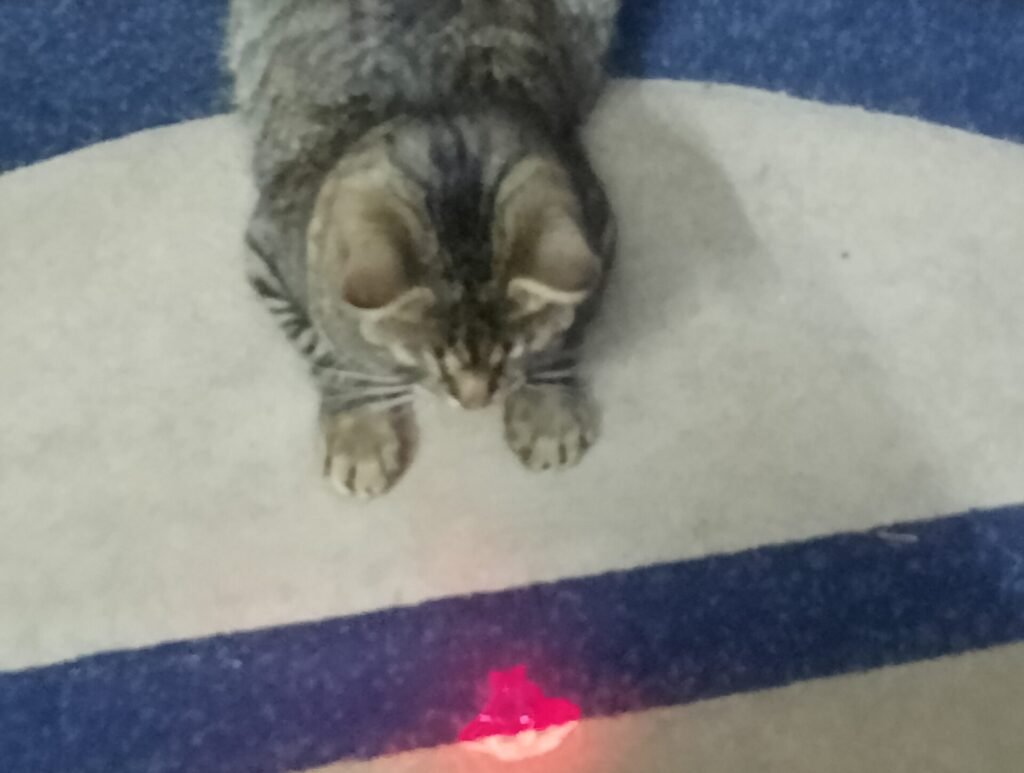
Signs of obsession include excessive searching for the laser dot, agitation when the laser is not present, and neglecting other activities. If your cat starts staring at walls waiting for the dot to appear, or if they’ve stopped playing with their other toys entirely, that’s a red flag. Some cats become so fixated that they can’t settle down even hours after laser play ends.
Cats that become obsessed with laser pointers may exhibit signs of frustration or anxiety if they are unable to catch the elusive dot, which can lead to behavioral problems, such as excessive meowing or pacing. You might also notice increased aggression, either toward other pets or even toward you. If a cat is riled up in predator mode, has been hunting the laser, and isn’t provided something appropriate to attack or bite, they may attack the closest thing to them that moves. That’s genuinely concerning and needs to be addressed immediately.
Understanding Your Cat’s True Nature

At the end of the day, your cat is still a hunter. A cat’s predatory instinct is to chase anything that moves quickly, as it is ingrained into their very anatomy, and house cats are not far from their wild descendants, the African and European wild cats. That laser pointer taps directly into something fundamental about what makes your cat a cat.
Laser pointers are exciting for cats primarily because they create the illusion of fast-moving prey darting before their eyes, and despite living alongside humans for thousands of years, their instincts remain as sharp as ever, with the rapid movement triggering innate feline behaviors. When you understand this, you can make better decisions about how to play with your cat. It’s not about taking away their fun. It’s about giving them play that’s both exciting and emotionally satisfying.
So what’s the verdict? Laser pointers aren’t evil, but they need to be used thoughtfully. Your cat’s fierce chase behavior is instinct at work – millions of years of evolution compressed into that five-second sprint across your living room. The key is respecting those instincts while ensuring your cat gets the complete, satisfying experience their brain is hardwired to need. Mix it up with other toys, keep sessions short, and always give them something real to catch. What do you think about laser pointer play now? Does your cat show any of these obsessive behaviors, or do they handle it just fine?