You toss a balled-up piece of paper across the floor, and suddenly your perfectly calm, well-fed cat transforms into a tiny, laser-focused predator. The tail twitches. The pupils blow wide. Then comes the pounce. Sound familiar? Most of us chalk it up to “cats being cats,” but there’s something far more fascinating happening beneath that fluffy exterior.
Your cat’s obsession with stalking your hair tie, ambushing your feet, or launching a full-scale assault on a crumpled receipt is not random. It’s ancient, deeply wired, and tells an extraordinary story about who your cat truly is. Let’s dive in.
The Ancient Blueprint Your Cat Still Carries
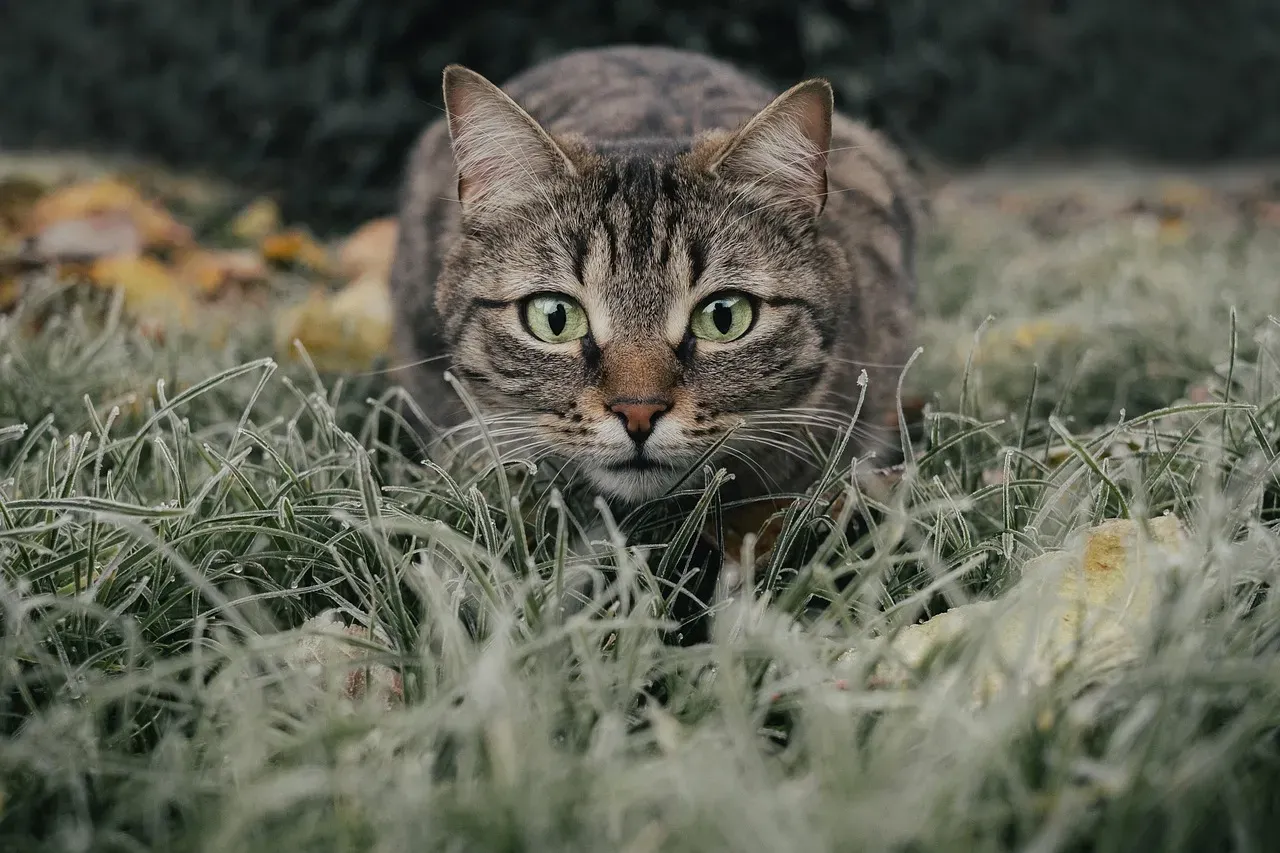
Here’s the thing – your sofa-lounging feline is not far removed from the wild. Before they became domesticated, cats had to provide for themselves and hunt for their own food, not unlike their larger tiger and lion cousins. That instinct didn’t vanish just because you started filling a bowl with kibble every morning.
Until quite recently, cats were mainly kept to control rodent populations rather than as pets, and during this time, only the best hunters survived and reproduced. There’s been very little selective breeding of cats, so their instinctive need to hunt remains strong. Think about that for a second. Dogs have been shaped by thousands of years of selective breeding for specific roles. Your cat? Pretty much the same as it ever was.
The urge to hunt is embedded deep in your cat’s DNA, harking back to its wild ancestors. Hunting isn’t just about finding and catching food – it’s about survival, play, and honing a very special set of skills. So when your cat goes berserk over a rolling bottle cap, you’re witnessing millions of years of evolution playing out on your kitchen floor.
Hunger Has Nothing to Do With It
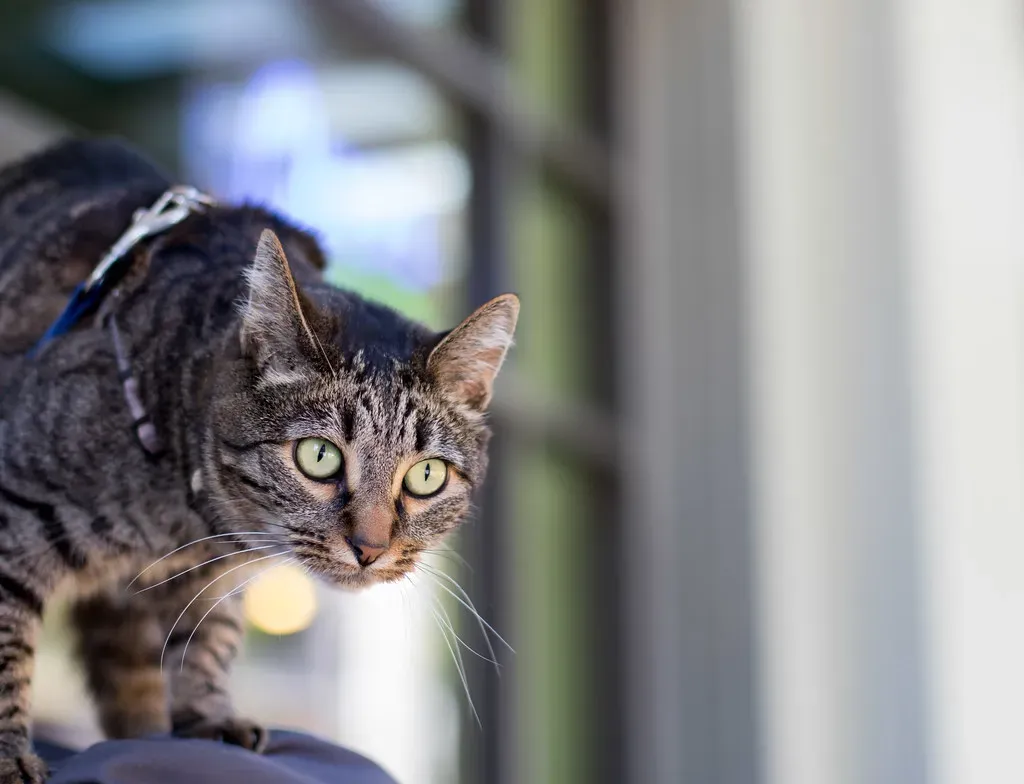
Honestly, one of the most surprising things you can learn about your cat is this: being full doesn’t stop them from hunting. Hunting comes as naturally to a cat as eating and sleeping, so the urge to hunt isn’t tied to hunger. In the wild, cats hunt all the time, even if they are not hungry, because they never know when their next meal will come. It’s an evolutionary safety net, not a spontaneous whim.
Even if cats that are fed hunt less than those who have to hunt to survive, the feeling of being full and well fed does not cause a cat to give up hunting altogether. So if you’ve ever thought, “I just fed you!” while watching your cat stalk a dust bunny across the hallway, now you know why that logic simply doesn’t apply in the feline world.
What Your Cat Actually Sees When It Looks at a Hair Tie
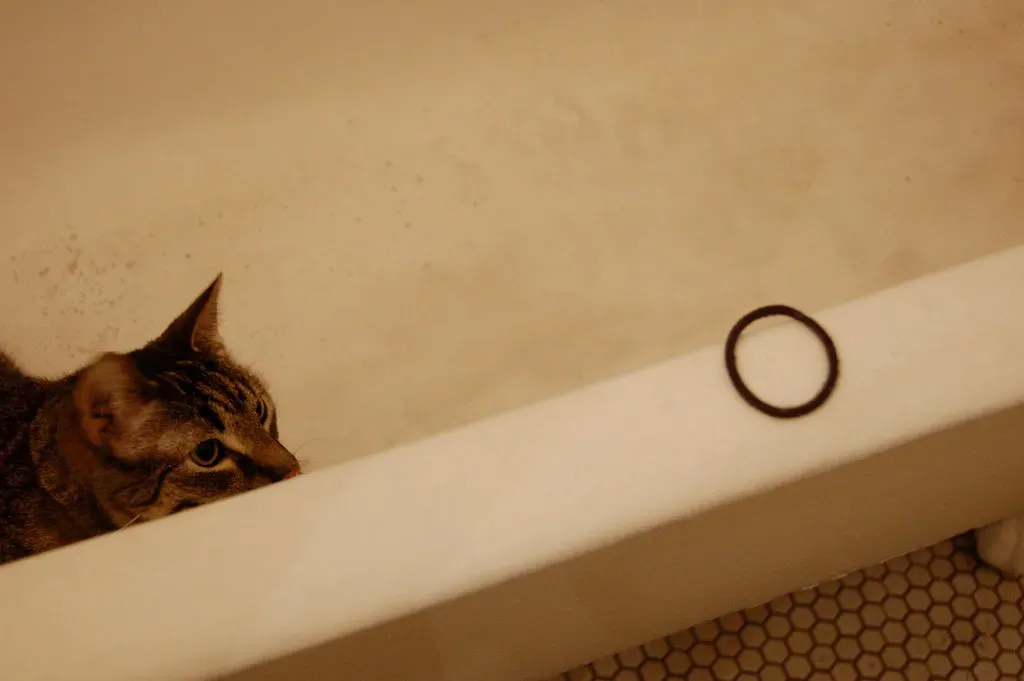
I know it sounds crazy, but when your cat locks eyes on your hair tie or the drawstring of your hoodie, it genuinely registers that object as something prey-like. Studies have found that adult cats show more intense and prolonged play with toys that resemble actual prey items. Similarly, the hungrier the cat was at the time of object play, the more intense and prolonged the play sessions were. Both factors indicate that cats consider these toys to be prey when they are playing.
Toy size, similarity to prey, and novelty are all predictors of a cat’s play response to toys. When cats were presented with toys covered in fake fur that were moved back and forth, cats tended to prefer smaller toys similar in size to a mouse. So that tiny crinkle ball you bought for two dollars? It is, in your cat’s mind, essentially a mouse. Welcome to the wild kingdom of your living room.
The Stalk, the Pounce, and the ‘Kill’: A Sequence That Never Gets Old
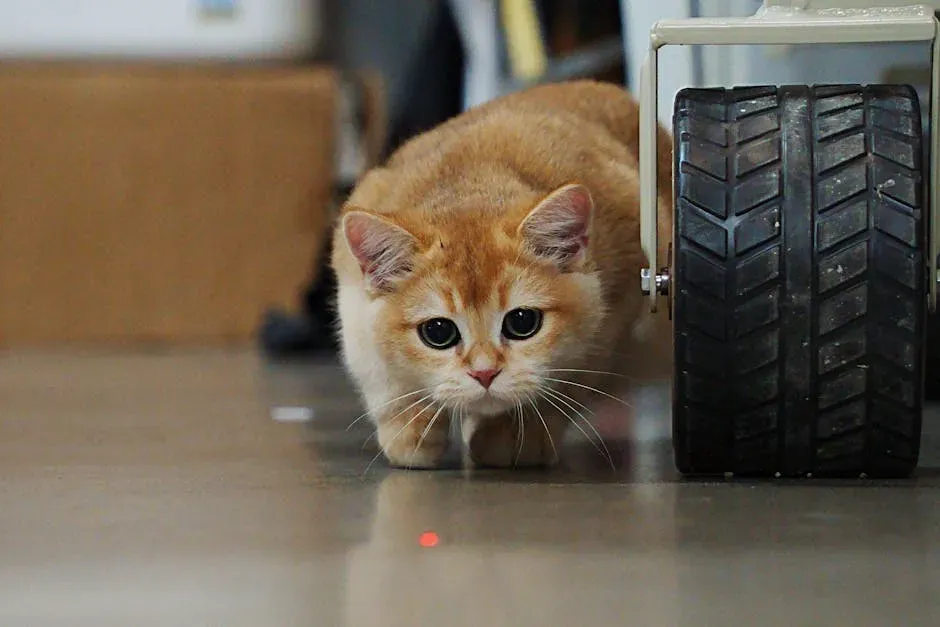
Cats commonly follow a set sequence of behaviors when hunting prey. Cats usually approach their prey by stalking, which involves moving in a crouched position with their head outstretched. Slow movements are used on the initial approach, which may speed up to a sprint the closer the cat gets to their prey. As the cat gets close enough to catch the prey, they stop and prepare to spring forward. You’ve probably seen every single one of these stages play out during what you thought was just a silly game.
If your cat suddenly crouches low, wiggles their hindquarters, and then launches themselves forward in an ambush, they are engaging in hunting behavior. Cats stalk and pounce because these behaviors are deeply ingrained instincts, even for those who have never hunted live prey. The sequence is so automatic, so deeply programmed, that it fires whether the “prey” is a real mouse or your unsuspecting ankle under a blanket.
Why Indoor Cats ‘Hunt’ Objects Even More Intensely
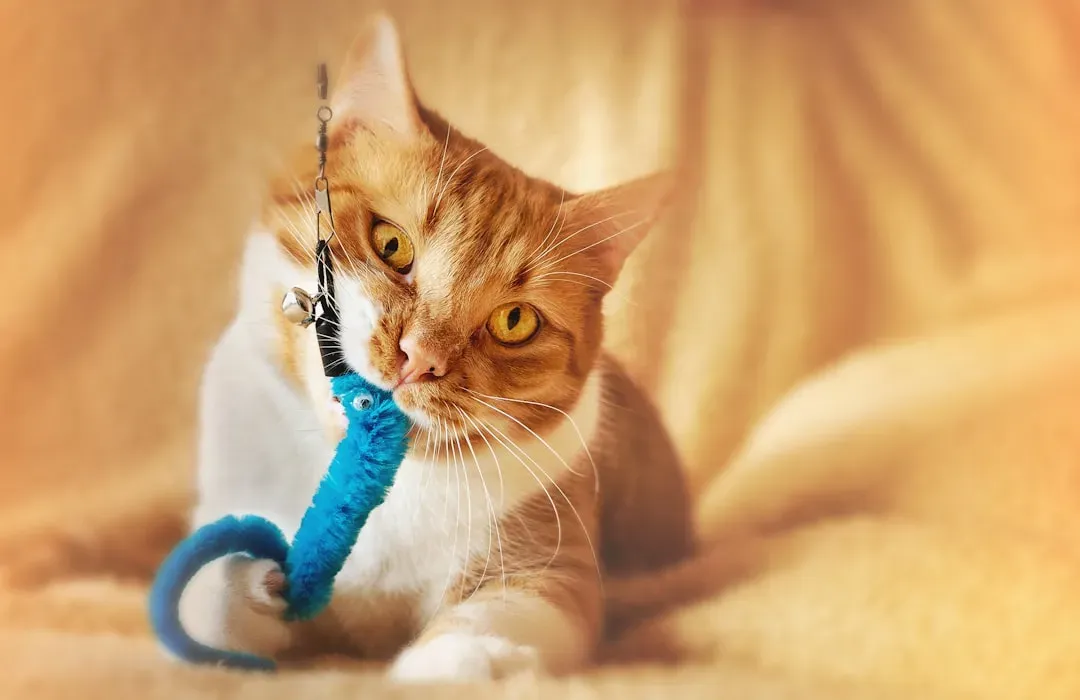
Here’s a fascinating twist. You might expect that cats with outdoor access would have stronger predatory urges, but the science suggests the opposite is true for certain behaviors. Cats who spend their lives indoors without encountering mice will still show typical hunting actions by attacking toys or pursuing mobile objects. The instinct doesn’t weaken just because the environment is safe and comfortable.
Indoor cats, despite the lack of real prey, continue to exhibit these hunting behaviors, often substituting toys for prey. The drive to hunt is so potent that it largely remains unaffected by the comforts of domestic life. Your sofa cushion, your charging cable, your wiggling toes – all of it becomes fair game when your cat’s inner predator needs an outlet and the outdoors isn’t available.
Toying With ‘Prey’: It’s Not Cruelty, It’s Caution
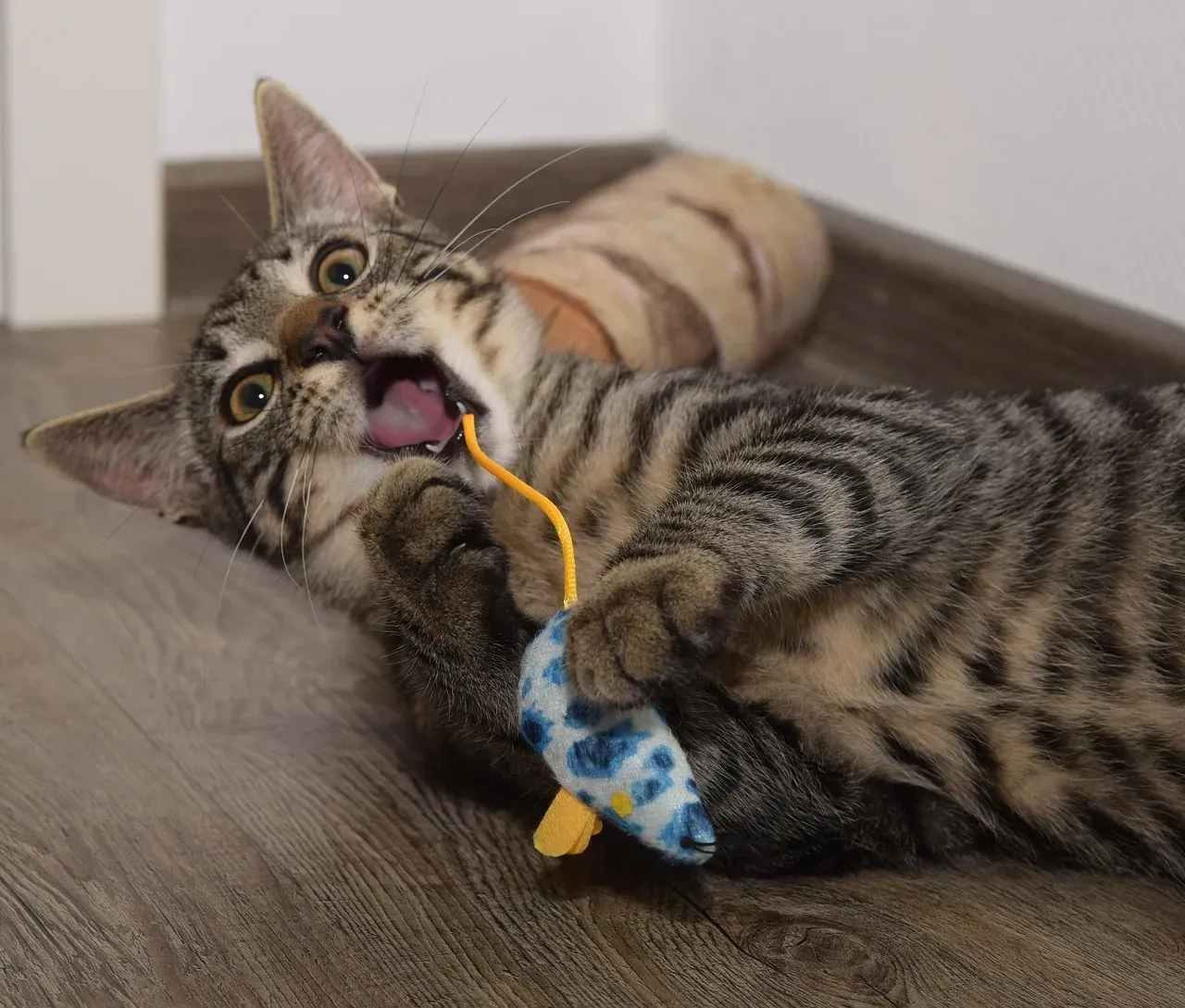
You’ve probably seen it – the cat catches something and then bats it around endlessly before actually doing anything with it. It looks almost playful. But there’s a very specific, logical reason for this behavior. Toying with their prey is brought about by the conflict of needing to kill their prey, and the fear of being injured by their prey as a result. It’s a risk management strategy, not entertainment.
When a cat bats around its prey after the initial pounce, it may seem like they want to “play” with their catch. In reality, the cat is tiring out the animal until it’s safe to go in for the killing bite. Mice and rats have sharp incisor teeth that can bite and injure your cat. Birds’ beaks are pointy and can cause damage, too. So when your cat “plays” with a toy mouse for ten minutes straight before finally delivering the death bite, it’s following a survival protocol its species refined over eons.
The Zoomies Connection: Pent-Up Predator Energy
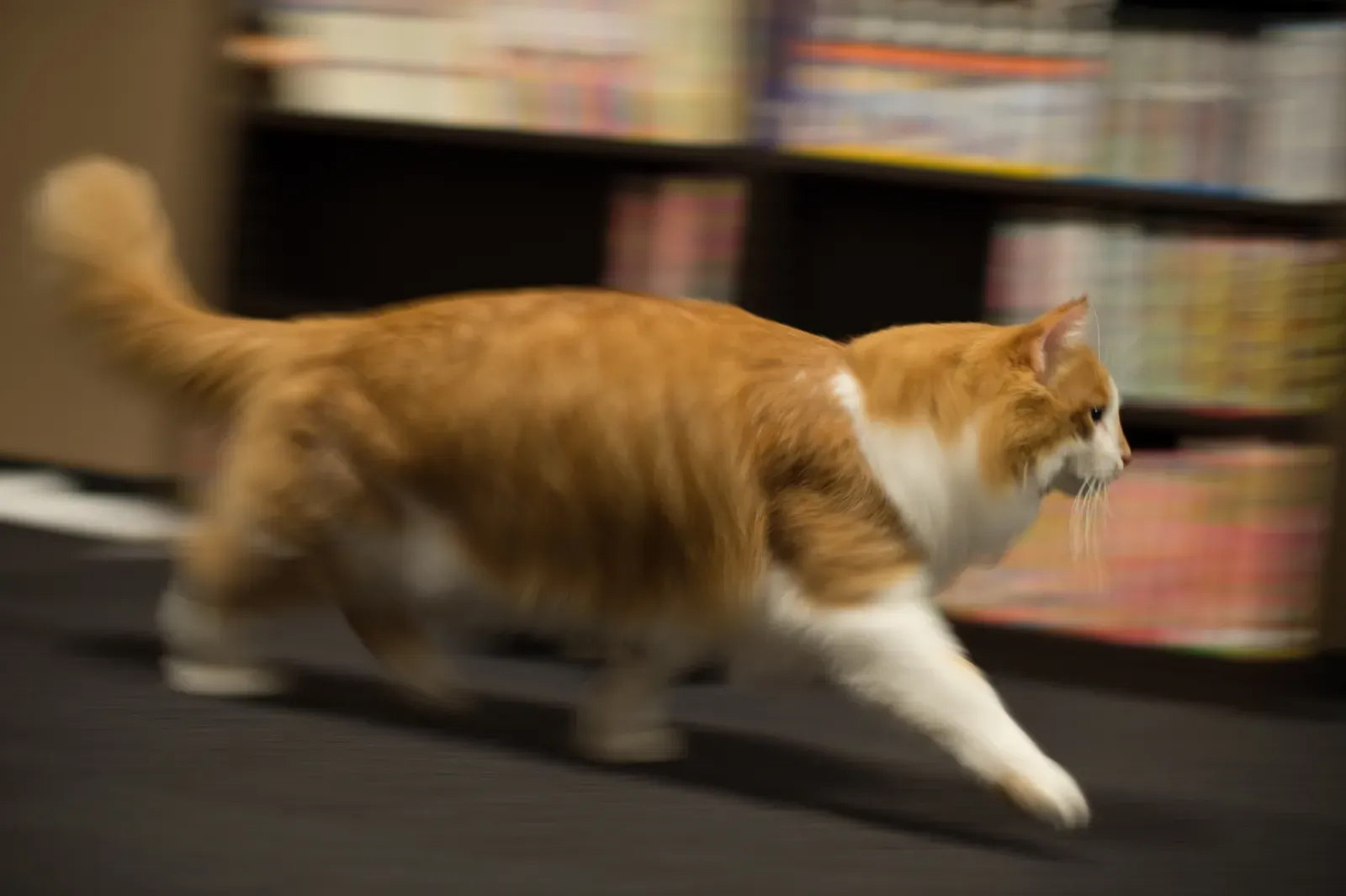
Uploaded by SunOfErat, CC BY-SA 2.0)
Let’s be real – few things are funnier or more baffling than the zoomies. One moment your cat is sound asleep, the next it’s sprinting laps around the apartment like it’s training for the Olympics. Zoomies in cats are those sudden, frantic bursts of energy where they go from a relaxing lounge to sprinting across the room out of nowhere. In scientific terms, these episodes are known as Frenetic Random Activity Periods, also known as FRAPs.
The most common reason cats experience the zoomies is pent-up energy. Cats rest and sleep for a majority of the day to conserve energy for short, very active periods. Without intentional exercise and activity, your kitty will need to find a way to get that extra energy out, resulting in a case of the zoomies. It’s not chaos – it’s a predator’s body demanding to do what predators are designed to do. When there’s no actual prey to chase, the living room becomes the savannah.
What Happens When the Hunting Urge Goes Unmet
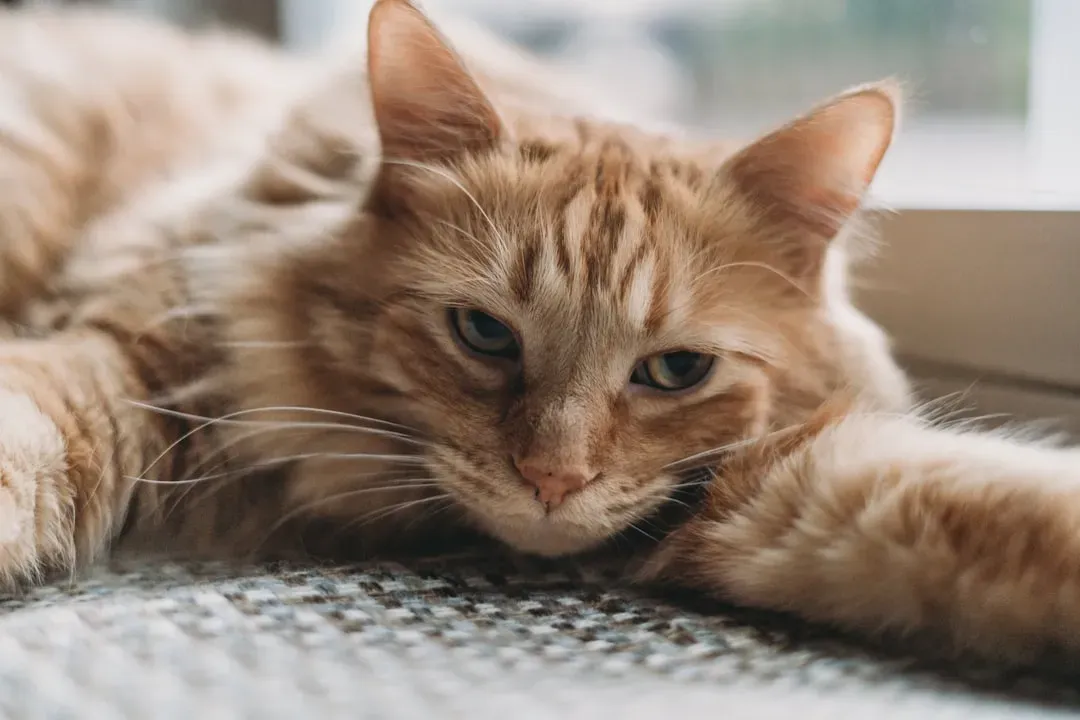
Not giving your cat an outlet for its hunting instincts isn’t just inconvenient for your furniture – it can genuinely affect their wellbeing. When play is absent, cats suffer distress and behavioral problems such as overgrooming, house-soiling, scratching furniture, and aggression. These aren’t signs of a “bad cat.” They’re signs of a predator with nowhere to direct its energy.
If your indoor cat spends most of their day snoozing on the windowsill, there’s a good chance they’re missing out on the mental and physical stimulation they need. While indoor life keeps cats safe from cars, predators, and other outdoor dangers, it can also lead to a lack of enrichment, leaving cats bored, stressed, and prone to health issues. Think of it like this: it would be like you spending every single day doing nothing but sitting in a comfortable chair. Eventually, something’s going to give.
How You Can Feed the Inner Predator (Without Live Prey)
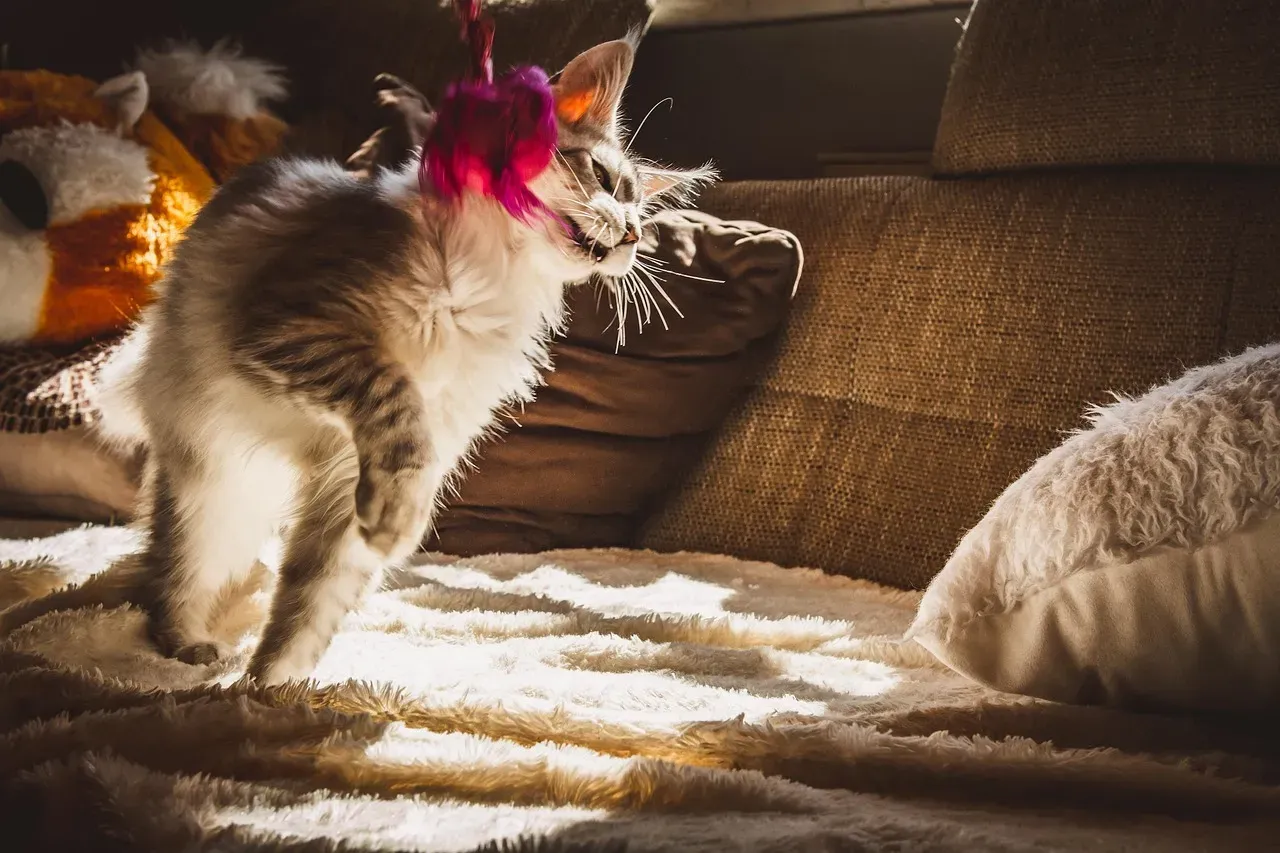
Redirecting your cat’s hunting instincts through frequent play is one of the most effective methods in helping to reduce or eliminate hunting behaviors. Play provides mental stimulation for your cat and helps to satisfy their hunting desires. The key is making that play feel as real as possible – unpredictable movements, varied speeds, and the chance to actually “catch” the prey at the end.
Current research shows that daily predatory play can impact your cat’s welfare positively and improve the cat-human bond. One of the five pillars of a healthy feline environment is the opportunity for predatory play. Experts recommend five to ten minutes of such play daily. It doesn’t take a lot of time or expensive equipment. A wand toy, a crinkle ball, or even a scrunched piece of paper moved erratically across the floor can be enough to let your cat feel like the skilled, capable predator it truly is inside.
Conclusion
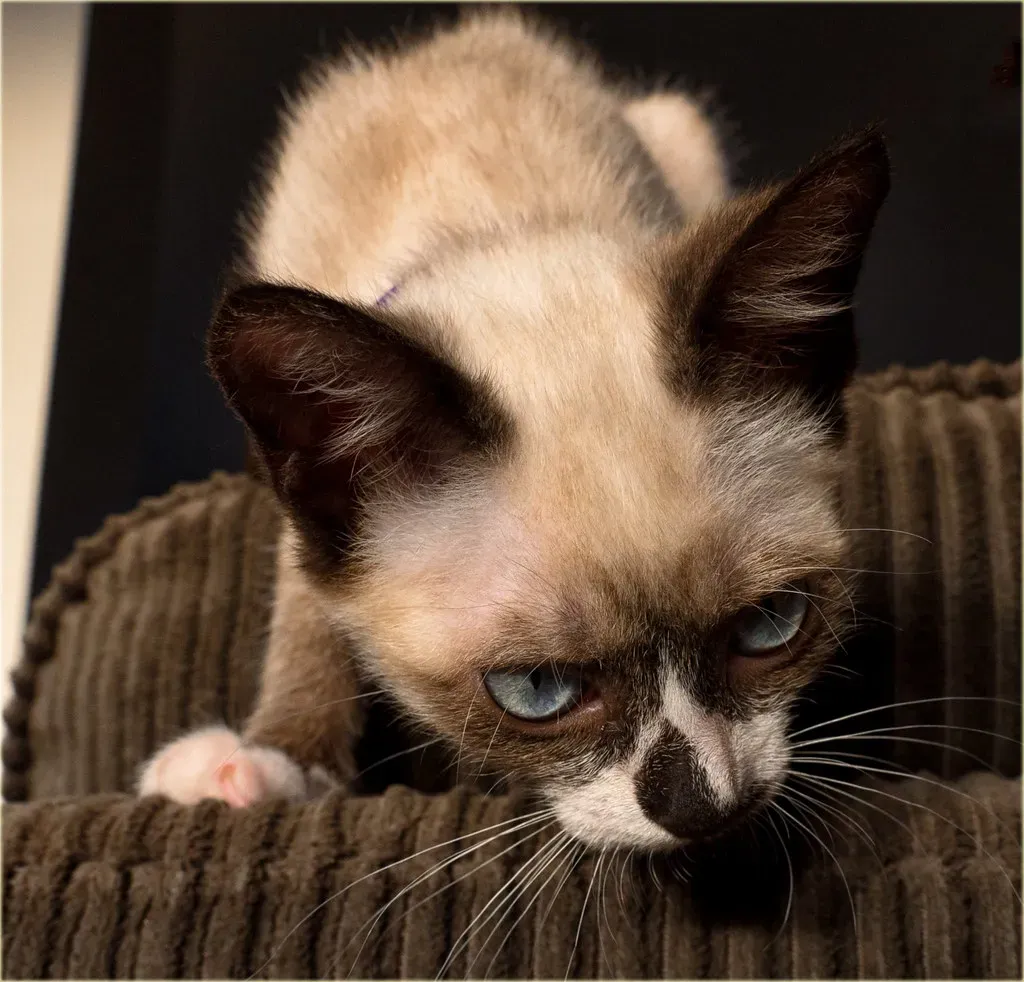
Your cat hunting your socks, ambushing your ankles, or treating a bottle cap like a deadly enemy isn’t quirky for the sake of being quirky. It’s a window into something remarkable – a creature that has lived alongside humans for thousands of years and still carries the soul of a wild hunter. Every stalk, every pounce, every session of furiously batting a toy mouse across the kitchen floor is an expression of something ancient and real.
Understanding this changes how you see your cat. It shifts your role from simply “the person who fills the bowl” to an active participant in your cat’s emotional and physical health. When you wave that feather wand or roll that crinkle ball, you’re not just playing. You’re honoring what your cat actually is – and giving it permission to be exactly that.
So the next time your cat launches a full tactical assault on your charging cable at two in the morning, maybe don’t just groan and roll over. Maybe grab a toy instead. What would you do if the hunter in your home finally felt truly understood?