There is a story that plays out in countless homes every single year, and it goes something like this: someone decides to get a cat because they want a low-maintenance companion. A creature that does its own thing. A pet that will not shadow their every move or demand constant cuddles. And then, almost immediately, the cat proceeds to follow them into the bathroom. It happens to more people than you would think, and honestly, it is one of the most relatable plot twists in modern pet ownership.
A recent viral video has put this experience back in the spotlight, and the internet is completely obsessed. So if you have ever adopted a cat expecting a cool, aloof housemate only to end up with a furry four-legged shadow, you are in very good company. Let’s dive in.
The Viral Moment That Started It All
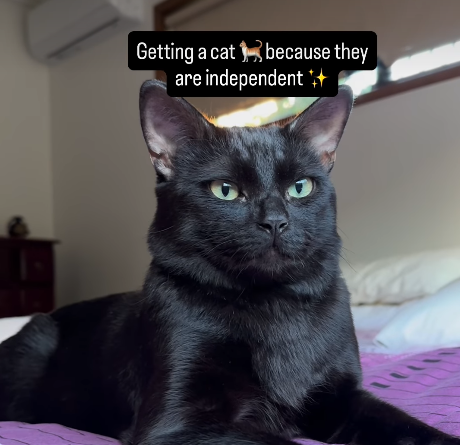
In a viral Instagram video, a cat owner revealed that she chose to get a pet cat because she thought they would be independent, and then the feline immediately changed her mind. The clip spread fast, and for good reason. It captured something that cat owners across the world know deeply but rarely talk about in public.
The video, shared by the account @midnightcalledricky, shows the black cat following his mom around all day, in bed, in the kitchen, at work, and even in the bathroom, turning out to be even needier than a dog, contrary to what the poster had envisioned. The moment was both hilarious and incredibly telling. The caption read, “Getting a cat because they are independent,” followed by, “I wanted a cat, I got a follower.” That single line seemed to resonate with millions of people who had lived the exact same experience.
A Shelter Cat Labeled ‘Independent’ – What Really Happened
This is not just one isolated story. Morgan Thomas, 29, adopted a seven-year-old cat named Twilight from an animal shelter in Indiana in 2020. At the time, the description on Twilight’s profile described her as “independent,” which Thomas did not mind at all. It sounded ideal. Low effort, low drama. The perfect companion for someone just starting out.
After meeting Twilight, Thomas said she instinctively felt a pull and instantly adopted her. A cat seemed like the perfect company as she started out as a therapist – but she had no idea just how attached Twilight would become. This story plays like something out of a romantic comedy, except the love interest is a seven-year-old shelter cat who apparently never got the memo about personal space.
The Big Myth: Are Cats Actually Independent?
Here is the thing. The idea that cats are naturally solitary and self-sufficient creatures has been around for a very long time. It is baked into popular culture, into the reason people choose cats over dogs, and into the way shelters sometimes describe their animals. The misconception that cats are independent and require little or no care causes many of them to suffer needlessly, both physically and emotionally. That is a genuinely surprising and sobering reality.
Cats are among the most popular pets worldwide, but there are still major gaps in the public’s general understanding of their social behaviors and related needs. In addition to these knowledge gaps, people often have negative or ambivalent attitudes about cats, which can directly impact their welfare outcomes. Science is increasingly clear that the “cats don’t need you” narrative is simply not true. Research has found that cat owners were inclined to agree that “cats are independent” and “have less social needs than other animals.” Beliefs such as these are not supported by the scientific data on cat social behavior and may result in failure to meet cats’ individual social or environmental needs.
Why Cats Follow You Everywhere: The Real Science
So why do cats shadow their humans so relentlessly? It turns out the answer is layered and genuinely fascinating. Cats form attachments that are subtler but no less significant than canine loyalty. Recognizing this emotional depth is the first step in understanding why your cat might follow you like a shadow. Think of it less like a clingy partner and more like a trusted colleague who just really appreciates good company.
Studies show that many cats form secure attachments to their owners, similar to dogs and human infants. They use their humans as a source of security and comfort, which explains why some cats follow you from room to room. Even more interesting, results of the Secure Base Test study with cats showed that cats have a similar capacity for secure attachment to their guardians as human children do to their parents, and dogs do to their guardians. If that does not shatter the myth of feline indifference once and for all, nothing will.
When Clingy is a Signal, Not Just a Quirk
Let’s be real though. Not all following behavior is purely a love language. Sometimes it signals something deeper. Clinginess in cats often starts with a trigger. A new family member, loss of a pet or family member, or even sudden changes in routine can cause a cat to become overly clingy. Cats love routine, and disruptions can make them feel unsafe.
Certain health conditions can make cats unusually dependent, restless, or vocal. Hyperthyroidism, for instance, is a metabolic disorder that can cause agitation, pacing, and increased attention-seeking. Cognitive Dysfunction Syndrome, common in senior cats, can also lead to confusion, anxiety, and clinginess. So if your previously independent cat suddenly becomes your permanent shadow, they could be trying to tell you that something is wrong. It is worth checking in with your vet if there are other behaviors present, such as hiding or changes in eating habits, or if they are more vocal than usual.
What Good Cat Ownership Actually Looks Like
Once you accept that your cat is not quite the lone wolf you imagined, the next step is understanding what they actually need from you. Pet MD explains that playtime with their humans is a crucial part of a cat’s life, which helps them express natural hunting instincts like stalking, chasing, and pouncing. Honestly, it is not that different from what humans need either.
For indoor cats especially, structured play combats boredom and decreases the likelihood of behavior problems such as aggression or destructive chewing. Playtime also supports bonding between cats and their pet parents. In terms of duration, most cats benefit from several short bursts of activity rather than one long session. Interactive toys like feather wands, laser pointers, and puzzle feeders can help reduce clinginess by keeping your cat mentally engaged. Setting up vertical space like a cat tree or providing safe hiding places can also give your cat a sense of independence and control in their environment. It is a balance, much like most meaningful relationships.
The woman who adopted a cat expecting a quiet, self-sufficient roommate and got an enthusiastic shadow instead is not alone. She is, in fact, part of a massive club that nobody warned her about before signing the adoption papers. Cats are not what popular culture has told us they are. They are social, emotionally complex, attachment-forming creatures that simply express love on their own terms.
Sometimes, following you is simply an expression of love. Cats demonstrate affection through proximity more than physical contact. While dogs seek constant touch, cats show affection by choosing to be near you, mirroring your activity, or settling within visual range. So the next time your cat follows you into the bathroom at 7 in the morning, maybe take it as a compliment. They chose you. And honestly, that is a pretty wonderful thing.
What do you think – did your cat completely prove every stereotype wrong the moment you brought them home? Tell us in the comments.