What started as a quiet night in Miami quickly turned into a medical mystery that captured nearly eight million strangers on TikTok. A young woman thought her cat was simply being his usual quirky self – limp, drowsy, completely unresponsive. She even Googled it. She found reassurance, went to sleep, and woke up to a flood of comments that changed everything.
This is a story about how a 60-second video, a worried pet owner, and a community of strangers on the internet may have literally saved a life. Keep reading, because the medical details that unfolded are genuinely unsettling.
The Night That Started It All
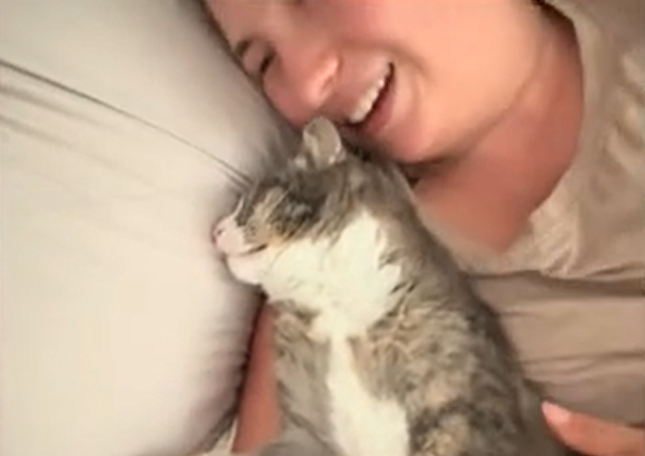
Rebecca Gladstone, 25, from Miami, Florida, was filmed cuddling her rescue cat Luna in bed, but something was immediately off. The cat was limp and completely unconscious. Despite trying to wake him, the one-year-old domestic shorthair tabby wouldn’t open his eyes, which caused Gladstone to turn the camera off as panic set in.
At first, she didn’t think too hard about it. After a quick Google search, she came across the possibility that cats can enter such deep REM sleep that they become limp, so she accepted it and headed to bed. It’s the kind of rationalization most pet owners have probably done at least once, honestly. You want it to be nothing.
When she woke up the next morning, however, the video had blown up overnight and the comments were pointing to something far more alarming than a deep nap. What she thought was cute, unusual behavior was being flagged by thousands of viewers as a potential medical emergency.
TikTok Rings the Alarm
The June 15 clip went viral fast, racking up 7.8 million views and drawing a wave of comments urging her to take her cat to a vet immediately. It’s remarkable, honestly, how quickly a concerned crowd of strangers can mobilize around something like this. The comment section essentially became a triage room.
One commenter bluntly stated that cats simply don’t know how to play dead. A self-identified vet assistant jumped in urging bloodwork and a check for feline diabetes, sharing that her own cat had done something similar but woke up after being shaken two or three times, describing the situation as “a tiny bit concerning.”
Gladstone later said that TikTok might have saved her cat’s life, because commenters helped her realize it was more serious than she initially believed and shared their own real-life experiences with the same symptoms that her doctors had never even encountered. That’s the kind of collective knowledge that no single Google search can replicate.
A History of Warning Signs Already Ignored
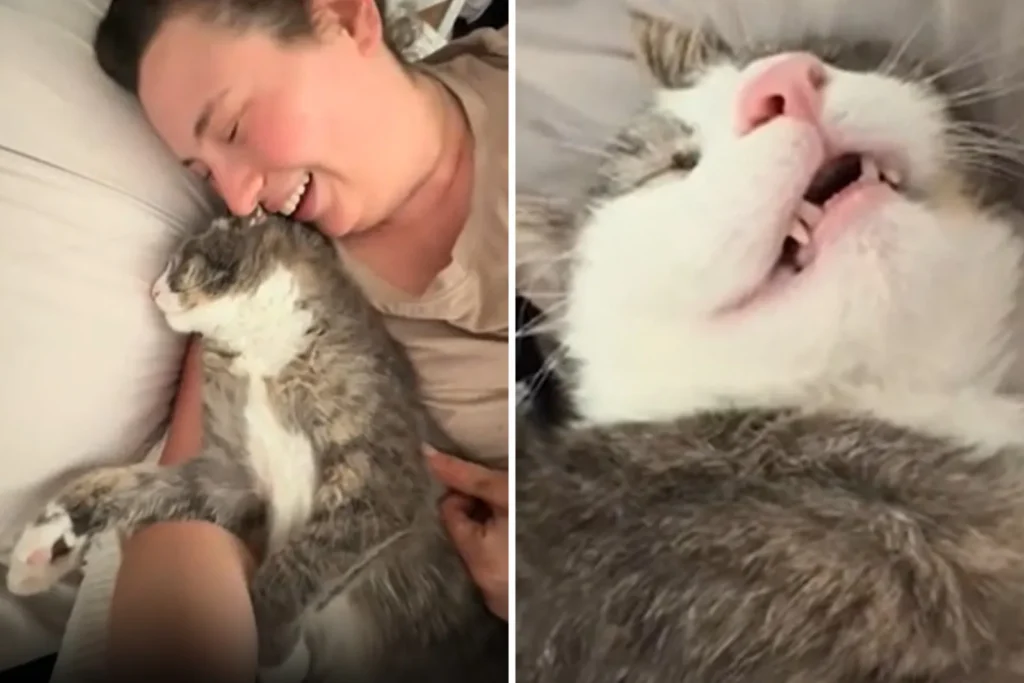
Gladstone admitted that she had been underreacting and that the situation could be something more serious. The cat had actually been to the vet in the past for shaking episodes, but every test had come back inconclusive. She had already been considering a neurologist referral but hadn’t felt any real urgency about it.
She had assumed the shaking was linked to pain from skin dermatitis, possibly caused by allergies. That morning after the video exploded, she called the neurologist, sent over the clip, and was told it wasn’t an immediate emergency but that Luna should be seen that week. It’s the kind of slow-moving medical story where, in retrospect, the clues were always there.
When seen by the primary vet, the doctor suspected diabetes but acknowledged other possible causes and ordered a full blood panel. Vets also observed proprioceptive deficits in the front paws, which pointed toward a neurological issue on top of everything else. That’s two serious conditions potentially in play at once for a one-year-old cat.
The Vet’s Diagnosis Keeps Getting More Complex
The emergency room recommended a cardiologist, while another vet suggested prioritizing neurological evaluation due to the reflex abnormalities. A further discovery revealed that the cat had previously tested positive for toxoplasmosis, a fact that had apparently not been disclosed at the time of earlier care. Instructions to stop antibiotics had been premature, and a longer treatment course was actually needed. Still, vets believed toxoplasmosis was likely not the direct cause of the current symptoms.
Gladstone said the cat was acting completely fine between episodes, playful and energetic as always, but the random collapses continued. No definitive diagnosis had been reached yet, and the family was still awaiting blood test results. Multiple specialists reviewed the footage and reportedly said they had never seen anything quite like it. That last detail is what really sticks with you. Specialists stumped by a TikTok video.
What a Veterinary Expert Says About “Going Limp”
Dr. Cliff Redford, owner and director of Wellington Veterinary Hospital in Markham, Ontario, Canada. He explained that when a cat or dog faints, collapses, or goes limp, the medical term for this event is syncope. It sounds clinical, but the reality of it happening in your arms is terrifying.
Dr. Redford explained that neurological conditions linked to syncope in animals are often tied to seizures, which don’t always look like the dramatic full-body episodes most people imagine. Some seizures may affect only specific muscle groups like the diaphragm and chest, resulting in breathing difficulty and collapse. Others may involve only the brain itself, causing changes like hallucinations, vertigo, or blackouts without any obvious physical convulsions. In other words, your cat could be having a seizure and you might genuinely mistake it for a deep sleep. That’s a sobering thought.
Why Cats Are So Good at Hiding Illness
Here’s the thing about cats: they are biologically wired to mask pain and vulnerability. It’s an evolutionary survival trait. A sick animal in the wild is a target, so they hide their suffering almost instinctively. This makes them notoriously difficult to read for even experienced pet owners. Cats are very good at hiding their pain, which is exactly why any visible sign of discomfort or unusual behavior should be examined by a vet.
Observing changes in your cat’s behavior and routine can reveal early signs that something is wrong, according to PetMD. Regardless, vets should always be contacted for evaluation and to discuss a potential diagnosis, since many symptoms that seem minor on the surface can indicate a serious underlying illness. Luna’s story is a perfect illustration of that reality.
What makes this case so fascinating is not just the medical complexity but the speed at which public awareness closed the gap between a worried owner’s blind spot and genuine danger. A community of strangers essentially acted as a first responder network. That’s something worth thinking about the next time your own pet does something that seems “probably fine.”
When a Viral Video Becomes a Lifeline
Rebecca Gladstone’s story is unusual, but the lesson it carries is universal. Cats are masters of disguise when it comes to illness. What looks playful, dramatic, or quirky can sometimes be a symptom hiding in plain sight. The fact that millions of people watched that short clip and collectively sounded the alarm is genuinely remarkable.
Luna’s case remains unresolved in terms of a firm diagnosis, but the cat is still receiving specialist care and monitoring. Gladstone herself credited TikTok with potentially saving her cat’s life, saying the community helped her understand the gravity of the situation and provided real-world experiences that even her doctors hadn’t come across before.
If there’s one takeaway here, it’s simply this: trust your gut when something feels off with your pet, and never underestimate what a second opinion, whether from a specialist or even a crowd of caring strangers online, might reveal. What would you have done in her position?