A woman’s simple act of sharing leftover milk with a young kitten has turned into an unexpected lesson in pet care, drawing attention to how early habits can shape a cat’s behavior for life. What began as a sweet, harmless gesture gradually evolved into a routine that proved difficult to break as the kitten grew older.
A Kind Gesture That Started It All
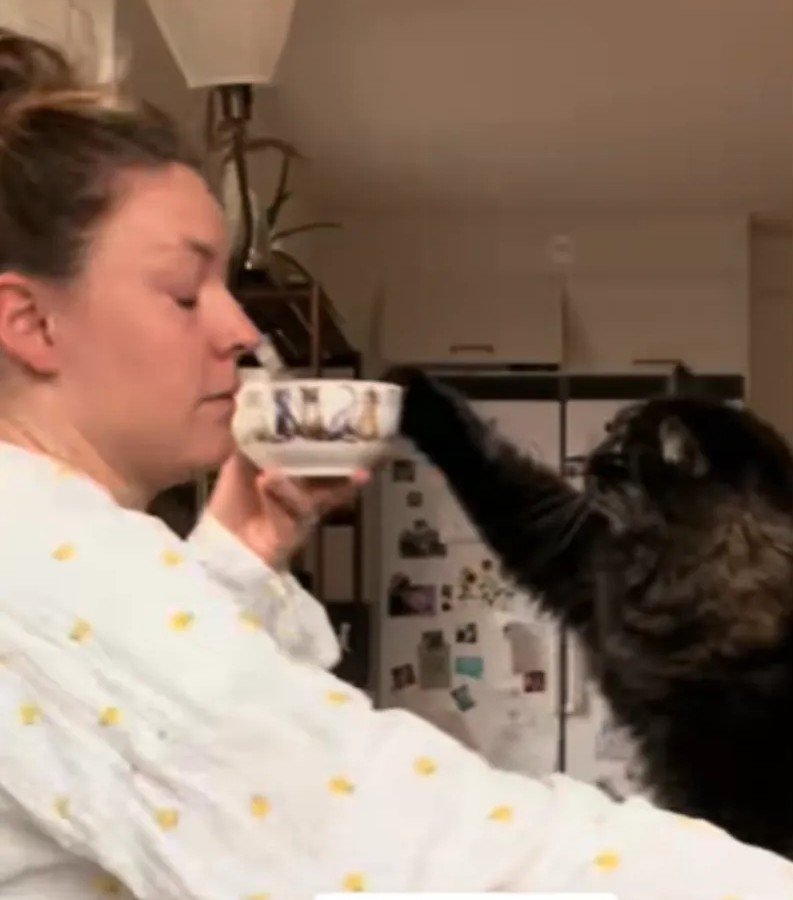
In the early days, the kitten was given small amounts of leftover milk during mealtimes. The act seemed caring and innocent, especially as the kitten eagerly lapped it up and appeared content after each feeding.
Over time, this occasional treat became a regular part of the kitten’s routine. The repeated exposure created a strong link between human meals and receiving milk, laying the foundation for future behavior.
From Cute Habit to Daily Expectation
As the kitten matured into an adult cat, the behavior didn’t fade. Instead, it became more pronounced, with the cat actively seeking milk whenever its owner sat down to eat, particularly during breakfast.
The situation soon became challenging. What once felt like a bonding moment turned into a persistent demand, with the cat refusing to ignore the routine it had grown accustomed to over time.
The Science Behind Learned Behavior
Cats are highly observant animals that quickly form associations through repetition. When a behavior is consistently rewarded, it becomes ingrained, making it harder to change later.
In this case, the cat learned to connect specific cues—like the sight of food or the sound of preparation—with receiving milk. This type of conditioning explains why the habit continued well into adulthood.
Why Milk Isn’t Ideal for Adult Cats
While kittens can digest their mother’s milk, most adult cats are lactose intolerant. Their bodies lack the necessary enzymes to properly break down dairy products like cow’s milk.
Regular consumption can lead to digestive issues such as bloating or diarrhea. Even if symptoms are mild, milk is not considered a healthy or necessary part of an adult cat’s diet.
A Common Misconception Among Pet Owners
Many people still associate cats with drinking milk, a belief often reinforced by media and cultural imagery. As a result, similar habits are unintentionally formed in households around the world.
Stories like this resonate widely because they reflect a shared misunderstanding. Pet owners often realize too late that what seems harmless can create long-term challenges.
Better Feeding Practices for Long-Term Health
Experts recommend providing cats with nutritionally balanced food and treats designed specifically for their needs. These options support proper digestion and overall well-being.
Establishing clear feeding routines early helps prevent unwanted behaviors. Limiting human food and maintaining consistency can make a significant difference as pets grow.
This situation highlights how small, well-intentioned actions can lead to lasting consequences. A simple routine created during a kitten’s early days shaped its expectations into adulthood.
For pet owners, the takeaway is clear: thoughtful feeding habits from the beginning are essential. Making informed choices not only protects a cat’s health but also helps avoid behaviors that can be difficult to reverse later.
Kristina is a young writer from India. An arts graduate and an avid content creator, Kristina is passionate about animals and wildlife. She enjoys exploring topics related to pet care, animal behavior, conservation, and nature, combining thorough research with engaging storytelling.