Scarlet thought a simple walk would clear her mind on a sweltering day. Instead, she found a tiny hummingbird collapsed on the ground, barely moving from exhaustion. What followed tested her patience and resolve over the next four hours.
Here’s the thing: encounters like this reveal how fragile these speedy creatures truly are. Scarlet’s quick thinking turned potential tragedy into triumph. Let’s dive into the details of her rescue and what it means for wildlife lovers everywhere.
A Routine Walk Becomes a Rescue Mission
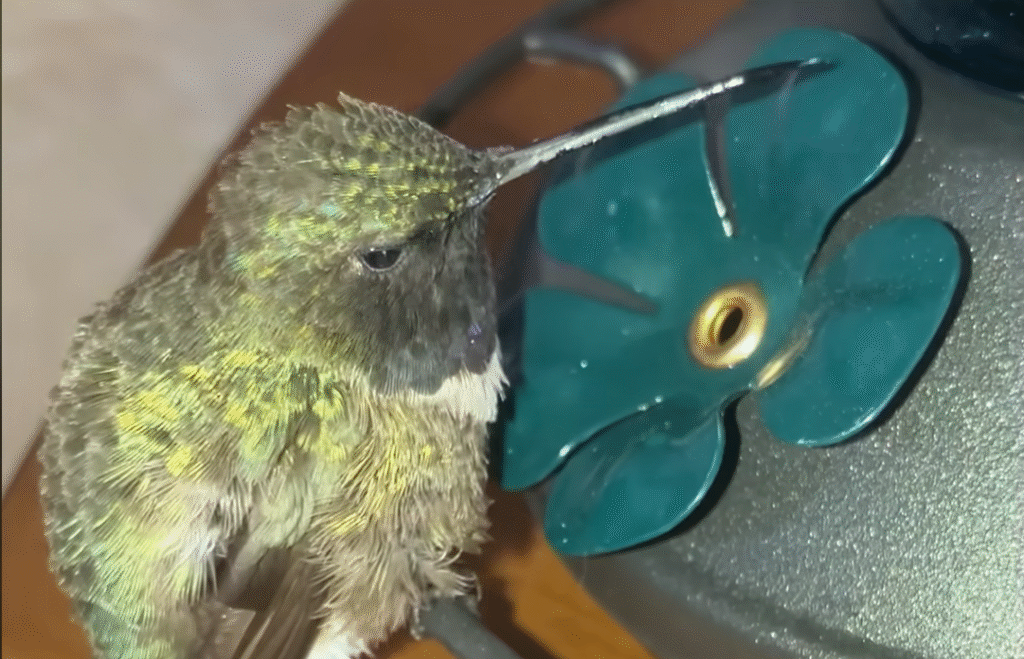
Scarlet spotted the motionless hummingbird during a summer outing, its body limp from the intense heat. She gently scooped it up, noting no injuries but clear signs of dehydration and fatigue. Without hesitation, she carried it to safety, determined to help. Her persistence paid off as the bird slowly responded to care. This moment highlights how everyday people step up when nature needs a hand. Stories like hers remind us vigilance can make all the difference.
Hummingbirds’ High-Stakes Battle with Heat and Exhaustion
These birds boast one of the highest metabolisms in the animal kingdom, burning energy at rates far exceeding other species. They must feed every 15 minutes just to keep going, with hearts pounding up to 1,200 times per minute during flight. Extreme temperatures trigger torpor, a deep energy-saving state that leaves them vulnerable on the ground. Climate shifts have spiked such cases, pushing more into distress during heatwaves. Scarlet’s find fits a troubling pattern reported by rescue groups. Awareness grows as tales spread, urging better protection for these jewels of the sky.
The Patient Revival Process Unfolds
Scarlet started by mixing a precise one-to-four ratio of sugar and water, the gold standard recommended by experts like the Audubon Society. She used an eyedropper to deliver tiny amounts, holding the bird steady in shade away from threats. After two hours, its eyes flickered open, a promising sign amid the wait. Strength built gradually as it sipped on its own and tested its wings. Avoiding overfeeding kept risks low, showcasing her careful approach. Four hours later, full recovery seemed within reach.
A Tender Kiss Seals the Miracle
Perched on her finger, the hummingbird leaned in for a soft beak touch against her skin, what Scarlet called a thank-you kiss. Seconds later, it whirred into the air, circling briefly before vanishing. She described the scene as witnessing a miracle, her awe palpable. Rare gestures like this forge deep connections in rescues. The bird’s confident flight confirmed its revival. Moments such prove the rewards of compassion.
Expert Advice and Bigger Picture for Conservation
Ornithologists praise methods like Scarlet’s, stressing hygiene and the right nectar mix to fight infections. Hummingbird numbers have dropped sharply in places, with some U.S. species down nearly 20 percent from habitat loss and pesticides. Citizen actions feed data to apps like eBird, tracking vital trends. Backyard feeders and pollinator gardens offer real help amid urbanization. Her tale inspires workshops on first aid for wildlife. Collective efforts could steady populations facing climate woes.
Final Thought
Scarlet’s experience deepens respect for nature’s tenacity and our role in it. One person’s four-hour stand saved a life and sparked hope. What would you do spotting a grounded hummingbird? Share your thoughts in the comments.
Source: Original YouTube Video