You probably already know that look. The one your cat gives you right before they do something completely deliberate and then pretend they have no idea what you’re talking about. Sound familiar? Most people chalk it up to typical cat weirdness. But what if those moments were actually tiny windows into a surprisingly complex mind?
Cats have long been overshadowed by dogs in the intelligence department, mostly because they refuse to perform on cue. Honestly, that stubbornness might itself be the biggest clue. The science of feline cognition is still catching up, but what researchers have uncovered so far is nothing short of remarkable. Get ready to look at your cat in a whole new way. Let’s dive in.
Their Brains Are More Human-Like Than You’d Expect

Here’s the thing most people never even think to ask: what does a cat’s brain actually look like? It turns out that while brain size often gets all the attention, it’s really the brain structure and surface folding that determine intelligence, and a feline’s surface folding and brain structure are roughly 90% similar to that of the human brain. That’s a wild statistic when you stop and think about it. We’re talking about an animal that fits in a carry bag having a brain architecture remarkably close to ours.
Analyses of cat brains have shown they are divided into many areas with specialized tasks that are vastly interconnected, sharing sensory information in a kind of hub-and-spoke network, with a large number of specialized hubs and many alternative paths between them. This exchange of sensory information allows the brain to construct a complex perception of the real world and to react to and manipulate its environment. Think of it like a sophisticated internal GPS system, constantly cross-referencing dozens of signals at once. Your cat isn’t just reacting to the world. They’re actively constructing it.
They Understand Cause and Effect Better Than You Think
You’ve probably noticed your cat meowing insistently at a certain time each day, right before you head to the kitchen. When your cat uses meows and other attention-getting behaviors to get you to feed them at a certain time, it indicates that they understand the concepts of time and cause and effect. This isn’t random behavior. This is strategic communication. Your cat has mapped out a reliable chain of events and they’re actively using it.
Cats not only excel at learning new information, but they can also mesh that information with things they’ve learned previously, recall it when needed, and apply it to the current situation. So when your cat figures out that scratching the door gets it opened, and then later applies that same logic to a cupboard, that’s layered learning at work. It’s honestly a little humbling when you realize they’ve been running quiet experiments on you this whole time.
Their Memory Can Last For Years
Think your cat forgets you after a long trip away? Think again. Cats possess impressive long-term memory capabilities, retaining recollections of events and locations for a decade or longer, and these memories are often intertwined with emotions, allowing cats to recall both positive and negative experiences associated with specific places. That’s not short-term convenience. That’s genuine biographical memory, which is a feature you’d expect in far more celebrated animals.
Many rehomed cats have been observed recognizing their previous owners months or even years later, responding by purring, rubbing against them, or showing signs of excitement or curiosity. Your cat remembers you. They remember the routines, the voices, and yes, probably the times you accidentally stepped on their tail too. Cats recognize and remember their owners and other significant people primarily through scent and sound, rather than visual cues. It’s a different kind of remembering, but no less real.
Object Permanence: Your Cat Knows Things Exist When Hidden
Here’s a mind-bending one. In controlled experiments, cats demonstrated fully developed concepts of object permanence, indicating that their sensorimotor intelligence is complete. In contrast, human infants are tested with multiple invisible displacements of an object to assess the emergence of mental representation during the sixth and final stage of sensorimotor intelligence. The cats’ search behavior in these tasks was consistent with their ability to represent an unsensed object and reflected fully developed sensorimotor intelligence.
To put that plainly: your cat knows the toy still exists even when it rolls under the couch. A young human baby cannot do that. A study published in Animal Cognition found that cats can perform object permanence tasks, meaning they understand that objects continue to exist even when hidden, and this is a cognitive skill that human babies only develop around 8 months of age. So next time your cat is laser-focused on staring at the space under the refrigerator for twenty minutes straight, they’re not being weird. They’re being logical.
They Can Actually Read Your Emotions

I know it sounds crazy, but your cat might genuinely know when you’re having a bad day. Researchers found that cats correctly matched the human auditory and visual signals of happiness and anger, suggesting that they have a cognitive representation of these emotions, which allows cats to discriminate between them. This isn’t a fluke. It’s a real cognitive skill that cats have quietly developed over thousands of years living alongside humans.
Researchers observed that cats exhibited more frequent positive behaviors, like purring, rubbing, or sitting on their owner’s lap and spending more time with them, when their owner was smiling. Frowns seemed to produce the opposite effect. Interestingly, cats can also pick up on subtleties, such as changes in facial expressions, tone of voice, and daily routines, hinting at their capacity to process emotional cues. They’re tuning in to you far more carefully than you ever realized.
They Are Master Problem-Solvers in Disguise

Let’s be real. Most people think of dogs when they imagine a problem-solving pet. Cats tend to get written off as lazy or indifferent. But hide a treat behind a closed cabinet door and see what happens. Cats’ problem-solving abilities are nothing short of impressive. Through observational learning and trial-and-error techniques, cats demonstrate a remarkable capacity to understand complex challenges and develop innovative solutions.
Cats excel at learning by watching. Whether it’s figuring out how to open a cabinet door or navigating a challenging obstacle, they can quickly comprehend and replicate behaviors they’ve observed. This skill is particularly evident in multi-cat households, where younger cats learn from more experienced feline companions. Think of it like watching a quiet genius in the corner of a classroom, not saying much, but absorbing everything. That’s your cat.
Their Communication System Is Surprisingly Sophisticated

You might think your cat’s vocabulary is limited to a single impatient meow. That would be a significant underestimation. Cats employ a diverse array of communication signals, including vocalizations, body language, and chemical cues, to convey intentions, emotions, and social information to both other cats and humans. Vocal signals form a primary mode of expression, with domestic cats producing a wide repertoire estimated at up to 21 distinct types, though meows alone account for around 16 variations differentiated by pitch, duration, and context.
Research reveals that cats can recognize their names and their owners’ voices, responding with subtle behaviors like head and ear movements rather than overt actions. This ability highlights their social intelligence and awareness of their surroundings. Cats often develop unique vocalizations for specific people. These individualized meows show that cats can adapt their communication style to get what they want from specific humans. Your cat has essentially created a personalized language just for you. How many other animals can claim that?
They Are Emotionally Bonded to You in Ways Science Confirms
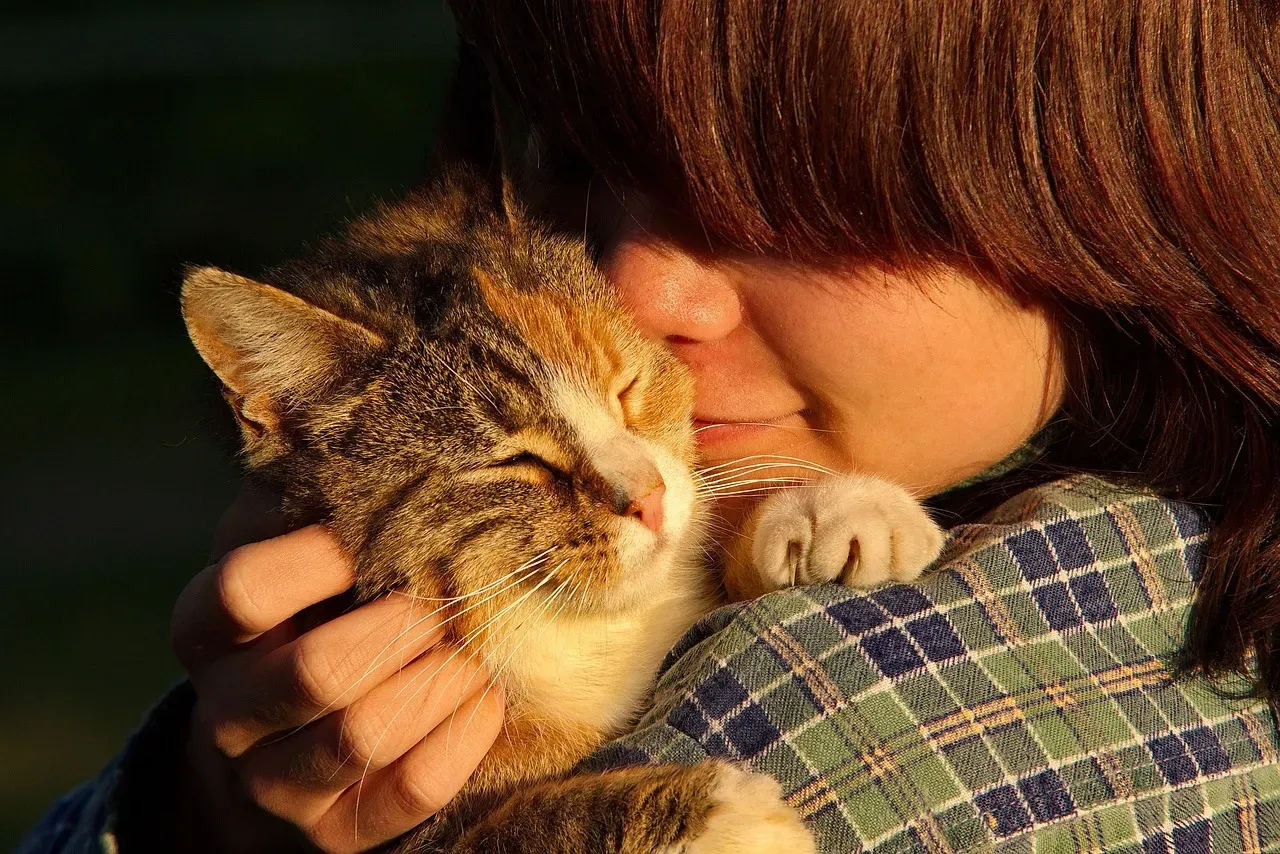
Here’s something that might genuinely surprise you: your cat isn’t as aloof as popular culture insists. Research from Oregon State University found that around 64% of cats demonstrate secure attachment to their humans, comparable to the bond seen in human infants. That’s a majority. More than half of all cats are forming the same kind of secure attachment bond that we normally only attribute to babies with their caregivers. That’s not trivial.
Cats are capable of complex relationships and long-term emotional memory. They may not express emotions like humans or dogs, but they show a nuanced, situational understanding of emotion. Cats will respond to their owners’ low moods, such as depression, by increasing interaction, like meowing more frequently and rubbing against them. This indicates that cats are not only passively perceiving emotions but are also actively participating in and responding to this emotional relationship. They’re not ignoring you. They’re watching you, reading you, and responding in their own way.
Their Independence Is a Feature, Not a Bug
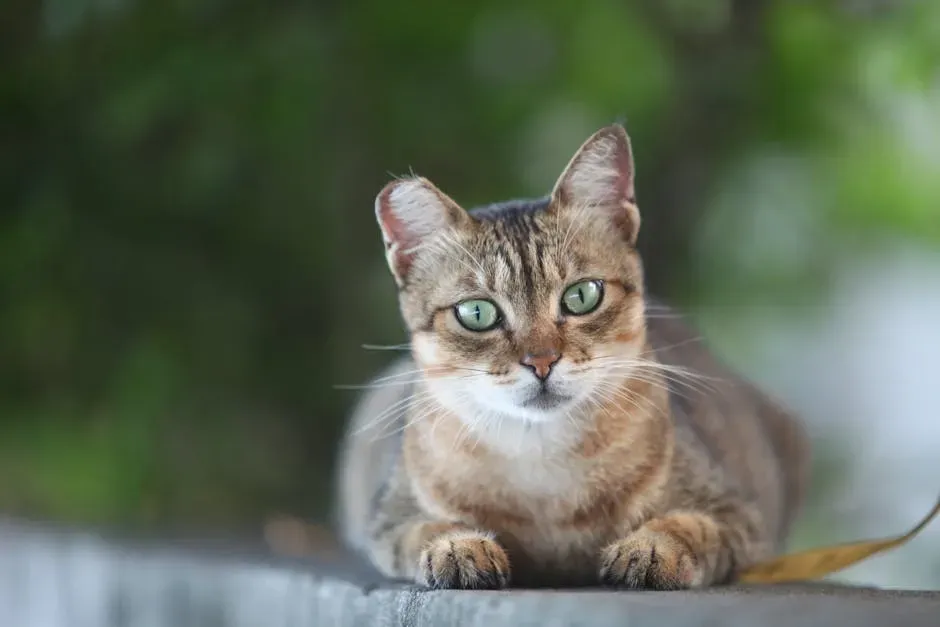
Cats more frequently try to solve problems on their own rather than turning to people for social cues. Both traits are signs of intelligence that fit with how each species moves through the world. Honestly, we’ve been measuring cat intelligence with the wrong ruler for decades. We expected them to behave like dogs: eager, compliant, performance-ready. Cats simply don’t operate that way, and that difference in approach has been mistaken for a difference in ability.
The feline brain’s neuroplasticity is a key factor in their intelligence. Unlike static neural structures, cats’ brains can reorganize and form new connections throughout their lives. This adaptability allows them to continuously learn, modify behaviors, and develop sophisticated problem-solving skills. Smart cats have the ability to think for themselves. They make decisions based on their own judgment and experience, and aren’t easily distracted by other things. That’s not aloofness. That’s cognitive confidence. There’s a massive difference.
Conclusion

The evidence really is stacking up, isn’t it? Your cat recognizes your face, remembers your voice, reads your emotions, solves problems independently, and has a long-term memory that can outlast most phone contracts. We’ve spent years assuming that because cats don’t fetch the newspaper or come bounding over when called, they must not be all that bright. Turns out, we were the ones missing something.
It’s hard to say for sure just how deep feline intelligence goes. Science is still catching up, and cats remain famously uncooperative research subjects. But maybe that refusal to perform on command is the most revealing clue of all. Cats have evolved to demonstrate their intelligence in ways that may not seem immediately apparent to us humans. For this reason, it can be challenging to accurately assess a cat’s intelligence. The available evidence suggests, however, that cats are much smarter than many people give them credit for.
So the next time your cat sits on your laptop, stares at a wall with suspicious intensity, or meows in that very specific tone that somehow gets you off the couch, take a second and appreciate the mind behind it. You’re not dealing with a creature that merely tolerates your presence. You’re sharing your home with a quiet, emotionally aware, long-memoried, problem-solving individual who has known how to handle you all along. What do you think – had you already suspected your cat was smarter than you let on? Tell us in the comments.