You’ve probably watched your cat lick and preen for what feels like hours, thinking to yourself, “Okay, we get it, you’re clean.” But honestly, there’s so much more happening beneath the surface of that seemingly simple grooming routine. Your cat is not just tidying up – they are communicating volumes about their physical health, emotional state, and social world, all without saying a single word.
What if those repetitive lick-and-swipe motions were actually a live health broadcast, a stress diary, and a declaration of friendship all rolled into one? Buckle up, because once you understand what your cat’s grooming habits are really telling you, you’ll never look at bath time the same way again. Let’s dive in.
The Remarkable Biology Behind Every Lick
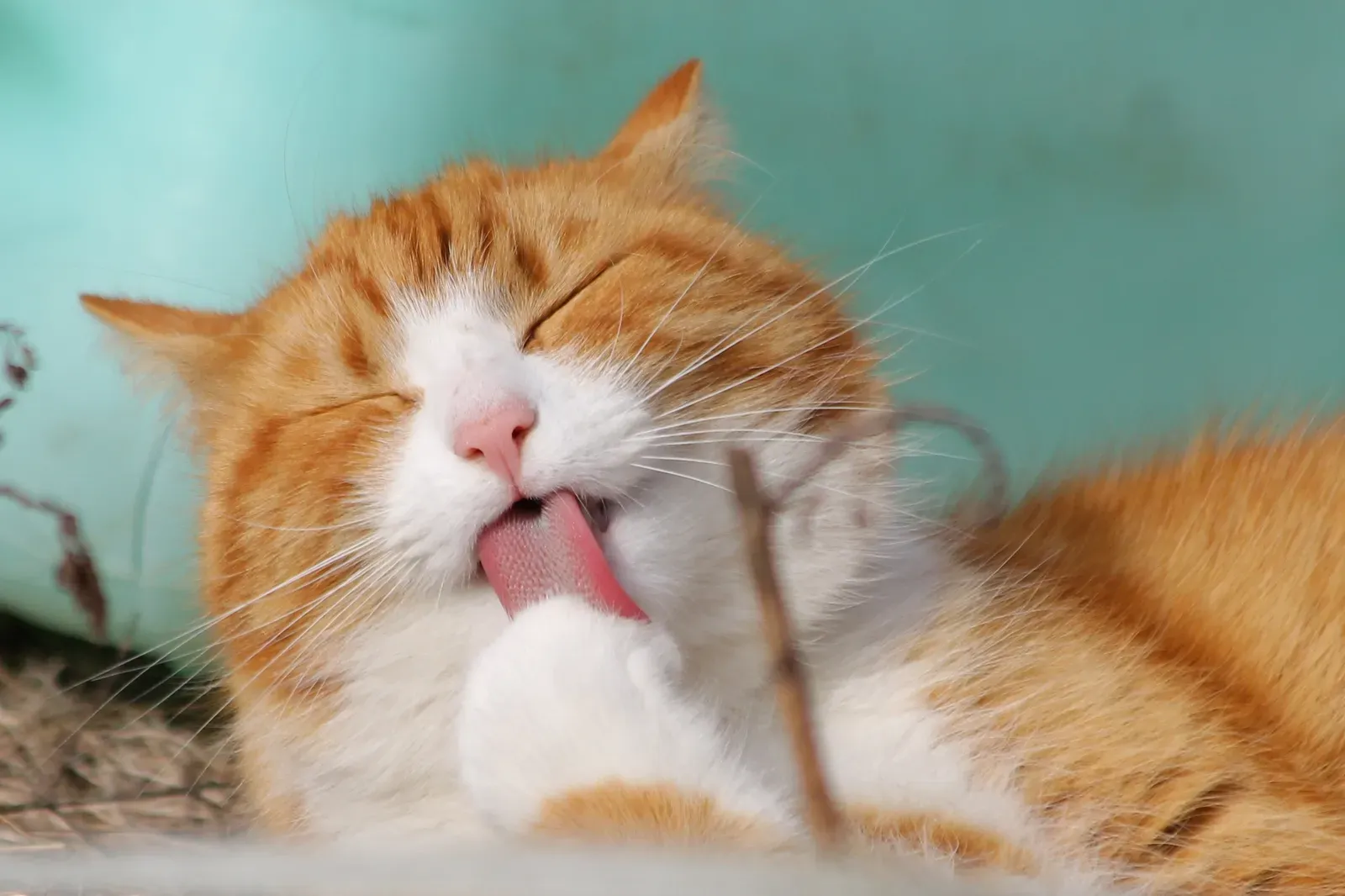
Before we can decode your cat’s grooming behavior, it’s worth appreciating the extraordinary biological toolkit they’re working with. A cat’s tongue is covered with tiny barbs called papillae, made of keratin – the same material found in hair and nails – and these backward-facing barbs are incredibly effective at removing loose hair and foreign particles from the coat. Think of it like a self-cleaning brush built right into your cat’s face. It’s honestly remarkable engineering when you stop to think about it.
Grooming also helps maintain healthy skin by stimulating the production of sebum, an oily secretion produced at the base of each hair, which lubricates and waterproofs the fur, giving it that beautiful, shiny appearance. Cats have very limited sweat glands – essentially only on their paw pads – and the evaporation of saliva after grooming can actually help cool them down on hot days. In other words, your cat’s grooming ritual doubles as their personal air conditioning system.
How Much Grooming Is Actually Normal?
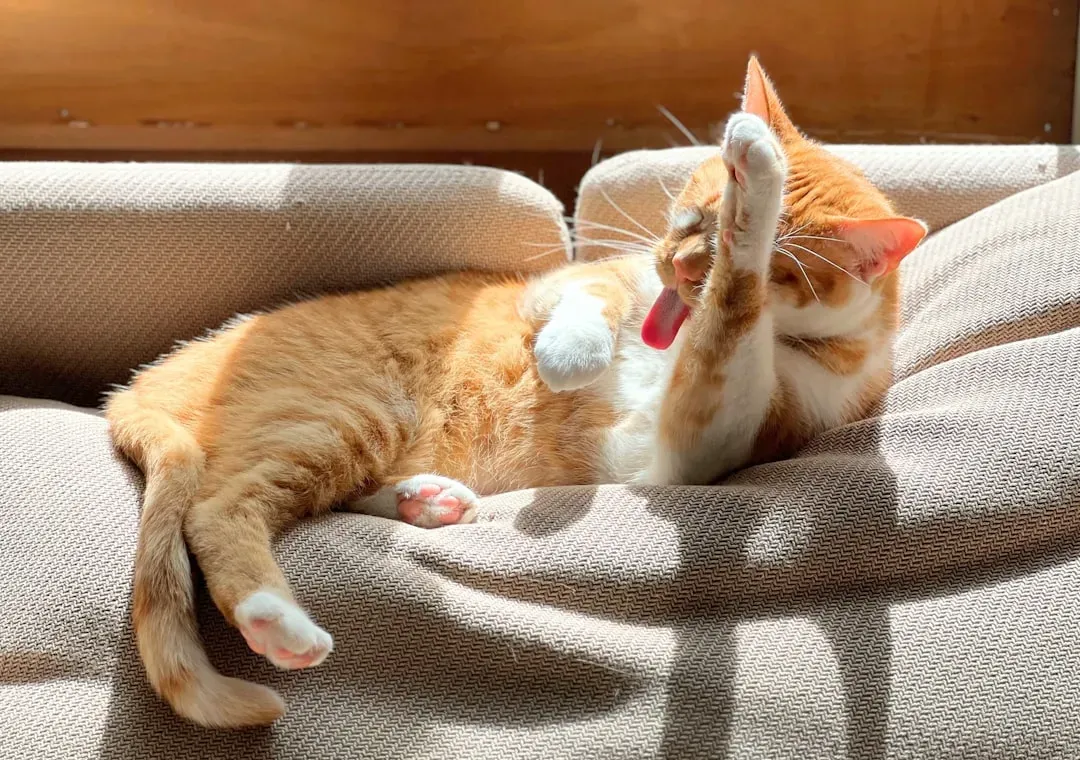
Here’s something that surprises most cat owners: grooming is a massive chunk of your cat’s daily life. Grooming behavior is an important indicator of health in feline companions, and cats spend between 30 and 50 percent of their day in grooming activities. That’s not laziness – that’s a full-time hygiene commitment most humans can only dream of maintaining.
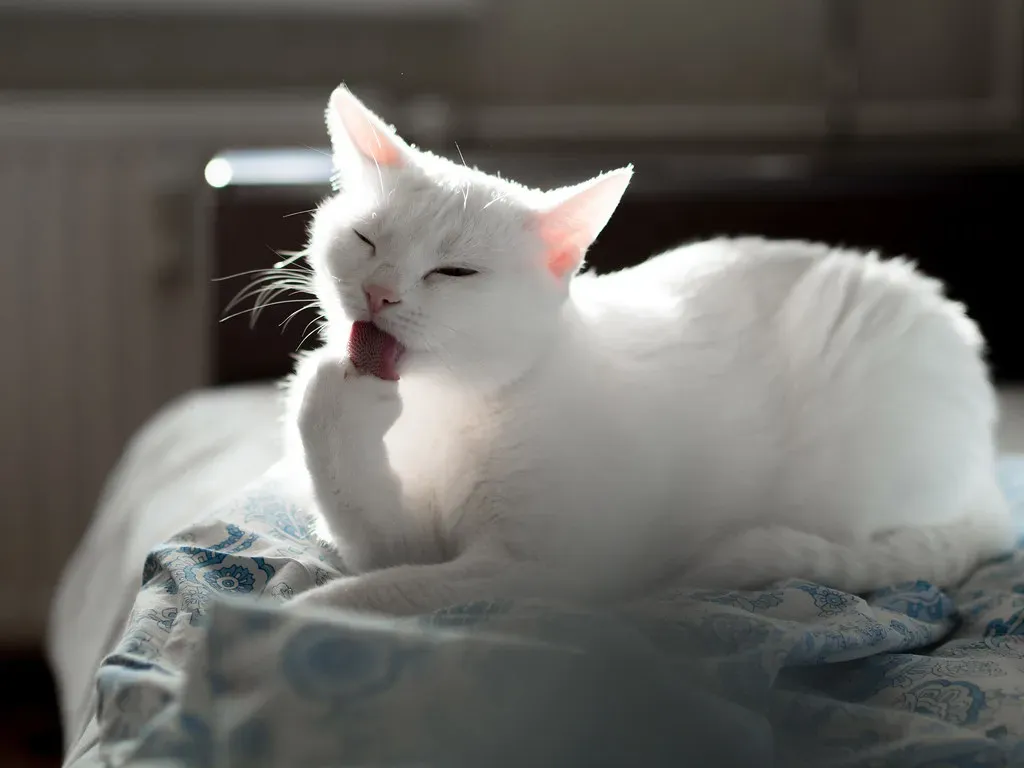
A healthy cat will typically groom several times a day, often after meals, naps, or using the litter box, including licking the coat, face, and paws in a steady and consistent pattern – it is a part of their natural routine, much like brushing your teeth. Even though cats can vary, on average they spend between 15 to 50 percent of their waking hours grooming themselves, with the amount of time changing depending on their preferences, age, and environment. Knowing this baseline makes it much easier to spot when something is off.
When Grooming Becomes a Stress Signal
Let’s be real – stress is not just a human problem. Your cat feels it too, and grooming is one of the first places that stress shows up. Psychological factors weave through grooming behaviors in complex ways, and stress-induced overgrooming typically follows major household changes such as new pets, moving homes, or even rearranged furniture, with the repetitive motion releasing endorphins and creating a self-soothing cycle akin to human nail-biting.
The location of grooming changes speaks volumes too – stress grooming tends to concentrate on easily reached areas like the forelegs and belly, while depression-related neglect shows most dramatically on the back and hindquarters where grooming requires more effort. Stress often causes cats to develop compulsive disorders like excessive grooming, and events like moving, home remodeling, a new pet or family member, separation anxiety, and lack of stimulation can all trigger these behaviors. If your furniture recently moved and your cat started licking their belly raw, those two facts may be very much connected.
The Hidden Pain Messages in Overgrooming
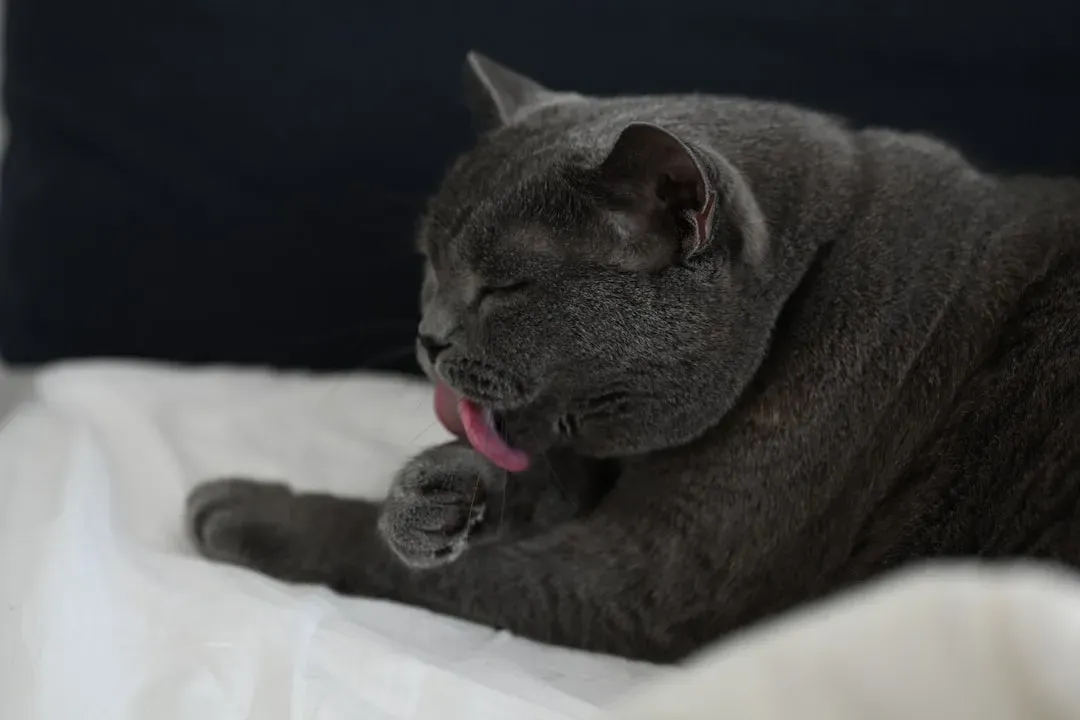
This one genuinely surprises people. Overgrooming is not always about stress or emotions – sometimes it is your cat’s way of telling you, “Something hurts right here.” Your cat’s fur-loss pattern may hint at the source of the problem, and overgrooming can indicate pain or discomfort, particularly if they’re repeatedly licking one area – for example, back pain may cause overgrooming on a specific part of the back, while a urinary tract infection or anal sac impaction may encourage excessive grooming of the lower belly or the area around the anus.
Arthritis and pain can result in overgrooming or decreased grooming – pain in a specific joint may cause your cat to lick more frequently in that area, while general arthritis may make it more difficult to reach certain areas to groom. Roughly three quarters of cats with overgrooming issues have underlying medical conditions, with only about one in ten overgrooming strictly due to behavior – meaning that if your cat is overgrooming, there is most likely a medical cause. That statistic genuinely changes how you should think about the problem.
What a Neglected Coat Is Actually Saying
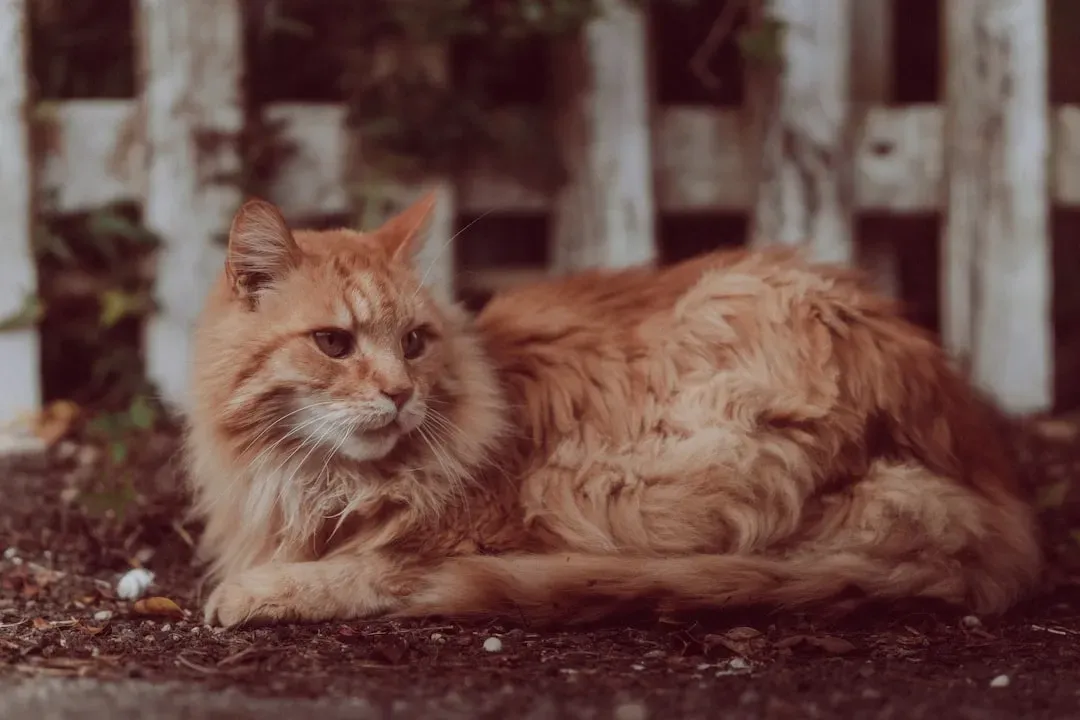
The opposite of overgrooming is just as telling. When your once-meticulous cat stops keeping up with their coat, that silence carries its own alarm. A once-meticulous cat abandoning their grooming routine sounds equally loud alarm bells – a dull, greasy coat with visible dander, clumped fur around the hindquarters, or food debris stuck to the face all suggest something has disrupted the grooming impulse.
Elderly cats with arthritis may struggle to twist into cleaning positions, with their unkempt appearance reflecting physical limitation rather than indifference, while obese cats often develop issues from being unable to properly reach their rear, and dental disease makes the grooming process painful as infected teeth protest the tongue’s movement. Neurological issues sometimes reveal themselves through lopsided grooming – one side of the body remaining pristine while the other grows increasingly disheveled. If you see that kind of asymmetry, it is worth a prompt vet visit rather than waiting it out.
Allergies, Parasites, and Skin Signals
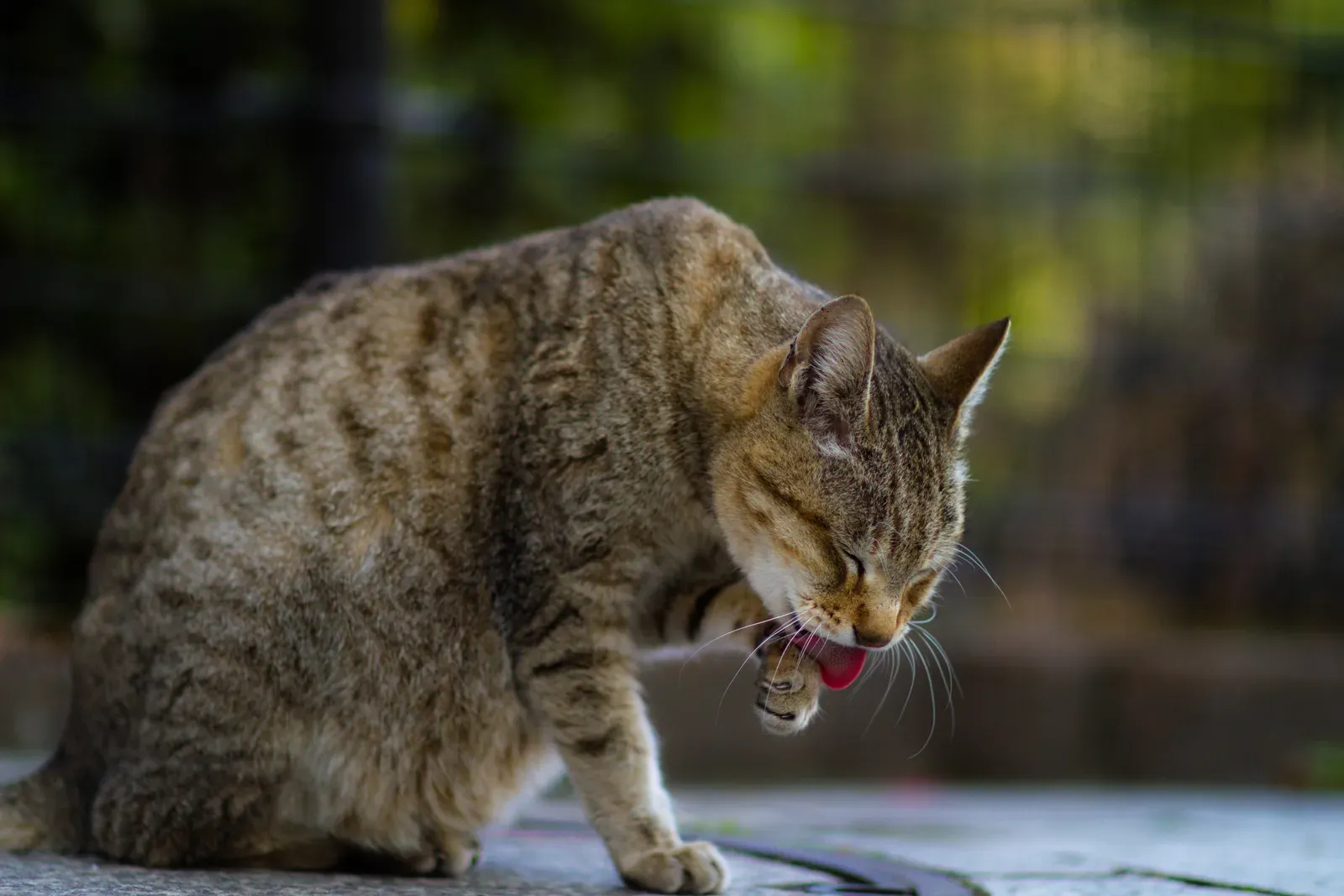
Your cat’s skin is essentially a live news ticker of what is going on inside and outside their body. Skin conditions betray themselves through altered grooming behaviors – the cat with flea allergy dermatitis will lick violently at their tail base and hindquarters, sometimes creating inflamed hot spots, while food allergies often manifest as excessive face-washing and paw-licking, and environmental allergies typically cause full-body itching with no clear pattern.
Parasites like mange mites create intensely localized grooming – cats may literally lick holes in their skin trying to reach the irritation – while systemic illnesses like hyperthyroidism or diabetes can alter skin oil production, leading to either excessive grooming of greasy fur or neglect of a brittle, dry coat. Symmetrical hair loss often suggests behavioral overgrooming, while asymmetrical patterns may indicate medical issues like skin allergies or parasites. The pattern of hair loss is basically your cat drawing you a map to the root cause.
Allogrooming: When Your Cat Grooms Others
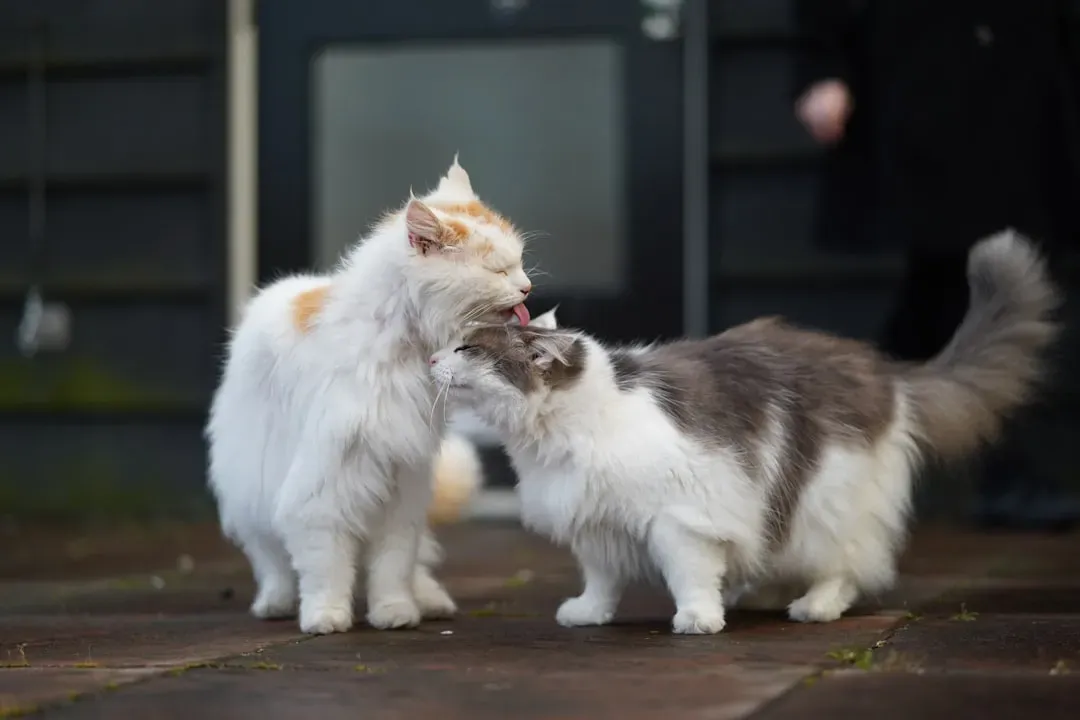
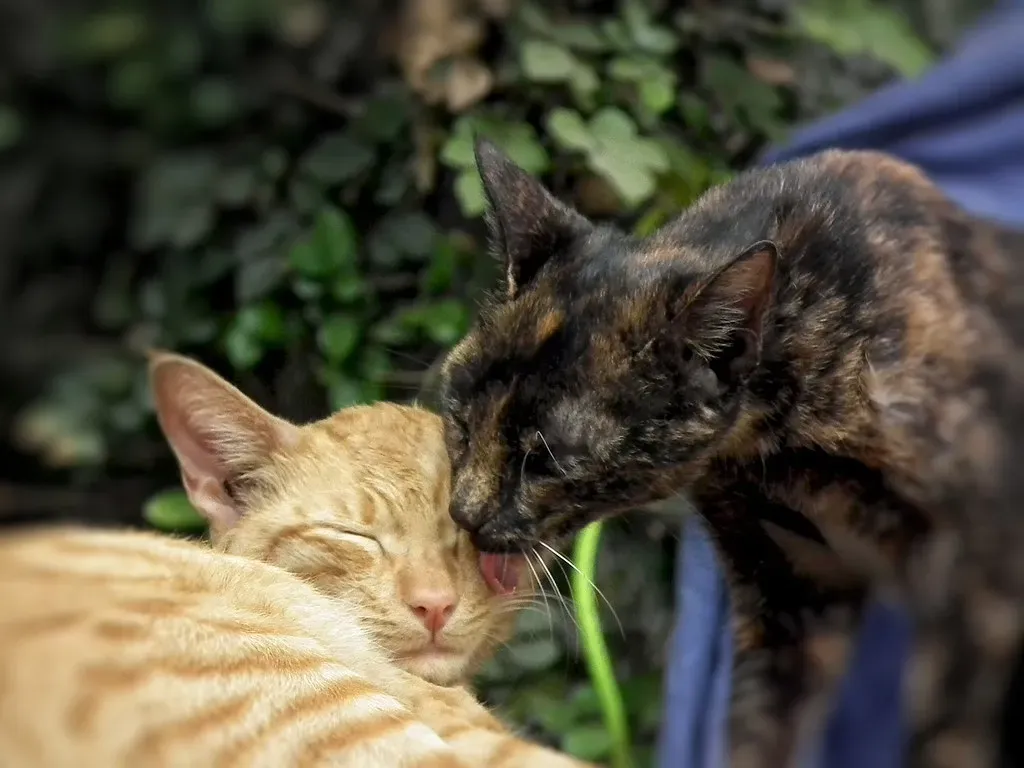
If you have multiple cats and you’ve noticed them grooming each other, you are witnessing one of the most genuinely tender rituals in the animal kingdom. Cats often groom each other as a way to establish and strengthen social bonds – this behavior, known as allogrooming, is a sign of affection and trust, and when cats groom each other they are not just cleaning but also sharing scents, which helps to create a unified group smell that fosters a sense of community and reduces aggression.
In some cases, grooming can serve as a way to establish or reinforce social hierarchy within a group – dominant cats might groom subordinate cats to assert their status, while submissive cats might allow themselves to be groomed as a sign of respect and acceptance. Cats that normally groom each other suddenly stopping may indicate interpersonal tension in a multi-cat household, and overgrooming of a single cat by their companions can signal social anxiety or even underlying illness in the recipient. Honestly, watching cat social dynamics through the lens of grooming is like reading a very dramatic novel.
When Your Cat Grooms You
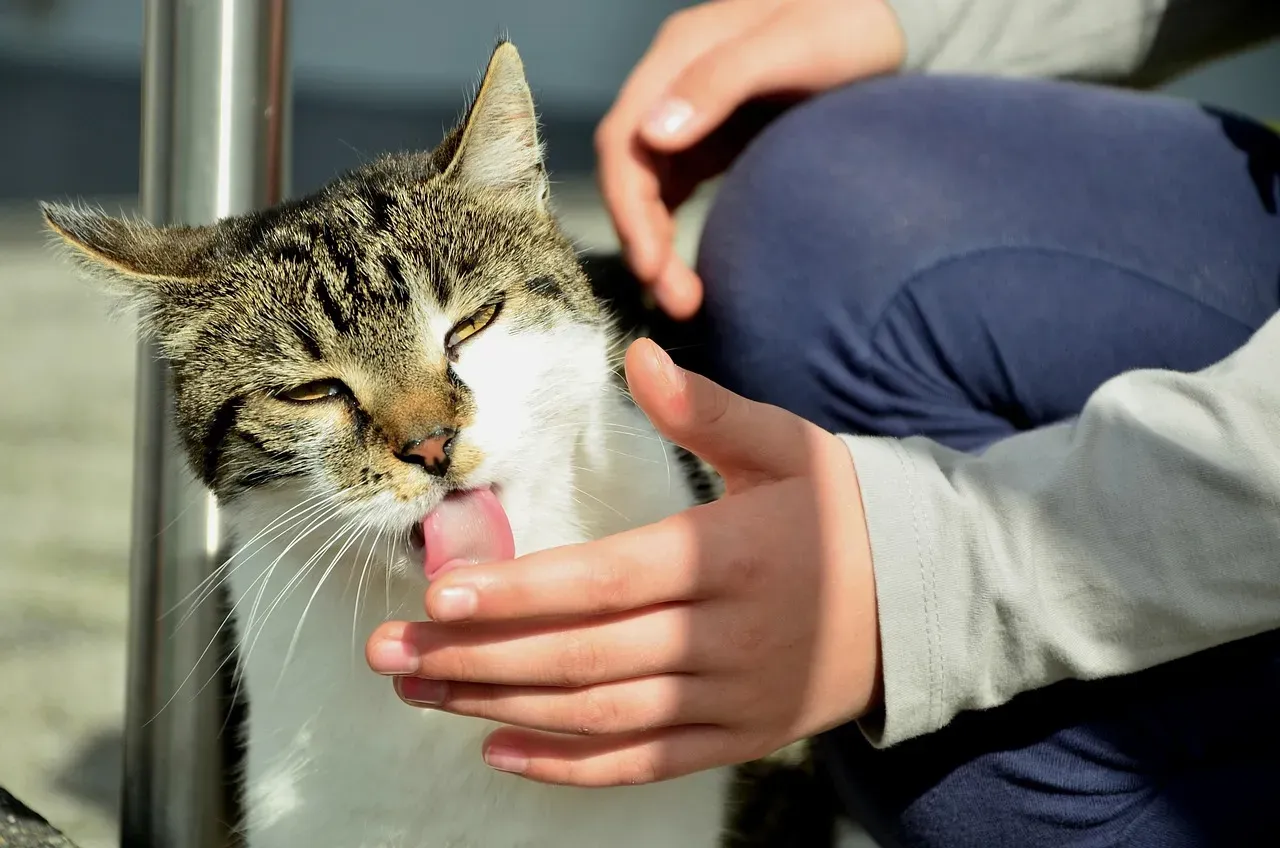
You reach down to pet your cat, and suddenly the sandpaper tongue comes out and starts working on your hand. Charming or bizarre? Actually, it is both – and it means something significant. A part of your cat’s grooming habits might be to lick you, and one of the main reasons they do this is social interaction – much like a mother cat would with her kittens, your cat sometimes grooms you to show affection and strengthen bonds, and if your cat licks you, it shows they have accepted you as part of their family.
Your cat may also start licking you if they want attention – if they have learned that grooming you gets a response, they’ll continue this behavior to get your focus. Interestingly, your cat may also groom herself right after you’ve pet her – she’s actually just rearranging her hair follicles back into place, which is another good reason to brush and stroke in the direction of the hair. So the next time your cat licks you immediately after a cuddle session, take it as a compliment, not a critique of your personal hygiene.
When to Take Grooming Changes Seriously
The big question every cat owner eventually faces is knowing when a change in grooming behavior crosses from “interesting quirk” into “time to call the vet.” Fortunately, there are some clear signals. If you notice lesions of the skin or coat such as bald patches, redness, wounds, or scabs, or behavior changes or symptoms of illness, that could mean overgrooming – you may also notice fur that has been shortened rather than completely lost, as if the coat has been buzzed down.
If your cat’s grooming behavior suddenly changes or intensifies, or if you observe subtle changes in appetite, energy level, or bathroom habits, a professional examination can help identify underlying issues before they become serious – and ultimately, you know your cat’s normal behaviors better than anyone, and if something feels wrong, it’s always better to err on the side of caution. A change in grooming behavior should always prompt cat owners to consider a visit to the veterinarian. Your instincts as a pet owner are genuinely worth listening to. Trust them.
Conclusion
Your cat’s grooming habits are one of the richest, most layered windows into their inner world. From the biology of that remarkable barbed tongue to the emotional language of stress licking, from the social warmth of allogrooming to the quiet alarm bells of a neglected coat – every lick tells a story. You just have to know how to listen.
The next time you catch your cat deep in a grooming session, pause and pay attention. Are they relaxed and methodical, or frantic and focused on one spot? Are they grooming their housemate with affection, or has that ritual suddenly stopped? These small observations can make a genuinely big difference in your cat’s health and happiness.
Your cat cannot speak, but they are absolutely communicating – and grooming is one of their most eloquent languages. Now that you know how to read it, what unexpected thing have you noticed about your own cat’s grooming habits? Share your thoughts in the comments below.