You feed your cat twice a day. You give it cozy beds, warm laps, and an endless supply of toys. Yet somehow, you still find a half-dead bird on your doorstep. Or your cat stares at a corner of the room with the kind of intense focus that a surgeon reserves for a twelve-hour operation. Sound familiar? There’s a reason for that.
The truth is, beneath all that domestic fluff, your cat carries something ancient, something wired so deeply into its biology that no amount of premium kibble or cozy blankies can switch it off. The science behind why your cat hunts, how it hunts, and just how remarkable it actually is at doing it, is honestly more fascinating than most people ever stop to consider. So let’s dive in, because what you’re about to discover might completely change the way you look at your furry companion.
The Wild Ancestors Your Cat Never Really Left Behind
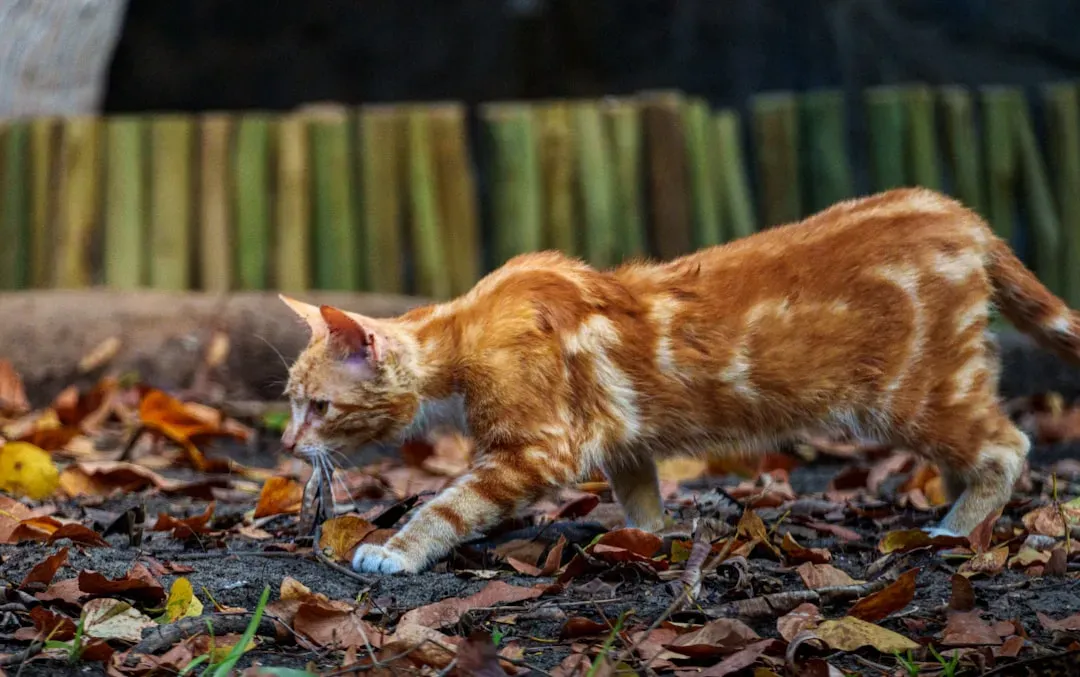
Most people look at their sleepy tabby and think “lap animal.” Here’s the thing: that same cat shares something remarkably primal with lions, leopards, and wild African cats that have never seen the inside of a living room. Your cat’s hunting instincts are deeply rooted in its evolutionary history as a solitary predator. For millions of years, wild cats roamed the earth, developing exceptional hunting skills to survive and thrive.
Over time, natural selection favored individuals with traits that enhanced hunting prowess, such as agility, stealth, and powerful claws. As these early felines adapted to their environments, they became increasingly efficient predators, able to take down prey much larger than themselves. Think of domestication not as a complete transformation, but more like a thin coat of paint over an incredibly powerful machine. Scratch the surface and the machine still runs.
It’s Hardwired, Not Learned – The Neurological Truth
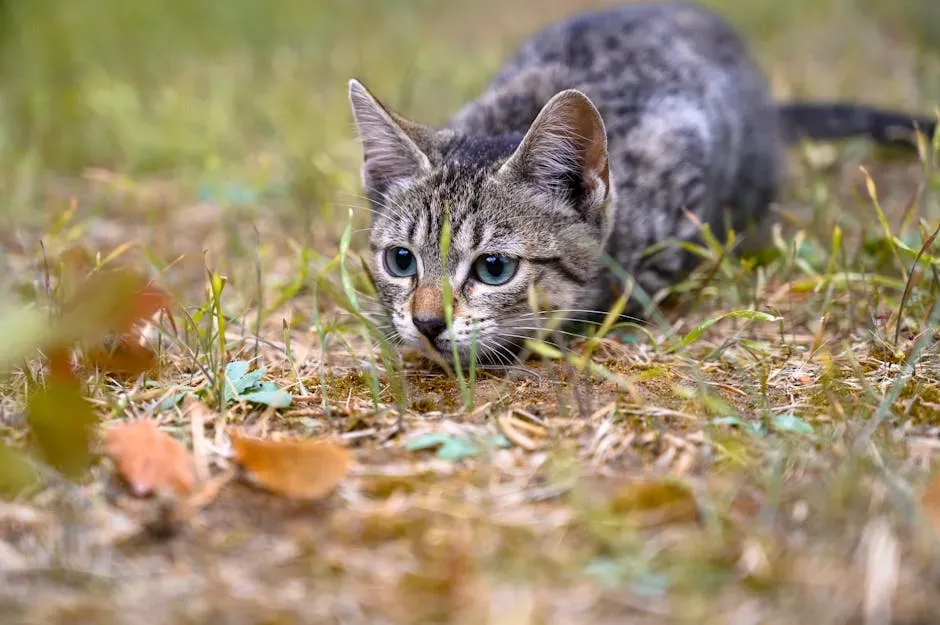
You might assume your cat learned to hunt by watching older cats or spending time outdoors. Partially true. Hunting is an instinctive behavior for cats. It is one of the main reasons cats were domesticated in the first place. The best hunting cats were prized for their ability to keep settlements free from vermin, and these cats form the basis of our domestic cat breeds.
Your cat’s brain has enlarged areas dedicated to processing sensory information and coordinating complex movements, essentially making it a biological hunting computer. The hunting instinct is so strong that it’s triggered by movement and sound, even in cats that have never experienced hunger. This explains why house cats will enthusiastically chase laser pointers, feather toys, or anything else that activates their predatory programming. It’s not cute entertainment. It’s an ancient system firing exactly as intended.
Your Cat Is a More Successful Hunter Than a Lion
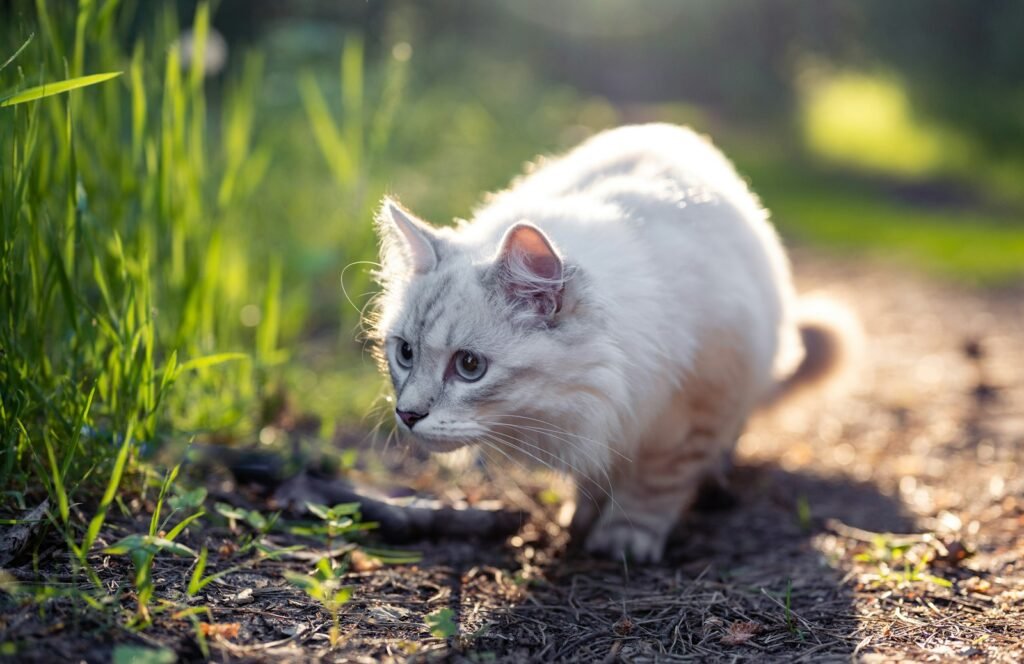
I know it sounds crazy, but hear this out. Domestic cats have a hunting success rate of around 32 percent when stalking birds and small mammals, which might not sound impressive until you consider that lions only succeed about 20 percent of the time. This success rate is even more remarkable when you factor in that most house cats are well-fed and hunting more for sport than survival.
Wild cats like the African black-footed cat have success rates as high as 60 percent, making them one of the most efficient predators on the planet. Even domestic cats hunting purely for entertainment are more successful than most wild predators, who are literally hunting to stay alive. Let that sink in next time your cat pounces on a toy mouse with laser-focused determination. It’s not playing around. It’s practicing a skill it’s genuinely exceptional at.
Supersonic Hearing That Eavesdrops on Prey
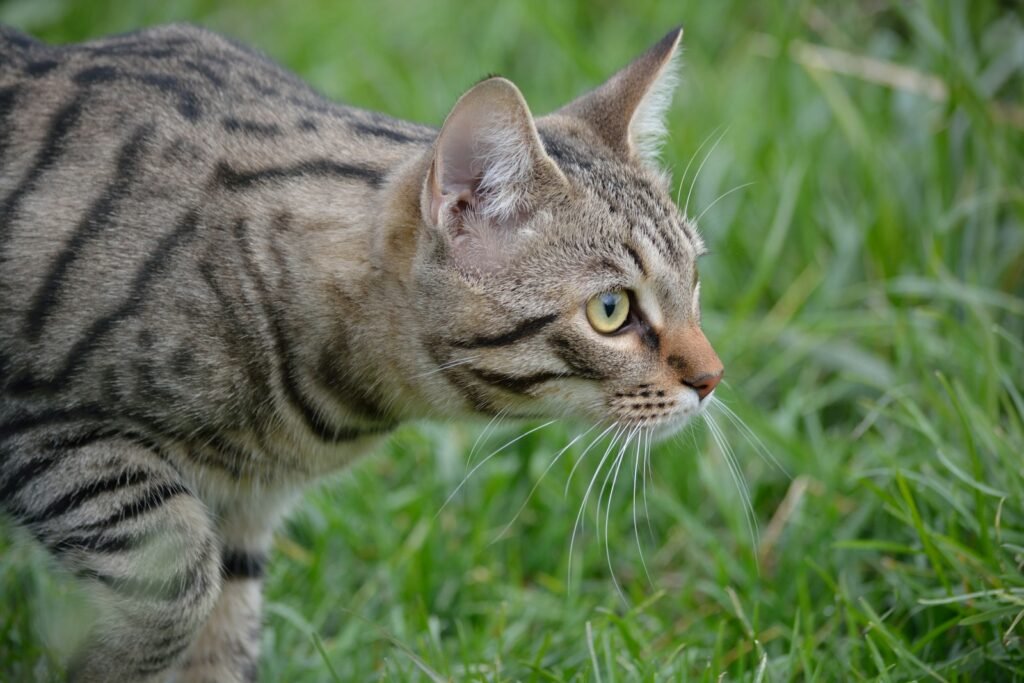
Your cat can literally hear things you will never hear. A cat’s hearing is so sensitive it can detect sounds up to 64,000 Hz, compared to humans who max out around 20,000 Hz. This superhearing allows cats to pick up the ultrasonic calls that rodents use to communicate, essentially eavesdropping on their prey’s private conversations.
Cats can also hear the subtle rustling of small animals moving through grass or leaves from impressive distances, and their highly mobile ears can pinpoint the exact location of sounds with scary accuracy. This acoustic advantage means prey animals are often detected long before they know a cat is in the area. Imagine trying to hide from something that can hear your heartbeat from across the room. That’s the world small rodents live in every single day.
Night Vision That Turns Darkness Into an Advantage
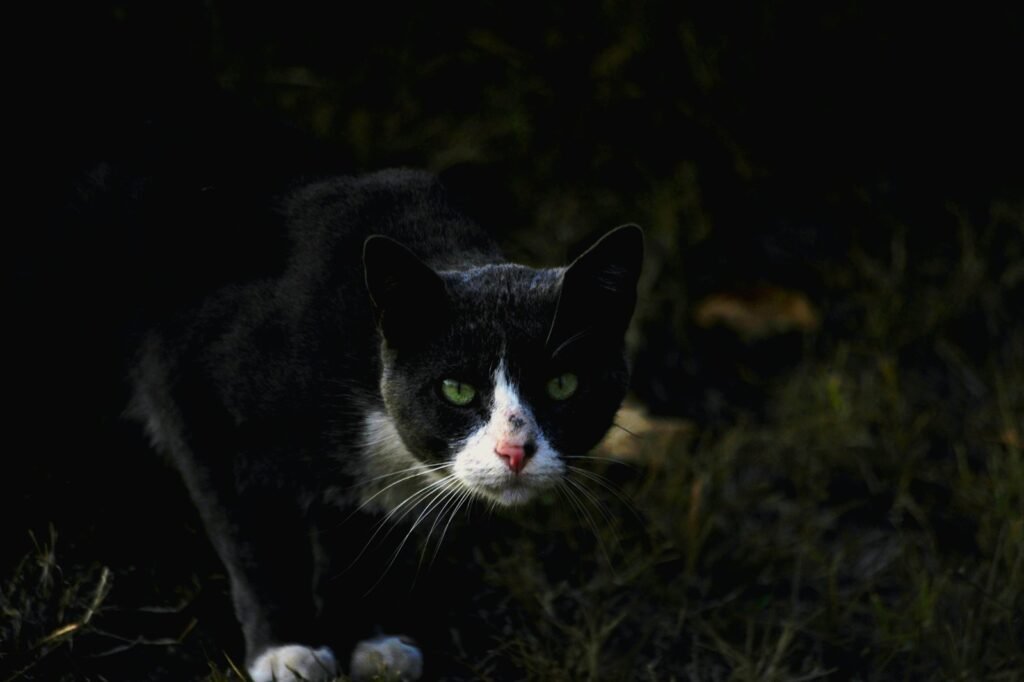
Here’s something most cat owners don’t fully appreciate. While you’re fumbling for the light switch at 2 a.m., your cat is operating with full visual clarity. Cats have six times better night vision than humans thanks to a reflective layer behind their retinas called the tapetum lucidum. This adaptation allows them to hunt effectively in conditions where their prey can barely see at all. Their eyes are also positioned forward on their heads, giving them excellent depth perception for judging distances when pouncing.
The trade-off is a narrower field of vision compared to prey animals, but when you’re an ambush predator, pinpoint accuracy matters more than peripheral awareness. Your cat essentially traded wide-angle vision for a precision scope. It’s a predator’s upgrade, not a flaw. Combined with its hearing, your cat in a dark house is arguably more capable than most animals outside it.
Silent Paws and Retractable Claws – Nature’s Perfect Toolkit
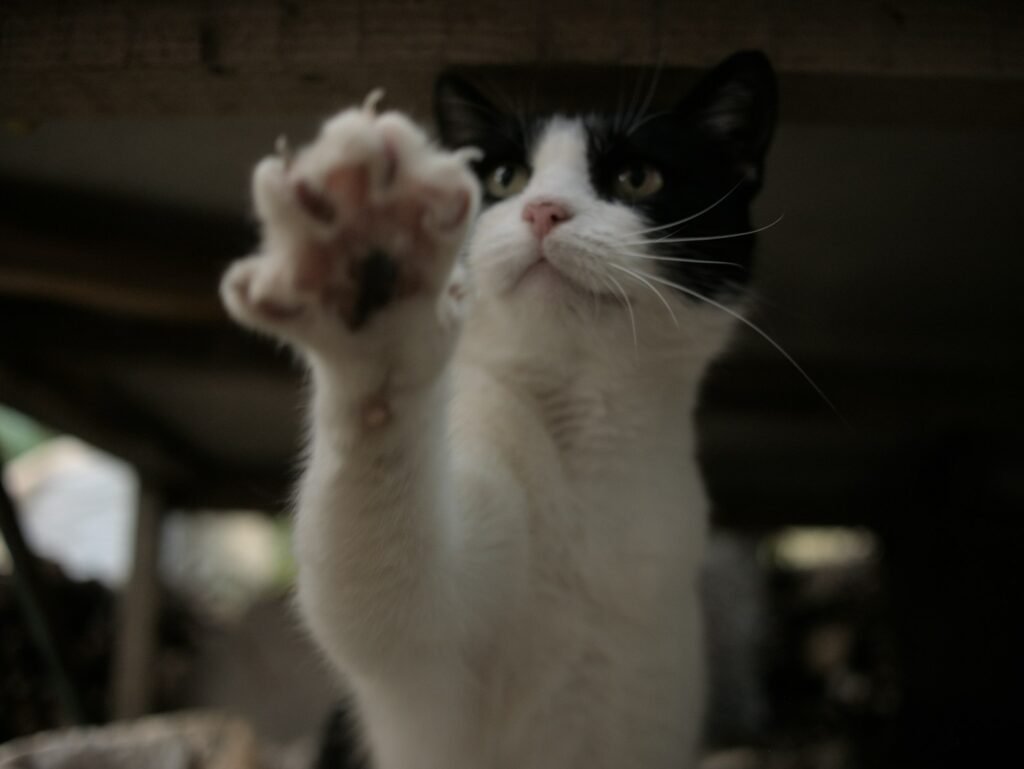
Honestly, if you stop and think about the engineering of a cat’s foot, it’s remarkable. Cat paws have soft pads and fur between their toes that act as natural silencers, allowing them to move almost soundlessly across most surfaces. This evolutionary adaptation makes them incredibly effective at sneaking up on prey without giving away their position. Their retractable claws stay sharp because they’re only extended when needed, and they can control each toe independently for maximum grip and stealth.
Cats have soft paw pads and retractable claws, allowing them to approach their prey unnoticed. Think of it like wearing noise-canceling sneakers while also carrying retractable knives in your fingers. That’s your cat, padding silently across your hardwood floor at midnight. The fact that it doesn’t use these tools on you is a relationship choice, not a physical limitation.
They Hunt Even When They’re Full – And Science Proves It
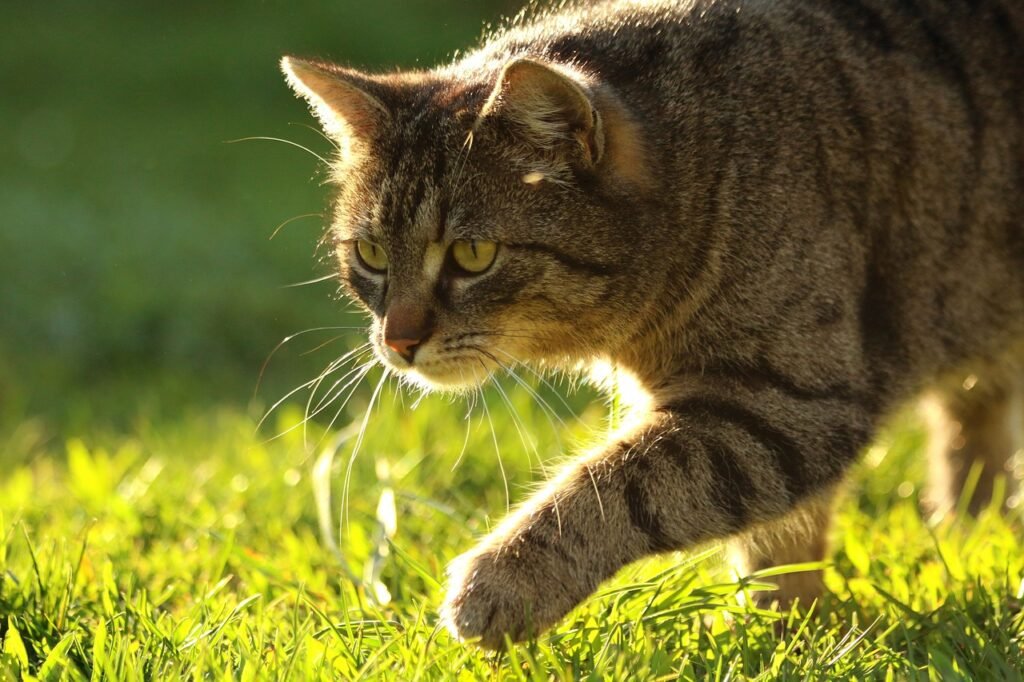
This is the part that surprises most cat owners. You just filled the bowl. You bought the expensive food. You watched your cat eat every last morsel. Two hours later, it’s outside terrorizing the local bird population. A team of researchers at the University of Exeter analyzed the diets of domestic cats through stable isotope analysis. They found that cats that regularly catch wild animals still get most of their nutrition from food provided by their owners, with wild prey contributing only around three to four percent of their diet.
This suggests that predatory instinct, rather than hunger, is probably the main reason why some domestic cats regularly hunt wild prey. It’s a profound finding. Your cat is not supplementing its meals. It’s acting on a biological drive so fundamental that a full stomach barely registers as a deterrent. Think of it like how humans sometimes eat dessert despite being full. Except with claws, and birds.
The Stalking Sequence – A Masterclass in Tactical Patience
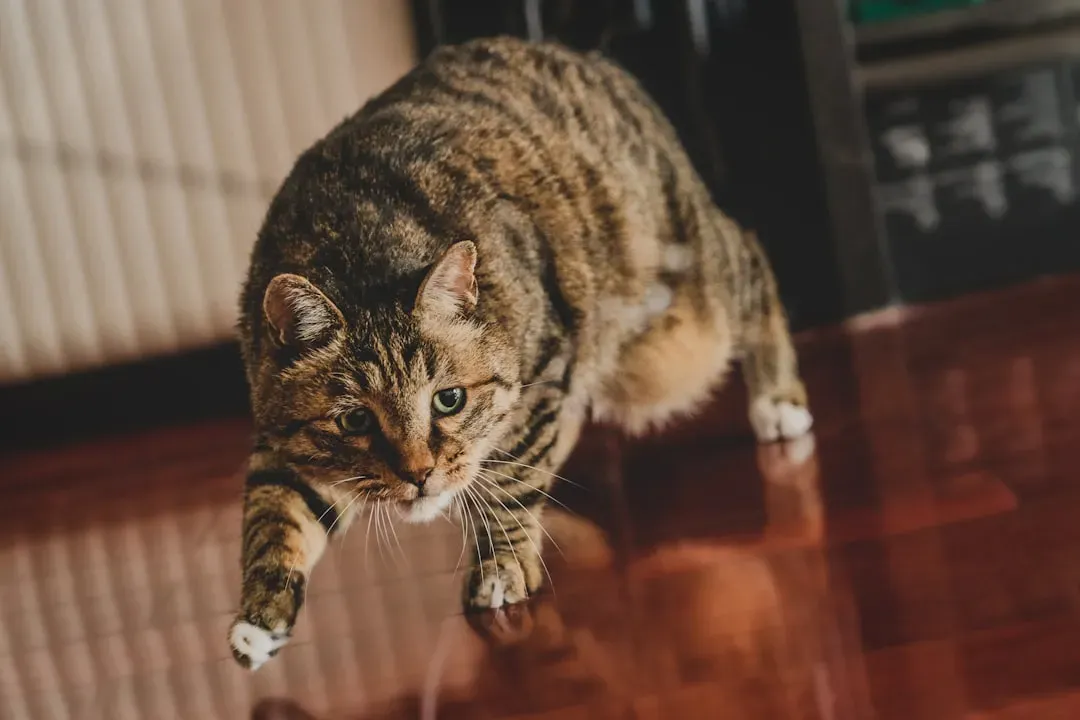
Watch your cat closely the next time it spots something moving. What you’ll observe is not random chaos. It’s a choreographed sequence refined over millions of years. The psychology behind a cat’s stalking behavior is rooted heavily in the element of surprise. A cat’s ability to slowly and silently move toward its target is a tactic developed to minimize detection. Pouncing then serves as the climax of their hunting strategy, maximizing the chance of capturing prey.
The pouncing technique is a signature move in a cat’s hunting repertoire. By crouching low to the ground and wiggling their hindquarters, cats prepare to launch themselves at unsuspecting prey. This motion is not merely preparation but part of an intricate strategy to catch their target off guard. That little butt-wiggle before the pounce? It’s not adorable randomness. It’s muscle activation, balance calibration, and targeting all rolled into one split-second preparation. Your cat is a professional.
Kittens Are Born Hunters – Even Before They Know It
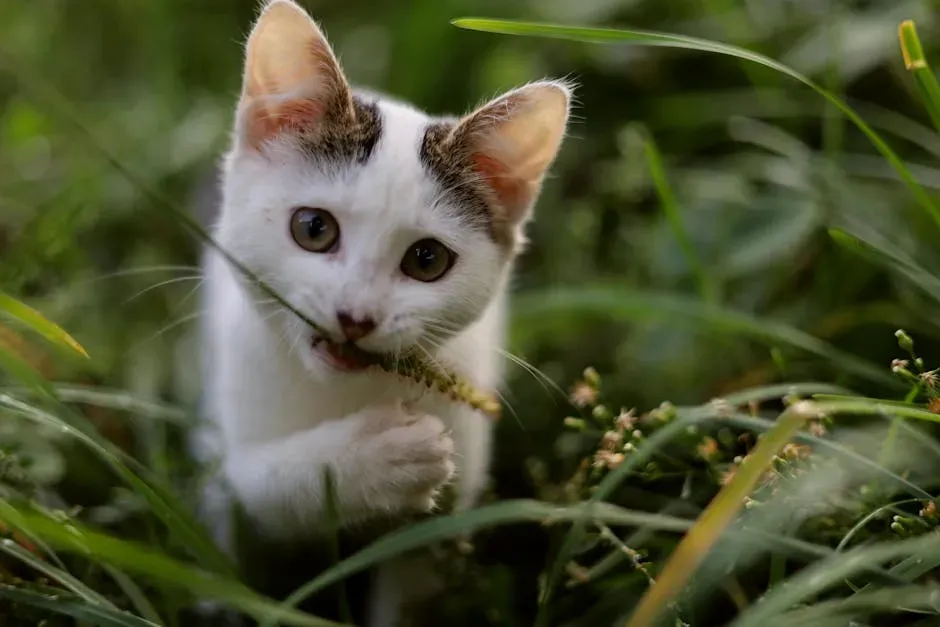
You don’t teach a cat to hunt. Not really. Kittens are born already knowing how to hunt instinctively, and you’ll see them practicing their skills on each other. Those tumbling wrestling sessions between littermates are not just sibling games. They are live-fire training exercises without a trainer.
Kittens are programmed from birth to chase. Through play, they develop the coordination and timing needed to successfully capture their target. They learn to adjust their speed to the speed of moving objects. They learn to gauge distance by pouncing. The mother cat does play a role in bridging from instinct to full execution, but the raw drive? That was already there at birth. It’s a bit like a child being born knowing how to walk, but still needing to develop balance. The code is preloaded.
What You Can Actually Do About It – Practical, Science-Backed Answers

Let’s be real. You’re probably not going to eliminate your cat’s hunting drive. But science has shown you actually can reduce it significantly without locking your cat indoors permanently. A study from the University of Exeter found that introducing a premium commercial food where proteins came from meat reduced the number of prey animals cats brought home by roughly a third, and that five to ten minutes of daily play with an owner resulted in about a quarter reduction in hunting.
Researchers have found that one of the most effective ways of reducing a cat’s hunting behavior is to play with them more. A bored cat may look for ways to entertain itself, and if it doesn’t have much in the way of enrichment, hunting will often be the first activity it indulges in. Toys on a fishing rod are often the most effective at encouraging cats to hunt and play. These allow your cat to stalk, chase, and pounce, just like it would during a real hunt. A few minutes of intentional play daily isn’t just fun for your cat. It’s tapping into the very instinct that drives it, giving it a safe, satisfying outlet so it doesn’t feel the need to find one on its own outside.
Conclusion
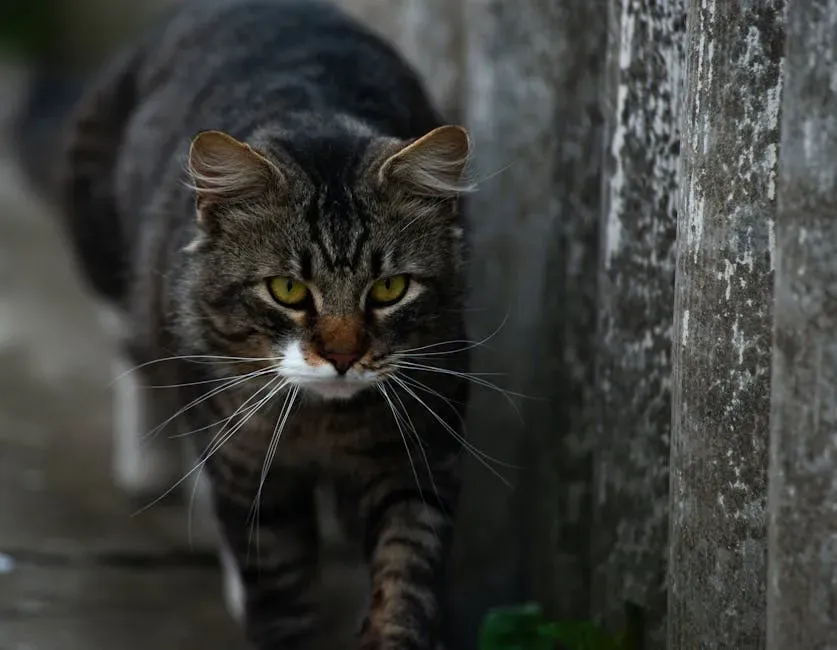
Your cat is not just a pet that occasionally acts weird. It is a spectacularly designed predator that simply happens to share your home, accept your affection, and tolerate your attempts to understand it. Every twitch of its ear, every slow blink from the armchair, every midnight sprint across the hallway, all of it is connected to millions of years of evolutionary refinement.
Understanding your cat’s hunting instincts is not about feeling guilty or alarmed. It’s about genuine appreciation for what this animal actually is beneath the purrs and cuddles. Once you see it clearly, you’ll respect the creature in your home on a completely different level. After all, you’re not just living with a pet. You’re sharing a sofa with one of the most effective natural hunters the planet has ever produced.
What do you think, does knowing all this change how you see your cat’s daily behavior? Drop your thoughts in the comments below.