Most cat owners have been there. You’re drifting off to sleep, and suddenly there’s a small, furry tornado sprinting across the bed at full speed, or a gentle paw tapping your forehead at 3 a.m. It feels random. It feels chaotic. Honestly, it can feel a little personal.
Here’s the thing though – it’s not random at all. Every single one of those after-dark behaviors your cat performs is rooted in something deeper. Something ancient, even. Your cat’s nightly rituals are a fascinating window into feline biology, emotional health, and the bond you share with them.
So, let’s dive in and find out exactly what your cat has really been up to while you’re trying to sleep.
The Crepuscular Truth: Your Cat Is Not Actually a Night Owl

Let’s get one popular myth out of the way first. Most people assume their cats are nocturnal, purely because they seem to come alive at night. The truth is, cats aren’t truly nocturnal – rather, they follow a crepuscular rhythm that has them more active during the low-light hours of the day, mainly around dawn and dusk, and then sleeping during the middle of the night and day. Think of it less like a vampire and more like an early bird who also happens to love sunsets.
Cats are naturally crepuscular, meaning they’re most active during the twilight hours of dawn and dusk. Cats are right in the middle of the food chain – both predator and prey – and these low-light conditions provide enough visibility for cats to stalk their prey while also offering some concealment from larger predators. It’s a survival strategy that’s millions of years old, and your perfectly comfortable house cat still carries every bit of it in their DNA.
Why Your Cat Sleeps So Much (And Why That’s Completely Fine)
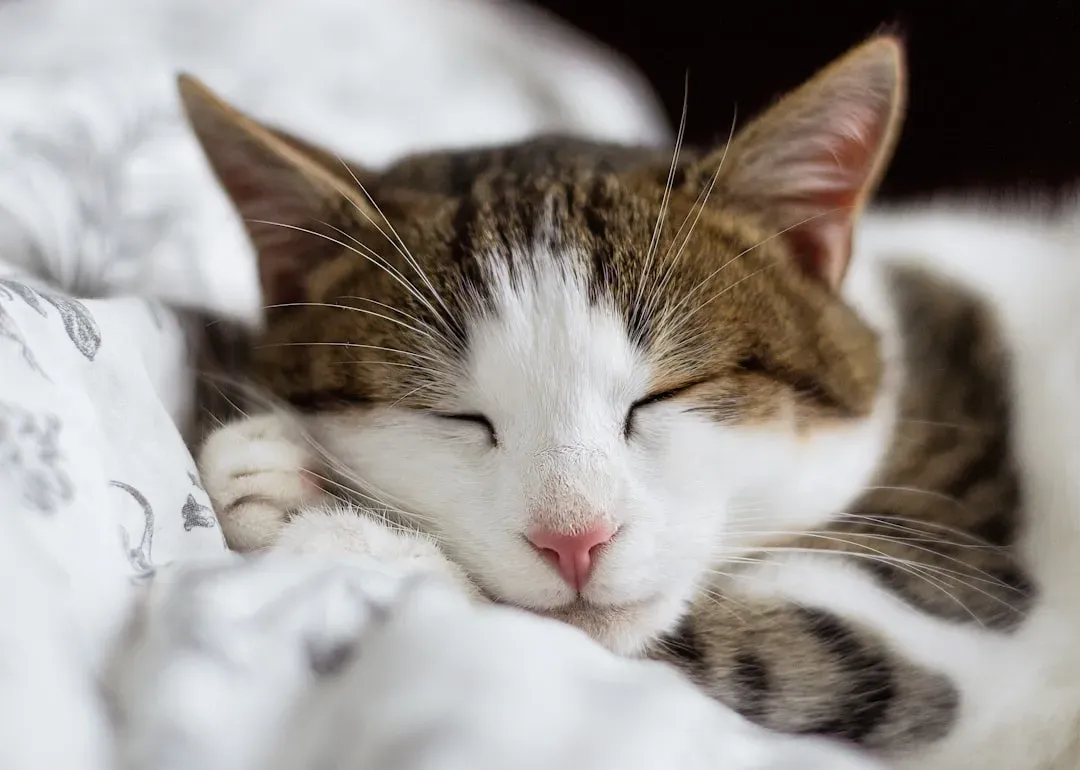
Unlike humans, who usually sleep for one long stretch, cats have what’s known as a polyphasic sleep pattern. Cats usually sleep between 12 and 16 hours a day. Some cats might even sleep up to 20 hours. I know that sounds almost unbelievably lazy, but there’s a brilliant biological reason for it.
Cats originally used the majority of their energy during shorter bouts of hunting for food, so they needed their sleep to conserve energy and recharge. It’s not laziness – it’s strategic recovery. Imagine being a sprinter who has to be ready to explode into full speed at any moment. You’d nap constantly too.
REM Sleep and Cat Dreams: Yes, Your Cat Actually Dreams
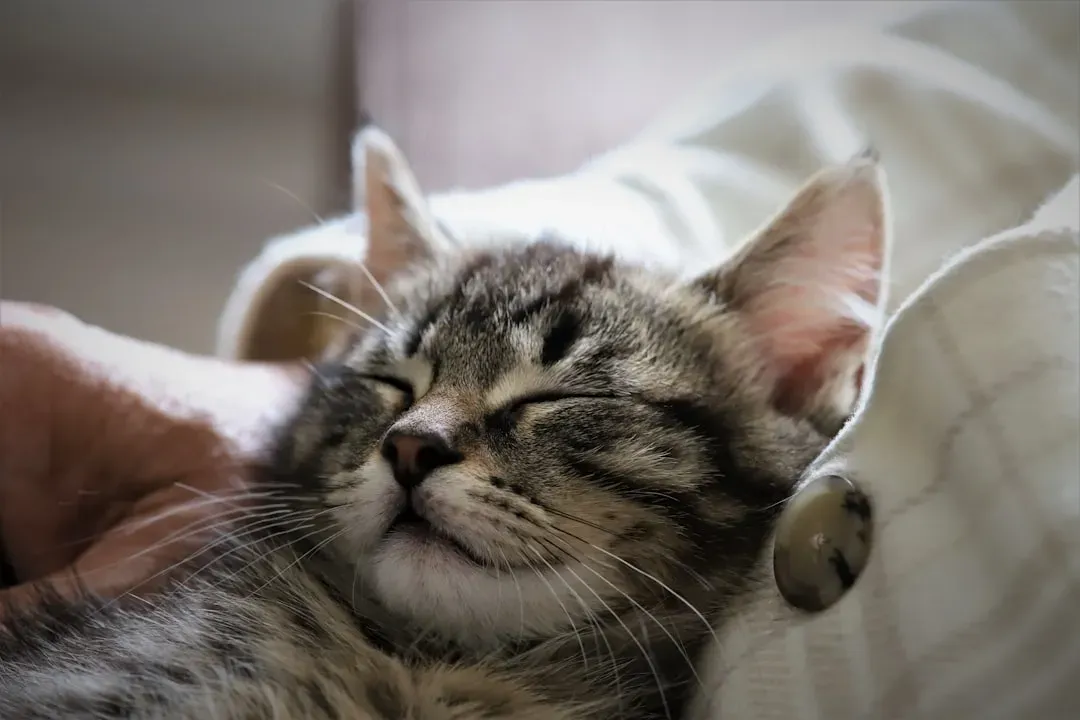
Cats experience both REM (rapid eye movement) and NREM (non-rapid eye movement) sleep. Similar to humans, cats dream during REM sleep. NREM sleep allows their bodies to recharge and conserve energy. So when you see your cat twitching, paddling their paws, or chirping softly in their sleep, they are genuinely in dreamland.
According to research, cats actually dream about roughly 30 to 40 percent of the time they are sleeping. We can’t tell you what a cat dreams about, but there’s a good chance yours might be dreaming about you. That’s honestly one of the sweetest things science has ever told us. Whether they’re replaying a hunt, chasing a toy, or reliving a warm nap in a sunny spot, their sleeping brain is very much switched on.
The Nightly Grooming Ritual and What It Really Means

Domestic cats are among nature’s most meticulous self-groomers, spending approximately 3.5 hours daily – roughly 30 percent of their waking time – maintaining their appearance and health through grooming. You’ve probably noticed your cat launching into a thorough grooming session right before settling down for the night. That’s not just habit – it’s a deeply functional ritual.
Post-meal grooming is a natural instinct that helps cats remove food scents and particles that could attract predators in the wild. This behavior also serves as a self-soothing ritual and maintains general hygiene around the face and paws. Even after thousands of years of domestication, that primal need to stay scent-safe at night remains fully intact. When your cat grooms before bed, they are mentally and physically preparing for rest.
Why Your Cat Chooses to Sleep Near You (Or On You)
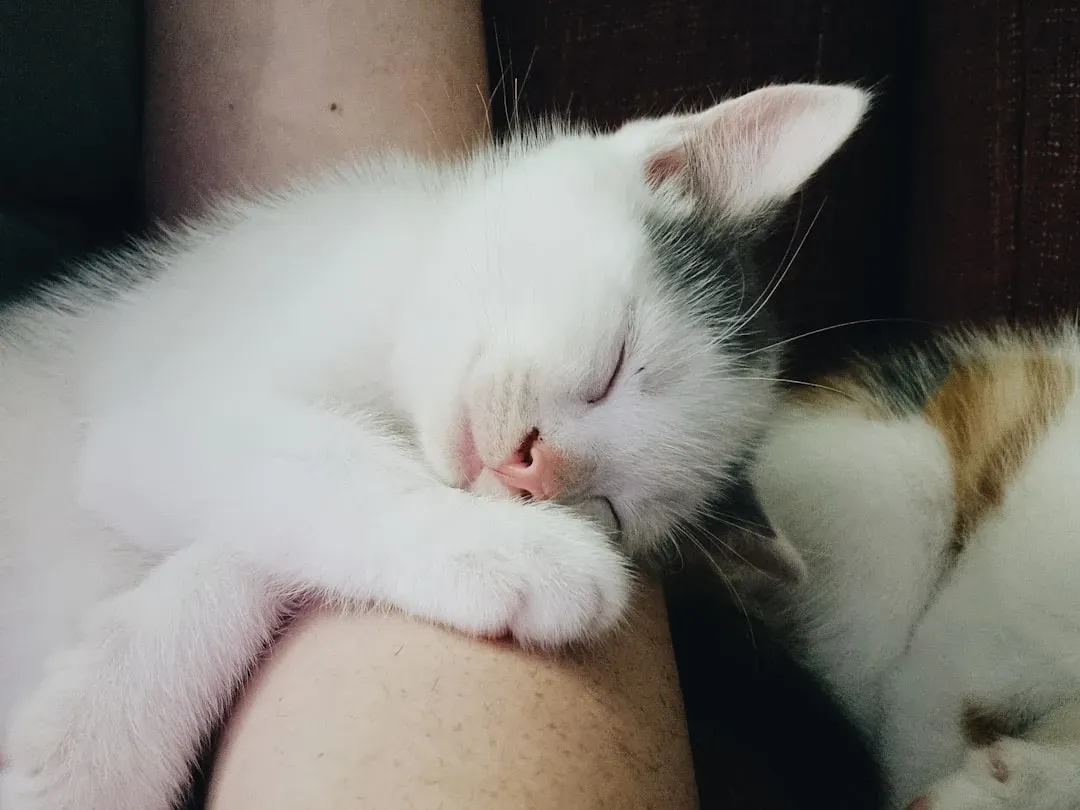
Cats are creatures of habit, relying on predictable patterns to feel secure in their environment. This reliance on routine is deeply ingrained: as both predators and prey in the wild, predictability helps them save energy and stay safe. Choosing to sleep near you is one of the most telling expressions of trust your cat can offer.
Sleep can be a vulnerable time, and cats instinctively gravitate toward places where they feel safe. By choosing to sleep near a familiar human, cats not only find warmth and comfort – they also benefit from a sense of security that reinforces their bond. So the next time your cat drapes themselves across your legs at midnight, try to appreciate it, even if you can no longer feel your feet.
The Hunt-Eat-Groom-Sleep Cycle: Your Cat’s Nightly Programming
The “Hunt, Catch, Kill, Eat, Groom, Sleep” cycle mimics your cat’s natural behaviors and signals that the day’s activities are winding down. This sequence is essentially your cat’s inbuilt nightly software running exactly as nature intended. When you understand it, their pre-bed behavior stops feeling bizarre and starts making perfect sense.
To help your cat’s energy levels match your schedule, focus on the timing of their last meal. If your bedtime is 11 PM, the final feeding should be around 9:30 PM. But don’t just feed them and expect them to settle down – they need an outlet for all that energy, and a robust interactive play session right before their last meal of the night will get them to the perfect point of exhaustion. Think of it like a toddler who needs to run around the yard before bath time. Same principle, different species.
Nighttime Vocalization: Cute Communication or a Warning Signal?
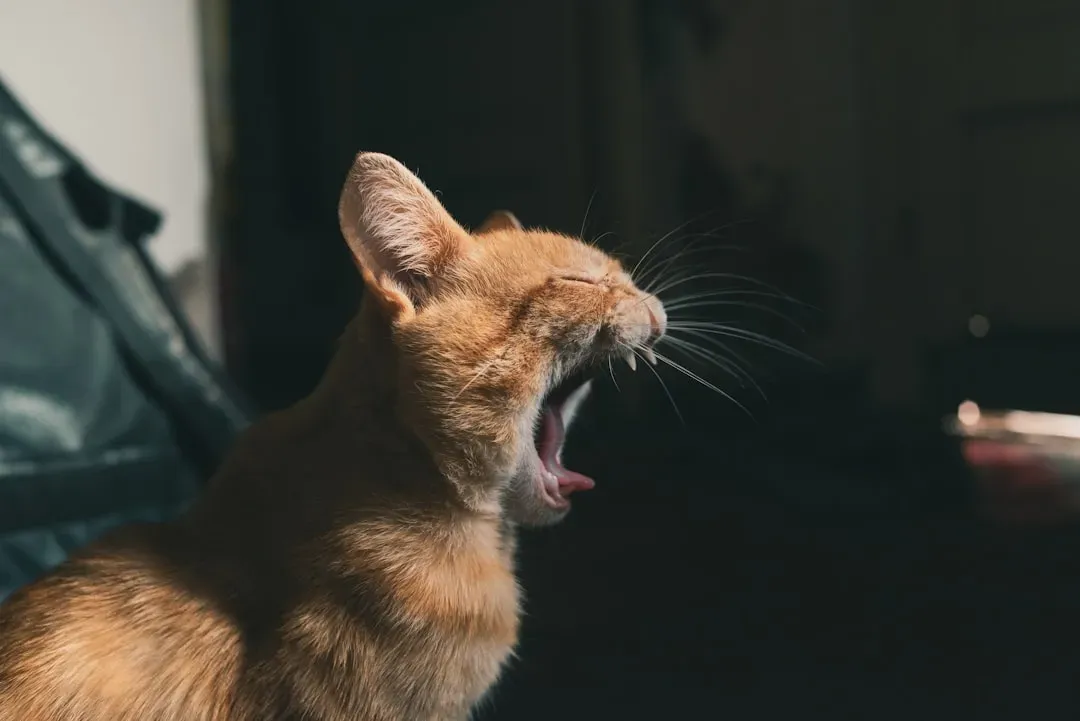
There’s a big difference between a soft nighttime chirp and a full-on 3 a.m. yowling session. Most owner complaints about feline vocalization are either to do with the intensity and persistence of the vocalization, or the fact that it occurs at night. Attention getting behaviors, sexual behaviors, play behavior, medical problems, discomfort, and aggressive displays are the most common reasons for feline vocalization. So it pays to really tune into what your cat is actually saying.
If your cat is yowling all of a sudden, it is rarely for attention. Instead, it often points to a gradual cognitive decline in seniors or a sudden metabolic shift like hyperthyroidism. A cat yowling all of a sudden is frequently a symptom of pain, hyperthyroidism, or high blood pressure. Senior cats: cognitive decline (feline dementia) is the number one cause of cat yowling at night for no reason in cats over 12 years old. Take the sounds your cat makes at night seriously. They could be telling you something genuinely important about their health.
When Nighttime Restlessness Is Actually a Health Red Flag
It’s hard to say for sure whether a single restless night means something is wrong, but patterns matter enormously. Health problems can also interfere with a cat’s sleep. Examples of health issues that might disrupt feline sleep include neurological or psychological disorders – both dementia and anxiety can interfere with normal sleep cycles in cats. Hyperthyroidism, an overactive thyroid, may boost appetite, making the affected cat too hungry to sleep. These aren’t rare edge cases – they’re relatively common, especially in older cats.
If your cat is spending more time awake at night than they used to, mention this to your veterinarian. Some health conditions can disrupt a cat’s sleep schedule and keep them up at night, including hyperthyroidism, hypertension, anxiety and pain. If a senior cat is experiencing cognitive dysfunction (like dementia in people), that can also create a disrupted sleep cycle. You know your cat’s baseline better than anyone. Trust your instincts if something feels off.
How to Build a Bedtime Routine That Works for Both of You
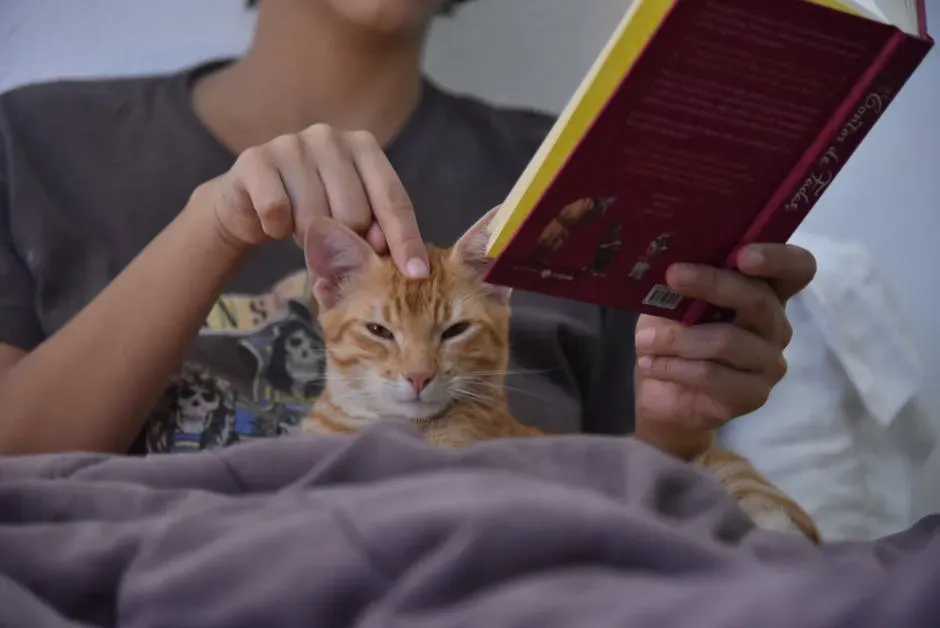
Let’s be real – living with a cat who runs on a different clock than you can be exhausting. The good news is that with a little patience and consistency, you can absolutely shape your cat’s nightly habits. You should incorporate rituals for your cat that help them settle when you do. A rousing play session and then a snack are the right things, in the right order, that will make them sleepy, too. Cats naturally discharge a lot of energy, and then take a nap to recharge. Arranging their tendencies to match yours will put you both in the same mood.
Many people reinforce boisterous nighttime activity without meaning to. They might get up to feed, play with, or simply chase them out of the room. All of these responses teach the cat that disturbing you gets attention. Consistency is the real key here. Once your cat learns that the nighttime routine signals sleep and not play, the whole household tends to find its natural, peaceful rhythm. It takes time. It takes ignoring some very persuasive meowing. You can do it.
Conclusion: The Night Shift Is More Meaningful Than You Realized
Your cat’s nightly rituals – the grooming, the positioning, the dreaming, the occasional midnight sprint through the hallway – are not random acts of chaos. They are an intricate blend of evolutionary instinct, emotional expression, and silent communication. Every behavior has a reason, and many of them are telling you something valuable about your cat’s wellbeing.
Pay attention to the sounds they make, the spots they choose, and the routines they keep. These small nightly details paint a much bigger picture of who your cat is and how they’re feeling. When something shifts, take notice. And when everything is steady, take a moment to appreciate it – because your cat curling up beside you at the end of the day is, in their language, one of the nicest things they can possibly say to you.
What’s the strangest or sweetest nightly ritual your cat has developed? Share it in the comments – we’d love to hear it.