You bring home a delivery, set the cardboard box on the floor for just a moment, and within seconds your cat has claimed it. You haven’t even opened it yet. Sound familiar? There’s something deeply consistent about this behavior, and it plays out in homes across the world, regardless of the cat’s breed, age, or personality. It’s one of those things that cat owners laugh about online and then quietly wonder about in real life.
The truth is, what looks like a quirk is actually a window into how your cat processes its entire world. The pull toward enclosed spaces is rooted in evolutionary wiring that stretches back far beyond the cozy apartment your cat currently occupies. Understanding it changes how you see your cat, and maybe even how you set up your home.
The Evolutionary Blueprint Behind the Box
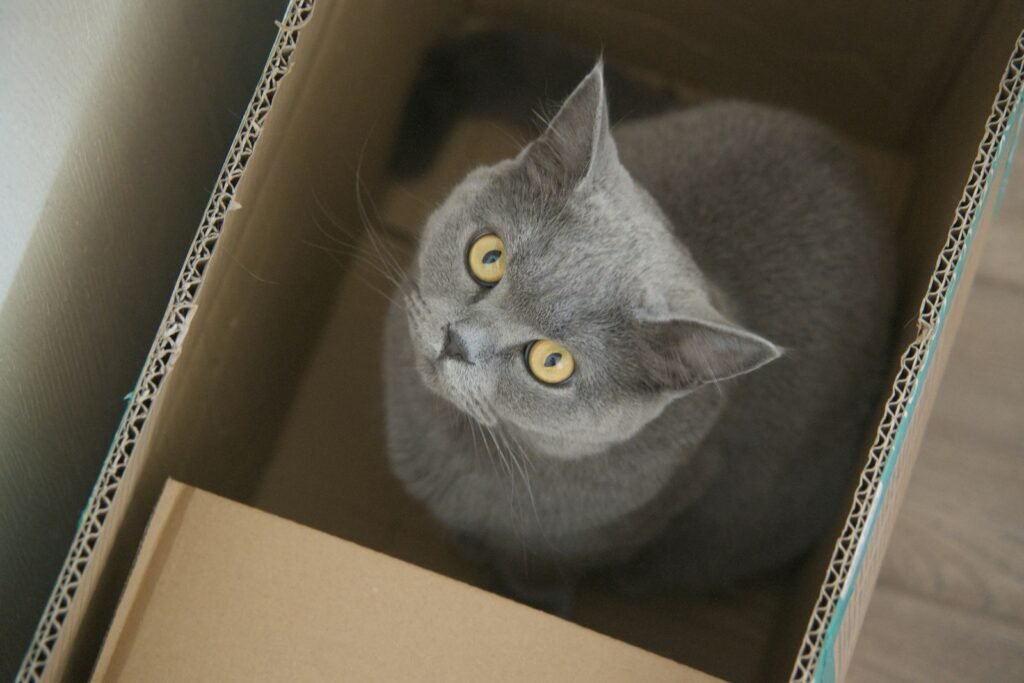
Your cat’s direct ancestor is the African wildcat, Felis silvestris lybica, and the domestic feline’s evolutionary heritage is tied to this small, adaptable species that spread across Africa and the Near East. That origin matters, because it means your cat carries millions of years of behavioral programming that was forged in open, often hostile landscapes where survival depended on staying hidden.
Cats are descendants of solitary hunters, and their wild relatives often sought out small, hidden spaces for shelter and safety. In the wild, these small hideaways protected them from predators and served as a strategic vantage point for stalking prey. This survival instinct is deeply ingrained in the feline psyche. A cardboard box on your kitchen floor is, to that ancient part of your cat’s brain, essentially a cave.
Predator and Prey at the Same Time
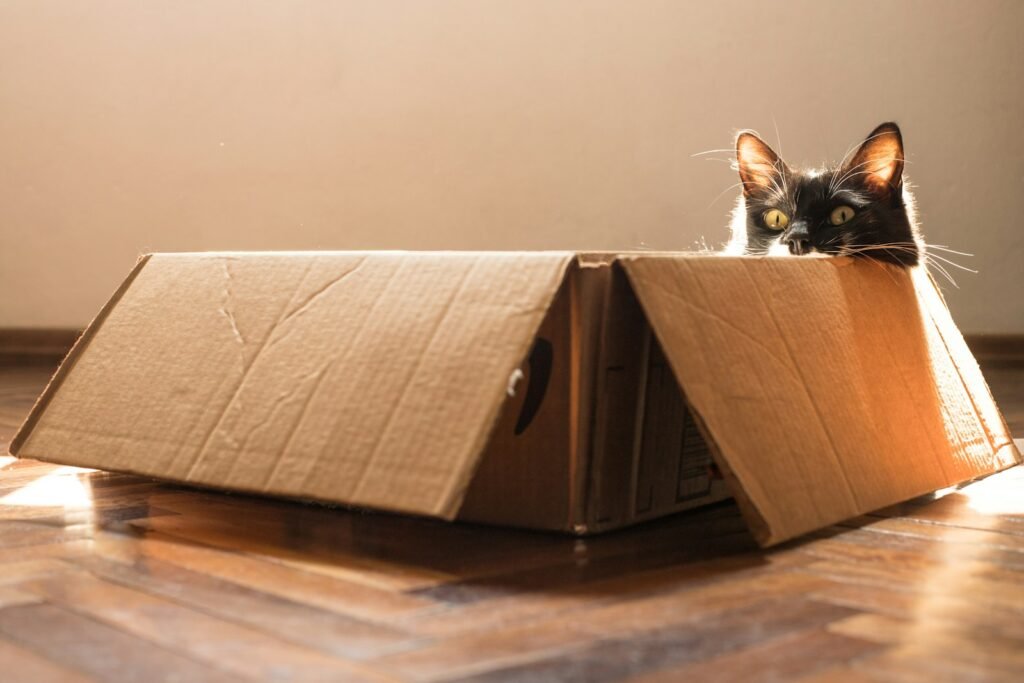
Cats that roam freely outdoors are in a delicate position in the local food chain: they are both predators and prey. This dual identity is the foundation of so many feline behaviors, and it’s the reason your cat never fully relaxes in an open space the way a dog might. Vulnerability is always on the table.
This implies that cats must not only remain vigilant to find prey, but also protect themselves from being hunted. From this fact, it is easy to understand that cats are a species particularly sensitive to potentially threatening stimuli, and that their main survival strategy is to flee or hide. A box satisfies both sides of that equation: it conceals your cat from anything threatening while simultaneously creating the ideal setup to pounce.
The Box as a Control Center
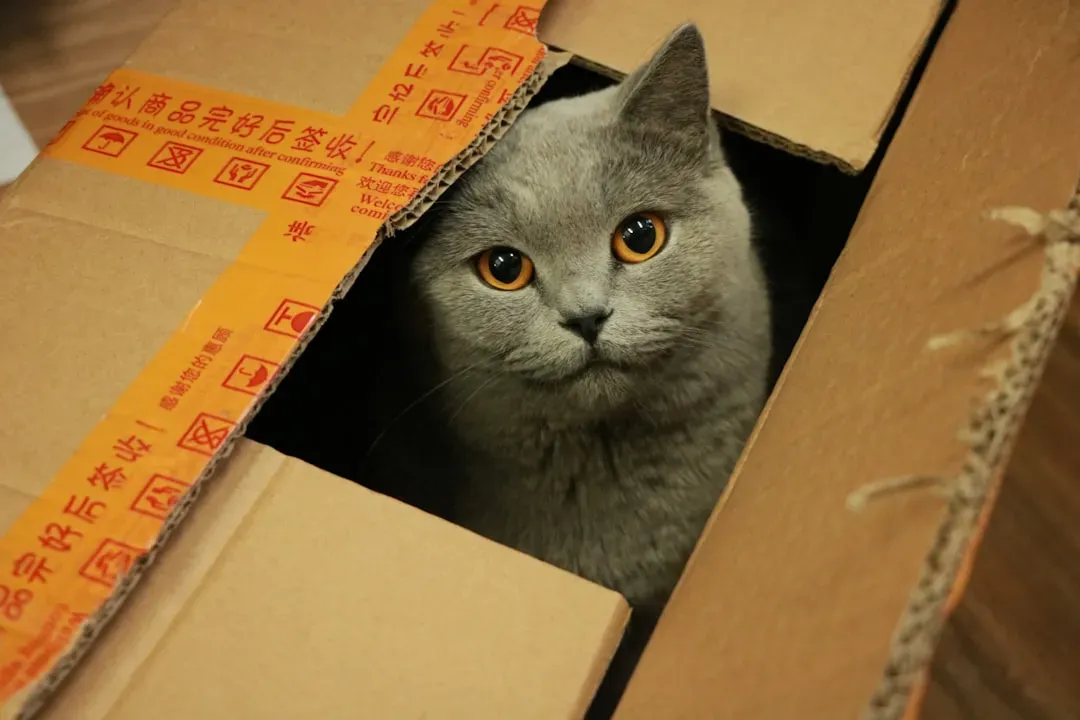
Boxes provide a sense of control. By hiding in a box, your cat can monitor its environment without being seen, making it feel both dominant and protected. This is especially helpful for shy or anxious cats who need a secure place to retreat. Control is something indoor cats don’t always have in abundance.
As feline behavior consultant Mikel Delgado notes, “what we do when we keep cats as pets is we keep them in an environment where they don’t have a lot of control.” When your cat steps into a box, it narrows the number of angles anything can approach from. Inside a box, nothing can sneak up from behind or from the sides. Any approaching threat has to come directly into view. That’s not comfort, that’s strategy.
Where the Instinct Begins: Earliest Life
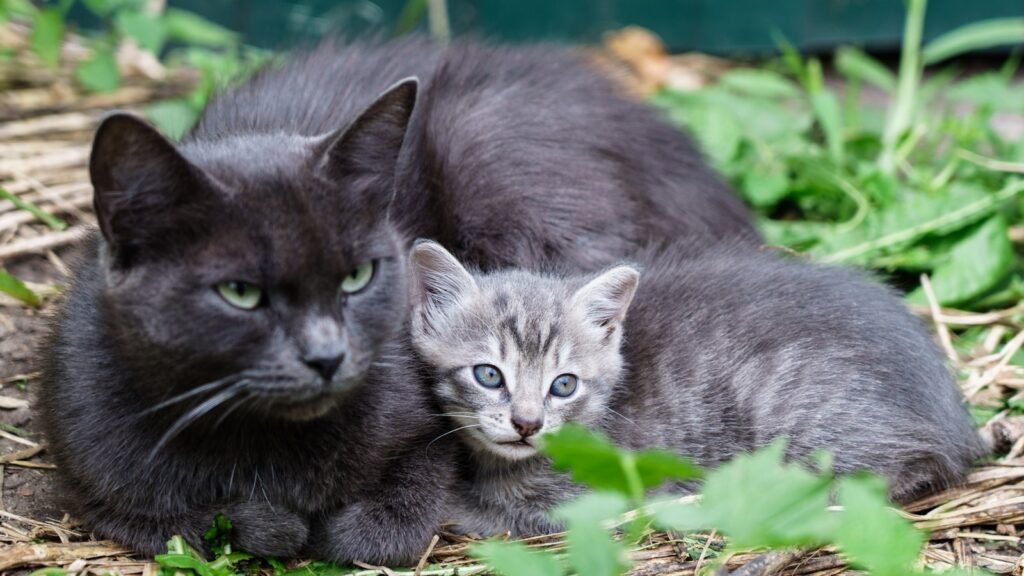
This instinct begins from the cat’s earliest moments. A mother cat will seek out a quiet area to birth her kittens. Their first experience will be a safe, enclosed space, says Danielle Gunn-Moore, a professor of feline medicine at the University of Edinburgh. So the connection between enclosure and security isn’t learned, it’s the very first thing a cat knows.
This need for a secure spot begins early in a cat’s life. When a mother cat gives birth, she seeks out a quiet, enclosed space to nurse her kittens. That earliest association between warmth, safety, and confined space becomes baked into the cat’s psychology before its eyes are even fully open. The cardboard box your cat squeezes into decades later is, on some level, a return to that original feeling.
What the Science Actually Says About Stress Reduction
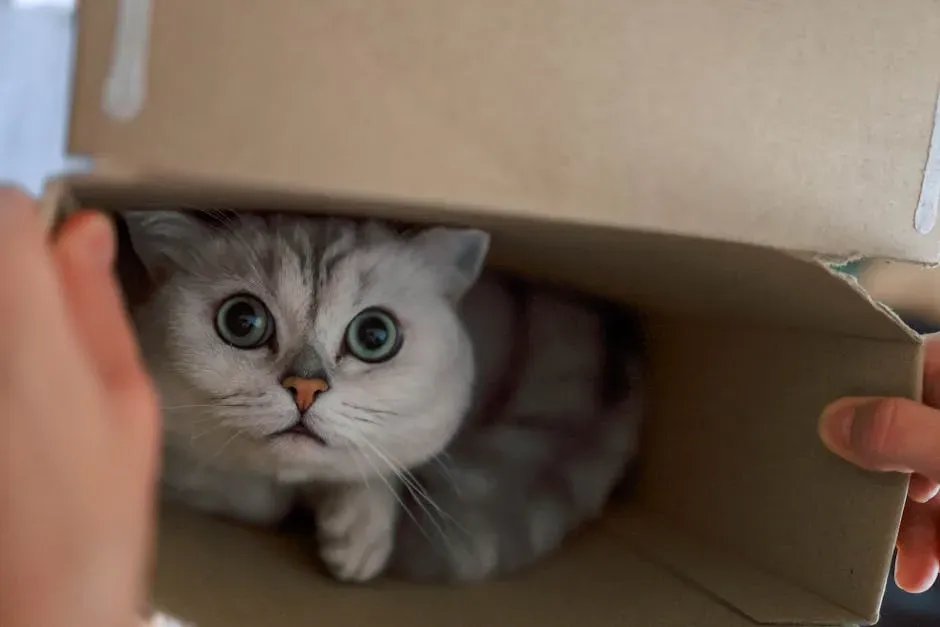
Studies have found that cats provided with hiding spaces like boxes exhibit lower stress levels, faster adaptation to new environments, and an increased sense of security. Research published in Applied Animal Behaviour Science found that shelter cats with access to boxes adjusted to their new surroundings faster and showed fewer signs of anxiety compared to those without boxes. This means that beyond just being a fun hiding spot, boxes serve an essential purpose in feline well-being.
Major findings of one randomized controlled trial show that cats with a hiding box demonstrated a significantly faster decrease in measured stress scores, reaching a lower steady state seven days earlier than the control group. A review of multiple studies showed that four of five reviewed trials found moderate evidence that hiding boxes reduce fear and stress in cats, with the hiding box found more useful in aggressive cats as stress scores reduced faster in these groups. The evidence, while still growing, is consistent enough to take seriously.
The Ambush Advantage: Hunting from a Box
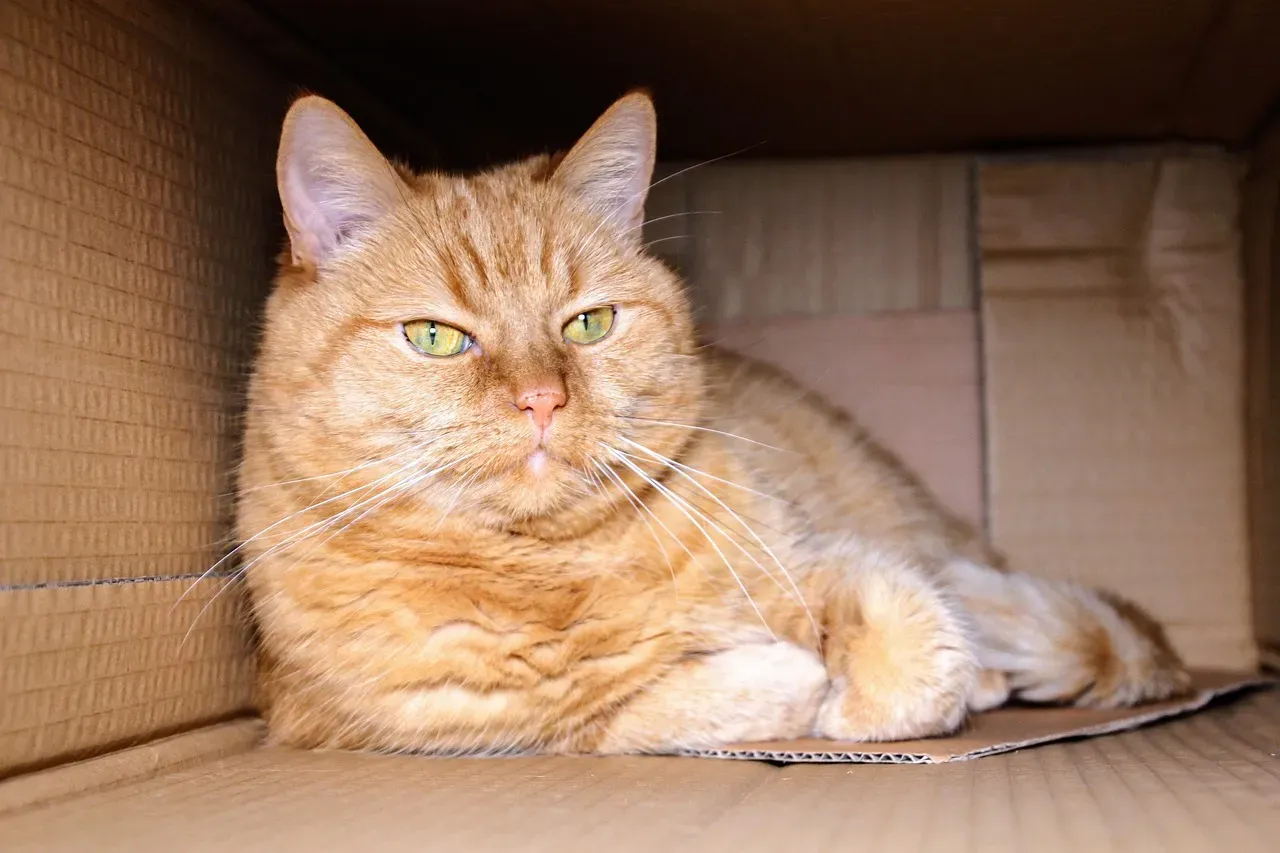
Though your housecat doesn’t have to hunt to survive, their ancestors did. Since the beginning, cats have been ambush predators, meaning that they catch or kill prey using the element of surprise. They find a hiding place and wait for the opportunity to pounce. A box is the domestic equivalent of a thicket of tall grass.
Even indoor cats retain these instincts. Boxes provide them with an ideal hiding place, with walls that conceal them from view and an open top for surprise ambushes, whether on prey or a soft toy. If you’ve ever walked past a box and felt a paw shoot out at your ankle, you’ve witnessed that ancient programming working exactly as designed, just applied to a much less threatening target.
Warmth Is Not a Side Effect, It’s a Feature
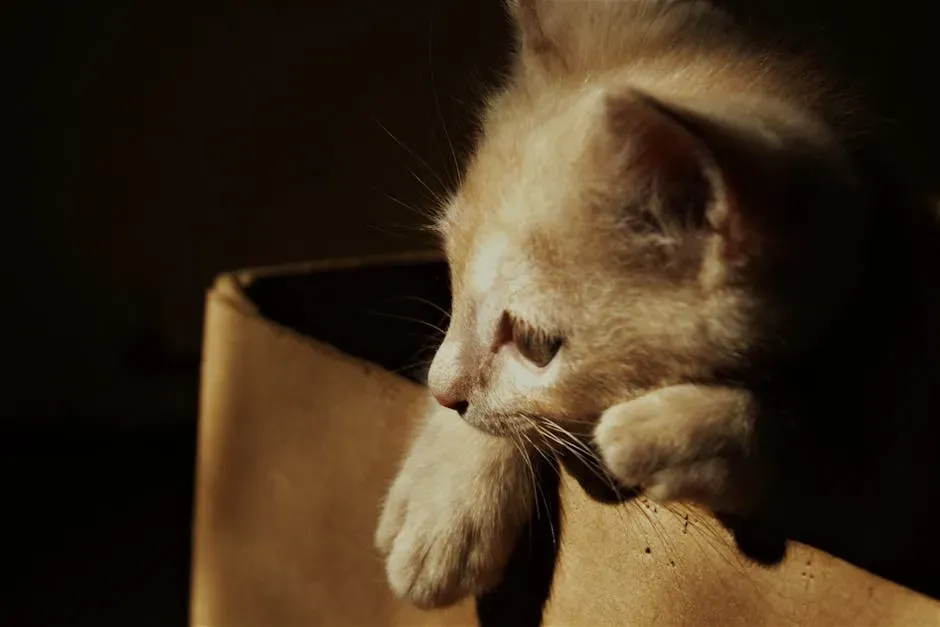
The National Research Council has reported that a cat’s preferred temperature is from 86 to 97 degrees Fahrenheit, which is far warmer than most people keep their homes. This creates a constant, low-level search for warmth that shapes where your cat chooses to rest throughout the day.
A cardboard box provides insulation for a chilly cat, and the small space helps retain body heat. Another reason cats love boxes is because they’re great for warmth. Not only is cardboard an amazing insulator, but the small space that boxes offer encourages your cat to curl up and relax, making it a comfy, warm space. The thermal and psychological benefits stack on top of each other, which is part of why a box beats almost any fancy cat bed on the market.
Scent Marking and Territorial Ownership
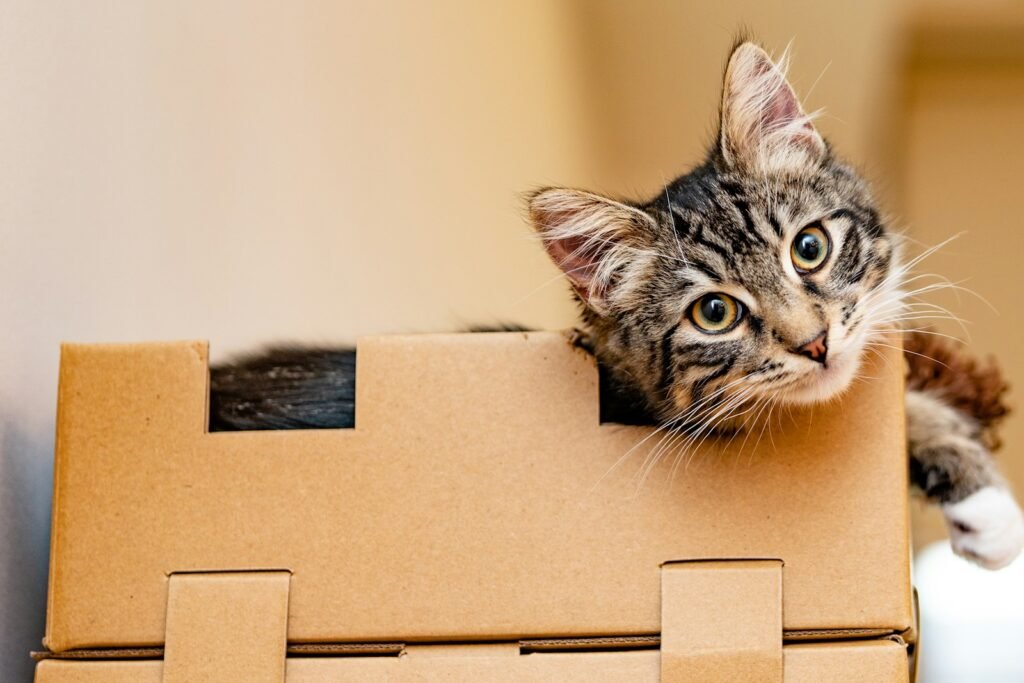
Cats are territorial animals, and they use scent marking as a way to establish and maintain their territory. When a cat enters a box, it leaves its scent behind, effectively claiming the box as its own territory. This behavior is a way for cats to assert control over their environment and create a familiar, secure space within their territory.
If you notice your cat chewing on the flaps or sides of a box, it could be your pet’s way of scent marking the box since saliva carries pheromones. When they spend time inside a box, it starts to smell familiar quickly. Their scent mixes with the natural scent of the cardboard, creating a little sanctuary that feels safe and personal. The longer your cat uses a box, the more it becomes genuinely theirs in a chemical, not just behavioral, sense.
The Cardboard Texture: Scratching, Chewing, and Sensory Play
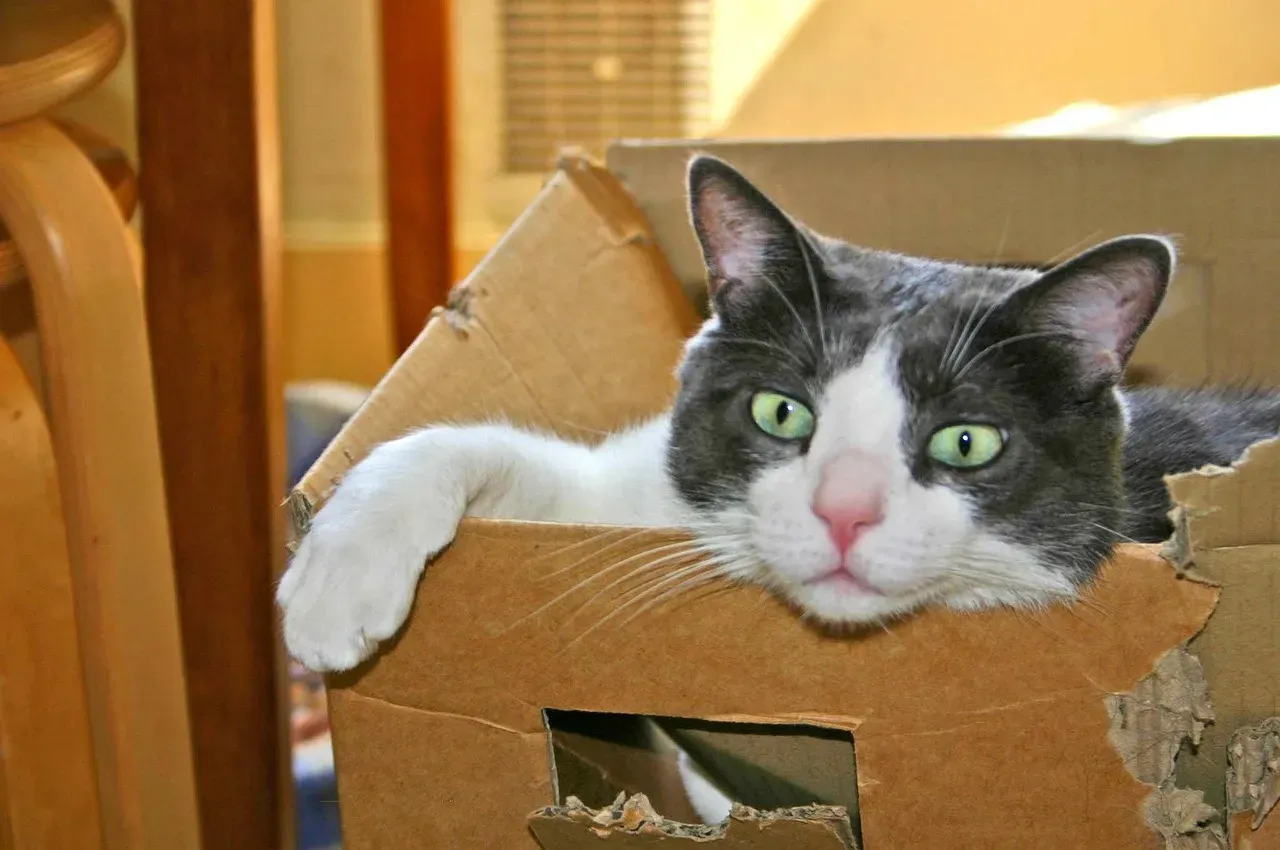
When cats scratch cardboard, they’re doing several things at once: maintaining their claws, marking territory with scent glands in their paws, and having a blast doing it. The material itself is part of the appeal, not just the shape. Another reason that cats love boxes so much is the texture. Cardboard is the perfect texture for your cat to bite and scratch, making them great fun to play with.
The rough texture is perfect for scratching and rubbing. Nestling into the corners or lightly chewing the edges gives your cat a way to engage their senses and feel comfortable at the same time. A box offers a full sensory experience, from the sound of a scratch to the feel of a cozy surface against their fur. It’s the kind of multi-sensory enrichment that most expensive cat toys can’t replicate in a single object.
When Box Hiding Signals Something More
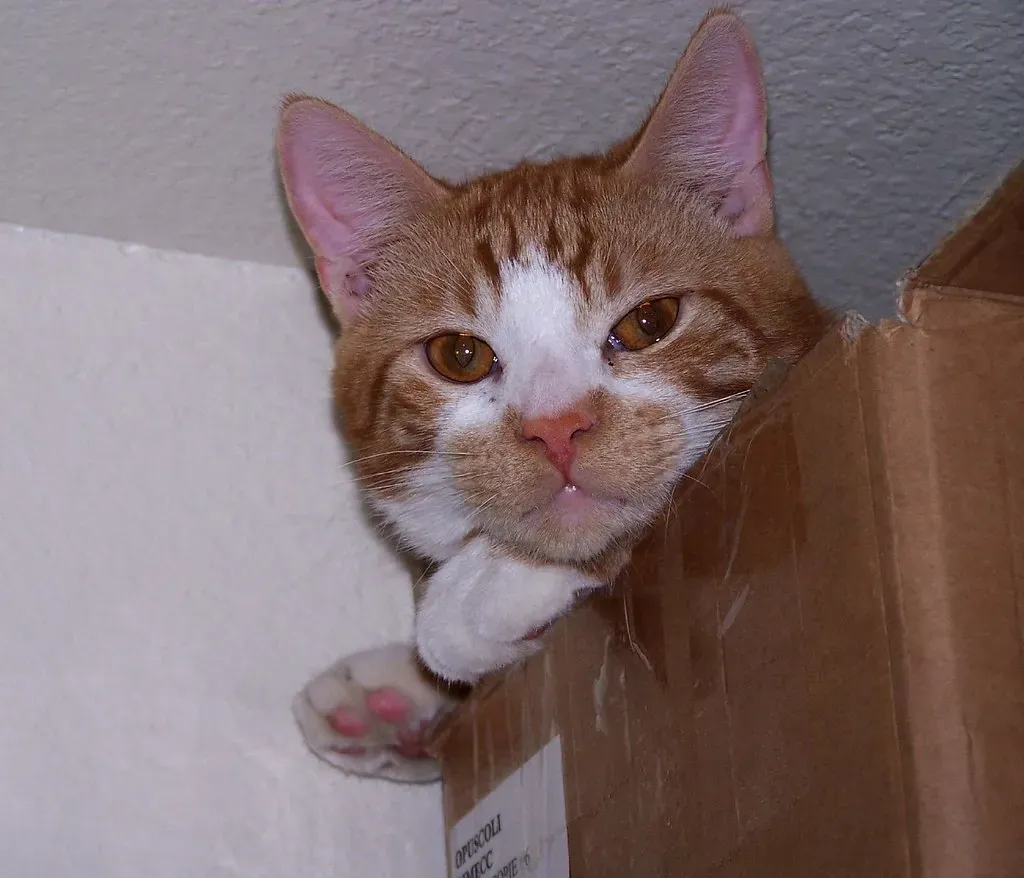
Whether your cat’s time spent in a box reveals something about their emotional state depends on the context. A cat hiding at the back of a box with wide, fearful eyes is using it for safety in a very different way from one who is happily snoozing inside or hopping in and out to play. The physical location and posture matter enormously.
Box hiding can also be a sign that something is stressing your cat out in their home. Cats need a safe spot to hide when they can’t control their environment. But if a cat is constantly hiding, it’s a cause for concern, and Gunn-Moore recommends consulting with a veterinarian in such cases. Occasional box retreats are healthy. Extended, withdrawn hiding is a different story, and worth a closer look with professional guidance.
How to Use This Knowledge as a Cat Owner
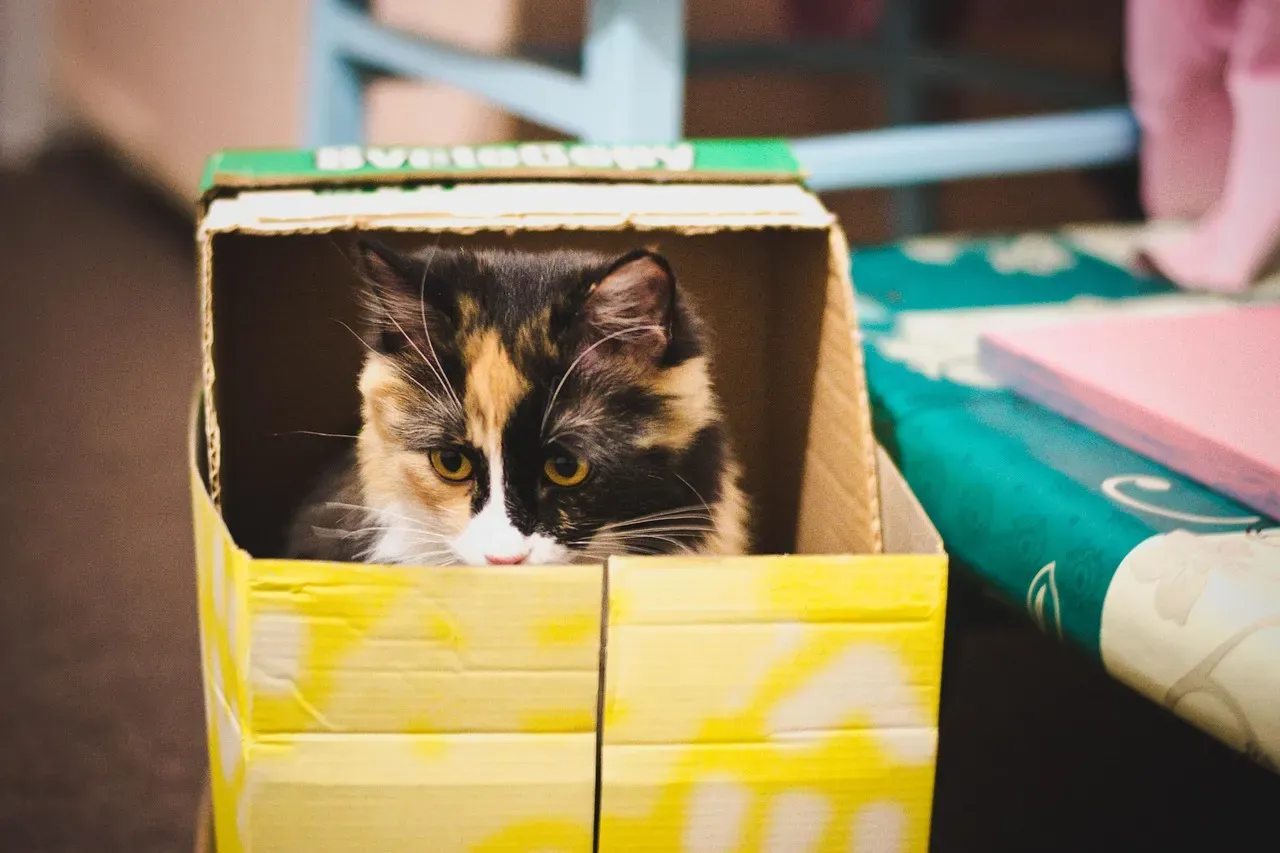
Every cat is an individual, and while many cats enjoy boxes, some may not show much interest in them. Providing boxes as an option in your cat’s environment can be a simple and cost-effective way to enrich their living space and give them a place to exhibit natural behaviors. There’s no pressure to force a preference, just to offer the option.
Placement matters too. Putting the box in a quiet, low-traffic area of the home allows for undisturbed rest. Changing the size, shape, or location of boxes can keep the environment engaging and exciting, preventing boredom and promoting mental agility. A simple rotation of different boxes, occasionally cut with holes or placed in new spots, keeps things fresh for a cat that notices every change in its environment.
Conclusion
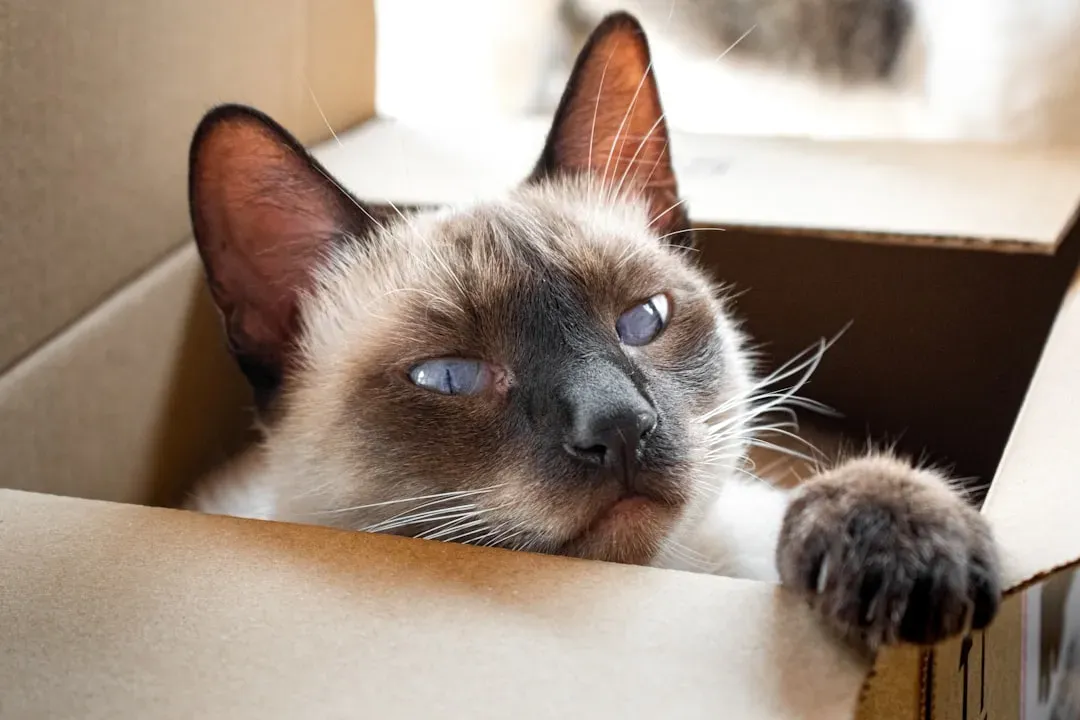
Your cat’s attachment to an ordinary cardboard box is not strange. It’s the product of millions of years of evolution distilled into a single, repeatable behavior. The box offers security, warmth, territorial ownership, sensory stimulation, and a platform for hunting, all wrapped up in something you were about to throw in the recycling bin.
Understanding this doesn’t just satisfy curiosity. It changes how you think about your cat’s needs. A cat that has a reliable, quiet box in a safe corner of your home has a resource it can count on when the environment feels uncertain. That’s a small thing with a surprisingly large impact on daily feline well-being. The next time your delivery arrives and your cat immediately takes possession of the packaging, know that it isn’t stealing your box. It’s just doing what cats have always done: finding safety in an unpredictable world, one cardboard corner at a time.