You order something online, tear open the packaging, set the box down for three seconds, and suddenly your cat is inside it, staring at you like they’ve just claimed a small kingdom. It doesn’t matter how expensive the cat bed is, how plush the couch cushions are, or how many toys are scattered across the floor. The box wins. Every single time.
This isn’t just a quirky internet phenomenon. There’s a genuinely fascinating body of science behind why your feline companion treats a humble cardboard container like the most valuable real estate in the house. From deep evolutionary instincts to brain chemistry and visual cognition, the story of cats and boxes goes far deeper than you’d ever expect. Let’s dive in.
It All Starts With a Primal Need for Safety
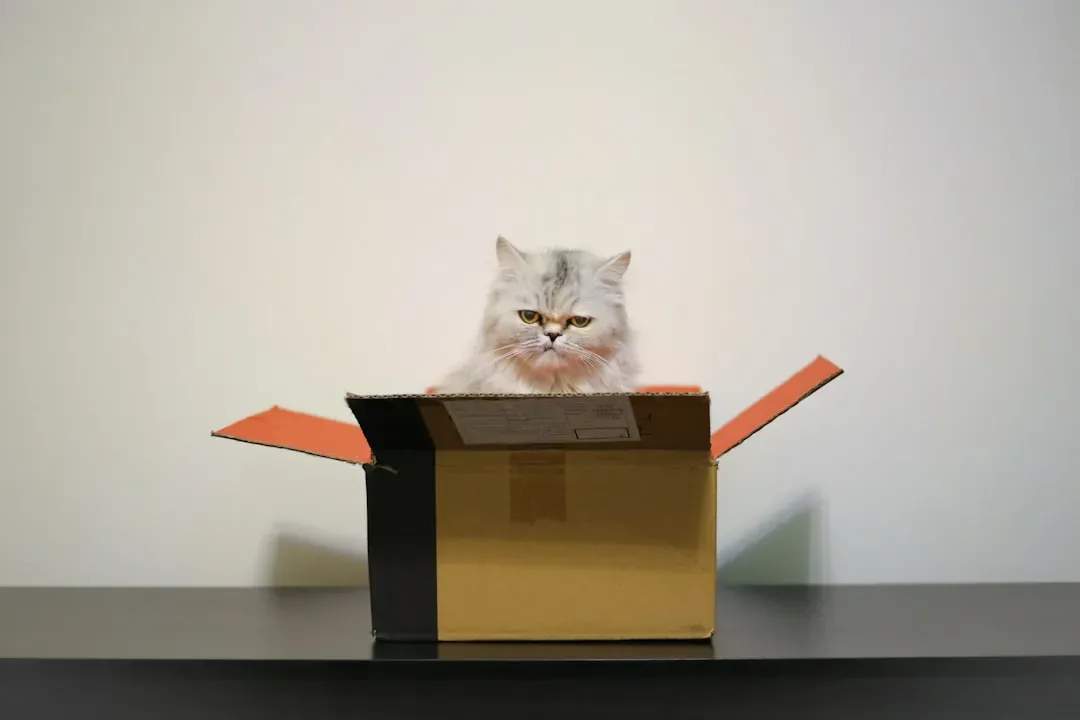
Think about what it would feel like to never be able to fully relax in a wide open room, knowing something could approach you from any direction. That’s essentially your cat’s reality. Cats like boxes because enclosed spaces give them a sense of security and comfort. It sounds simple, but the psychological roots of that feeling run extraordinarily deep.
Cats often seek out boxes because the confined space makes them feel protected and sheltered. By nature, cats seek out small, confined spaces where they can hide from potential threats. Think of it like always wanting the corner seat at a restaurant, where your back is protected and you can see everything in front of you. Your cat is doing the exact same thing, just with cardboard.
The Evolutionary Blueprint: Predator and Prey at the Same Time
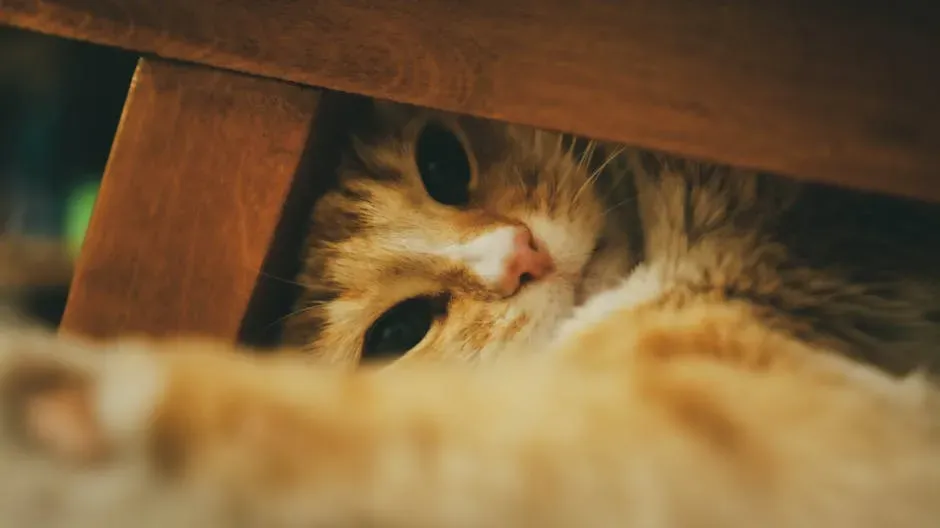
Here’s something a lot of people don’t fully appreciate: your domestic cat occupies a fascinating and somewhat uncomfortable middle position in the natural food chain. Cats occupy a delicate midpoint in the neighborhood food chain, where they are both predator and prey. As they hunt for birds or insects, outdoor cats look for hiding spots like bushes or nooks that can conceal them from being noticed by their prey or any potential predators, such as hawks or foxes.
In the wild, cats are predators. They have to be stealthy to catch their next meal, which often involves hiding in small spaces where they can’t be seen. This is crucial for survival because it helps them sneak up on unsuspecting prey. Cats in the wild are also prey for some animals, and a tight enclosure helps keep them out of sight. So that cardboard box sitting in your living room? To your cat, it’s basically a tactical command center.
It Begins at Birth: The Very First Safe Space
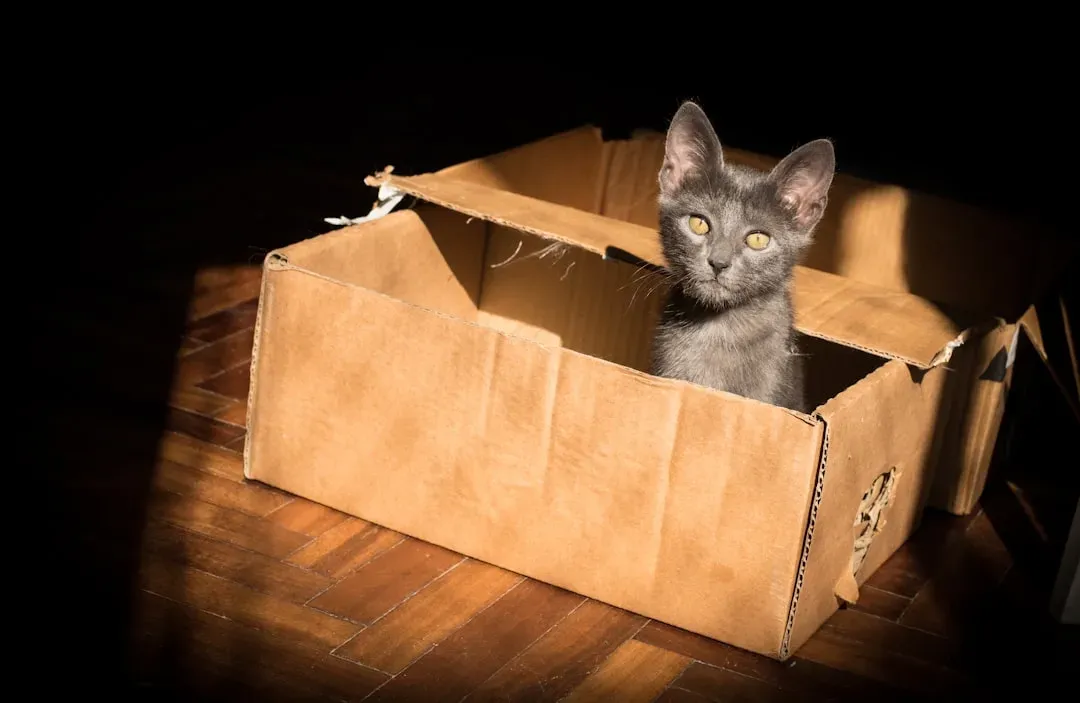
You might be surprised to learn that a cat’s love for enclosed spaces doesn’t develop over time. It’s actually hardwired from the very first moments of life. This instinct begins from the cat’s earliest moments. A mother cat will seek out a quiet area to birth her kittens. That first experience of being nestled in a warm, dark, enclosed space leaves a powerful imprint on the developing feline brain.
In a shelter, a box helps mimic the enclosed comfort that kittens experience when cuddling with their mother and littermates. Just as human babies are comforted by swaddling, an enclosed space helps cats become calmer. It’s one of the most beautiful parallels between humans and cats, honestly. We’re not so different after all.
The Stress Science: What Cortisol Has to Do With Cardboard
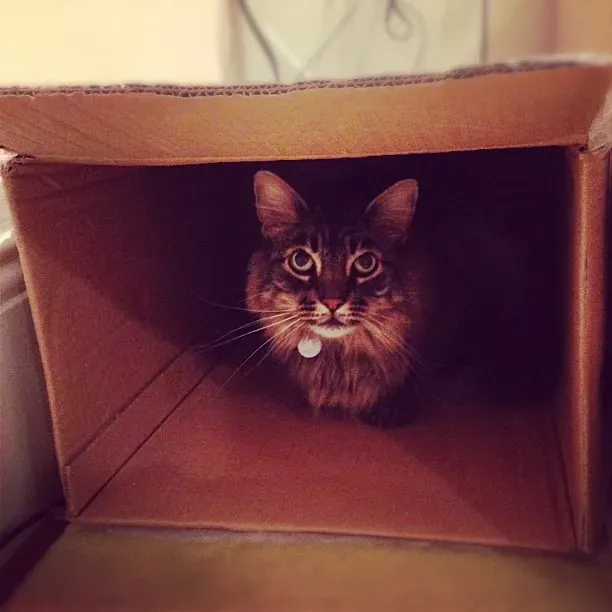
This is where things get genuinely compelling from a scientific standpoint. It’s not just a feeling or a behavioral observation. There is hard biochemical evidence that boxes are good for your cat’s health. Multiple studies have shown that stress hormones like cortisol are reduced in newly rescued cats when they are given access to a box. That’s a measurable, physiological response to a piece of cardboard.
A study on Dutch shelter cats found that when cats are given boxes, their stress levels decrease significantly faster than cats not given boxes. Cats with boxes got used to their new surroundings faster, were far less stressed early on, and were more interested in interacting with humans. So next time someone rolls their eyes at your cat’s box obsession, you can tell them it’s literally proven medicine.
Warmth: Why Your Cat Is Basically a Heat-Seeking Missile
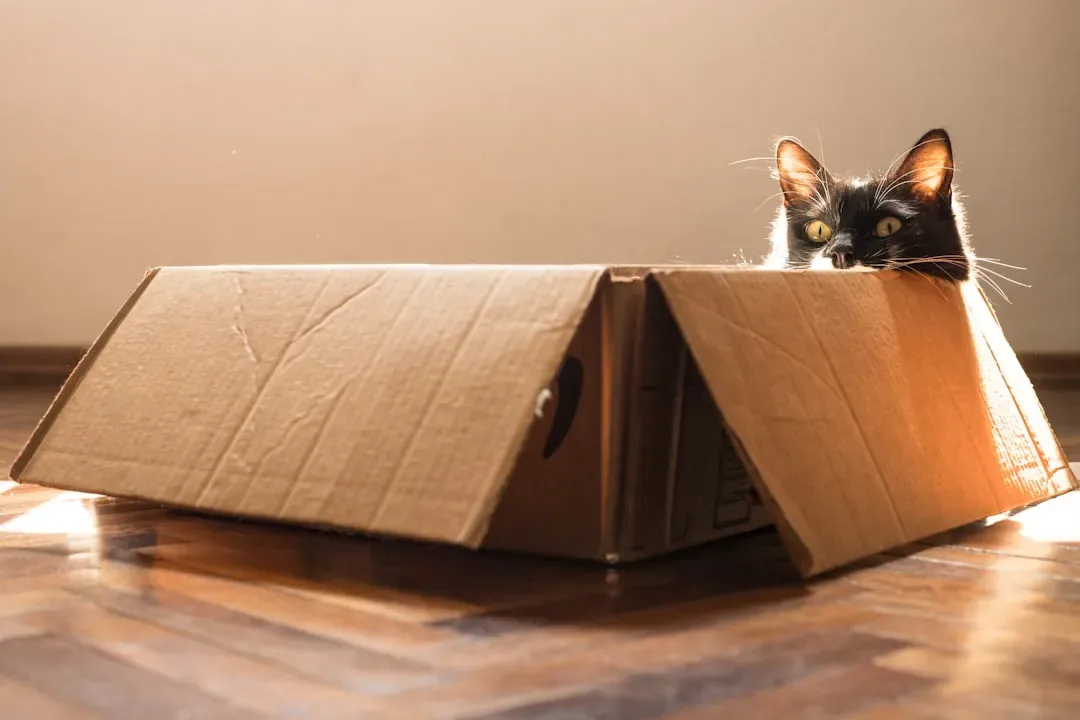
Let’s be real, your cat is always looking for warmth. They nap on laptops, sprawl across radiators, and park themselves directly in patches of sunlight. A 2006 study showed that temperatures between 86 and 97 degrees Fahrenheit are best suited for most cats. The closed space of a box, especially one made from a good insulator such as cardboard, creates a warm, cozy environment that helps to retain body heat. Most homes are kept significantly cooler than that, which means your cat is almost always a little cold by their preferred standards.
The cardboard acts like a cozy blanket, trapping the cat’s body heat and acting as an insulator. The confined space of a box forces a cat to curl up into a ball, which also helps to preserve body heat. It’s the feline version of pulling a thick duvet over yourself on a winter morning. Entirely logical, deeply satisfying, and nearly impossible to resist.
The Ambush Factor: Hunting Instincts Never Die
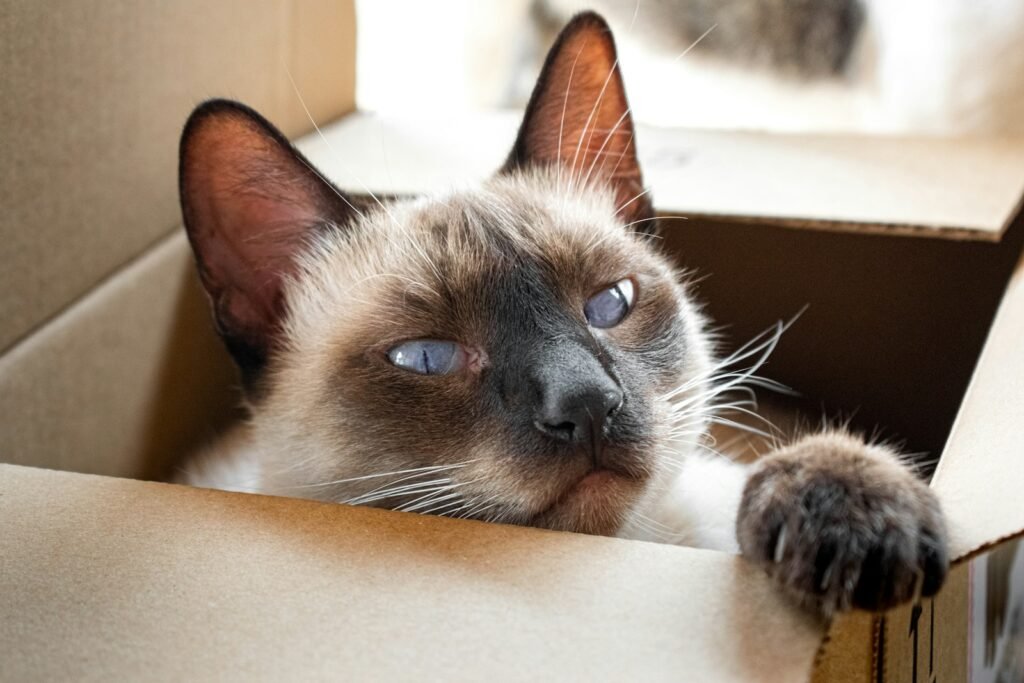
If your cat has ever launched itself out of a box directly at your ankles, you’ve experienced this firsthand. Just because a cat is indoors doesn’t mean they lose their instincts, and boxes offer a perfect hunting spot, with walls that shield them from view and an open top that they can use to pounce onto potential prey. That sudden attack on your feet? Completely intentional, deeply satisfying for your cat, and rooted in thousands of years of evolutionary programming.
Even though your cat may be a pampered pet, their hunting instincts are still alive and well. Even though companion cats don’t need to hunt for survival, boxes provide a confined place where they can pretend they are in the wild, hiding while they prepare to pounce on their prey. Think of the box as both a hunting blind and a theater stage, all rolled into one piece of corrugated cardboard.
The “If I Fits I Sits” Phenomenon: Even Fake Boxes Will Do
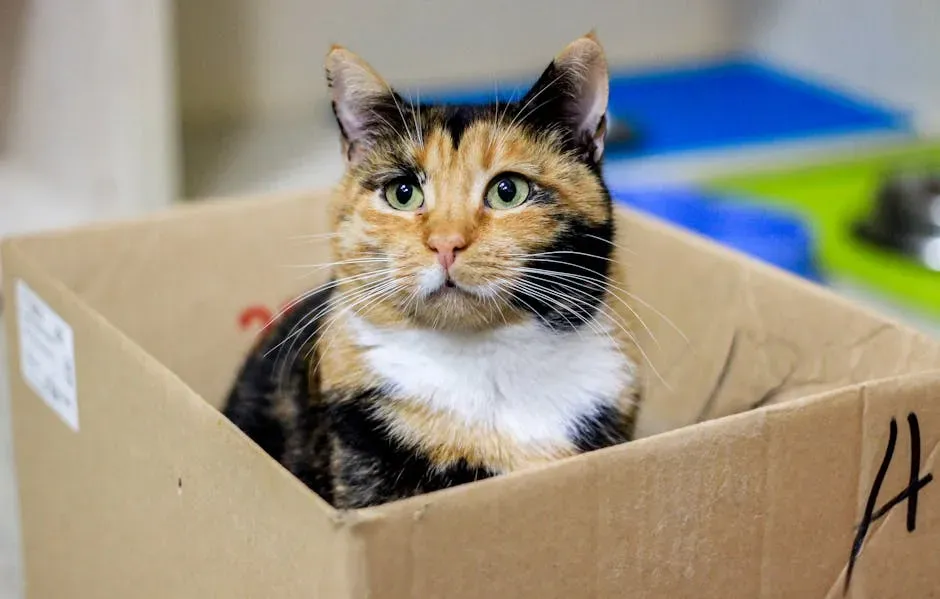
This is perhaps the most mind-bending discovery in cat behavior science. Researchers found that the pull of box-shaped spaces is so strong in cats that it extends well beyond three-dimensional reality. Cats’ love for boxes extends beyond three-dimensional structures. In 2021, researcher Gabriella Smith spearheaded a citizen science paper, asking the public and their cats to contribute to an experiment. The study, published in the journal Applied Animal Behaviour Science, explored whether cats would sit inside a Kanizsa contour, a rectangle created by corners that are taped off on a floor.
Researchers found that the felines chose the illusory square seven times, nearly as much as the eight times the cats chose the real squares, “indicating that they were susceptible to the illusion.” The major takeaway is that cats are susceptible to the Kanizsa illusion in a human-like way, and are most likely attracted to 2-D shapes for their contours rather than solely novelty on the floor. I know it sounds crazy, but your cat might genuinely sit in a box that doesn’t technically exist.
Scent Marking and Territory: The Box Is Theirs Now
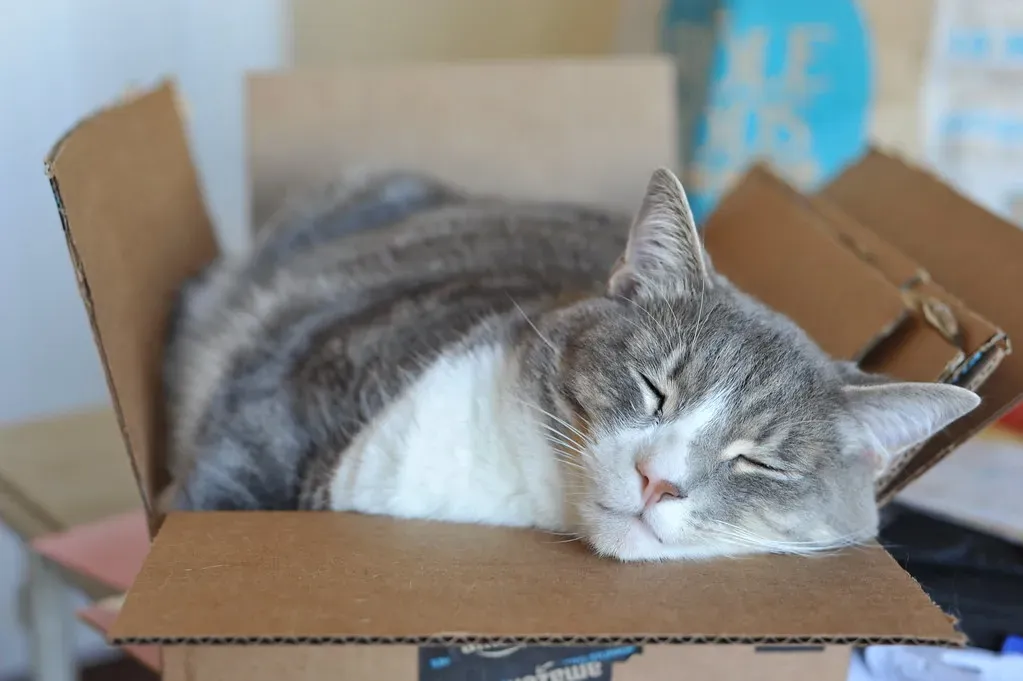
The moment your cat climbs into a new box, something very deliberate and instinctually significant begins. The very first thing most curious cats do when they see a cardboard box is rub up against it. Kitties have scent glands on the sides of their face, which is why they love rubbing their cheeks against everything. This action leaves their scent on the object, like a feline ownership sign. The box isn’t just a hiding spot. It becomes territory.
Cats have an acute sense of smell, and cardboard boxes are porous materials that can retain scents. When cats enter a box, they are enveloped by a medley of intriguing smells. This olfactory experience can be comforting and captivating, especially when they are exploring a box brought from the outside world, teeming with unfamiliar scents. A brand new delivery box is essentially a mystery novel written entirely in scent, and your cat is absolutely going to read the whole thing.
Conflict Avoidance: How Boxes Double as Emotional Retreat Centers
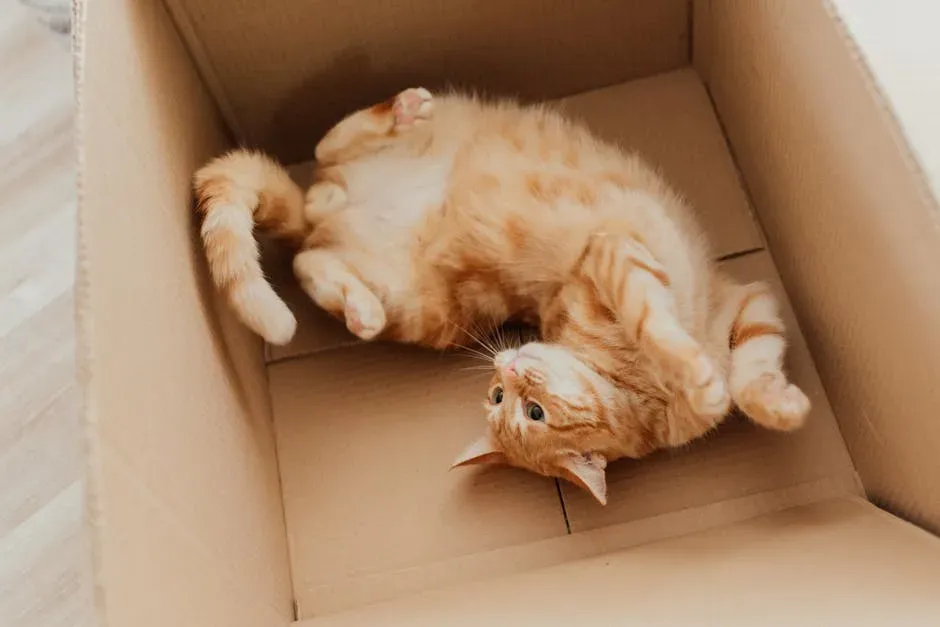
Cats are notoriously non-confrontational when it comes to resolving tension. They don’t sit down and talk things through. Instead, they disappear. Cats lack refined conflict resolution skills, so they prefer to avoid negative interactions. When tensions arise with family members, be that with humans or fellow pets, the refuge of a box offers the cat a chance to recalibrate and de-stress. It’s honestly quite a healthy coping mechanism when you think about it.
When faced with unfamiliar or stressful situations, a cat may retreat into a box to regain a sense of control and feel at ease. Boxes are also helpful during conflicts, as cats are not adept at resolving disputes and would rather take refuge in the safe space of a box. This behavior can help reduce anxiety and promote well-being. So when your cat disappears into a box after you’ve rearranged the furniture, try not to take it personally. It’s just self-regulation, feline style.
When Box Behavior Becomes a Signal Worth Watching
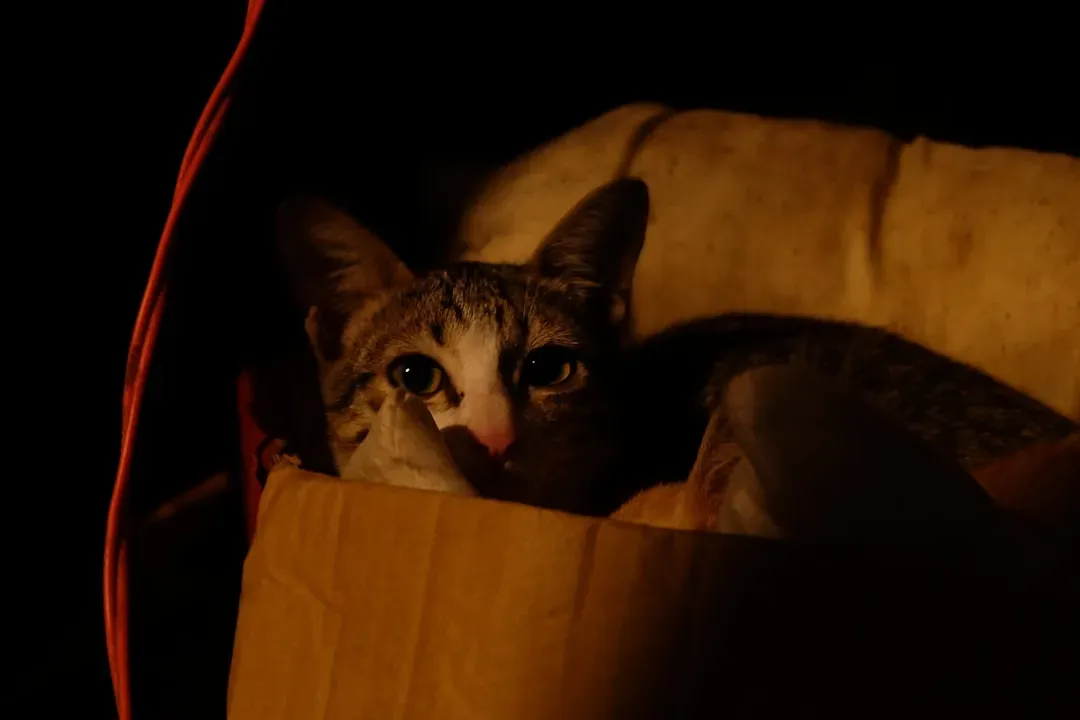
Here’s the thing though: not all box behavior is the same, and a cat that spends time in a box for comfort is very different from a cat using a box to hide from the world entirely. A cat cowering at the back of a box with wide eyes is likely using the box in a very different way from one who is snoozing inside or repeatedly pouncing in and out of it. Context matters enormously here, and observant cat owners will know the difference.
Hiding behavior in a box or enclosed space might just be what a cat needs to feel safe. It can also be a sign that something is stressing them out in their home. Providing boxes as an option in your cat’s environment can be a simple and cost-effective way to enrich their living space and give them a place to exhibit these natural behaviors. The simple act of leaving a clean cardboard box in a quiet corner of your home could genuinely make a meaningful difference to your cat’s daily quality of life.
Conclusion: Never Underestimate a Cardboard Box
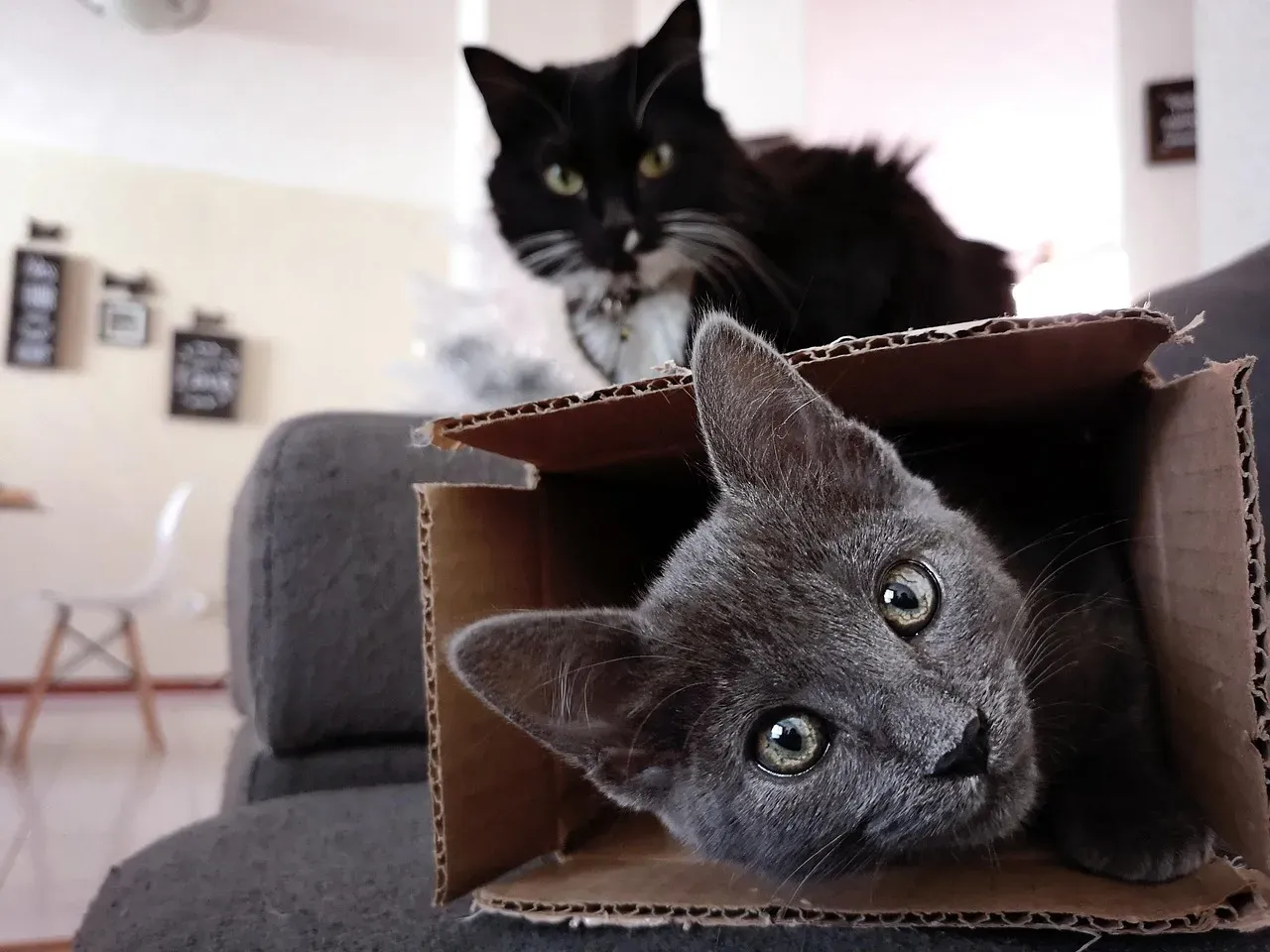
It’s easy to laugh at your cat’s passion for boxes. The memes are endless, the videos are delightful, and the whole phenomenon feels charmingly absurd on the surface. Yet beneath all of that is a genuinely rich tapestry of evolutionary biology, neurochemistry, sensory behavior, and psychological need. Your cat isn’t being weird. Your cat is being exactly what they are: a complex, instinct-driven creature who happens to find the perfect solution to multiple survival needs in something you’d normally toss in the recycling bin.
The next time that delivery arrives and you catch your cat already folding themselves into the box before you’ve even finished unpacking, take a moment to appreciate what you’re actually watching. It’s thousands of years of feline evolution, stress management science, and territorial instinct all happening inside a piece of cardboard. Honestly, it’s kind of extraordinary. What do you think about it? Drop your thoughts and your cat’s funniest box moments in the comments below.