You’ve probably been there. You lean in for a cuddle, your cat’s tail starts doing something odd, and the next thing you know you’re nursing a tiny scratch wondering what went wrong. The truth is, your cat was talking to you the entire time. You just didn’t speak the language.
Cat tail language can tell you about a cat’s moods, their emotions, and their intentions, allowing you to understand and predict their behavior. It’s like a mood ring strapped to their backside, except this one is genuinely accurate. Once you learn how to read it, your relationship with your cat will honestly never be the same. Let’s dive in.
The Tail Is More Than Just a Tail
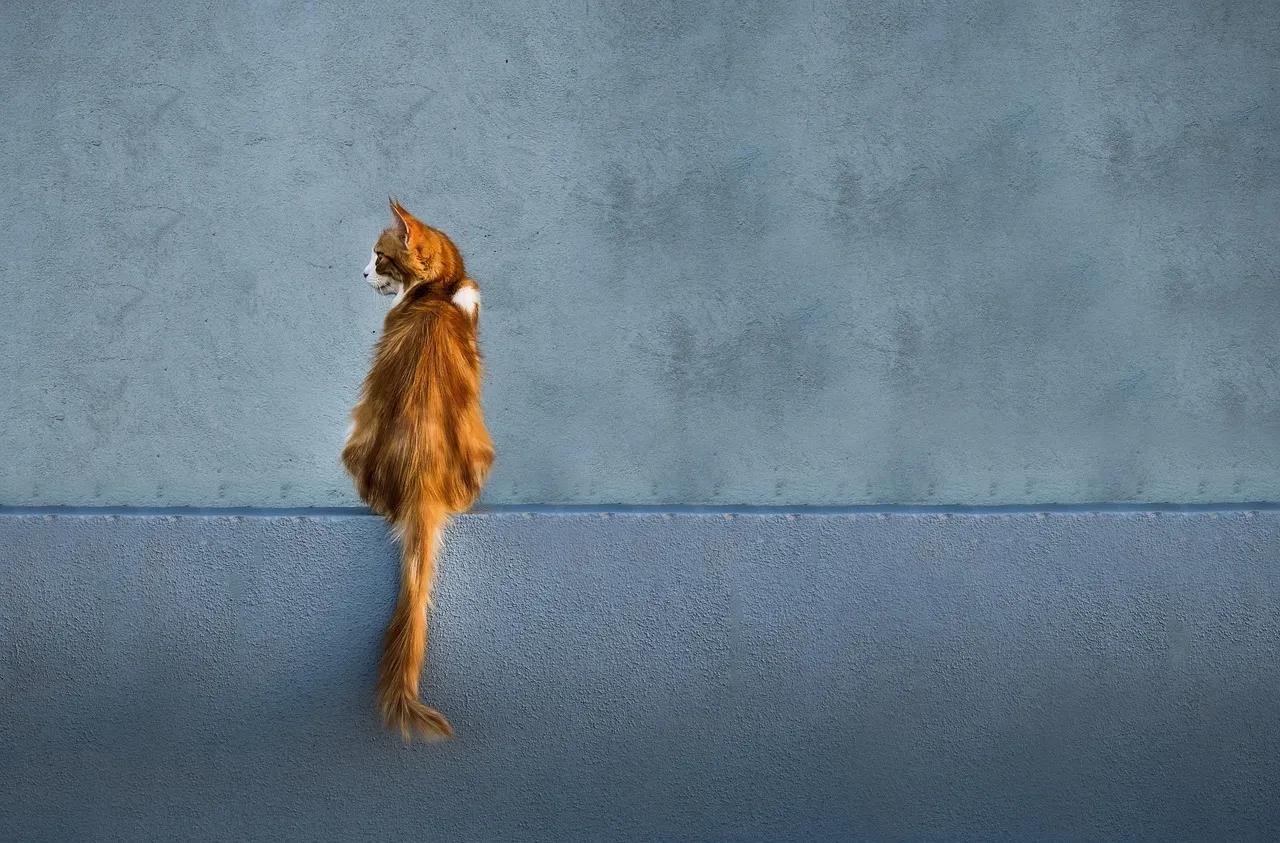
Before you can start decoding your cat’s tail movements, it helps to understand what you’re actually looking at. The tail is an extension of the spine. While the human spine stops at the pelvis, in cats the spine continues backward for another 18 to 23 small bones, or roughly 20 to 30 centimeters. That’s not just extra anatomy. That’s an expressive, nerve-rich appendage that your cat has full awareness of.
The tail has a rich supply of nerves, giving cats the ability to make it move in small and large ways. A cat’s tail can twitch or quiver almost invisibly, or it can move like a whip to strike with strength. Think of it like a conductor’s baton, except instead of music, it’s directing emotional messages right at you. Tails also aid in your cat’s righting reflex, which allows them to land on their feet most of the time. Similar to their whiskers, cats’ tails are filled with nerves and serve as another form of sensory touch.
The High and Proud Tail: Your Cat Is in a Good Mood
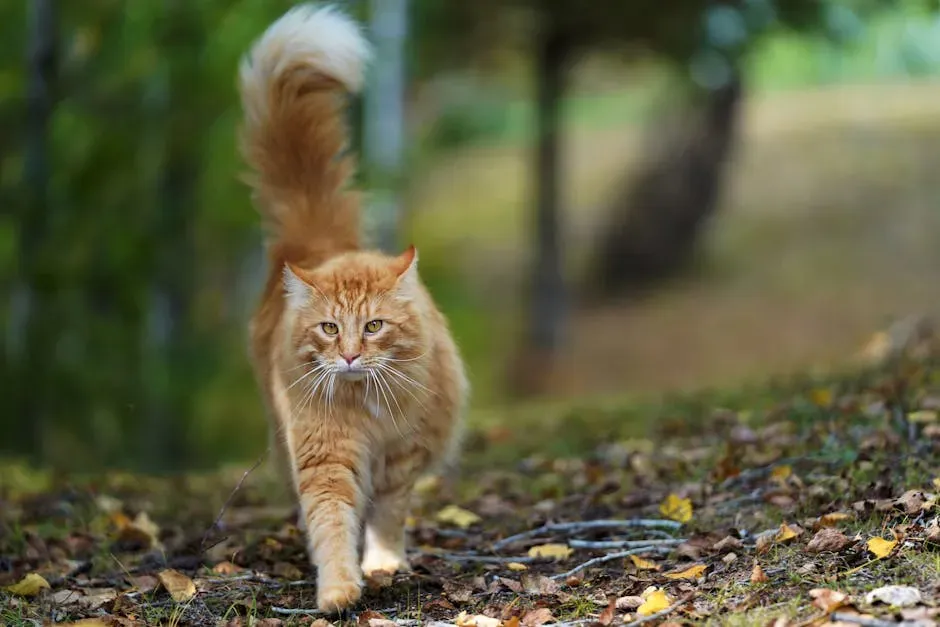
If there’s one tail position every cat owner should recognize immediately, it’s this one. A cat holding their tail straight up is feeling attentive and alert. This behavior doesn’t necessarily have a positive or negative connotation. It just means the cat understands something is happening and is paying attention to it. So context matters here, as it does with almost everything in cat communication.
Straight up or high tails indicate cats are attentive and alert, and usually confident, contented, and willing to be sociable. What’s even more fascinating is that science backs this up. A doctoral study on communication in domesticated and wild cats found that while wild cats displayed many of the same social behaviors as domestic cats, they did not use the “tail up” signal commonly seen in domestic cats during friendly interactions. This suggests the “tail up” signal likely developed during the process of domestication. Your cat literally evolved to greet you this way. That’s kind of beautiful, honestly.
The Question Mark Curl: An Invitation to Play
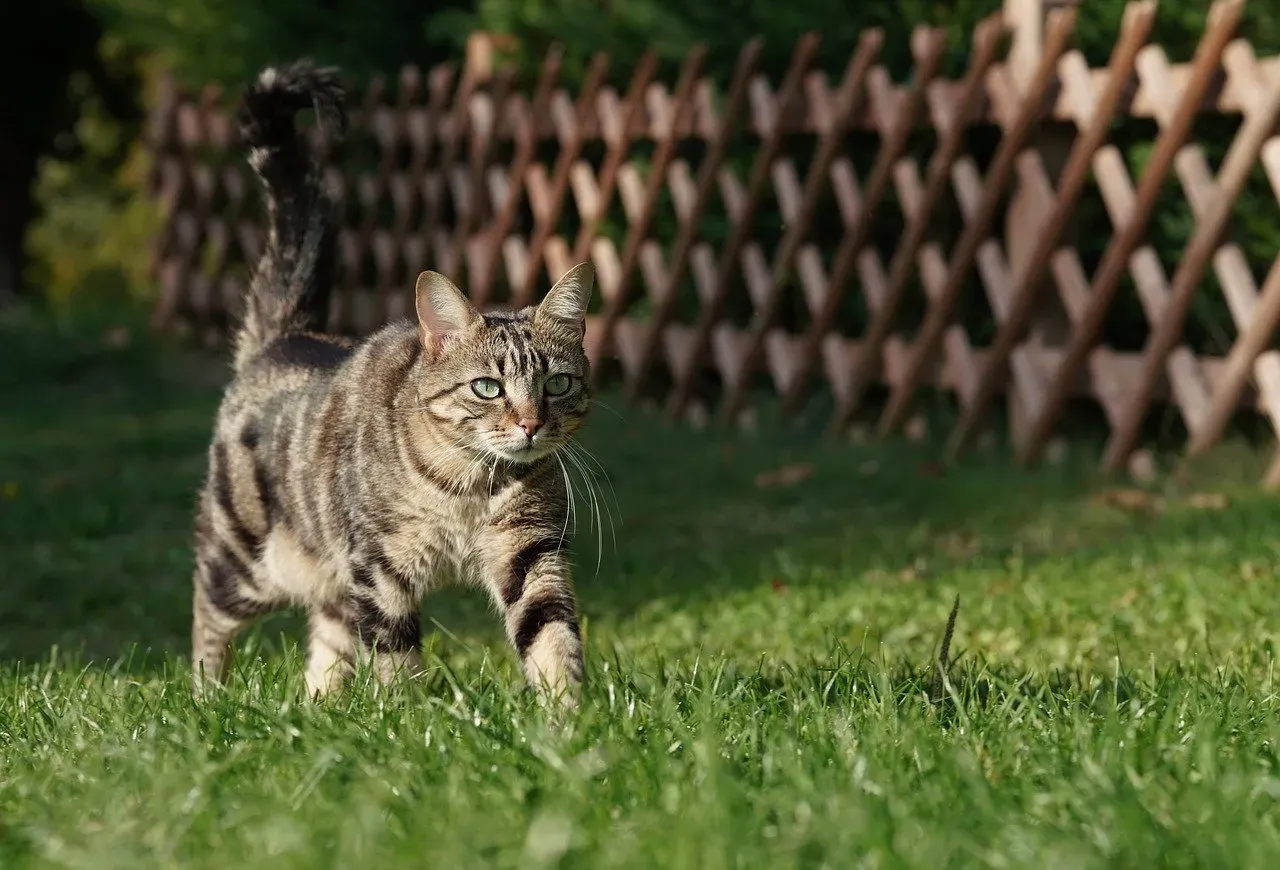
A tail held high with a “question mark” curve at the tip is friendly and usually signals the cat is in a good mood. It’s one of the most charming tail gestures your cat can offer, and it shows up exactly when you’d hope. If your cat bends their tail into the shape of a hook or question mark, this is a very positive sign. Think of it as your cat’s version of putting their hand up and saying, “Hey, I’m up for some fun right now.”
A question mark or hooked tail is straight up but curls at the tip. These cats are playful, telling you they are ready to have fun. If you see this tail paired with wide, bright eyes and an eager posture, that’s your cue to grab the feather wand and get moving. Miss the window, and your cat may quickly lose interest. They work on their own schedule, after all.
The Slow, Fluid Swish: Calm and Collected
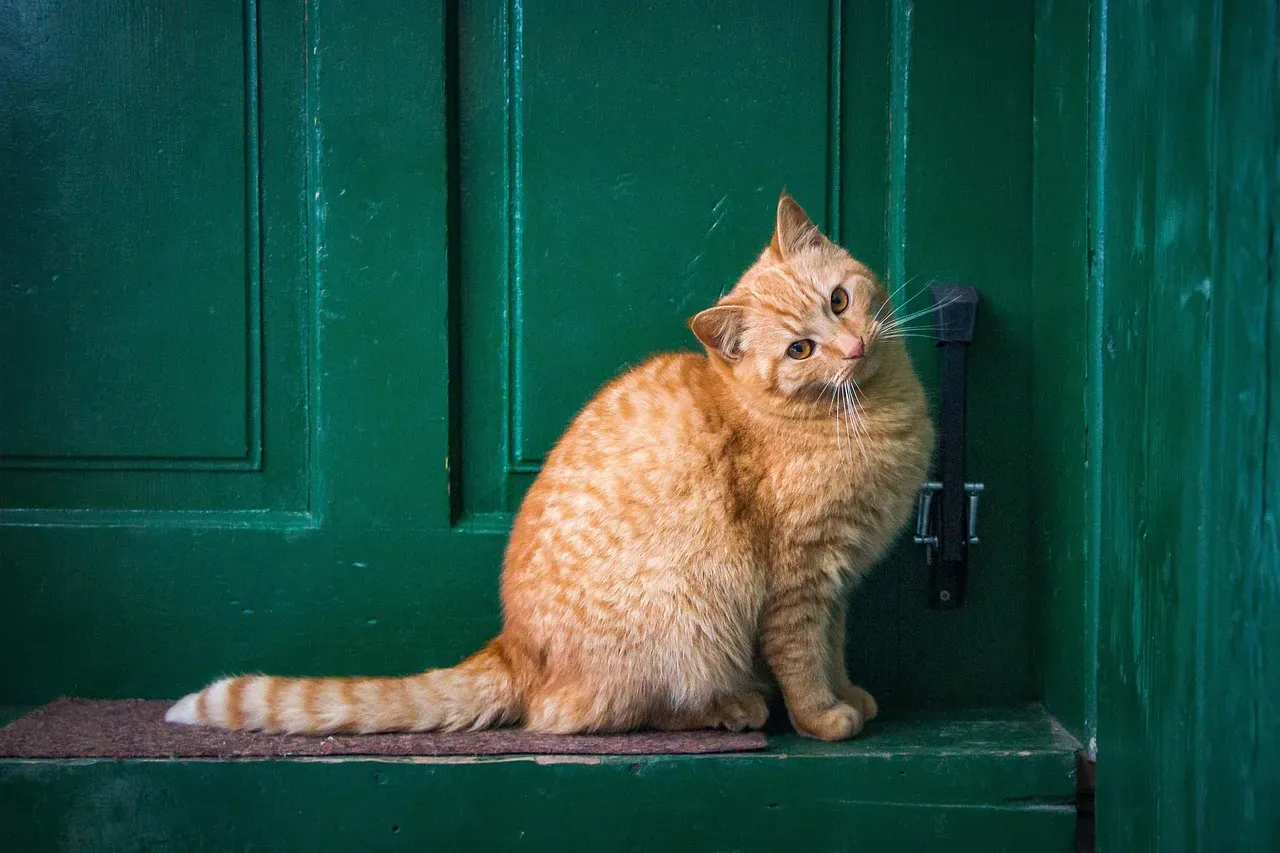
Not every tail movement is a warning sign. Some are actually quite peaceful. When a cat’s tail is in motion and looks fluid and soft, it’s “swishing.” Generally, this indicates a cat who’s relaxed or calmly interested in what’s happening. At this point, no alarm bells are going off in the cat. They also aren’t sleepy. It’s the feline equivalent of leaning back in a chair with your feet up.
Swishing tails slowly from side to side in a soft, fluid manner indicate cats who are relaxed, calm, and perhaps mildly interested in something. Just let these purring machines hang out and enjoy life. I think of this as your cat simply processing the world around them. They might be watching a bird outside the window or tracking a dust mote in the sunlight. Whatever it is, they’re content. Leave them to it.
The Tip Twitch and Flick: Focused or Frustrated
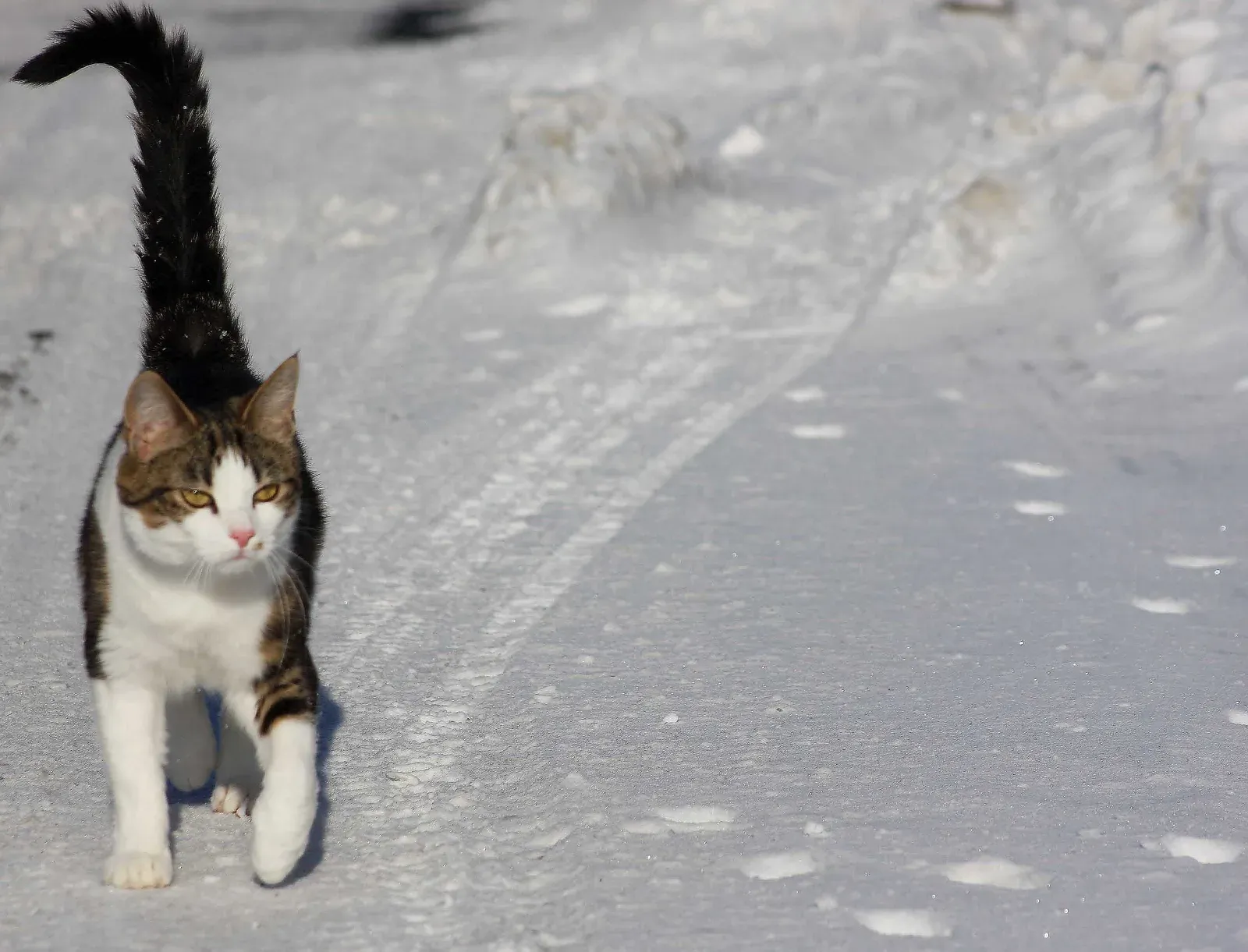
Here’s where things start getting nuanced, and this is the one that trips up so many cat owners. Cats twitch the end of their tails when they are hunting and playing, as well as when they are mildly irritated and frustrated. The exact same movement can mean two completely opposite things depending on the situation, which means you need to pay attention to everything else that’s happening around your cat at the same time.
Cats may also twitch the tip of their tail if they are focusing on prey or preparing to pounce on a toy, so make sure you interpret their tail position in accordance with the situation and other body language cues. If your cat is locked onto a toy and their tail tip is flicking rapidly, that’s pure predatory excitement. Tail swishing and flicking are subtly different tail movements. With flicking, just the tip of the tail is moving. It may flip back and forth in a rapid motion. This motion can be part of predatory behavior or predatory play, meaning your cat might see something they want to pounce on, whether for playtime or to attack.
The Thrashing Lash: Back Off, Right Now
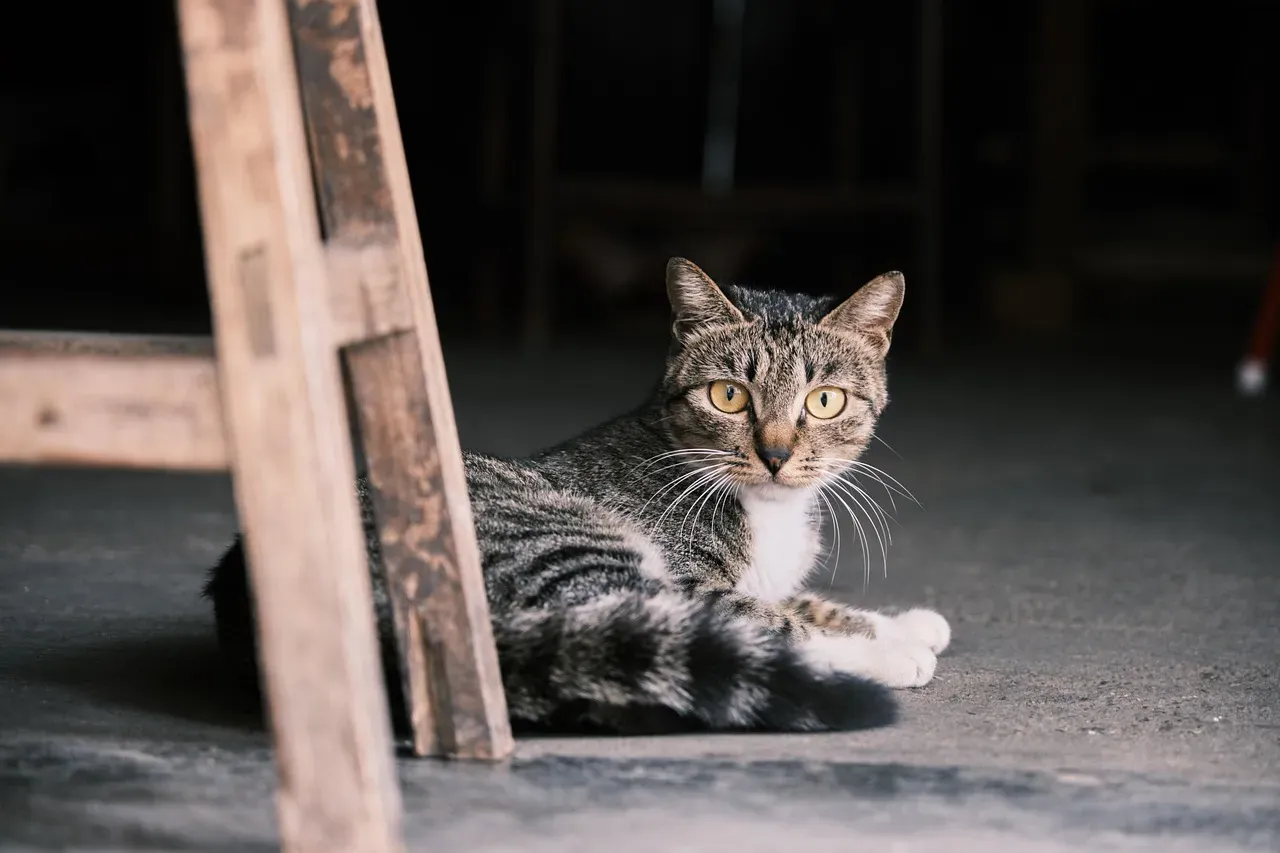
If the slow swish is the peaceful end of the tail spectrum, the thrashing lash is very much the other end. When your cat thrashes their tail, they are irritated, annoyed, or angry. This tells you that something is bothering your cat. This is not a subtle message. This is your cat shouting. And you really do need to listen.
If you are petting your cat and they start thrashing their tail, they are trying to tell you to stop. If you don’t, then the thrashing tail may be a prelude to hissing, growling, swatting, or biting. Let’s be real: most cat scratches you’ve ever received were preventable with this knowledge. If your cat is lashing their tail, it means they’re really ticked off about something and are making their feelings known. Respect it. Give them space. Come back when the storm has passed.
The Puffed-Up Tail: Fear in Full Display
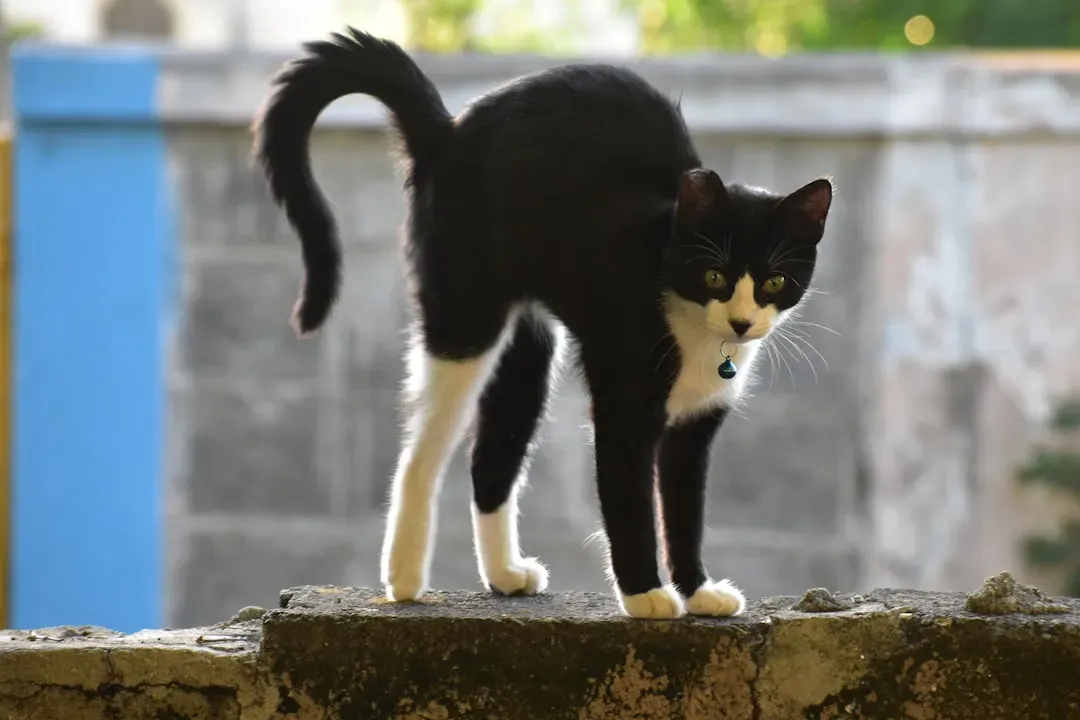
You’ve seen this one. It looks almost cartoonish, like a pipe cleaner that’s been dramatically inflated. When a cat’s tail becomes bushy, it’s a sign that they feel threatened or scared, and they are trying to appear larger to intimidate potential aggressors. It’s the feline version of puffing out your chest, except it happens reflexively out of genuine fear.
A puffed-up tail is often a response to a threat, such as seeing a cat outdoors, and is assumed to be a defensive attempt to make themselves appear bigger. Think about how a person might look wide-eyed and round-shouldered when they hear a sudden loud noise. Same principle, different anatomy. Your cat wouldn’t puff their tail if they weren’t feeling threatened to begin with, so the behavior almost always stems from a fearful reaction. Similar to other signs of fear, remove the thing that’s scaring them if you can, but don’t try to move your cat, who’s in panic mode and may respond by trying to protect themselves.
The Low Tail, the Tucked Tail, and When the Tail Signals Pain
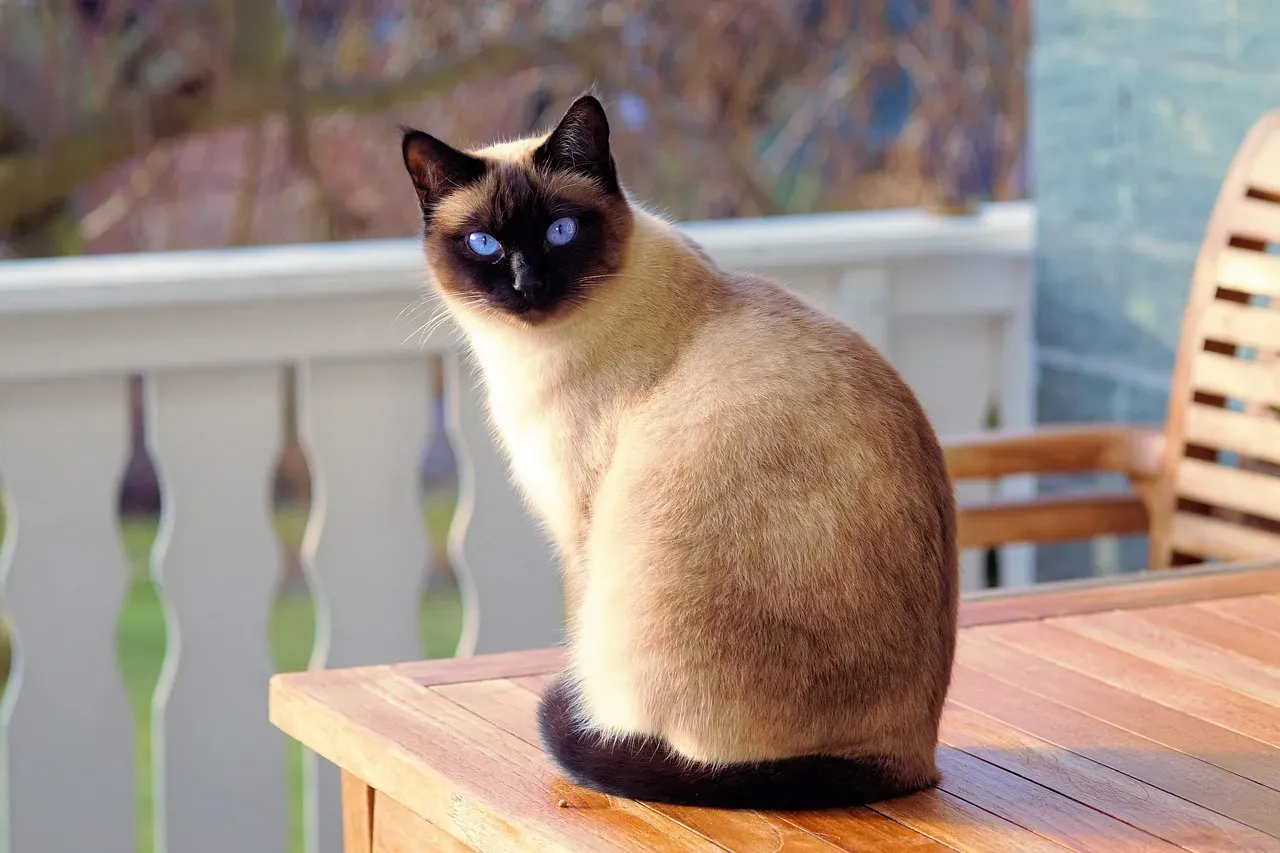
A tail held low is one to take seriously. If your cat’s wagging tail is low, it’s generally an indicator that they’re scared. Their ears may also be pinned back, their body crouched low to the ground, and if they’re really scared, they might tuck their tail between their legs too. If you see your cat acting this way, it’s best to give them some space and let them calm down. Identifying the source of their fear and quietly removing it is always the best move.
There’s another scenario worth knowing about. Cats don’t have words to tell you when they’re in pain or stressed. However, what they do have is their body language, such as how they talk to you with their tail. If your cat is lying down and waving their tail around, they might be trying to communicate that they’re in pain. If your cat is doing this and not otherwise acting in a way you expect from them, you should contact your vet. It’s hard to say for sure without a professional’s opinion, but in rare instances your cat’s tail twitching could be a sign of feline hyperesthesia syndrome, also called twitch-skin syndrome. If you notice severe tail twitching and brief bursts of odd behavior after you touch or scratch your cat’s lower back region, you should consult with your veterinarian.
The Tail Wrap: Reserved for Those They Trust Most
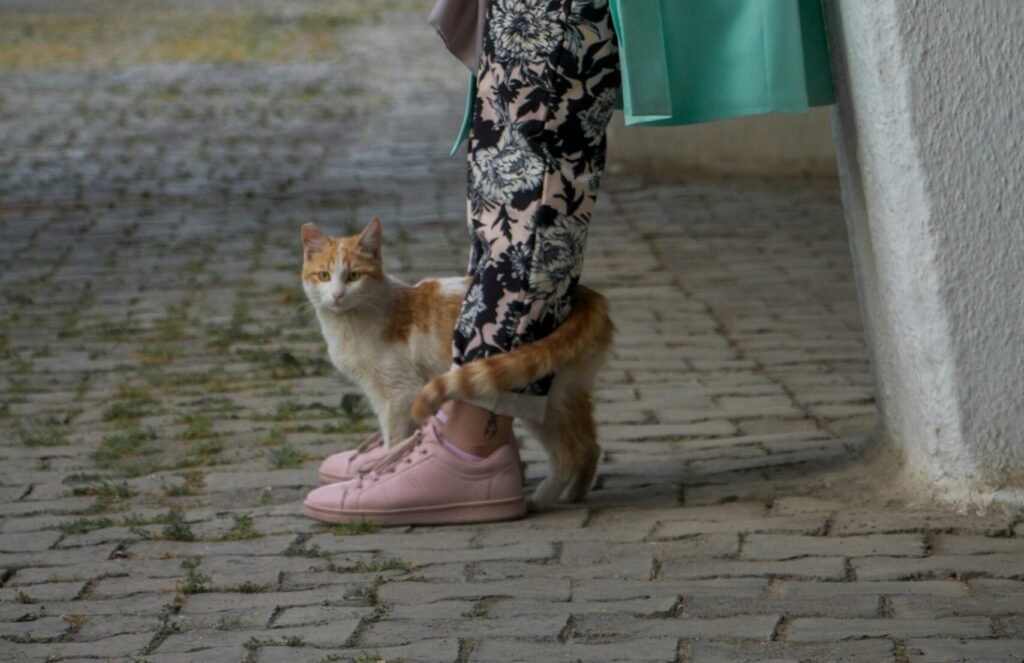
This one is genuinely touching. If your kitty wraps their tail around you, they are probably showing trust and security. It’s essentially the feline version of putting an arm around a friend’s shoulder. Not everyone gets this. You have to earn it. If you’ve ever seen cats cuddling curled with their tails around each other, you know how adorable this behavior is. It’s also a very pro-social tail behavior. In other words, this is one of the ways cats bond and socialize with each other. It’s a way of marking each other with their scent and signaling who their friends are. If your cat snuggles up next to you with their tail curled around you, it means you’re part of their in-crowd.
Research actually supports how meaningful this gesture is among cats themselves. Researchers at the University of Florida and the University of Georgia have noted that “preferred associates” will often wrap their tails around each other in any series of complex designs. So when your cat does this to you, it’s not just a cute coincidence. You genuinely made their preferred associates list. Meanwhile, sometimes when your cat’s sleeping and you pet or talk to them, they might twitch their tail. This cat tail language is their way of saying they know you’re there, but they feel safe enough to carry on snoozing anyway. That’s the ultimate compliment from a creature that trusts almost no one.
Conclusion: You Now Speak Tail
Here’s the thing about understanding your cat’s tail language: it doesn’t just prevent scratches or awkward misread moments. It actually deepens the bond between you and your animal in a way that’s genuinely meaningful. Cats have a ton of different, complicated ways of communicating with you, and by reading them properly, you can improve your bond with your cat and ensure that you always keep them happy.
The tail is just one piece of the full picture, of course. You also need to remember to read other clues in tandem with the tail wagging. Ears, eyes, body posture, and vocalizations all play a role. But the tail? It’s arguably the loudest signal your cat sends. Every swish, wag, flick, and curl contains a hidden message, and understanding cat tail positions and movements can give you deeper insight into your cat’s personality and feelings, leading to a deeper bond with your furry friend, as well as a better sense of whether your cat is sick or in pain.
Your cat has been narrating their inner world to you every single day. Now you finally know how to listen. What tail signal have you been misreading all along? Drop your thoughts in the comments below.