13 Reasons Your Cat Sits With Its Back Pressed Against You
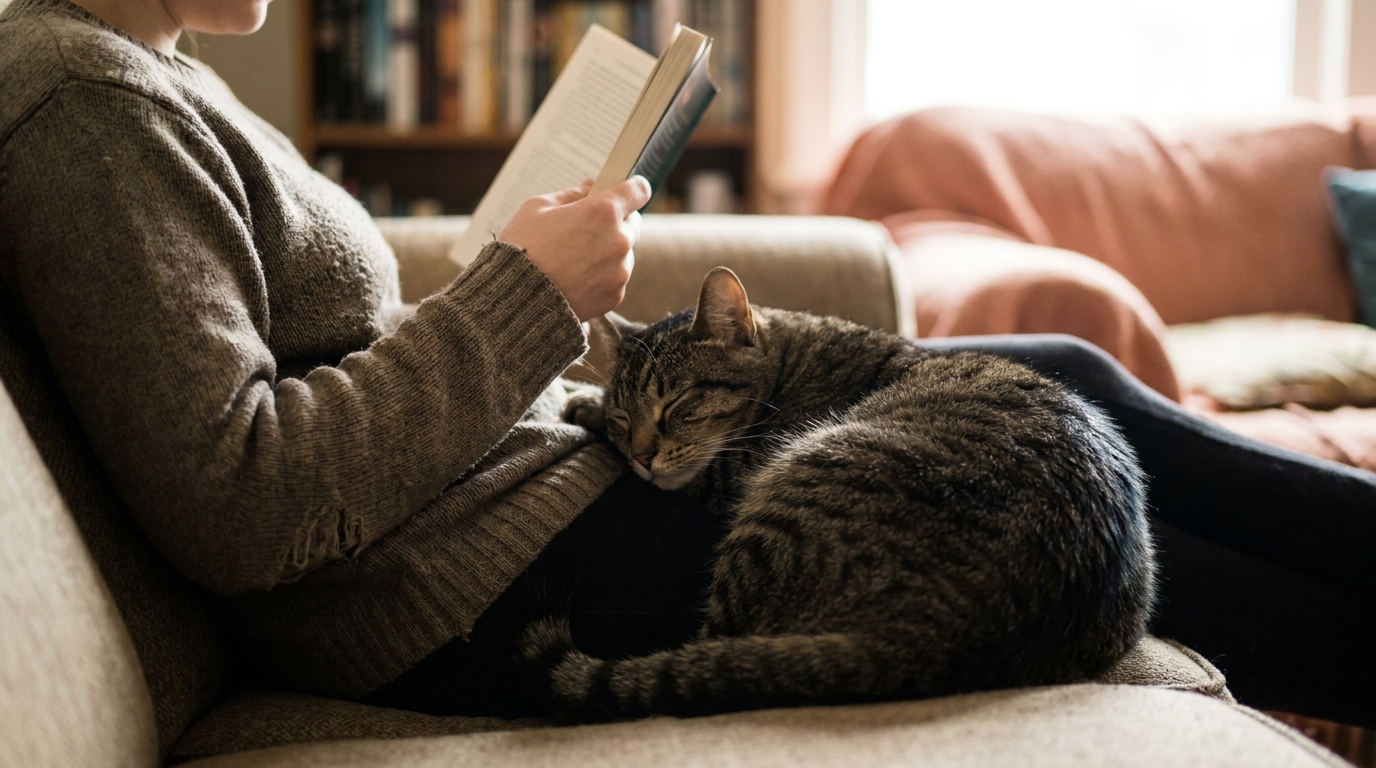
Most cat owners have experienced it: you sit down, and within minutes your feline friend positions themselves with their back firmly pressed against you. While it might seem like an odd choice compared to sitting on your lap or beside you, this specific posture actually reveals surprising things about how your cat views you and processes their environment.
Veterinary behaviorists and feline researchers have identified more than a dozen distinct reasons cats choose this particular position, and most of them challenge what people assume about cat independence and aloofness. Here's what the data actually says.
#13 — They're Guarding Their Blind Spot
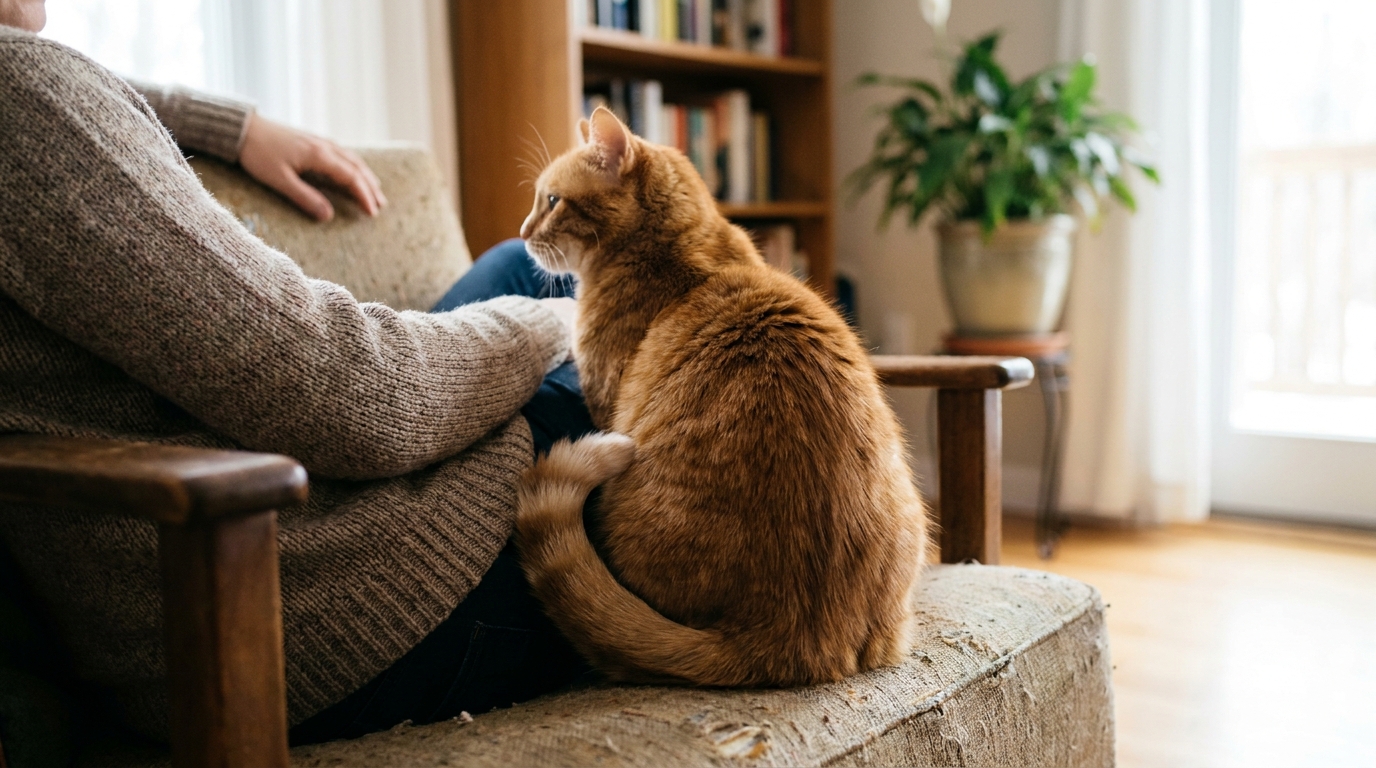
When your cat presses their back against you, they're strategically covering their most vulnerable area.
Cats are both predators and prey animals in the wild. Their eyes are positioned to give them nearly 200-degree vision to the front and sides, but they have almost no ability to see directly behind them. This blind spot creates anxiety in unfamiliar or open spaces.
By placing their back against you, your cat is essentially using you as a trusted barrier. They can monitor everything in front of them while knowing nothing can approach from behind. It's a tactical position that allows them to relax while staying alert.
Studies of feral cat colonies show that cats with strong social bonds often position themselves back-to-back when resting in exposed areas. Your cat is applying the same logic to you.
But that's nothing compared to #12...
#12 — Temperature Regulation Without Overheating
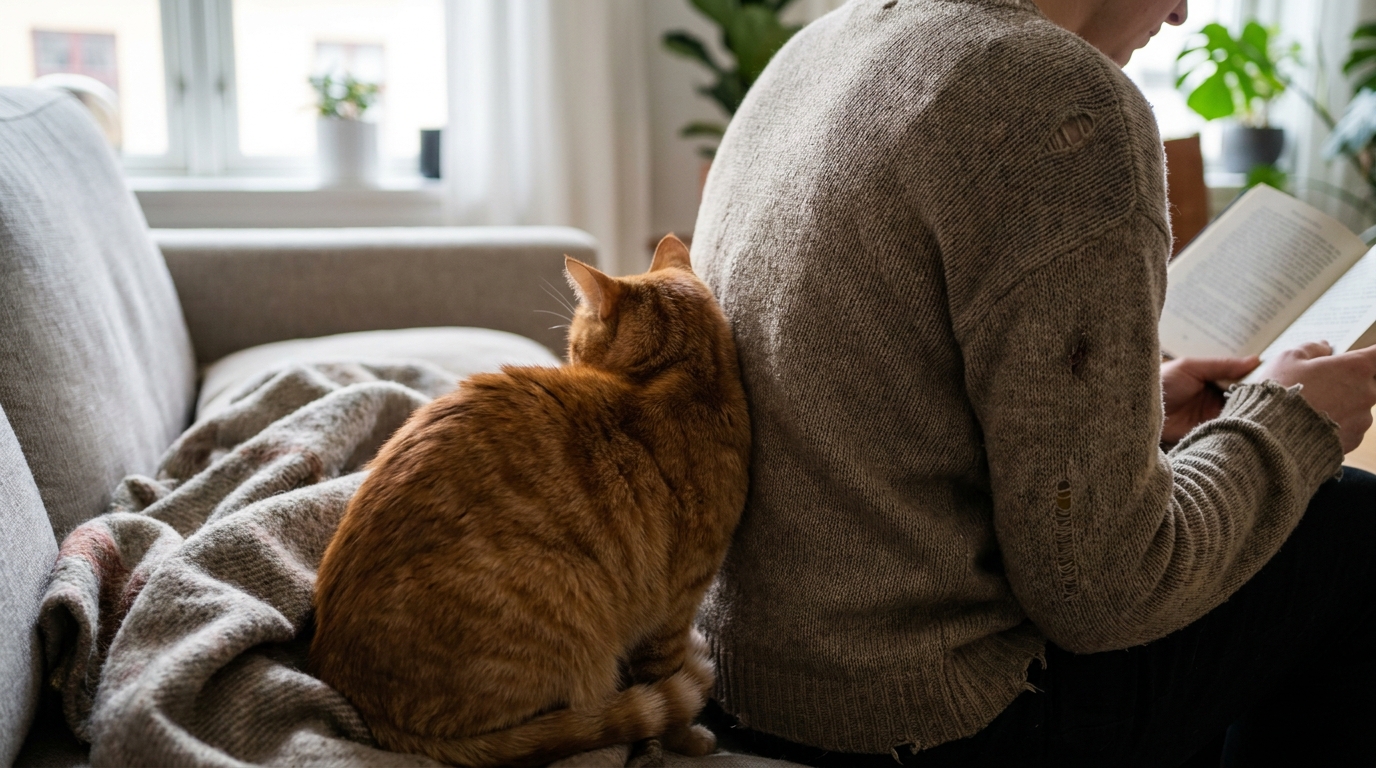
Sitting with their back against you gives cats warmth control that full-contact cuddling doesn't provide.
A cat's normal body temperature runs between 100.5°F and 102.5°F, significantly warmer than humans. When they sit fully on your lap, they can actually overheat within 15 to 20 minutes, especially long-haired breeds. This is why many cats jump off just when you've gotten comfortable.
The back-press position solves this problem elegantly. Your cat gets the warmth they're seeking through the contact point while their front, sides, and belly remain exposed to cooler air. They can regulate their temperature by leaning in more or pulling slightly away.
Indoor cats especially seek this arrangement during winter months when ambient temperatures drop. They've learned that humans are reliable heat sources, and the back-press lets them "thermostat" themselves without committing to full contact.
But the thermal comfort is just one piece of a larger puzzle, as #11 reveals...
#11 — It's Actually a Sign of Deep Trust
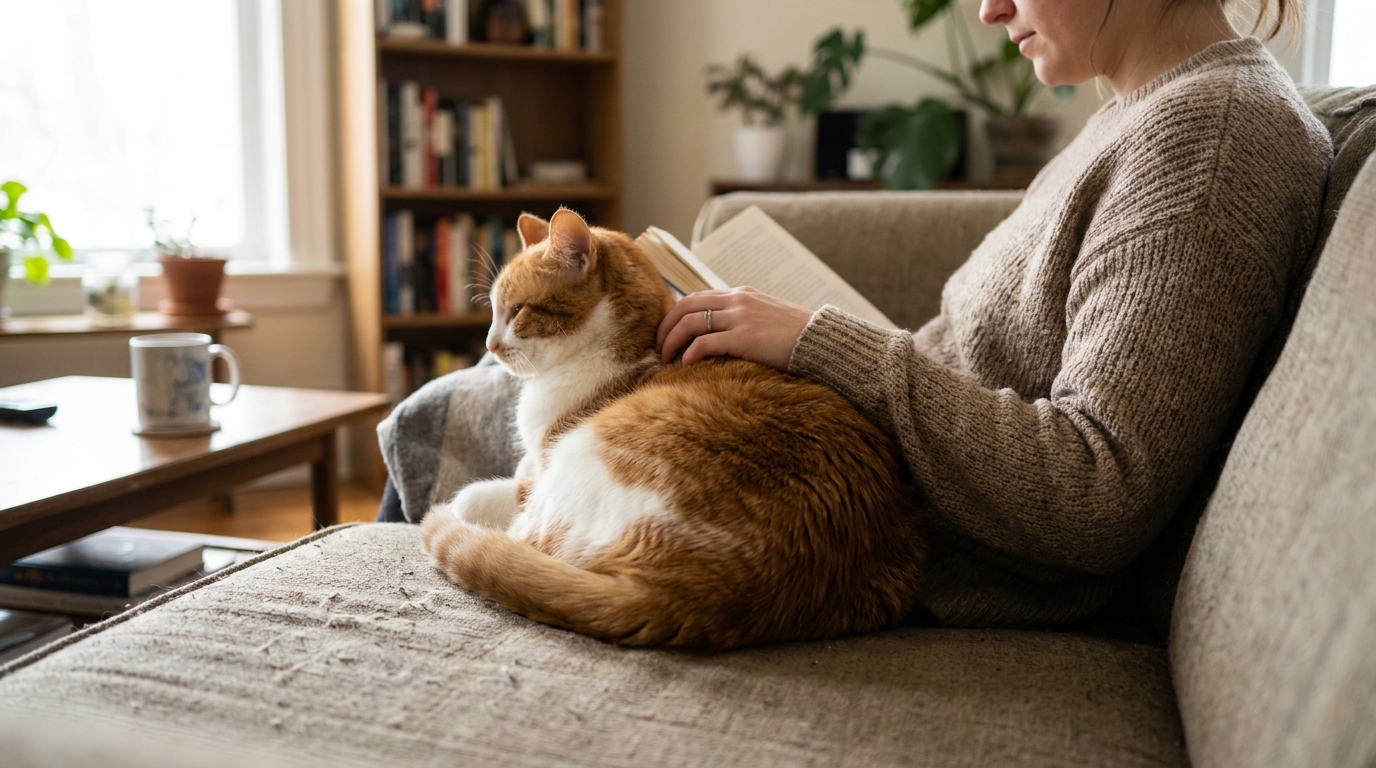
Turning their back on you is one of the highest compliments a cat can give.
Most people assume cats only trust someone when they make eye contact or sit facing them. Feline behavior experts say the opposite is often true. In cat social dynamics, sustained eye contact can be confrontational, while looking away signals peace and trust.
When your cat sits with their back to you, they're demonstrating they feel completely safe. They trust you won't attack, startle, or betray them while they're in this vulnerable position. It's a level of confidence they would never display around strangers or in stressful environments.
Researchers studying cat-human bonds have found that cats who regularly sit back-to-owner score higher on other trust indicators too. These cats are more likely to slow-blink at their owners, sleep fully exposed, and remain calm during handling.
This trust behavior develops over months or years. It's not something new cats do immediately, which makes it all the more meaningful when it appears.
But trust alone doesn't explain the next reason...
#10 — They're Claiming You as Territory
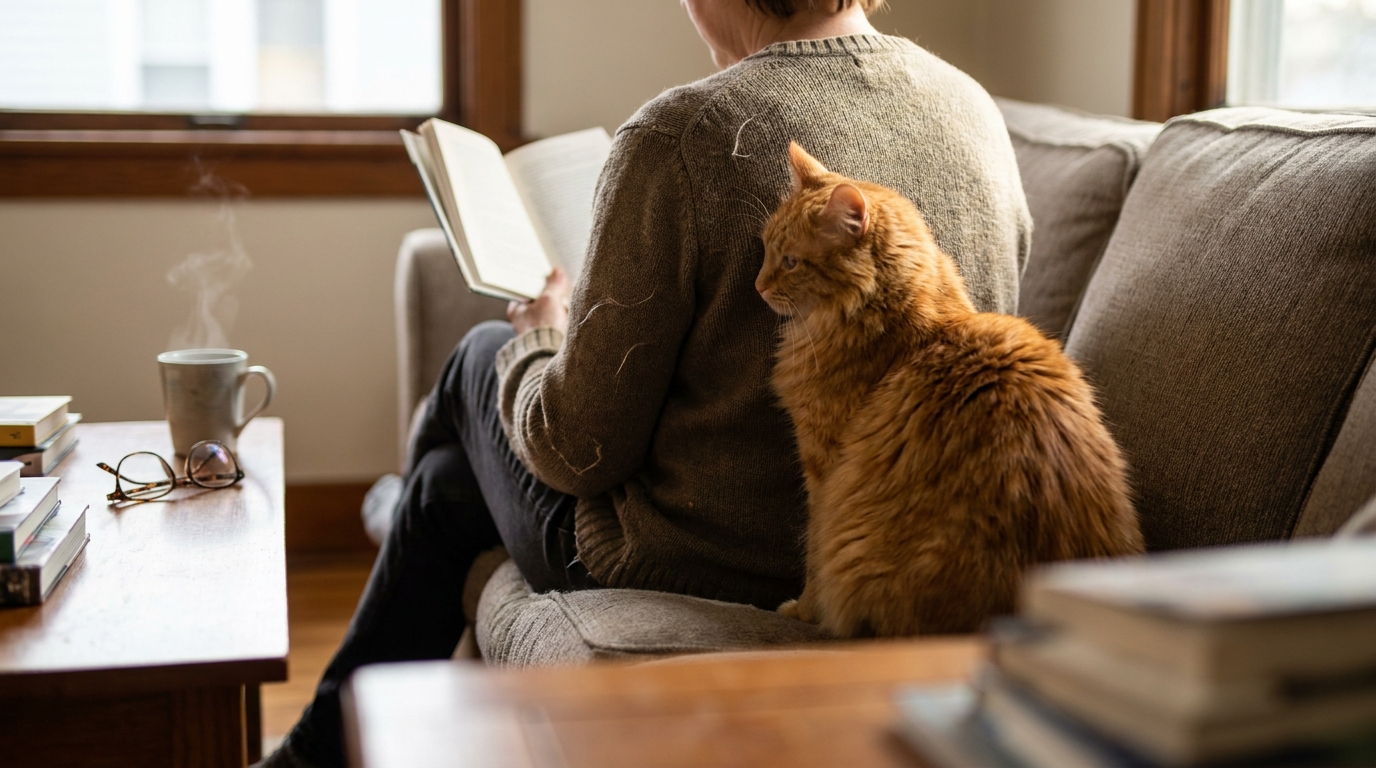
Cats have scent glands along their spine, and pressing against you marks you as theirs.
While most people know about the scent glands in a cat's cheeks and paws, fewer realize cats also have sebaceous glands along their back, particularly near the base of the tail. These glands secrete pheromones that other cats can detect but humans cannot smell.
When your cat presses their back firmly against you, they're depositing their scent. This olfactory signature tells other animals (and other cats in multi-cat households) that you belong to this particular cat. It's a territorial claim made through chemical communication.
The behavior intensifies if you've been around other animals. Cat owners often notice their cat immediately assumes the back-press position after they return from a friend's house with pets. The cat is essentially "re-marking" their human.
This scent-marking is completely different from spraying and is a normal, healthy social behavior. It's how cats build and maintain their sense of spatial ownership.
But possession isn't the only motivation, as #9 demonstrates...
#9 — They Want Attention on Their Terms
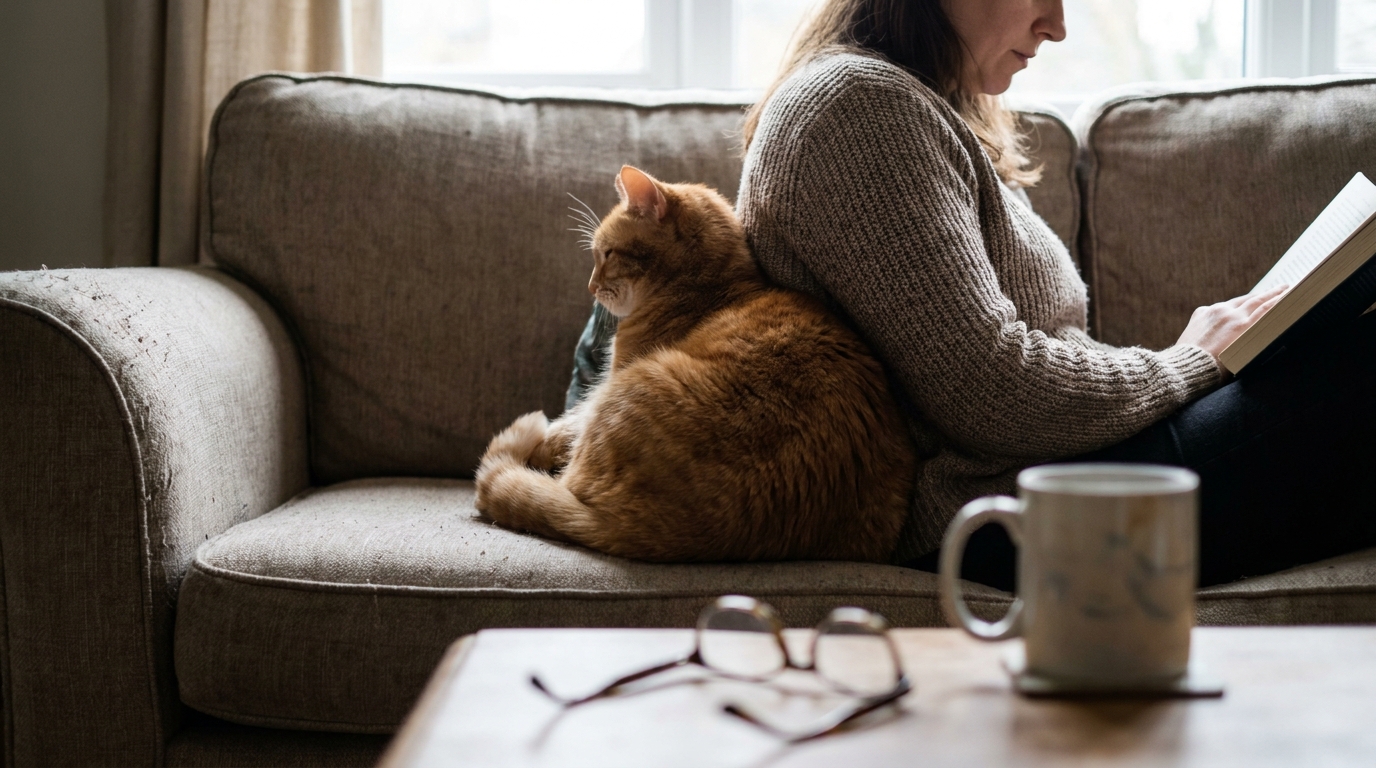
The back-press position lets cats be near you without demanding interaction.
Cats are often labeled as independent or aloof, but research shows they seek social proximity just as much as dogs do. The difference is in how they want that proximity structured. While dogs often want active engagement, cats frequently prefer what behaviorists call "passive companionship."
Sitting with their back against you satisfies your cat's desire for closeness without obligating them to interact. They're physically connected to you but face away, which signals they want presence, not petting or play. It's companionship with boundaries.
This is why many cats choose the back-press position when their owners are working, reading, or watching television. They're joining the activity by being near you, but they're not seeking to become the center of attention.
Cats who don't get this option often become either clingy (demanding constant active attention) or distant (giving up on proximity altogether). The back-press is the healthy middle ground.
And this positioning serves a very practical monitoring purpose revealed in #8...
#8 — They're Using You as a Early Warning System
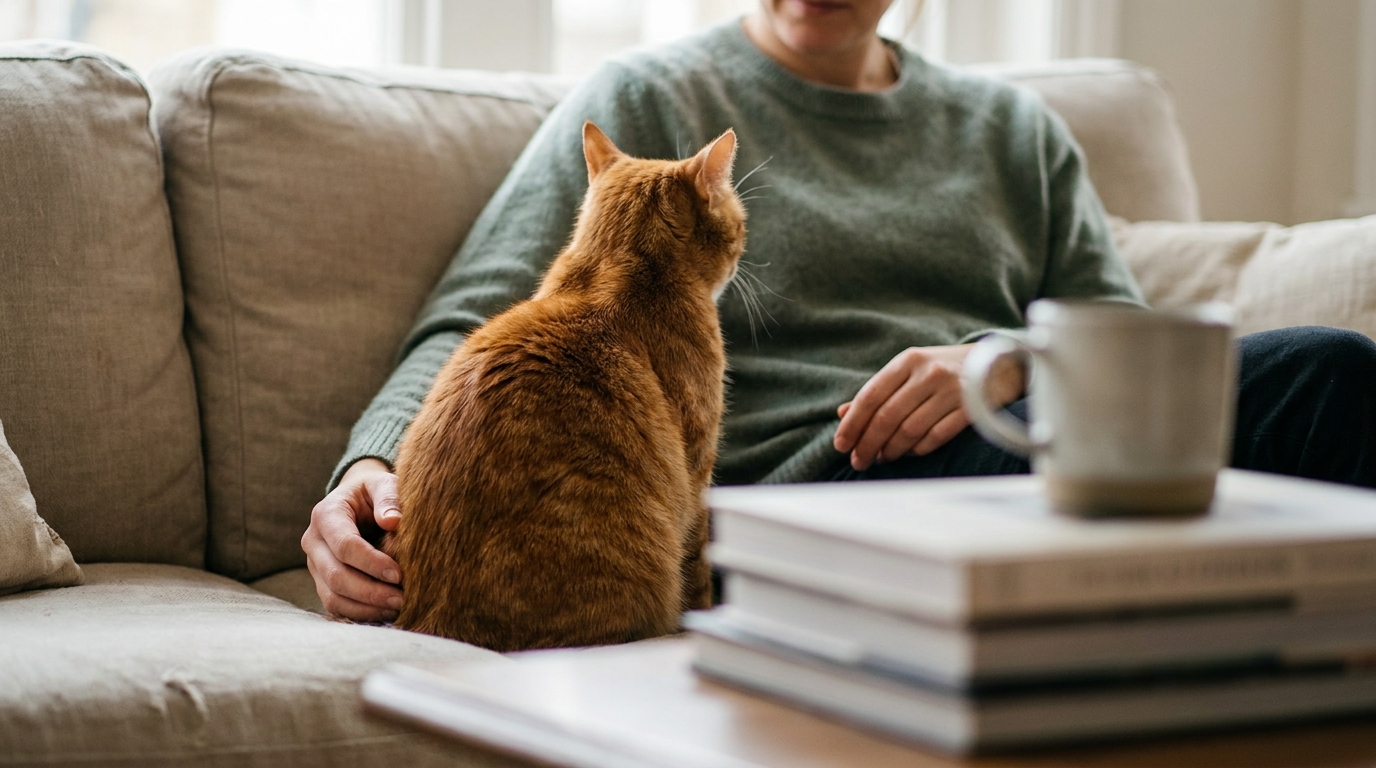
Your cat can feel your body's micro-movements through back contact, alerting them to changes before they see or hear anything.
Cats are incredibly sensitive to vibration and movement. Their skin contains specialized nerve endings called mechanoreceptors that detect the slightest shifts in pressure or position. When pressed against you, they're essentially turning you into an extension of their sensory system.
If you tense up suddenly because you heard a noise, your cat feels it instantly through the contact point. If you shift to stand up, they know seconds before you actually move. This advance warning gives them time to decide whether to stay, move, or investigate.
In multi-cat or multi-pet households, this monitoring becomes even more important. Cats use their human as a "sensor platform" to detect approaching dogs, other cats, or unfamiliar people before those threats enter their visual range.
The back-press position maximizes the contact area for vibration sensing while keeping their eyes and ears free to focus forward. It's remarkably efficient threat detection.
But sometimes the motivation is more emotional, as #7 shows...
#7 — Stress Relief Through Physical Connection
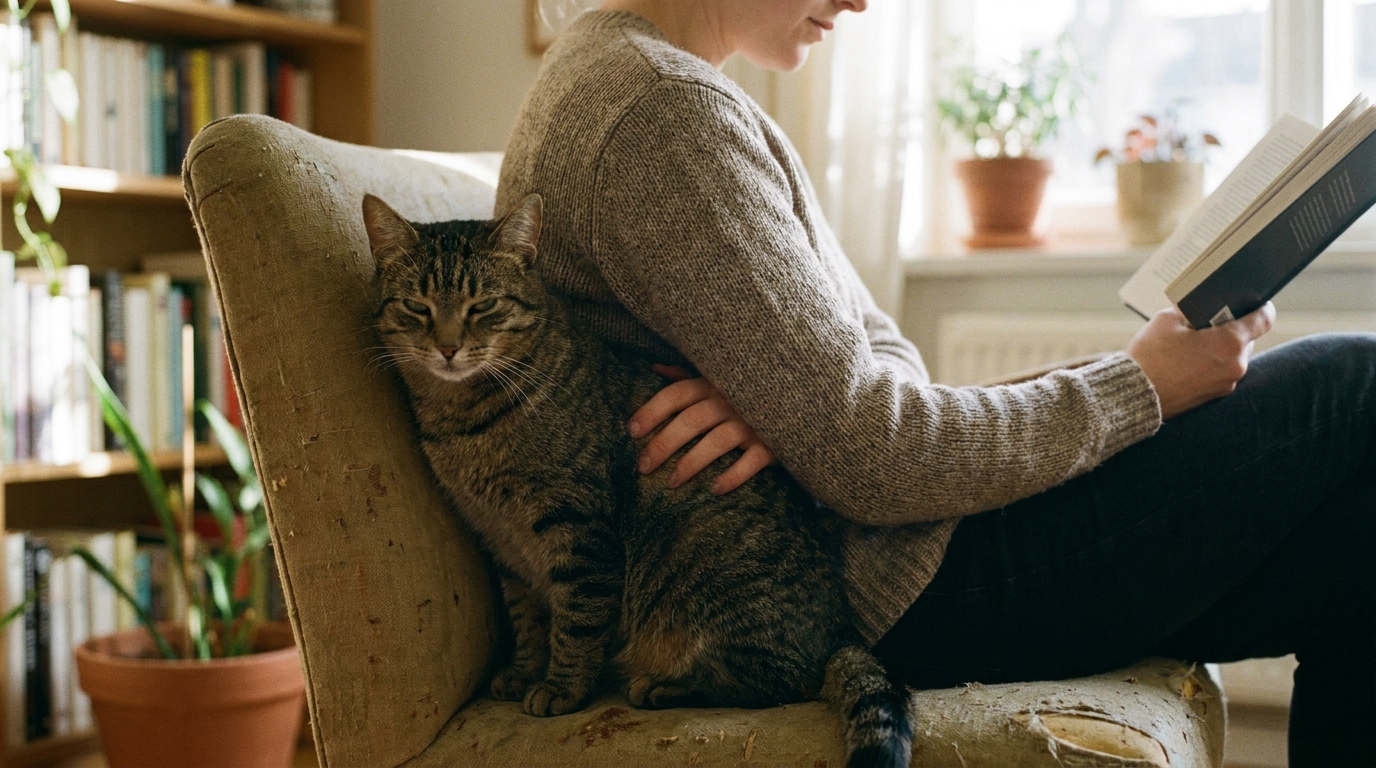
Pressure against their back activates calming responses in a cat's nervous system.
Studies on animal behavior have shown that gentle, consistent pressure reduces cortisol levels and activates parasympathetic nervous system responses in cats. This is the same principle behind anxiety wraps and thunder shirts for anxious pets.
When your cat presses their back against you, they're self-administering this calming pressure. Your body provides firm, warm, consistent contact that helps regulate their stress response. Cats in households with multiple stressors (new pets, construction noise, schedule changes) show increased back-pressing behavior.
The behavior is especially common in cats who are generally anxious or were poorly socialized as kittens. They've learned that the back-press position provides both security and physiological calming.
Interestingly, cats don't get the same effect from pressing against walls or furniture. The warmth and slight give of a human body seem to be key components. Some researchers believe the human heartbeat and breathing rhythm, transmitted through contact, also play a calming role.
And this position serves a very specific social function explored in #6...
#6 — It's How They Show Affection Without Being Vulnerable
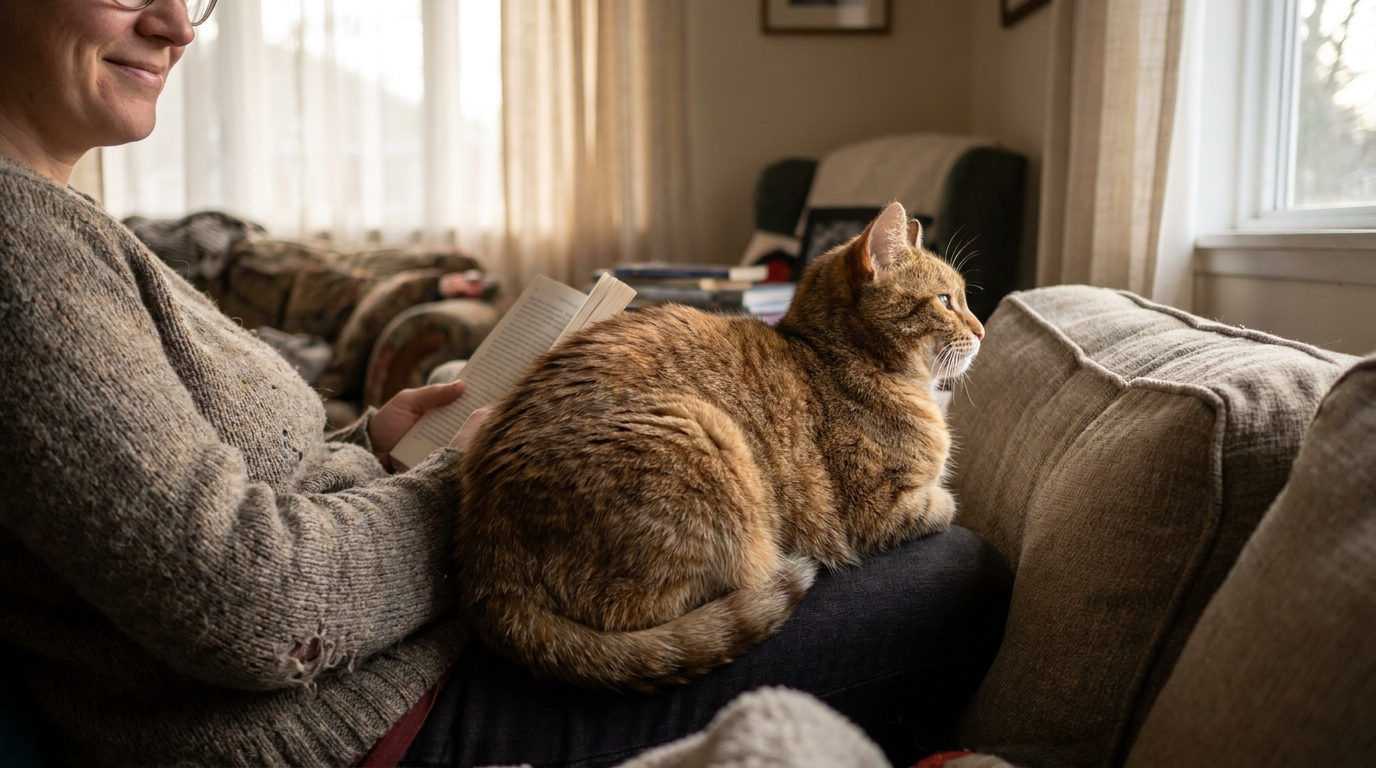
The back-press lets cats express love while maintaining their independence and dignity.
Cat behaviorists distinguish between "active affection" (head butting, kneading, purring on your chest) and "passive affection" (the back-press, slow blinks, sleeping nearby). Both are genuine expressions of bond, but they communicate different things.
Active affection is emotionally exposed and makes cats vulnerable. Passive affection lets them express the same feeling without giving up control or dignity. For cats who are naturally reserved or who didn't have extensive human contact as kittens, the back-press is their primary love language.
Many cat owners misinterpret this behavior as coldness or rejection. They want their cat to sit facing them, make eye contact, and purr. But for many cats, that level of vulnerability feels uncomfortable, and pushing for it damages the bond.
Respecting the back-press as a valid form of affection actually strengthens your relationship with reserved cats. They learn that you accept them on their terms, which gradually builds more trust.
The next reason reveals something surprising about cat social structure...
#5 — They're Treating You Like a Littermate
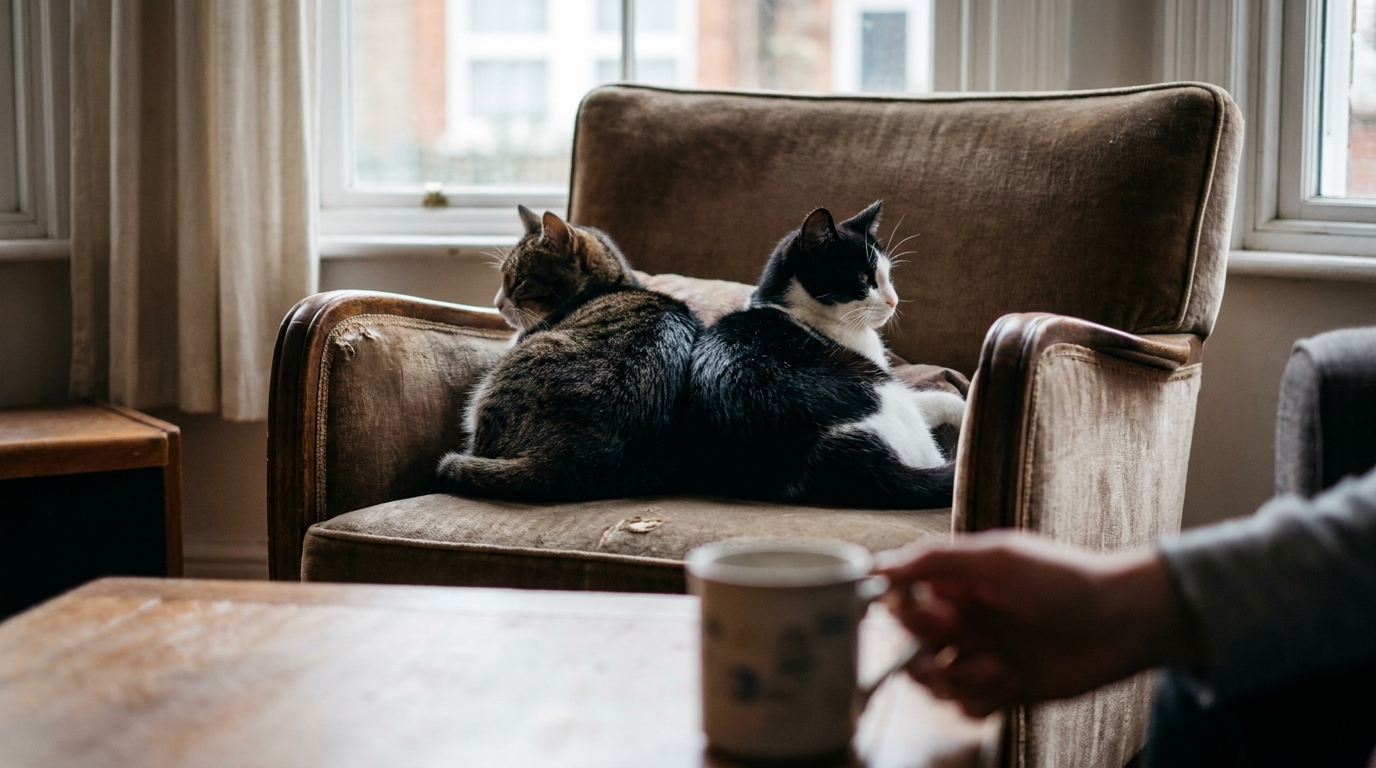
Back-to-back positioning is how cats show equality and partnership.
In cat colonies and among bonded pairs, the back-to-back rest position is remarkably common. Unlike dogs, which have hierarchical pack structures, cats form more egalitarian social groups. The back-to-back position reflects this equality—neither cat is dominant or subordinate, they're simply partners.
When your cat assumes this position with you, they're placing you in their social category as a companion, not as a parent figure or authority. It's actually a sign of respect in cat terms. They see you as a peer, not a provider they depend on but don't trust.
Kittens from the same litter often sleep and rest back-to-back once they're past the early nursing stage. The behavior persists into adulthood among cats who remain bonded. Your cat is extending that same social recognition to you.
This is also why the back-press position is more common in households where the cat is allowed substantial autonomy and isn't constantly picked up or constrained. The cat recognizes the human as respecting boundaries, which reinforces the peer relationship.
But there's a surprisingly practical reason covered in #4...
#4 — They're Protecting Their Vital Organs
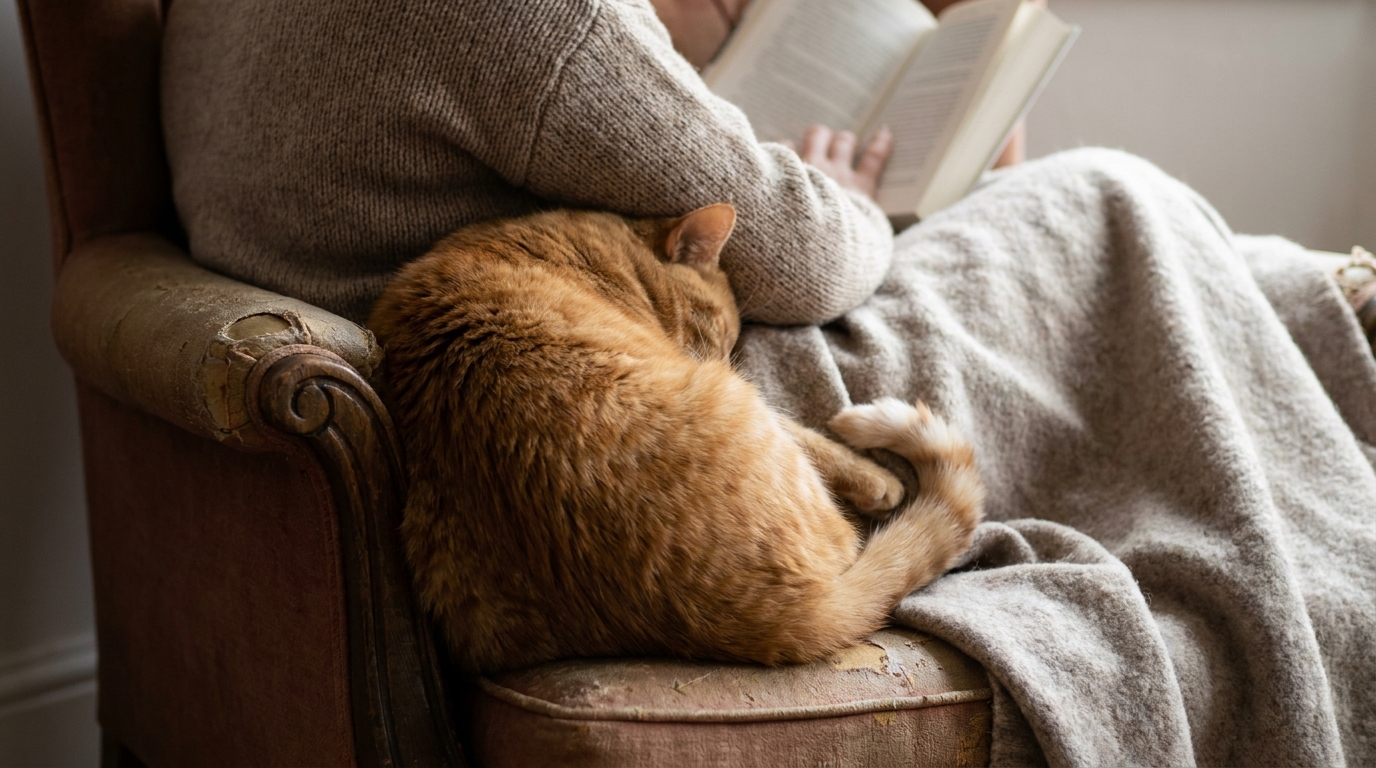
The back-press position keeps a cat's vulnerable underside protected and monitored.
A cat's belly, chest, and throat contain all their vital organs and major blood vessels. In the wild, any injury to these areas is likely fatal. Even though domestic cats aren't facing predators, millions of years of evolution have hardwired them to protect these zones.
When your cat sits with their back against you, they create a secure rear boundary while keeping their vulnerable front visible and defensible. If a threat appears, they can see it coming and either escape or defend themselves without being attacked from behind.
This is why most cats hate belly rubs, even from trusted owners. Exposing the belly requires complete trust and leaves them defenseless. The back-press position is the compromise—they're close to you and accepting touch, but on their vulnerable areas.
Cats who have experienced trauma, attacks from other animals, or rough handling are especially likely to prefer the back-press position. It represents maximum safety with acceptable proximity.
And this positioning relates to an unexpected communication method in #3...
#3 — Tail Position and Movement Communication
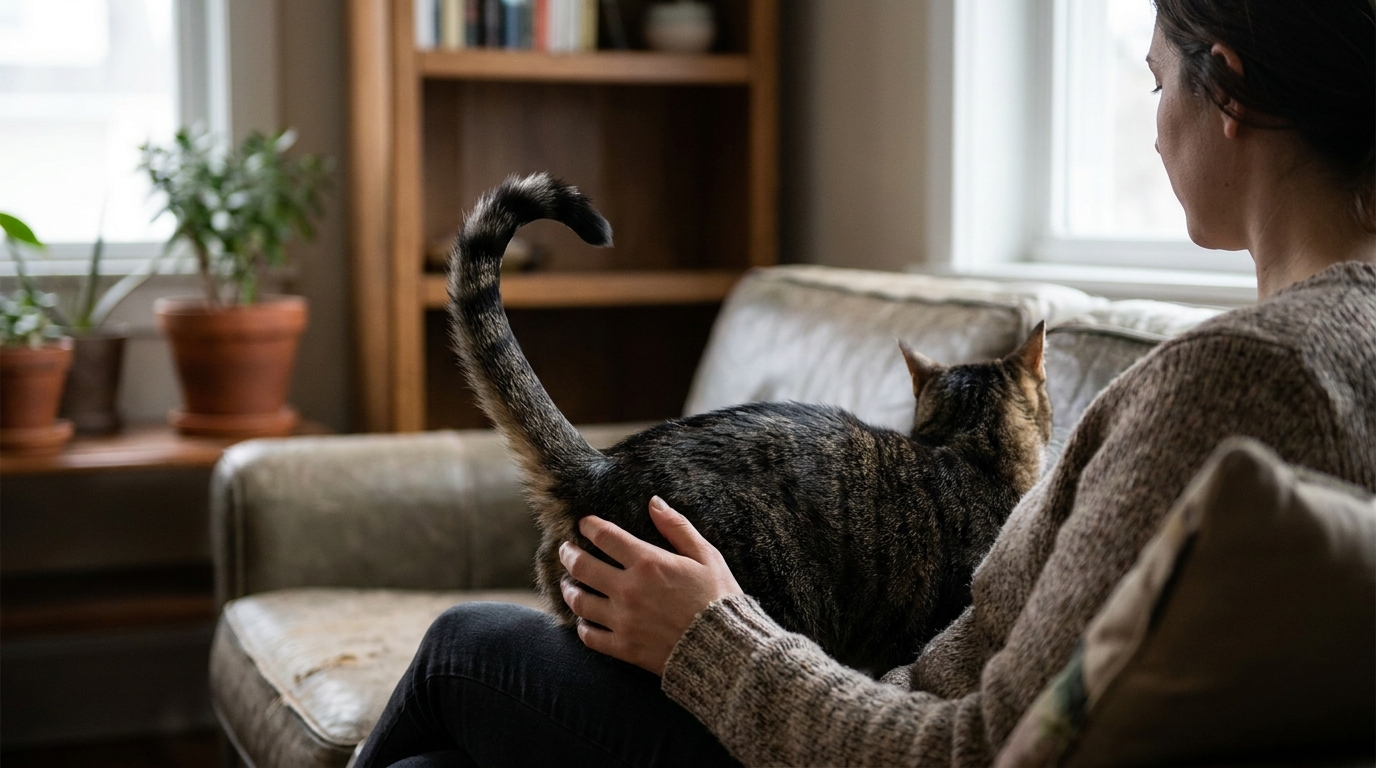
Sitting back-to-you lets cats communicate with tail signals while staying connected.
Cat tails are incredibly expressive, and their position conveys specific emotional states and intentions. When a cat sits facing you, their tail is often hidden or behind them. When they sit with their back to you, their tail becomes visible and active.
A cat pressing their back against you with their tail loosely curved is relaxed and content. A tail that's upright with a slight hook at the tip indicates happiness and engagement. A slowly swishing tail suggests they're monitoring something interesting but not threatened.
Experienced cat owners learn to "read" their cat's emotional state through tail signals while the cat maintains the back-press position. It's a form of non-verbal communication that happens specifically because of the position, not despite it.
Young cats and kittens are still learning tail control and often use more exaggerated movements. Adult cats develop more subtle signals that their trusted humans learn to interpret. The back-press position essentially puts the communication "display" in your line of sight.
Veterinary behaviorists recommend paying attention to these tail signals because they often indicate discomfort or stress before it escalates into hiding or aggression.
The next reason is one most cat owners never consider...
#2 — Strategic Position for Quick Departure
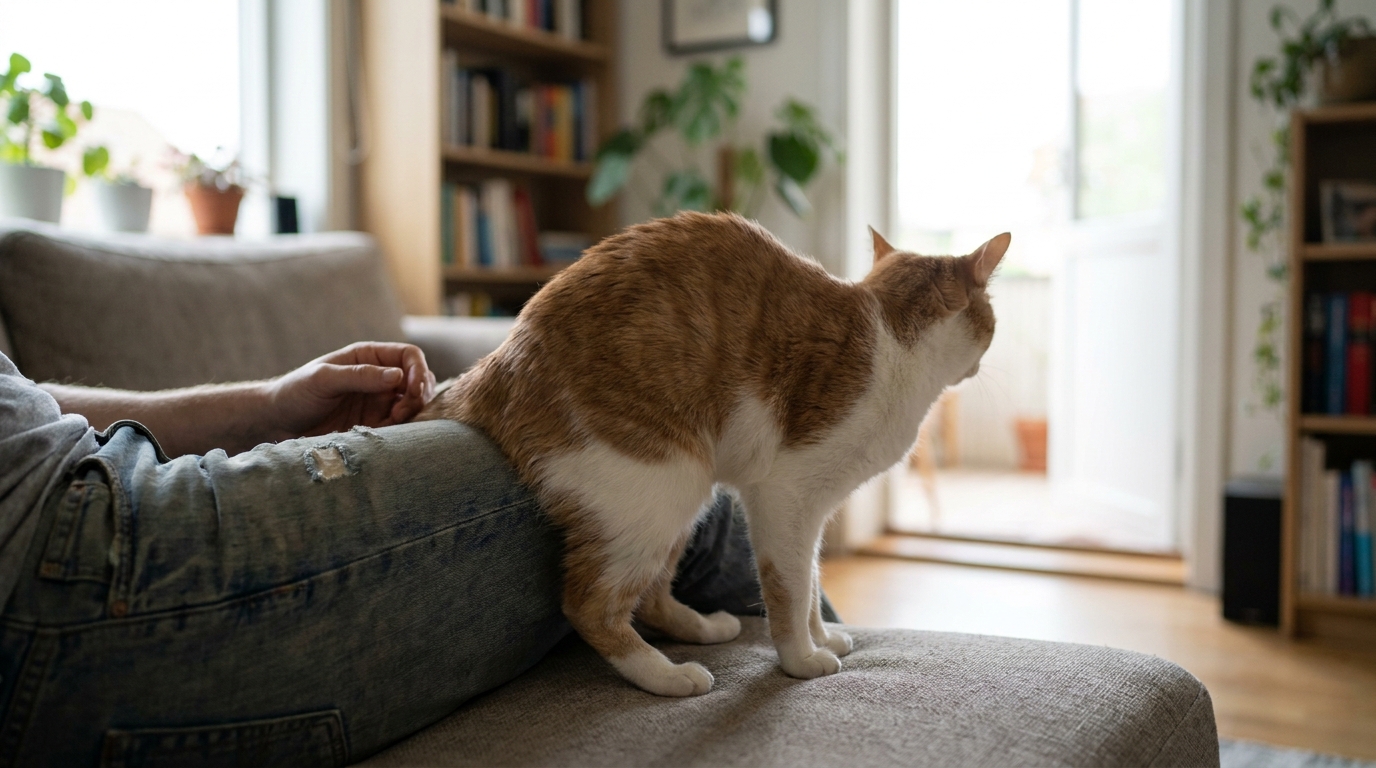
The back-press lets cats launch themselves away instantly if needed.
While your cat trusts you, their survival instincts are always running in the background. The back-press position is biomechanically ideal for rapid movement. With their back against you and their legs positioned forward, they can push off and launch themselves away in any forward direction within a fraction of a second.
Compare this to sitting on your lap or being held, where the cat must first twist, struggle free, and then establish footing before they can run. The back-press requires no adjustment—they're already in launch position.
Cats in households with loud noises (young children, door slamming, sudden visitors) show a strong preference for the back-press over lap-sitting. They're staying close to their human while maintaining escape readiness.
This isn't a sign of fear or poor bonding—it's simply smart positioning that lets cats satisfy both their social needs and their safety instincts simultaneously. Even the most confident, well-adjusted cats maintain this awareness.
Older cats and cats with mobility issues are sometimes an exception. They may choose lap-sitting more often because they're less concerned about quick escapes, or they've calculated that lap-sitting provides better overall comfort than the benefits of quick departure capability.
And the number one reason reveals something surprising about how cats see us...
#1 — You're Part of Their Territory Map
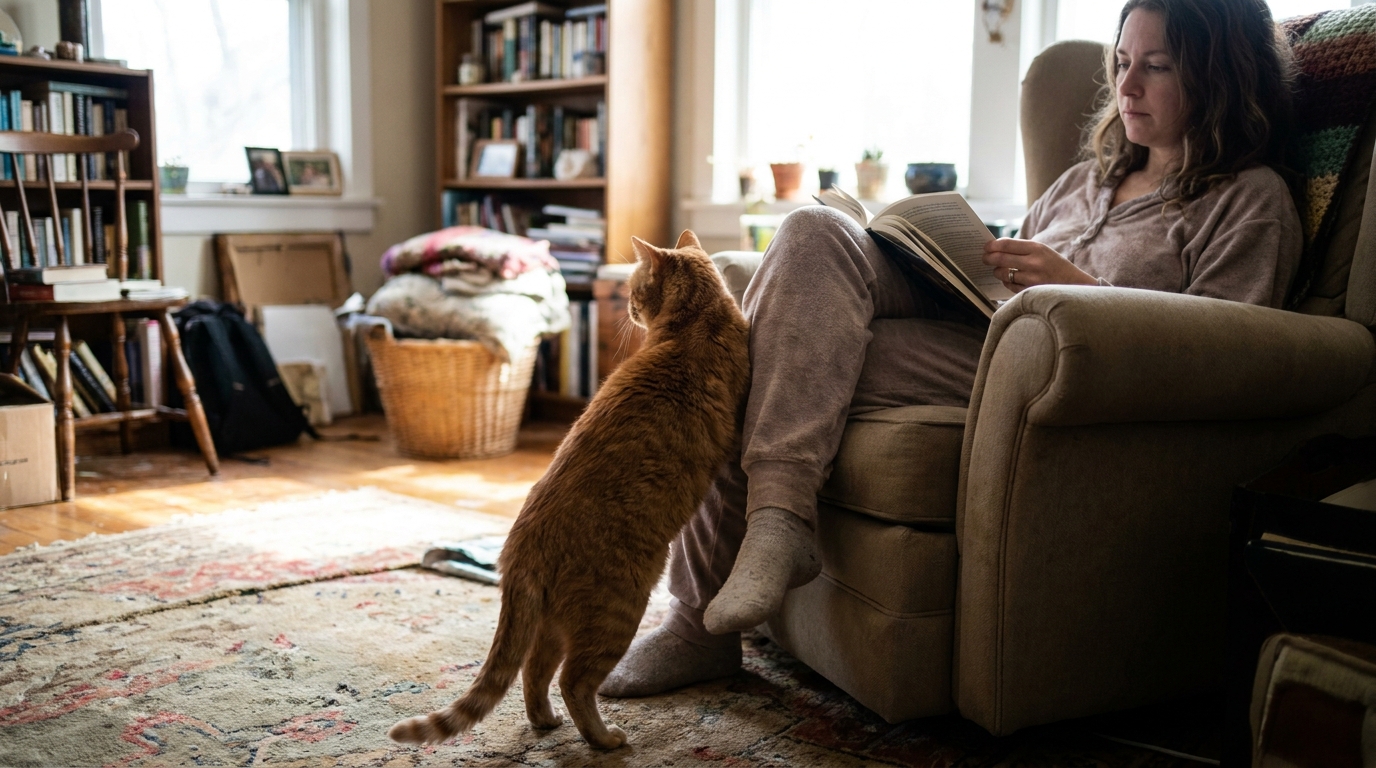
Your cat presses their back against you because you're a landmark feature in their territorial understanding.
Recent research into cat cognition shows that cats don't just view their home as a space—they build detailed mental maps with specific features, pathways, and reference points. You're not just an occupant of their territory; you're actually part of the territory itself.
When your cat sits with their back against you, they're positioning themselves relative to a known, trusted landmark. Just as they might sit against a wall, doorframe, or piece of furniture, they use your body as a spatial reference point. But unlike inanimate objects, you provide warmth, security, and movement feedback.
Cats who have lived with the same owner for years develop remarkably precise territorial maps that include the owner's usual positions and movements throughout the day. They know where you typically sit for morning coffee, where you work, where you watch television. The back-press happens at these predicted locations because the cat has integrated you into their environmental understanding.
If you change your routine significantly—working from a different room, sitting in a different chair—you'll often notice your cat seems confused or takes several days to resume the back-press behavior. They're updating their territorial map to account for your new position.
This territorial integration is one of the deepest forms of bonding in the cat-human relationship. Your cat doesn't just tolerate your presence in their space—they've fundamentally incorporated you into how they understand and navigate that space.
The Bottom Line
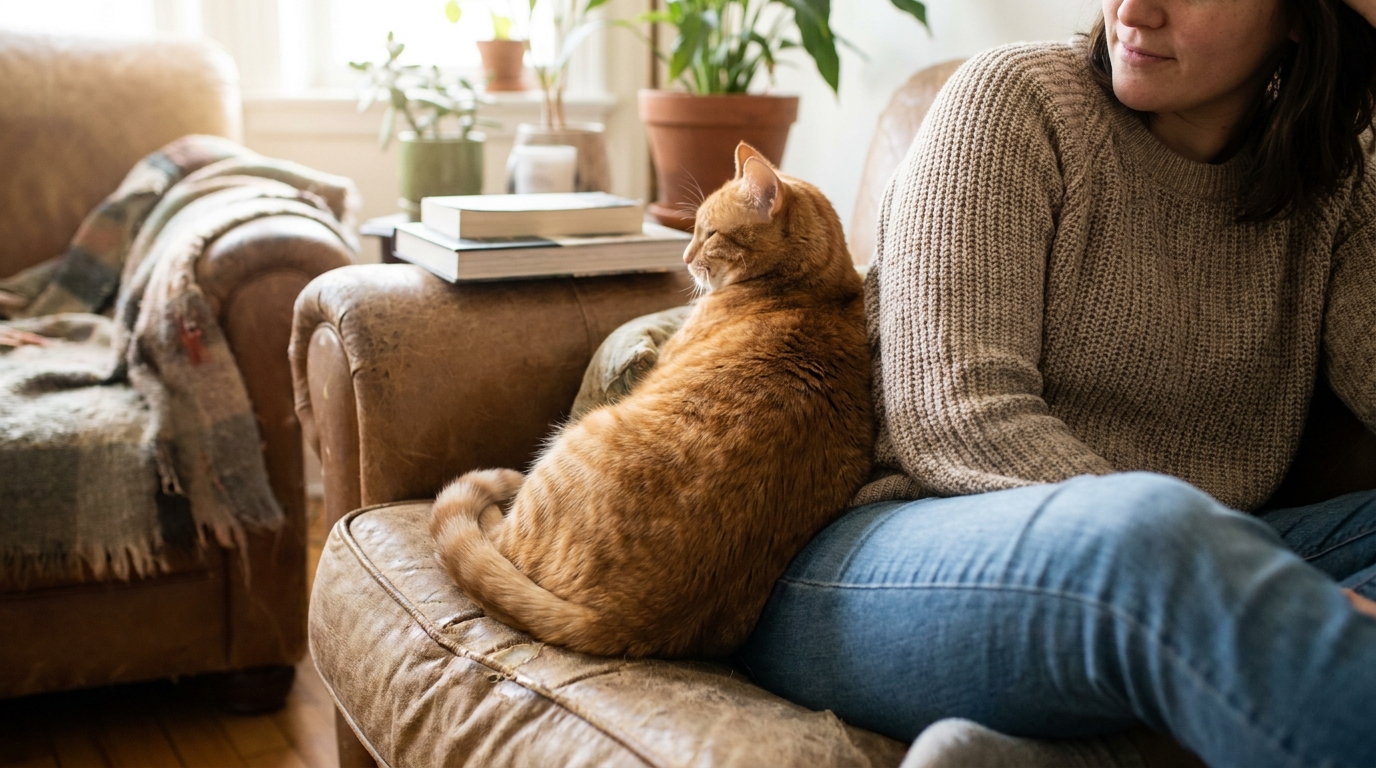
The next time your cat sits with their back pressed against you, recognize it for what it is: a complex behavior that combines trust, tactical awareness, temperature regulation, and deep social bonding. It's not rejection or aloofness—it's actually one of the most sophisticated forms of connection cats offer.
The back-press position meets multiple needs simultaneously: safety, warmth, affection, and territorial security. Cats who choose this position have essentially told you that you're a trusted part of their world, both socially and spatially.
Rather than trying to reposition your cat to face you or sit on your lap, appreciate the back-press as the meaningful gesture it is. Some of the strongest cat-human bonds are expressed through this simple, quiet form of contact.
Did we miss one? Drop it in the comments.
- 10 Tiny Ways Cats Show They Trust You That Are Easy to Miss in Everyday Life
- Feline Psychology Says Cats Who Relax More Quickly Around One Person May Be Revealing Who Makes Them Feel Safest
- 12 Signs Your Cat Has Made You Part of Their Daily Routine and Notices When You’re Missing
- 10 Quiet Ways Cats Ask Their Favorite Human for Reassurance Without Making a Sound