13 Vet-approved Signs your Cat Trusts you More than Anyone Else
Most people assume their cat is simply tolerating them - sitting nearby out of habit, purring for food, or rubbing against their legs on autopilot. Turns out, they're completely wrong.
Cats are almost impossibly selective about who earns their trust, and the signals they send are rooted in instincts that go back thousands of years. Most of these signs look nothing like what you'd expect from an affectionate animal - and by the time you hit #1, you'll never look at your cat the same way again.
#13 - They Greet You at the Door With a Raised Tail
Most people think only dogs do the excited greeting routine. That's a mistake.
A nervous cat watches you from a distance. A cat that comes running the moment you walk in? That's trust in motion.
But the tail is the real tell.
"When a cat trusts you, their tail will be relaxed and often held up, which reveals they are actively interested in an interaction," says Dr. Stephanie Borns-Weil, assistant clinical professor at Cummings School of Veterinary Medicine at Tufts University.
A raised, gently curled tail is one of the most overlooked trust signals in feline body language. It's not random - in the wild, cats only display this kind of open posture toward those they consider completely safe.
But #12 is even harder to fake.
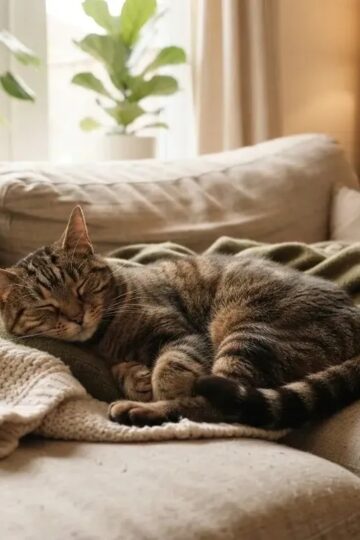
#12 - They Choose to Sleep On or Near You
Plenty of cats sleep near their owners. What most people miss is how they sleep.
Cat naps aren't just quick, light snoozes. A cat that feels safe enough to sleep soundly around you is showing you something deeper than affection.
A cat that enters a deep, fully relaxed sleep on your lap or beside you is making a profound statement - prey animals only let their guard completely down around those they'd trust with their life.
Still, #11 might be the one that changes how you see your daily routine.
#11 - They Follow You From Room to Room
This one surprises a lot of people, because cats have a reputation for independence. That reputation is partly misleading.
"If your cat follows you from one room to another, it is a very good indication of trust. In the wild, cats do not follow other animals unless they feel secure and protected."
When a cat follows you around, it is choosing you as its safe person.
A cat can want to be near you without wanting to be petted constantly. Even if they skip the cuddles, their choice to stay close still shows real trust.
This room-to-room shadowing is your cat quietly saying you're the anchor of their world.
And #10 is a signal almost every owner overlooks completely.
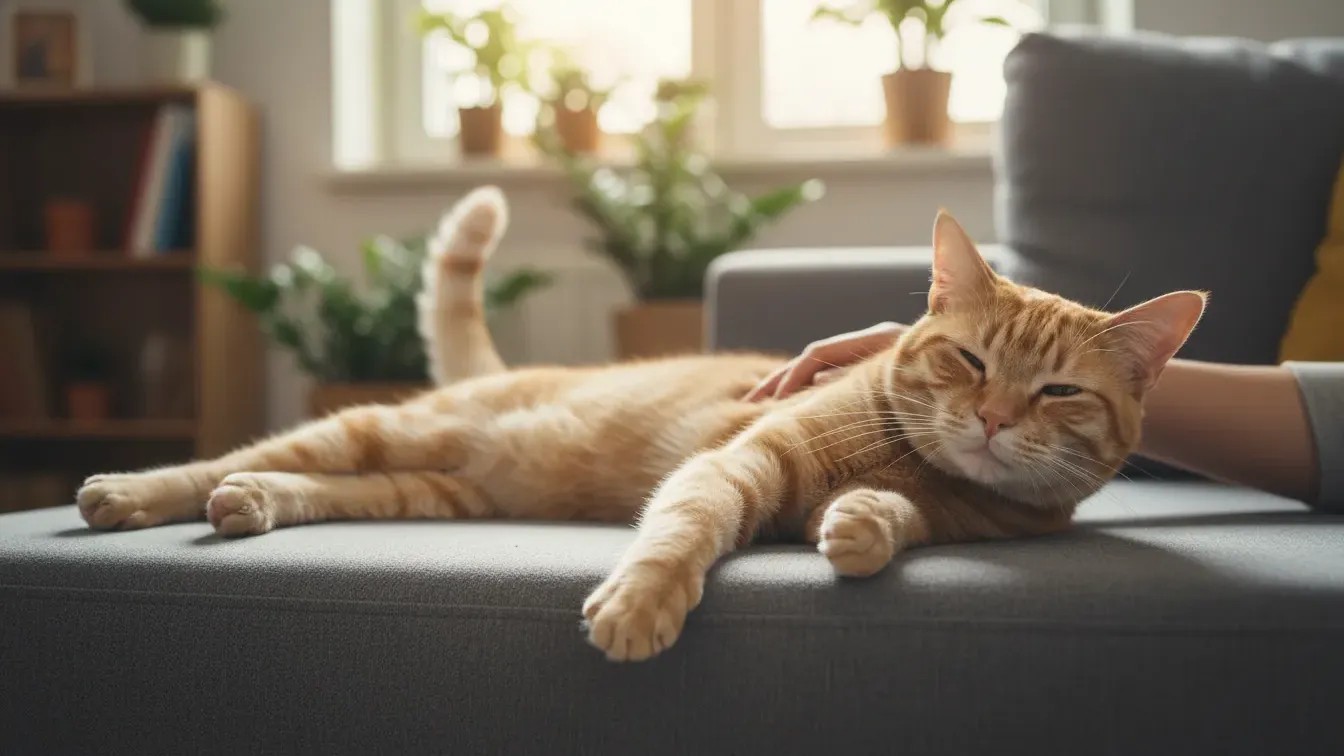
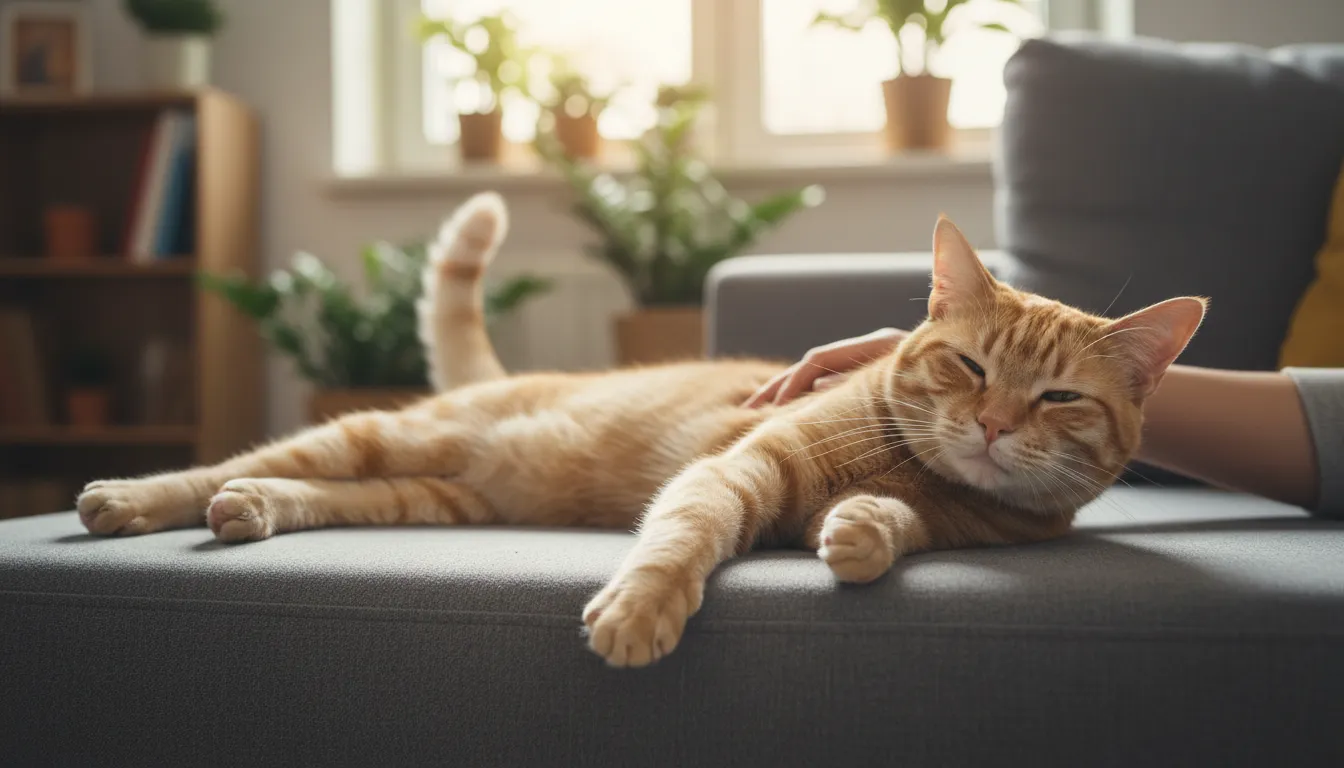
#10 - They Show You Relaxed, "Neutral" Body Language
Tense muscles, wide eyes, flattened whiskers - that's a cat on alert. The opposite tells a completely different story.
"Cats with their ears tilted forward, smooth fur, whiskers in a relaxed neutral position, and slow movements all demonstrate that the cat feels safe and trusting with no need for defensive tension."
A cat that truly feels at ease avoids defensive postures like crouching or tucking itself tightly away. Instead, it stretches out and lounges nearby like it has nothing to guard against.
The absence of tension IS the signal - most owners look for dramatic displays and completely miss this quiet one.
Quick Compare
- Trusting cat: tail up, ears forward, slow blinks, smooth fur
- Wary cat: flattened ears, dilated pupils, puffed tail, crouched body
- Trusting cat: stretches out fully in the open
- Wary cat: hugs the wall or hides from view
Wait until you hear what #9 actually means.
#9 - They Meow at You Specifically
Here's something most cat owners don't know: adult cats almost never meow at other cats.
Purring and other vocalizations show that cats trust you and feel comfortable in your presence. Researchers have found that adult felines largely developed their meowing vocabulary specifically to communicate with humans.
When your cat meows at you, they've essentially built a private language just for your relationship. That's not something they'd invest in someone they didn't deeply trust.
The variety of tones - chirps, trills, slow meows - each carry meaning. And they're directed at you alone.
#8 takes trust to a whole new level.
#8 - They Let You Do Things No One Else Can
This one is arguably the clearest proof that your cat trusts you specifically - not just humans in general.
"This is one of the biggest signs your cat trusts you. Maybe they let you trim their nails or hold them or, in some extreme cases, only come out of hiding when you are around."
Your cat is willing to be physically vulnerable - restrained, handled, or exposed - with you and absolutely no one else. That's not tolerance.
That's the deepest form of species-level trust a cat can extend to a human. If your cat hides from everyone but walks calmly to you, you've earned something rare.
Here's where it gets a little strange - #7 might make you rethink that "gift" on your doorstep.
#7 - They Bring You "Gifts"
Yes, it's gross. No, you shouldn't be offended.
In fact, you should be flattered.
Your cat may "gift" you with prey - a toy mouse, or something they caught outside. This comes from a deep feline social instinct.
In cat colonies, individuals share resources only within their trusted inner circle.
When your cat drops a dead bird at your feet, they're including you in their most primal act of care. They're treating you as family - not just a provider.
Worth Knowing
- Mother cats bring live prey to kittens to teach hunting skills.
- Feral colonies typically share caught prey only within their trusted core group.
- Indoor cats often substitute toys, socks, or leaves when prey isn't available.
- The behavior taps into the same social instinct as grooming and sleeping close by.
Many owners shudder at this gesture. Feline behaviorists consistently rank it as one of the highest compliments a cat can pay a human.
#6 is even more intimate than it sounds.
#6 - They Groom You (Allogrooming)
Mutual grooming - called allogrooming - is something cats only do with animals they fully accept as part of their group.
So when your cat grooms you, or lets you groom them, it's more than habit. It's a sign they see you as family.
Kneading or licking their owner is a classic sign of trust and affection. It shows the cat feels completely safe in your presence.
Licking your hair, hands, or face isn't just a quirk - it's your cat formally welcoming you into their social group. It's one of the most intimate gestures in the feline world.
#5 might be happening in your lap right now.
#5 - They Knead on You ("Making Biscuits")
If you've ever had a cat rhythmically pressing their paws into your lap, you've witnessed a deeply emotional behavior.
As adult cats, kneading becomes a comfort behavior tied to feelings of security and happiness. It's an instinct that echoes back to their mother.
The fact that your cat re-enters that kitten-level state of safety specifically around you is profoundly significant.
This isn't mindless. It's a cat who has decided, on a biological level, that you are their safe place.
#4 confuses almost everyone - until you know the truth.
#4 - They Turn Their Back to You
This one confuses almost every cat owner. A cat turning away from you is actually one of the most flattering things they can do.
Sitting near you but facing away is a clear sign your cat likes you. In feline terms, it means they're not threatened - they don't need to watch you.
Rolling onto their backs, legs up, belly out, is another huge display of trust. Their body is vulnerable, but they know you're safe.
A cat that plants itself in front of you and faces away is essentially saying, "I trust you at my back."
In the wild, that kind of vulnerability only happens within a bond of absolute confidence. Don't take it personally - take it as a compliment.
#3 has a secret language behind it.
#3 - They Headbutt You (Bunting)
That gentle - or sometimes forceful - press of their forehead against yours isn't random. It's one of the most loaded gestures in cat social behavior.
Bunting is usually a friendly, bonding behavior where cats mark you with their scent. They have pheromone glands in their cheeks, foreheads, and chins.
Humans can't smell those pheromones, but other cats can. It tells every cat around that you've been claimed.
By headbutting you, your cat is literally marking you as family in a language every other cat will understand.
In the wild, cats only engage in this kind of scent-bonding with members of their trusted colony. This is not a casual gesture.
#2 is the one people get wrong the most.
#2 - They Expose Their Belly to You
Here's where most people make a critical mistake - and it costs them a scratch.
When your cat rolls over and exposes their belly, you're seeing a major trust signal. It's their most vulnerable area, completely exposed.
A relaxed cat with their belly out is saying, "I trust you." But that doesn't necessarily mean "go ahead and touch me."
The belly exposure itself is the declaration of trust - not an invitation for a rub.
Some cats become defensive the moment you reach for that spot. The cat who shows you their belly has decided you pose zero threat - that's a completely different category of relationship than a cat who merely tolerates you.
And #1... this is the one vets always mention first.
#1 - They Slow-Blink at You
This is the one vets and feline behaviorists point to above everything else - and most people have no idea what it means.
"When a cat slow blinks at you, it is a sign of immense trust and respect. It takes time for cats to get comfortable around a new person, but when they share this behavior with you, it means a bond has been formed."
The slow blink is a sign of trust. Your cat is showing that they are relaxed and comfortable in your presence.
Cristin Tamburo, certified feline behavior consultant
Closing their eyes - even partially - in front of another creature is something a cat will only do when they feel completely safe.
Fast Facts
- The slow-blink effect was documented by psychologists at the Universities of Sussex and Portsmouth.
- The findings were published in the journal Scientific Reports in 2020.
- Cats were more likely to approach a person's outstretched hand after being slow-blinked at.
- Researchers compared the expression to a genuine, eye-crinkling human smile.
You can send the same message back by slow-blinking at your cat - also known as "cat kisses" or the "love blink." Try it tonight.
The response will tell you everything.
The Bottom Line
Cats don't hand out trust cheaply - and they never fake it.
Every behavior on this list, from the slow blink to the 3 a.m. kneading session, is your cat communicating something deeply intentional.
The slow blink remains the gold standard, but the full picture is richer than any single sign.
A cat who follows you, grooms you, exposes their belly, and brings you "gifts" has extended a level of trust most animals never offer humans.
The real mistake most owners make is assuming their cat is aloof. Turns out, they've been saying "I trust you" all along - in a language nobody ever taught us to read.