15 Breed Traits That Make Your Cat the Calmest Companion You Have Ever Had
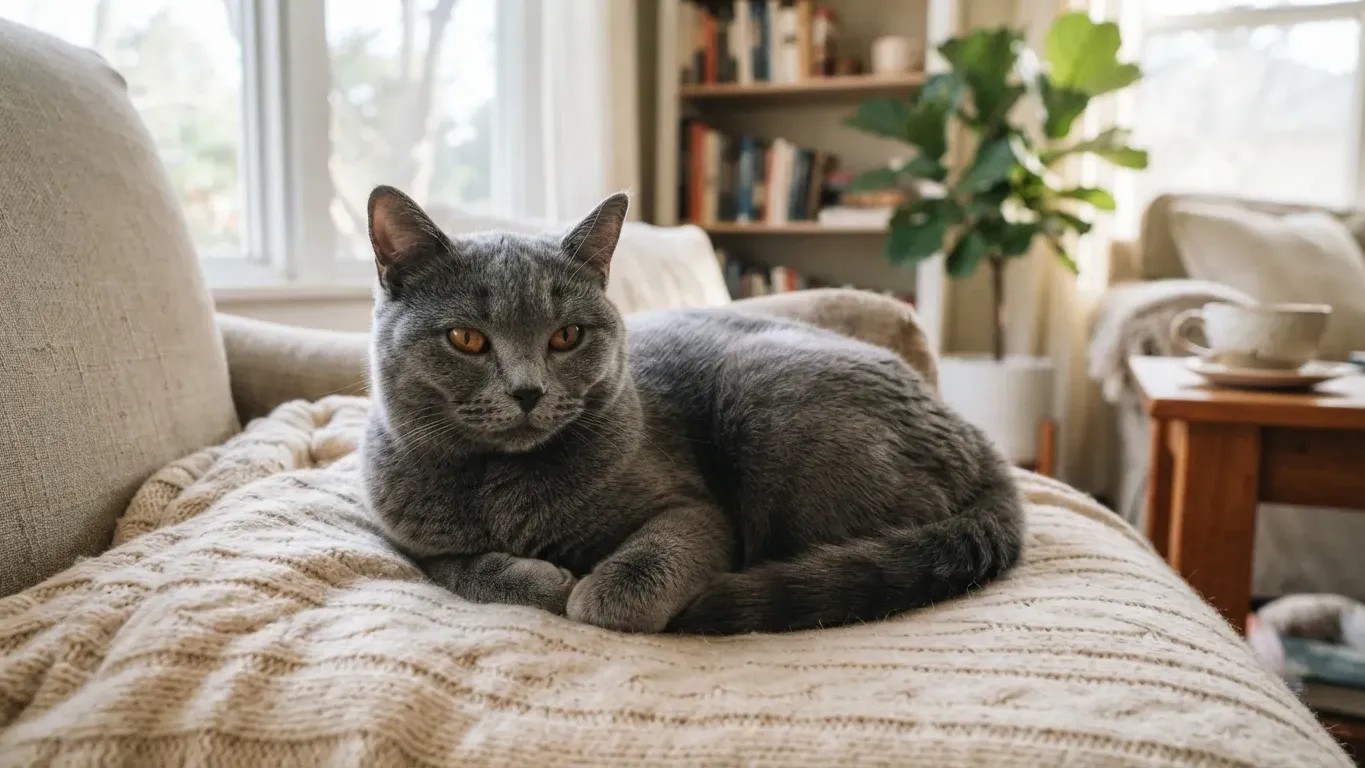
Most people assume the calmest cat is just the one that sleeps twenty hours a day. But scientists who've studied more than 4,300 cats across dozens of breeds found something stranger: real calm has almost nothing to do with being tired.
It's a mix of genetics, breeding history, and specific behavioral traits most owners never think to look for. Some of the chillest cats alive are also playful, social, and eerily tuned into your emotions - and the list below breaks down exactly why.
#15 - Intentional Calm Breeding: The Genetic Foundation
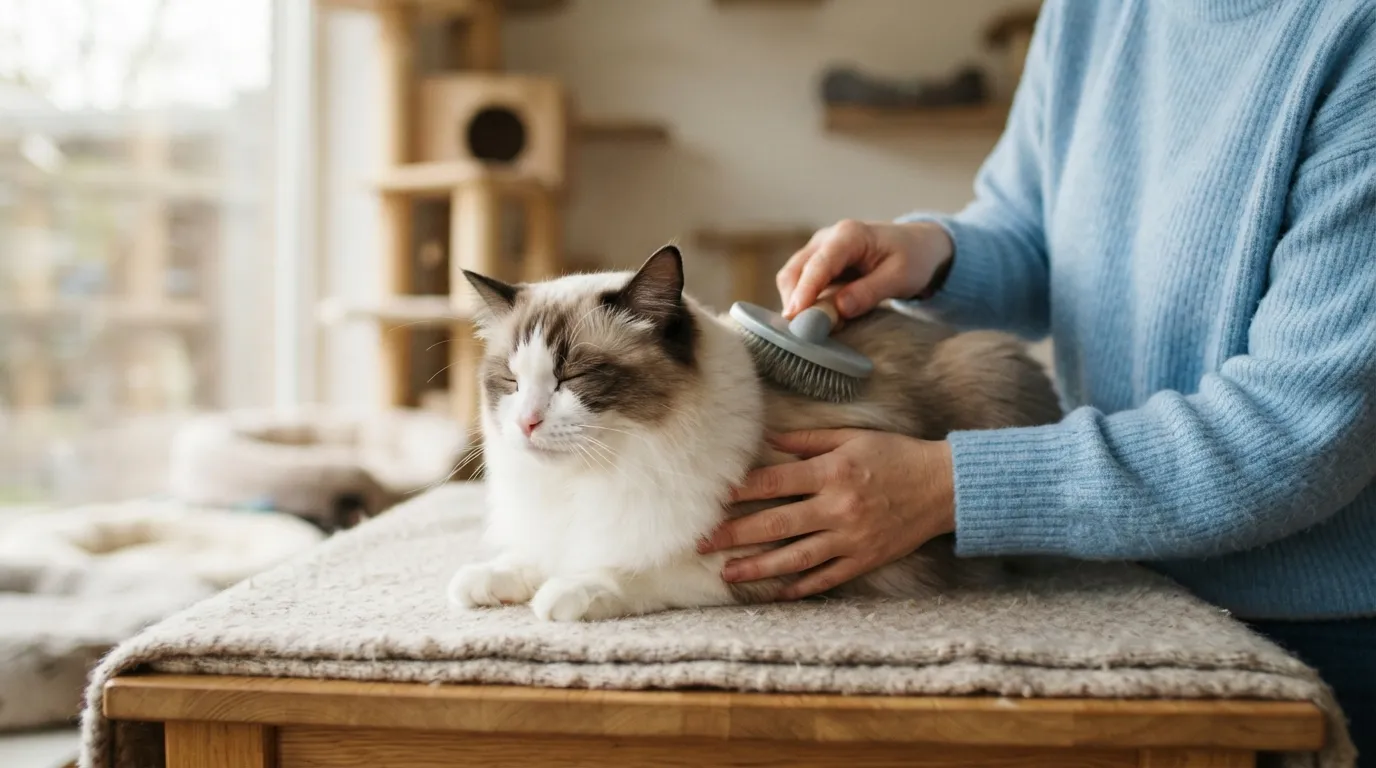
Calm in cats isn't an accident - it's often by design. Ragdoll breeders, for instance, selected for cats that stayed relaxed while being handled and brushed.
That deliberate choice is what separates a truly serene breed from a cat that's simply worn out.
Breed differences suggest a genetic background for personality, and hard data backs it up. A dataset of over 4,300 cats, studied through a validated questionnaire, found that feline personality breaks into seven distinct traits: fearfulness, activity/playfulness, aggression toward humans, sociability toward humans, sociability toward cats, excessive grooming, and litter box habits.
Fast Facts
- Study sample: over 4,300 cats across many breeds
- Method: validated behavioral questionnaire
- Seven personality traits identified in total
- Categories include fearfulness, sociability, aggression, and grooming habits
The biggest takeaway: calm is heritable. If a breed has been calm for generations, its kittens carry that blueprint before they even open their eyes.
This is the bedrock trait that makes everything else on this list possible. But there's more to it than DNA - the next trait reveals the behavioral side of the equation.
#14 - Low Reactivity to Environmental Stressors
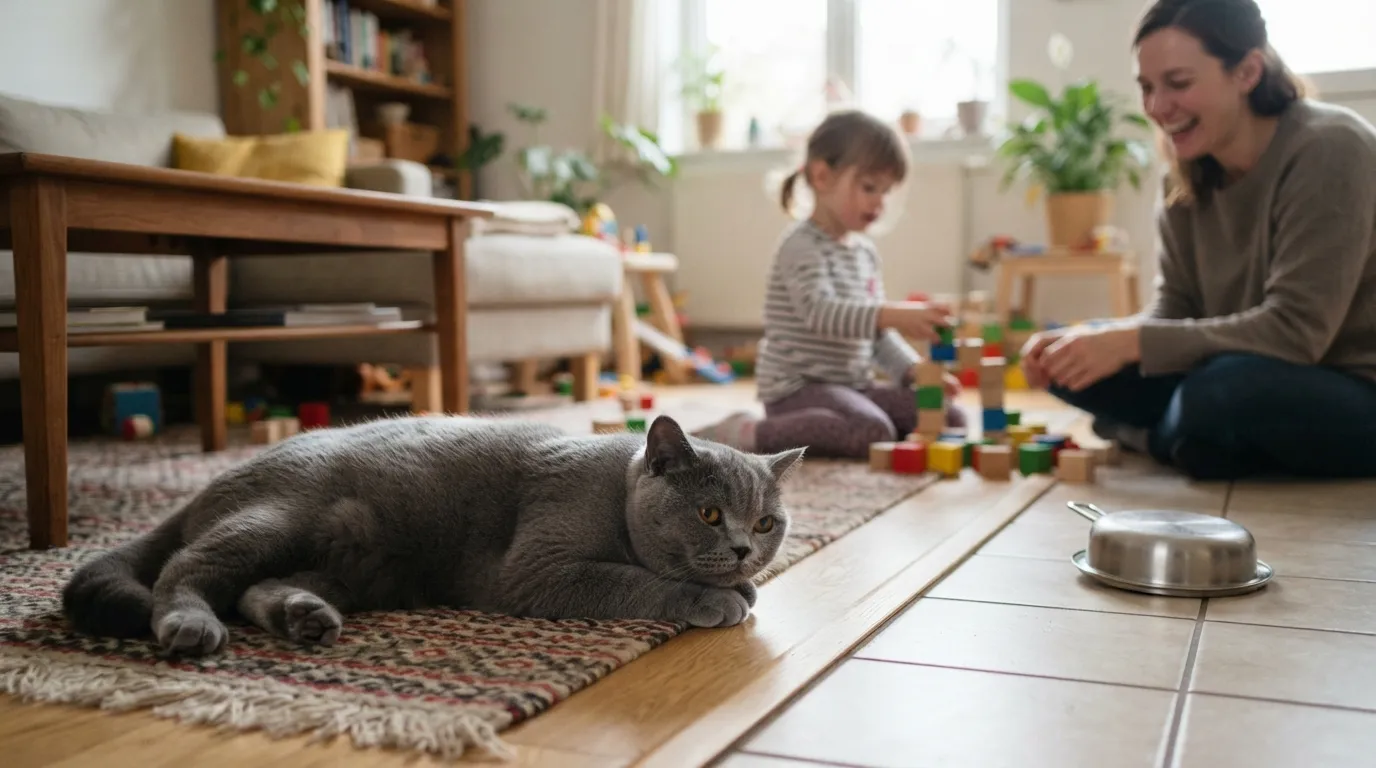
Most cats bolt at the sound of a dropped pan. Genuinely calm breeds don't even flinch.
This isn't the same as being sleepy or lethargic. Low reactivity means the cat's nervous system genuinely reads household noise and movement as non-threatening - a real neurological difference, not just a personality quirk.
The British Shorthair and Scottish Fold score especially well here. The British Shorthair can be reluctant around strangers but warms quickly to familiar faces, and when it plays, it's never loud or destructive.
That makes it a great fit for apartments or homes with small kids. This low-drama response to the world is what turns a cat into an anchor in a chaotic household - but trait #13 is what keeps owners truly hooked.
#13 - Preference for Resting Near People (Without Demanding It)
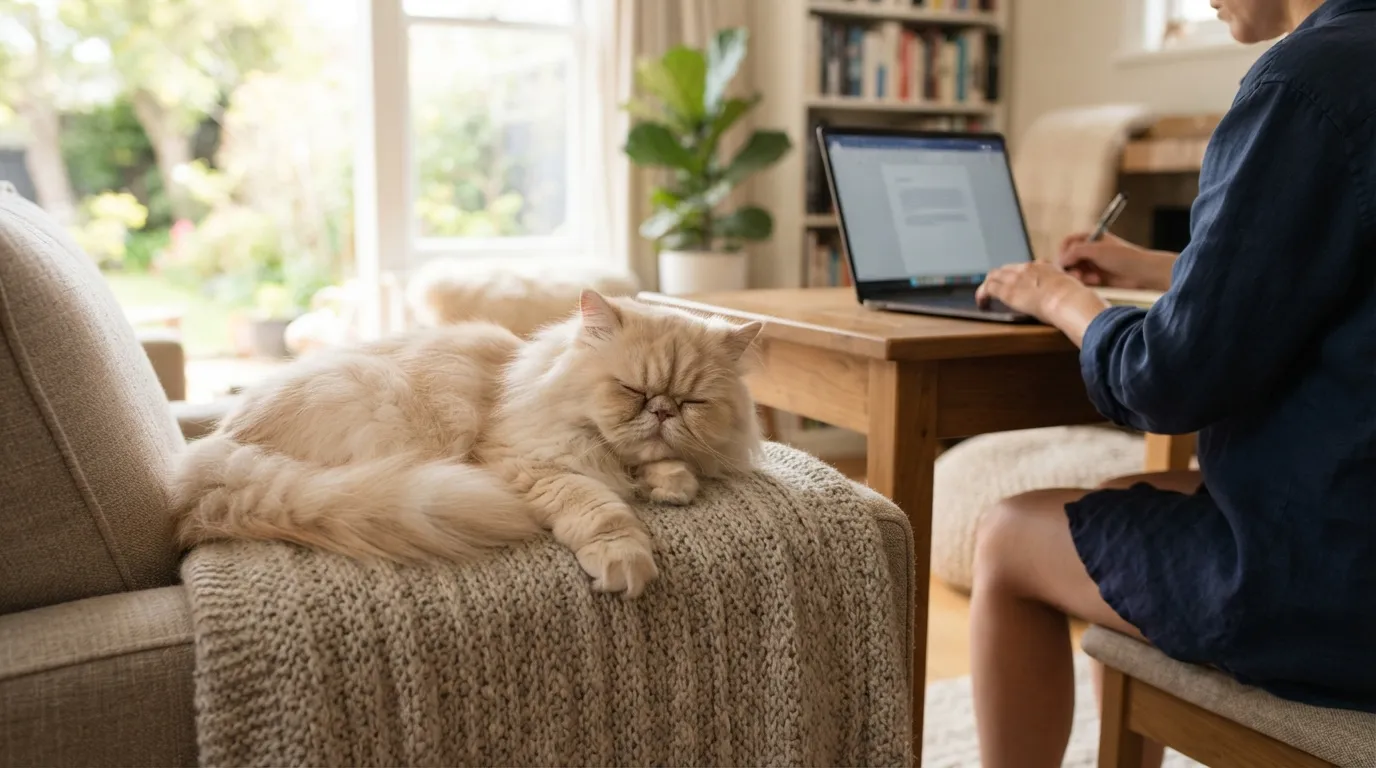
Here's a distinction most owners miss: there's a huge difference between a cat that demands attention and one that simply wants to be near you. The calmest breeds almost always fall into the second category.
The Persian is the textbook example. It won't demand attention, though it will happily accept whatever you offer.
Persians enjoy playing but they're not a high-energy breed, and they thrive in quiet homes with steady routines. This "nearby but not needy" quality is exactly what makes calm breeds so compatible with working adults.
You get the warmth of companionship without being trailed to the bathroom and judged for it. If that sounds like your ideal relationship, wait until you see trait #12.
#12 - The "Limp When Lifted" Phenomenon
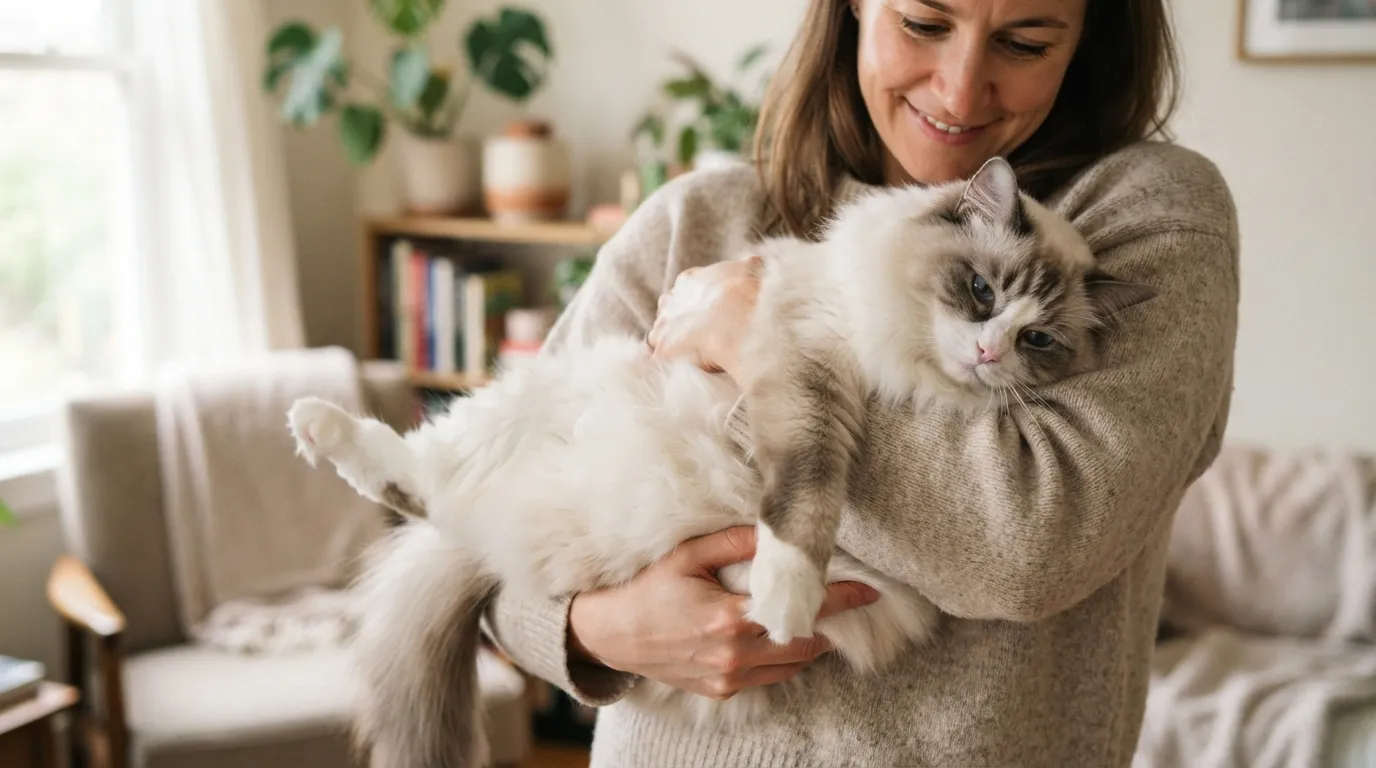
Few traits are more reliably tied to extreme calmness than this one. Ragdolls are famous for going completely limp and relaxed the moment you pick them up - it's literally where the breed's name comes from.
This isn't just endearing, it's measurable. A cat that goes fully slack in your arms genuinely does not perceive the situation as threatening.
Ragdoll kittens can be surprisingly energetic. But they typically mature into calm, affectionate, gentle adults who melt into a hug rather than fight it.
Most experts cite the Ragdoll as the single calmest breed on the planet, and the limpness trait is the clearest proof of it. Surprisingly, the next trait isn't about relaxation at all.
#11 - Dog-Like Loyalty Without the Chaos
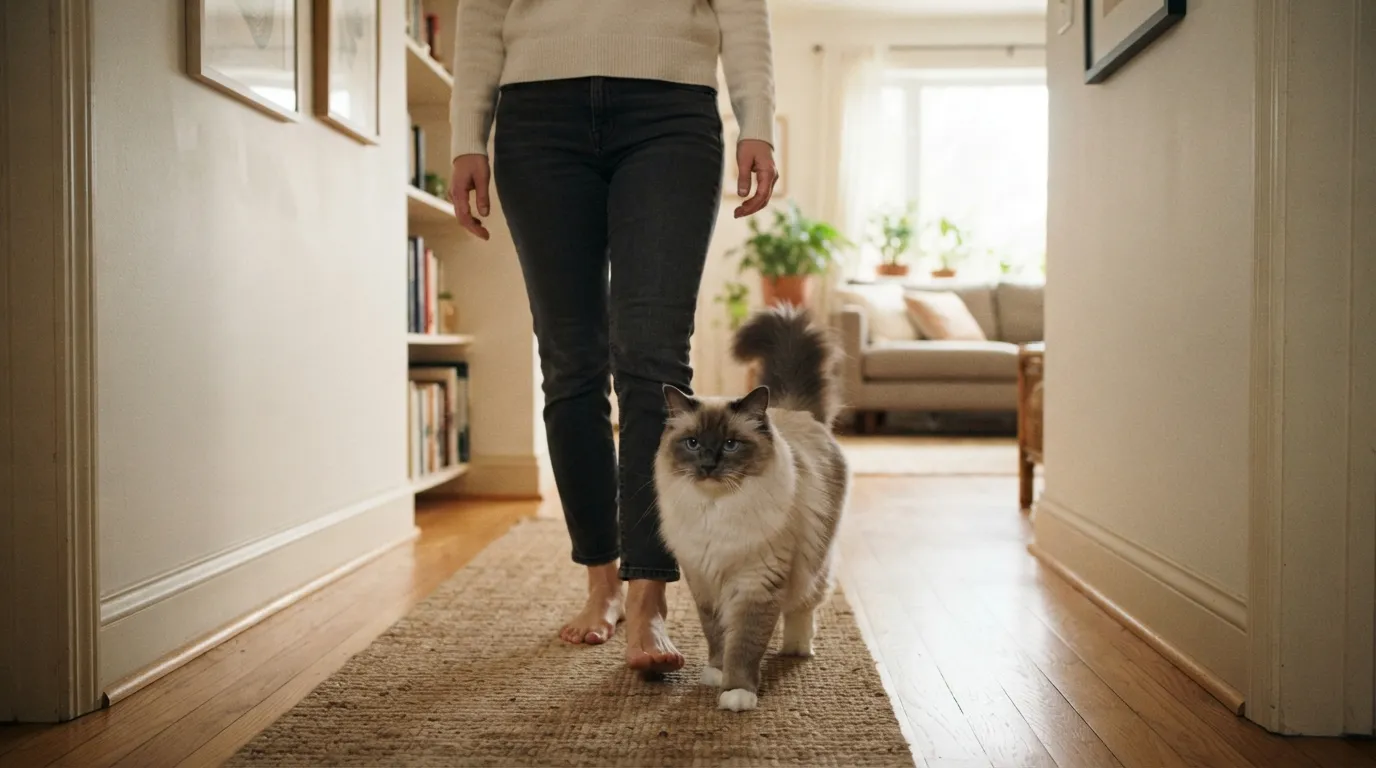
Many calm breeds display a trait most people associate only with dogs: following their owner from room to room with quiet devotion. Ragdolls are known for this, along with their easy handling and low aggression toward other pets.
This loyalty stays calm in nature - no barking, no jumping, no frantic energy. The Maine Coon is adaptable and laid-back, fitting easily into many types of homes.
It also carries that same canine-like devotion to its owner. What makes this trait so valuable is the combination: devoted but quiet.
You always know your cat is there, but you're never overwhelmed by it. It's a companionship style a lot of dog people end up preferring - and trait #10 is what makes it sustainable long-term.
#10 - Adaptability to Multiple Household Types
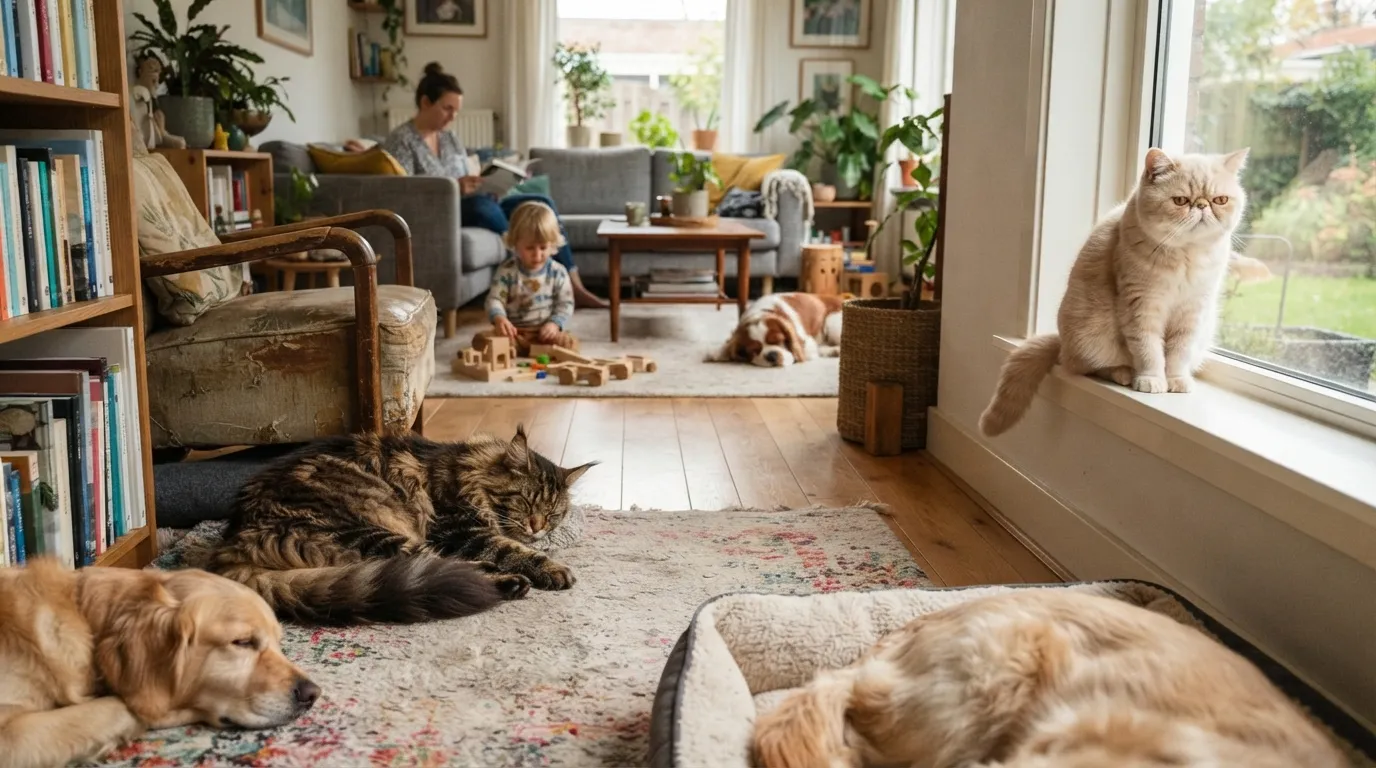
A calm cat that falls apart in a noisy household isn't truly calm, it's just sheltered. The best calm breeds stay relaxed across wildly different environments.
Many of the calmest breeds were historically bred as affectionate house cats, shaped by diverse domestic settings rather than controlled kennels. The Maine Coon is the standout here, sociable and mellow enough for large households with dogs.
The Exotic Shorthair sits at the other end of the spectrum. It's relaxed but playful in short bursts, making it ideal for apartment living.
Truly calm breeds don't need perfect conditions to stay composed. Whether it's a studio apartment or a house full of kids, their baseline barely shifts - and trait #9 explains the hidden mechanism behind it.
#9 - Quiet Vocalization
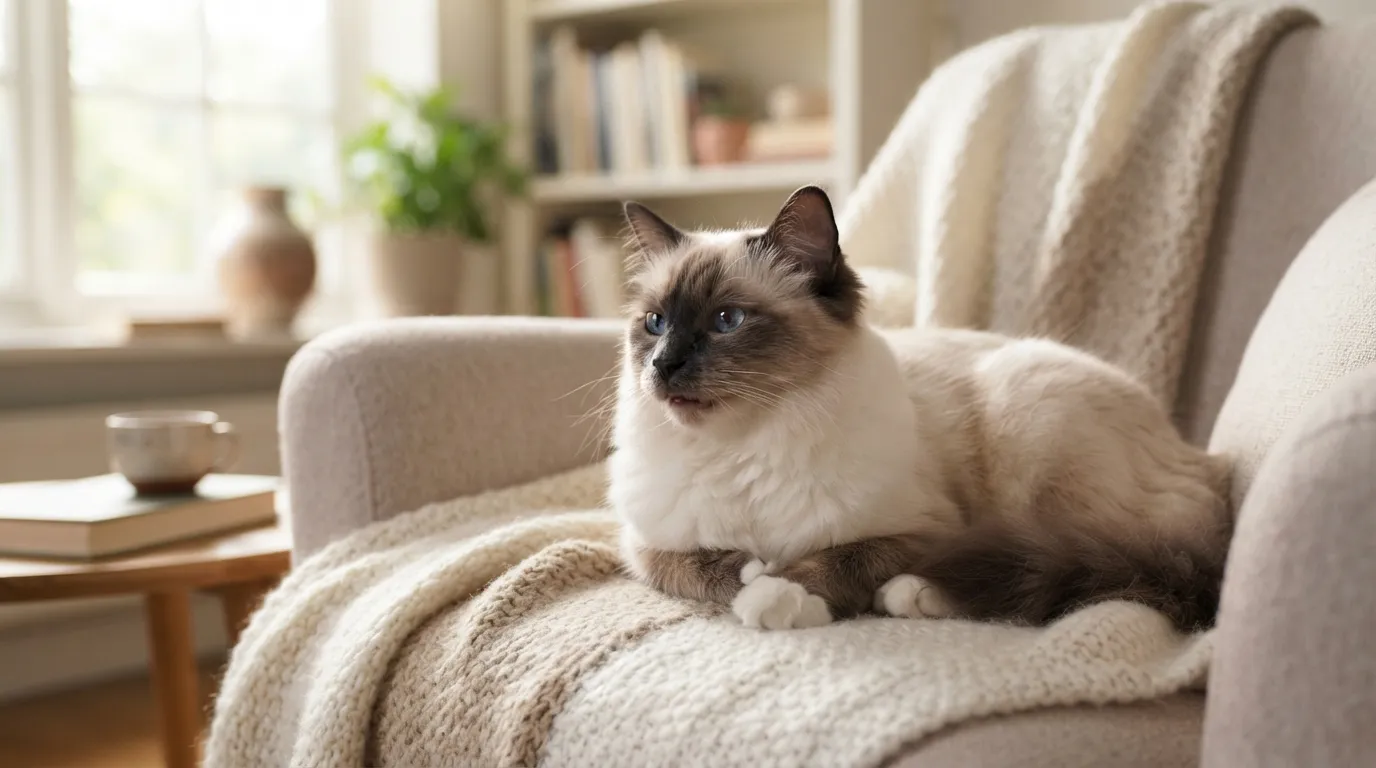
Here's one most owners overlook: the calmest breeds are also the quietest. Constant meowing is a stress signal just as much as it's a demand, and calm cats simply don't do much of it.
Ragdolls are notably quiet compared to famously vocal breeds like the Siamese. The Birman takes this even further.
Birmans are relatively quiet cats, most are soft-spoken and refined, with soft, chirp-like voices. Compare that to a Siamese, and you're living in a completely different acoustic universe.
Quick Compare
- Ragdoll: soft, infrequent vocalizations
- Birman: soft, chirp-like voice
- Siamese: loud, frequent, demanding vocalizations
A quiet cat isn't constantly broadcasting anxiety - and that silence creates a more peaceful home for both of you. You don't appreciate it until you've lived with the alternative, but trait #8 is the one that surprises people the most.
#8 - Tolerance for Children and Other Pets
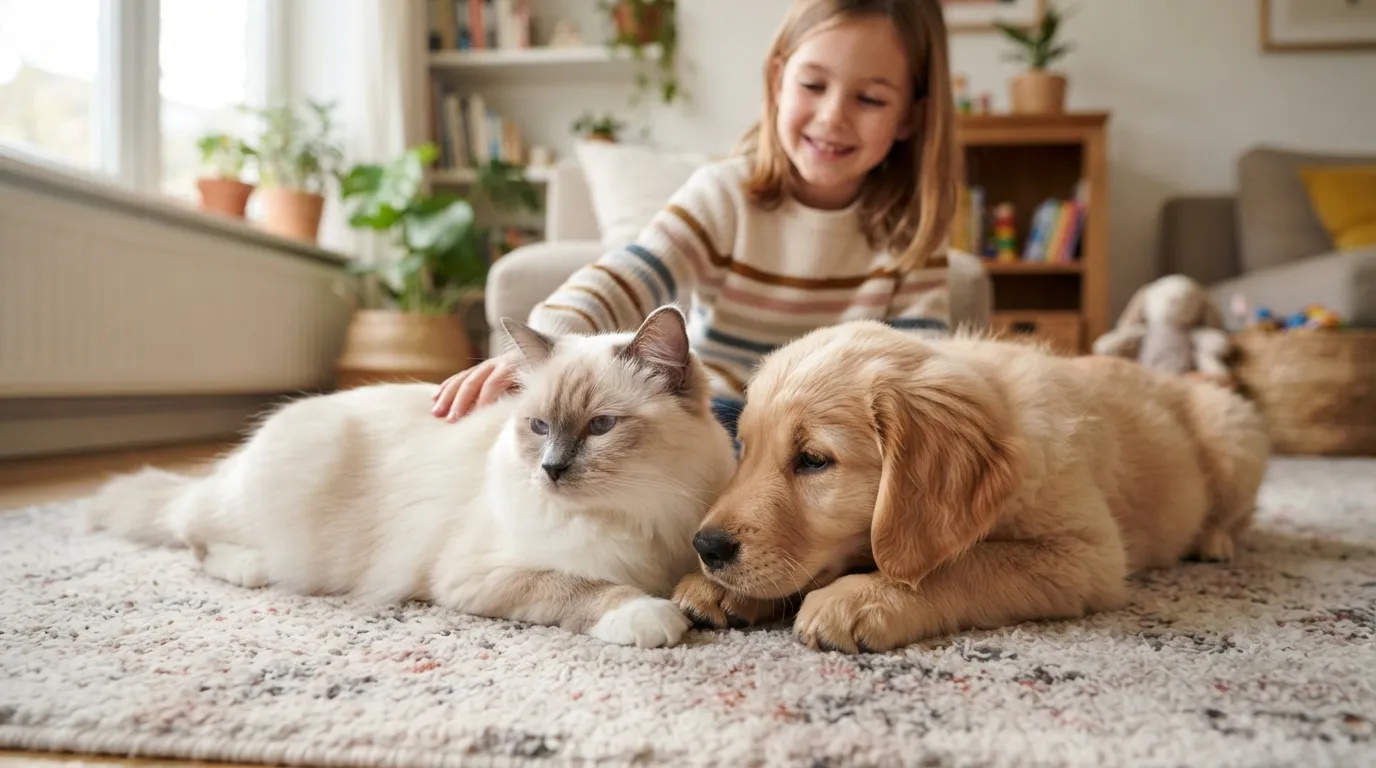
Truly calm cats don't save their composure just for adults in quiet rooms. The most settled breeds extend that same low-stress energy to kids and other animals.
The Ragdoll is friendly without being demanding, and usually totally fine sharing a house with other pets and kids. The Birman earns equal marks here.
It's patient, even-tempered, and tolerant, which makes it an excellent choice for families with children and other pets. This cross-household tolerance is a hallmark of breeds selected for steady temperament, not just good looks.
A cat that tenses up around a toddler or hisses at a dog isn't calm, it's managing. Trait #7 reveals something even more specific about how calm breeds relate to people.
#7 - High Sociability With Humans (On Their Own Terms)
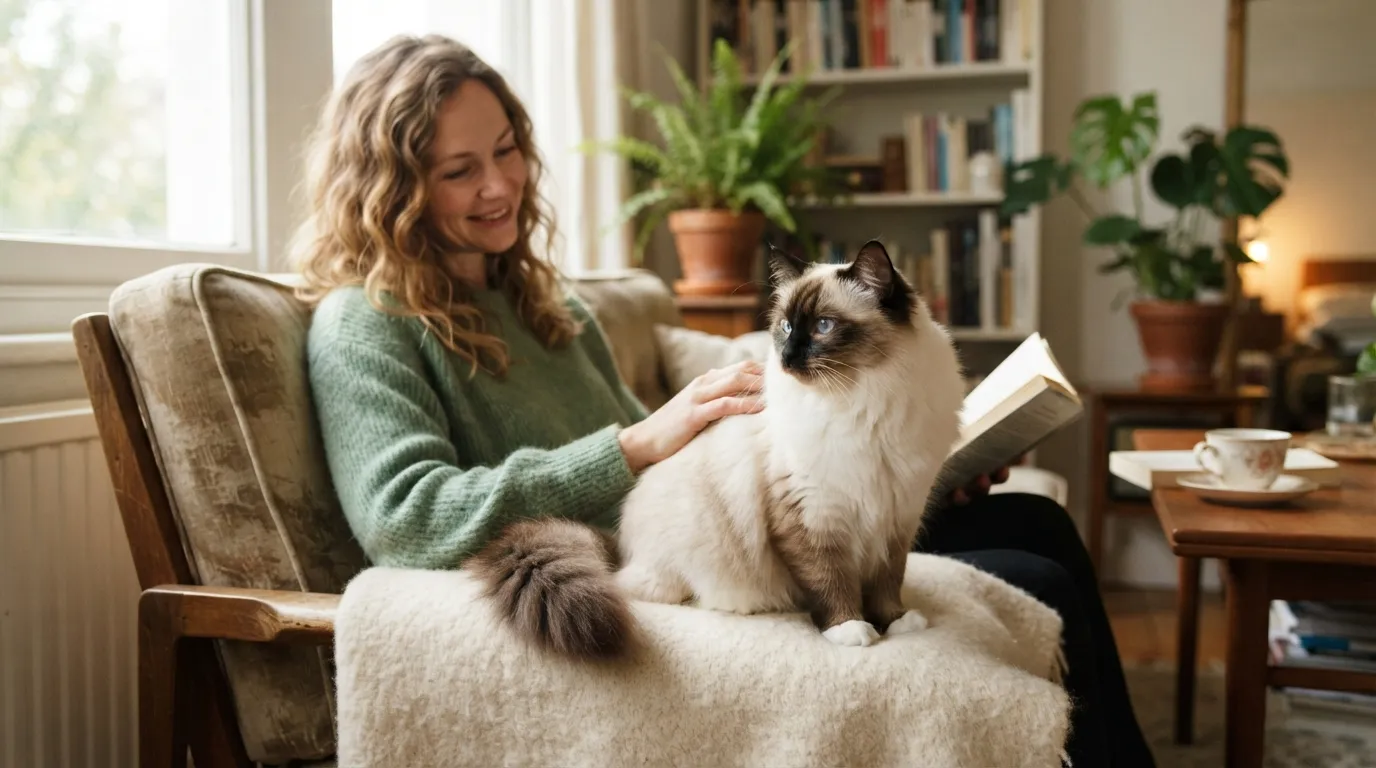
Research consistently shows the calmest breeds also rank high on sociability - but it's a relaxed, non-demanding kind. Birmans form strong bonds with their families and genuinely enjoy interaction and companionship.
They're intelligent and curious, and they thrive in homes with regular attention and play. But this isn't the same as being clingy.
Birmans love following their people around, yet they're independent enough to entertain themselves when needed. The ideal calm breed is social enough to be a companion but stable enough not to unravel when you leave the room.
It takes generations of selective breeding to strike that balance, and it's what makes these cats genuinely therapeutic to live with. Trait #6 takes that idea even further.
#6 - The "Loyal to One Person" Phenomenon
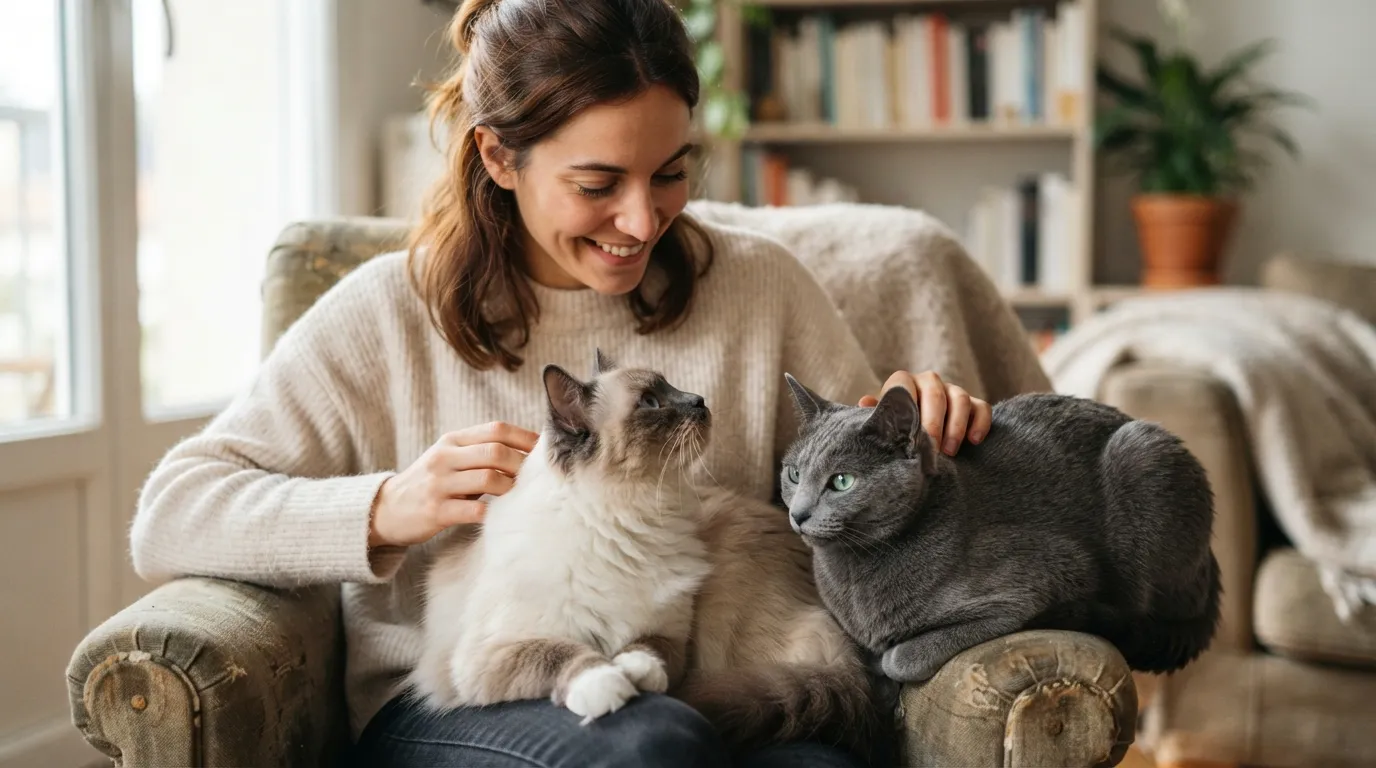
Some calm breeds don't spread their affection evenly, and that's a feature, not a bug. Birman cats can stay somewhat reserved even with people they know well, often attaching to a single person above everyone else.
If you want a cat that loves you specifically, the Birman might be it. The Russian Blue operates the same way.
It's quiet, shy, and deeply loyal, taking its time to trust strangers but becoming intensely attached to its one person. It carries a gentle, almost elegant personality throughout.
That deep, focused loyalty paired with a genuinely quiet nature creates a bond that feels remarkably close to what dog owners describe. If you want a cat that truly chooses you, these breeds deliver - but trait #5 is the one that consistently shocks new owners.
#5 - Low Aggression Toward Humans
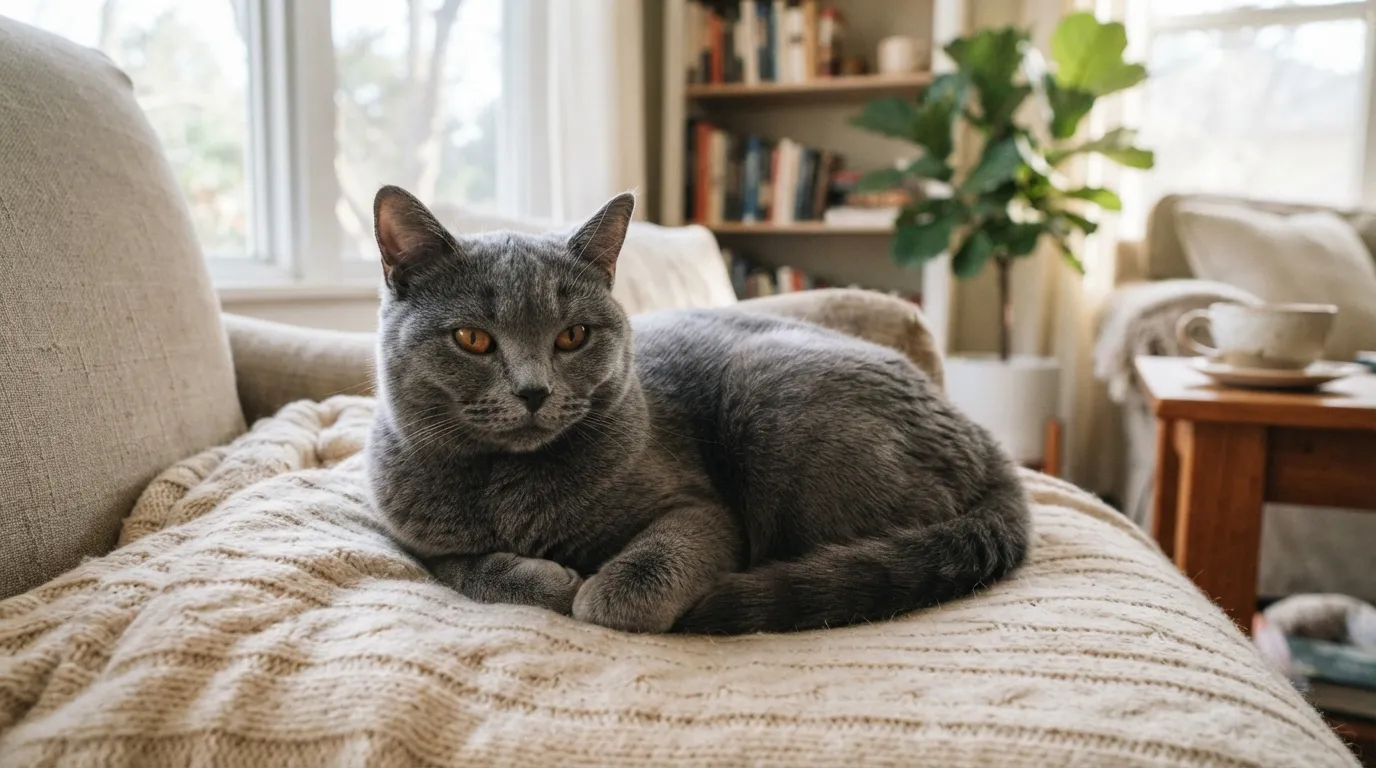
This one seems obvious until you realize how many beloved cats will still swipe, bite, or hiss once they've had enough. Calm breeds have a measurably lower aggression baseline.
Feline personality research identifying seven core traits found breeds differed significantly across every one of them, including aggression toward humans. The Chartreux is one of the clearest examples of low-aggression calm.
It stays remarkably composed between bursts of natural hunting instinct, rarely darting around the house or getting into mischief. It's affectionate with its family but just as content hanging out alone.
A cat that never swipes, never bites in play, and never turns a cuddle into an ambush is a different category of pet entirely. That's what low-aggression breeds actually deliver - and trait #4 is what seals the deal for apartment dwellers specifically.
#4 - Contentment with Indoor Apartment Life
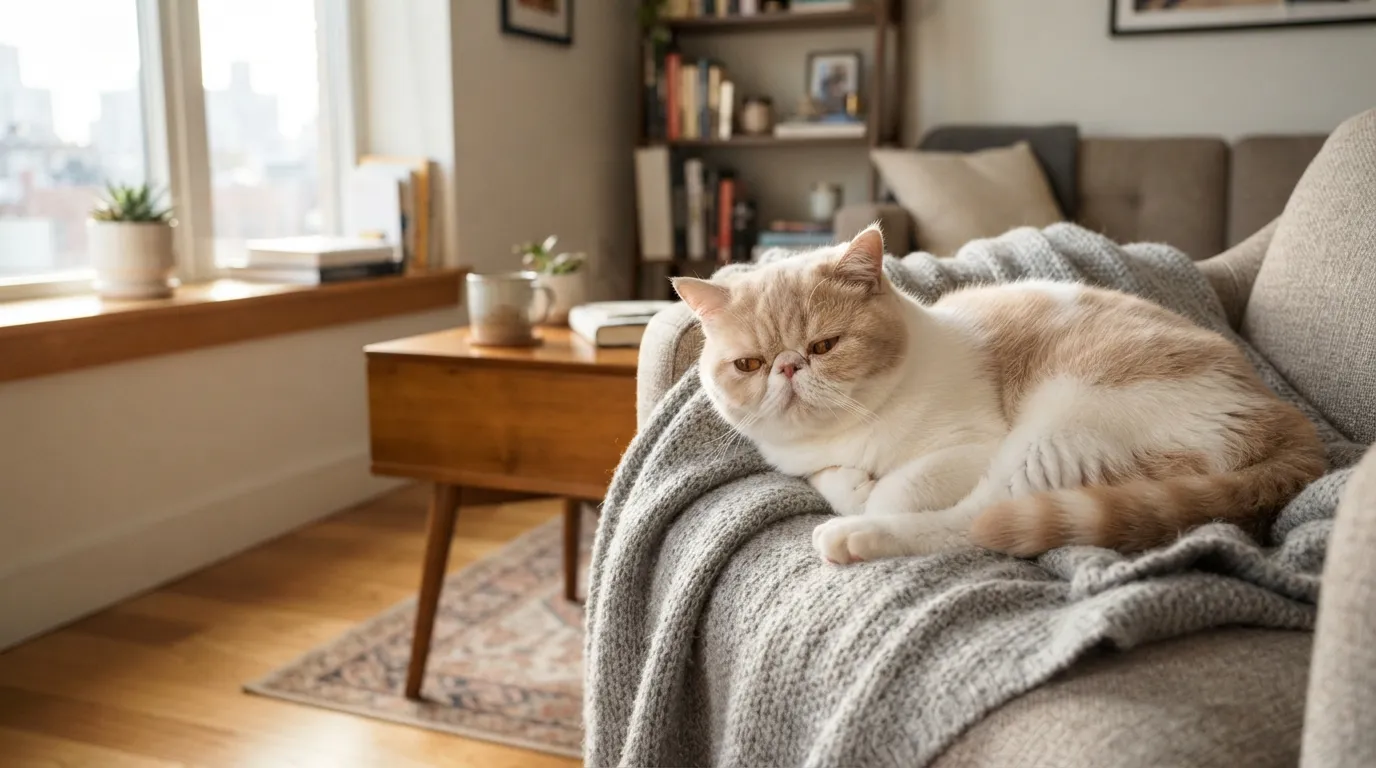
Calm cats and apartment living are a natural match, but only when the breed's energy level genuinely suits smaller spaces. Many calm breeds weren't just bred for personality, they were shaped for indoor, domestic life.
Birmans are content indoors and well-suited for apartment living thanks to their calm, quiet, docile nature. The Exotic Shorthair, essentially a short-coated Persian, is another standout.
It's calm, affectionate, and easygoing, with a personality close to the Persian but far less grooming required.
At a Glance
- Low destructive scratching or climbing needs
- Minimal anxiety when left alone for a few hours
- Comfortable in smaller square footage
- Exotic Shorthair offers Persian-like calm with less grooming
This indoor contentment means less destructive behavior, less escape-attempt anxiety, and a cat that genuinely thrives in the space you already have.
It's one of the most practical traits on this entire list. But trait #3 is the one researchers find most fascinating.
#3 - Rapid Socialization Response in Early Life
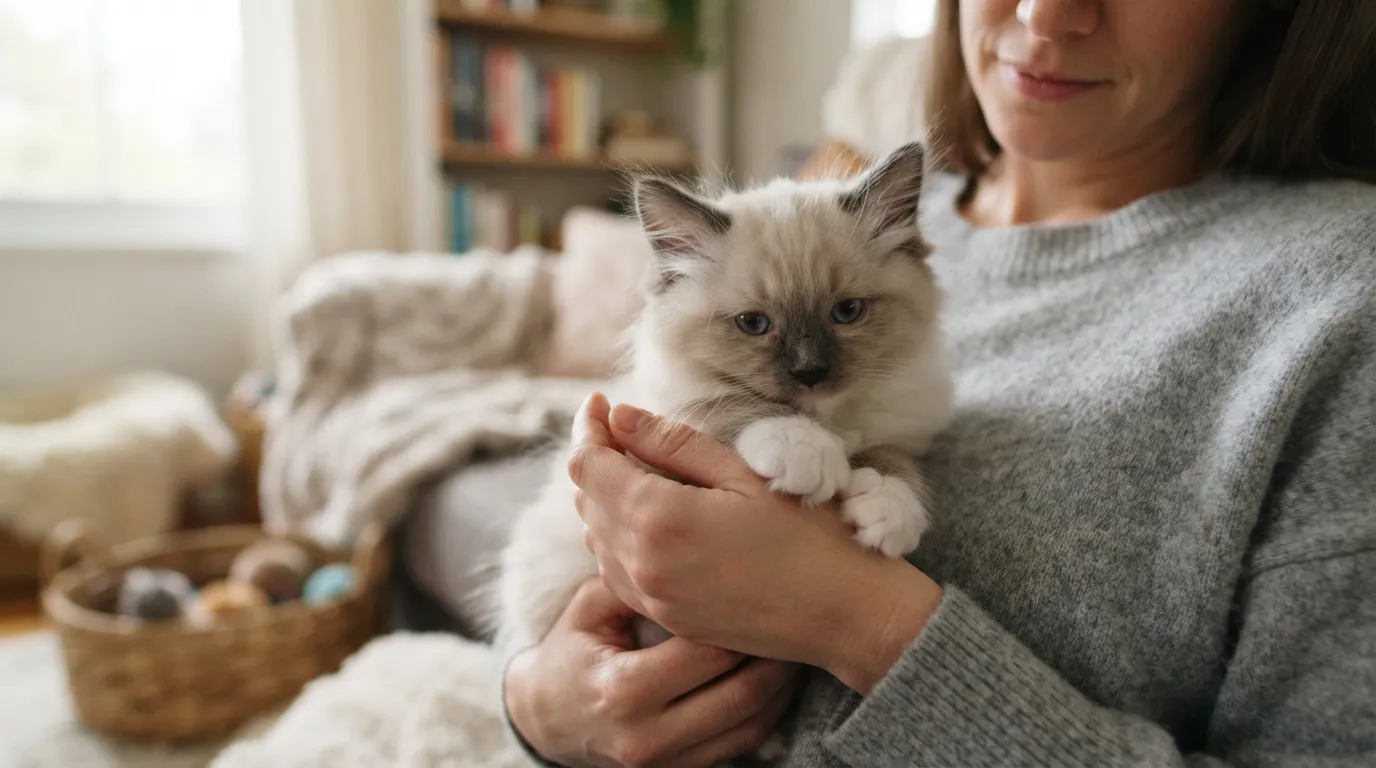
Here's something the data confirms that most owners don't know: early life experiences shape temperament for good. The American Veterinary Medical Association notes that kittens exposed to gentle handling during the early socialization period tend to develop greater confidence and reduced fear responses.
Calm breeds respond to this window more dramatically than high-strung ones. A Ragdoll kitten handled gently in its first weeks becomes an exceptionally composed adult.
The socialization period essentially amplifies whatever genetic calm is already built in. A calm breed that's also well-socialized becomes something exceptional.
A cat's personality is largely stable from kittenhood onward, with genetics clearly involved. Early handling of an already calm-breed kitten is essentially locking in the best possible version of that cat - and trait #2 surprises people who thought they wanted a "low-maintenance" cat.
#2 - Trainability and Positive Reinforcement Responsiveness
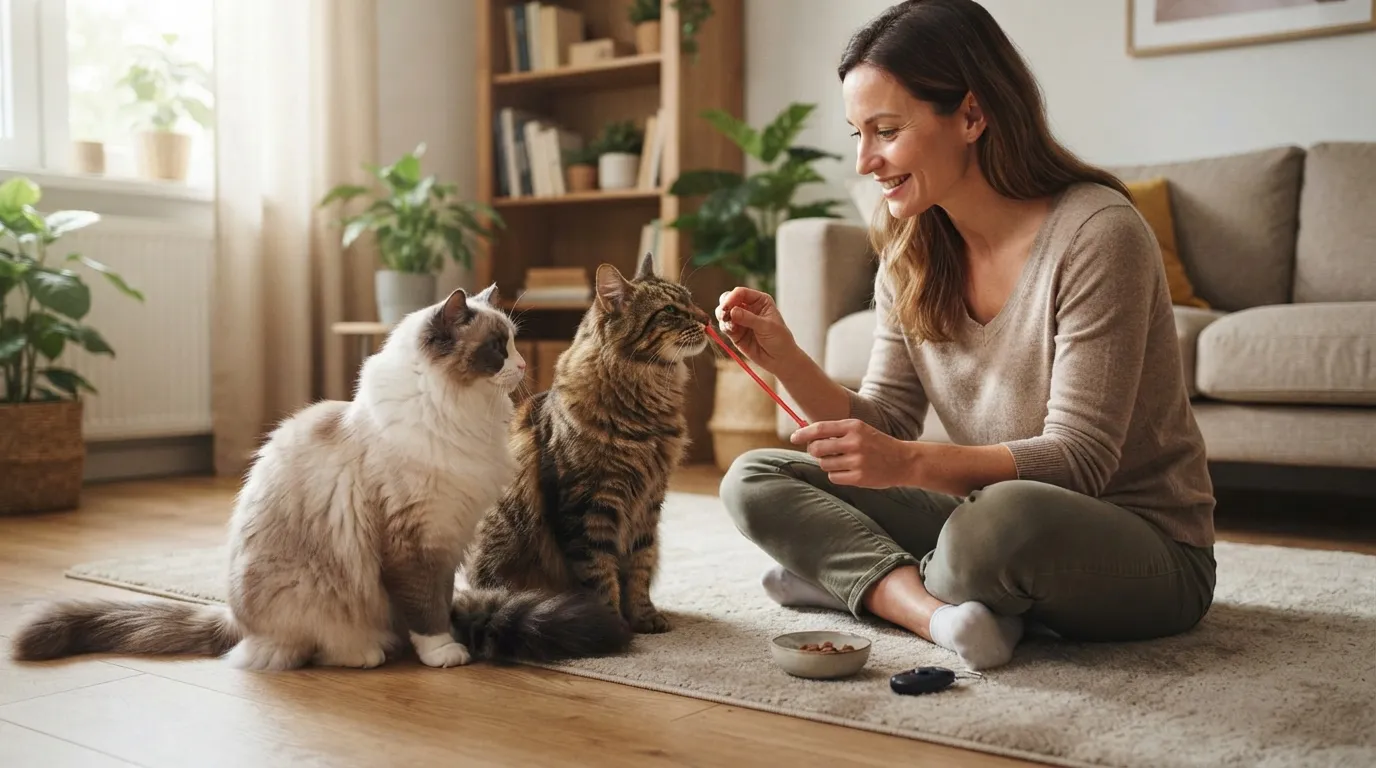
Most people assume calm cats are passive - easy to ignore, impossible to train. Turns out, many of the calmest breeds are actually among the most trainable.
Maine Coons are incredibly intelligent, easy to train, and quick to pick up on human emotions. The Ragdoll follows the same pattern.
Even mixed-breed cats with Ragdoll heritage often inherit that trainability and social adaptability. Their calm, people-oriented temperament means they typically respond well to positive reinforcement.
A calm, trainable cat is not a boring cat - it's the most rewarding kind of cat. You can teach them routines, leash habits, even basic commands, all without the drama.
Their composure doesn't mean they're checked out, it means they're genuinely paying attention. Which brings us to the trait that tops this entire list.
#1 - The "Floppy" Full-Body Trust Response
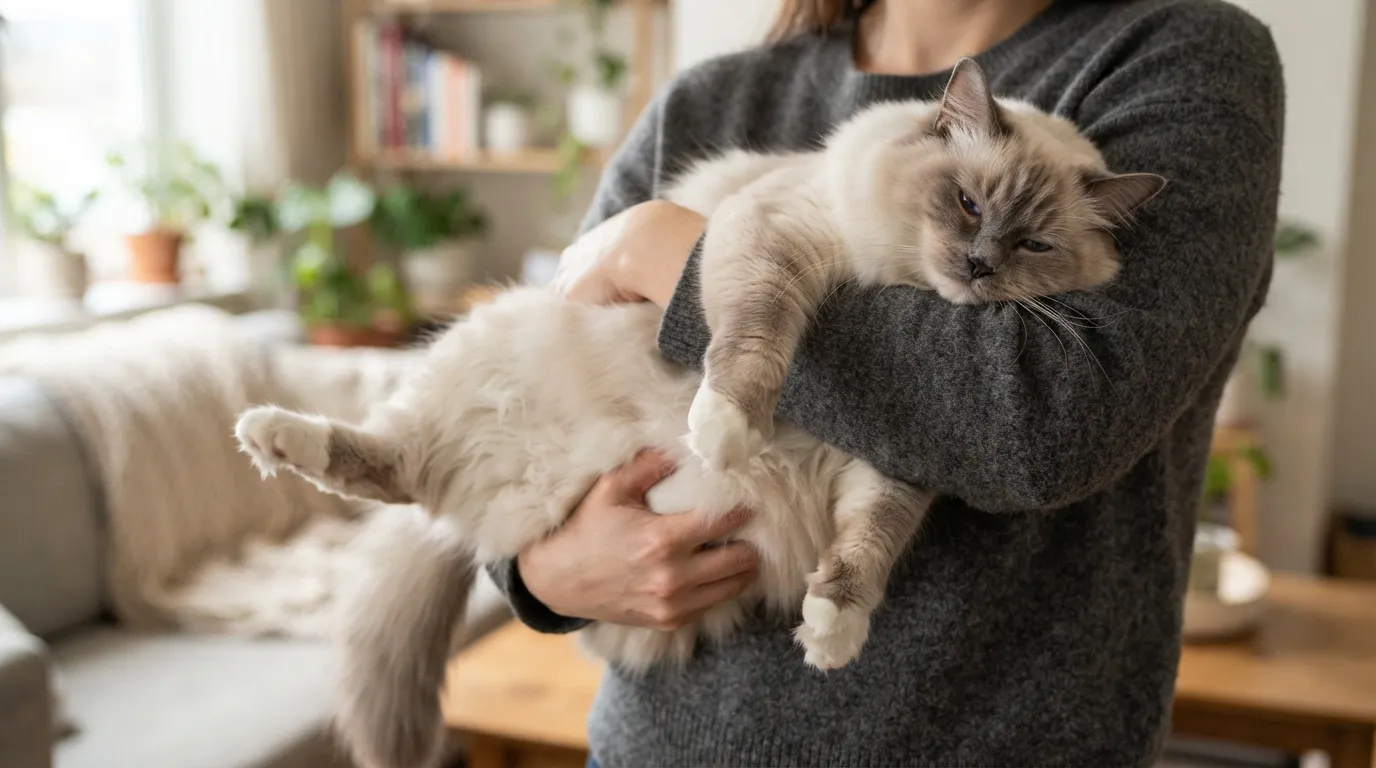
No calm trait is rarer, more measurable, or more emotionally powerful than this one. When a cat goes completely limp in your arms - muscles releasing, body heavy, eyes half-closed - it's not just cute.
It's one of the most complete expressions of trust and calm a domestic animal can display.
Ragdolls are relaxed enough to make apartment living effortless, and their name literally comes from this limp, floppy response to being picked up. But it isn't exclusive to Ragdolls - it shows up in varying degrees across every breed on this list once a cat is properly socialized and feels genuinely secure.
Ragdolls are known for their calm, gentle, sociable nature. They crave attention from their people but never demand it, which is what makes them so easy to love.
That combination - deeply trusting, affectionate without being needy, physically composed - is the gold standard of feline calm. It's the trait that turns a pet into a companion, and a companion into something closer to a confidant.
The Bottom Line
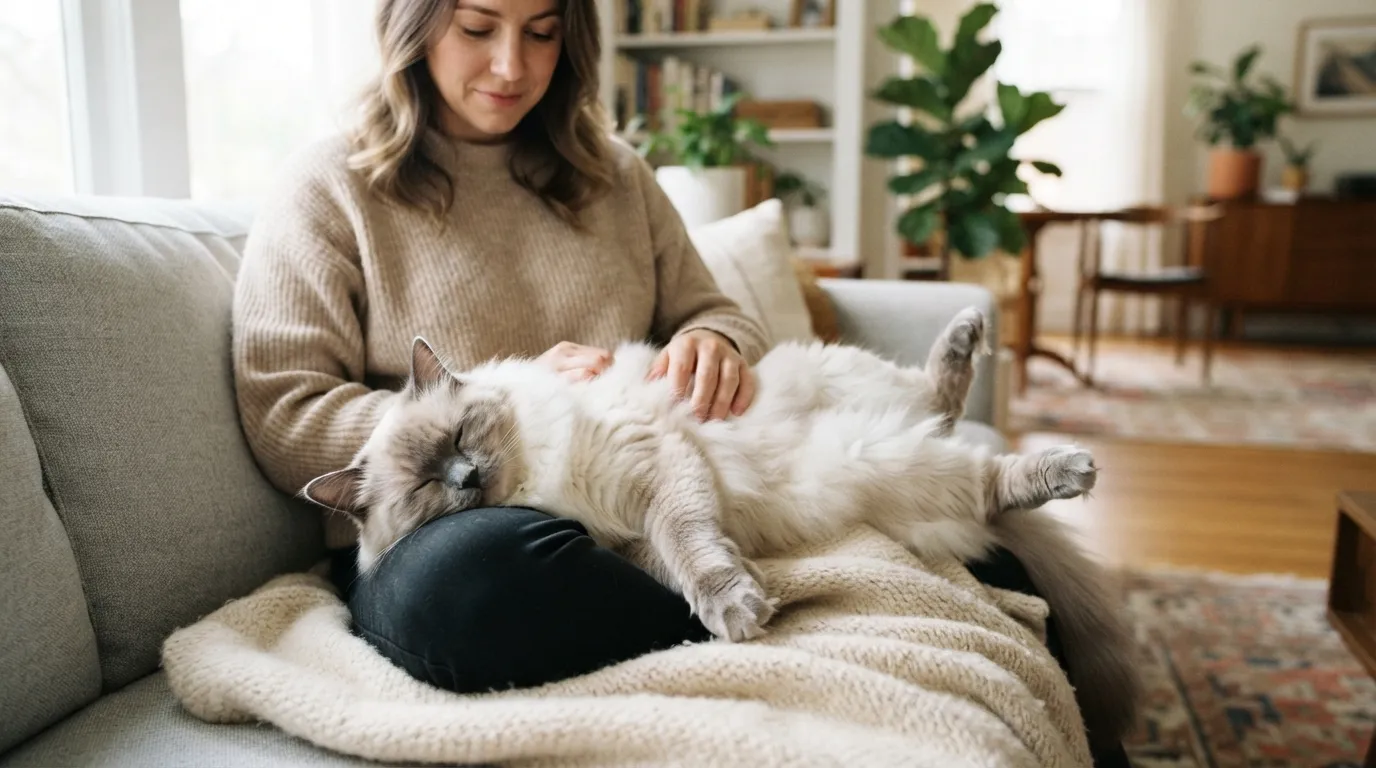
Calm in cats isn't one thing, it's a stack of traits reinforcing each other: genetic selection, low reactivity, quiet vocalization, high tolerance for chaos, and that extraordinary full-body trust response that tells you a cat has truly settled into your world.
Breeds like the Ragdoll, Birman, Persian, British Shorthair, Chartreux, and Russian Blue deliver combinations of these traits that are genuinely backed by research.
Quick Compare
| Breed | Standout Calm Trait |
|---|---|
| Ragdoll | Full-body limp trust response |
| Birman | Deep loyalty to one person |
| Persian | Content without demanding attention |
| British Shorthair | Low reactivity to noise and chaos |
| Chartreux | Very low aggression baseline |
| Russian Blue | Reserved, one-person devotion |
The calmest companion you've ever had isn't a matter of luck, it's a matter of knowing exactly what to look for.
Look closely at your own cat, and chances are you'll spot at least three or four of these fifteen traits already sitting right there in front of you.