
Most cat owners think a bored indoor cat in winter is just “cats being cats” – annoying, but harmless. That belief is dead wrong, and it’s costing you more than you realize.
Reduced daylight scrambles a cat’s natural rhythm, and unmet boredom doesn’t just look like restlessness – it can turn into overgrooming, shredded furniture, sudden aggression, or litter box avoidance. Fifteen real fixes exist, and most owners never try the ones that actually work.
#15 – Rule Out a Medical Problem First
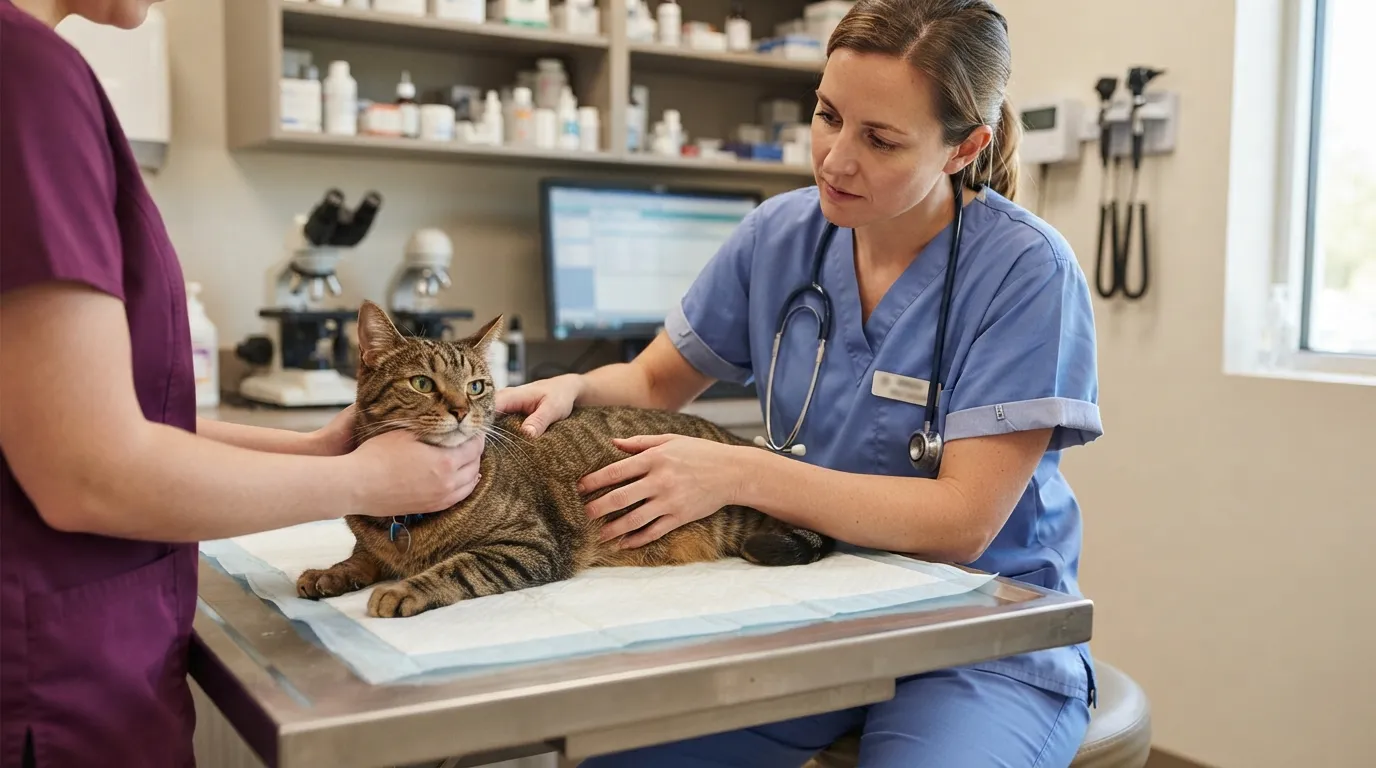
Before you try a single trick on this list, stop assuming it’s just cabin fever.
Sudden or severe boredom behaviors can actually signal pain, hyperthyroidism, or another medical issue hiding underneath. A vet visit rules out the scary stuff before you chase the wrong fix for months.
This step costs one appointment. Skipping it can cost you months of misdiagnosis.
Once the vet gives the all-clear, the real work – and the real fun – begins. Wait until you see what fix #14 does to a cat’s entire week.
#14 – Nail the Twice-Daily Play Session
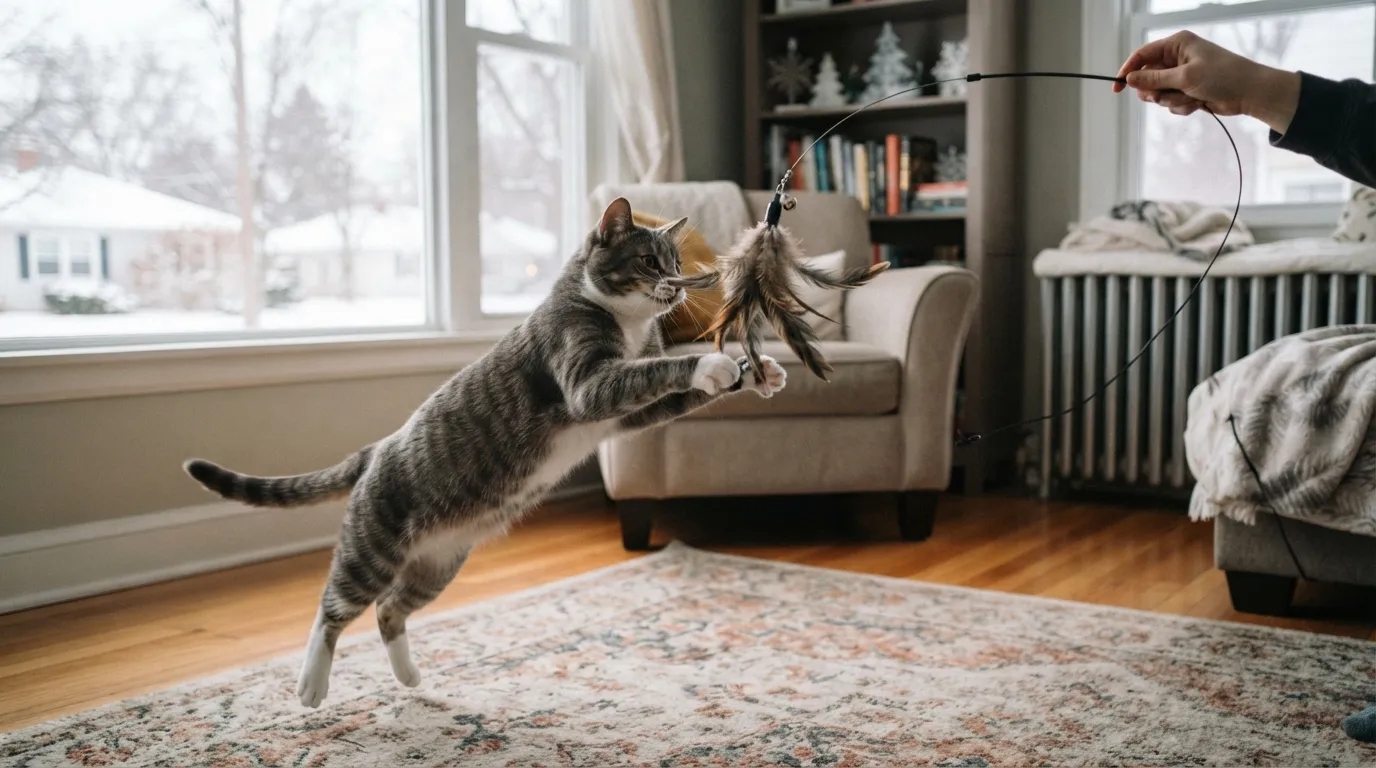
Two ten-minute sessions sounds almost insultingly simple. It isn’t.
Interactive wand toys are one of the most effective enrichment tools that exist. Move the toy like real prey – stop, dart, retreat – and let your cat “catch” it so the hunt actually pays off.
Most owners wave the wand aimlessly, and that’s the mistake that kills results.
Fast Facts
- Well-fed pet cats naturally hunt only about 3 hours a day, compared to roughly 12 hours for an unfed feral cat.
- Regular, interactive play is one of the single most effective ways to lower boredom-driven behavior indoors.
- Two tight 10-15 minute sessions timed before meals mimic a real stalk-catch-eat cycle.
Two tight 10-15 minute sessions a day, ideally before meals, beat one long exhausting free-for-all. Don’t make the blunder we cover in fix #13.
#13 – Stop Leaving the Same Toy Out All Day
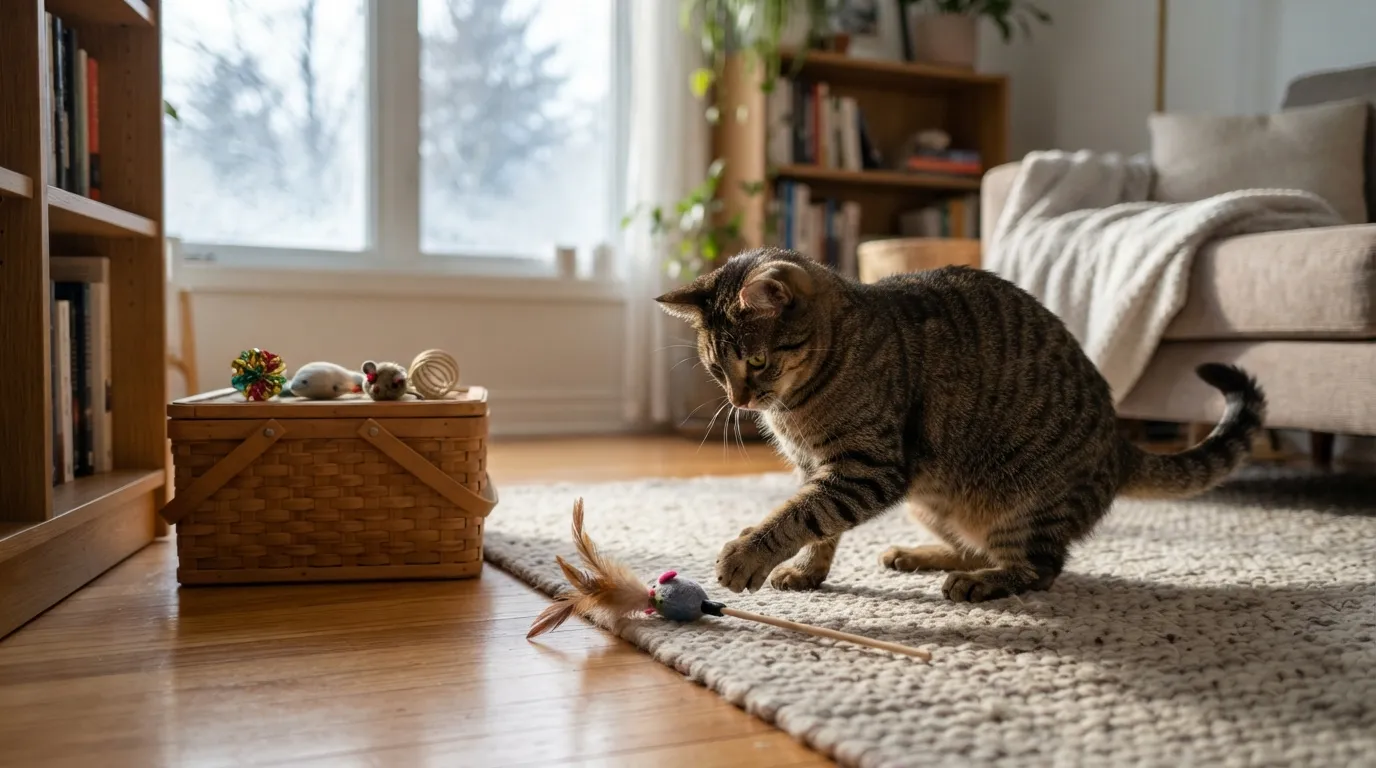
This one is quietly sabotaging your entire winter enrichment plan.
Cats habituate fast, and a toy left out permanently just becomes furniture. Keep only five or six toys visible and rotate the rest weekly.
Old toys become “new” again – this alone can double engagement without spending a dime.
Think of it as a Netflix algorithm for your cat: always something fresh, never stale. The next fix pairs with this perfectly, and it involves something most people walk past every morning.
#12 – Turn the Window Into a Live TV Channel
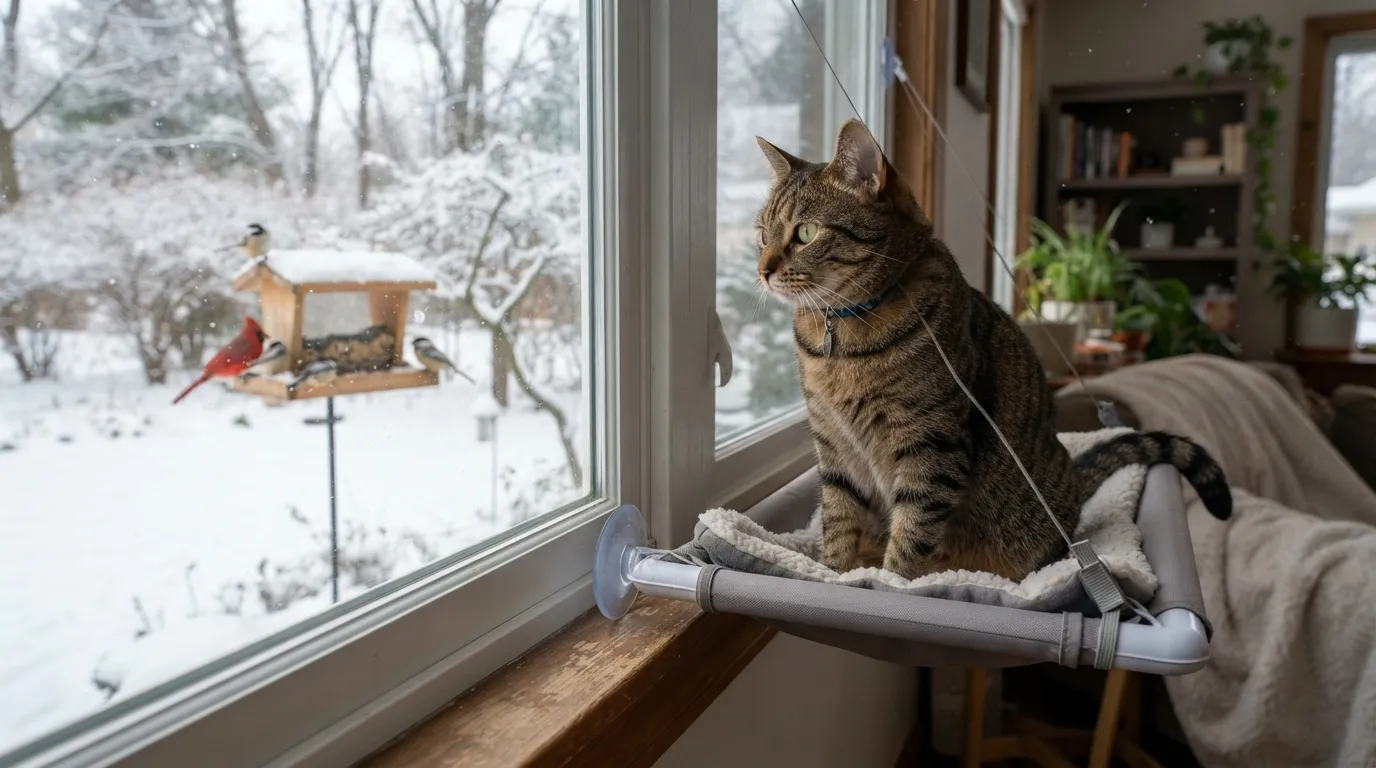
Your cat is staring out that window for a reason. Stop ignoring it.
Set up a comfortable perch facing bird feeders, squirrel traffic, or falling snow – even winter offers a surprising amount of visual drama. On slow days, cat-TV videos of birds or fish can fill the gap.
A bird feeder placed just outside the glass is essentially free entertainment that runs all day.
Pair the perch with elevated shelving or a window hammock so your cat can watch in comfort. Once visual stimulation is covered, it’s time to attack the sense almost every owner ignores completely – that’s fix #11.
#11 – Add Vertical Territory (Not Just Floor Space)
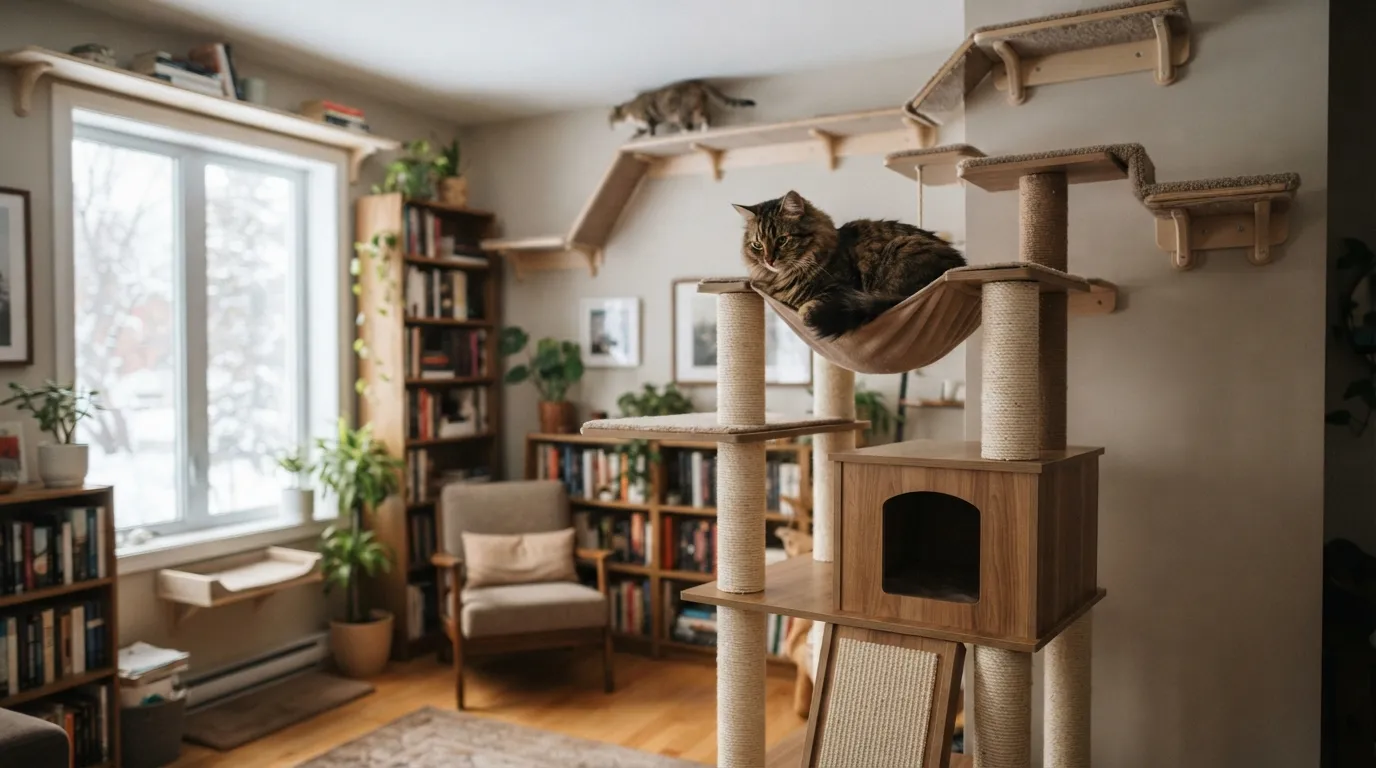
Most owners rearrange the floor. Experts rearrange the ceiling.
A single 5-foot cat tree can effectively triple the usable “cat map” in a small apartment. Shelving, trees, and hammocks give your cat elevated spots to survey the room like it’s their kingdom.
Cats are hardwired to feel safest when they can look down on their territory. A stressed, winter-cooped cat with nowhere to climb almost always becomes a destructive one.
Put a perch near a window and you’ve doubled the value of fix #12 instantly. But here’s where things get interesting – fix #10 is where food becomes a tool.
#10 – Switch to Puzzle Feeders for At Least One Meal
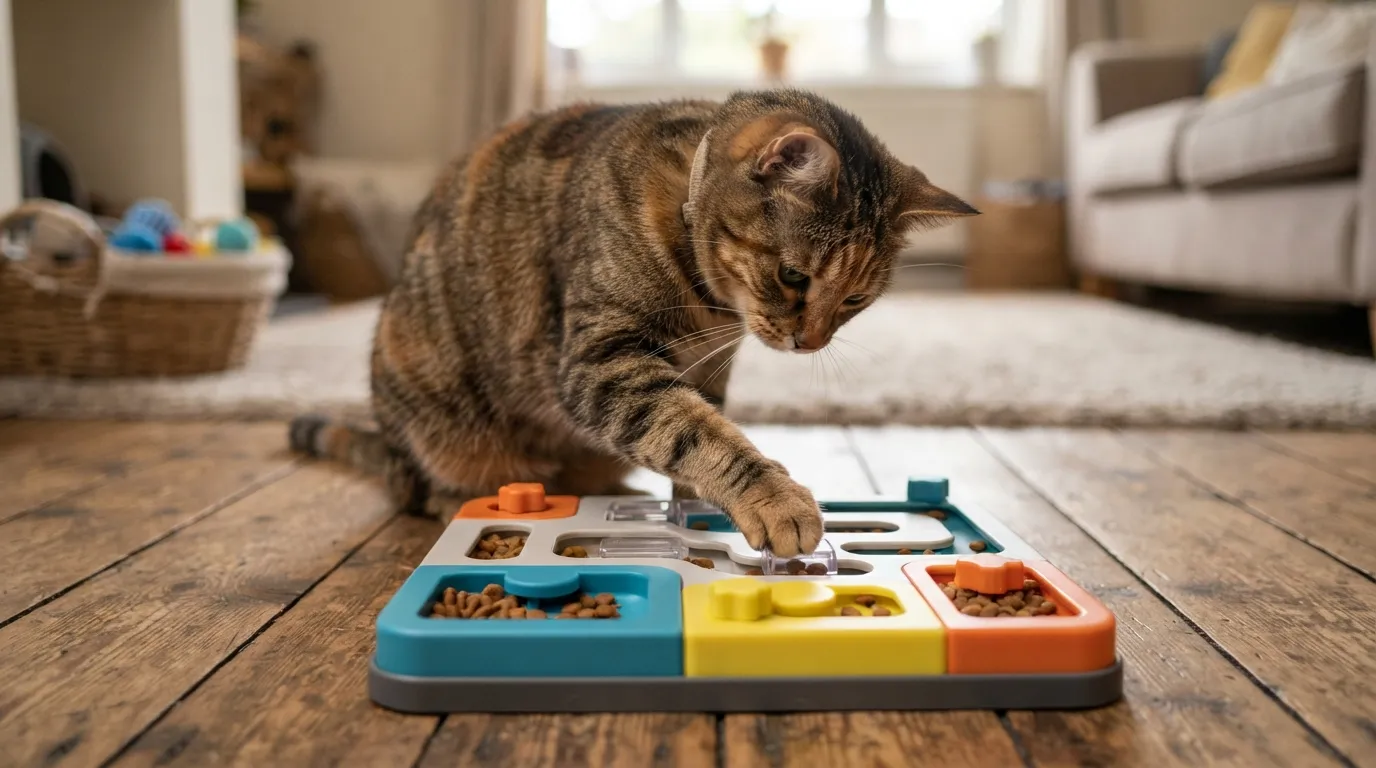
Dropping food in a bowl is the laziest enrichment decision you make every single day.
A wild or feral cat spends 40 to 60 percent of its waking hours hunting, patrolling, and foraging. Turn one meal into a puzzle and your cat “works” for it again – eating slower, vomiting less, and staying leaner.
Start simple: a muffin tin with treats hidden under balls, or a toilet paper tube folded shut at both ends. Commercial puzzle feeders range from beginner-easy to genuinely tricky.
Fix #9 takes the foraging idea even further – and you can do it with zero equipment at all.
#9 – Hide Food Around the House (Scatter Feeding)
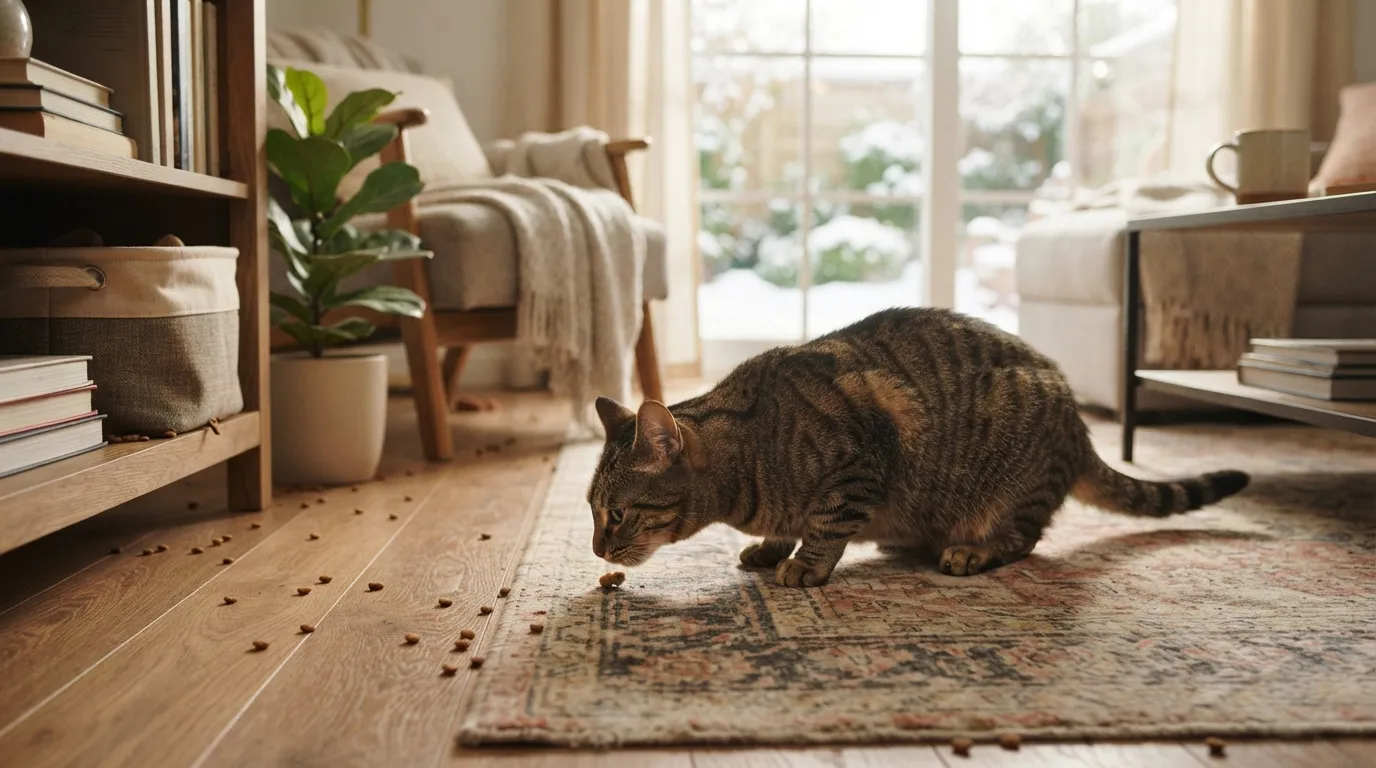
This one takes 90 seconds to set up and delivers results all afternoon.
Instead of a bowl, hide small portions of food or treats around the house and let your cat sniff them out. Start easy, then make hiding spots trickier as your cat gets confident.
This single change can keep a cat mentally occupied for hours at zero cost. It isn’t a gimmick – it’s exactly how cats eat in the wild.
Ready for the fix that actually builds your cat’s brain? Fix #8 is the most underrated tool on this entire list.
#8 – Teach Your Cat One New Trick
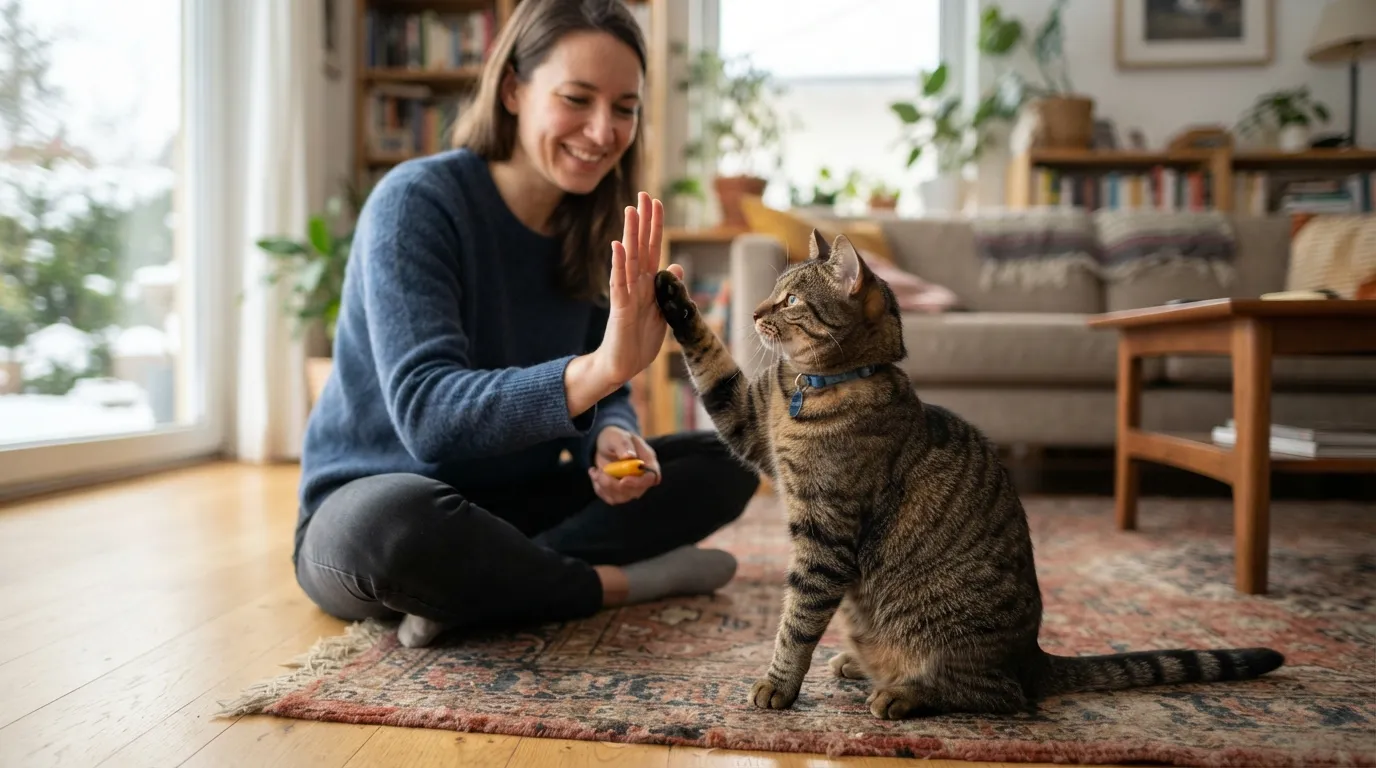
Most people never try this because they assume cats can’t be trained. They’re wrong.
Mental work tires a cat out just like physical play does. Sit, high-five, and target-touch are all learnable in under a week with five minutes of practice twice a day.
Clicker training in particular is a game-changer for under-stimulated indoor cats.
This isn’t just about tricks – it rewires how your cat interacts with its whole environment. Fix #7 is the one that keeps working even while you’re asleep.
#7 – Use a Timed or Automatic Feeder for Night Boredom
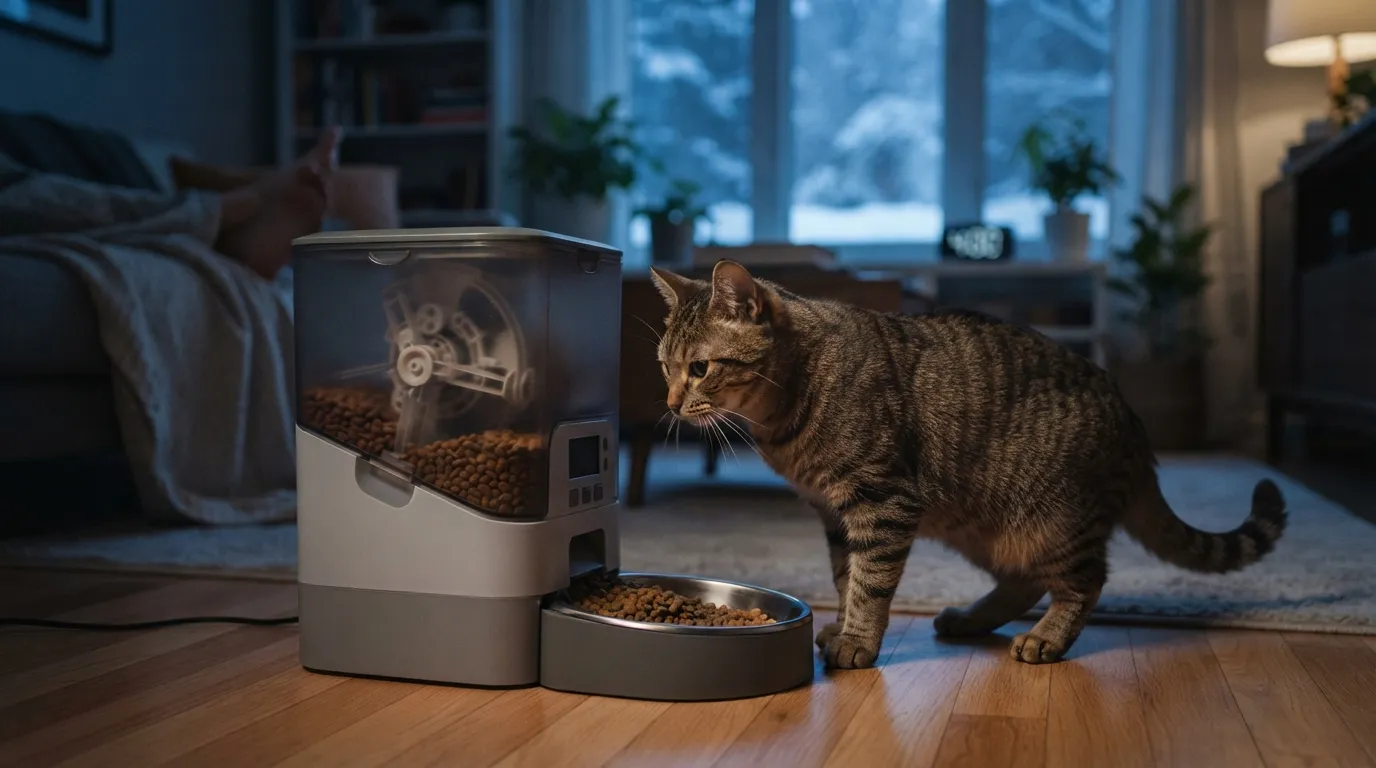
That 4 a.m. chaos isn’t your cat being evil. It’s a biological clock going off with nowhere to send the energy.
Cats are naturally crepuscular, wired to hunt at dawn and dusk. A hunting-style or timed feeder lets them earn a meal in the early hours without ever waking you up.
Night waking is one of the top complaints from cat owners in winter – and one of the most fixable.
The fix costs less than a week of lost sleep. Fix #6 tackles a symptom most owners misread completely.
#6 – Give Scratching Posts a Strategic Location
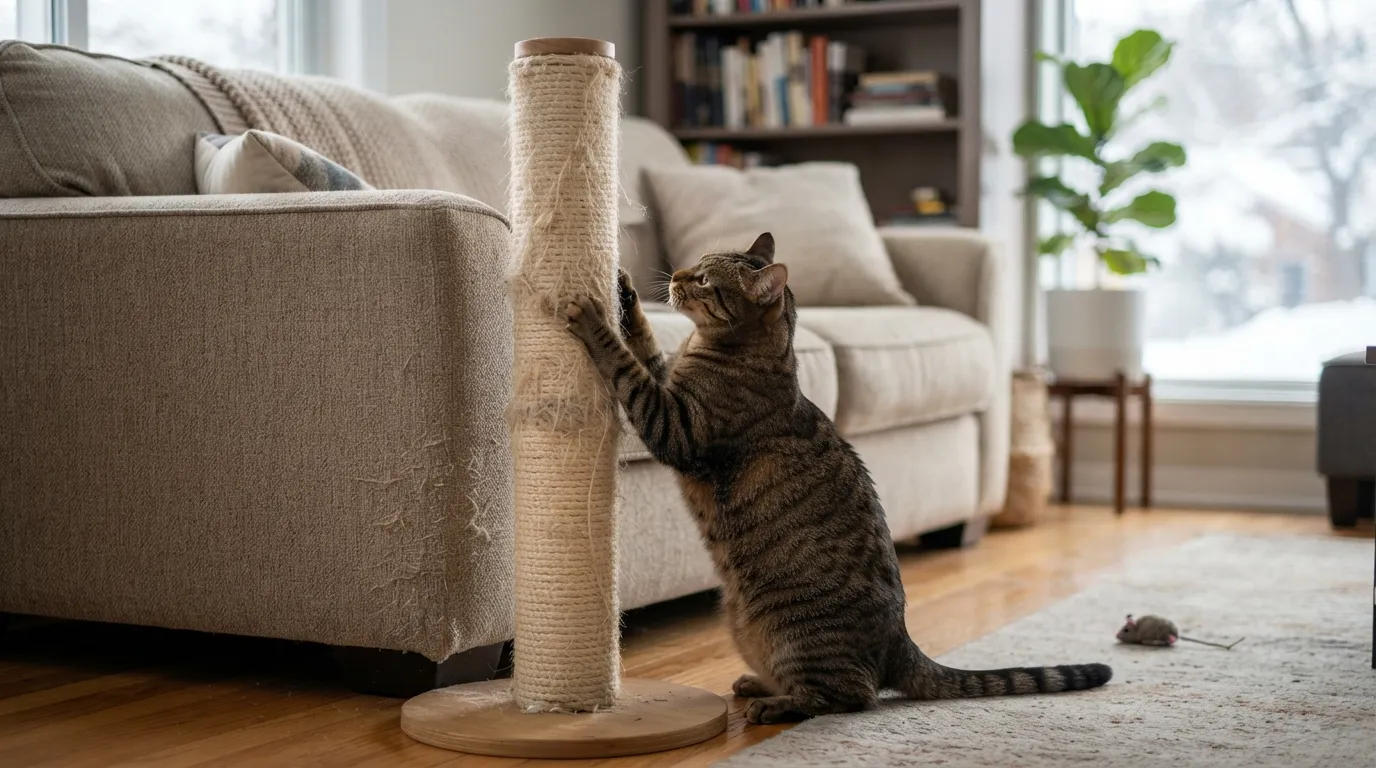
Scratching in the wrong place isn’t rebellion. It’s communication.
Cats scratch to mark territory, and they usually do it near sleeping areas, entryways, or favorite resting spots. Give them a legal outlet in the right location and the couch stops being a target.
Put the post next to the couch they’re already scratching, not across the room.
Worth Knowing
- Boredom can look loud: furniture scratching, knocked-over objects, or sudden aggression.
- Boredom can also look quiet: overgrooming, extra sleeping, pacing, or a flat, withdrawn mood.
- Loud and quiet cats are often fighting the exact same root problem – not enough enrichment.
Placement is the entire difference between a post that gathers dust and one that gets used daily. Fix #5 covers something winter does to cats that almost nobody talks about.
#5 – Watch for Dry Skin From Indoor Heating
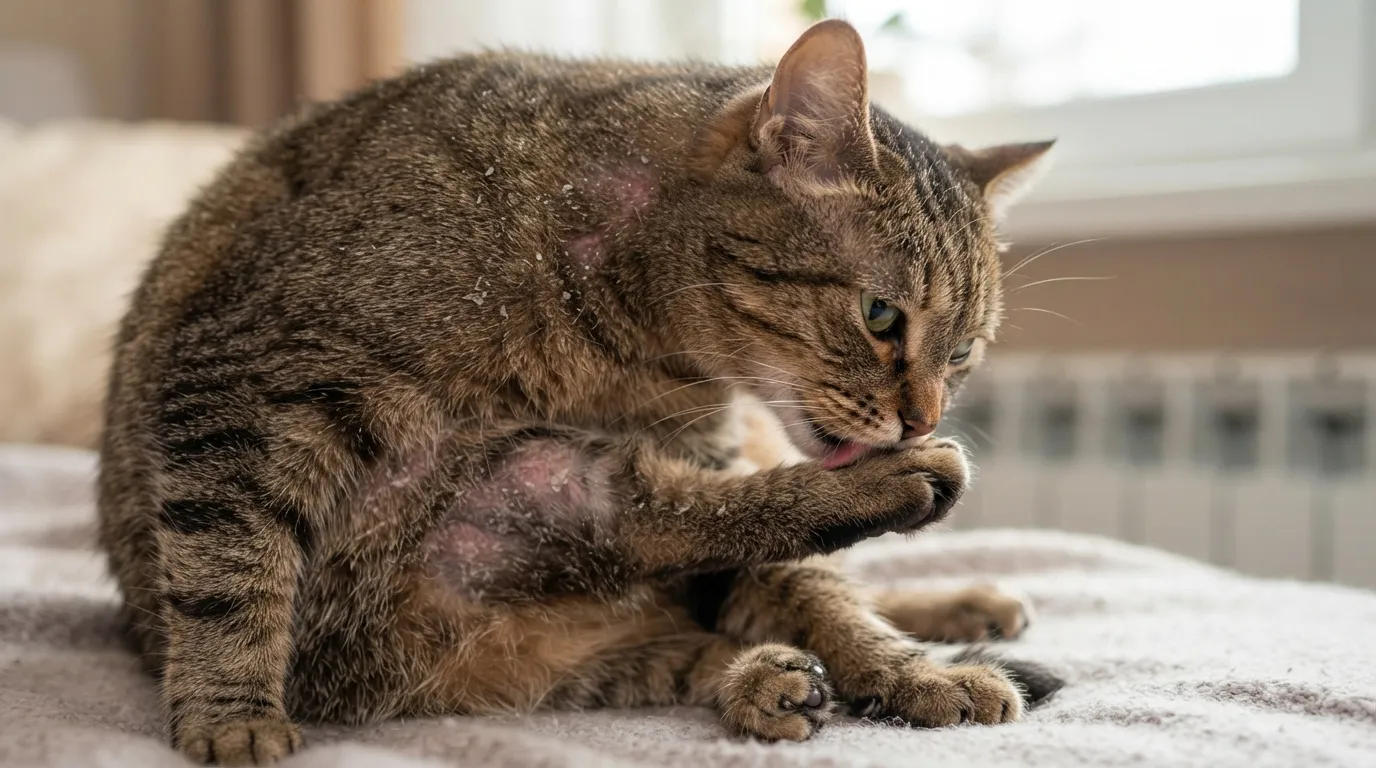
Your heating system is quietly wrecking your cat’s coat all winter long.
Dry cat skin can turn red, flaky, and itchy – and an itchy cat will bite and scratch until it scabs. Ask your vet whether an omega-3 supplement makes sense for your cat’s coat.
Dry, itchy skin can trigger overgrooming that gets misread as pure anxiety.
Ruling out a physical cause first keeps you from chasing the wrong fix for weeks. Fix #4 is one most owners only remember to do in summer – and that’s exactly the mistake.
#4 – Keep the Water Bowl Interesting Year-Round
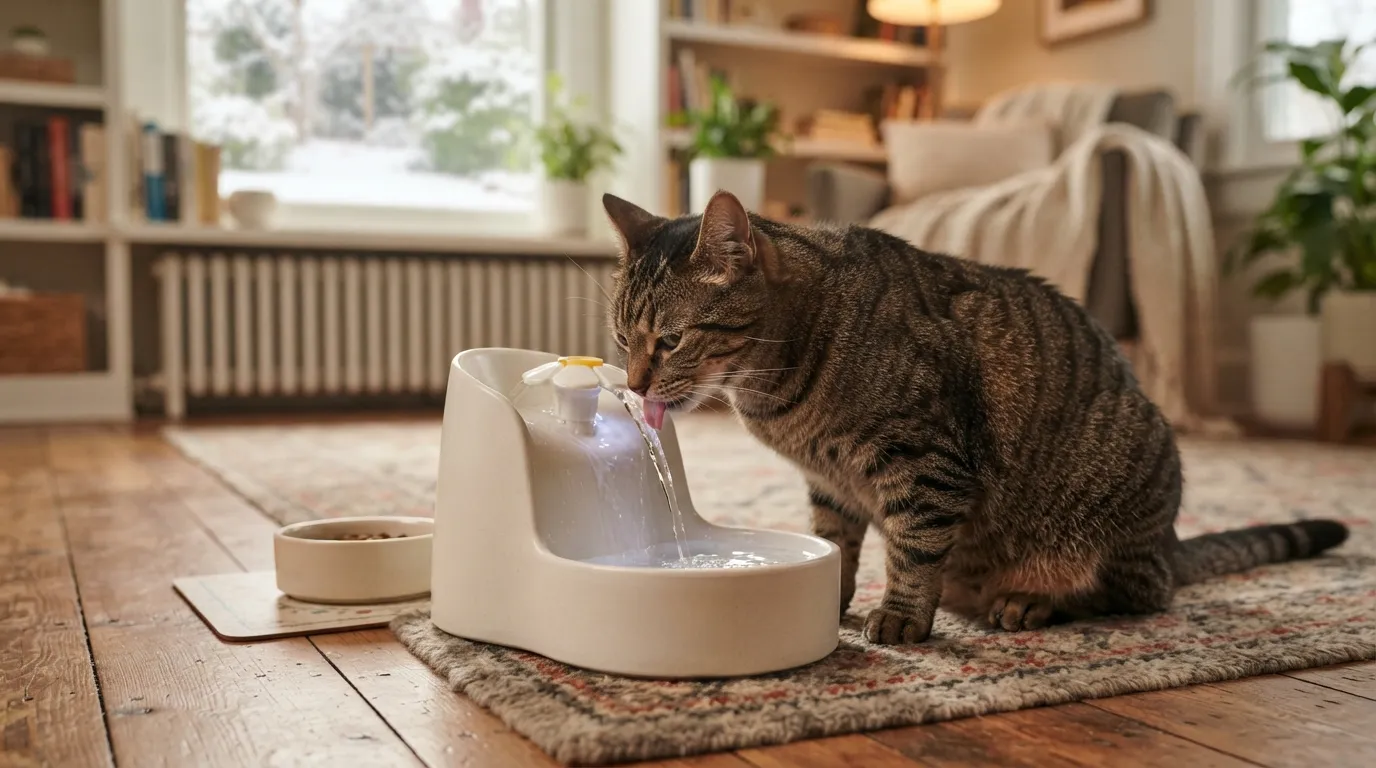
Winter is secretly one of the easiest times for a cat to get dehydrated.
Indoor heating dries out the air fast, and dry air pulls moisture straight out of your cat. A cat water fountain is one of the most vet-endorsed fixes, since moving water is simply more appealing than a still bowl.
Dehydration in winter is underreported and underestimated, especially in cats eating mostly dry food.
One fountain protects kidneys, coat, and energy levels all at once. The next fix is the one most experts say owners start far too late in the season.
#3 – Build a Weekly Enrichment Rotation (Not a Daily Routine)
Doing the exact same thing every single day is just boredom with a schedule.
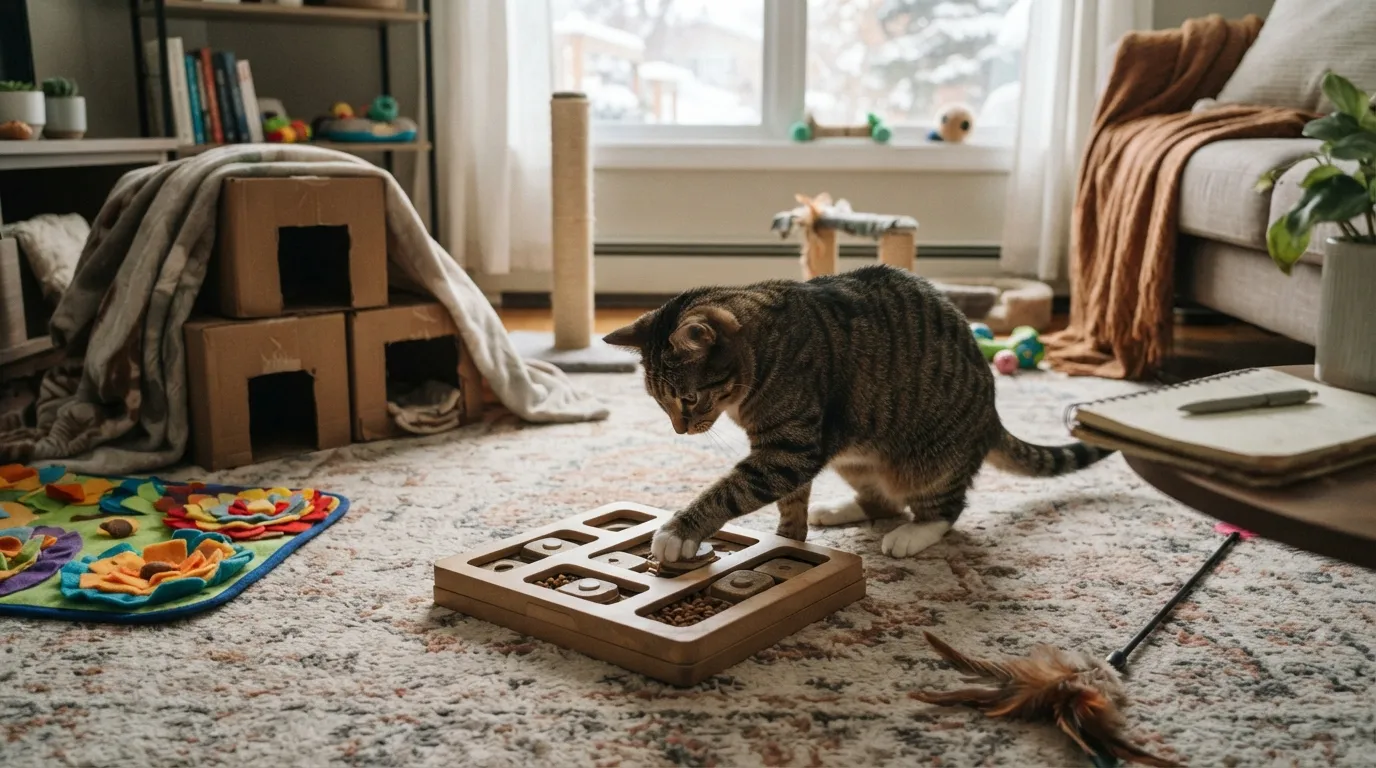
Try puzzle feeders and wand play on Monday, foraging games and trick training on Tuesday, new boxes or towel forts on Wednesday. Track what your cat actually loves and repeat those more often.
Variety is the mechanism here, not just a nice-to-have. A young, high-energy cat needs far more stimulation than a mellow senior does.
A pet parent may also note an increase in the cat’s problem behaviors, such as excessive vocalization or biting.
Kristyn Vitale, Cat Behavior Researcher
Build the rotation around your specific cat, not a generic list off the internet. Fix #2 is the one nobody wants to admit they’ve been putting off.
#2 – Start Harness Training NOW (Not When Spring Arrives)
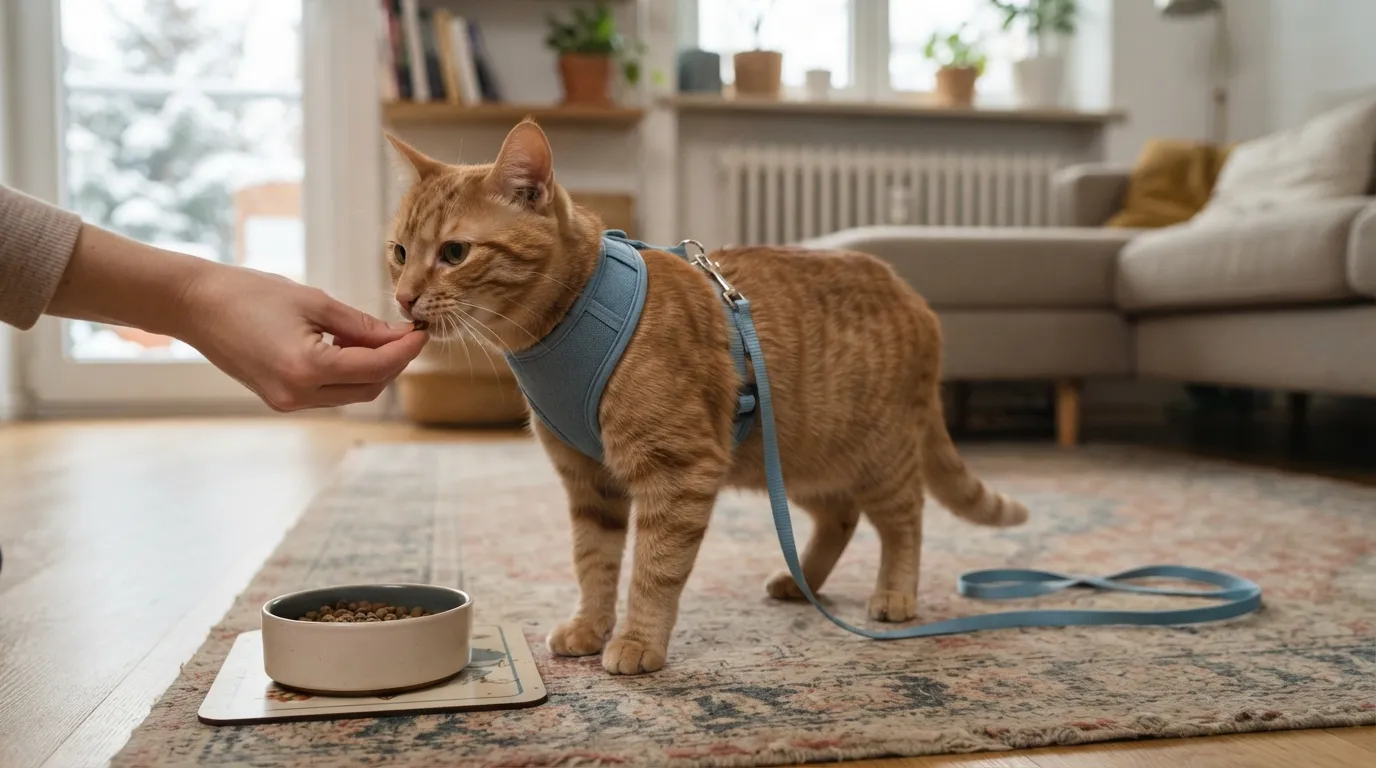
The owners who wait until spring are always the ones who can’t get the harness on by April.
Leave the harness near the food bowl for a few days so it stops looking like a threat. Then clip it on for a few seconds with treats, stretch that time out, and eventually add the leash indoors with zero tension.
Most cats explore at their own pace rather than walking beside you like a dog. But a well-trained cat on a harness gets safe access to new sights and smells right when cabin fever peaks.
Winter is the perfect training window, precisely because nobody’s rushing outside yet. And it all leads to fix #1 – the one experts say is the root of almost every winter behavior problem.
#1 – Match Enrichment to Your Individual Cat, Not a Trend
This is the fix that makes all the other 14 actually stick.
Let your cat’s real personality guide your choices, not whatever’s trending online. Most indoor cat behavior problems trace back to one root cause – an enrichment deficit, not a medical issue and not “bad personality.”
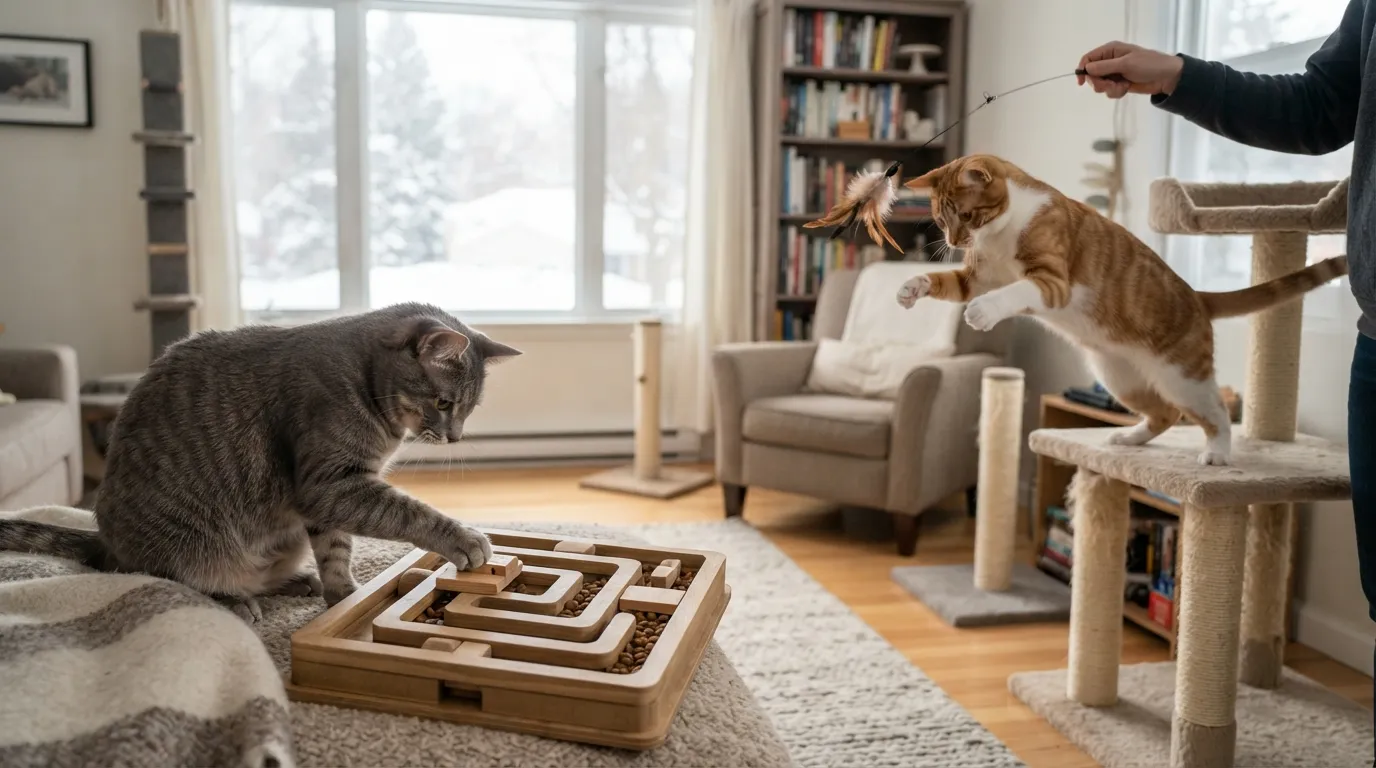
The wrong enrichment done consistently is almost as bad as none at all. A shy cat pushed into high-stimulation play withdraws further, while a high-energy breed stuck with only a window perch will destroy your curtains.
Most indoor cats need just a handful of essentials met every single day.
At a Glance: Daily Minimums
- Two short predatory-play sessions
- One puzzle-fed or foraged meal
- Vertical territory in at least two rooms
- A safe, quiet resting spot of their own
If your cat is missing more than one of those, boredom is almost certainly the real diagnosis.
The Bottom Line
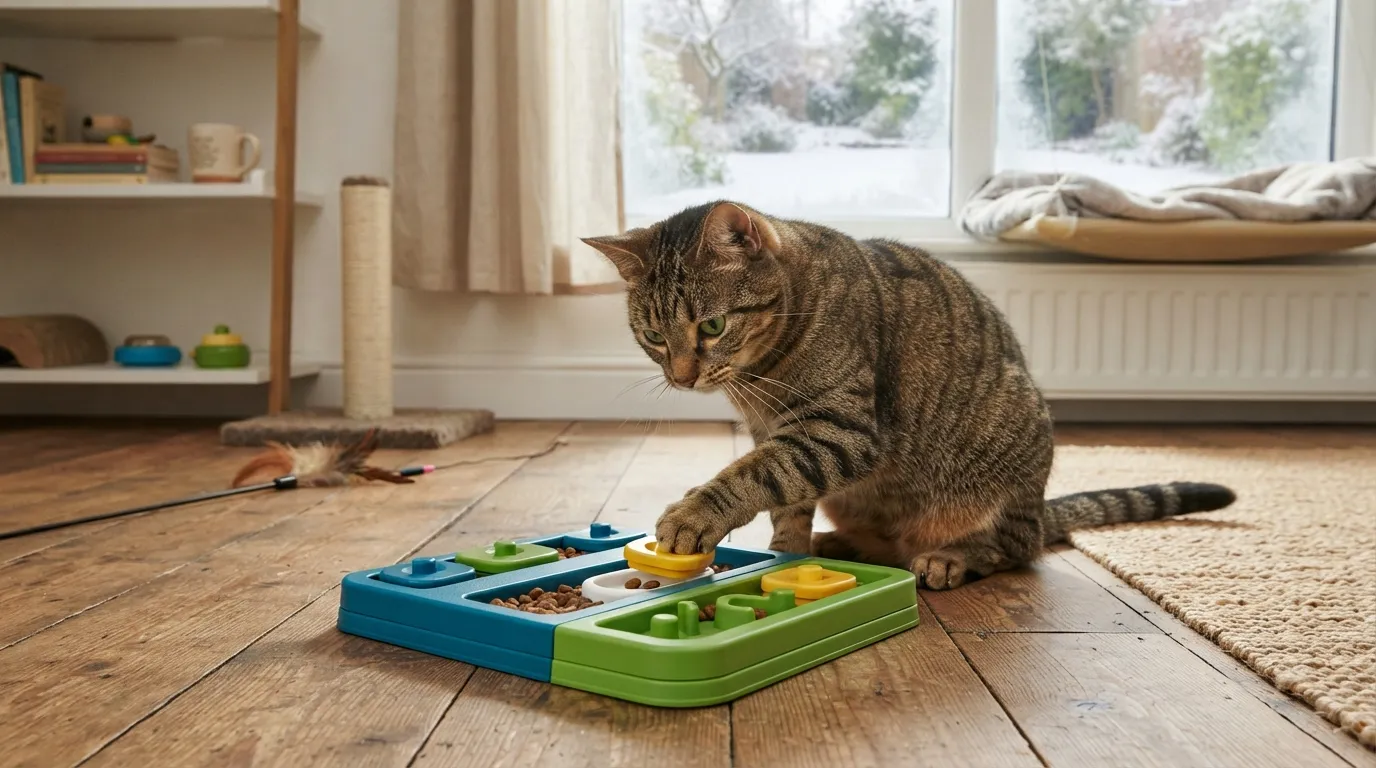
Most winter cat problems aren’t mysterious. They’re predictable, fixable, and almost entirely caused by enrichment deficits that quietly compound over months.
Cats do sleep more in winter, but that’s not a green light to do less for them – winter boredom is a genuine, common driver of bad behavior. These fixes range from free (toy rotation, scatter feeding, trick training) to low-cost (window perches, puzzle feeders), and any single one can flip a miserable, destructive cat into a calm, engaged one.
Start with the vet, build your weekly rotation, and tailor everything to your cat – not someone else’s. Which fix surprised you the most? Tell us in the comments.
Growing up traveling and experiencing new cultures and wonders, I have had a passion for nature, adventuring, photography, and videography. I am currently working towards a BSc in Biodiversity and Ecology at Stellenbosch University, and I hope to specialise in Marine Sciences one day.
Please send any feedback to Feedback@animalsaroundtheglobe.com