15 Signs Your Senior Cat Still Feels Young That Most Owners Overlook Completely
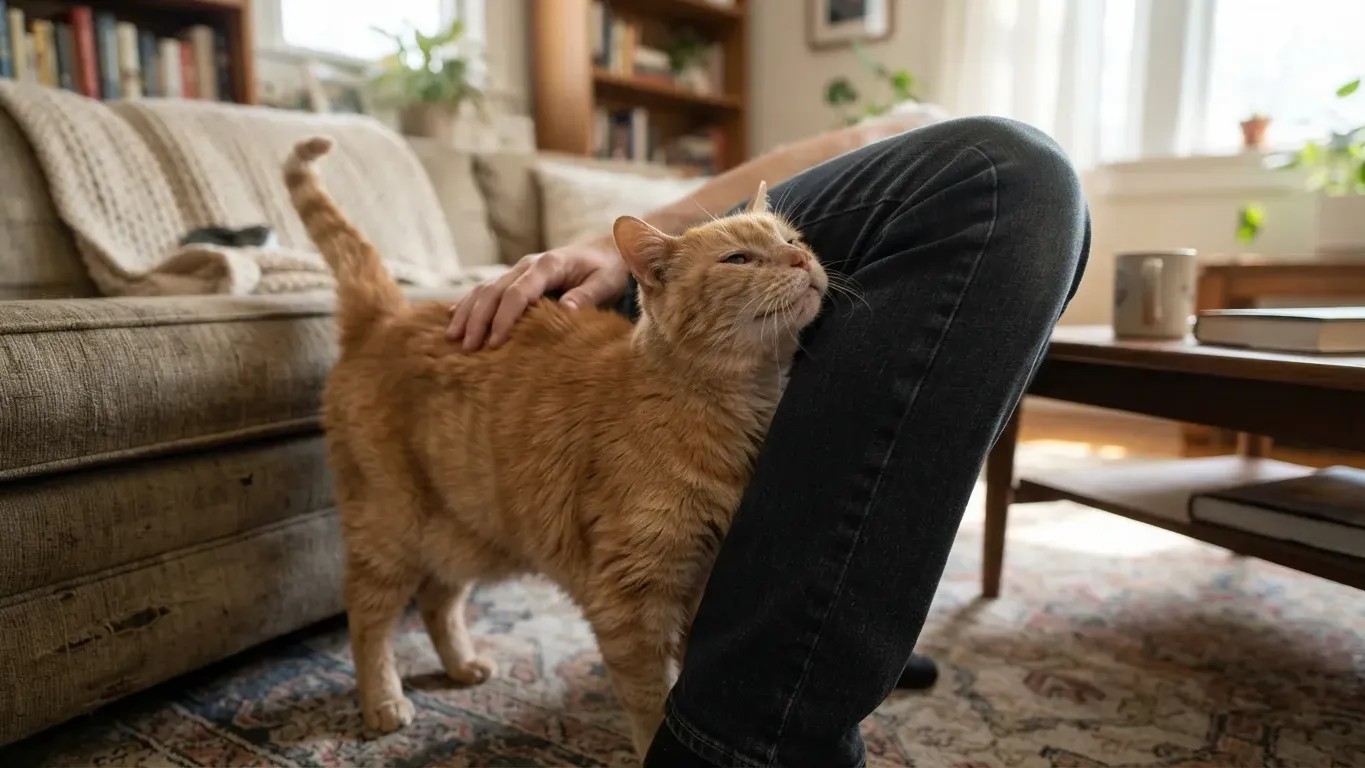
Everyone assumes a slowing senior cat is "just getting old." Cornell's feline health experts say that assumption is quietly costing owners years of insight into their cat's real health.
Aging in cats is far more individual than people think. Some cats hit their late teens and are still batting toys across the kitchen floor, demanding breakfast at 5 a.m. - and the gap between a cat that's declining and one that's secretly thriving is smaller than most owners realize. Here are the 15 signs vets and behaviorists say prove your senior cat still feels young, and most owners walk right past every single one.
#15 - They Still Show Up Hungry, Right on Schedule
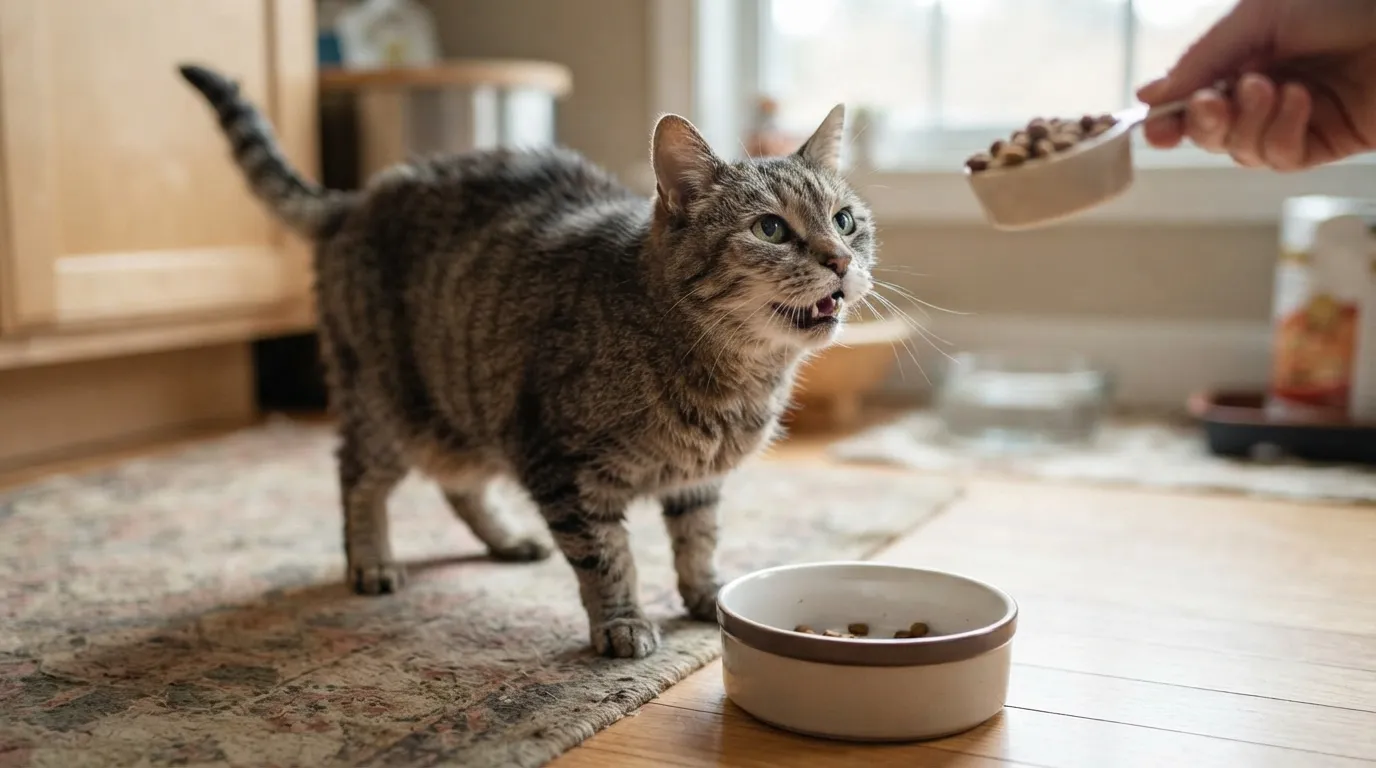
A senior cat that rushes to the food bowl the moment you pick it up is quietly winning at the aging game. Appetite naturally dips with age as taste and smell fade, so a cat still eager and on schedule is bucking that trend hard.
A cat's emotional state directly shapes its appetite. A happy cat looks forward to mealtime - and a happy cat eats well.
If your senior cat is still the first one at the bowl, that's not a small thing - that's a green flag. A sudden change in eating habits, on the other hand, is one of the fastest ways vets spot pain or metabolic trouble.
But that's nothing compared to what we found about #14...
#14 - Their Coat Still Feels Smooth and Slightly Glossy
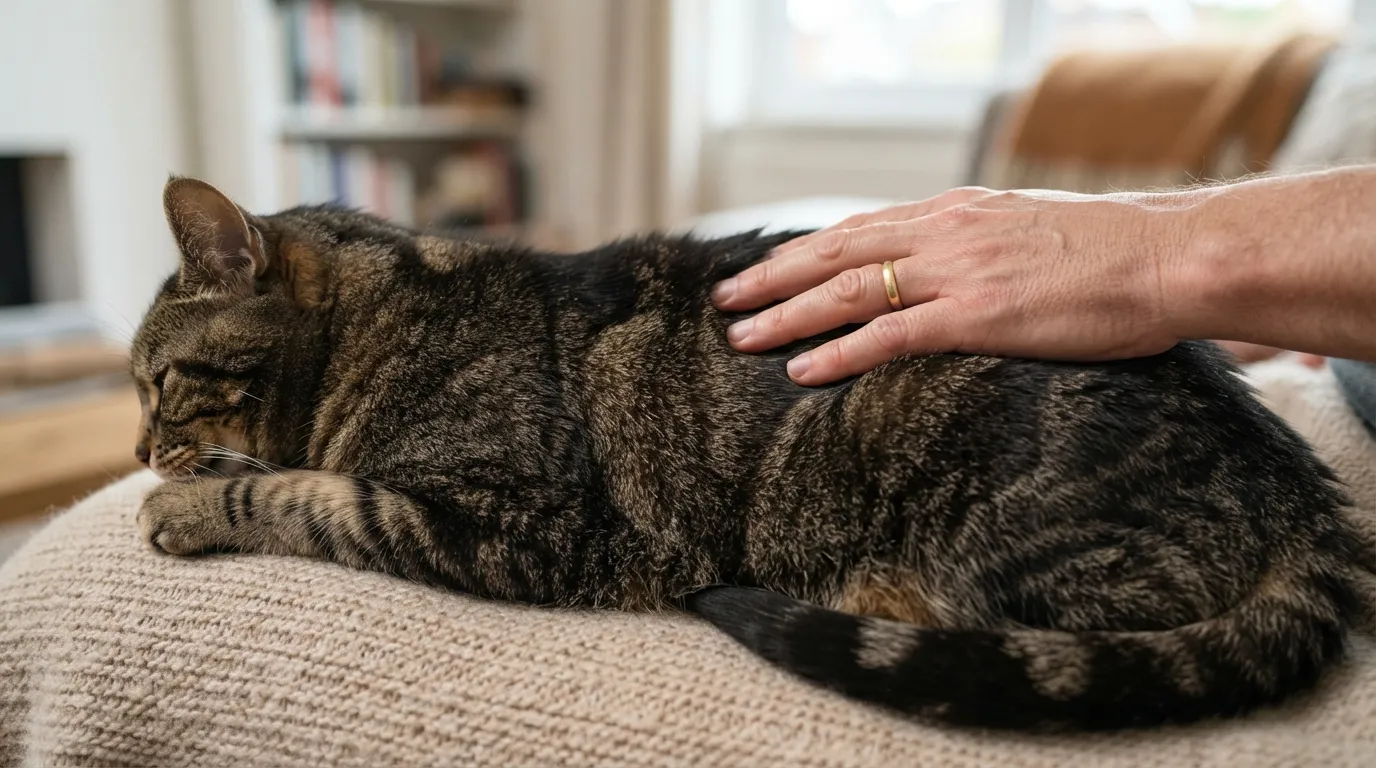
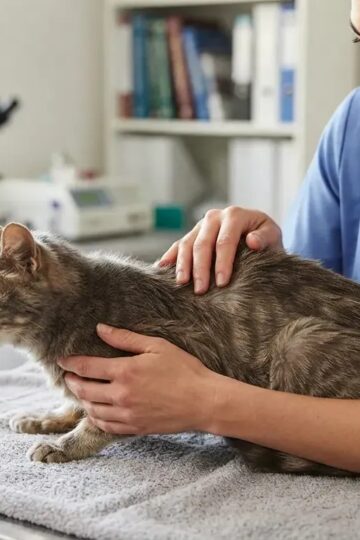
Run your hand along your senior cat's back right now. That simple act tells you more than most owners ever bother to check.
A shiny, smooth coat is one of the most underrated signs of good health in an aging cat. If it turns matted, dull, or coarse, that's often a sign of pain or illness - not just "getting old."
The first place grooming slips is usually the hips, tail base, and back legs - the spots stiff joints make hardest to reach. Sudden matting in a cat who groomed herself fine last month is worth mentioning at the next vet visit.
Fast Facts
- Veterinary guidelines classify cats as "mature" from 7 to 10 years old, "senior" from 11 to 14, and "geriatric" from 15 and up.
- A cat's coat is often the first visible clue vets use to spot hidden pain or illness.
- Stiff hips and sore joints usually show up first as neglected grooming around the tail base and back legs.
But that's nothing compared to what we found about #13...
#13 - They Still Self-Groom Regularly Without Help
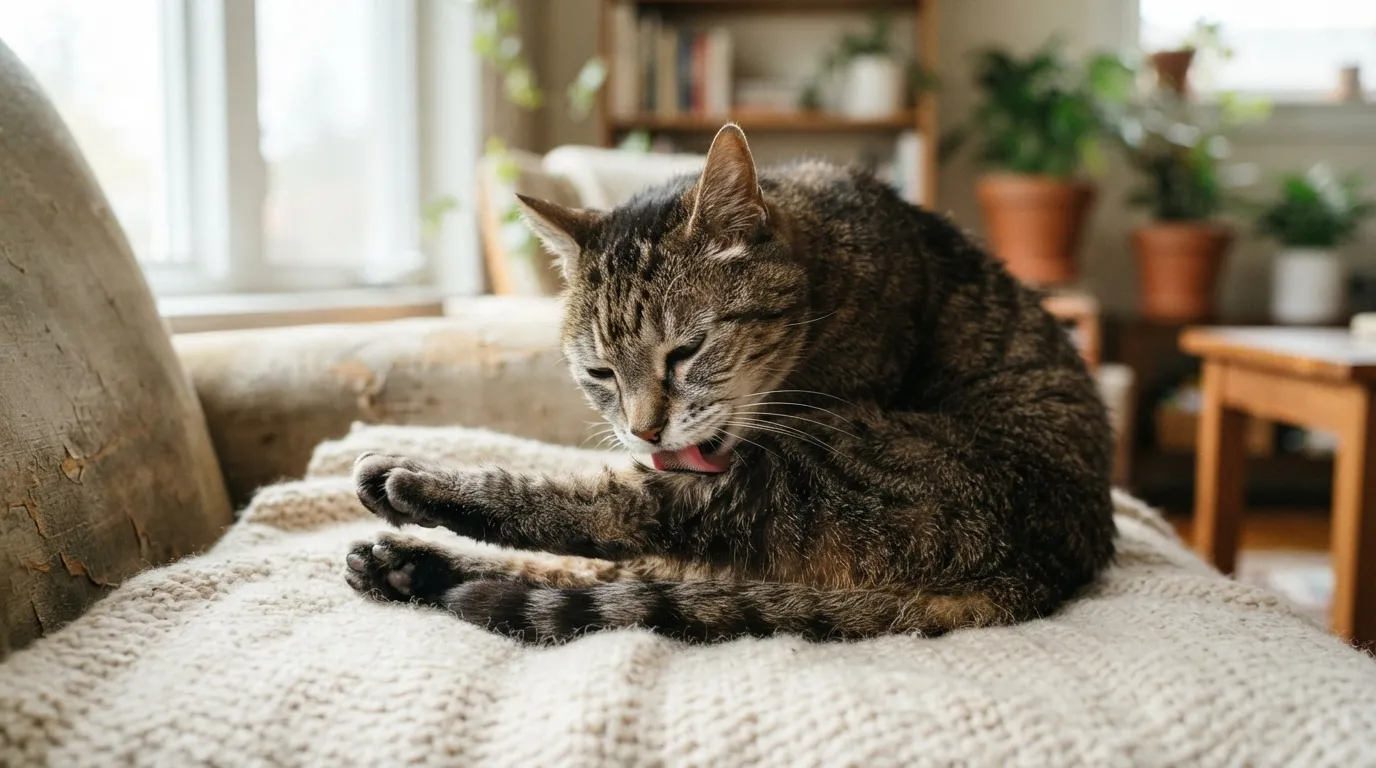
This one is so closely tied to the coat that most owners lump them together. They're actually two separate signals.
A content, comfortable cat spends real time grooming itself, and that upkeep shows in a healthy, shiny coat. An older cat that's hurting or exhausted often stops bothering, leaving fur unkempt, tangled, or dandruffy.
A senior cat that still grooms itself thoroughly is telling you its joints, weight, and mental state are all holding up. Arthritis is usually the first thing to interrupt this habit, so don't take a clean coat for granted.
But that's nothing compared to what we found about #12...
#12 - They Still Knead (and They Mean It)
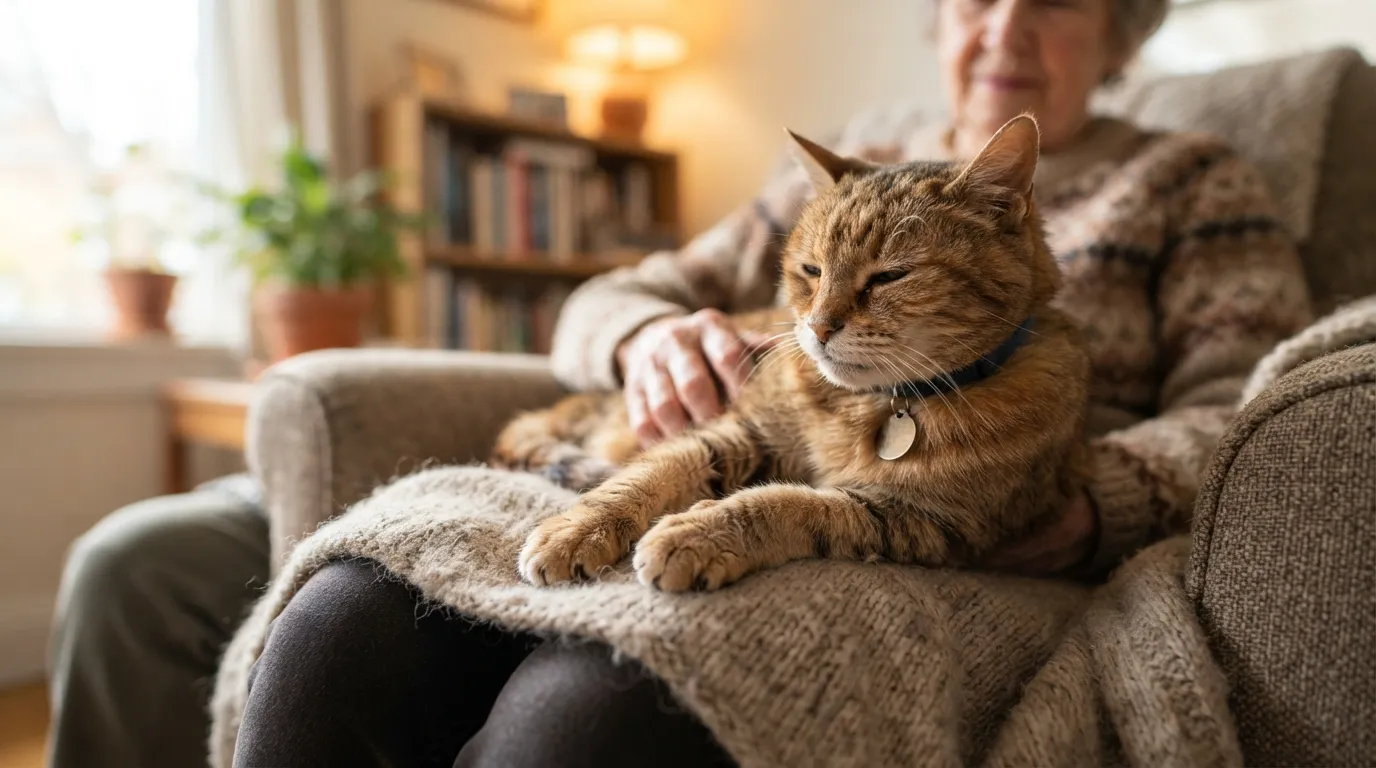
If your older cat still curls up on your lap and starts "making biscuits," pay attention. This behavior is more revealing than it looks.
Kneading traces back to kittenhood security - the comfort a kitten feels nursing against its mother. Cats carry it into adulthood and do it almost exclusively when they feel safe and content.
A senior cat that still kneads is expressing comfort, safety, and emotional wellbeing - three things that quietly disappear first in cats that aren't feeling their best. Most owners dismiss it as a quirky habit; vets read it as a wellness report.
But that's nothing compared to what we found about #11...
#11 - They Still Purr Deeply and Consistently
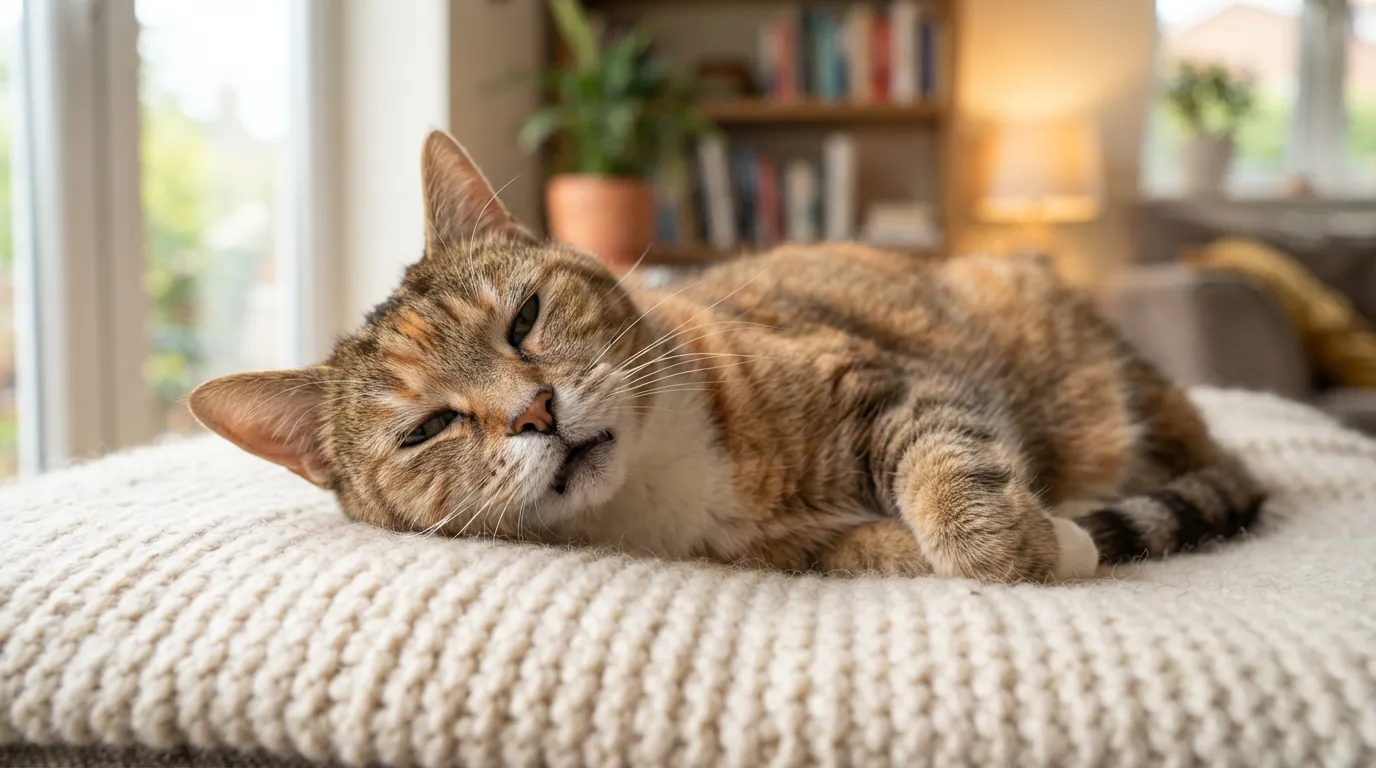
Almost every owner knows purring means happiness. In a senior cat, consistent deep purring carries a lot more weight than most people realize.
Purring isn't always joy - some cats purr when stressed or in pain, using it as self-soothing. Context is everything: a cat purring while relaxed, eyes half-closed, in a comfortable position is a different story entirely.
That distinction matters: a deep, voluntary purr during calm moments is a strong positive sign that the cat isn't carrying hidden discomfort. Watch for the setting, not just the sound.
But that's nothing compared to what we found about #10...
#10 - They Still Seek You Out for Social Interaction
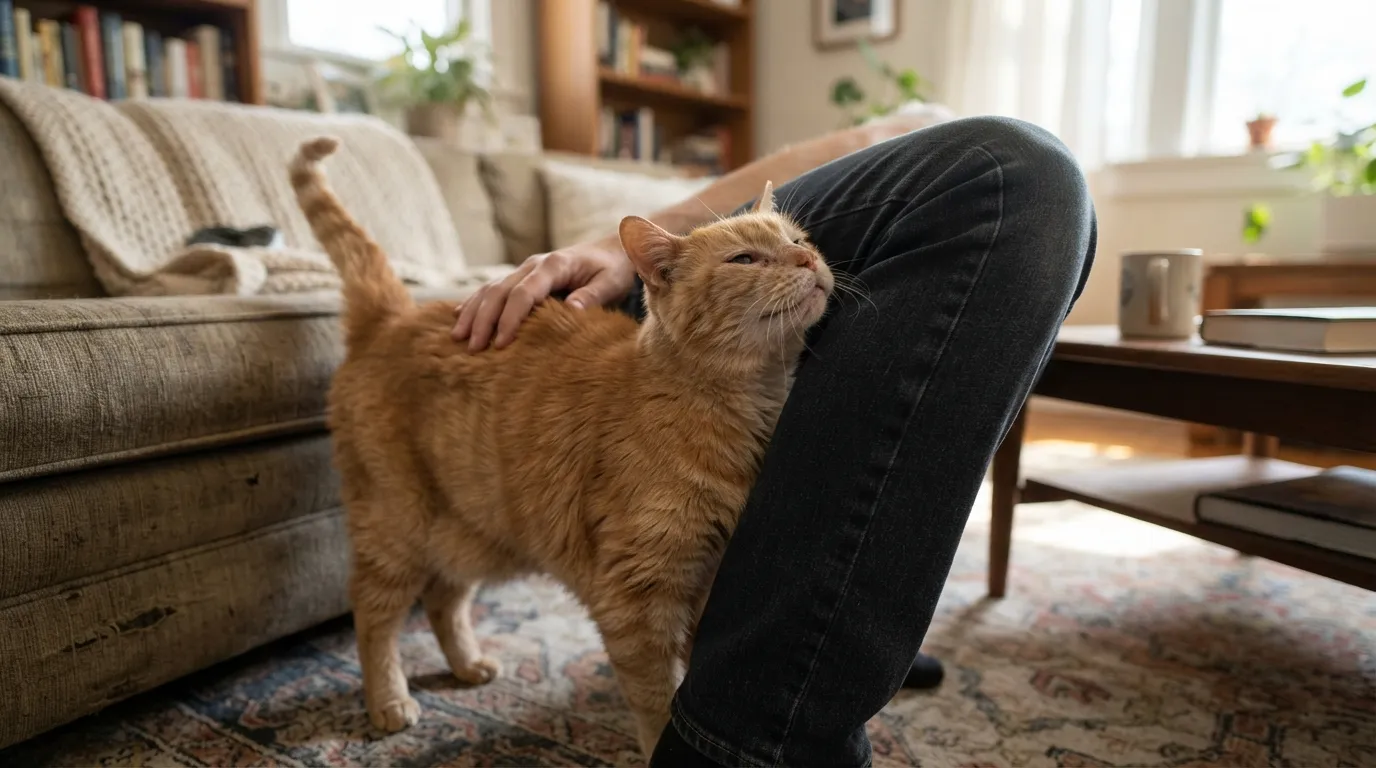
Here's one most owners write off as "just being clingy." They're wrong.
Cats have a reputation for independence, but a happy cat still rubs against your legs, purrs when petted, and curls up nearby for company. There's a real line, though, between healthy attachment and anxious clinging.
Contrast that with a senior cat that suddenly hides constantly - that's often discomfort or illness talking. A cat that chooses to be near you, on its own terms, is showing confident, contented behavior.
But that's nothing compared to what we found about #9...
#9 - They Still Greet You at the Door
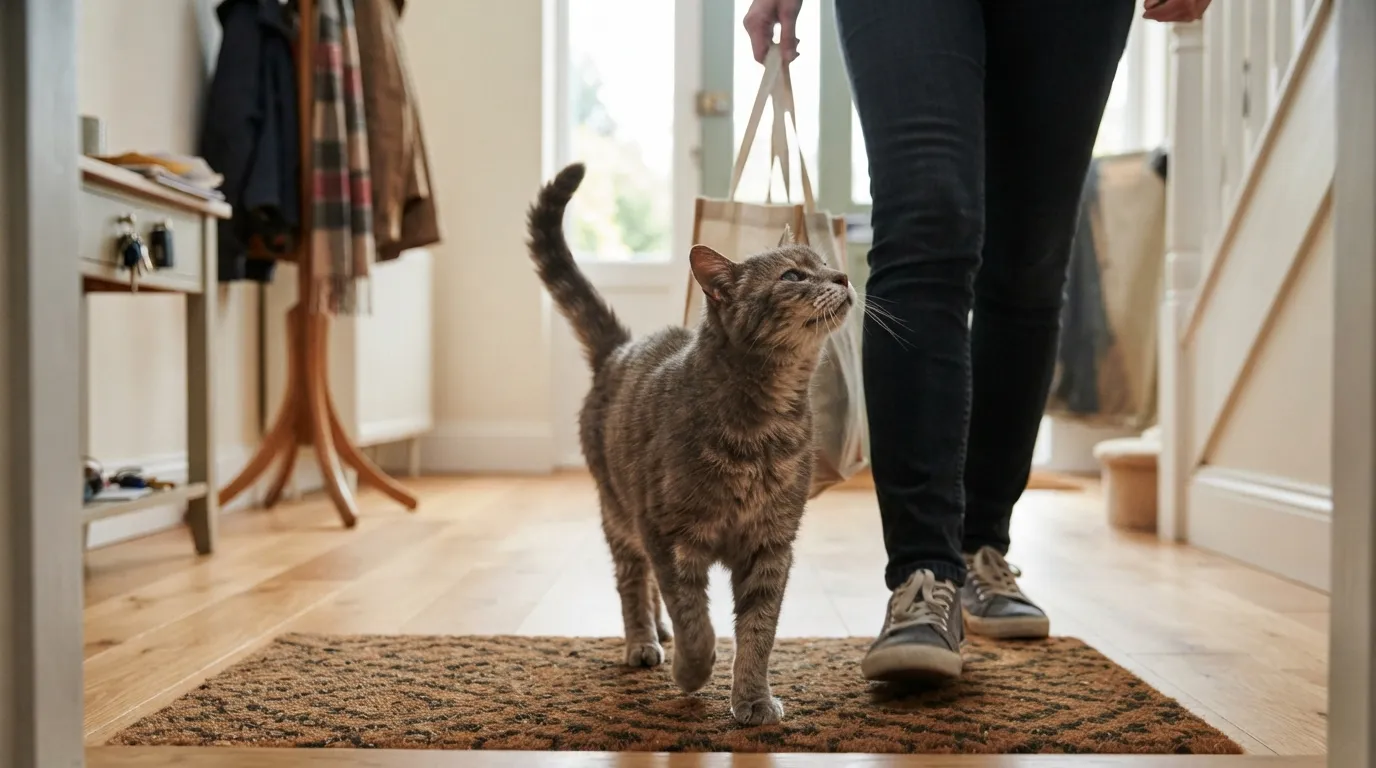
It sounds simple. It means everything.
A cat that trots over with its tail high, rubs against you, and sniffs at what you're carrying is a genuinely happy cat. Most senior cats lose this habit gradually as they feel less motivated - or less physically able - to make the trip.
A senior cat that still meets you at the door, tail up and curious, is demonstrating muscle strength, coordination, and emotional investment all at once. Watch for that upright, question-mark tail next time you walk in.
But that's nothing compared to what we found about #8...
#8 - They Still Show Genuine Curiosity About Their Environment
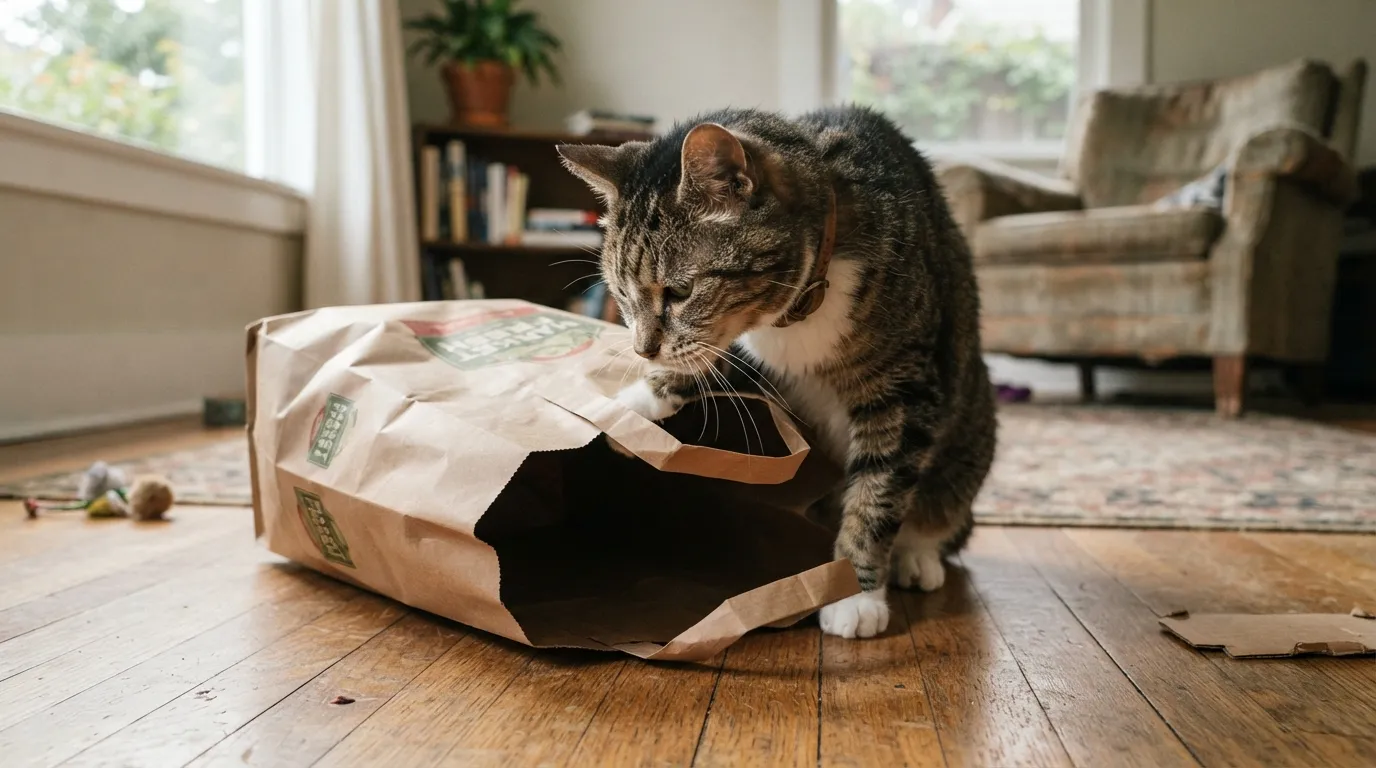
Some cats carry kitten-like curiosity well into their golden years - and it's one of the clearest signs their brain is still fully switched on.
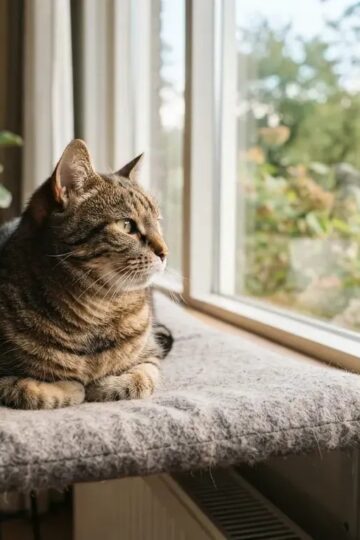
A happy cat stays interested in its surroundings: watching birds from a window, investigating a grocery bag, tracking movement across the room. That mental engagement matters just as much as physical fitness in an aging cat.
A senior cat that still investigates its world is telling you something younger cats can't - that curiosity survived the years. That's worth noticing.
But that's nothing compared to what we found about #7...
#7 - They Still Initiate Play (Even Briefly)
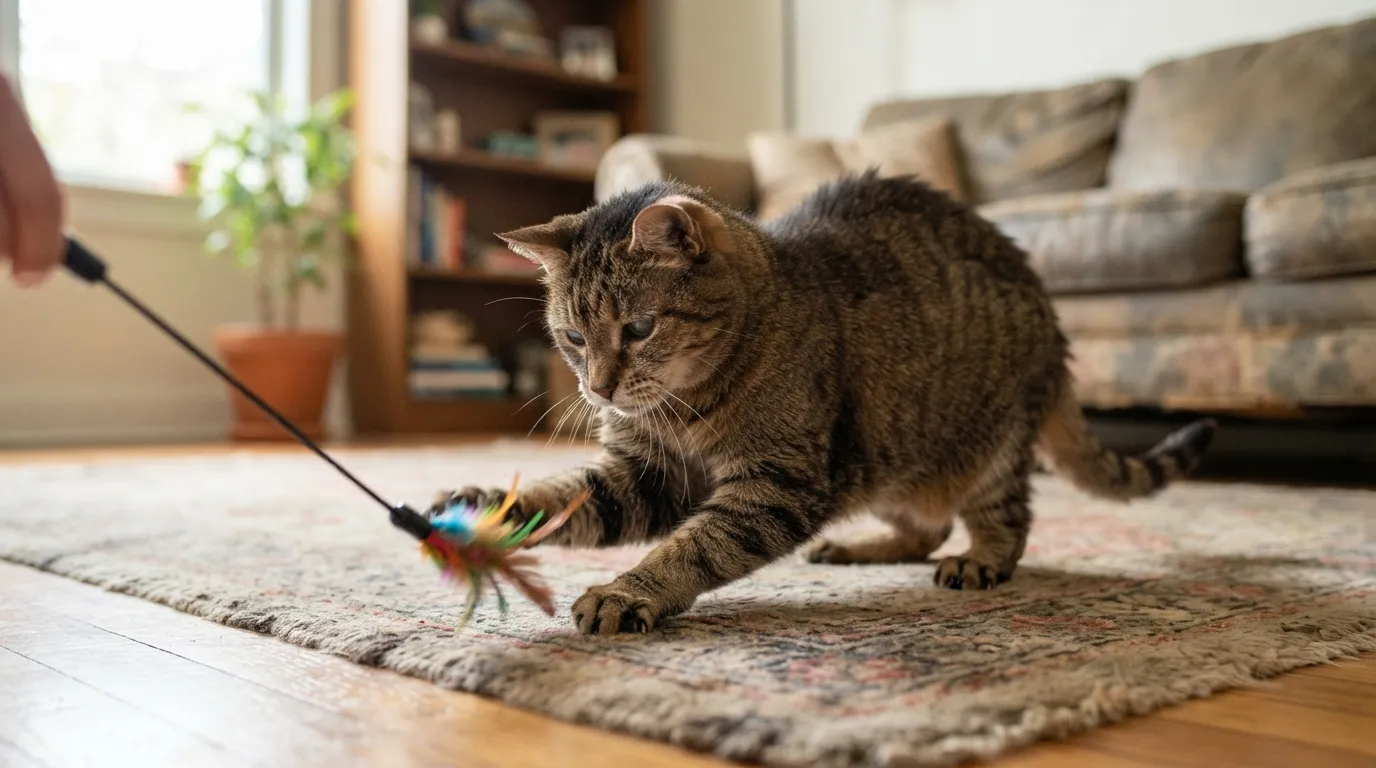
Most owners assume that once a senior cat stops playing, that's just the new normal. Vets are far more cautious about that assumption.
Senior cats still need mental stimulation, even if their preferences shift toward shorter, interactive sessions. The key word is initiate - a cat that bats a toy or pounces on a shadow, unprompted, is showing coordination many cats lose early.
This is arguably the single most overlooked positive sign of feline youth. A cat that doesn't need coaxing to play is in a category of its own.
Worth Knowing
- Studies show up to 90% of cats over age 12 have radiographic evidence of arthritis, yet most owners and even many vets miss it because cats hide pain so well.
- Reduced play is often the only visible clue, since cats rarely show obvious pain the way dogs do.
- A senior cat that still pounces unprompted is showing joint and muscle function many arthritic cats have already lost.
But that's nothing compared to what we found about #6...
#6 - Their Eyes Are Bright and Clear
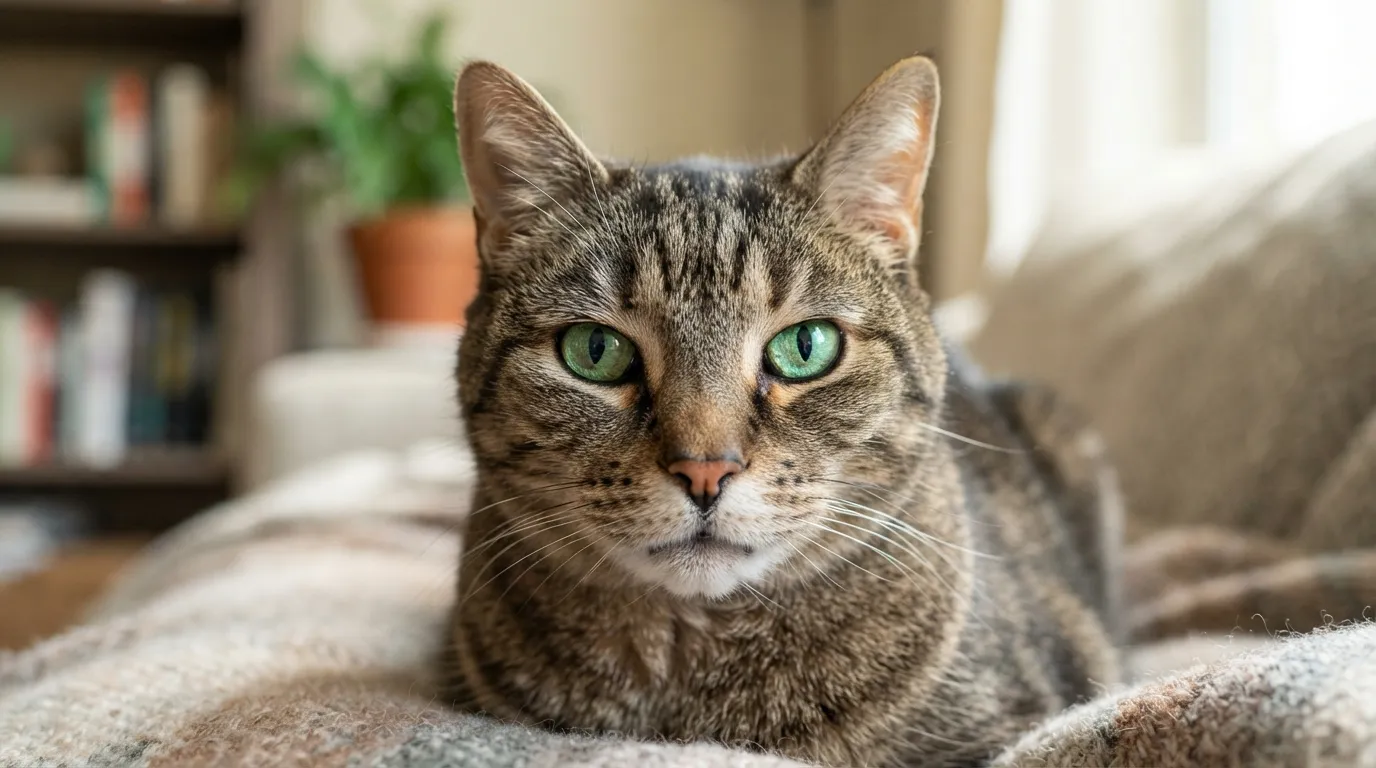
You can learn a tremendous amount about your senior cat's health just by looking them directly in the eyes.
Bright eyes, a shiny coat, pink gums, and fresh breath are the classic signs of a cat that's healthy and mostly pain-free. Cloudy, weeping, or dull eyes, on the other hand, can quietly reflect pain, dehydration, or early organ decline.
Clear, bright, alert eyes are worth celebrating. Most owners never look closely enough to know which category their cat is actually in.
But that's nothing compared to what we found about #5...
#5 - They Still Sleep a Normal Amount - Not Dramatically More
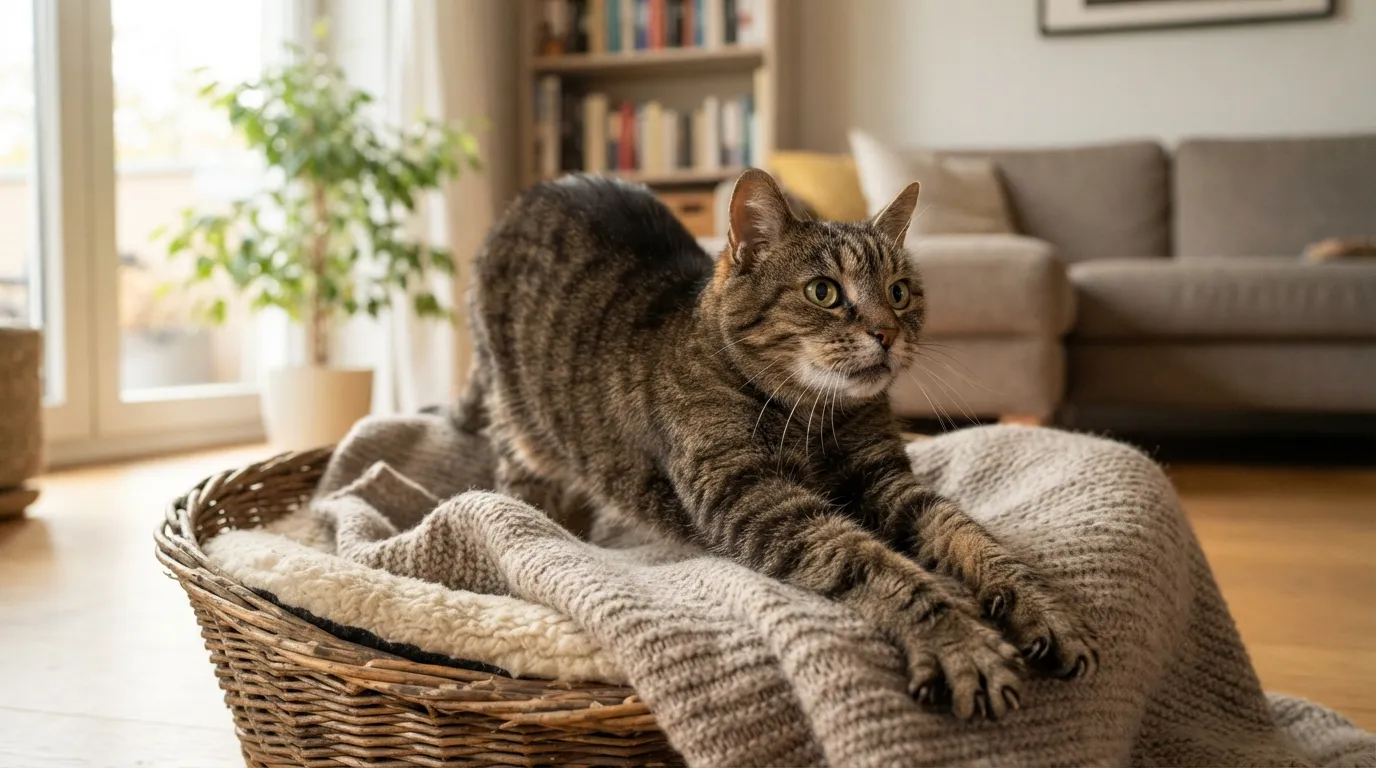
Yes, cats sleep a lot. But there's a real difference between normal feline sleep and the kind that signals something is wrong.
Senior cats often sleep 16 to 18 hours a day - that's the baseline, not a red flag by itself. What matters is whether they're alert and engaged during the hours they're awake.
Quick Compare
- Normal senior sleep: 16 to 18 hours a day, broken into naps, with alert stretches in between.
- Cause for concern: sluggish, hard-to-rouse grogginess, or sleeping straight through mealtime and playtime cues.
- Bottom line: the hours matter less than how sharp your cat is during the time it's actually awake.
The senior cat that wakes up refreshed and responsive is very different from one that can barely be roused. That waking behavior is what actually counts, not the hours logged.
But that's nothing compared to what we found about #4...
#4 - They Maintain a Stable Weight Without Effort
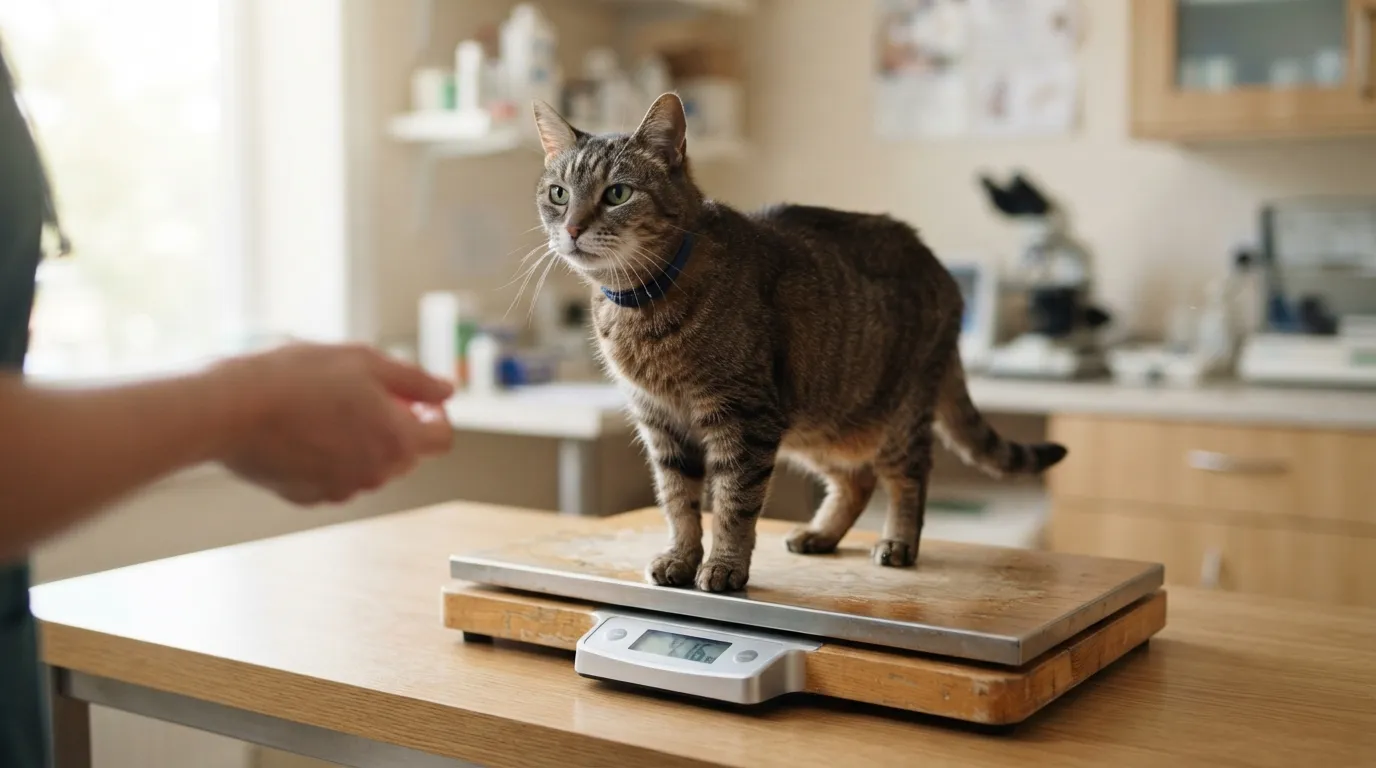
Weight in senior cats is one of the most underrated health indicators - and one of the easiest for owners to miss entirely.
Weight loss in an older cat can signal anything from kidney disease to diabetes, especially as metabolism naturally slows. Reduced ability to smell, taste, and digest food only makes stable weight harder to pull off.
A senior cat that holds steady weight without any dietary intervention is showing that its metabolism, organs, and appetite are all still aligned. That's genuinely harder to achieve than most people think.
But that's nothing compared to what we found about #3...
#3 - They Jump and Move Without Hesitation
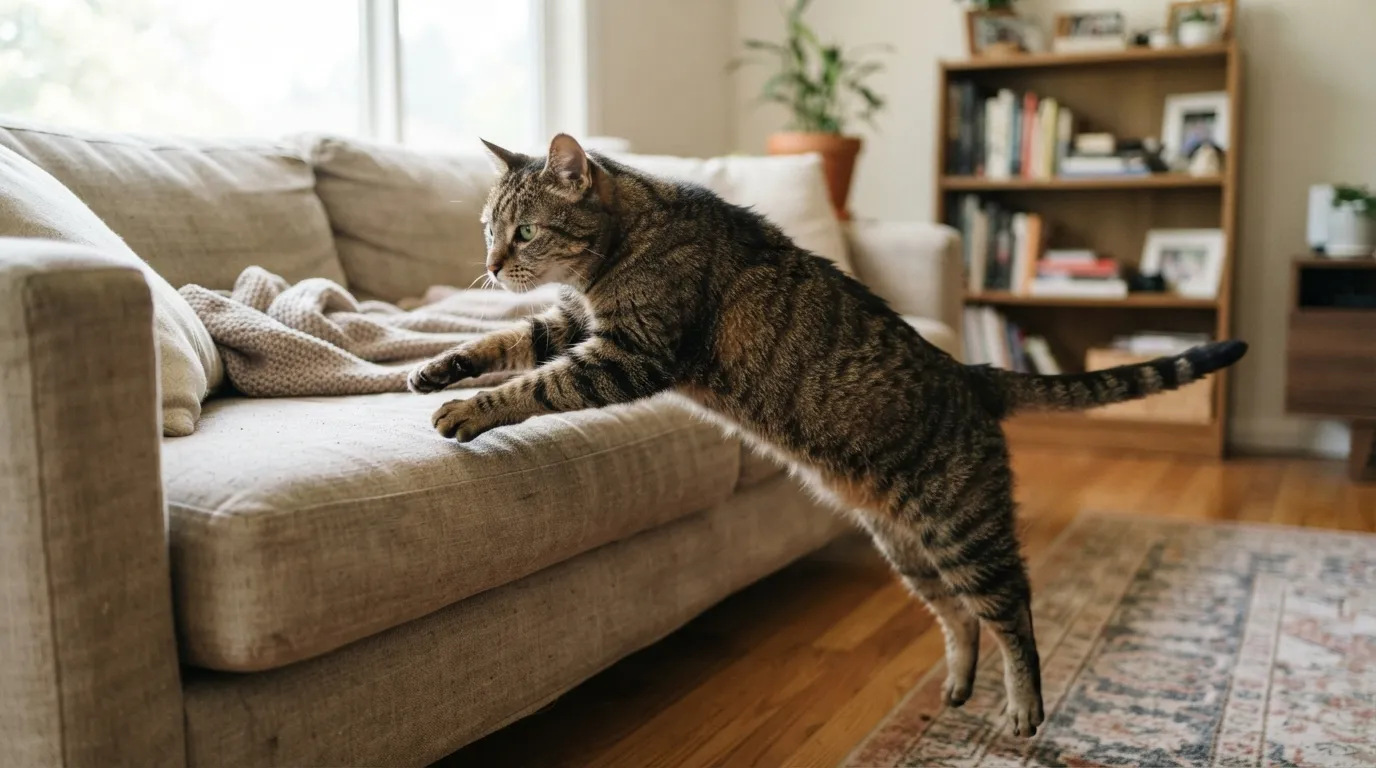
Mobility is one of the fastest things to deteriorate in senior cats - which makes it one of the most meaningful things to watch for when it holds up.
Muscle loss and arthritis often show up first as hesitation before a jump, or outright avoidance of high surfaces. So watch closely: does your cat pause and calculate, or just go?
At a Glance
- Hesitation before a jump is often the earliest visible sign of arthritis in cats.
- Unlike dogs, arthritic cats rarely limp - they simply jump, play, and move less instead.
- A senior cat clearing a couch or windowsill without pause is showing joint health well above average for its age.
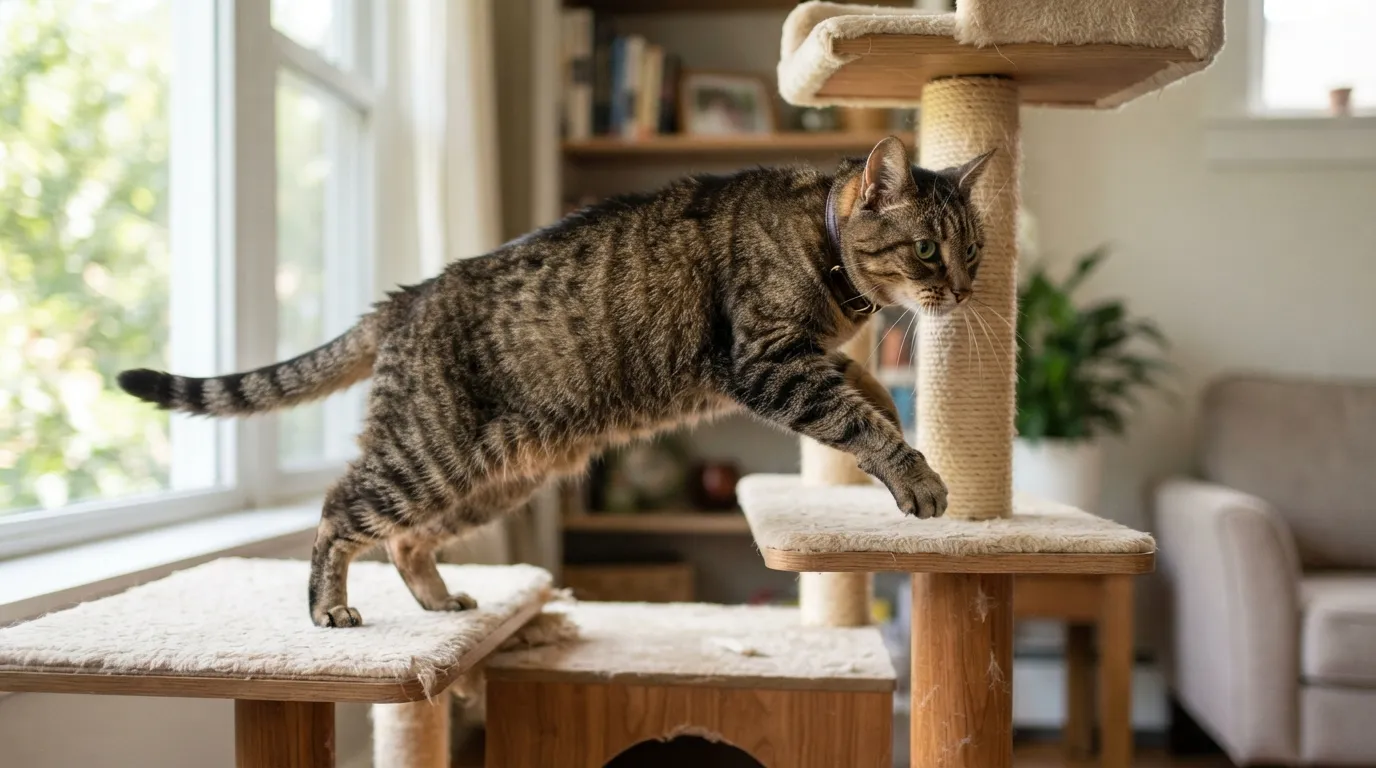
A senior cat that leaps onto a couch or windowsill without a second thought is showing muscle strength and joint health that many cats half their age don't have. The absence of that hesitation is a sign most owners walk right past every single day.
But that's nothing compared to what we found about #2...
#2 - They Still Respond Sharply to Sounds and Movement
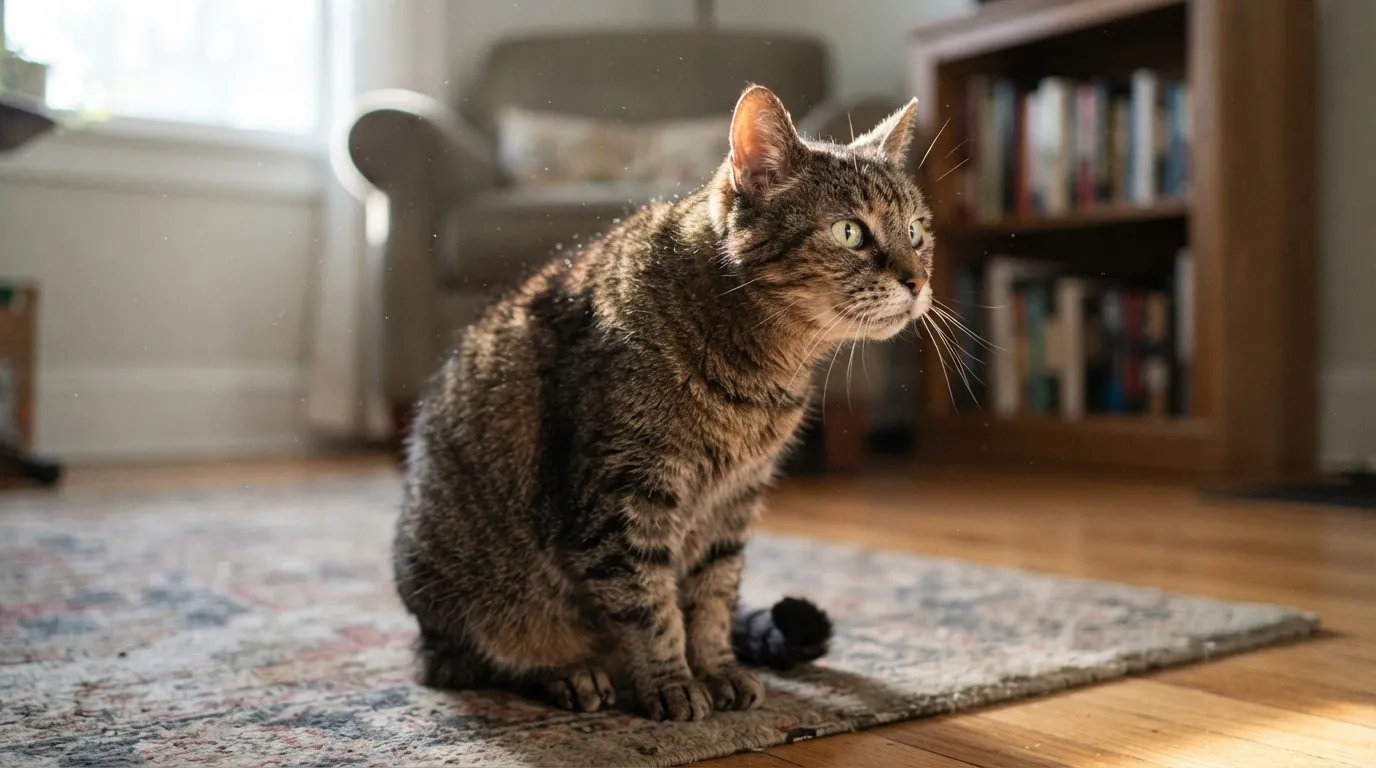
This one separates the cats aging gracefully from the ones quietly declining.
Reduced reactivity to sound or movement is often the earliest sign of fading hearing or vision - changes owners rarely notice until they're already significant. A senior cat that still snaps its head toward a sound, or bolts alert at the crinkle of a treat bag, is different.
That cat's sensory system is still firing on all cylinders - and that's rarer than it sounds in a cat over 10. It's proof you wouldn't otherwise have.
But the biggest sign of all? That's #1 - and most owners have never once thought about it...
#1 - They Still Have a Predictable, Contented Routine on Their Own Terms
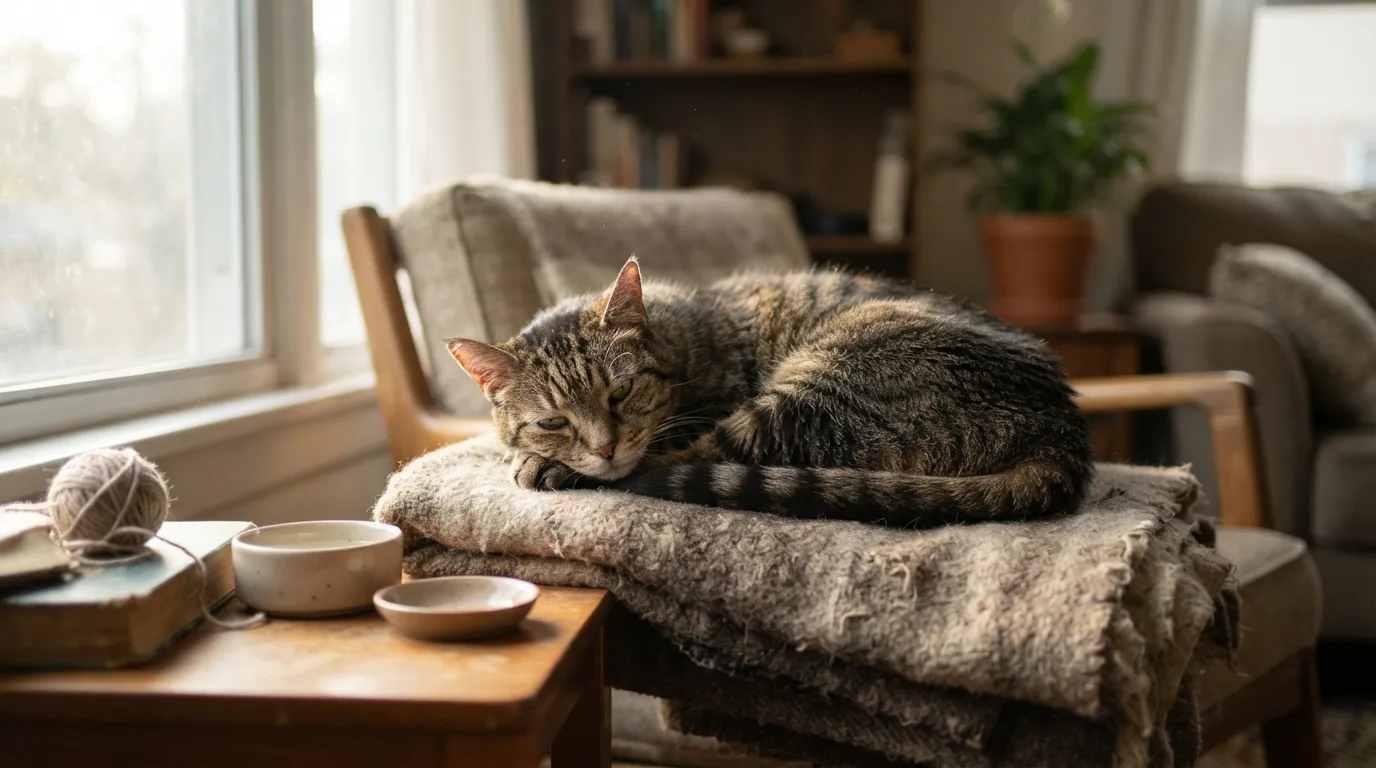
Here's the sign that ties all the others together - and the one almost nobody talks about.
Older cats cherish predictable days even more than younger cats do. A senior cat that wakes at the same time, eats with enthusiasm, grooms, explores briefly, naps, seeks affection, and settles down again - all without being prompted - has an internal world that's still ordered and rich.
Just as we become set in our ways as we get older, cats do too.
Cornell Feline Health Center
That self-directed daily rhythm is the single strongest signal that a senior cat still feels young from the inside out. When that routine holds together voluntarily, without medical support forcing it, you're looking at a cat that's genuinely thriving.
The Bottom Line
Most owners look for the absence of illness as their standard for a healthy senior cat. The real bar is higher, and far more specific.
A senior cat that still grooms itself, eats eagerly, jumps without hesitation, reacts sharply to the world, and follows its own contented routine isn't just "doing okay" - it's thriving. These are the 15 signs vets notice and most owners walk right past.
Now you know exactly what to look for. Does your senior cat show any of these signs that surprised you? Drop it in the comments - we want to hear about your cat.