Living with a cat means living with a creature that routinely does things you didn’t ask for, didn’t plan for, and honestly can’t quite explain. Your sofa gets shredded. A favorite mug gets casually swiped off the counter. A very dead mouse appears at your feet like an offering. It’s easy to read all of this as chaos, or worse, defiance.
The truth is more interesting. Much of what looks like bad behavior actually serves a specific function for your cat. Every behavior a cat displays serves a purpose, or it simply wouldn’t be repeated. Animals aren’t operating on randomness. Once you understand what’s actually driving these moments, the frustration often gives way to something closer to respect.
Knocking Things Off Surfaces: A Precision Test of the Physical World
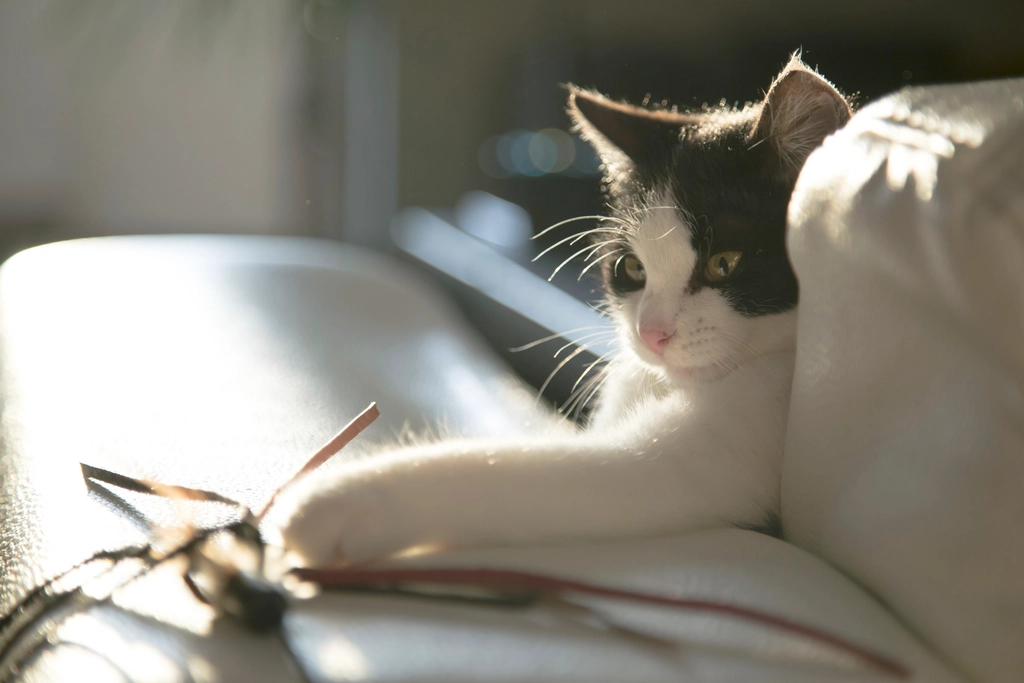
You’ve probably seen it happen. Your cat walks slowly toward an object on the table, makes deliberate eye contact with you, and then nudges it off the edge. The behavior looks spiteful, even theatrical. In reality, this common feline behavior has some fascinating explanations rooted in instinct and curiosity. Your cat relies heavily on its sensitive paws to learn about objects, and knocking something off a surface may simply be its way of discovering what that object is, how it feels, and whether it moves or makes a sound.
At its core, this table-sweeping behavior stems from your cat’s powerful hunting instincts. Cats are natural predators, and their paws are precision instruments designed for capturing prey. Many of your cat’s seemingly quirky behaviors can be traced back to those natural hunting instincts. In the wild, cats often bat at their prey to see if it’s alive or to weaken it before going in for the catch, and when your cat nudges an object off the counter, it could be acting on that same impulse to paw, swipe, and stalk. Your desk is, in a sense, your cat’s personal wildlife simulation.
Scratching the Furniture: A Full-Body Maintenance Routine
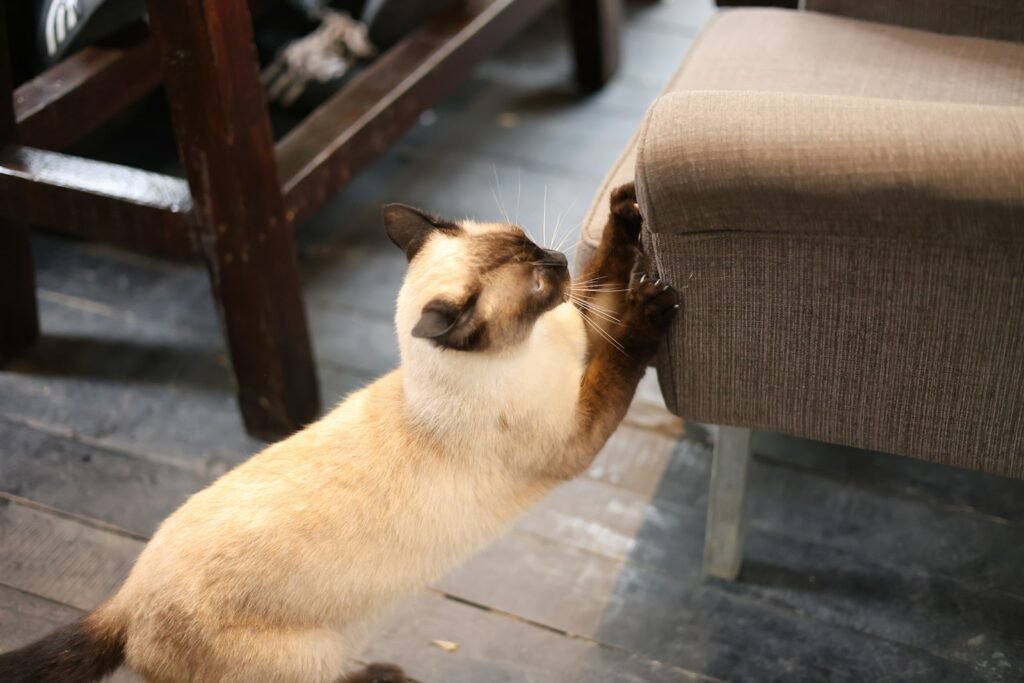
Nothing tests a cat owner’s patience quite like watching a perfectly good sofa become a cat’s personal scratching post. You may have already tried offering an alternative post, only to watch your cat walk past it with complete indifference and return to the armrest. Scratching is a normal, instinctive feline behavior, not a misbehavior at all. Cats scratch to mark territory, stretch their muscles, maintain healthy nails, and relieve stress.
Scratching surfaces allows your cat to mark territory with both the visual cue of torn material and the chemical cue of a pheromone released from scent glands in their feet. This pheromone contains information about your cat’s health, sex, and breeding status, which other cats can detect. Scratching also allows your cat to stretch out fully and relieve muscle tension, and the action even releases calming chemicals in the brain that help cats overcome feelings of anxiety and overexcitement. Calling this “bad behavior” is a little like calling a yoga session destructive.
Bringing You Dead Animals: An Uncomfortable but Genuine Gesture

Discovering a dead mouse, bird, or insect waiting for you at the doorstep is the kind of morning surprise that’s hard to appreciate in the moment. Yet this is, by most accounts, one of the more socially meaningful things your cat does. Cats bringing dead animals home can indeed be seen as a form of affection or gifting, stemming from their instinctual behaviors. This behavior carries over into domestication, where cats present their catch to their human companions to share their success and demonstrate care.
In the wild, mother cats bring half-dead animals to their kittens for sustenance and to show them how to hunt. This behavior is still ingrained in domesticated cats, who may see you as part of their family the way a mother sees her kittens. It is now thought that cats quite simply prefer to bring their prey back to their core territory where it is safer to eat it or store it for a bit later. Gross? Yes. A sign of deep trust? Also yes.
Ignoring You Completely: Preserving Energy the Smart Way
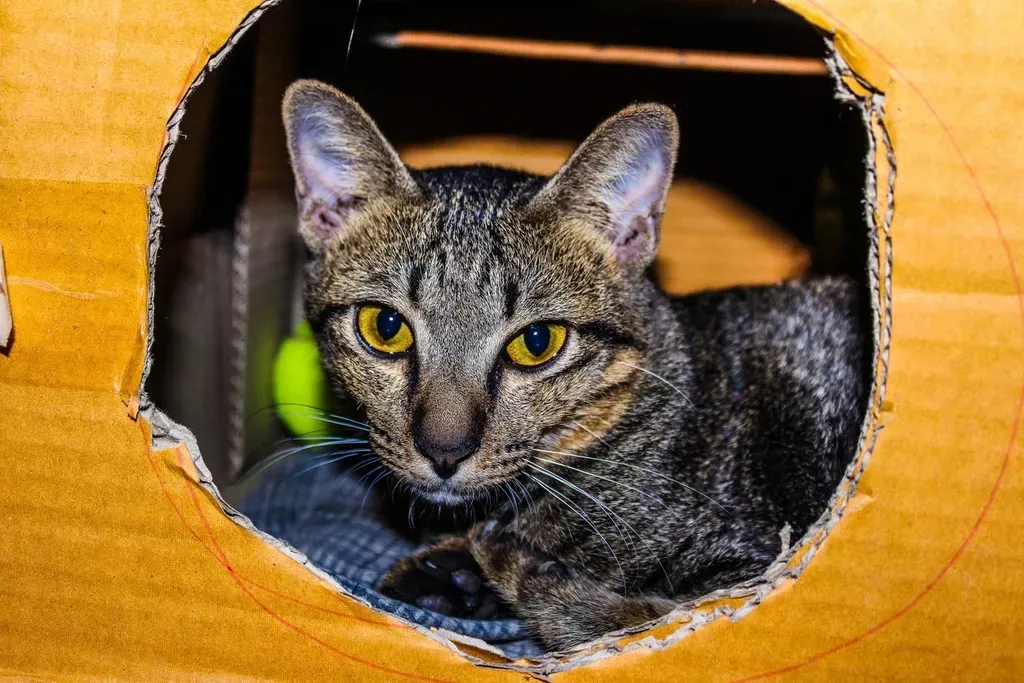
You call your cat’s name. Your cat stares at the wall. You call again, slightly louder. Your cat begins grooming a paw. It’s tempting to take this personally, but your cat isn’t dismissing you out of contempt. Cats evolved from a solitary ancestor, unlike dogs, which descended from a social species. They haven’t developed the same complex social behaviors dogs have, and much of their interaction is based on distance and non-prolonged contact.
Although domestic cats no longer need to hunt for survival like their ancestors, their genetic makeup still influences their behavior, including their inclination to conserve energy through frequent napping and rest. Cats have a slightly higher basal temperature than humans, and they’re naturally drawn to warm areas for their slumber, so you’ll often find them basking in the sun or curling up on warm surfaces. That strategic stillness you read as aloofness is, in reality, a finely tuned energy management system built over thousands of years.
Biting During Petting: Setting a Limit You Didn’t Know Existed
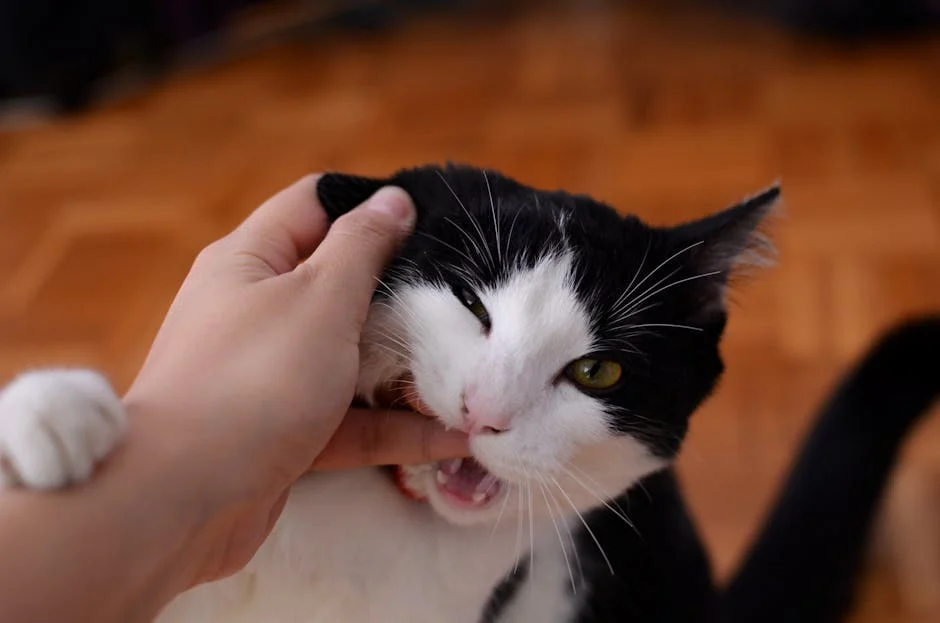
Everything seems fine. You’re petting your cat, your cat is purring, and then, without what feels like any warning at all, you get bitten. This so-called petting aggression confuses a lot of owners, who interpret it as random hostility. If you think like a cat, you realize that the unwanted behaviors your cat displays are not abnormal or bad. Your cat isn’t acting crazy or spiteful. It’s trying to solve a problem according to what its instincts are telling it.
Further evidence of how widely misunderstood cat behavior is can be seen in research showing that owners who believed their cats often misbehave to get back at them were actually more likely to use positive punishment to deter those behaviors. Unfortunately, punishing a cat in response to unwanted behaviors is counterproductive and tends to elicit or worsen problems like biting or scratching. When your cat bites mid-petting session, it’s communicating a boundary as clearly as it knows how. The genius isn’t in the bite itself; it’s in the fact that your cat has its own threshold for stimulation and is actively enforcing it.
Conclusion
Most of what gets labeled as “bad behavior” in cats is really just feline logic playing out in a human environment. Cats are among the most popular pets worldwide, yet there are still major gaps in the public’s general understanding of their social behaviors and related needs. People often hold negative or ambivalent attitudes about these behaviors, which can directly impact the cat’s welfare outcomes.
Your cat isn’t staging a rebellion. It’s scratching because it needs to, hunting because it’s wired to, and setting limits because it must. Assumptions and beliefs about cat behavior can have real welfare consequences, even when those assumptions are inaccurate. Understanding the purpose behind the behavior changes everything about how you respond to it. The relationship you build with your cat gets a lot easier once you stop expecting it to behave like something it was never designed to be.