You’ve bought your cat the most expensive toy on the market, something with feathers and bells and all the bells and whistles. Yet, what does your furry friend prefer? The plain cardboard box it came in. If you’ve ever wondered why your cat seems magnetically drawn to every box that enters your home, you’re not alone. This quirky behavior has fascinated cat owners for generations. The truth is, your cat’s box obsession runs deeper than you might think, rooted in ancient instincts and modern-day needs.
Let’s dive into the fascinating science behind this adorable feline fixation.
The Ultimate Safe Haven
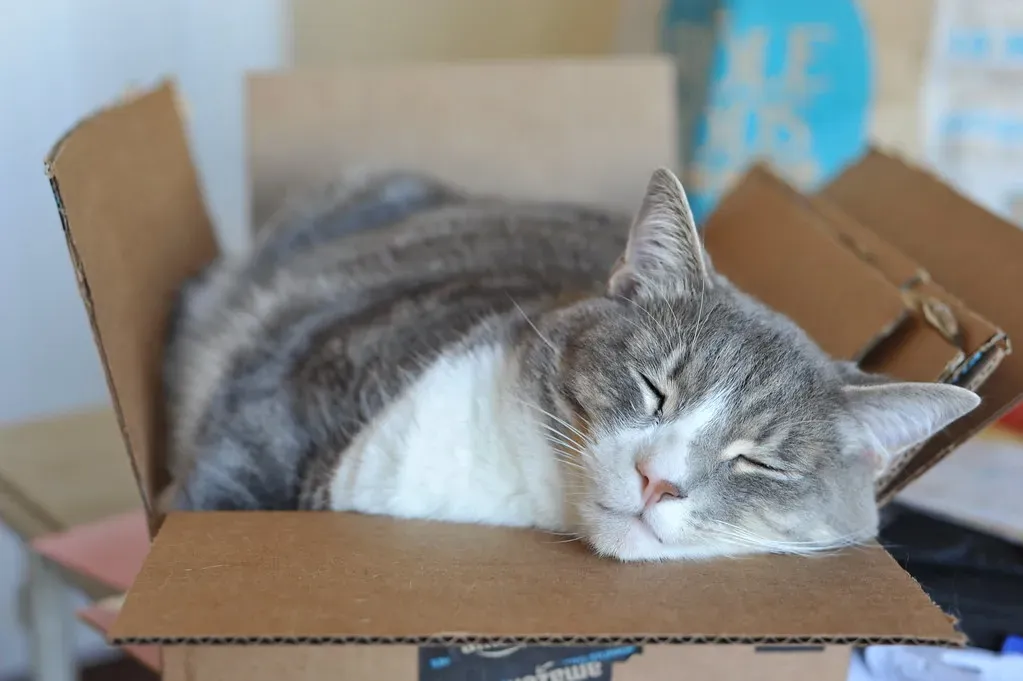
Your cat views that humble cardboard box as their personal fortress. All cats can get something out of a well-placed box, particularly relating to their hunting instincts. Think about it from your cat’s perspective: an enclosed space with solid walls provides protection from all sides. In the wild, cats face dangers from larger predators, so they’ve evolved to seek out secure spots where nothing can sneak up on them from behind.
A cat in a box feels their vulnerable back is protected, and they can periscope their little face around the edge to see everything happening. It’s like having a front-row seat to the world while staying completely safe. This instinct starts early too. A mother cat will seek out a quiet area to birth her kittens, so their first experience will be a safe, enclosed space.
Stress Relief in Cardboard Form
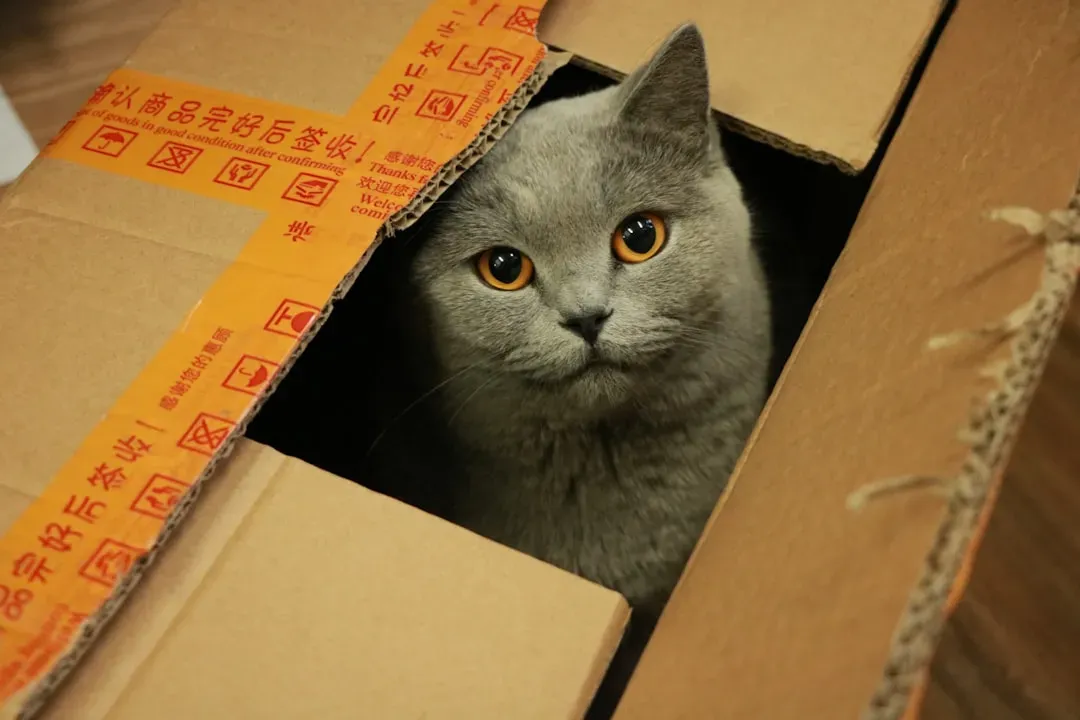
Here’s something you might not expect: boxes are scientifically proven stress relievers for cats. Studies have shown that stress hormones like cortisol are reduced in newly rescued cats when they are given access to a box. Researchers at the University of Utrecht conducted fascinating experiments with shelter cats and discovered something remarkable.
Cats with a hiding box showed a significantly faster decrease in stress scores than the control group. Your cat isn’t being antisocial when they retreat to a box after you’ve had guests over. They’re actually managing their anxiety in the healthiest way they know how. The box becomes their personal therapy room where they can decompress and reset their emotional state.
The Perfect Hunting Blind
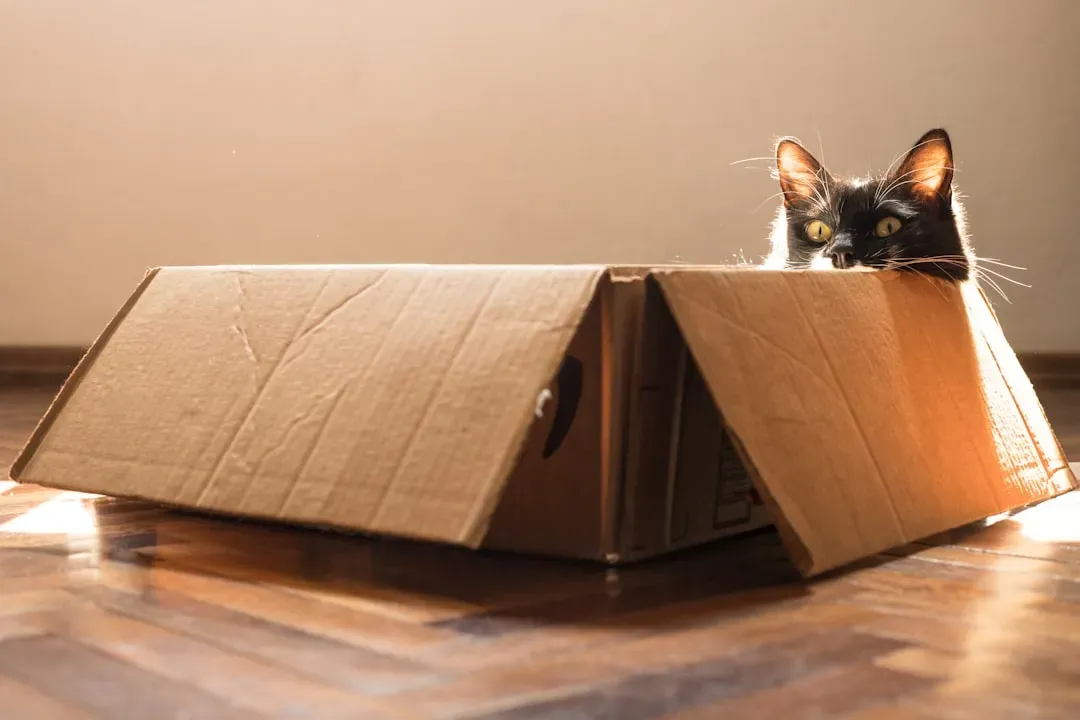
Cats that roam free outside occupy a delicate midpoint in the neighborhood food chain, where they are both predator and prey. Even though your pampered house cat doesn’t need to hunt for dinner, those predatory instincts remain incredibly strong. Predatory instinct, rather than hunger, is probably the main reason why some domestic cats regularly hunt wild prey.
That box sitting in your living room? Your cat sees it as the ideal ambush location. A cat’s instincts to hide and pounce in order to capture their prey makes the box a perfect place for your domestic cat to try out similar behavior. Whether they’re stalking a toy mouse or preparing to attack your unsuspecting ankles, the box provides the concealment they crave. Honestly, have you ever noticed how your cat’s eyes light up when they’re crouched in a box, watching you walk by?
Warmth and Cozy Comfort
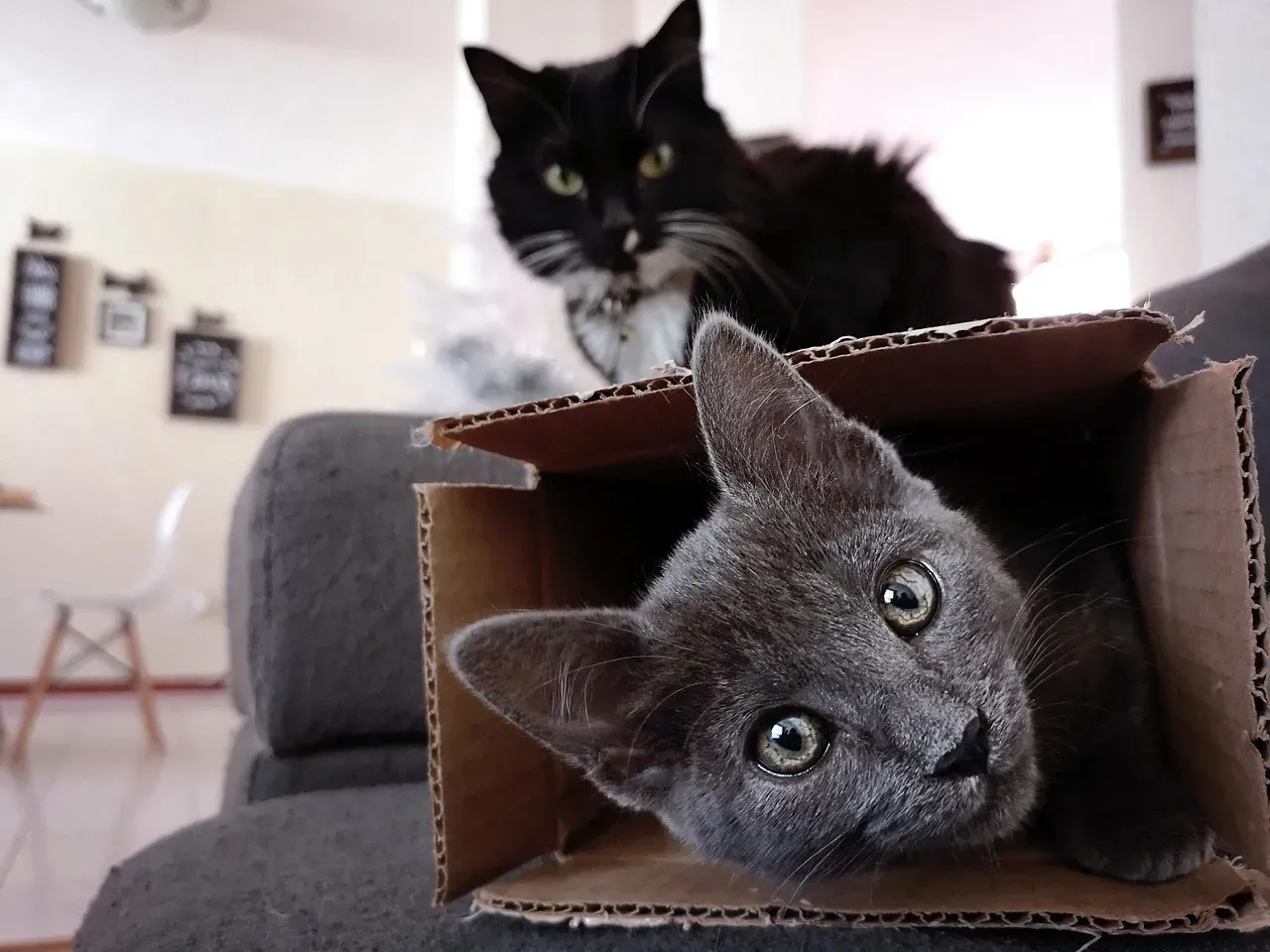
You might keep your home at a comfortable temperature for yourself, but your cat probably thinks it’s a bit chilly. Cats are most comfortable in temperatures between 86 and 97 F, but most homes are kept at around 72 degrees. That’s a significant difference when you’re covered in fur but still evolved to thrive in warmer climates.
Boxes act as insulators and trap body heat so cats can enjoy tropical temperatures. Cardboard is surprisingly effective at retaining warmth. When your cat curls up into a tight ball inside a box, they’re creating their own little heating chamber. Cardboard, in particular, is a good insulator, which means the inside of the box heats quickly, giving your kitty their little pocket of warmth. It’s basically a free heating pad that doesn’t require any electricity.
Curiosity and Novelty
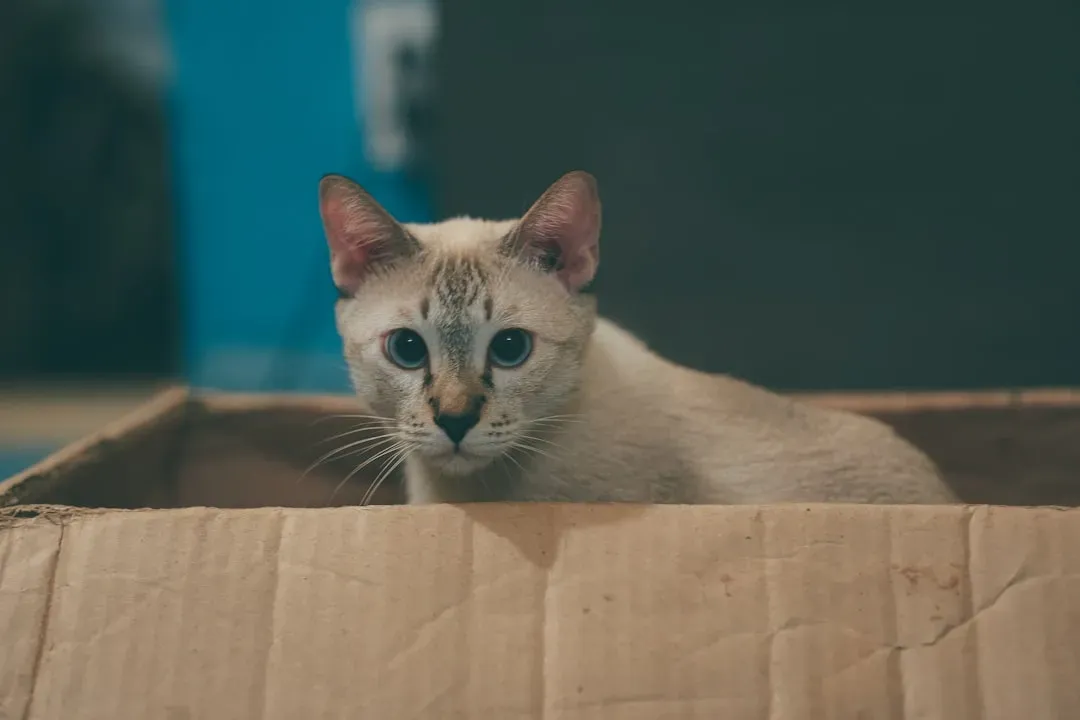
Cats that live indoors know every inch of their kingdom and immediately notice any changes, and for a curious cat, the box is something fun and novel to investigate. Your cat doesn’t just love boxes because they’re safe or warm. They love them because they’re new and interesting.
Every box that arrives in your home is like a present designed specifically for your cat’s entertainment. It offers new smells, especially if it came from somewhere far away. The texture is perfect for scratching and exploring. Let’s be real: cats are naturally curious creatures who need mental stimulation, and a simple cardboard box provides hours of investigation and play. The fact that it’s temporary makes it even more appealing. Your cat knows they need to enjoy it before you inevitably recycle it.
Territory Marking and Ownership
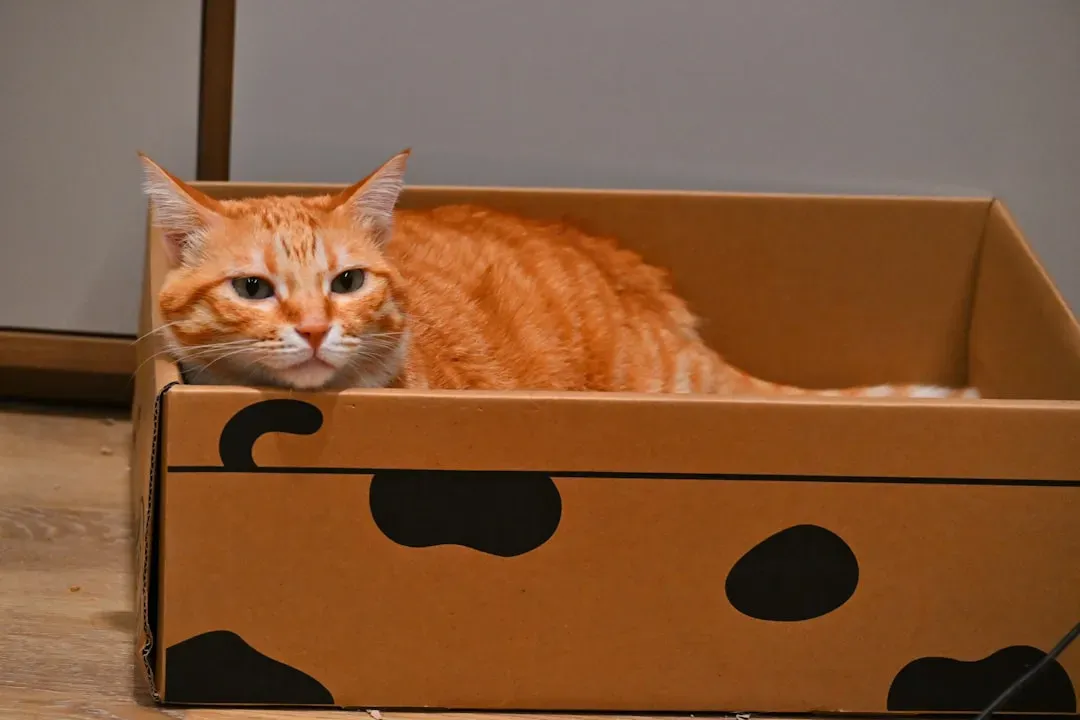
The very first thing most curious cats do when they see a cardboard box is rub up against it, because kitties have scent glands on the sides of their face. This isn’t just your cat being affectionate with an inanimate object. They’re claiming it as their own property.
This action leaves its scent on the object, like a feline property sign, and your cat considers a new cardboard box an interesting addition to their domain. When your cat rubs their face all over that Amazon delivery box, they’re essentially writing their name on it. It becomes part of their territory, and defending territory is deeply ingrained in feline behavior. Once they’ve scented it, that box is officially theirs, and they’ll happily defend their claim.
Conflict Avoidance Strategy
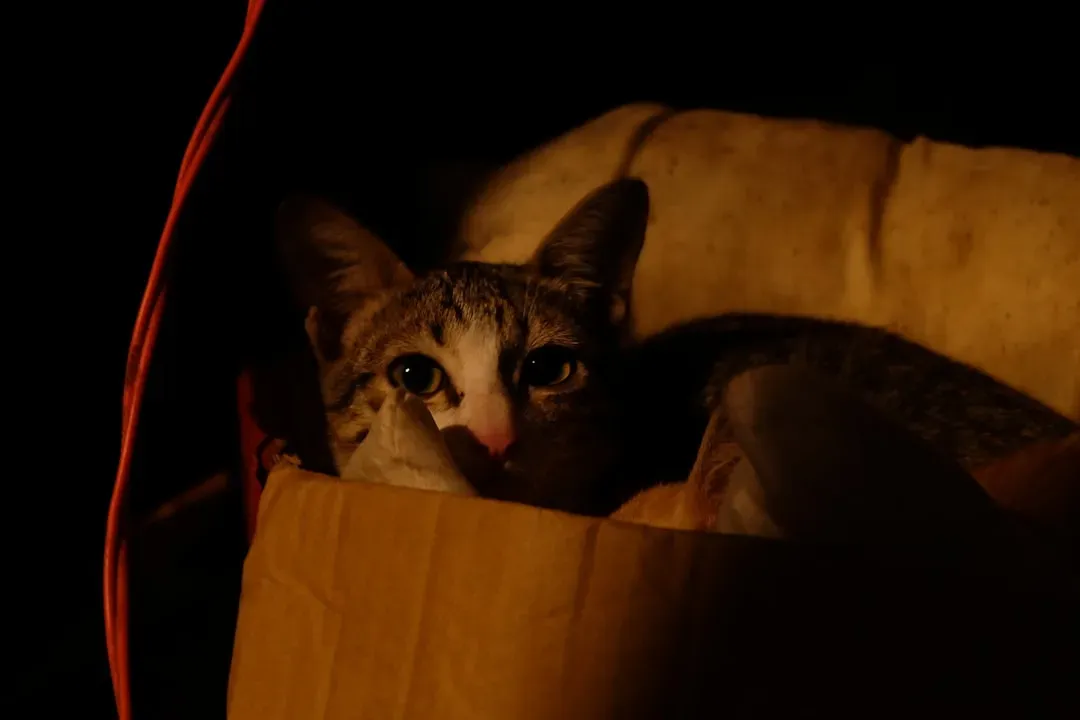
Cats aren’t great at working through disagreements. Cats lack ability towards conflict resolution and will usually resort to fighting or running and hiding, and if there are other pets within your household, your cat may frequently hide in a box. Maybe your cat had a tense moment with your dog, or perhaps you raised your voice after they knocked over yet another plant.
The box acts as a safe zone for your cat who is looking to avoid unwanted attention, hostile situations, or anything that is causing anxiety. It’s their version of going to their room and closing the door. I know it sounds like they’re being dramatic, but from their perspective, removing themselves from a stressful situation is actually a very mature coping mechanism. The box gives them space to calm down without feeling exposed or vulnerable.
Sensory Satisfaction
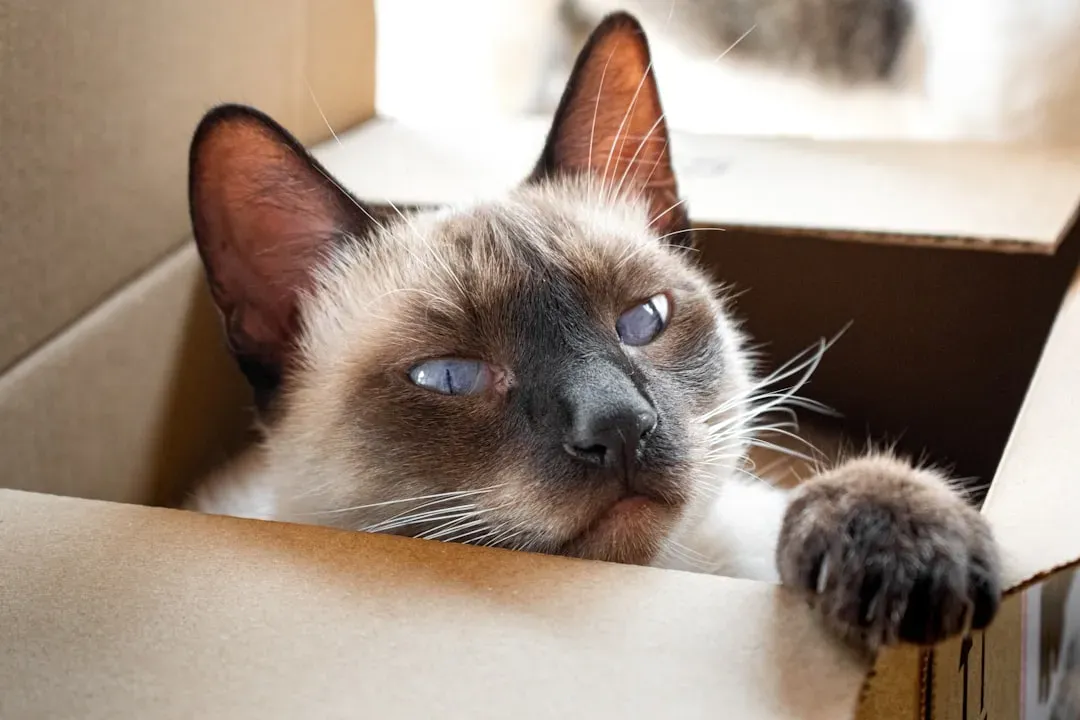
There’s something uniquely satisfying about the texture and feel of cardboard for cats. Cats love the feel of boxes, making them the perfect place for a cat to claw and scratch their nails. Unlike your furniture (which you’d prefer they leave alone), boxes are acceptable casualties.
When your cat bites, chews, and scratches at cardboard, they’re fulfilling multiple needs at once. They’re maintaining their claws, marking territory, and engaging in satisfying physical activity. Cardboard is chewable, scratchable, and gloriously destructible. The texture provides just the right amount of resistance. Plus, when your cat tears into a box, you don’t get upset, which means they can indulge in destructive play without any negative consequences.
The Illusion of Enclosure
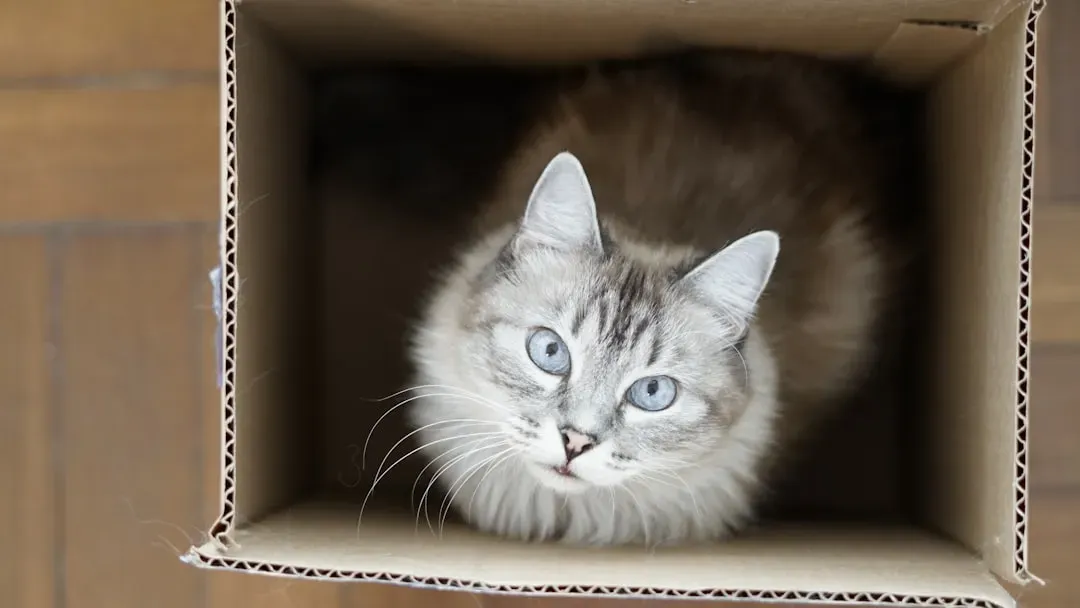
Here’s where things get really interesting from a scientific perspective. Research has shown that cats are even drawn to the illusion of boxes. Cats chose to sit in squares made of tape on the floor more often than controls, demonstrating cats’ ability to recognize the illusion of a square created by the Kanizsa square.
Cats are susceptible to the Kanizsa illusion, perceiving edges that don’t physically exist, and when cats see defined contours, their brain processes them as enclosures they can sit within. This means your cat’s attraction to boxes isn’t just about physical barriers. Their brain is wired to recognize and seek out enclosed spaces, even when those spaces are merely suggested by visual boundaries. It’s hard to say for sure, but this might explain why your cat sometimes sits in the middle of random squares on your floor.
Psychological Control and Autonomy
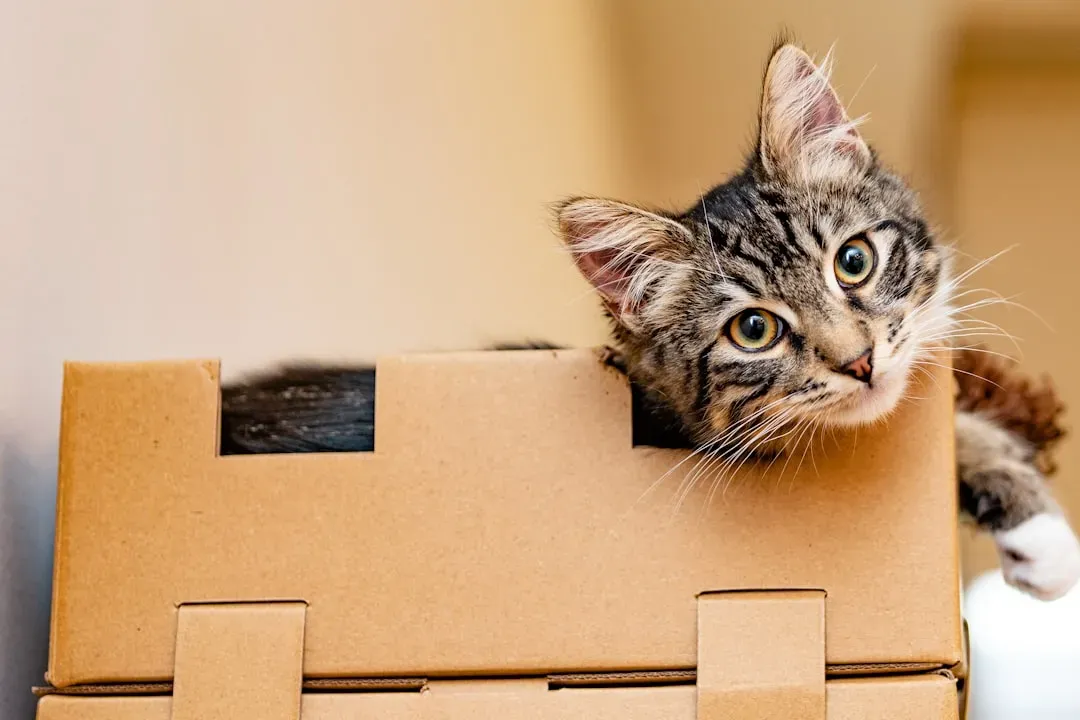
What we do when we keep cats as pets is we keep them in an environment where they don’t have a lot of control. Think about it: your cat doesn’t decide when you come home, when other people visit, or when the vacuum cleaner makes its terrifying appearance. They have relatively little control over their daily environment.
A box gives them back some of that autonomy. They can choose to enter it or leave it whenever they want. They decide who (if anyone) gets to join them inside. It’s a small domain that they completely control, which is psychologically important for their wellbeing. Providing your cat with boxes isn’t just indulging a quirky preference. It’s actually supporting their mental health by giving them choices and control in an otherwise controlled environment.
Why Expensive Cat Beds Can’t Compete
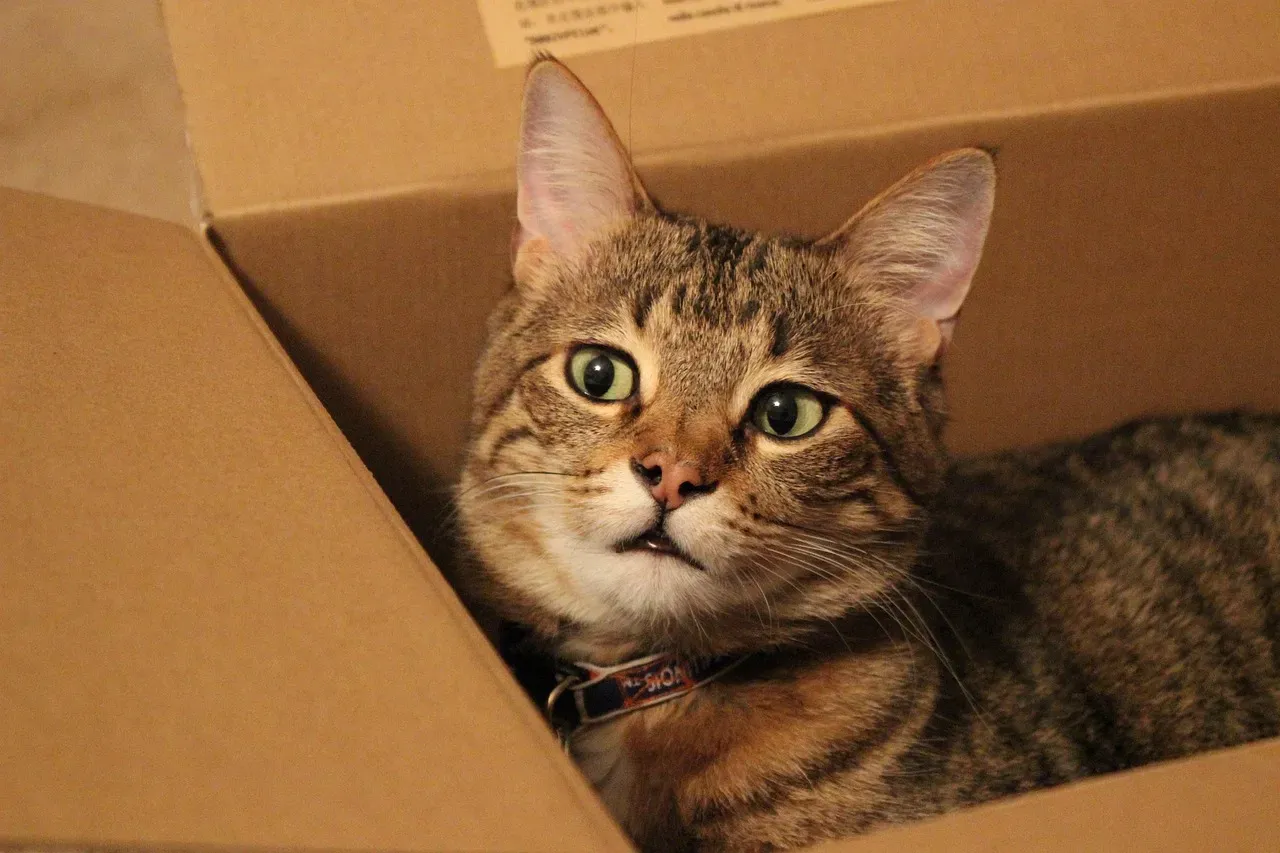
You’ve probably spent good money on plush cat beds, only to find your cat ignoring them in favor of a ratty old box. Boxes offer novelty because every new delivery is a new fortress, texture because cardboard is scratchable and destructible, and scent retention because boxes absorb smells, which cats use to mark territory.
Expensive cat beds are predictable and permanent. They’re always there, always the same. Boxes, however, come and go. They smell different. They can be destroyed without consequence. They offer variety and stimulation that a static cat bed simply cannot provide. The temporary nature of boxes actually makes them more valuable in your cat’s eyes. They know they need to enjoy it while it lasts, which makes the experience more exciting. Your cat isn’t rejecting your thoughtful gift; they’re just responding to their hardwired preferences for novelty and texture.
Bringing the Outdoors Inside
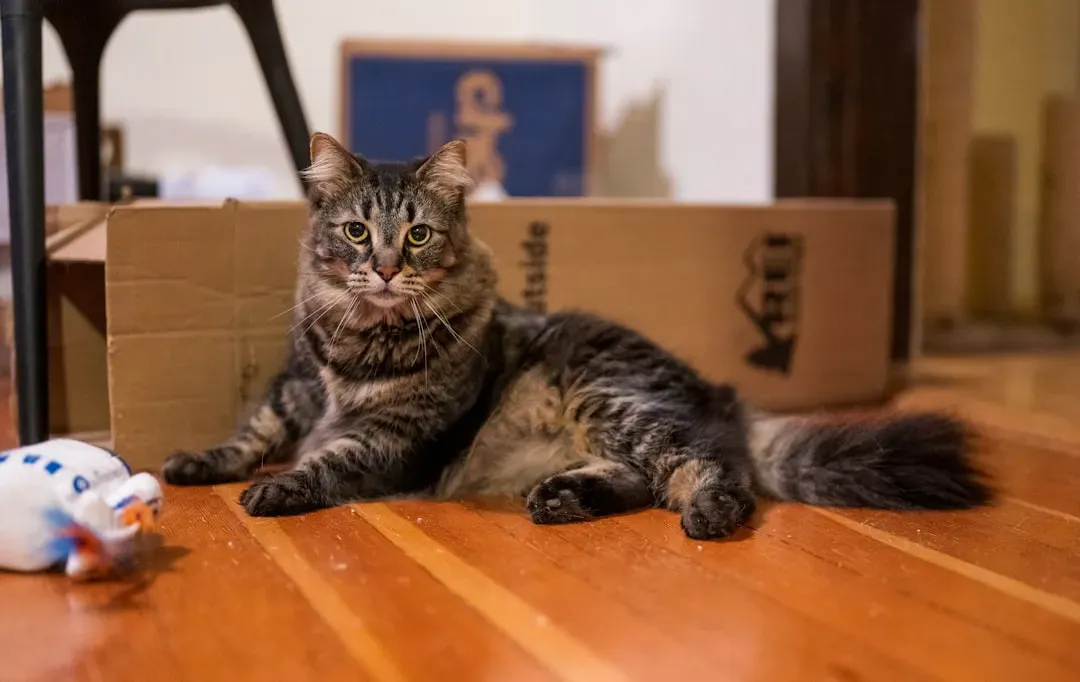
For indoor cats especially, boxes serve an important purpose in satisfying instincts that would normally be fulfilled by outdoor exploration. Indoor-only cats were more interested in artificial stimuli resembling prey, even though completely deprived of experience with live prey, possibly due to higher play drive because of lack of stimulation.
Boxes become a substitute for the caves, hollows, and sheltered spots that wild cats would naturally seek out. They offer a taste of the wild within the safety of your home. Your indoor cat might never hunt real prey or hide from actual predators, but their DNA still carries those ancient blueprints. The box lets them act on those instincts in a harmless, domestic setting. It’s essentially environmental enrichment that costs you nothing but provides your cat with essential mental and physical stimulation.
Conclusion
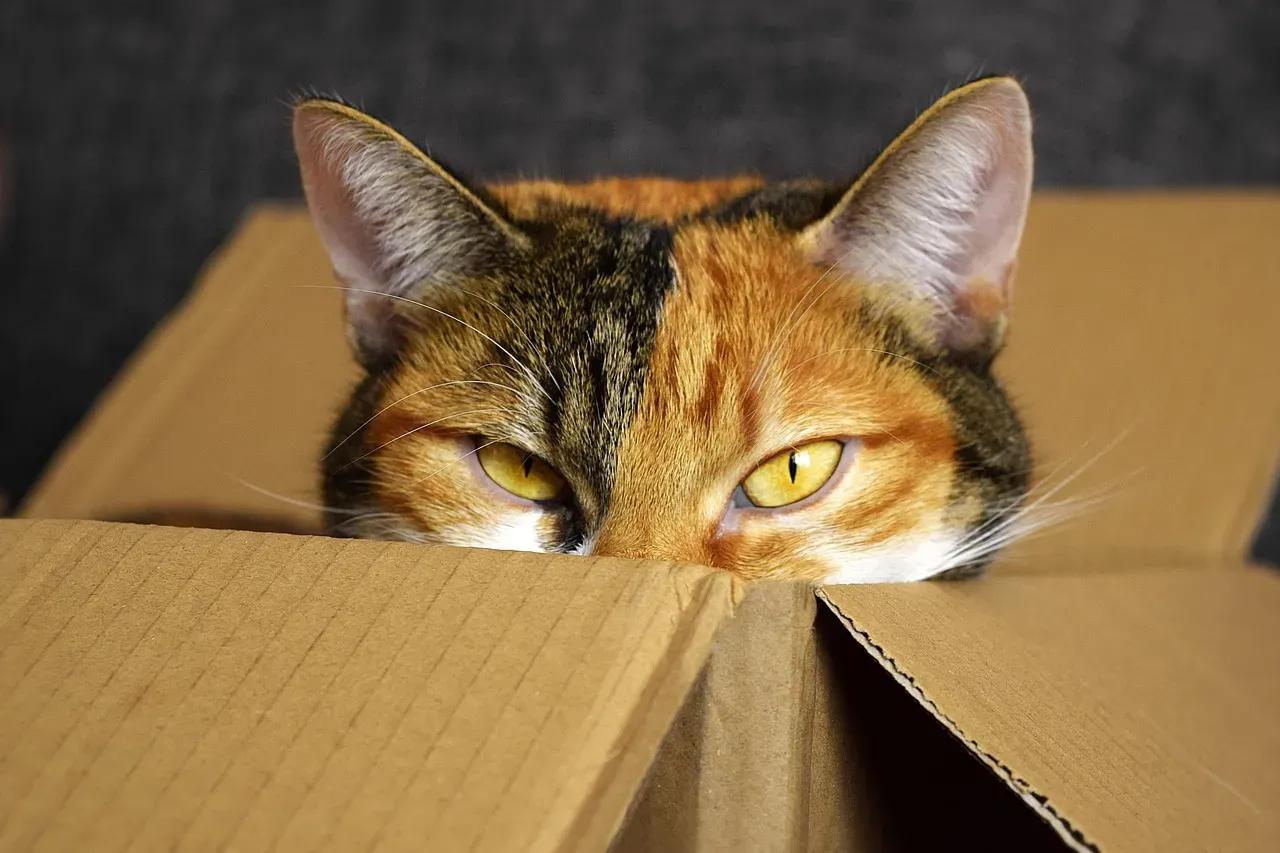
Your cat’s obsession with boxes is far from silly or superficial. It’s a complex behavior rooted in evolution, neurology, and psychology. From stress reduction to temperature regulation, from predatory instincts to conflict avoidance, boxes serve multiple crucial functions in your cat’s life. The hiding box appears to be an important enrichment for the cat to cope effectively with stressors and a new environment.
So the next time a package arrives and your cat immediately claims the empty box, let them have it. You’re not just indulging a quirky habit. You’re providing your cat with a tool they genuinely need for their wellbeing. That simple cardboard container is a stress reliever, a fortress, a playground, and a comfort zone all rolled into one. What do you think about your cat’s box obsession now? Does it make more sense, or do you have your own theories about why they can’t resist?