Most people glance at their cat’s face and see something adorable. Those long, quivering hairs framing a tiny feline nose look like pure decoration. Cute, sure. Functional? You have no idea just how functional they really are.
Cat whiskers are one of the most underrated structures in the entire animal kingdom. They are precision instruments, mood indicators, navigation systems, and survival tools all rolled into one. If you thought whiskers were just fancy facial hair, you’re about to be seriously surprised. Let’s dive in.
1. Your Cat’s Whiskers Are Basically a Living Radar System
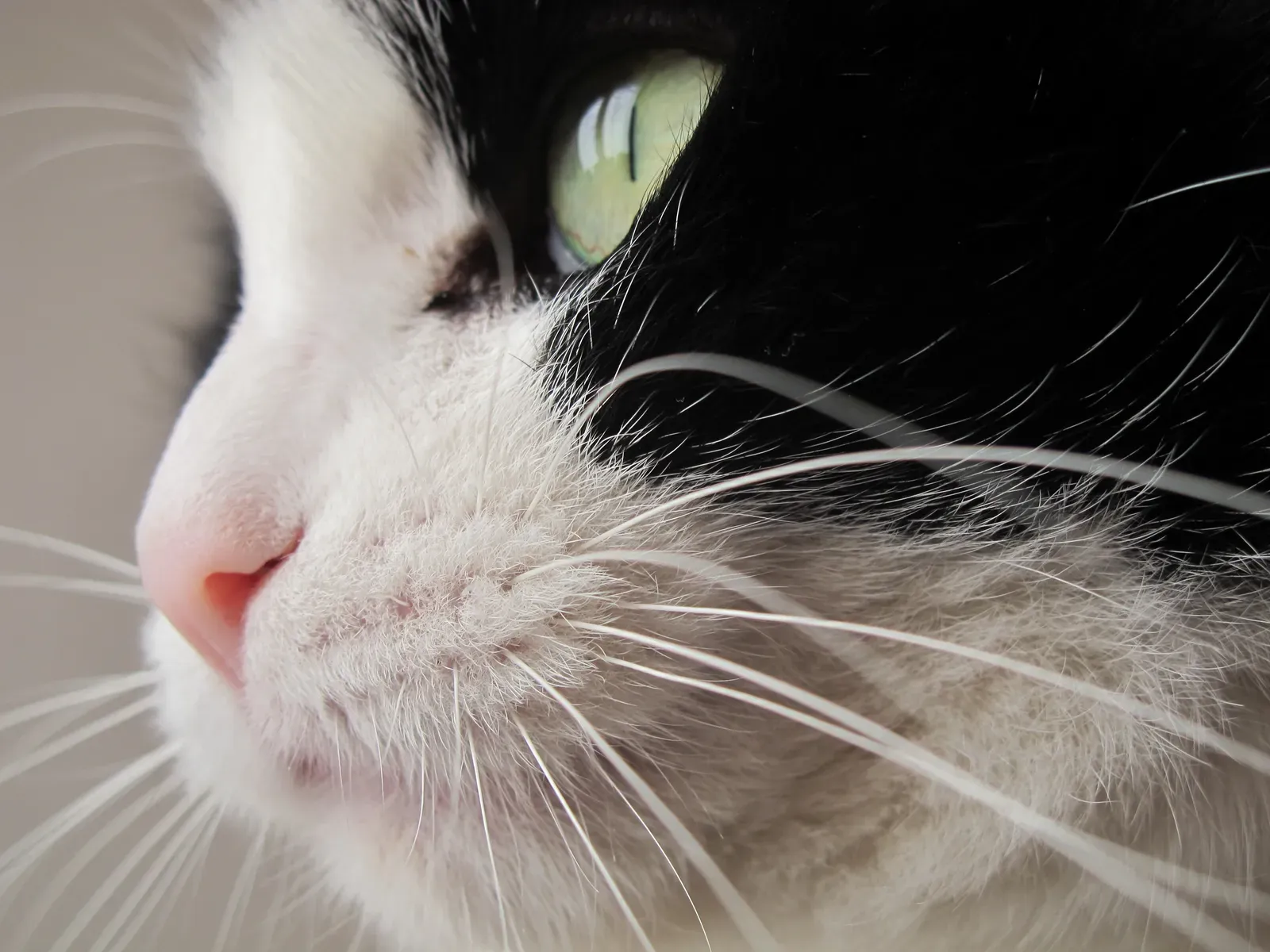
The official title for whiskers is vibrissae, a word that comes from the Latin “vibrio,” meaning “to vibrate.” That name alone tells you something important. These aren’t passive hairs sitting on your cat’s face. They are active, vibrating sensors doing real-time work every single second.
Cat whiskers operate through sophisticated mechanoreception, the biological process of converting mechanical stimuli into electrical nerve signals the brain can interpret. This system rivals modern technological sensors in its sensitivity and response speed. Each whisker acts as a sensitive lever that amplifies even microscopic movements and transmits them to the nerve-rich follicle base. When air currents or objects contact the whisker, the movement triggers nerve firing that sends specific information about the stimulus’s location, intensity, and direction to the brain’s sensory processing centers. Honestly, that sounds more like a piece of advanced engineering than biology.
2. They Are Rooted Three Times Deeper Than Regular Fur
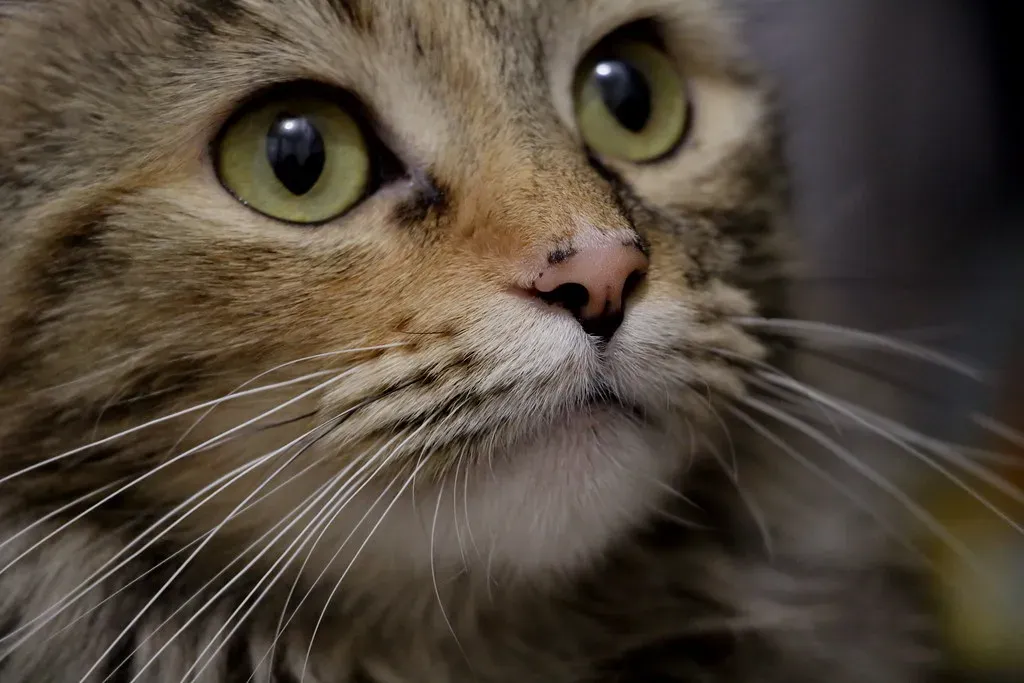
While cats are covered in hair, their whiskers are fundamentally different from their regular coat. Whiskers are coarser, thicker, and rooted three times deeper than normal hairs, making them incredibly sturdy and sensitive sensory instruments. Made of keratin like human hair, whiskers have a much more robust structure that allows them to detect even the subtlest environmental changes.
The most remarkable aspect of whisker biology lies beneath the surface. These specialized hairs are packed with blood vessels and nerves, making them as sensitive as human fingertips. At the base of each whisker are sensory organs called proprioceptors, which send detailed messages to the brain about the body’s position and movement. Each whisker is associated with numerous nerve cells, creating a direct pathway for sensory information to reach the cat’s brain for immediate processing. Think about that the next time you’re tempted to tug on one. That depth of connection means they feel everything.
3. Nearly Half of Your Cat’s Brain Is Wired to Process Whisker Data
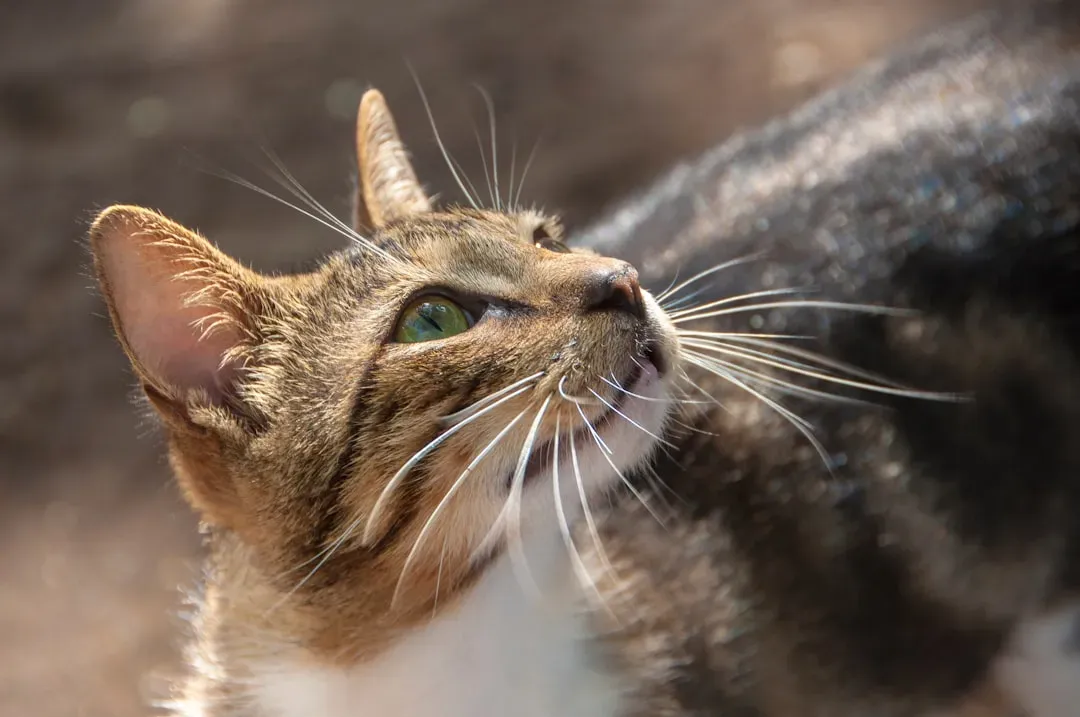
Here’s a jaw-dropper that most people have never heard. A good portion of a cat’s brain is devoted to processing data from touch sensors. Whiskers are reliable touch sensors, and almost 40% of the brain’s sensory area aligns with body parts that have whiskers. Each individual whisker can be traced back to a specific spot in the brain, meaning that whiskers occupy valuable neurological real estate in a cat’s body.
To put that in perspective, imagine if nearly half your brain’s sensory capacity was dedicated entirely to your fingertips. You’d be able to feel a single grain of sand on a table from across a room. That’s the level of sensitivity your cat is operating with, every moment of every day. Each cat whisker follicle can be associated with as many as 100 to 200 neurons. That is staggering.
4. Your Cat Uses Whiskers to “See” What Their Eyes Cannot
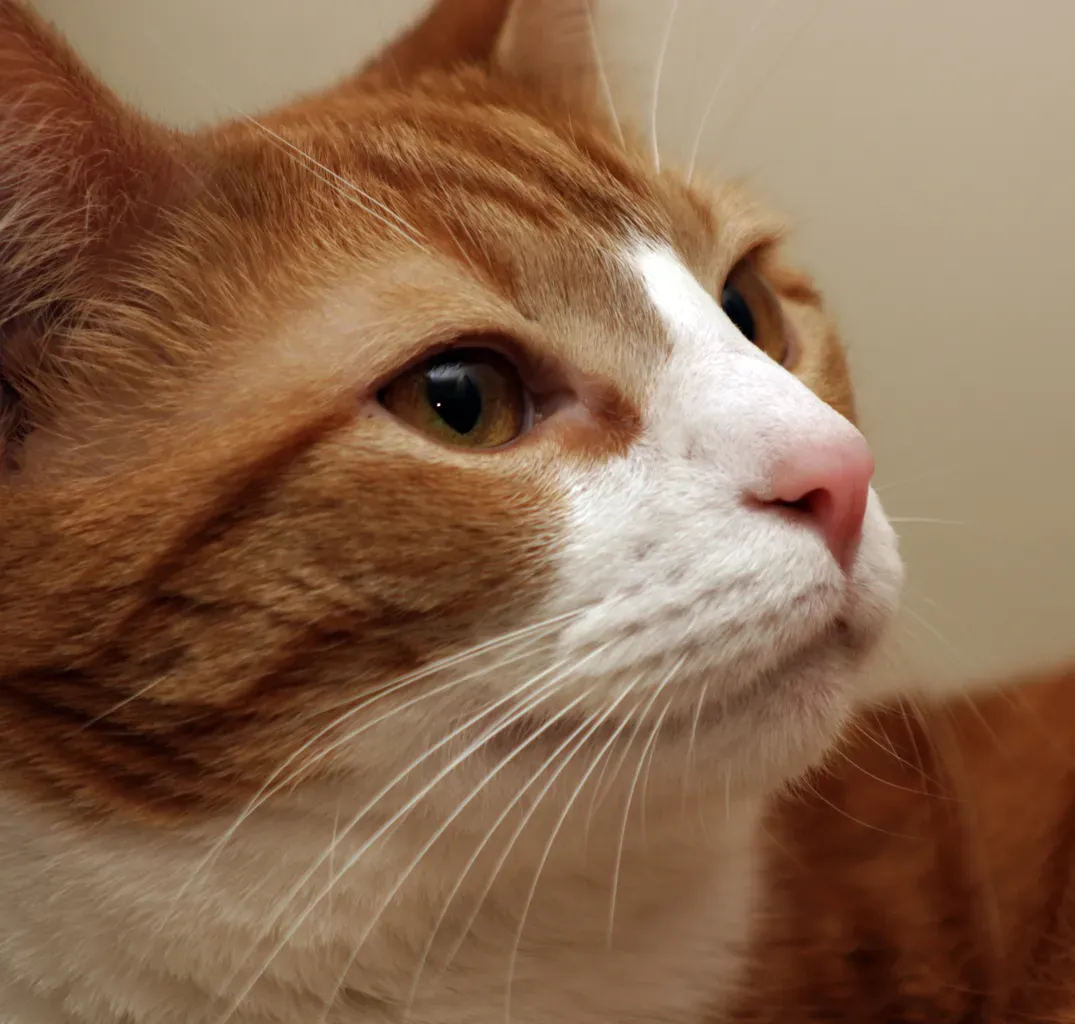
It may surprise you to learn that your cat’s close-up vision isn’t very good, and they can’t easily see anything closer than 12 inches in front of them. They use their whiskers to navigate the world straight ahead, as by touching them against an object they can tell where it is, its size, and even the texture. So that toy dangling right under their nose? Your cat is literally feeling it, not seeing it.
As a cat approaches something in their path, they stir up air currents that bounce back when they hit solid objects. Whiskers detect very faint vibrations caused by these changes in air currents and act like radar detectors. In the wild, whiskers can alert a cat to the presence of prey or potential enemies. At home, whiskers help domestic cats locate their food bowls or favorite toys at night. It’s like a built-in echolocation system. Bats use sound to do this. Your cat uses air.
5. Whiskers Are Spread All Over the Body, Not Just the Face
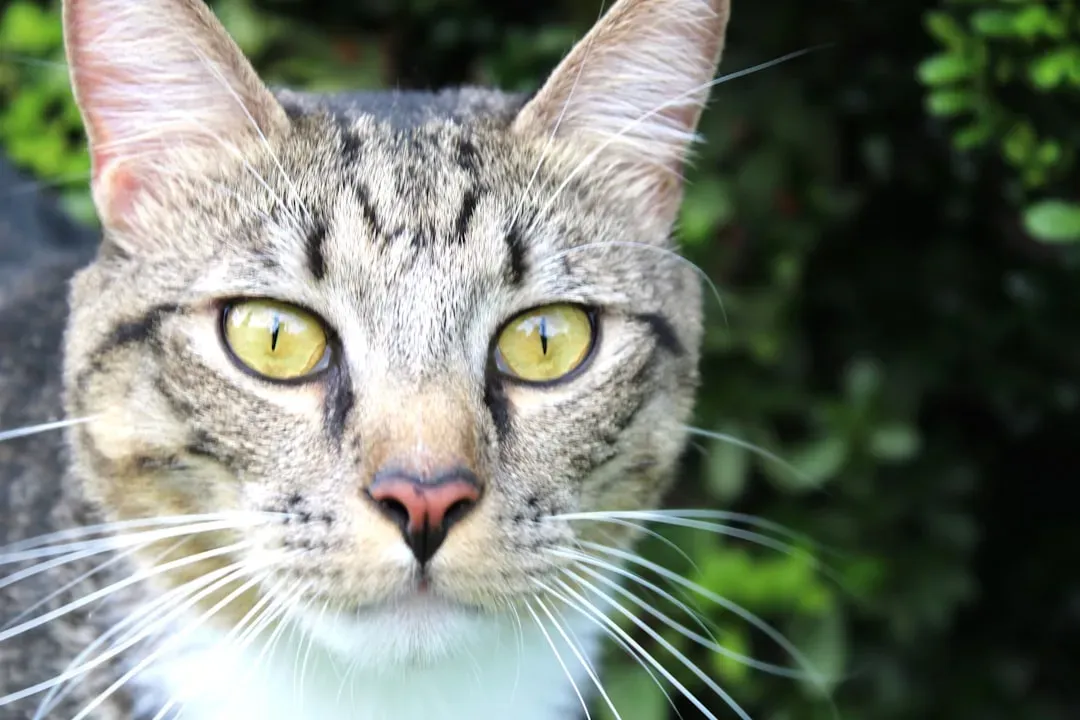
Whiskers aren’t limited to the familiar facial location above the upper lip. These sensory hairs are strategically located above the eyes, on the chin, on the jawline, near the ears, and even on the back of their front legs, with placement varying slightly between breeds. Each whisker location serves a specific purpose in the cat’s sensory system. The prominent cheek whiskers help gauge the width of openings and detect air currents, while the whiskers above the eyes protect against particles and help trigger blinking reflexes. The whiskers on the front legs assist with climbing and provide additional tactile feedback when cats are exploring surfaces with their paws.
The leg whiskers are hunting tools. They’re called carpal whiskers, and cats use them when holding prey to sense how much it’s moving. Cats don’t see very well up close, so those leg whiskers are a big help. It’s a complete, full-body sensory network. You were probably only looking at the face this whole time.
6. Whiskers Work as a Built-In Measuring Tape for Tight Spaces
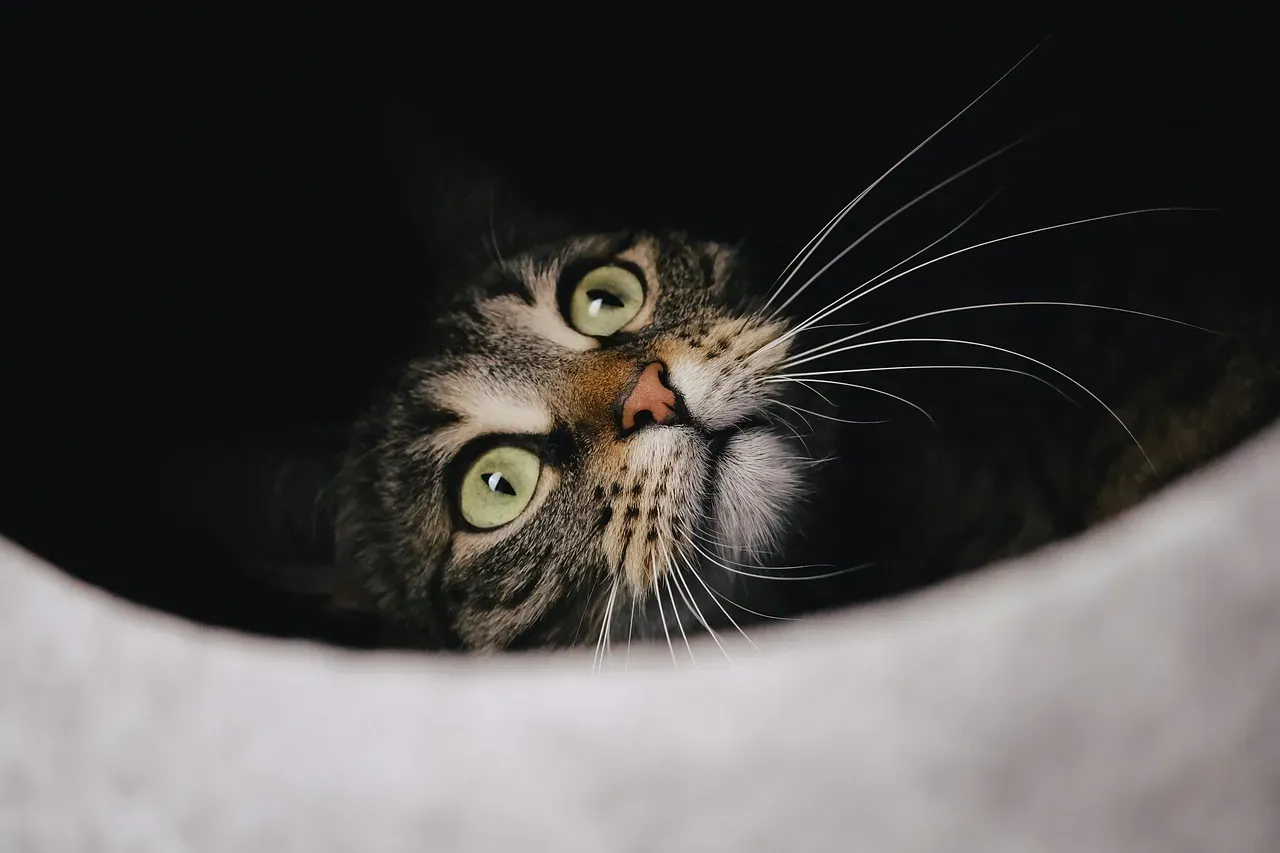
The size of a cat’s whiskers isn’t random. They’re usually about the same width as the cat’s body. Their size helps cats judge whether they can fit through tight spaces, like under furniture or through a gap in a fence. If the whiskers touch both sides of a space, it tells the cat they may get stuck. It’s a brilliantly simple system that never needs calibration and never runs out of battery.
Cat whiskers actually grow with a cat. If a cat starts putting on more weight, those whiskers will begin to grow longer too to accommodate for their bigger width. So when you notice your somewhat chubby tabby getting stuck behind the sofa less often than you’d expect, this is why. Nature builds in automatic adjustments. I find that honestly incredible.
7. You Can Read Your Cat’s Mood Through Their Whiskers
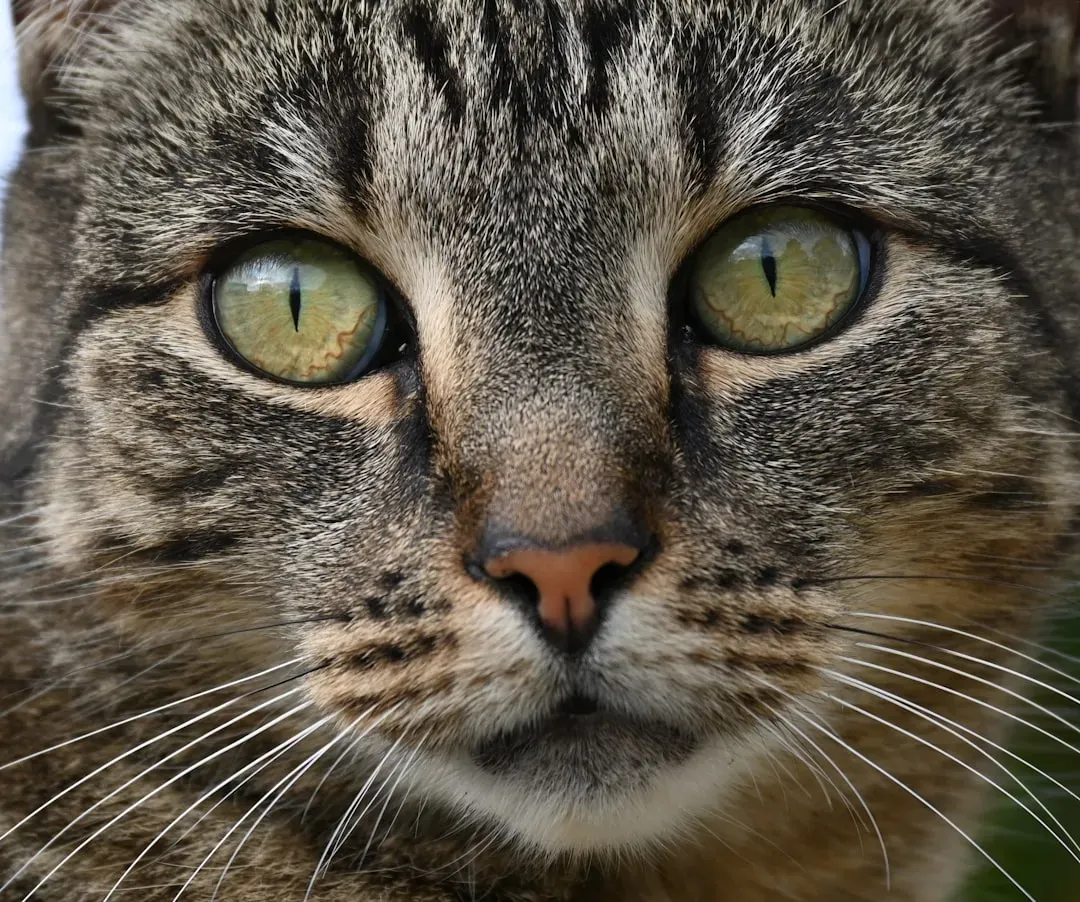
Cats may not speak our language, but their whiskers often reveal what they’re feeling. Forward-pointing whiskers usually mean the cat is curious, alert, or in hunting mode. Flattened whiskers, on the other hand, often signal stress or fear. Other cats can interpret these signals instinctively, making whiskers an important tool in feline-to-feline communication. Pet owners who learn to “read whiskers” often have an easier time understanding their cat’s moods.
Your cat’s whiskers can give you insight into how she’s feeling. When the whiskers are pulled back tightly across the face, your cat is feeling alarmed or threatened. When the whiskers are relaxed and pointing sideways away from the face area, as they are most of the time, it means your cat is content. Next time your cat looks at you with those sideways, relaxed whiskers, that’s basically a feline smile. Take the win.
8. Whisker Fatigue Is a Real Condition That Causes Your Cat Stress

Whisker fatigue is a relatively newly recognized condition. It occurs when cats’ whiskers are over-stimulated, often by frequently touching against the sides of their food or water bowls. This might explain why your cat scoops food out onto the floor and eats it there instead of from the bowl. It’s not being dramatic. It’s in genuine discomfort.
Each cat whisker follicle can be associated with as many as 100 to 200 neurons, and overstimulation of the whisker, or “whisker fatigue,” is a real issue. Whisker fatigue is usually caused by chronic, recurrent pressure on the whisker and the firing of those neurons in a way that overstimulates your cat. It is often associated with inappropriately sized food and water dishes. If you notice your cat dislikes eating from their food bowl or seems distressed until they scoop it out onto the floor, mention this to your veterinarian. Your cat may benefit from some shallower dishes to protect their sensitive whiskers. Something as small as switching to a wide, flat bowl can genuinely transform your cat’s mealtime experience.
9. Whiskers Shed Naturally, But You Should Never Cut Them
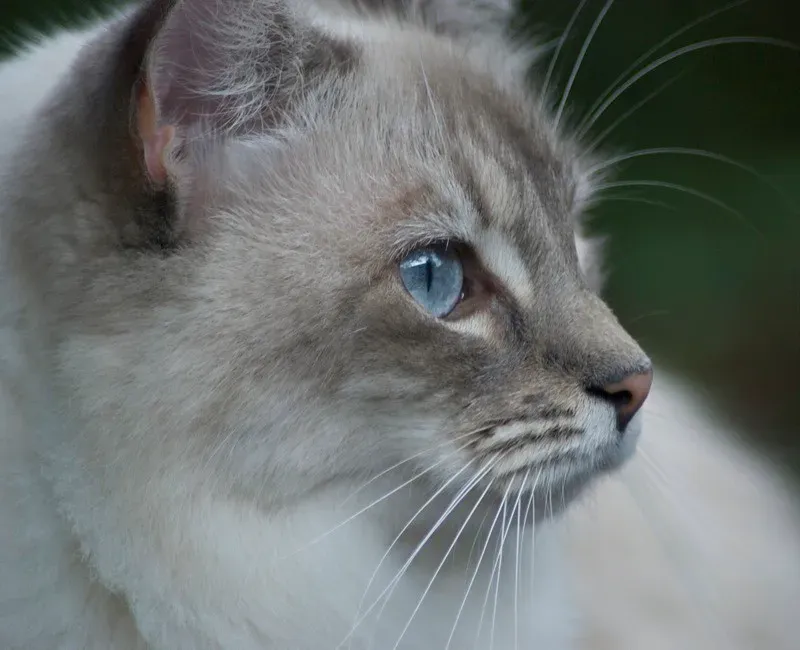
Cats naturally shed their whiskers as part of their normal growth cycle, similar to how they lose fur. Each whisker reaches a certain age and falls out to be replaced by a new one, ensuring the cat maintains optimal sensory capabilities. This process is completely normal and allows the cat to continue accurately navigating and sensing their environment. Owners should not be concerned about occasional whisker shedding unless it appears excessive or is accompanied by other health symptoms, which could suggest a need for veterinary evaluation.
Cats do shed whiskers occasionally, but you should never attempt to cut or trim them yourself. If you do, you’re removing crucial sensory information that your cat needs, and she could experience dizziness, confusion, and disorientation. It would be like suddenly removing your sense of touch or sight. Trimming a cat’s whiskers, even slightly, is genuinely harmful. It’s one of those things that looks harmless but really isn’t. Please don’t do it.
10. Whisker Color Can Actually Change as Your Cat Ages

Don’t be surprised if you find a white whisker growing in your pure black cat’s fur as they age. Cats do start going gray with age, but it’s not noticeable unless your cat’s fur is a dark, solid color. It’s one of those quiet little signs of aging that most owners miss entirely, mostly because they’re busy being obsessed with the cat’s eyes or ears.
Yes, cats can have different color whiskers, and black cats often do have black whiskers. Torties and calicos may have different colored whiskers, and tabbies may have whiskers that start off dark at the root and get lighter toward the end. So whisker color isn’t just genetic randomness. It’s tied to coat pigmentation, it changes with age, and it’s genuinely unique to each individual cat. Just like human fingerprints, a cat’s whisker pattern is unique, as no two cats have exactly the same spacing or number of whiskers.
A Final Thought Worth Carrying With You
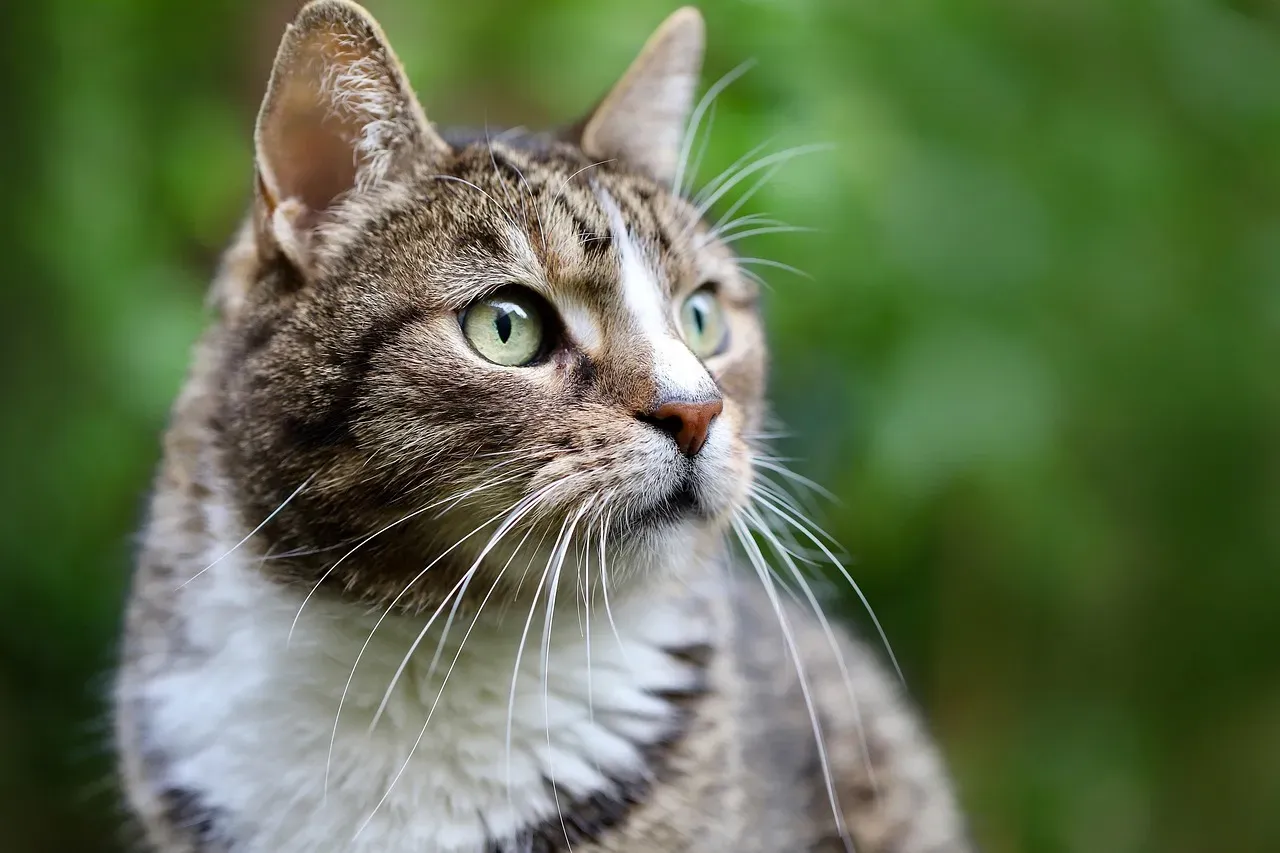
It’s hard not to look at a cat differently after learning all of this. What you thought were decorative little hairs are actually a masterpiece of biological engineering. Every twitch, every forward lean, every relaxed sideways droop is a piece of real-time data your cat is both sending and receiving.
The next time you catch your cat sitting perfectly still by the window, nose barely moving, whiskers faintly trembling, know that they’re not just zoning out. When a cat is sitting by a window, its whiskers can sense the direction of wind or detect the flutter of an insect’s wings before it’s even visible. Your cat is reading the world in a language you’ll never fully understand.
There’s something genuinely humbling about that. These small, soft, purring creatures are walking around with biological technology that no engineer has fully replicated. So the next time someone dismisses cats as simple or detached, you’ve got ten very compelling facts that say otherwise. What would you have guessed was the most surprising one? Drop it in the comments.
Kristina is a young writer from India. An arts graduate and an avid content creator, Kristina is passionate about animals and wildlife. She enjoys exploring topics related to pet care, animal behavior, conservation, and nature, combining thorough research with engaging storytelling.