There are stories that stop you mid-scroll and make you feel something you weren’t quite prepared for. This is one of them. A senior ginger tomcat named Starkist has found himself inside a shelter at the age of 15, navigating a world that is suddenly foreign, confusing, and lonely after spending his entire life in one home. It’s the kind of story that puts a lump in your throat because it isn’t about cruelty. It’s about circumstances, aging, and the heartbreaking reality that love alone is sometimes not enough.
The people at Sullivan County Humane Society in New Hampshire stepped in when no one else could. Now, they are pleading with the public to open their hearts to a cat who still has so much left to give. Let’s dive in.
Meet Starkist: The Ginger Gentleman Who Deserves Better
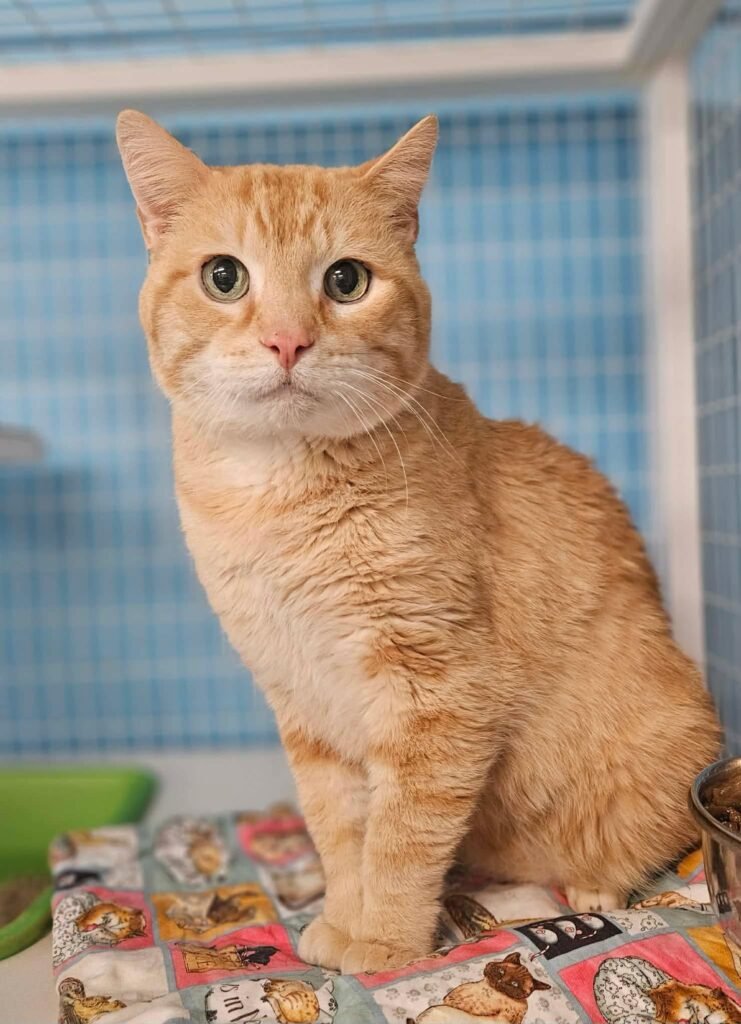
Starkist is a 15-year-old sweet ginger tomcat who now faces spending his senior years in a shelter after his elderly owner was forced to give him up. Think about what that means for a second. This cat has known one home, one scent, one voice his entire life. Fifteen years is a long time. For context, that’s roughly equivalent to a human living well into their late seventies.
Currently in the care of the Sullivan County Humane Society of New Hampshire, staff at the rescue issued an urgent appeal for someone to give Starkist a new home, after the only life he had ever known was unexpectedly taken from him. In a post to their Facebook page on February 19, staff shared a photo of the handsome, healthy-looking cat in their care. The response from animal lovers online was immediate, emotional, and deeply human.
Why the Owner Surrendered Him and Why It’s More Complicated Than It Looks
Sherry Bell, intake and foster coordinator at Sullivan County Humane Society, explained that Starkist is currently decompressing and getting used to the strange smells, sounds, and surroundings of life in the rescue. Bell noted that the cat may have become “too much for his elderly mom to handle,” and his previous owner had even inquired about euthanasia before the Sullivan County Humane Society agreed to take him in despite his advanced age. That detail is hard to sit with, honestly.
Here’s the thing: it would be easy to judge. It would be easy to point a finger and call it abandonment. One online commenter pointed out that the owner could have “had to give the cat up because of a terminal illness,” adding that “not everyone is cruel and cold-hearted when they give up a pet, sometimes they have no choice.” That perspective matters. The reality of aging pet owners facing health decline is a quiet, painful crisis that rarely gets the attention it deserves.
How the Shelter Stepped Up to Save Starkist
The Sullivan County Humane Society has a clear policy: they take in all cats and will not euthanize unless there is a non-treatable medical condition. If that is the case, they place the cat in experienced hospice homes until the animal is ready to pass peacefully. It’s a remarkably compassionate stance, and it’s exactly the kind of care that Starkist needed at the most vulnerable moment of his life.
So far, Starkist has been nothing but a gentleman and has adjusted well. He saw a vet and appears to be a healthy boy. His next step involves getting neutered, completing his quarantine time, and then being placed up for adoption. All cats adopted through the shelter are vet checked, spayed or neutered, treated for fleas and worms, vaccinated against rabies and distemper, tested negative for FIV and FeLV, and microchipped. For a senior cat, that level of care before adoption is genuinely reassuring.
The Harsh Reality Senior Cats Face in Shelters
I think this is the part people don’t always want to talk about. Senior cats are very difficult to find homes for, since most people looking to adopt gravitate toward kittens or younger cats they expect to have for a long time to come. It’s an uncomfortable truth. Shelters overflow with senior animals who are calm, sweet, and low-maintenance, yet they consistently get passed over for younger, more energetic alternatives.
Senior cats most often end up in shelters through being surrendered by their owners. Aging cats frequently develop chronic diseases that are costly to diagnose and treat, and research into owner surrender behavior suggests these cats are many times abandoned when owners feel they can no longer afford to care for them. Starkist appears to be in good health right now, which actually makes his story a little more hopeful than most. Still, the clock is ticking, and finding a home for a 15-year-old cat is no small challenge.
The Emotional Toll on Pets Left Behind
Cats are creatures of habit, arguably even more so than dogs. They map their world through routine, familiar scents, and the rhythm of the people they love. When that world collapses overnight, the psychological impact is real and measurable. As one animal shelter has noted, “no matter how much we work to create a calm and caring environment, a shelter can never fully replicate the feeling of home.”
Cats do well with consistency and routine, and some transitions are harder than others. Surrendering a cat should always be a last resort, not a first choice. In Starkist’s case, shelter staff are doing everything right. A shelter volunteer noted in the comments that they are still assessing him as he decompresses, and will know more about his full demeanor in the coming days. He is being given time, patience, and space. That is truly the most anyone can offer right now.
A Nation of Pet Lovers and the Adoption Gap That Still Exists
An estimated 94 million families own a pet in the United States, according to a 2024 to 2025 American Pet Products Association National Pet Owners Survey. This makes up around 71 percent of total U.S. households, with roughly 68 percent owning a dog and 49 percent owning a cat. With numbers that staggering, it’s almost baffling that senior animals like Starkist struggle to find placement.
In 2024 alone, 5.8 million dogs and cats entered shelters and rescues across the United States, according to the ASPCA. An estimated 4.2 million shelter animals were adopted, including 2.2 million cats, yet there is an ongoing capacity crisis limiting space for new animals. The math is uncomfortable. Millions of animals need homes, millions of households have room, and still the gap persists. Senior cats like Starkist are caught squarely in the middle of that gap, waiting for someone to look past the number beside their name.
One Old Cat, One Big Question
Starkist’s story is not an isolated tragedy. It is a window into a much larger reality: aging owners, senior pets, and the painful intersections of life circumstances that nobody plans for. The Sullivan County Humane Society stepped up, vetted him, gave him warmth, and is now doing the hard work of finding him a home he deserves for whatever golden years he has left.
Adopting a senior cat is not a consolation prize. It is, honestly, one of the most quietly rewarding things a person can do. Senior cats like Starkist come already formed. Their personalities are known. Their quirks are charming. Their gratitude is profound. He is not a burden. He is a gentleman waiting for his final chapter to be a good one.
If Starkist’s story moved you even a little, perhaps the better question to sit with is this: when the time comes that someone you love can no longer care for themselves, wouldn’t you hope the world would show up for them too? What would you do if Starkist were yours to give a home to?
Kristina is a young writer from India. An arts graduate and an avid content creator, Kristina is passionate about animals and wildlife. She enjoys exploring topics related to pet care, animal behavior, conservation, and nature, combining thorough research with engaging storytelling.