You’ve probably watched your cat stroll across a shelf, tail held high, and thought nothing more than “graceful little creature.” Maybe you’ve noticed it flick its tail while you scratched its back and assumed everything was fine. Spoiler: it probably was not. Your cat was likely telling you something, loudly, in a language you simply hadn’t learned yet.
The truth is, a cat’s tail is one of the most expressive, emotionally loaded, scientifically fascinating body parts in the entire animal kingdom. It does far more than prevent your cat from tumbling off fences. It broadcasts feelings, sets social boundaries, signals history, and even reflects the ancient process of domestication. If you’re ready to actually understand what your cat has been saying this whole time, you’re going to want to keep reading.
The Tail Is an Engineering Marvel Hidden in Plain Sight
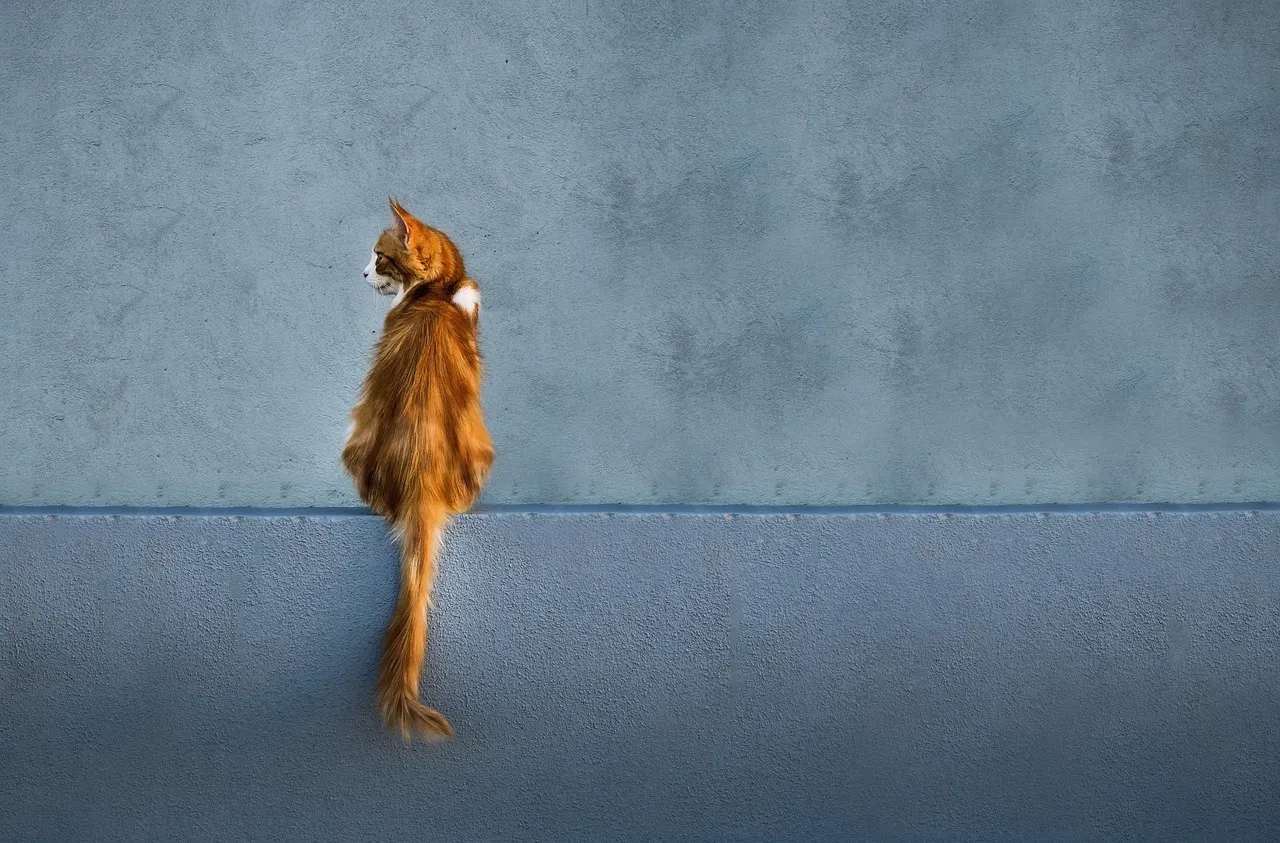
Most people see fur and a waggle. What’s actually inside your cat’s tail is closer to a small, precision-built machine. A cat’s tail is an extension of its spinal column, made up of five regions of vertebrae, and a normal tail houses between 18 and 23 caudal vertebrae, tapering from base to tip. That’s a surprisingly complex structure for something most of us barely think about.
Because the average cat has a total of around 230 bones, roughly 10 percent of your cat’s bones are found in its tail. Think about that for a second. One in ten of all your cat’s bones is dedicated to this one appendage. Six main muscle groups work in conjunction with the caudal vertebrae, while an extensive network of nerves provides sensory feedback and motor control, allowing for precise movements and the tail’s characteristic flexibility.
How the Brain Commands Every Flick and Twitch
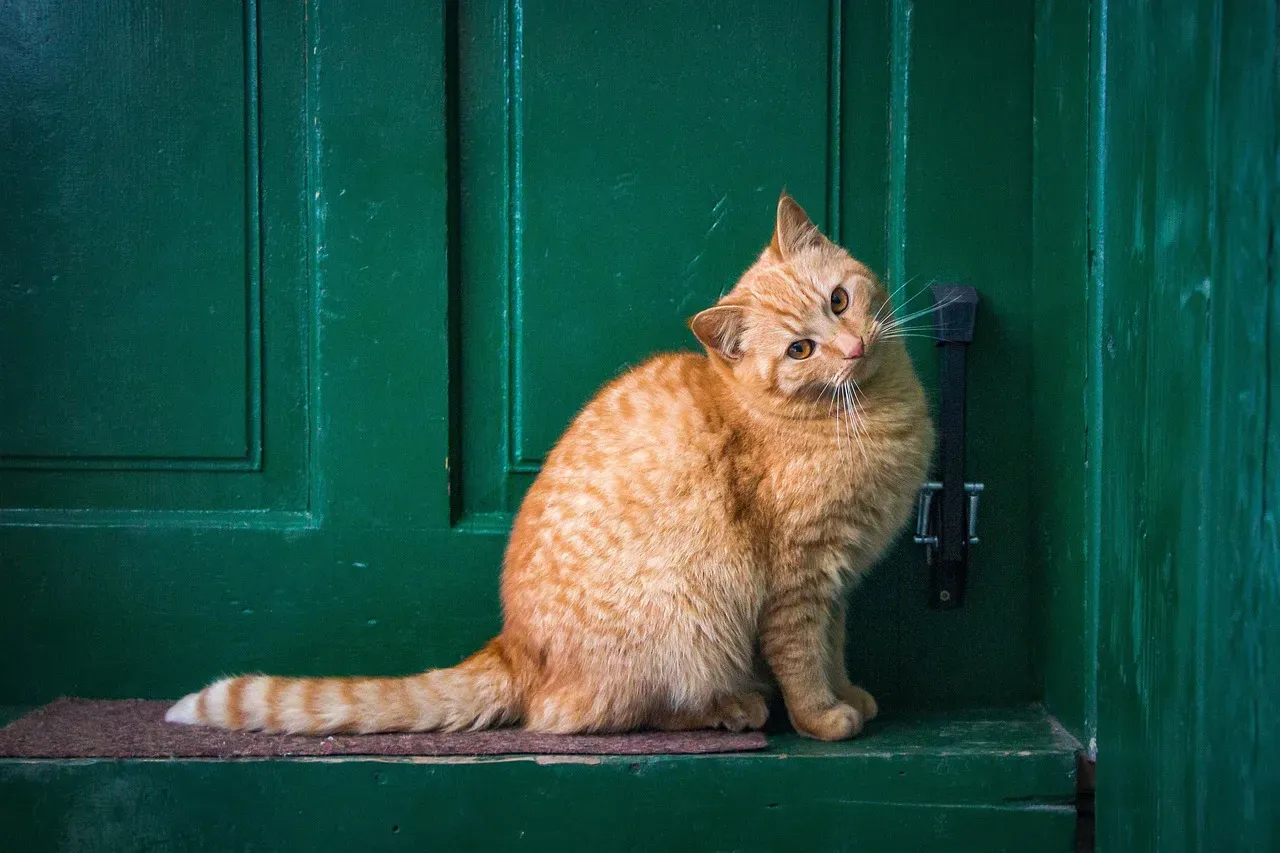
Here’s something that might genuinely surprise you. Your cat does not move its tail by accident, at least not most of the time. All of the action begins in the brain, with your cat determining what the tail should do, and nerves then act like cables, delivering the command via electrical signals from the brain to the muscles that manipulate the tail. It is a deliberate, neurological act.
When a cat experiences an emotion, its brain sends signals to muscles in the tail through the pudendal nerve, the nerve that connects tail muscles to the central nervous system. The tail is connected to the central nervous system through the pudendal nerve, which enables almost instantaneous communication between the brain and tail muscles, explaining why cats can move their tails with such lightning speed and precision. It is, in other words, an emotional broadcast system operating at reflex speed.
Yes, the Balance Function Is Real – But It Is Only Half the Story
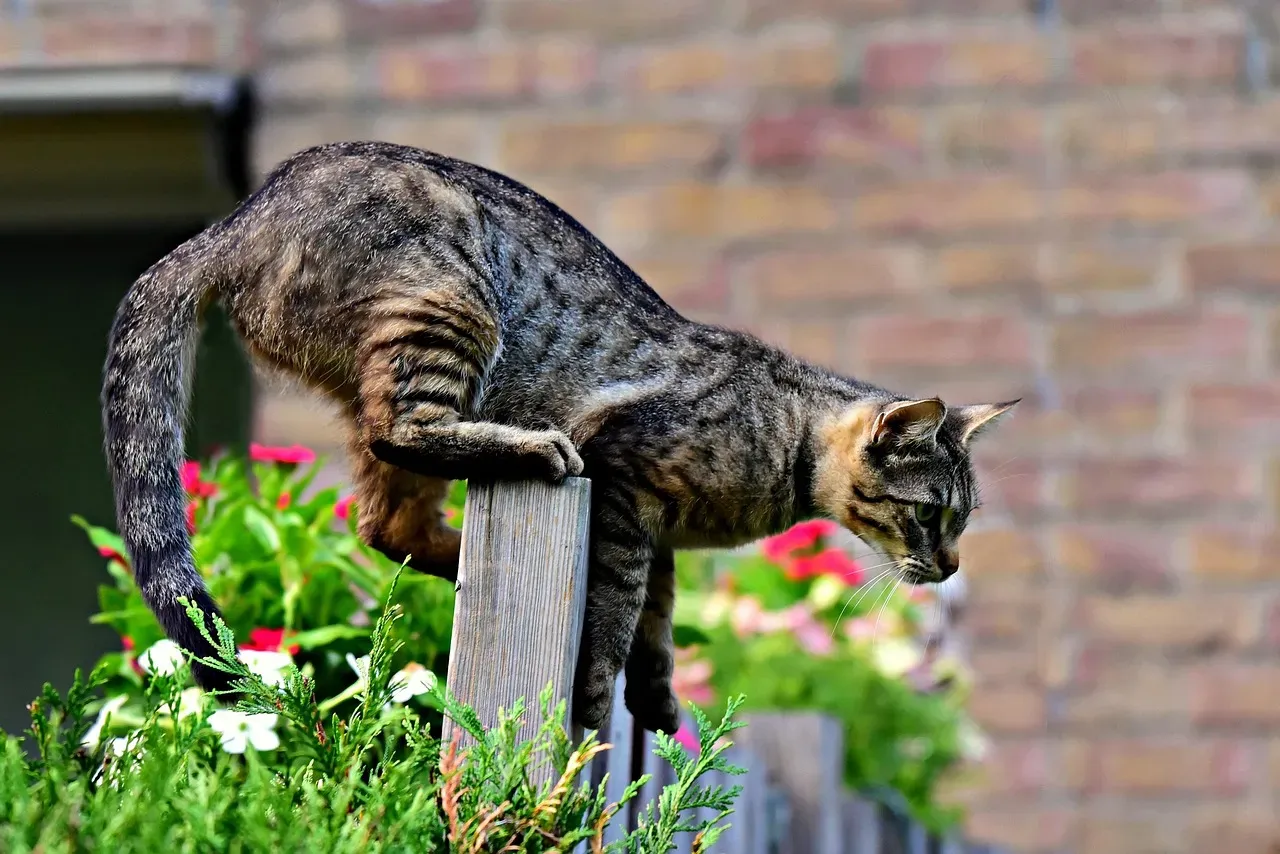
Let’s be real: the “cats use their tail for balance” explanation is not wrong, it’s just wildly incomplete. Freeze-frame videotape analysis revealed that cats respond to sudden surface movements by rapidly moving the tail in the opposite direction, and adjustment of the tail contributes to realignment of the hips and enables the animal to remain steady. That is impressive engineering at work.
The tail seems to be used in circumstances where a rapid shift in center of mass is required, usually during locomotion, and films of cheetahs chasing prey indicate that the tail is used in a rudder-like fashion to assist in rapid turning by facilitating a shift in weight. Still, treating the tail as purely a balancing organ is like describing a piano as a piece of furniture. Complex behaviors of the feline tail that appear to originate supraspinally include both balance adjustment and social signaling. The two functions are inseparable.
The Tail-Up Signal Was Born From Domestication Itself
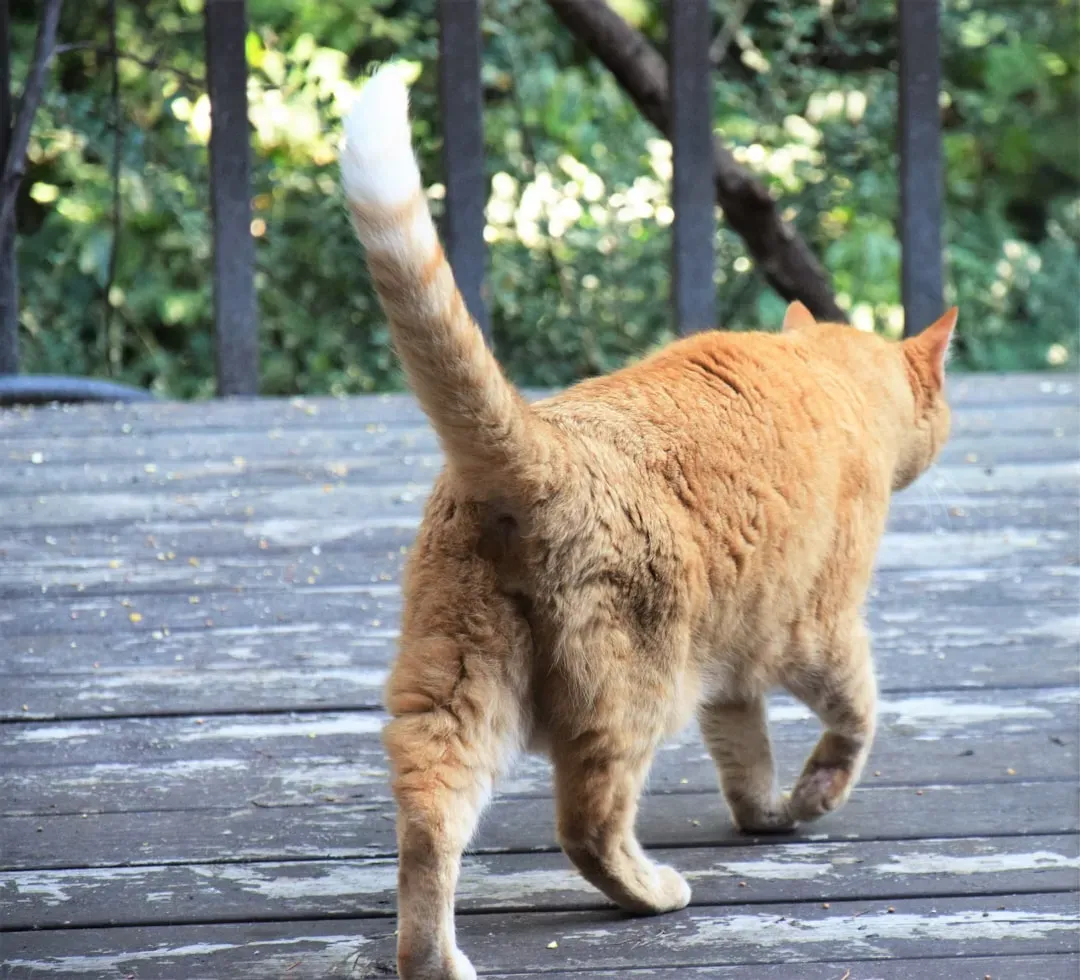
This one genuinely floors most cat owners. That proud, upright tail your domestic cat raises when trotting toward you? It is not an ancient feline trait. A doctoral study on communication in domesticated and wild cats found that while wild cats displayed many of the same social behaviors as domestic cats, they did not use the “tail up” signal commonly seen in domestic cats during friendly interactions, suggesting that the “tail up” signal likely developed during the process of domestication.
The domestic cat is the only feline that can hold its tail in a vertical position while walking. Let that sink in. Out of every wild cat on the planet, your house cat alone developed this trait. During domestication, cats had to adapt to living at higher densities than their ancestors, and the changes in spacing patterns and social organization may have led to an evolutionary change in the signaling patterns used by the domestic cat. Your cat’s tail-up greeting is, essentially, a social innovation thousands of years in the making.
What a High Tail Actually Tells You
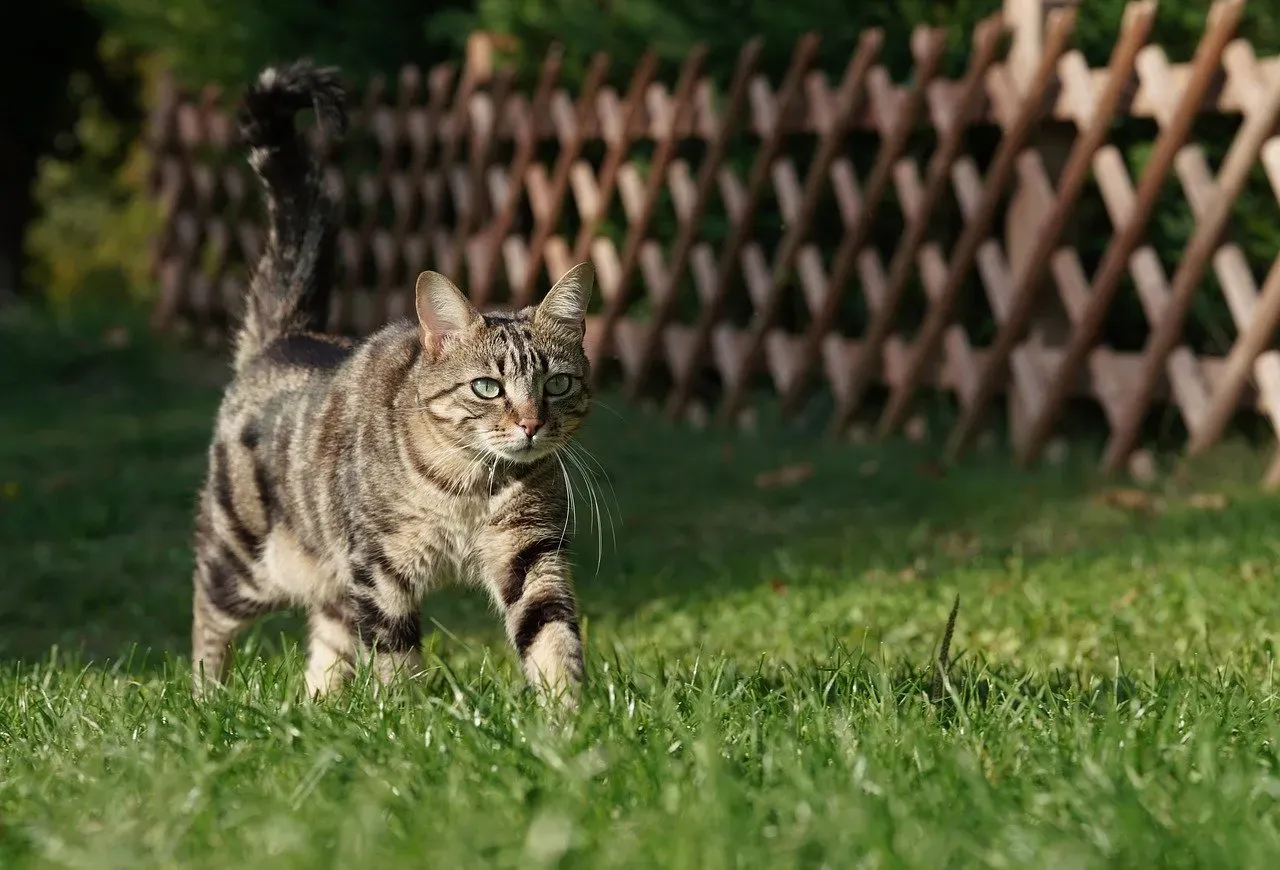
When your cat comes bounding toward you with its tail pointing straight up at the ceiling, you are receiving a clear, confident message. When a cat’s tail is upright, it is feeling social and confident and is approaching in a friendly manner, and this cat tail language indicates a friendly greeting between cats – and it’s how kittens greet their mothers. You are being given the same greeting a kitten gives its mom. Honestly, that is incredibly touching when you think about it.
A 1997 study by the University of Southampton found that cats were willing to readily approach a cat-shaped silhouette if it had a raised tail but were reluctant to approach the silhouette if it had a lowered tail. If your cat approaches you with its tail up, it is open to interaction, and it is a good time to pet it or play with it. So the next time you see that high tail coming your way, go ahead and meet your cat halfway.
The Question Mark Tail: Your Cat Is in the Best Mood
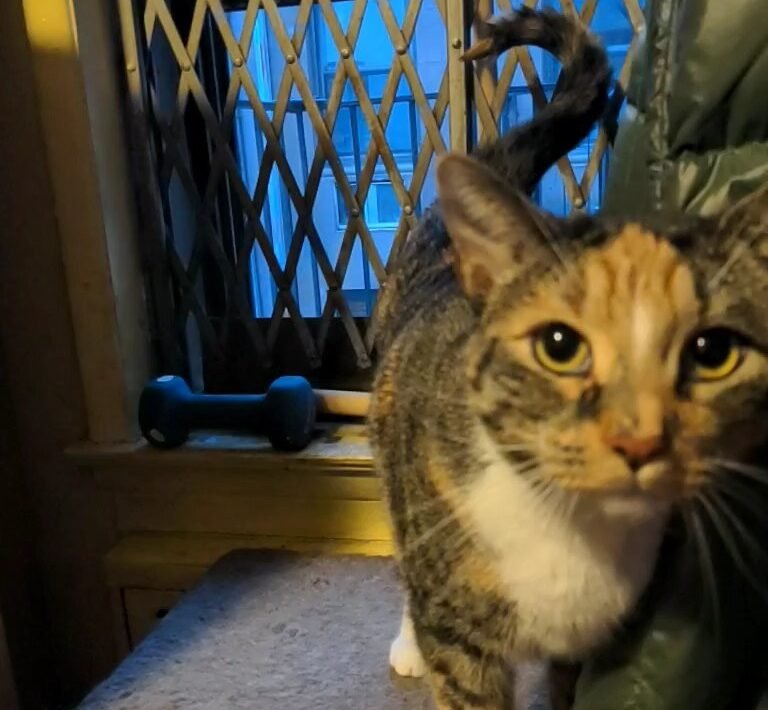
You may have noticed your cat walking toward you with a tail that curves at the very tip, like a tiny fishhook or a punctuation mark with an attitude. Sometimes a cat’s tail looks like a question mark – it stands upright but curls at the end, and this cat tail language indicates that your cat is happy and approaching amicably, which is an invitation to interact. Think of it as the feline equivalent of a cheerful wave from across the room.
A cat with a question mark-shaped tail is in a playful mood, suggesting that the feline is feeling energetic and ready to engage, and may be exploring new environments or interacting with its favorite toys. However, while it is tempting to pet that curly-tipped tail, most cats prefer to be petted around their facial glands on their cheeks, under their chin, and next to their ears. So redirect your hand toward the cheeks, and you will both be much happier.
Puffed, Tucked, and Low: When the Tail Screams Fear
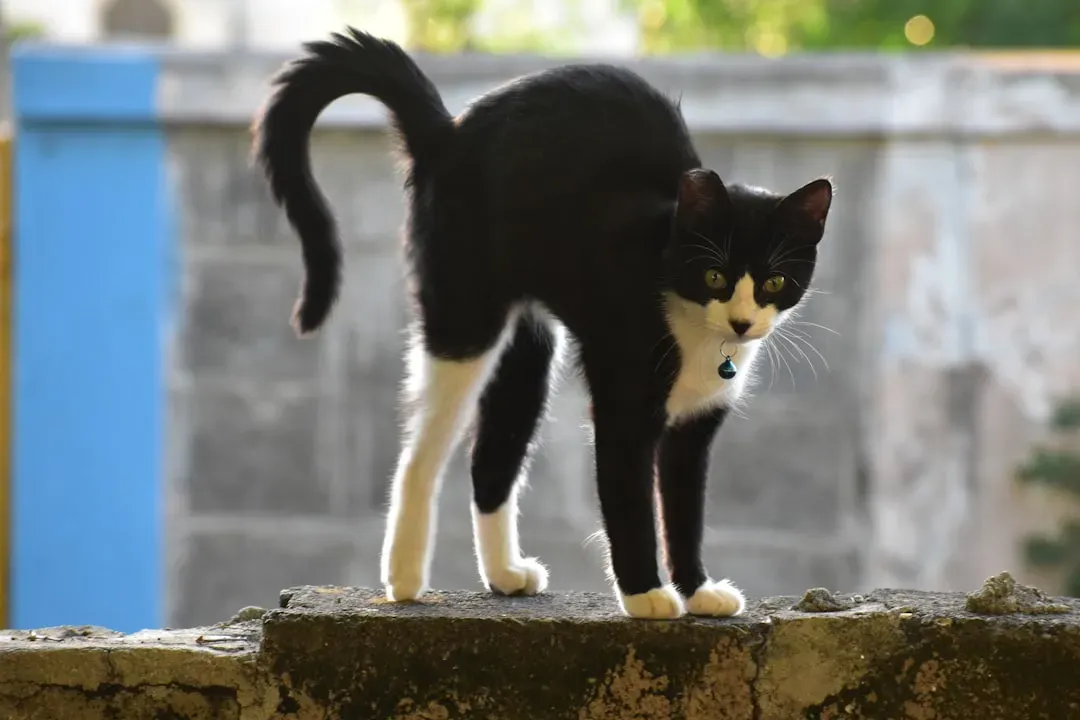
On the opposite end of the emotional spectrum, a cat’s tail can become a distress signal that no responsible owner should ignore. A lowered tail can mean your cat is feeling uncomfortable or scared, and in fact, the closer the tail is to the cat’s body, the less comfortable your cat is feeling – when a cat feels afraid, it attempts to pull in vulnerable parts like the tail. It is as though the cat is trying to make itself disappear.
A puffed-up tail is often a response to a threat, such as seeing a cat outdoors, and is assumed to be a defensive attempt to make the cat appear bigger. If your cat assumes the quintessential Halloween-cat posture with a puffed tail and arched back, it is startled or frightened by a sudden, severe threat, its hair stands on end so it can appear larger, and this defensive reaction indicates your cat wishes to be left alone, often triggered by other animals, approaching dogs, visitors, or sudden noises. Your best move in that moment is to remove the trigger and give your cat space.
The Tail Thrash and Flick: Boundary-Setting in Real Time
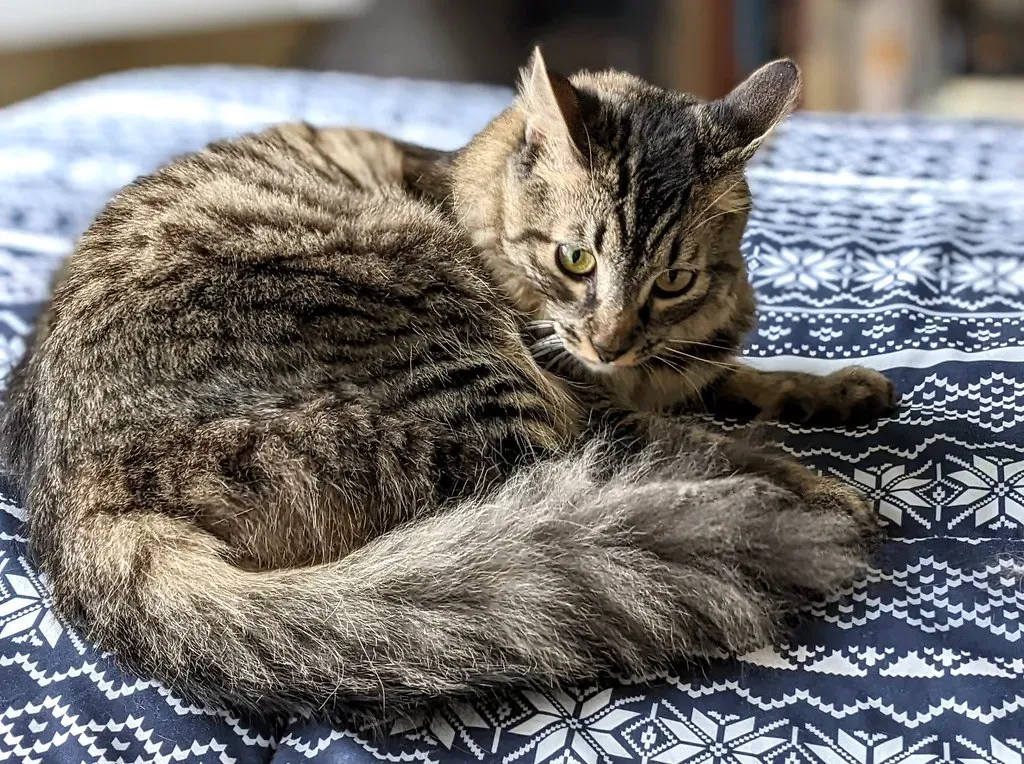
Here is where things get personal. Many cat owners have made the mistake of continuing to pet a cat that was already signaling them to stop. If you are petting your cat and they start thrashing their tail, they are trying to tell you to stop, and if you don’t, then the thrashing tail may be a prelude to hissing, growling, swatting, or biting. The tail thrash is not dramatic – it is a warning with a deadline.
Tail twitching can have a variety of meanings depending on the context: when a cat is focused on something such as a toy or prey, it may exhibit quick, subtle twitching reflecting heightened attention, but if the tail begins to thrash or twitch more rapidly, it can signal mild irritation or annoyance, and understanding these subtle shifts in body language is crucial to prevent overstimulation or potential aggression. Think of the tail flick as a yellow light. You still have a moment – but only just.
The Wrapped Tail: A Feline Hug You May Have Been Missing
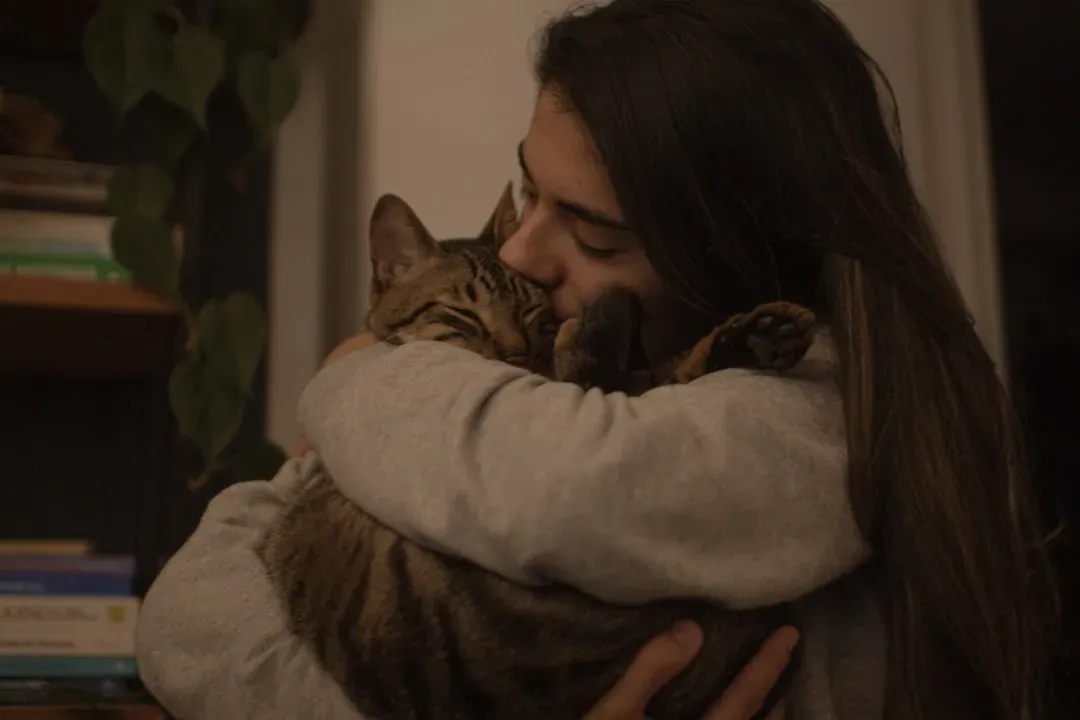
Of all the tail signals in a cat’s repertoire, this one might be the warmest and most overlooked. Just as humans greet one another with handshakes or hugs, cats may greet by curling their tails around people and by intertwining their tails with other cats, and tail wrapping is an affiliative behavior that demonstrates a willingness to interact. Your cat is reaching out to you the only way it knows how.
When a cat wraps its tail around a person or animal, it is usually a sign of affection, and if a cat uses its tail to wrap around your leg or another cat’s tail, this is a sign of close affection; at a biological level, a cat’s tail includes scent glands, so the tail is being used to swap scents with the other creature. If your cat snuggles up next to you with its tail curled around you, it means you’re part of their in-crowd – they like you a lot. You have been officially claimed, and you should feel genuinely honored.
Reading the Full Picture: The Tail Never Speaks Alone
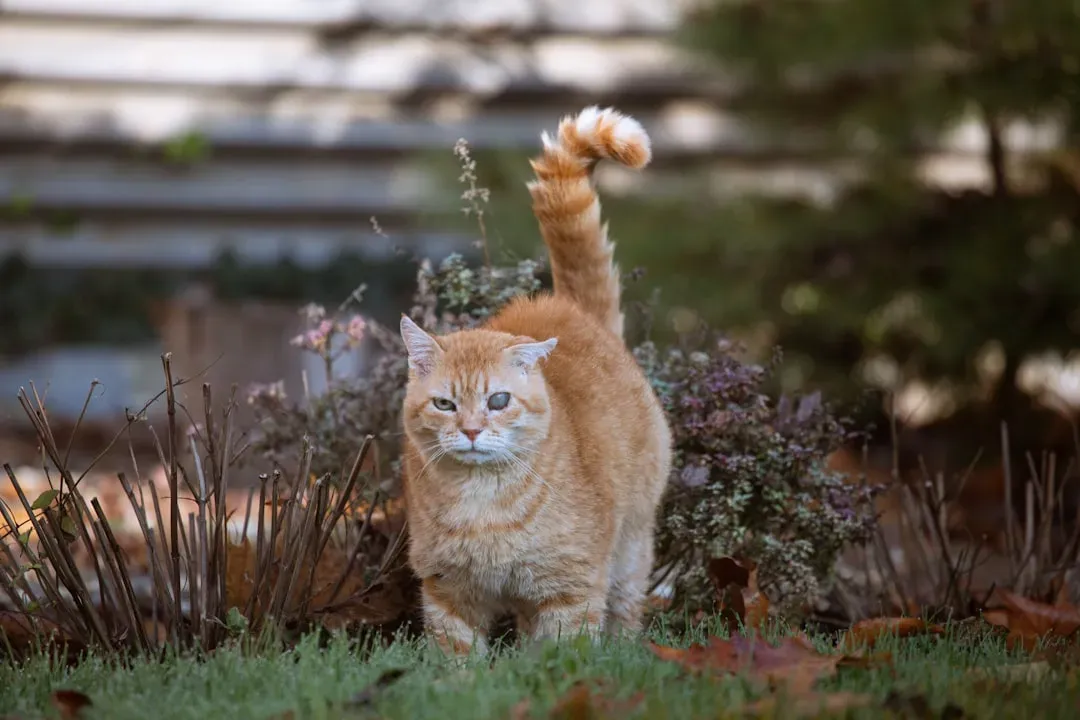
Here is the thing that even many experienced cat owners overlook: the tail does not tell the whole story on its own. While tail movements are a critical aspect of feline body language, it is essential to consider the entire body when interpreting a cat’s emotions – a puffed tail combined with flattened ears and wide eyes is a strong indicator of fear, while an upright tail with a relaxed body posture reflects confidence. Context is everything in this language.
Analysis of tail-and-ear configurations shows clearly that the position of the ears is more important than tail position for both cats when they interact with each other. However, in cat-human interactions, the cat most often approaches with its tail up prior to rubbing itself against the human, and these results are important for a better understanding of cats’ perceptions of humans and help promote cat welfare. The tail is one instrument in a full orchestra. Learning to hear all of them together is where true understanding begins.
Conclusion
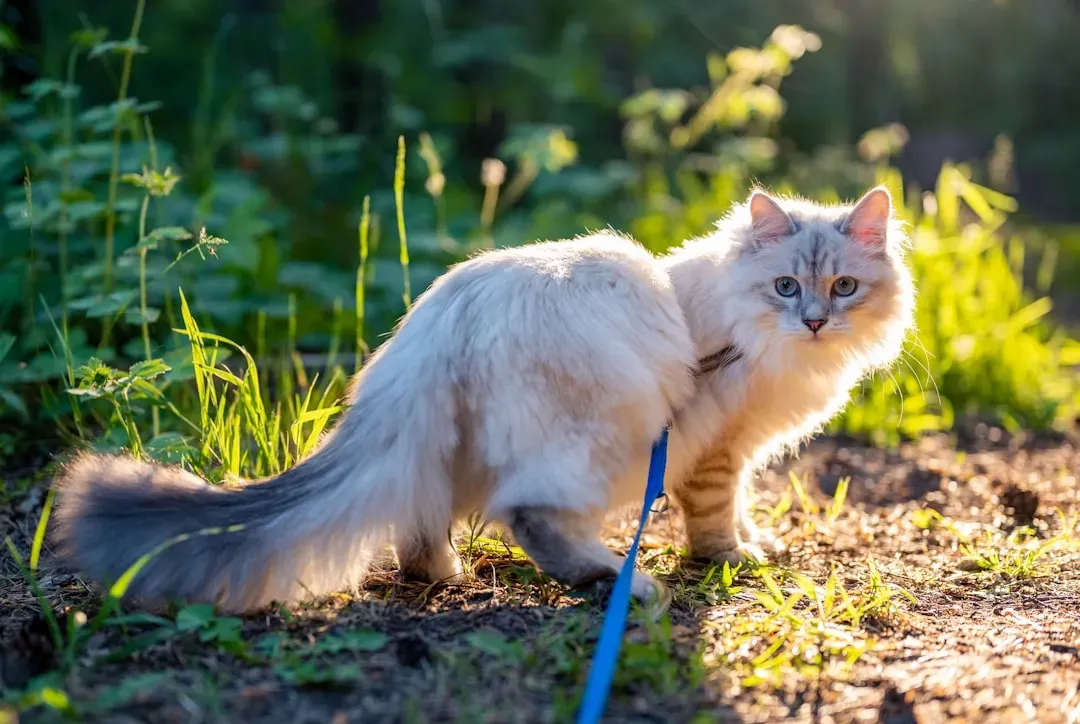
Your cat has been talking to you this whole time. Not in a vague, interpretive way – in a precise, biologically wired, evolutionarily refined language that has been developing since the first wild cat chose to live near humans thousands of years ago. Every swish, wag, flick, and curl contains a hidden message, and understanding cat tail positions and movements can give you deeper insight into your cat’s personality and feelings, leading to a deeper bond with your furry friend.
The more you watch, the more you will see. A confident high tail on your way home from work. A gentle question-mark curve before playtime. A slow, deliberate wrap around your ankle that means more than words ever could. Cats are masters of communication and your job is to pay attention – if you learn to accurately read body language signals and respect what your cat is telling you, it will create trust and strengthen the bond you share.
You have been living with a tiny, furry emotional translator for years. The only question left is: how many signals have you been missing without even knowing it?
Kristina is a young writer from India. An arts graduate and an avid content creator, Kristina is passionate about animals and wildlife. She enjoys exploring topics related to pet care, animal behavior, conservation, and nature, combining thorough research with engaging storytelling.