You share your home, your couch, and honestly, your entire daily schedule with a creature that weighs less than a bag of flour. You fill the bowl, open the door, move over on the bed, and do it all again tomorrow. Sound familiar? If you live with a cat, you already know something feels slightly off about who is really in charge around here.
Here’s the thing – it’s not an accident. Cats are remarkably calculated in how they interact with you. Scientists have been quietly uncovering just how sophisticated these behaviors really are, and the results are equal parts fascinating and humbling. So before you go telling people you “own” a cat, maybe read on first. You might be surprised.
The Baby Cry Hidden Inside the Purr
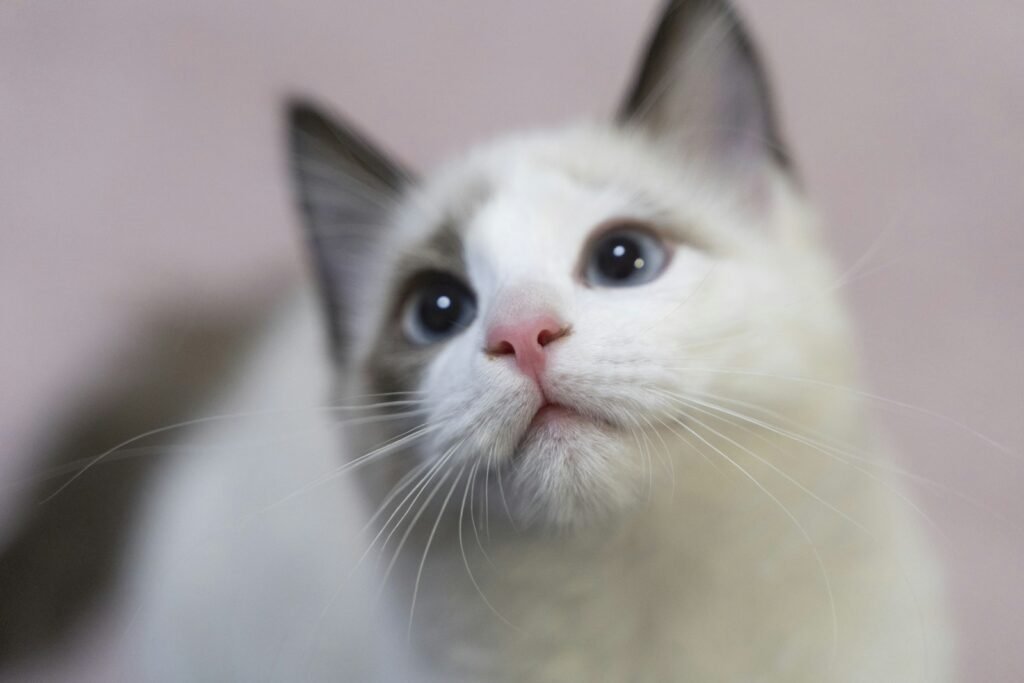
Of all the tricks in a cat’s playbook, this one might be the most devious – and the most scientifically documented. A study from the University of Sussex discovered that cats insert a high-pitched cry into their purring, mimicking the sound of a human baby to get attention from their owners. You think that purring is just a sign of happiness. It isn’t always.
Scientists digitally compared the spectral qualities of two types of purrs and discovered that the major difference is that the insistent purr includes a component very similar to the sound of a human baby crying. People are innately attuned to this sound, and cats have evolved to take advantage of this sensitivity to get your attention. You are essentially being played by thousands of years of biological fine-tuning. Honestly, it is hard not to be a little impressed.
Researchers think this cry occurs at a low level in cats’ normal purring, but cats learn to dramatically exaggerate it when it proves effective in generating a response from humans. It also seems to most often develop in cats that have a one-on-one relationship with their owners rather than those living in large households, where their purrs might be overlooked. The more one-on-one time your cat gets with you, the more refined this trick becomes. Think about that next time you feel a warm glow from your cat’s evening purr session.
The Art of the Perfectly Tuned Meow
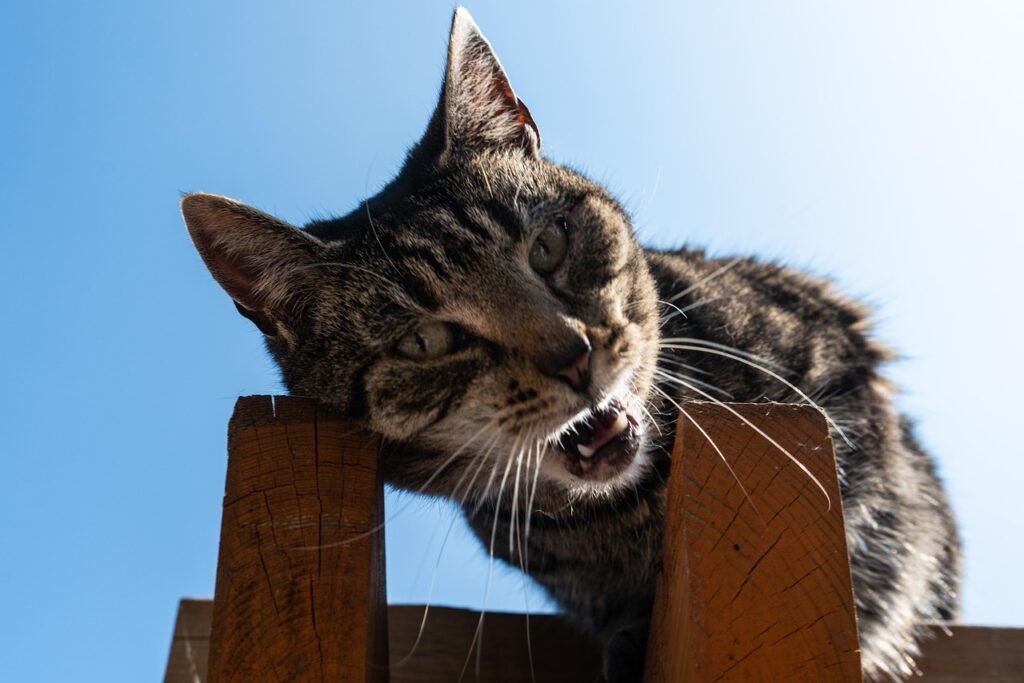
Cats rarely meow to one another. The sound of their meows has evolved during domestication to more effectively communicate with humans. That alone should tell you something important. Your cat is not chatting for the fun of it. Every single vocalization directed at you is a calculated move.
According to research published in Comparative Psychology, cats know how to meow to get what they want. The study involved sampling 100 different meows from 12 cats, and volunteers rated these meows according to pleasantness and urgency. They found a consistent human interpretation of the meows. In other words, you are not imagining it when your cat’s 6 AM food call sounds especially unbearable. That is entirely on purpose.
You have probably noticed how your cat has different meows for different situations. Research shows that cats modify their vocalizations based on their owners’ responses, meaning they essentially “train” humans to respond in specific ways. Repeat after me: your cat is training you. Not the other way around.
The Slow Blink That Melts You Completely

If your cat has ever locked eyes with you across the room and then slowly, lazily blinked those eyes shut – congratulations. You just received what many cat behaviorists call the “cat kiss.” This gentle slow blink is one of the clearest signs that your cat feels safe, relaxed, and bonded with you. In the wild, cats never close their eyes around threats. Closing their eyes even for a second is a vulnerability. So when they do it to you, it is profoundly meaningful.
Collectively, research results suggest that slow blink sequences may function as a form of positive emotional communication between cats and humans. I think this is one of the most quietly beautiful things in the human-animal world. Research published in The Journal of Physiology notes that cat slow blinking, when both the closing and the opening of the eyelid happen at a slow pace, differs from the velocity of a typical cat blink, when the closing of the eyelid is rapid but the opening is slow. This observation is noteworthy because it shows that slow blinking is not a reflexive movement – it’s an intentional behavior.
The first experiment in the University of Sussex study revealed that cats are more likely to slow blink at their owners after their owners have slow blinked at them. A second experiment found that cats were more likely to approach an experimenter’s outstretched hand after the experimenter had slow blinked at the cat. The slow blink is not just a display of affection – it is also a clever way to draw you in closer and keep you emotionally invested. Works every single time.
Head Bunting: Marking You as Their Territory
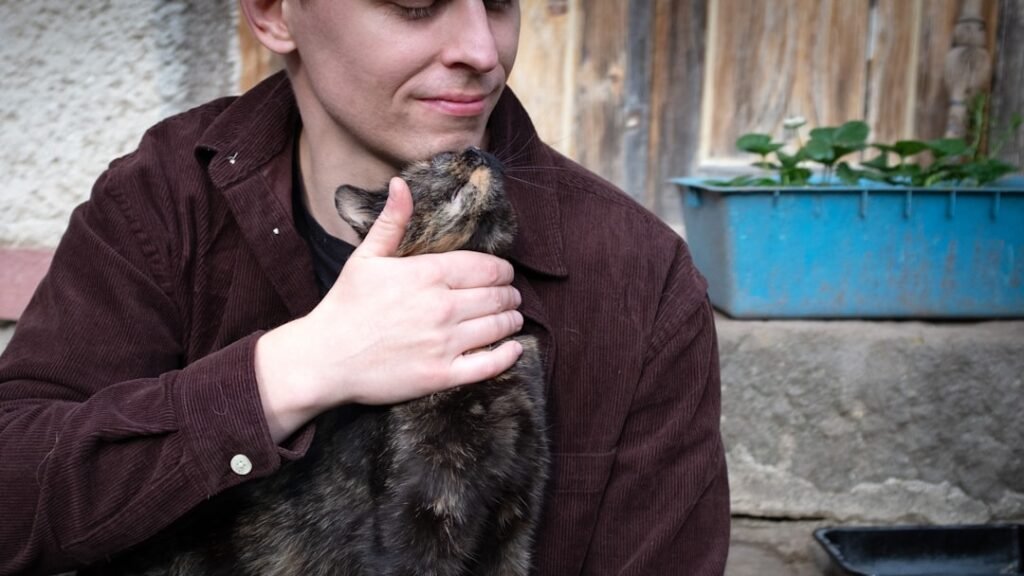
Your cat walks over, bumps their forehead hard against your chin, rubs their cheek along your jaw, and then strolls off like nothing happened. Sweet, right? It is also a territorial claim. Cats have scent glands located around their cheeks, forehead, and chin. When they press or rub their head against you, they’re releasing pheromones that blend with your natural scent. You have officially been marked as belonging to them.
Cat headbutting, also called bunting, is usually a friendly behavior where cats mark you with their scent to show bonding, comfort, and familiarity. In fact, a study showed that shelter cats who frequently rubbed against people were adopted more quickly. So this behavior doesn’t just happen at home – cats have figured out that it works on strangers too, which is remarkable when you think about it.
If a cat is consistently rewarded with attention after headbutting, this may encourage more headbutting. In addition, the more you bond with your cat through headbutting, the more headbutting your cat will do for attention and bonding, creating a sort of feel-good cycle. Your cat is essentially running a very effective feedback loop on you. You pet them. They head-bunt more. You pet them more. Repeat indefinitely. Sound familiar?
Kneading: The Guilt-Trip That Works on Every Lap
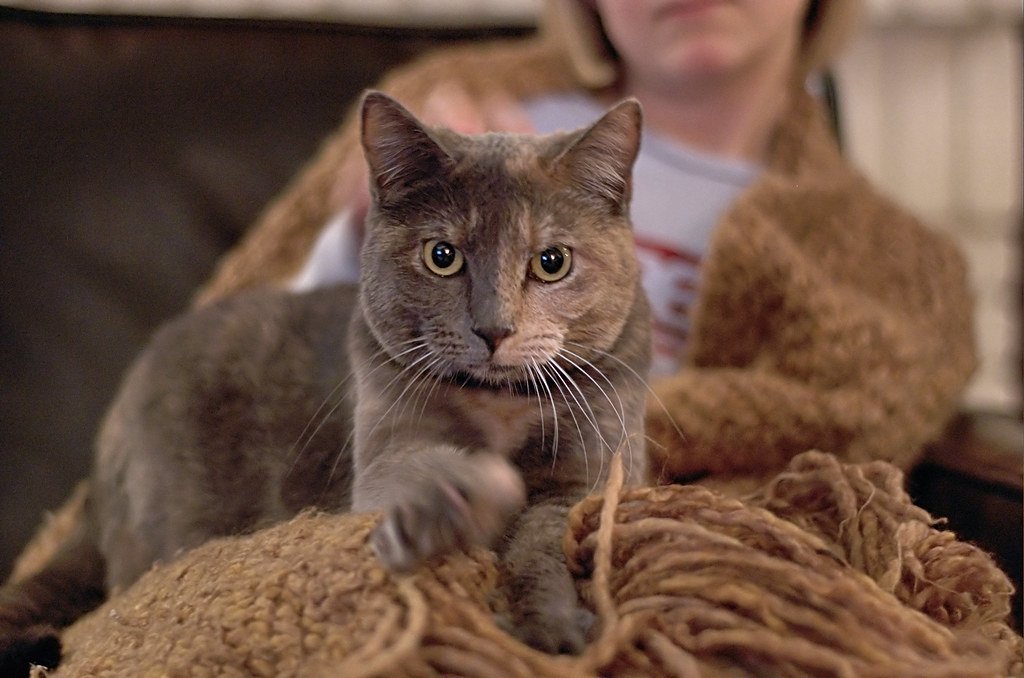
Few things in life are more disarming than a cat settling into your lap and beginning to slowly knead your thighs with rhythmic, deliberate paws. It feels like the highest honor. It is also a deeply rooted psychological strategy. Kneading or “making biscuits” is a natural behavior that cats engage in when they feel at ease. The behavior consists of a cat repeatedly pressing and pulling back their front paws into and from a soft surface, alternating between their right and left limbs. While somewhat ambiguous, making biscuits as an adult cat is thought to stem from early nursing experiences when kneading was used to encourage milk secretion.
Kneading is believed to bring comfort by releasing endorphins to reduce stress and promote relaxation. Relaxed cats that knead are showing contentment. They will often knead when you gently pet or stroke them. Here’s the clever part: by doing this in your lap, your cat is essentially creating an emotional attachment ritual. You feel needed, warm, and important. You become far less likely to move or disturb them. Mission accomplished.
Cats may also knead to relax, bond affectionately with people, or mark their territory through the scent glands in their feet. Yes, those little paw pads also have scent glands. So while your cat appears to be giving you an adorable massage, they are also quietly stamping you with their personal scent. They really do think of everything.
Sitting on Your Laptop and Blocking Your Path
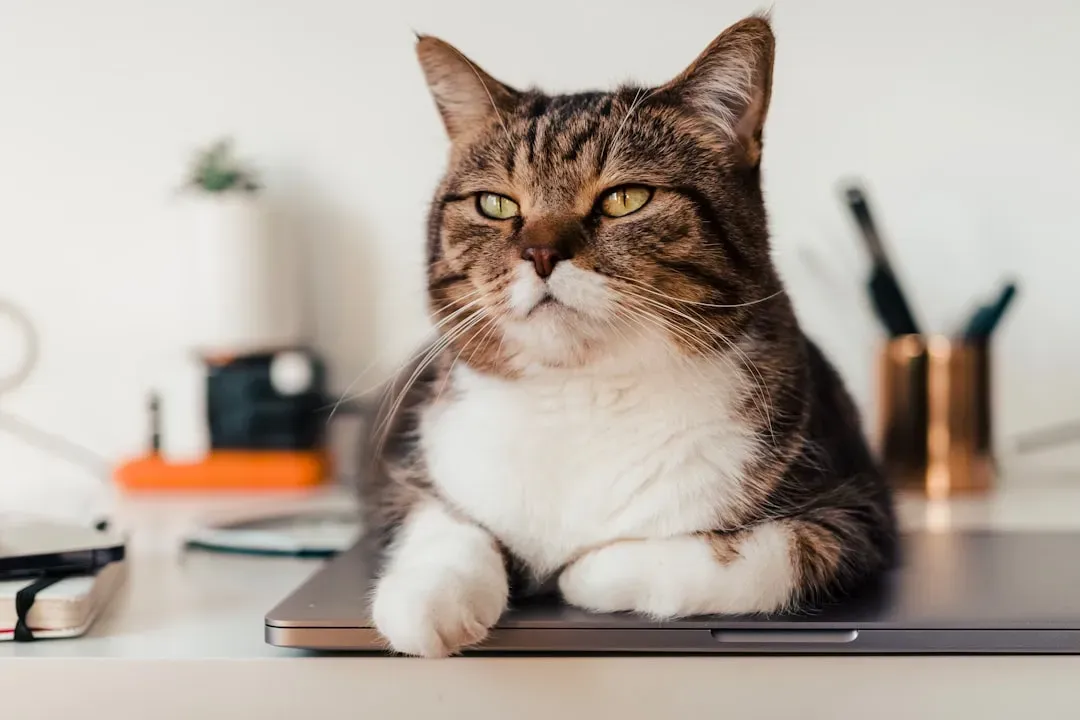
You open your laptop for a video call, and within thirty seconds there is a cat on the keyboard. You try to get up from the couch, and there is a cat weaving between your feet like a small, furry traffic cone. This is not clumsiness. Cats may overtly place themselves on your lap while you are working at a computer or reading a book in an attempt to redirect your attention onto them. They know exactly what they are doing.
Some cats will deliberately knock items off tables or counters to gain your attention. They may even make eye contact with you as they do this, as they have often learned from previous antics that this behavior gains them a quick response and interaction from their owner, thus rewarding their motivation. Direct eye contact while pushing your favorite mug off the edge of the counter. That is not accidental. That is a performance, and you are the audience.
Attention-seeking behaviors can develop because you unintentionally reinforce them through your reactions. For example, if your cat learns that excessive meowing, frantic scratching of carpets or furniture, or knocking an item off a shelf gets a swift response from you, they’ll quickly learn that that particular activity paid dividends and had the desired outcome. So, even an adverse reaction by you to their antics is a positive result for the cat. Even your frustration is a win for them. That is next-level strategy.
Social Referencing: Reading You to Get What They Need
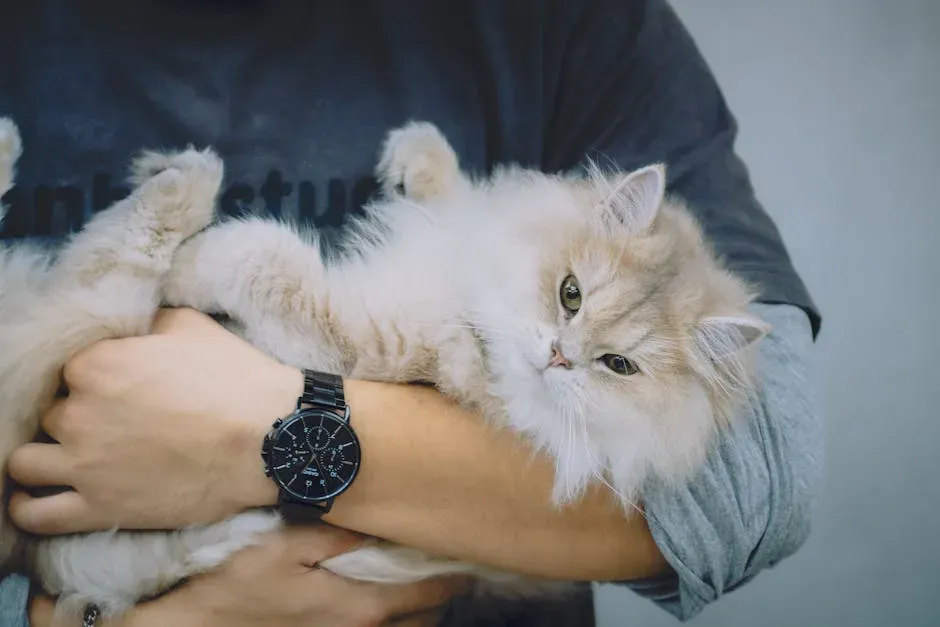
This one genuinely surprises people. Cats observe your behavior using a process called social referencing. This is something that children learn to do and continue into adulthood. It’s when you’re in an unfamiliar situation and look to the people around you to learn how to react. Cats do this too, and they use what they learn about you to predict your responses and push the right buttons.
Social referencing is a complex process, so animals exhibiting it have high intelligence. Think of it like a very attentive intern who studies your every move, learns your habits, figures out your weak points, and then deploys that knowledge at the most strategic moments. Your cat has been watching you far more carefully than you have been watching them.
Felines have evolved around humans, permitting them to observe your actions. Cats use these observations to develop habits that can get them the results they want. So the next time your cat seems to know when you’re about to leave the house, when you’re stressed, or when you’re most likely to give in and refill the food bowl early – they genuinely do know. They have been studying you since the day they arrived.
Conclusion
Let’s be real: none of this makes us love our cats any less. If anything, understanding just how calculated and sophisticated their behavior is makes them even more fascinating. Over the many years cats have been with us, they have evolved and learned how to use clever manipulation techniques without us noticing. They are incredibly smart and will always find a way to get what they want from their human.
The deeper truth is that these behaviors, clever as they are, happen within a genuine relationship. Cats are shown to prefer spending time with their owners. At times, cats can choose human communication over food and toys. The manipulation, if you want to call it that, is wrapped up in something real.
You were never really in charge. Your cat moved in, studied you, learned your patterns, and quietly took the wheel – and you handed it over with a smile every single time. The question isn’t whether your cat is smarter than you think. The question is: now that you know all their tricks, will it actually change anything? Probably not. And honestly, that says everything. What do you think – which of these tricks does your cat use the most on you? Share it in the comments!
Kristina is a young writer from India. An arts graduate and an avid content creator, Kristina is passionate about animals and wildlife. She enjoys exploring topics related to pet care, animal behavior, conservation, and nature, combining thorough research with engaging storytelling.