You leave the house, hit play on your favorite playlist, and assume your cat is simply vibing along to the same beats you love. Honestly, that’s a sweet thought. The reality, though, is a little more humbling. Your cat is not impressed by your music taste, and science has the receipts to prove it.
There’s a fascinating world of research sitting at the intersection of animal behavior and acoustics, and it turns out our feline companions have strong, biologically rooted opinions about sound. What they prefer might completely surprise you. Let’s dive in.
Your Cat Has Been Silently Judging Your Playlist All Along

Here’s the thing – most cat owners have experienced that moment when they turn up their favorite song and their cat just stares blankly at the speaker, then walks away. It’s not rudeness. It’s biology. Research shows that although cats don’t demonstrate any particular preference for the music their owners listen to, that doesn’t mean they’re indifferent to music altogether.
Cats do not care much for the type of music we like to listen to and instead seem to have very specific preferences. Think of it like this: imagine someone handing you sheet music written for a bat’s hearing range and expecting you to enjoy the concert. That’s essentially what you’re doing when you play your favorite pop banger for your cat.
The Science Behind How Cats Actually Hear Music

To understand why your cat rejects your Spotify playlist, you first need to understand how wildly different feline hearing is from ours. Humans generally hear sounds in a range of 20 Hz to 20,000 Hz, while for felines, this range is 45 Hz to 64,000 Hz. In short, they hear much higher frequencies than we do and are far more sensitive to high-pitched sounds.
Cats can hear frequencies up to 65,000 Hz, which is considerably higher than the human hearing range of 20,000 Hz. They are also sensitive to vibrations and can feel them through their paws and whiskers. This sensory perception plays a crucial role in how cats react to music. So when you blast that perfectly curated playlist, your cat isn’t just unimpressed – large portions of it may be aurally irrelevant, or even uncomfortable, to them.
What “Species-Specific Music” Actually Means

A study published in the journal Applied Animal Behavior Science found that for feline friends to truly enjoy music, it needs to be species-specific. The trick for getting pets to respond lies in composing music that fits into how each animal naturally communicates. Think about that for a second. Human music is built around our own vocal ranges, our heartbeat tempos, our emotional wiring. It makes perfect sense that it wouldn’t speak to an entirely different species.
Researchers have found that cats have a preference for sounds that fall within a frequency range similar to that of their own communications, such as purring or meowing. Cat music is essentially classical music engineered for cats, with frequencies and tempos precisely orchestrated to mimic the qualities of purrs, meows, and other sounds that cats find appealing. Harp overtures are mixed with gentle cat noises or the sound of trickling water. That’s not just creative – that’s genuinely brilliant acoustic science.
The Man Who Composed Music Specifically for Cats

You might not have heard of David Teie, but your cat almost certainly would approve of him. He is a soloist for the National Symphony Orchestra who partnered with animal scientists to create a groundbreaking collection called “Music for Cats.” His music is designed specifically to appeal to feline auditory preferences, using tones that mimic the comforting sounds of a cat’s natural environment, such as purring and suckling, tapping into a cat’s instincts and offering a sense of security.
Professor Charles Snowdon of the University of Wisconsin conducted a study with Megan Savage and Teie to examine the effect of music on cats and whether reactions varied according to the type of music played. David Teie composed a series of songs specially created for cats, including sequences that mimic the noise a cat makes when suckling or purring. A remarkable seventy-seven percent of the cats reacted positively to Teie’s specially composed music. That’s not a small number. That’s nearly eight out of ten cats responding with measurable enthusiasm.
The Landmark Study That Changed Everything We Thought We Knew

I think this is where things get genuinely exciting. To test the hypothesis about species-specific music, researchers turned to David Teie to compose songs that would fit feline parameters. Testing 47 different domestic cats, the researchers played the cat-targeted songs and compared the felines’ reactions to two human songs: Bach’s “Air on a G String” and Gabriel Fauré’s “Elegie.”
The results showed that the cats had a far more significant preference for the cat music, and they responded to it much more quickly. Not only that, but 15 of the cats in the study became calmer after hearing the cat music. In contrast, the human music only had a calming effect on two of the cats. That comparison says everything. Fifteen versus two. Classical music written by human geniuses simply could not compete with music tuned to feline biology.
Classical Music and Jazz – The Human Genres Cats Tolerate Best

Now, let’s be real. You’re not always going to play a cat-specific playlist. Sometimes you just want your own music on, and that’s completely valid. Among human genres, not all of them are equally tolerable to your feline roommate. Multiple studies indicate that cats are generally in a good mood when listening to classical music. Pieces with harmonious and gentle melodies can appeal to feline ears, as the music lowers stress and allows them to relax.
Like many animals, cats tend to enjoy most classical music. The soft sounds provide a relaxing atmosphere for cats. Other kinds of soft music, like instrumental or even certain kinds of jazz, can also create a calming effect for a nervous kitty. Not abrupt free jazz with weird sounds, but calm and collected jazz. The works of musicians like Bill Evans, Stan Getz, and Chet Baker are all considered to be relaxing jazz, meaning that your cat could enjoy listening to it a great deal. Soft jazz as a shared listening experience with your cat? Honestly, that sounds like a pretty good evening.
The Genres and Sounds That Stress Your Cat Out

On the flip side, some music is genuinely bad for your cat’s wellbeing, and this part of the research is worth taking seriously. Cats have extremely sensitive ears and can hear sounds that humans cannot. Because of this, many kinds of human music are too loud and stressful for cats’ ears. Music with a lot of noise or abrupt sounds can actually cause significant stress for feline friends.
Unfortunately, cats are objectively not fans of heavy metal. A few studies have suggested that this type of music increases cat stress levels. Qualities like excessive loudness or sudden changes in sound are not welcome to a cat’s ears, so anything excessively loud regardless of genre, or with sudden changes, could upset your cat. That essentially rules out metal, dance music, and experimental genres. Think about how loud sounds like fireworks terrify cats – now imagine that same auditory alarm response triggered every time a bass drop hits. Not ideal.
How to Use Music to Improve Your Cat’s Daily Life
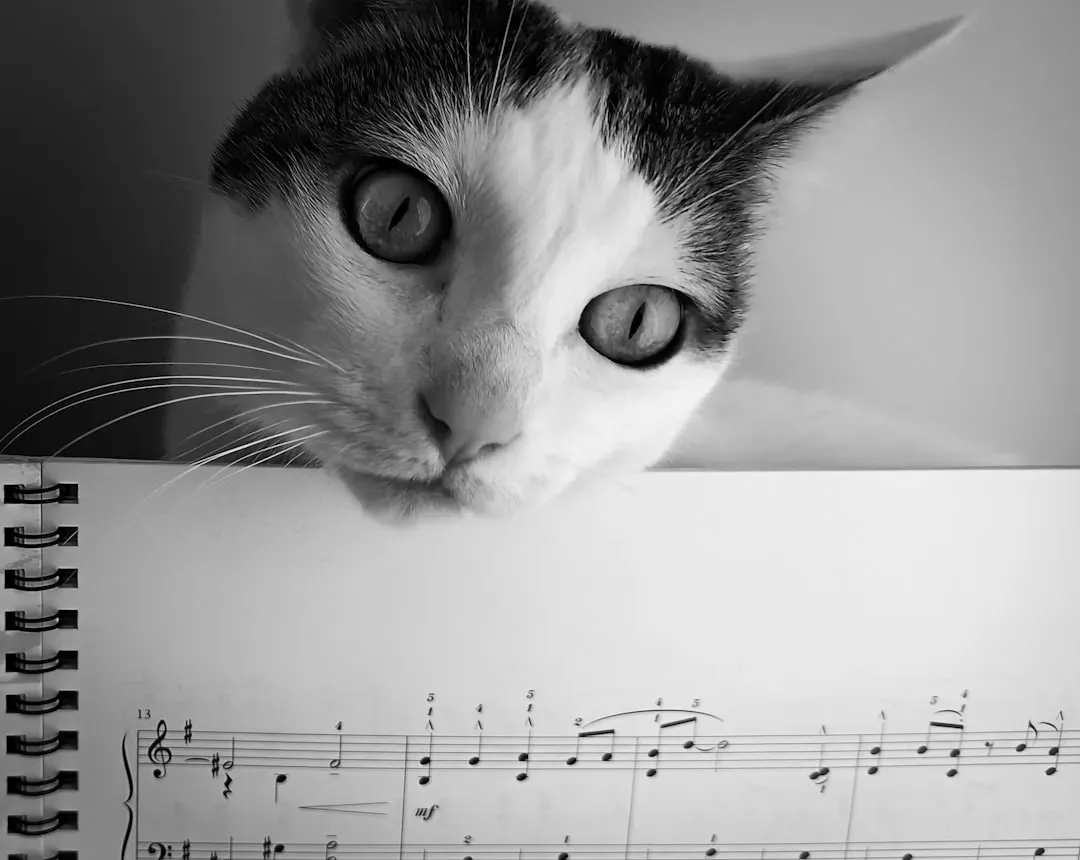
The practical applications here are genuinely exciting for anyone who cares about their cat’s wellbeing. Playing calming music in the background can help distract cats from loud noises like fireworks, thunderstorms, or the vacuum cleaner, which may cause them distress. Research shows that feline-appropriate music can have a positive impact on cats’ stress levels, reduce anxiety, promote relaxation, and even improve sleep quality.
Studies have shown that cat-specific music can significantly lower stress-related behaviors in cats visiting the veterinary clinic for wellness examinations. Adding cat-specific music to veterinary offices as environmental enrichment could provide great value to the cat’s welfare in the clinic, the client’s comfort, and the veterinary team’s ability to accurately assess the patient. Each cat is unique, and their music preferences can vary. Note what seems to soothe your cat the most and adjust your playlist accordingly. Consistency can help your cat get the most out of the experience. Start low, observe closely, and let your cat guide the playlist. It’s a small change with genuinely big benefits.
Conclusion: Your Cat Is a Music Critic, and a Surprisingly Sophisticated One

It’s hard not to feel a little humbled by all of this. We spend years curating playlists, arguing about genres, investing in good speakers – and meanwhile, our cats have their own deeply wired acoustic preferences that most of us have never even considered. For music to be effective with other species, it must be in the frequency range and with similar tempos to those used in natural communication by each species. That’s a profound idea, and it applies far beyond just cats.
The good news is that with cat-specific music now freely available on platforms like Spotify, giving your feline companion a better auditory environment has never been easier. Music can be a wonderful addition to your cat’s environment, providing benefits that enhance their quality of life. Just as some music can soothe human nerves, certain melodies can significantly reduce stress levels in cats, which is particularly helpful during potentially frightening situations like vet visits or moving to a new home.
So the next time your cat turns their back on your playlist and saunters out of the room, don’t take it personally. They’re not being antisocial. They’re simply waiting for something composed with their biology in mind. Maybe it’s time to share the aux cord. What do you think – would you actually switch your home playlist for your cat’s sake? Drop your thoughts in the comments.
Kristina is a young writer from India. An arts graduate and an avid content creator, Kristina is passionate about animals and wildlife. She enjoys exploring topics related to pet care, animal behavior, conservation, and nature, combining thorough research with engaging storytelling.