You’ve probably been there. Your cat is demolishing your couch at full speed at two in the morning, or knocking your favorite mug off the counter with zero remorse. You’re half-asleep, mildly furious, wondering what on earth is wrong with your animal.
Here’s the thing though: nothing is wrong. Not even a little. Almost every behavior you’ve labeled “bad” in your cat is rooted in millions of years of feline evolution. Your cat isn’t difficult, dramatic, or out to get you. Your cat is simply being a cat, and that difference in understanding can completely transform how you relate to your furry companion. Let’s dive in.
Scratching Your Furniture Is Not an Act of Revenge
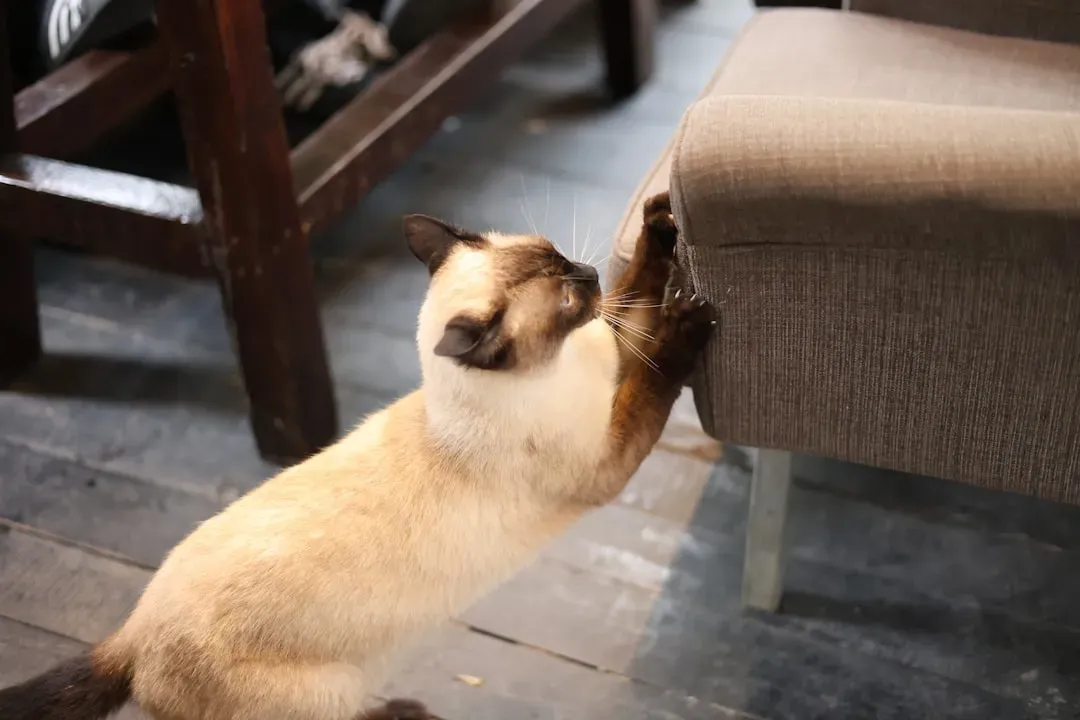
You walk into the living room and your sofa looks like it lost a fight with a buzz saw. Most cat owners take this personally. I get it, it’s frustrating. But honestly, your cat is not punishing you for leaving the house or feeding them five minutes late.
Cats scratch for several very legitimate reasons. First, it shortens and conditions the claws. Second, it allows for an effective whole-body stretch. Third, and perhaps most importantly, cats scratch to mark their territory, both visibly with claw marks and invisibly by leaving the scent from their foot pads. So when your cat shreds the arm of your sofa, they’re essentially leaving a sign that says “I live here.” Think of it as a cat’s version of interior decorating.
Cats residing primarily indoors do not have tree trunks readily available, and may run into disapproval with their owners when they instead scratch furniture, walls, or use their claws to climb up the drapes. The solution isn’t punishment. It’s redirection. Provide a tall scratching post near the furniture they favor and you’ll likely solve most of the problem overnight.
Knocking Things Off Counters Is Ancient Prey-Testing Behavior
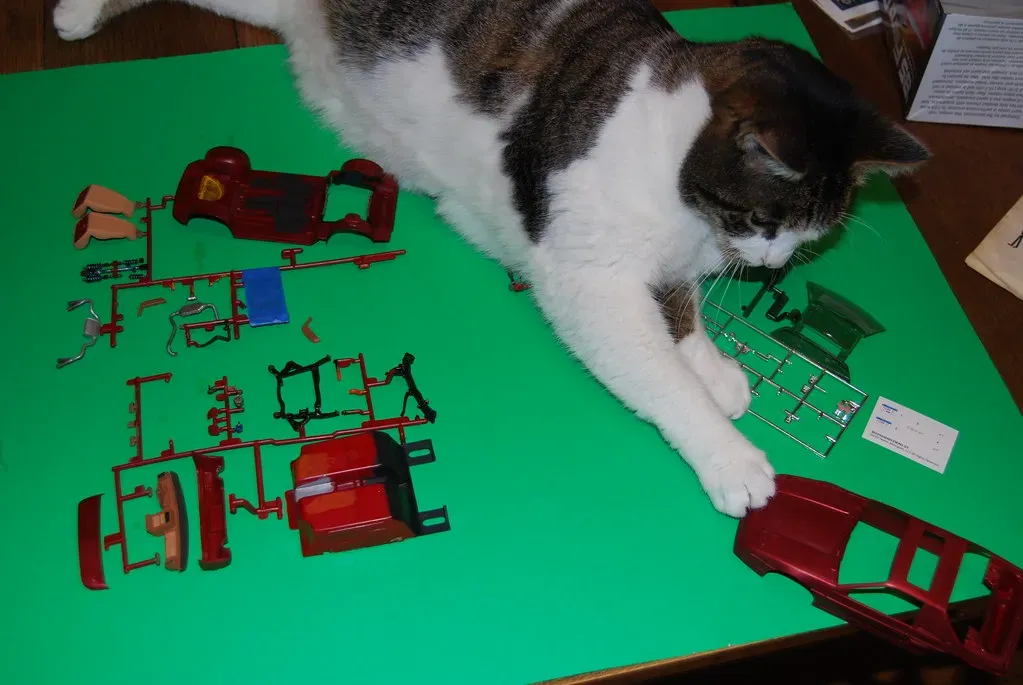
Let’s be real. The image of a cat staring directly into your eyes while slowly pushing your phone off the edge of a table has become iconic for a reason. It feels calculated. It feels personal. Spoiler: it’s neither.
Cats rely heavily on their paws to assess safety, movement, and texture. In the wild, cats swat prey to check whether it is alive, dangerous, or edible. When a cat bats a pen, key, or cup and watches it fall, the movement stimulates the same instincts associated with hunting behavior. This predatory pattern explains why cats like to knock things over, even when the object has no practical value.
Fast-moving objects are potentially something to chase, catch, and eat. The simple act of pushing or batting items off counters and desks plays to this instinct. So your cat isn’t being a tiny chaos agent. Your cat is essentially running a live prey evaluation. Your pen just failed the “is it edible?” test.
Midnight Zoomies Are a Crepuscular Survival Mechanism
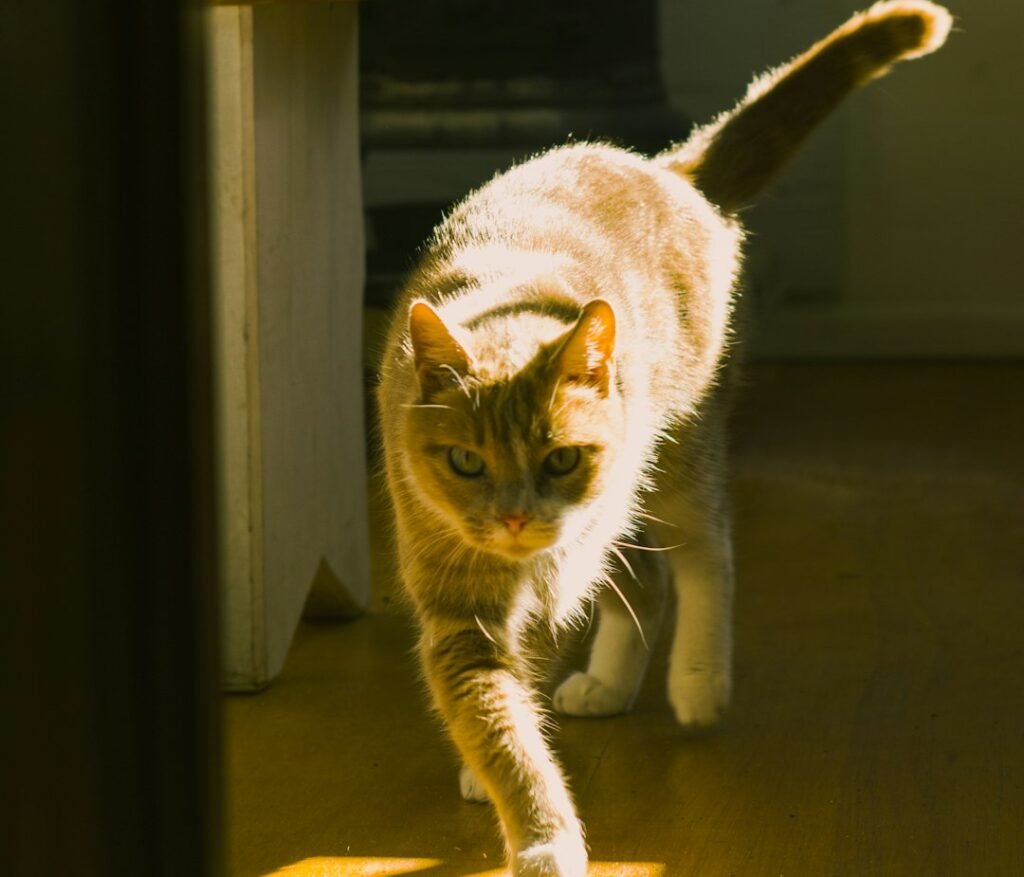
You’ve been there. Dead asleep at 3 AM and suddenly something that weighs roughly four kilograms is treating your hallway like a NASCAR track. You stare at the ceiling wondering why you even own a cat.
Despite thousands of years of domestication, household cats still retain much of their wild ancestry. Cats are crepuscular by nature, meaning they’re most active during dawn and dusk. This evolutionary adaptation allowed their wild ancestors to hunt when there was enough light to see prey but enough darkness to remain concealed from larger predators. Your domestic cat’s internal clock is still hardwired for this activity pattern. When the house quiets down at night, your cat’s natural instincts kick in.
Cats experience what are known as “zoomies,” scientifically referred to as frenetic random activity periods, or FRAPs. During these episodes, cats may sprint laps around the house, jump up and down the stairs, or leap onto your bed. The fix? Implementing a consistent daily play schedule with interactive toys can help deplete energy reserves before bedtime. Aim for at least two 15-minute play sessions daily, with the last one shortly before you go to sleep.
Kneading on You Is Actually a Profound Compliment
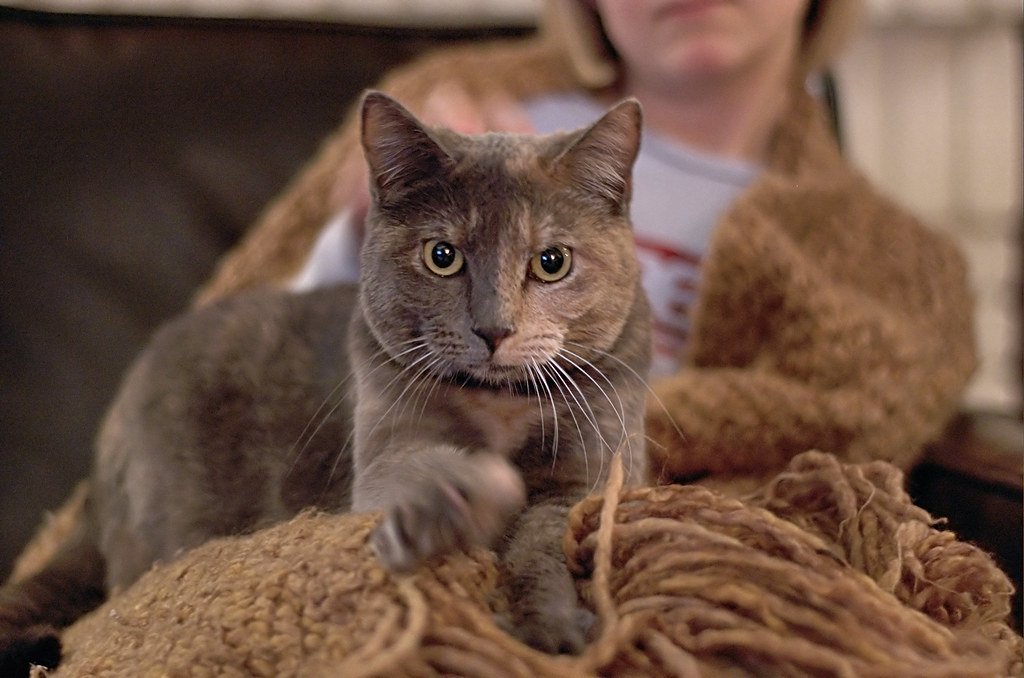
If your cat climbs onto your lap and starts rhythmically pushing their paws in and out, you may enjoy it or find it mildly painful depending on how sharp those claws are. Either way, what’s happening is genuinely touching.
The most widely accepted explanation for why cats knead traces the behavior back to kittenhood, when nursing kittens push their paws rhythmically against their mother’s mammary glands to stimulate milk flow. This instinctive motion is associated with warmth, nourishment, comfort, and safety from the very first days of life. Even after cats are weaned and no longer nurse, the kneading behavior often persists because the emotional associations it carries remain deeply embedded in the cat’s behavioral repertoire. Adult cats that knead are, in a sense, revisiting those early feelings of comfort and closeness.
When your cat kneads specifically on you rather than on a blanket or cushion, it carries a distinct emotional message. Cats have scent glands in their paw pads, and kneading on a person or object is a way of depositing their scent and marking something as familiar, safe, or their own. When your cat kneads on you, they are essentially claiming you as part of their trusted inner circle, which is one of the highest compliments a cat can pay. That’s not a bad habit. That’s love.
Bringing You “Gifts” Is an Instinct Rooted in Family Care
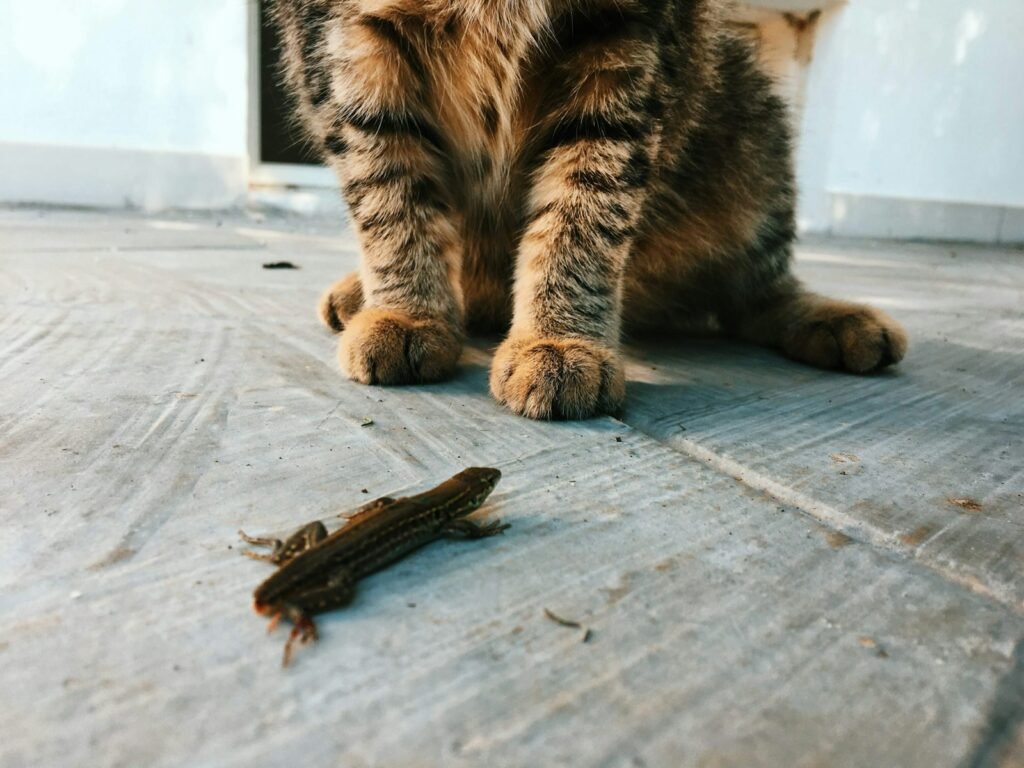
There are few experiences as jarring as waking up to find a dead mouse on your pillow. Gratitude is not usually your first emotion. However, your cat’s motivation is genuinely warm-hearted, in its own very feline way.
Cats have an innate hunting instinct, which can sometimes manifest in them bringing their humans dead birds, rodents, or bugs. This behavior is a way for cats to show their affection and regard their human family as part of their pack. By presenting these items as gifts, cats are demonstrating their desire to contribute to the group’s wellbeing and ensure that their humans are well-fed.
This comes from when wild cats would bring prey back to their kittens and drop it to be eaten. Your cat brings this to you to show off their accomplishment and provide you with a token of their appreciation. It’s actually one of the most sincere gestures your cat can make. It’s hard to say for sure that it ever feels flattering, but the intent is genuinely thoughtful.
Biting During Petting Is a Sensory Overload Response, Not Aggression
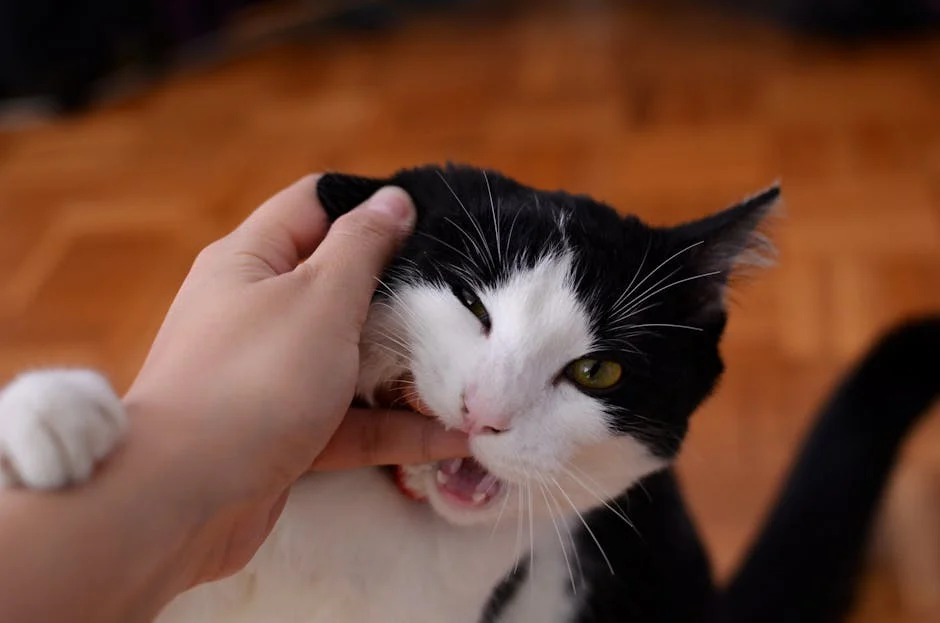
Your cat is purring. You’re petting them. Everything is blissful. Then, out of nowhere, they turn and bite your hand. It feels like a betrayal. It’s actually a form of communication you simply missed.
The opinion among experts is that a cat’s skin is so much more sensitive that at a certain point, petting or stroking becomes sensory overload, at which point the nervous system is simply stimulated too much, so the cat has to escape. Think of it like someone tickling you. Pleasant at first, then suddenly unbearable. Your cat didn’t flip a switch randomly. You were getting warnings you didn’t see.
Your cat is giving you subtle signals: any change at all in pupil size, ear position, head or whisker position, or any movement of the tail means they are done. Most people cannot recognize these signals because they are too subtle. So you pet them too long, they get overwhelmed, and since you didn’t respond when they asked nicely, they bite and scratch you. Learning to read these tiny cues is a game changer for your relationship with your cat.
Hiding in Small Spaces Is Hardwired Self-Protection
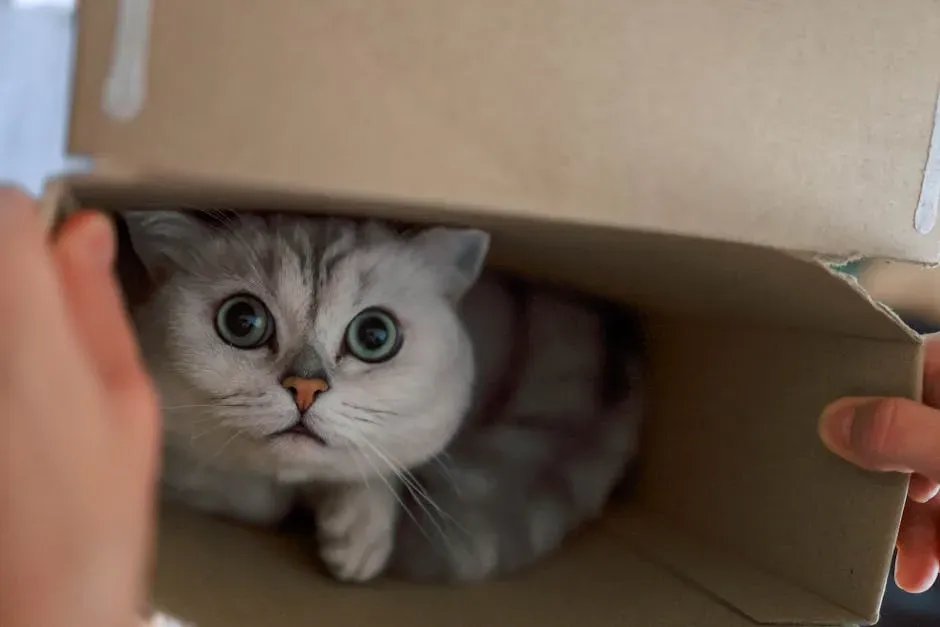
You spend good money on a plush cat bed. Your cat ignores it and squeezes into a shoebox that barely fits their head. You take it personally. You shouldn’t.
Small spaces make your cat feel safe and secure. If they were out in the wild, they would not want to be unprotected in an open area because this would make them more susceptible to predators. Felines also have a natural instinct to ambush. A tight enclosed space is both a hiding spot from threats and the perfect launching point for a surprise attack on unsuspecting prey. That cardboard box is, to your cat, a fortress and a sniper’s nest rolled into one.
If your cat is scared with no place to escape and hide, they may become aggressive. Making sure they have constant access to safe hiding places where they can escape if they feel afraid is one of the simplest things you can do to reduce stress-related behavior. More hiding spots, fewer problems. A counterintuitive but very real truth.
Loud Nighttime Vocalizations Are Driven by Deep Biological Urges
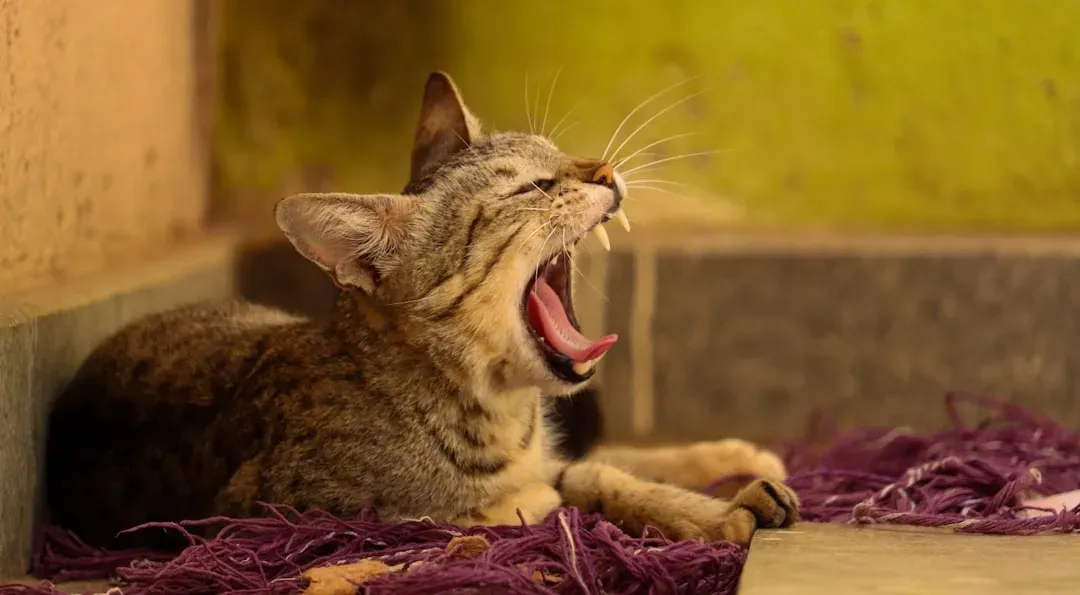
Few things are more disruptive than a cat who decides to hold a one-sided opera performance at midnight. It’s loud, it’s persistent, and it seems entirely designed to prevent you from sleeping.
Cats primarily squall at night because of their natural instinct to mate. When cats are in heat, they call out to attract potential mates, and this vocalization can be quite loud and persistent. Cats may also squall at night because they realize their vocalization gets them attention and care, like receiving a snack or petting from their owners.
There can also be medical reasons behind a cat’s nighttime squalling. Older cats with decreased vision or hearing may seek reassurance from their owners during the night. So before you write it off as drama, it is worth listening. Sometimes that nighttime noise is your cat trying to tell you something that genuinely matters.
Urine Marking Is Territorial Communication, Not Spite
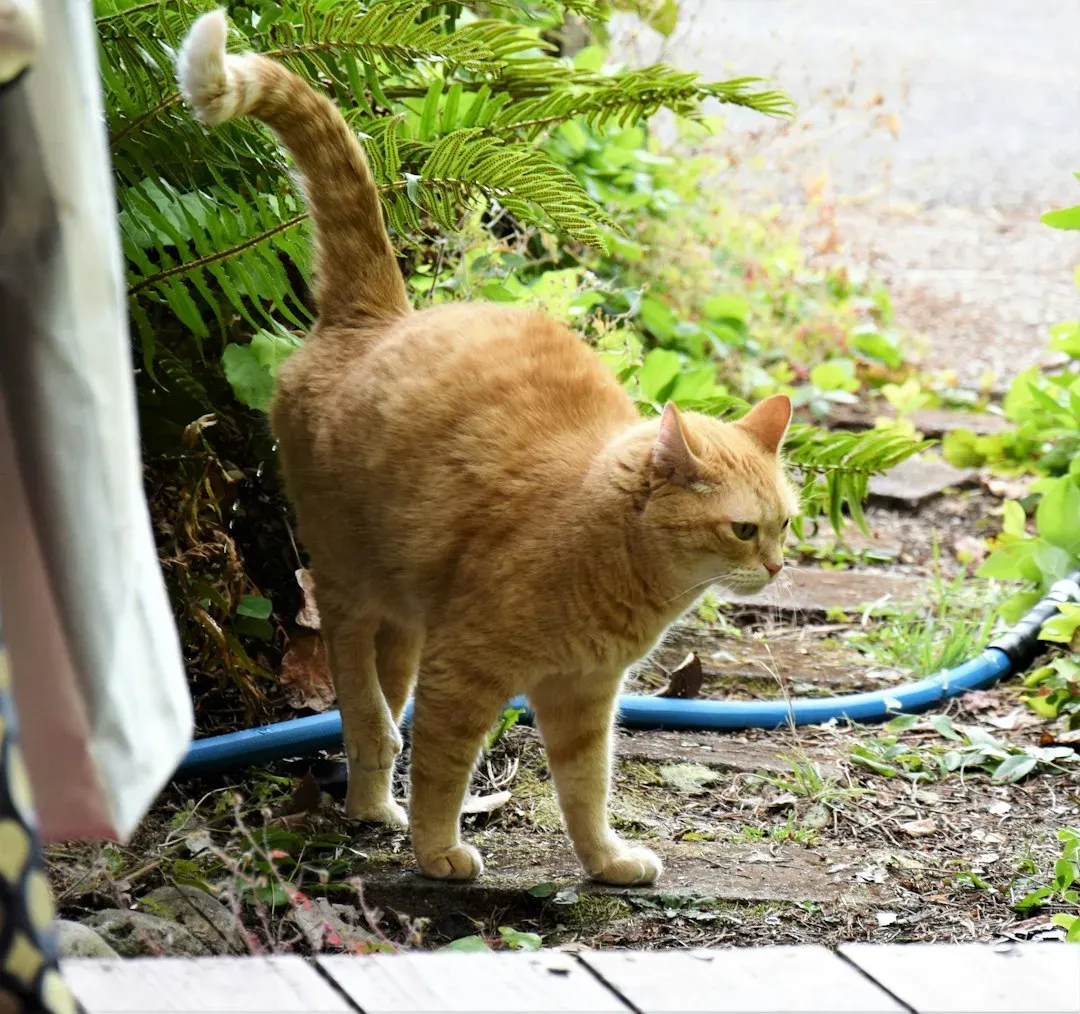
Discovering that your cat has sprayed somewhere outside the litter box is one of the more exasperating moments in cat ownership. It’s tempting to assume your cat is angry with you or being deliberately difficult. That assumption is simply incorrect.
Contrary to popular opinion, inappropriate elimination is not a cat seeking revenge for a perceived slight. Urinary house soiling is also known as periuria. As explained by Frontiers in Veterinary Science, this is divided into two sub-categories. Latrine behavior is the act of urinating outside the litter box. Marking is a cat claiming territory through urine.
Cats use scent and pheromones to help organize their territory by marking prominent objects. If these objects or scents are removed, it upsets the cat’s perception of its environment. In other words, your cat is not a petty roommate seeking revenge. Your cat is a territorial creature maintaining what it believes is its home’s scent map. Understanding that distinction changes your entire approach to solving the problem.
Play Aggression Is Hunting Practice in Disguise
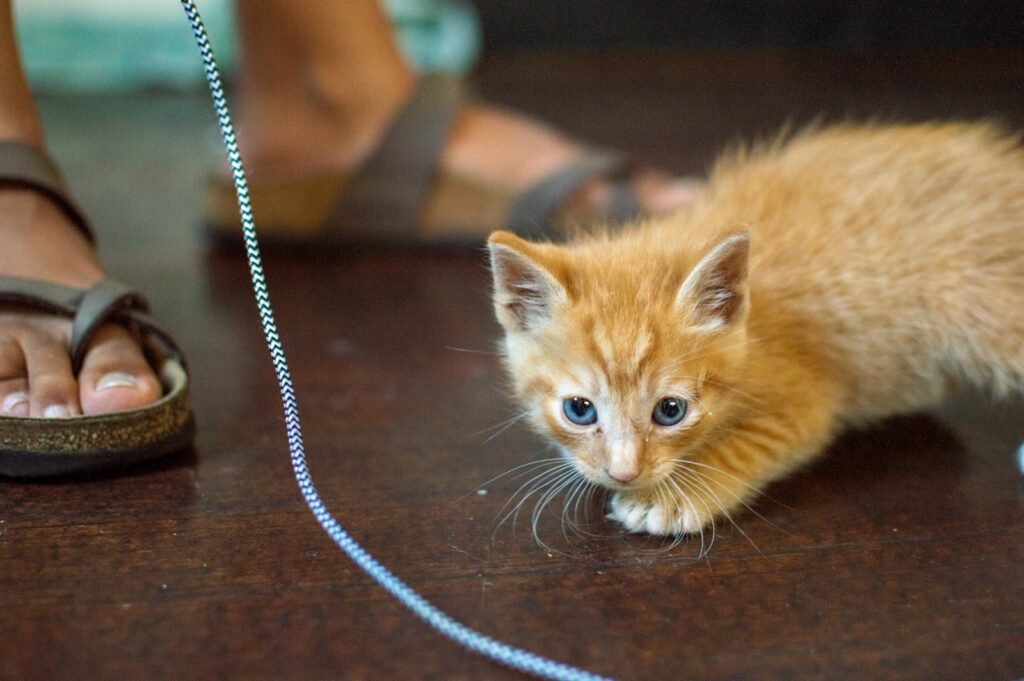
Your cat ambushes your feet from behind the couch. They pounce on your moving hand under a blanket. They leap onto your back without warning. If you have a young or highly energetic cat, this is probably very familiar.
To cats, play is practice for real life. If your cat pounces or attacks you while you’re moving about, they may be honing their hunting skills, which is normal, instinctive behavior. It’s the same principle as a lion cub wrestling with its siblings. The behavior looks fierce but it’s fundamentally educational for the cat, teaching them coordination, timing, and strength.
A cat’s main form of play involves biting and scratching in winner-takes-all battles, whether with another cat, a toy mouse, or an unsuspecting human who finds they have become their cat’s plaything. One of the first rules for human companions is to not teach your cat that hands are toys. If you ignore this advice, those tiny claws and teeth will soon grow into razor-sharp hooks, and you may end up bearing the scars. Redirect that predatory energy toward toys, and your hands will thank you.
Conclusion: Your Cat Is Not Badly Behaved. Your Cat Is Just a Cat.
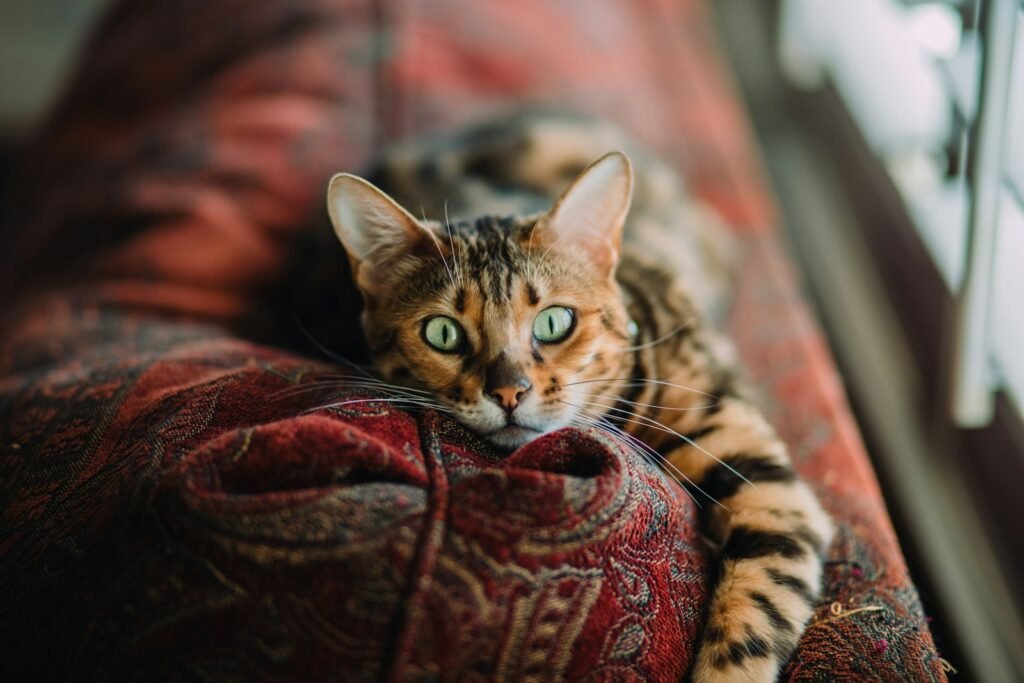
Once you start seeing your cat’s behavior through the lens of instinct rather than intent, everything shifts. The shredded sofa becomes a territorial map. The 3 AM sprints become an ancient hunting rhythm. The “gift” on your pillow becomes an act of love, albeit a very unsettling one.
Every action that a cat undertakes has meaning. It could be borne of instinct, fear, frustration, or boredom. Whatever the explanation, bad behavior can be resolved with patience and understanding. This journey begins with understanding your cat and its habits.
Your cat is not trying to ruin your furniture, steal your sleep, or embarrass you in front of guests. Your cat is doing exactly what millions of years of evolution designed them to do. The real question isn’t “Why is my cat so bad?” It’s “How can I create a home that meets my cat’s instinctual needs?” Answer that one, and you might be surprised at just how good your “bad” cat can be. What about you? Did any of these instincts surprise you? Drop your thoughts in the comments.