You’re mid-sentence on a work call, the room is quiet, and your cat climbs onto the desk with the slow, deliberate energy of someone who has already made a decision. One paw extends. The glass moves an inch. Then another. You watch. Your cat watches you watching. Then it goes over the edge.
That little scene plays out in homes every day, and it rarely feels random once you understand what’s actually happening. What looks like mischief from the outside turns out to be a surprisingly layered mix of instinct, sensory curiosity, learned behavior, and something that looks almost suspiciously like strategy.
Your Cat Is Wired to Swat First and Ask Questions Later
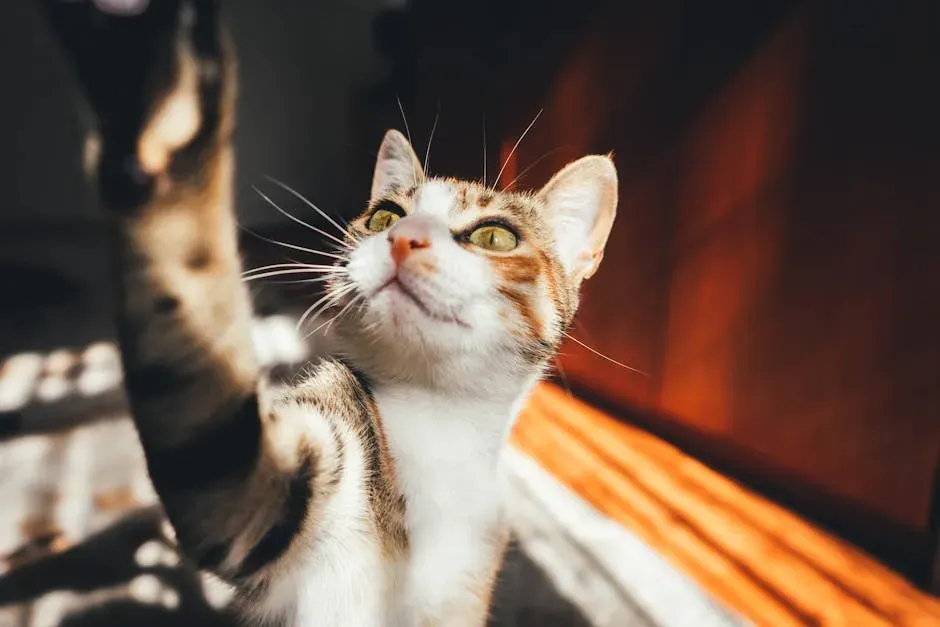
When your cat bats at your phone or pushes your keys across the counter, they’re doing exactly what millions of years of evolution programmed them to do. Cats are ambush predators with lightning-fast reflexes designed to pounce on small, moving prey. That drive doesn’t switch off just because your cat lives indoors and eats from a bowl twice a day.
In the wild, cats swat prey to check whether it is alive, dangerous, or edible. When a cat bats a pen, key, or cup and watches it fall, the movement stimulates the same instincts associated with hunting behavior. This predatory pattern explains why cats like to knock things over, even when the object has no practical value.
The Paw Is Their Version of a Hand
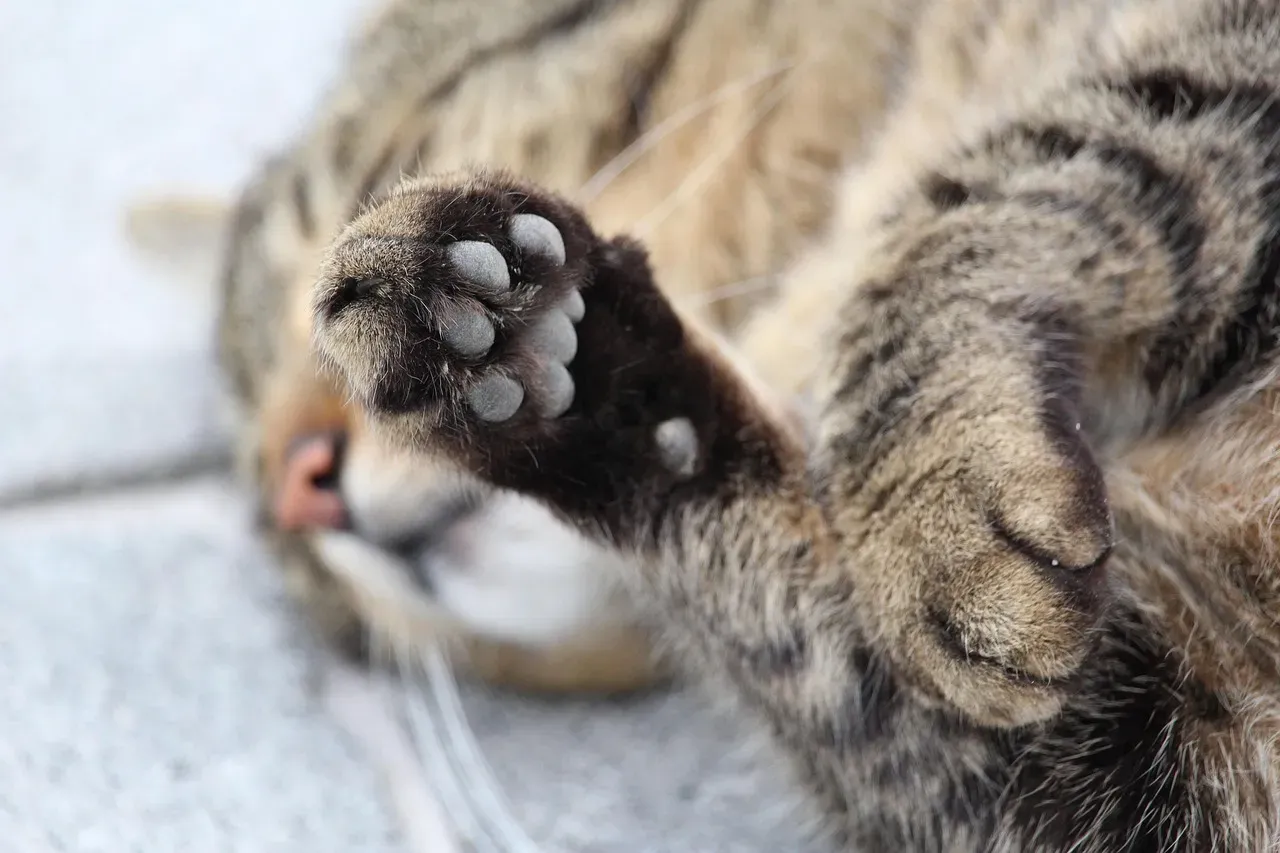
Cats use their paws to investigate the world around them. Unlike dogs, who often explore with their mouths, cats rely heavily on their sensitive paws to learn about objects. Knocking something off a surface may simply be your cat’s way of discovering what it is, how it feels, and whether it moves or makes a sound.
The act of pushing objects with their paws provides crucial sensory information. Hard objects feel different from soft ones, light items move differently than heavy ones, and the various sounds created by different materials all contribute to their understanding of their surroundings. Your pen isn’t just a pen. To your cat, it’s a data point waiting to be tested.
They’re Running a Genuine Gravity Experiment

Cats seem genuinely intrigued by the fact that things fall when pushed. The trajectory of a pen rolling off a desk, the bounce of a rubber ball, or the satisfying crash of something breakable all provide entertainment and mental stimulation. This isn’t random chaos. It’s cause-and-effect learning, feline style.
Sometimes cats seem fascinated by what happens after the push. They watch the object fall, listen for the sound, and sometimes even peek over the edge to see where it landed. Repetition strengthens the association: “I push → interesting thing happens,” so cats repeat it. It’s not spite. It’s science, at least from their perspective.
You Are Actually Part of the Experiment
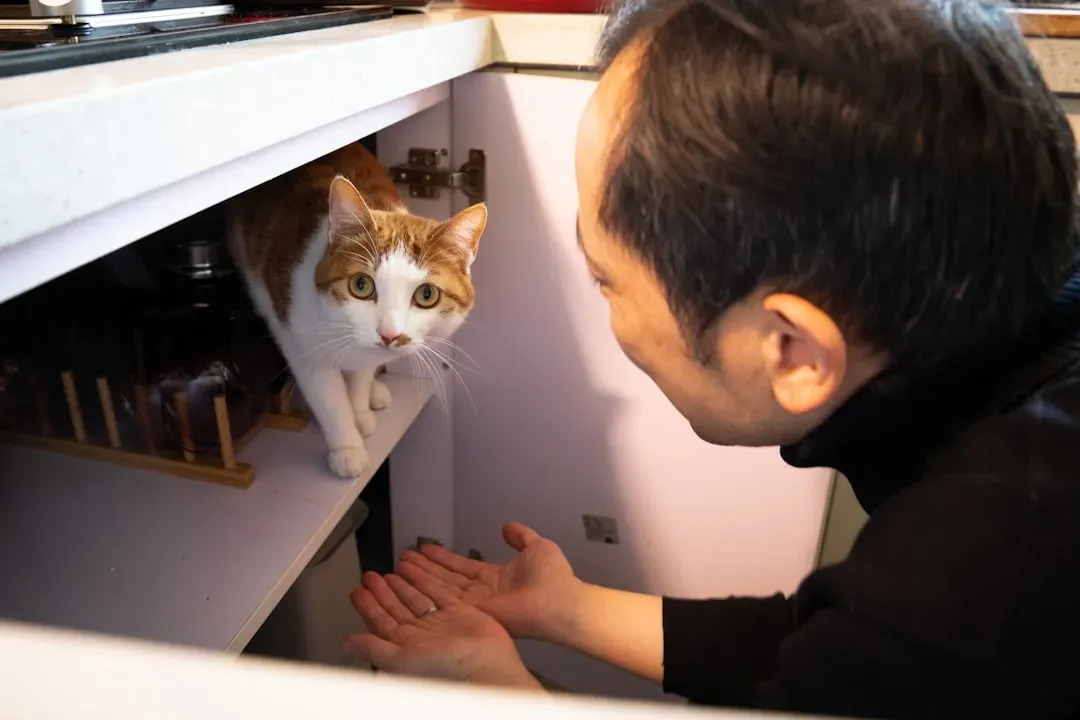
Cats are very good at learning cause and effect. If your cat taps a glass, you look up. If your cat pushes a pen off the desk, you speak, stand up, or walk over. If your cat does it around feeding time, it may get an even bigger reaction. Your response, whatever it is, becomes data your cat files away and uses again.
Many cats discover that positive attention and negative attention both satisfy their need for interaction. Whether you’re praising them, scolding them, or simply engaging with them after they’ve knocked something over, you’re reinforcing the behavior. From their perspective, mission accomplished. The scolding you thought was a deterrent? It probably felt like a reward.
Boredom Has a Lot to Answer For
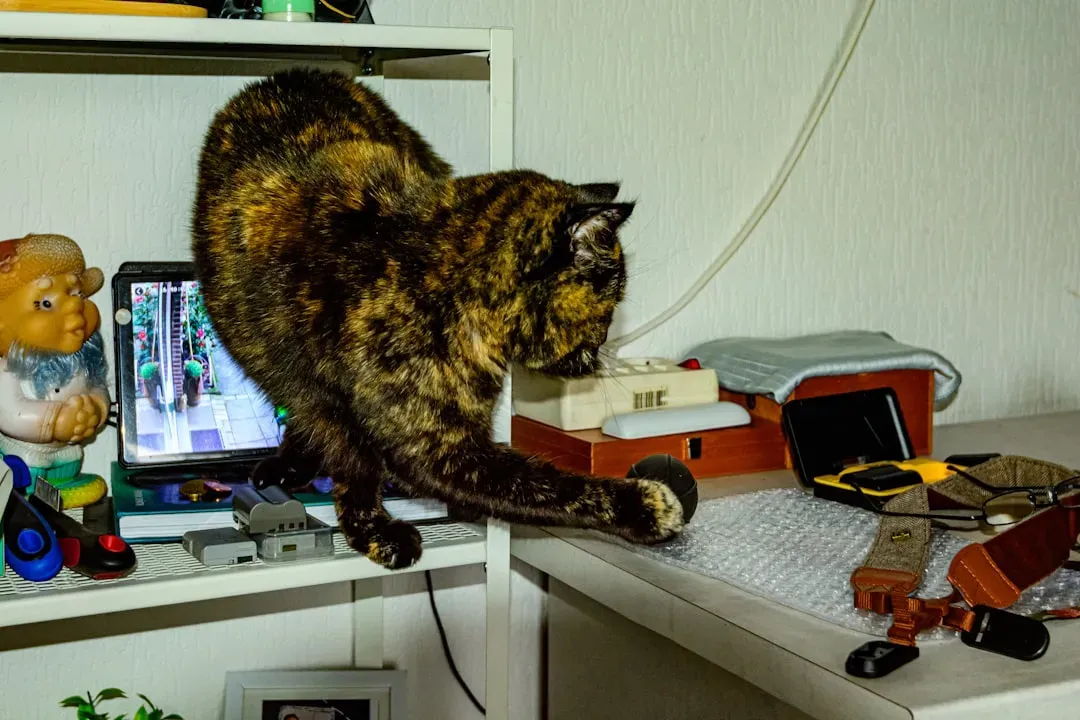
If a cat doesn’t have enough appropriate outlets for climbing, hunting, and playing, those areas can become a source of fun. Knocking something over creates movement, noise, and action, which breaks up the boredom. Cats may be more likely to do this when they don’t have enough interactive toys, climbing options, puzzle feeders, or regular play sessions with their people.
Sometimes, destructive behaviors escalate when cats feel stressed, anxious, or understimulated. A cat who suddenly begins knocking over more objects than usual might be expressing frustration about changes in their routine, environment, or social situation. Boredom can also manifest as increased mischievous behavior. Indoor cats, particularly those without adequate mental and physical stimulation, may turn to table-clearing as a way to create their own entertainment and release pent-up energy.
Some Cats Are More Prone to This Than Others
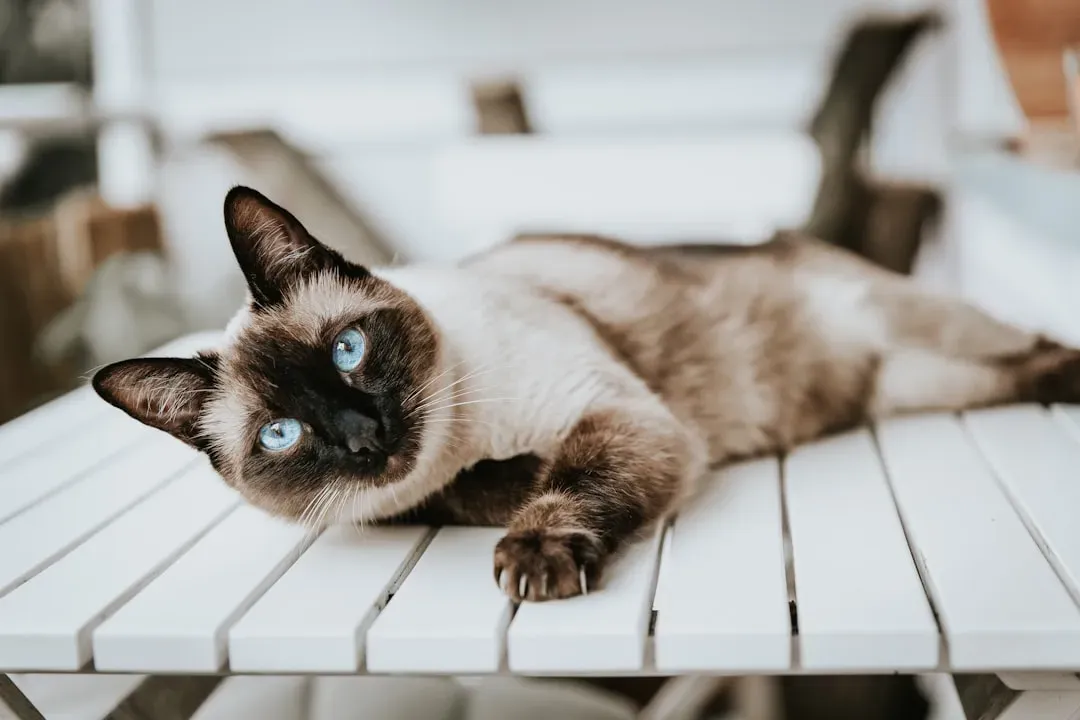
High-energy breeds like Bengals, Siamese, and Abyssinians show this behavior more frequently than laid-back breeds like Persians or Ragdolls. Their need for stimulation runs higher, making them more likely to turn household objects into toys when bored. Breed isn’t destiny, but it does shift the odds considerably.
Age plays a massive role. Kittens and young cats under three years old knock things over far more than senior cats. Their energy levels are higher, their curiosity more intense, and their impulse control less developed. Intelligence contributes as well. The smartest cats might become the biggest troublemakers because they figure out the cause-effect relationship faster and exploit it more consistently. They’re the ones who’ll test different objects to see which gets the strongest reaction.
Your Cat May Also Be Rearranging Their Territory
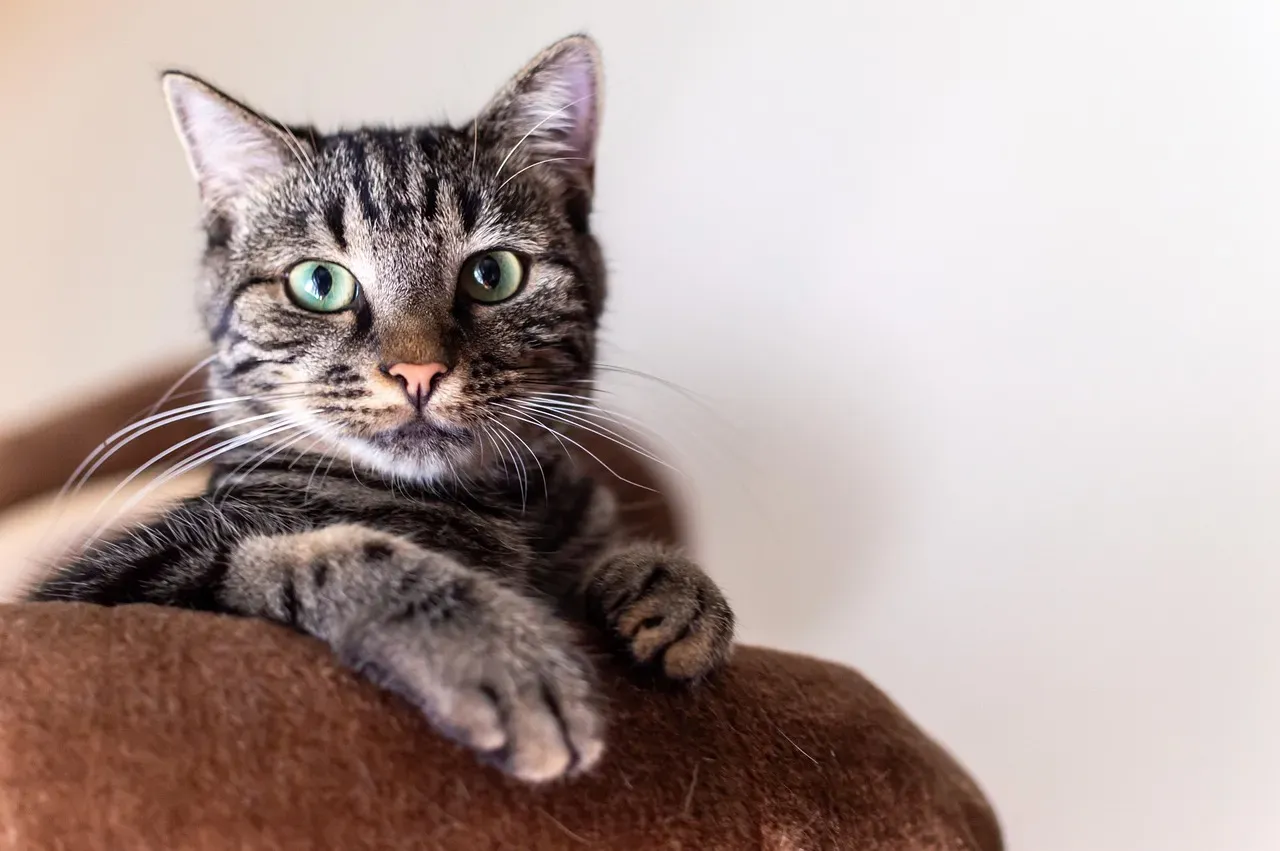
Cats are territorial creatures who like to maintain control over their environment. Knocking objects off surfaces can be a way of rearranging their space to their preferences. By moving or removing items, they’re essentially redecorating according to their own specifications.
Cats often knock objects off tables and counters because they perceive items in their close-range blind spot as obstructions. By pushing objects away, cats clear areas they consider part of their territory. This behavior is particularly common when new objects appear in familiar spaces. Your cat might knock over a new decoration, book, or houseplant as a way of saying, “I didn’t approve this addition to my territory.”
It Gets Worse at Night, and There’s a Reason for That
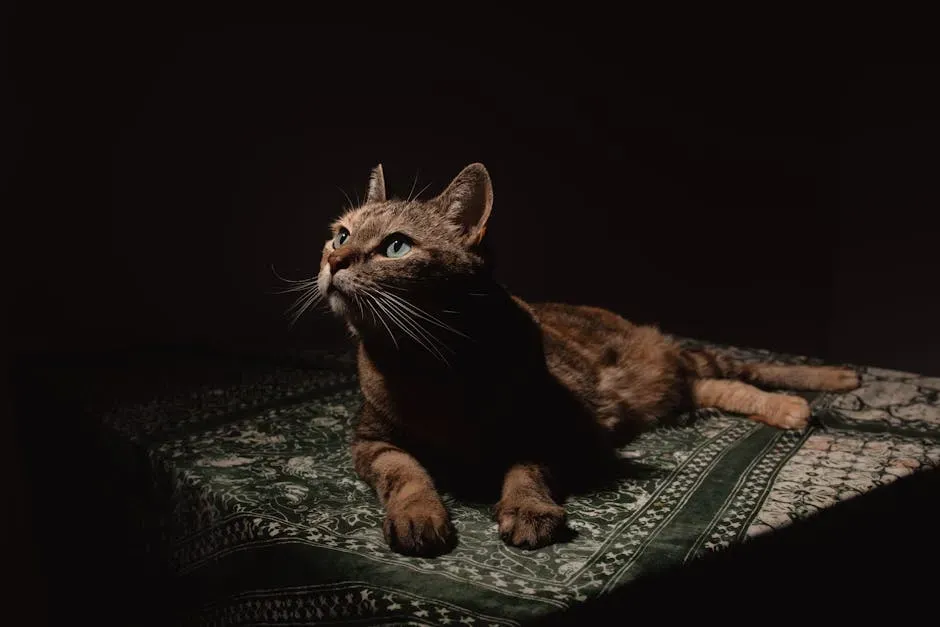
The sliding motion of an object across a surface becomes more pronounced and interesting at night. Hunger often drives early morning counter raids. Your cat knows breakfast comes from you, but in the meantime, that water glass or loose change might trigger your appearance.
The quiet of nighttime also makes reactions more predictable. During the day, you might be busy and not respond immediately. At night, a crash guarantees you’ll wake up and acknowledge them. The immediate feedback strengthens the behavior pattern. Creating a pre-bedtime play routine helps burn excess energy before sleep.
What You Can Actually Do About It
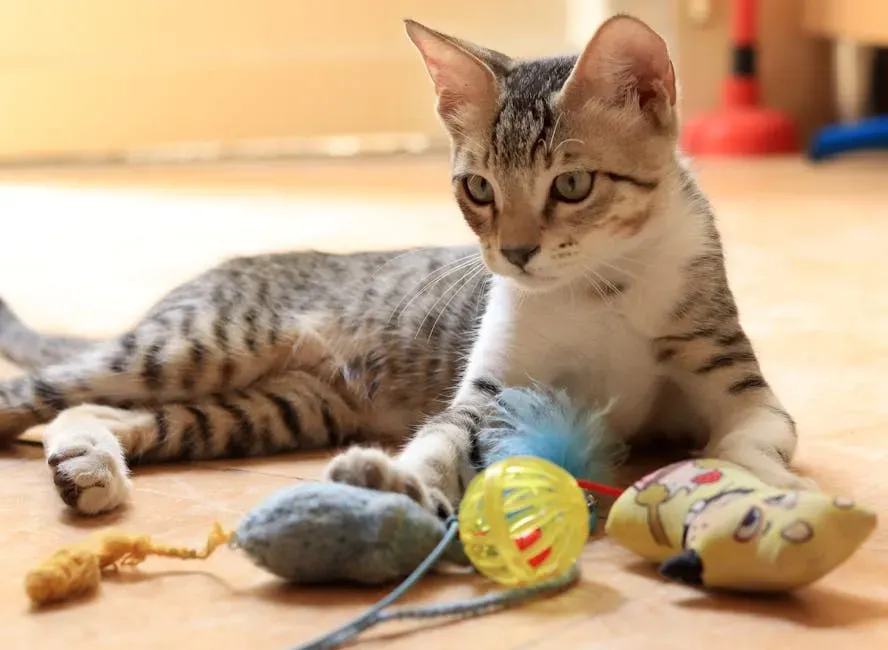
Don’t accidentally reinforce your cat’s behavior with attention when they swat your treasures off the table. Instead, before they jump on the desk or counter, proactively redirect their attention and give them stimulating things to do. Throw toys and cat treats for them to chase. Make them work for meals by hiding treats and food on cat trees and in puzzle toys.
Give your cat stuff to do that’s more fun than knocking things onto the floor. All cats need horizontal scratchers, scratching posts, and lots of toys that are more fun to box and chase than the stuff on your desk. Tall cat condos and high-up cat shelves encourage cats to climb and exercise, and they’re also ideal places for a catnap. Placing a couple next to windows will keep your feline entertained so they can watch birds and bask in the sun. For breakable or valuable items, the simplest solution remains removing them from reach entirely.
Conclusion
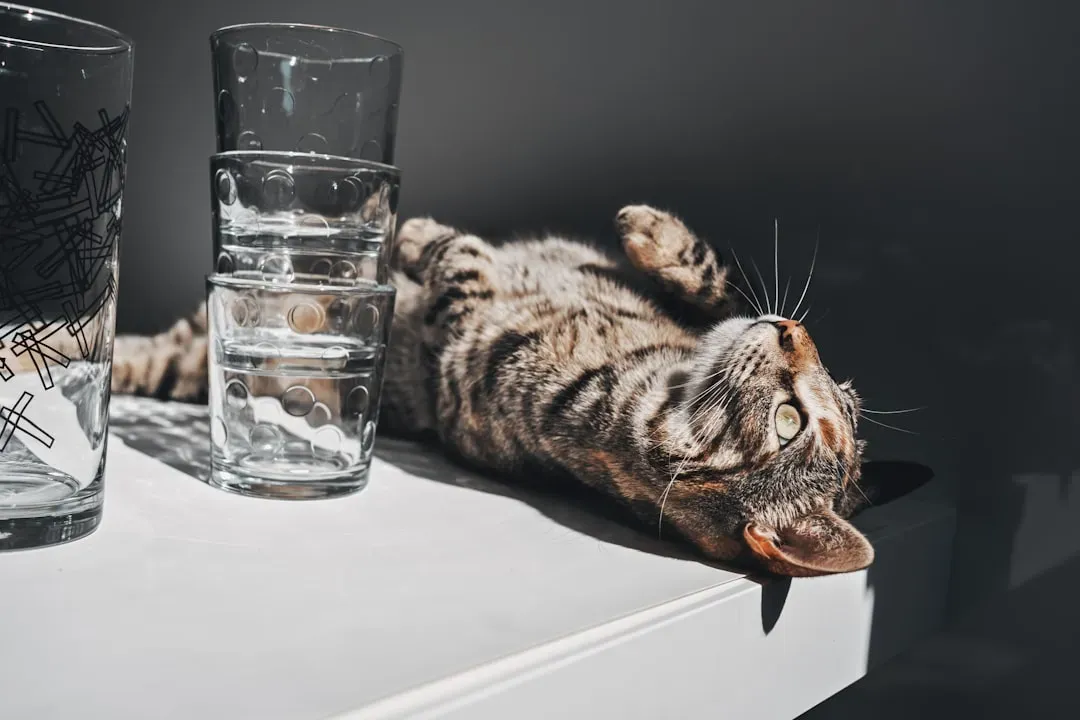
That slow, deliberate push of a glass toward the edge of your table isn’t your cat acting out. It’s a creature with refined predatory instincts, high sensory sensitivity, and a surprisingly developed sense of cause and effect doing what comes naturally. Cats are not being disobedient when they knock things over. This behavior reflects instinct, learning, environment, and sometimes unmet needs.
Once you stop seeing it as defiance and start reading it as communication, the whole dynamic shifts. Your cat isn’t testing your patience so much as testing the physics of their world, and occasionally the physics of yours too. Understanding that changes how you respond, and how you respond changes everything.
Kristina is a young writer from India. An arts graduate and an avid content creator, Kristina is passionate about animals and wildlife. She enjoys exploring topics related to pet care, animal behavior, conservation, and nature, combining thorough research with engaging storytelling.