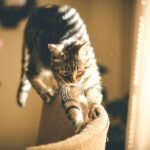
Your cat slips off the edge of a shelf, your heart lurches, and then – nothing. They stroll away looking faintly offended, completely unharmed. It happens so often that it barely surprises you anymore. Yet this moment, so ordinary in any cat-owning household, contains a genuine scientific puzzle that has occupied physicists, physiologists, and neurologists for well over three centuries.
Research into the physics of a cat’s ability to land on its feet is almost as old as physics itself, with the first paper tackling the subject published as far back as the year 1700. The deeper you look, the more remarkable the whole thing becomes. What looks like feline arrogance is actually a masterclass in biomechanics, anatomy, and instinct working together in the span of less than a second.
What the Righting Reflex Actually Is
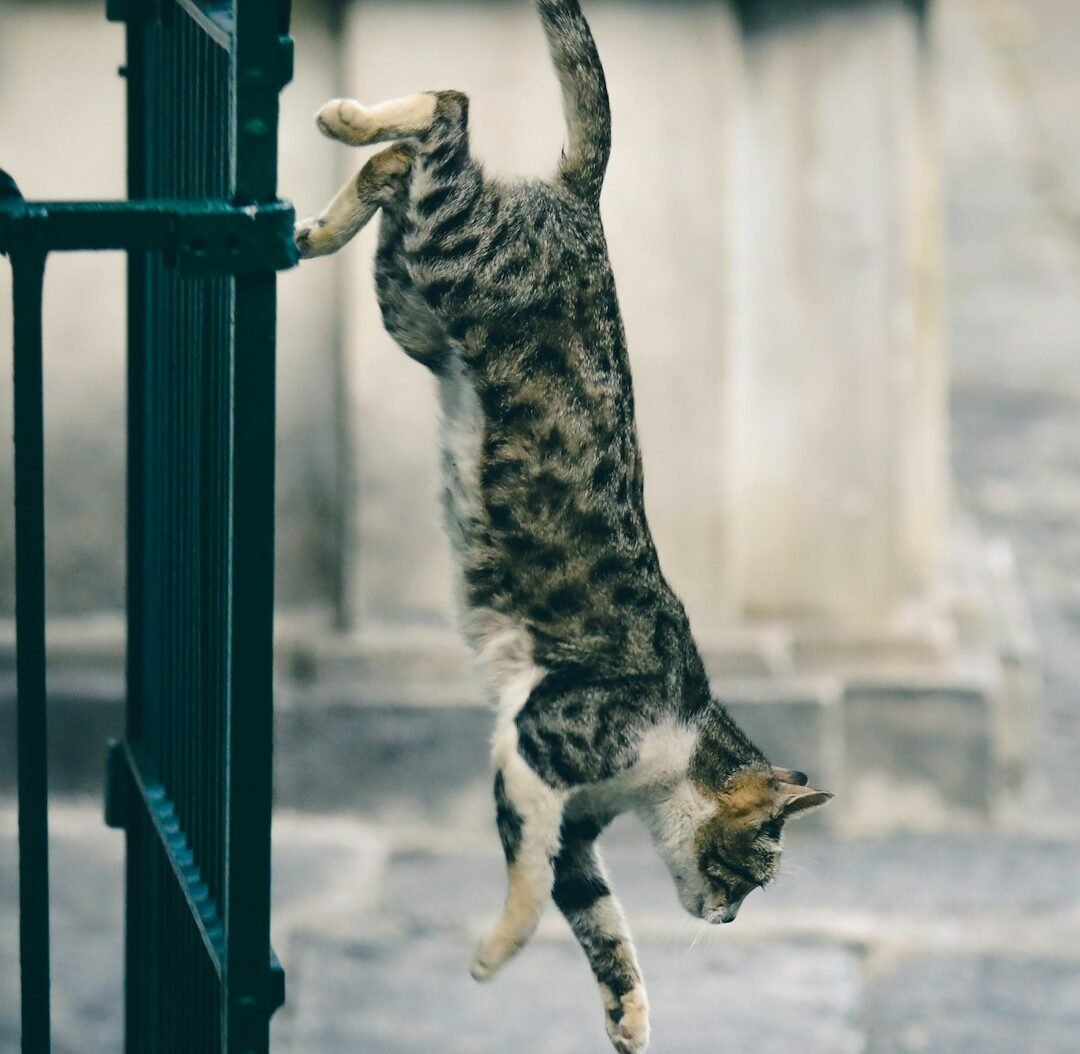
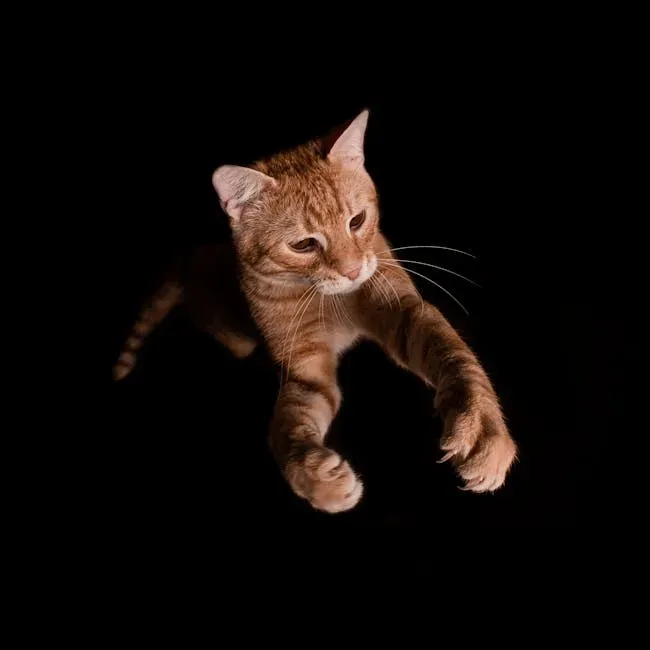
The righting reflex is an automatic response that corrects the body’s orientation when it isn’t in its normal, upright position, allowing cats to land on their feet when they fall or jump to the ground. It isn’t a learned trick or a conscious decision. It fires on its own, every single time, whether your cat was paying attention or not.
The cat righting reflex is a cat’s innate ability to orient itself as it falls in order to land on its feet. The righting reflex begins to appear at three to four weeks of age, and is perfected at six to nine weeks. That’s a remarkably short developmental window, and it tells you just how deeply hardwired this behavior really is.
The Inner Ear Does the Heavy Lifting First
When a cat slips or misjudges a jump, fluid-filled structures in the inner ear detect that the body is no longer upright and send rapid signals to the brain about which way “down” is. This happens faster than conscious thought. By the time you’ve even registered that your cat is falling, its nervous system has already begun the correction sequence.
The vestibular apparatus inside a cat’s ear is used for balance and orientation, and this enables cats to quickly figure out which way is up and rotate their head so the body can follow. This system is so finely tuned that even in complete darkness, a cat can execute the righting reflex with precision. Sight helps, but it’s not actually required.
The Extraordinary Spine Behind the Twist
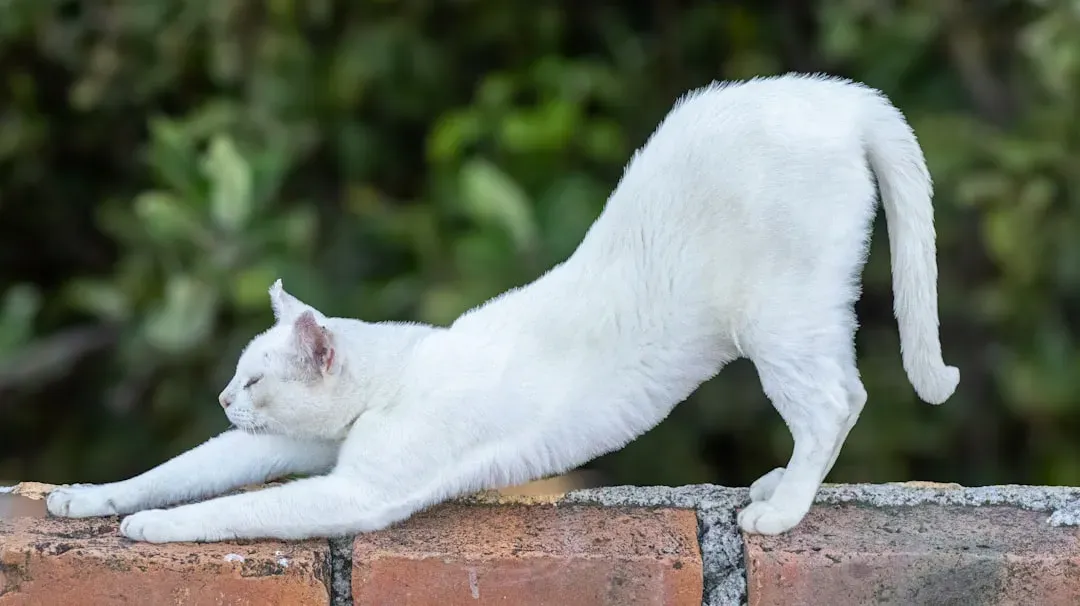
The thirty exceptionally flexible vertebrae in the spine enable felines to stretch out, compress, arch the back, and rotate, bend, and twist the front half of the body independently from the back half. This is a structural feature most animals simply don’t share. Your spine, by comparison, is far more constrained in the rotational range it can achieve.
A team of researchers from Yamaguchi University in Japan discovered that this uncanny ability is all down to the thoracic spine being more flexible than the lumbar spine. As cats tumble, their spine twists mid-air, seemingly contradicting the laws of physics. This complex maneuver, known as the air-righting reflex, protects them from serious injury during a fall. Understanding that the upper and lower spine work on different timetables was a key piece of the puzzle.
The Bend-and-Twist: A Physics Puzzle Solved
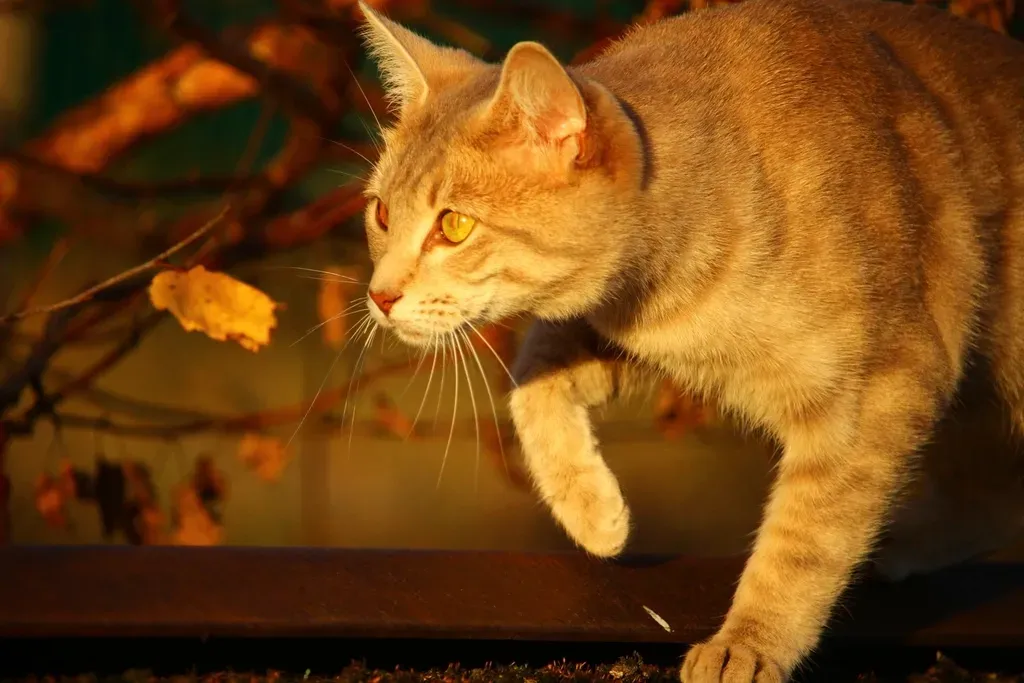
Several factors affect how a cat is able to land on all fours, but two main forces are at play: physics and neurology. “One of the reasons that physicists were surprised that cats could rotate to always land on their feet is the conservation of angular momentum,” physicist Greg Gbur told Live Science. An object that starts falling without rotation, in theory, should not be able to rotate on its own.
If the cat bends at the waist, it can then twist the two halves of its body in opposite directions, causing their opposing angular momenta to largely cancel. When it unbends, its body will be oriented in a different direction, even though the cat had no angular momentum to start with. This motion, now known as the “bend-and-twist” model of cat-righting, is arguably the most important movement that a cat undertakes to turn itself over.
No Collarbone? That’s Actually the Point
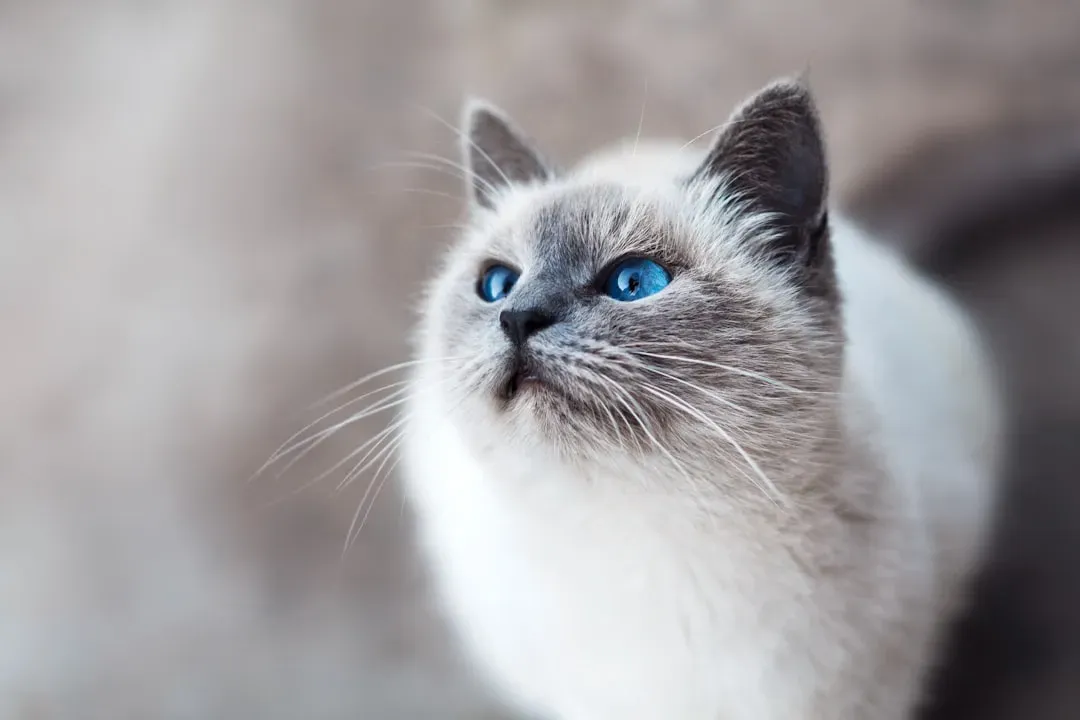
Cats have incredibly unique skeletal structures: they have no collarbone and a very flexible backbone with thirty vertebrae. This flexible spine means that they can correct themselves easily and quickly during a fall. Most mammals have a clavicle that locks the shoulders into a fixed relationship with the chest. Cats don’t, and that absence is a significant biological advantage in freefall.
Cats are able to do this because they have an unusually flexible backbone and no functional clavicle. When they fall, cats first position their head, then their front legs, and finally the hind legs, using quick muscle coordination and flexibility in the spine to twirl without violating the laws of physics. The sequence is precise and ordered, not random scrambling.
Terminal Velocity and the Feline Parachute Effect
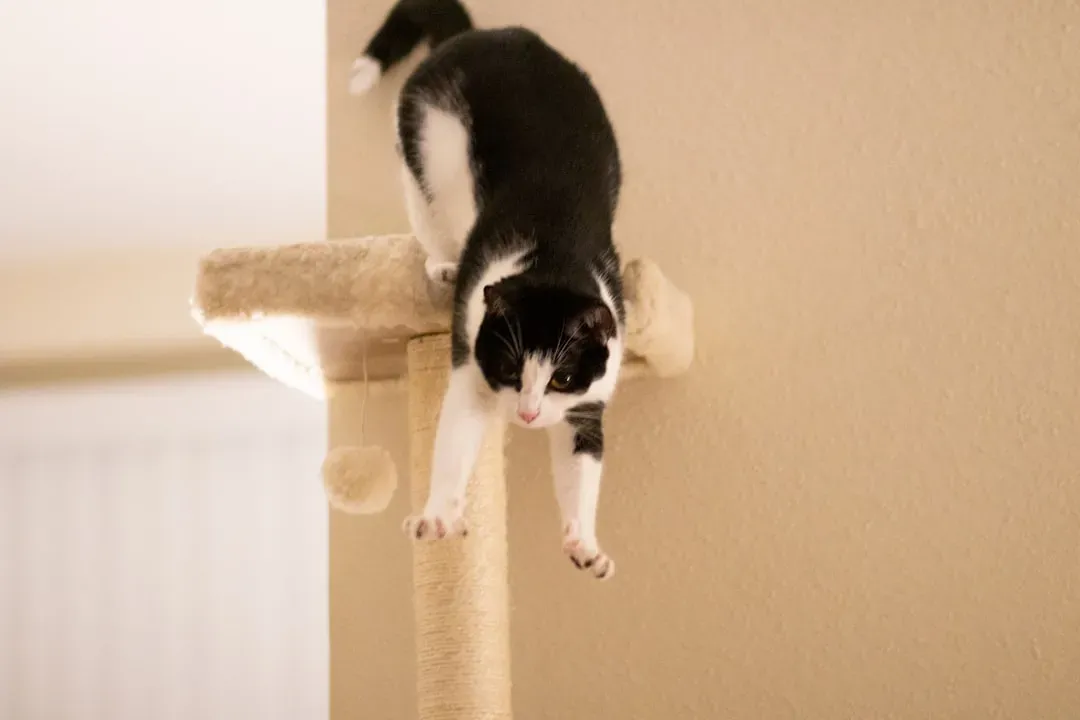
An average-sized cat with its limbs extended achieves a terminal velocity of about sixty miles per hour, around half that of an average-sized man, who reaches a terminal velocity of about one hundred and twenty miles per hour. That difference matters enormously at the moment of impact. The lighter and more compact the body, the slower the fall at its maximum speed.
Once cats reach terminal velocity, they begin to relax and stretch their legs out, much like how a flying squirrel does, which expands their body size and creates air resistance. It’s almost like cats can turn themselves into little parachutes, which increases drag resistance. Where their legs may appear long and slender, they’re actually very muscular and work to reduce the impact and act as shock absorbers when they land.
When the Reflex Was First Caught on Camera
Theories concerning the cat-righting reflex and momentum, equilibrium, mass, density, and rotation floated within the European physics camp for some time until all of these were blown out of the water in 1894 by French physiologist Etienne-Jules Marey. Marey presented to the French Academy of Sciences his now famous series of high-speed photographs documenting the cat-righting reflex in action. The photographs showed, without ambiguity, what human observation had long suspected but never proven.
The revelations within the photographs threw the meeting into disarray. One member of the Academy declared that Marey “had presented them with a scientific paradox in direct contradiction with the most elementary mechanical principles.” Scientists had neglected at that time to account for cats’ lack of bodily rigidity. Cats continued to flummox researchers and this uncanny ability continued to be studied not just by physicists and physiologists but also brain researchers and NASA scientists and robotics people.
Does the Tail Actually Matter?
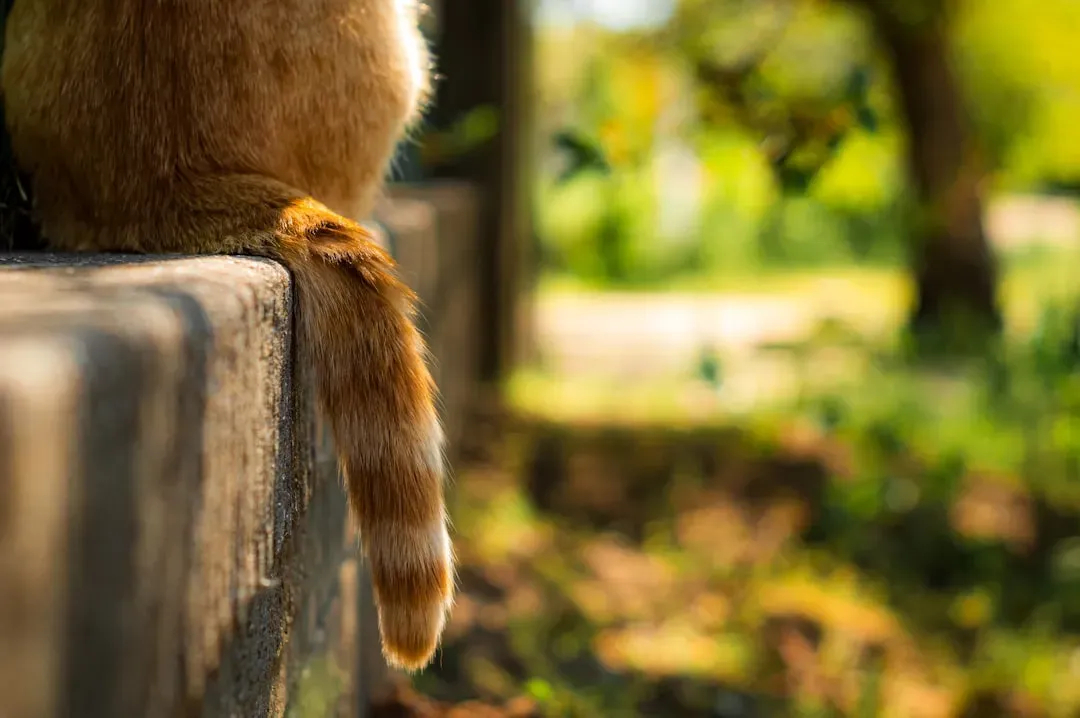
Cats’ tails have a lot of uses, including balance, sense and communication, and while not always necessary, a cat’s tail can act as a counterweight to fine-tune their orientation. You’ve probably watched your cat throw its tail one way while jumping the other direction. That’s not random movement; it’s calculated counterbalancing.
Tails are great for balance and can act like little rudders, helping fine-tune body rotation and stability, but they are not required for the righting reflex itself. Tailless cats and those with partial tails still perform the flip by relying on inner-ear balance signals, spine flexibility, and the same bend-and-twist mechanics seen in long-tailed cats. So the tail refines the movement, it doesn’t make it possible.
When the Reflex Fails: Real Limits and Real Risks
The righting reflex can take less than a second and a cat needs at least two and a half feet to stick the landing. That doesn’t mean every cat nails every landing every time. Cats do sustain injuries from falls; it happens so often the cluster of injuries has a name: “high-rise syndrome.” The existence of that medical term alone says plenty about how common these accidents actually are.
You’re not the only one who gets a little stiffer with age – cats do too. Even before they hit their senior years around age ten, many start to experience joint stiffness or arthritis that can make midair twists more difficult. Aging cats also tend to lose muscle mass and may struggle with balance. While cats often survive falls from moderate heights, they are not invincible. Severe injuries, including fractures and internal damage, can and do occur. The reflex reduces risk; it doesn’t eliminate it.
What Modern Science Is Still Uncovering
The reason why cats always land on their feet has just been more fully revealed – and it could lead to improved spinal injury treatments in felines as well as the development of more agile robots. Research from Yamaguchi University, published in early 2026, has added a precise biomechanical layer to what we understand about the spinal sequence involved in the reflex.
The study of the righting reflex has implications beyond understanding cats. Researchers have explored how this reflex can inform the design of robots and safety devices. By mimicking the cat’s ability to reorient its body, engineers aim to develop robots that can navigate complex environments with greater agility. Cats are well-known for being keepers of secrets, and their righting reflex remains a mystery to many scientists to this day. Even now, with centuries of research behind us, the full picture isn’t entirely settled.
Conclusion
What your cat does in a fraction of a second when it tumbles off a countertop is the product of millions of years of evolutionary refinement, an inner-ear gyroscope, a spine built for twisting, and a nervous system fast enough to run the whole sequence before gravity has finished its job. It’s not magic, but it’s close enough that the distinction barely feels important.
Understanding the righting reflex won’t make you worry any less when your cat misjudges a jump. It probably should, actually, since the reflex has real limits that are worth respecting. Still, there’s something quietly remarkable about living alongside an animal whose body solves a centuries-old physics problem every time it slips off a chair. The cat, of course, acts like it wasn’t even a close call.
Kristina is a young writer from India. An arts graduate and an avid content creator, Kristina is passionate about animals and wildlife. She enjoys exploring topics related to pet care, animal behavior, conservation, and nature, combining thorough research with engaging storytelling.