
Your cat stretches out on the couch, round and content, and it looks like the picture of a happy pet.
Your vet looks at that same cat and sees something closer to a financial time bomb – one that’s already ticking whether you’ve noticed or not.
Here’s the part that should worry you: most owners can’t even tell their cat is overweight until a vet says it out loud. By then, the damage – and the bill – is already stacking up.
Stick with this, because the numbers ahead go from uncomfortable to genuinely alarming.
#7 – 61% of American Cats Are Already Overweight (And Most Owners Have No Clue)
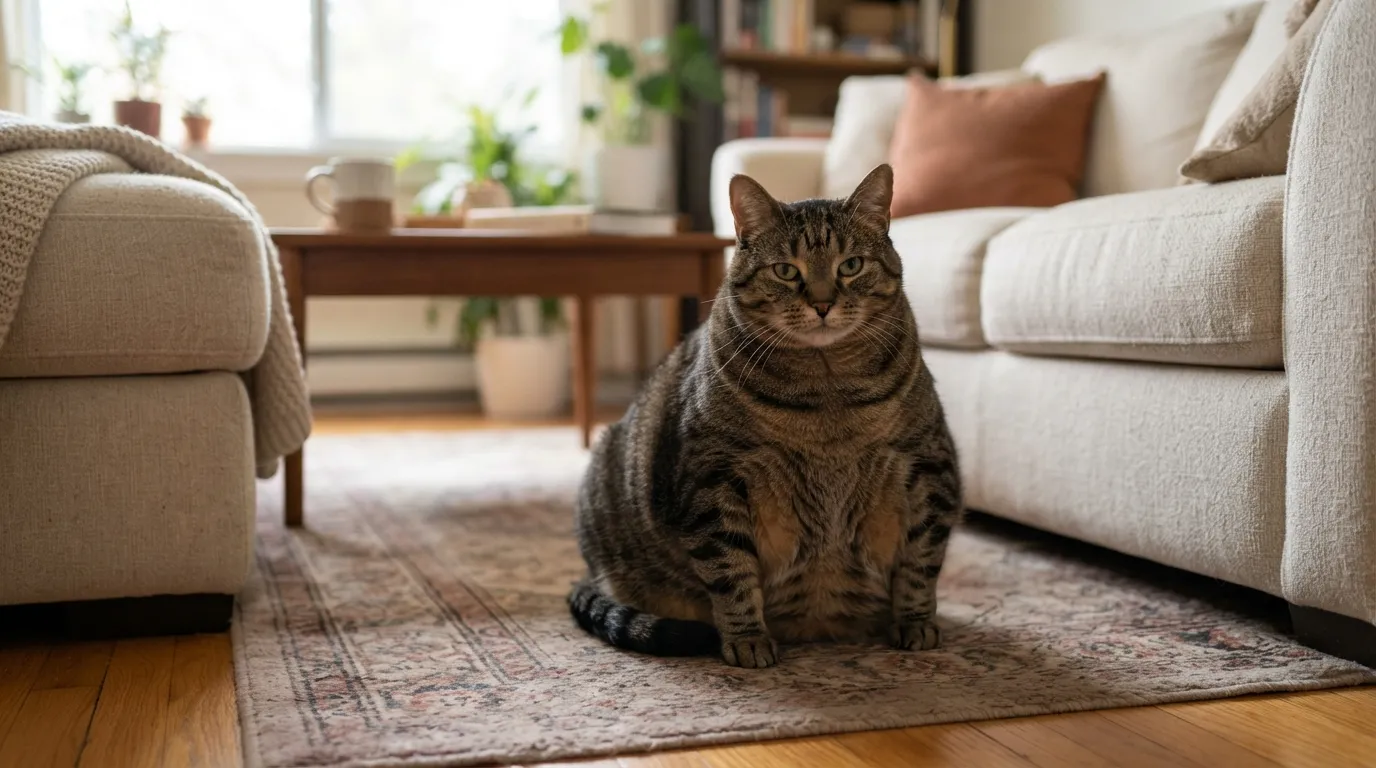
This isn’t a niche problem. It’s the majority.
A 2022 Association for Pet Obesity Prevention survey found that 61% of U.S. cats are overweight or obese. That number has been climbing for decades, and obesity is now the most common preventable disease in North American cats.
Here’s the twist: owners are more than eight times more likely to call their overweight cat “normal weight” than to correctly identify the problem. Internet culture hasn’t helped – the “chonky cat” gets celebrated online while the extra fat quietly stresses real organs.
Fewer than half of pet owners even know what body condition scoring is. Vets and owners alike lean on soft language – “a little chunky,” “big-boned” – that hides how serious this actually is.
Fast Facts
- 61% of U.S. cats are overweight or obese, per APOP’s 2022 survey
- Owners are 8x more likely to call an overweight cat “normal” than to spot the problem
- Fewer than half of owners know what body condition scoring even is
- Obesity is now the most common preventable disease in North American cats
That denial is expensive. Slide #6 shows exactly how expensive.
#6 – The Vet Bill Gap Is Bigger Than Anyone Expects
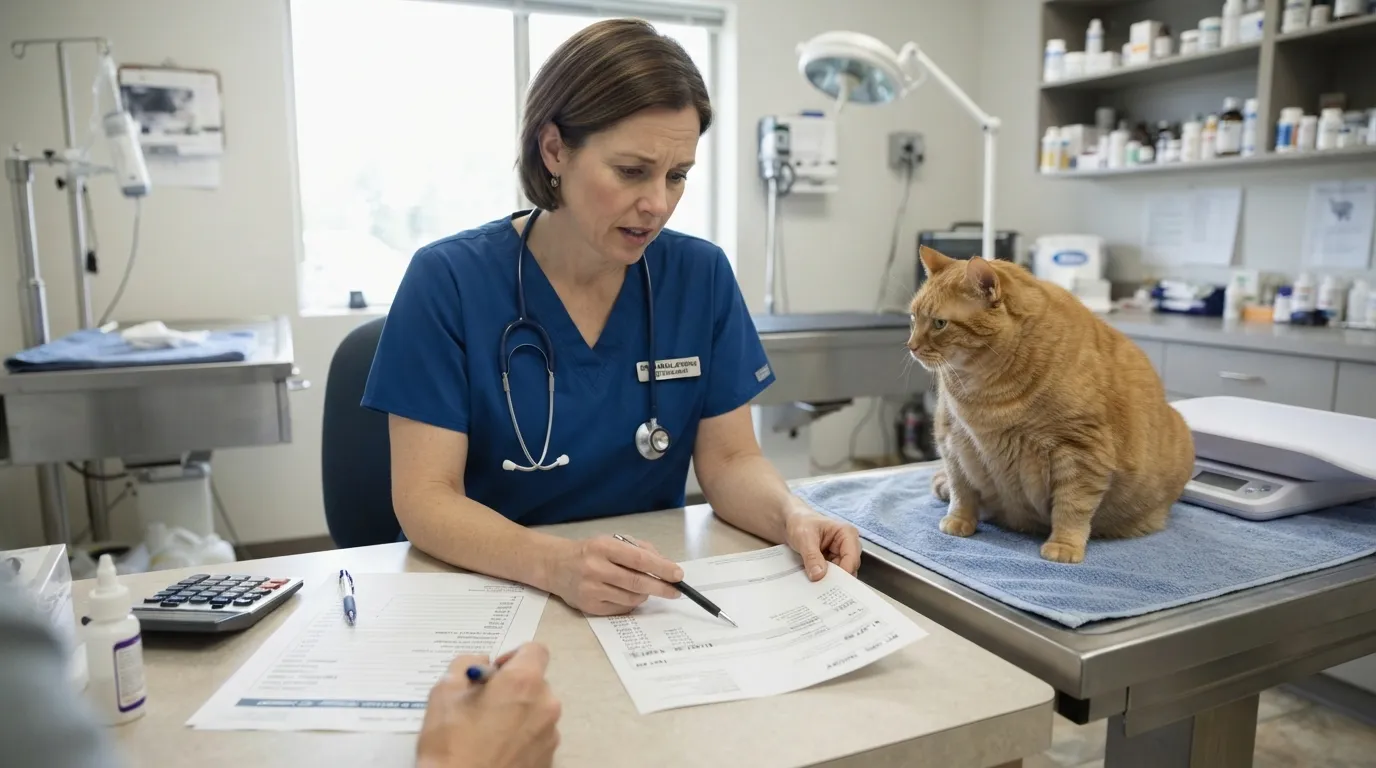
Most people assume a chubby cat means a slightly pricier checkup. The real gap is much wider than that.
Owners of overweight or obese cats spend 36% more on diagnostics and 53% more on surgical procedures than owners of lean cats. That’s not a rounding error – that’s a completely different financial reality as a pet owner.
One report found the first 12 months after an obesity diagnosis cost the average owner over $1,000 in vet bills alone. That figure doesn’t even include hospital stays or extra pathology work.
A lean cat is quietly one of the smartest money decisions you’ll ever make. But the real financial trap is what obesity leads to – and slide #5 is where it gets serious.
#5 – Diabetes Can Quietly Cost Over $3,000 in a Single Year
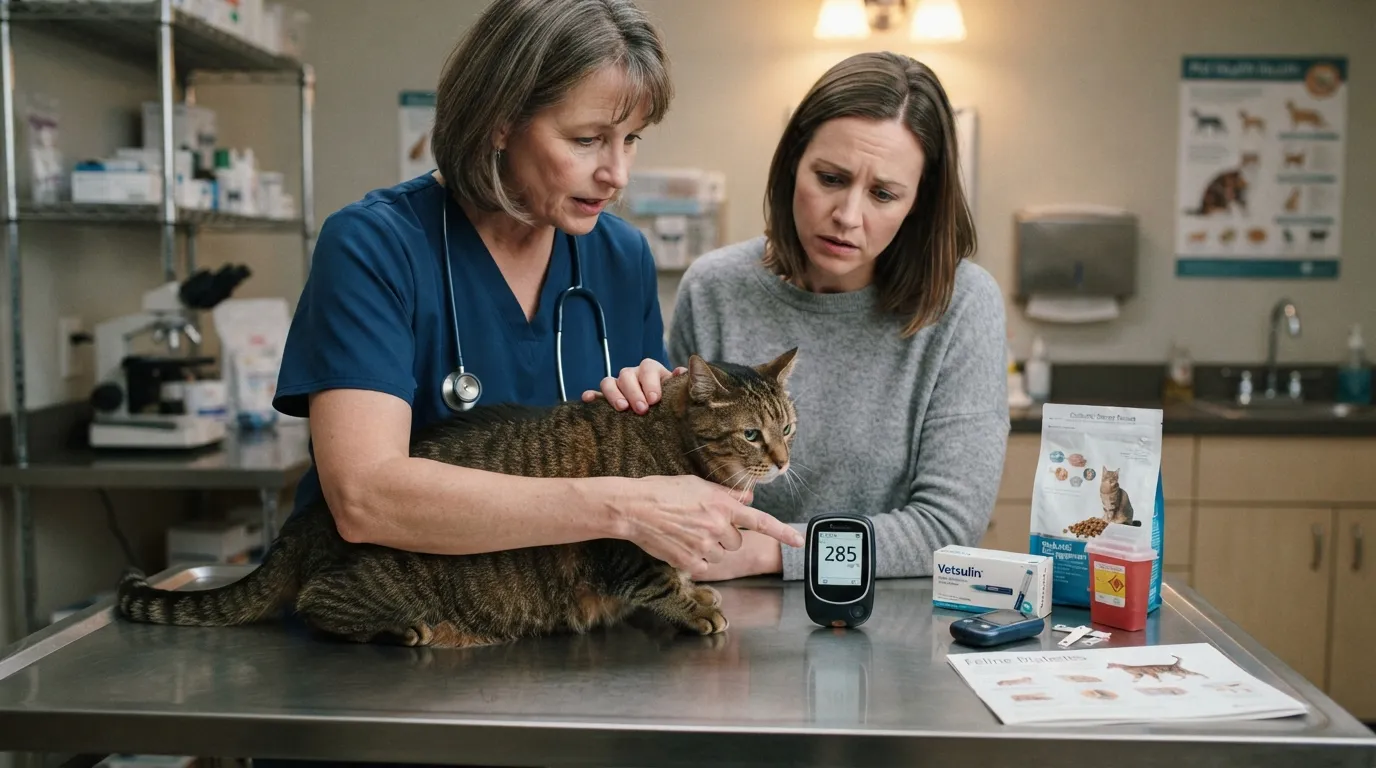
Obesity is the number one risk factor for feline diabetes. Once it takes hold, it doesn’t let go.
Diabetes becomes a lifetime management project the moment it’s diagnosed. Insulin alone runs $50 to $250 a month, before you even factor in monitoring supplies, vet visits, and complications.
In a rough first year, total diabetes management can hit $2,600 to $4,200. Add urinary infections, pancreatitis, or insulin adjustments, and that number only grows.
Prevention will always be cheaper than treatment – and with feline diabetes, that gap is enormous.
Veterinary consensus on feline weight management
There’s no guaranteed way to prevent feline diabetes. But keeping your cat lean through diet and exercise dramatically lowers the odds.
#4 – Excess Weight Is Quietly Attacking Your Cat’s Joints, Heart, and Kidneys
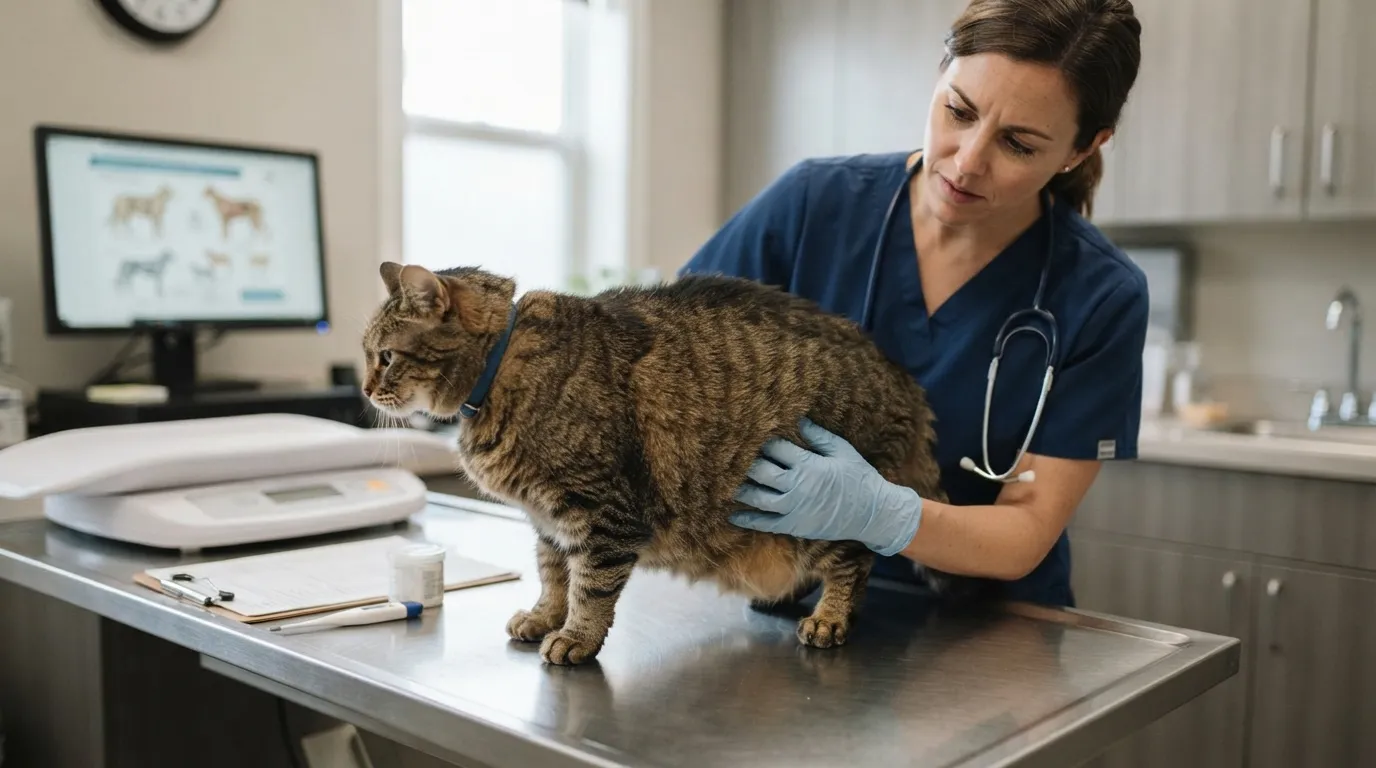
Extra weight isn’t one problem. It’s a chain reaction across nearly every system in your cat’s body.
Obesity is linked to arthritis, cardiac changes, urinary tract disease, and even feline asthma. This isn’t one bad outcome – it’s several, happening at once, often silently.
Even when nothing looks wrong on the outside, obese cats face higher anesthesia risk and more complicated medication dosing. A routine surgery becomes measurably riskier the heavier your cat is.
If obesity leads to something like cancer, treatment can run upwards of $10,000. The fat isn’t just sitting there – it’s inflaming your cat’s body from the inside out.
Worth Knowing
- Arthritis and joint strain from carrying extra weight daily
- Changes in heart structure and function over time
- Higher rates of urinary tract disease and feline asthma
- Increased anesthesia risk during any future surgery
- Cancer treatment costs that can climb past $10,000
That inflammation has a brutal consequence for lifespan. Slide #3 lays it out in years, not dollars.
#3 – Obese Cats Can Lose Up to 5 Years of Life
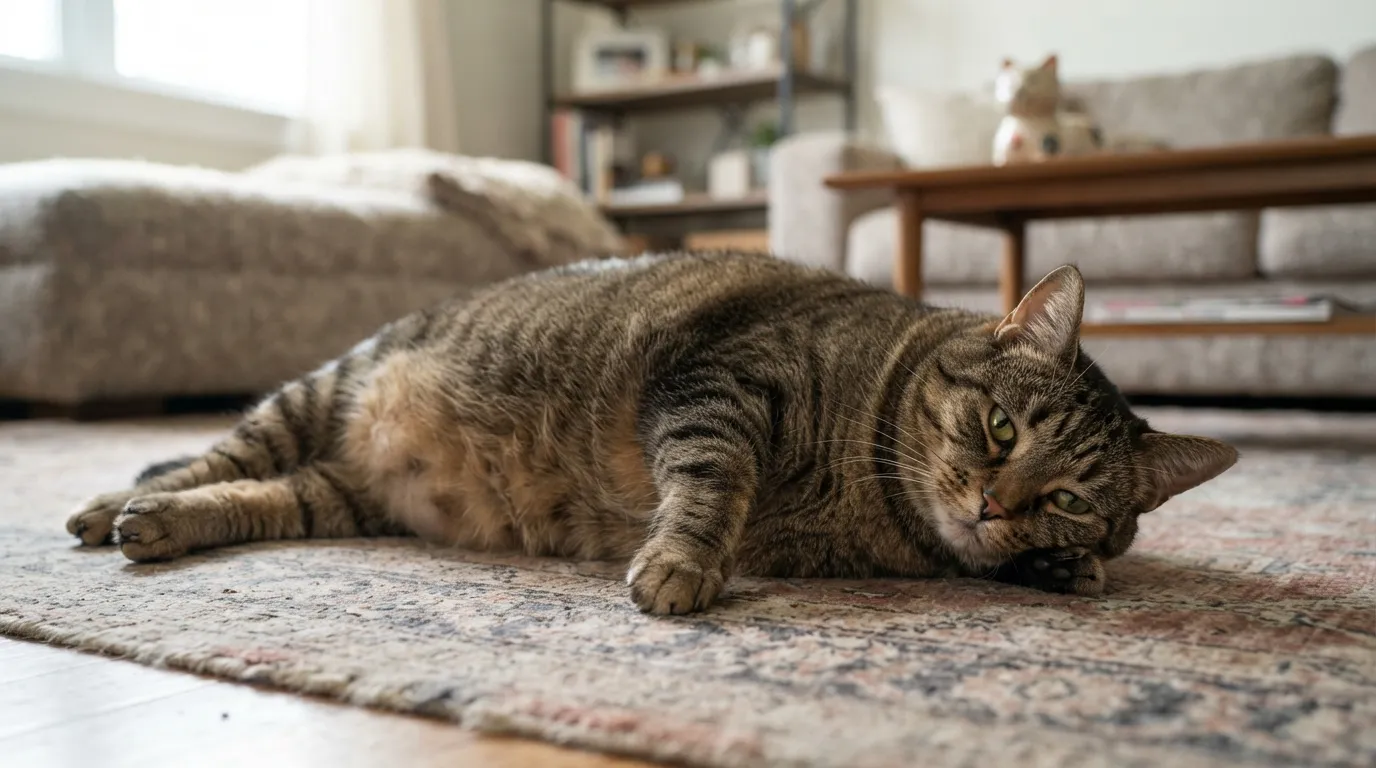
This is the number most owners never hear at the vet’s office. It changes how you look at every extra pound.
Obese cats average a 5 to 10 year lifespan, compared to 10 to 15 years for a healthy cat. That’s a potential loss of half their life.
Obese cats between ages 8 and 12 have a 2.8-fold higher mortality rate than lean cats the same age. Obesity is a chronic inflammatory condition that primes the body for diabetes, orthopedic disease, and cancer.
At a Glance
- Healthy-weight cat lifespan: 10 to 15 years
- Obese cat lifespan: 5 to 10 years
- Mortality rate for obese cats aged 8-12: 2.8x higher than lean cats
Excess weight is always easier to prevent than to reverse. A lifelong healthy weight remains the single biggest lever you have over how long your cat lives.
Here’s the frustrating part – most owners are causing this by accident, with the best intentions. Slide #2 explains how.
#2 – Free-Feeding and “Just a Few Treats” Are the Real Culprits
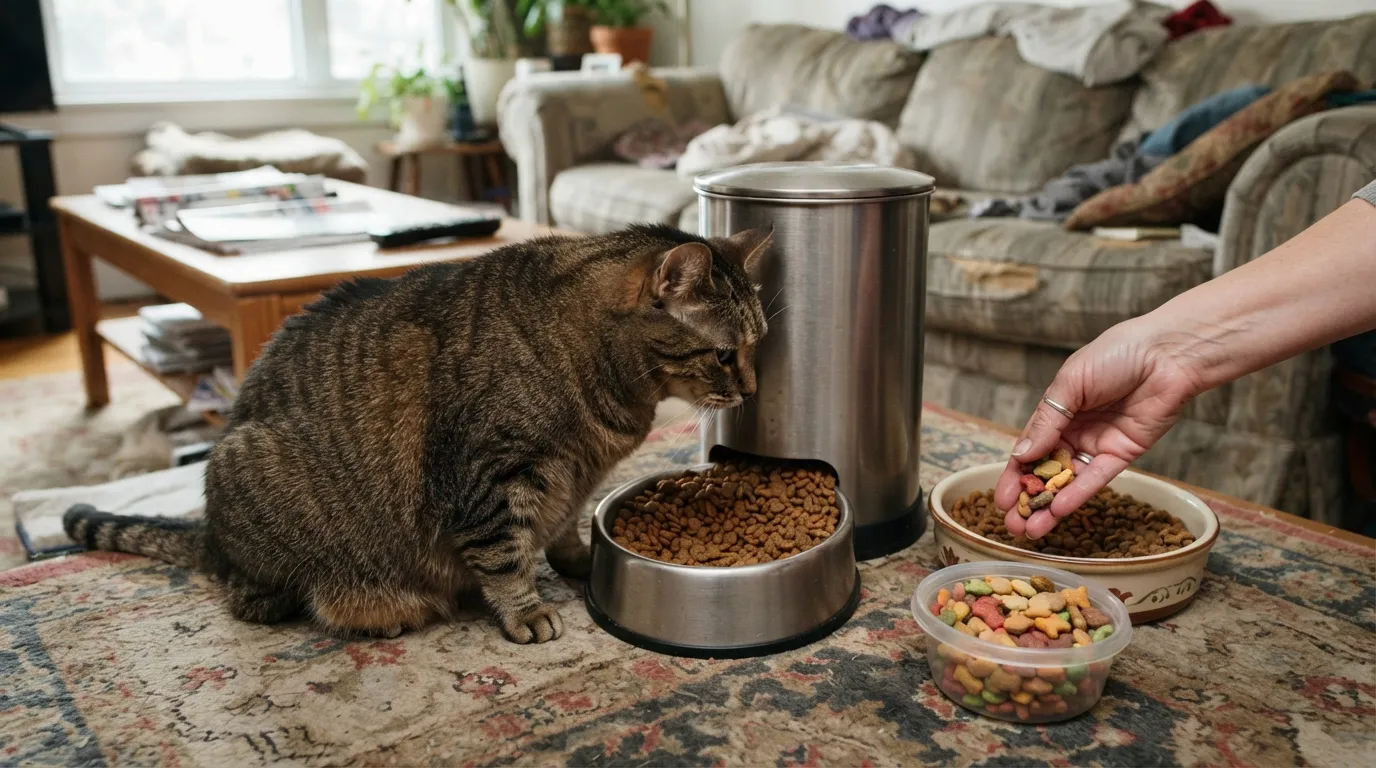
The uncomfortable truth: the way most people feed their cats is directly fueling this epidemic.
Free-feeding – leaving dry food out all day – trains cats to eat from boredom instead of hunger. Overfeeding is one of the single biggest drivers of feline weight gain.
Treats are the quiet accomplice. Those extra calories rarely get counted toward a cat’s daily total, and they add up fast.
Indoor cats are especially vulnerable since inactivity compounds the effect of overfeeding. Weight gain peaks between ages 2 and 10 – exactly the window when most owners assume their cat is “fine.”
The good news is that the fix is almost embarrassingly simple. Slide #1 shows you exactly what it looks like.
#1 – The Fix Doesn’t Require Expensive Food or Fancy Gadgets
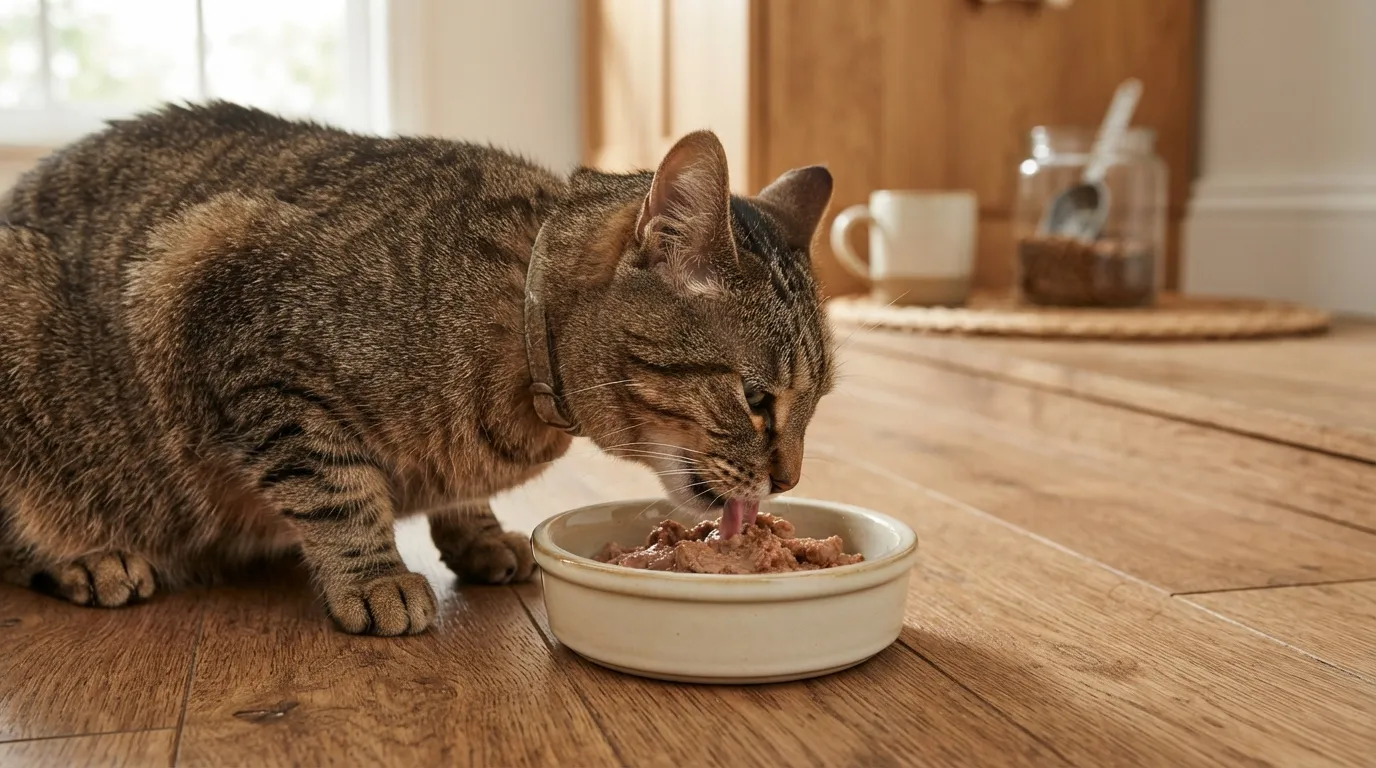
Forget the weight-loss industry marketing. Getting a cat to a healthy weight doesn’t require pricey prescription subscriptions.
The most effective diets are either high-fiber/low-fat, which increases fullness, or high-protein/low-carb, which slows digestion. Wet food’s higher water content also helps by adding volume without adding calories.
Quick Compare
- High-fiber, low-fat: increases fullness, helps cats feel satisfied on fewer calories
- High-protein, low-carb: slows digestion and helps preserve lean muscle
- Wet food: adds volume and water content without adding extra calories
Cats should lose no more than 1 to 2% of body weight per week. Rapid weight loss is genuinely dangerous and can trigger fatty liver disease.
Exercise matters just as much as diet. Wand toys, puzzle feeders, and vertical climbing spaces all add meaningful calorie burn to a cat’s day.
The single most important first step is a vet visit to set a real baseline and a real plan. From there, everything else – comfort, mobility, lifespan – starts moving in the right direction.
The Bottom Line
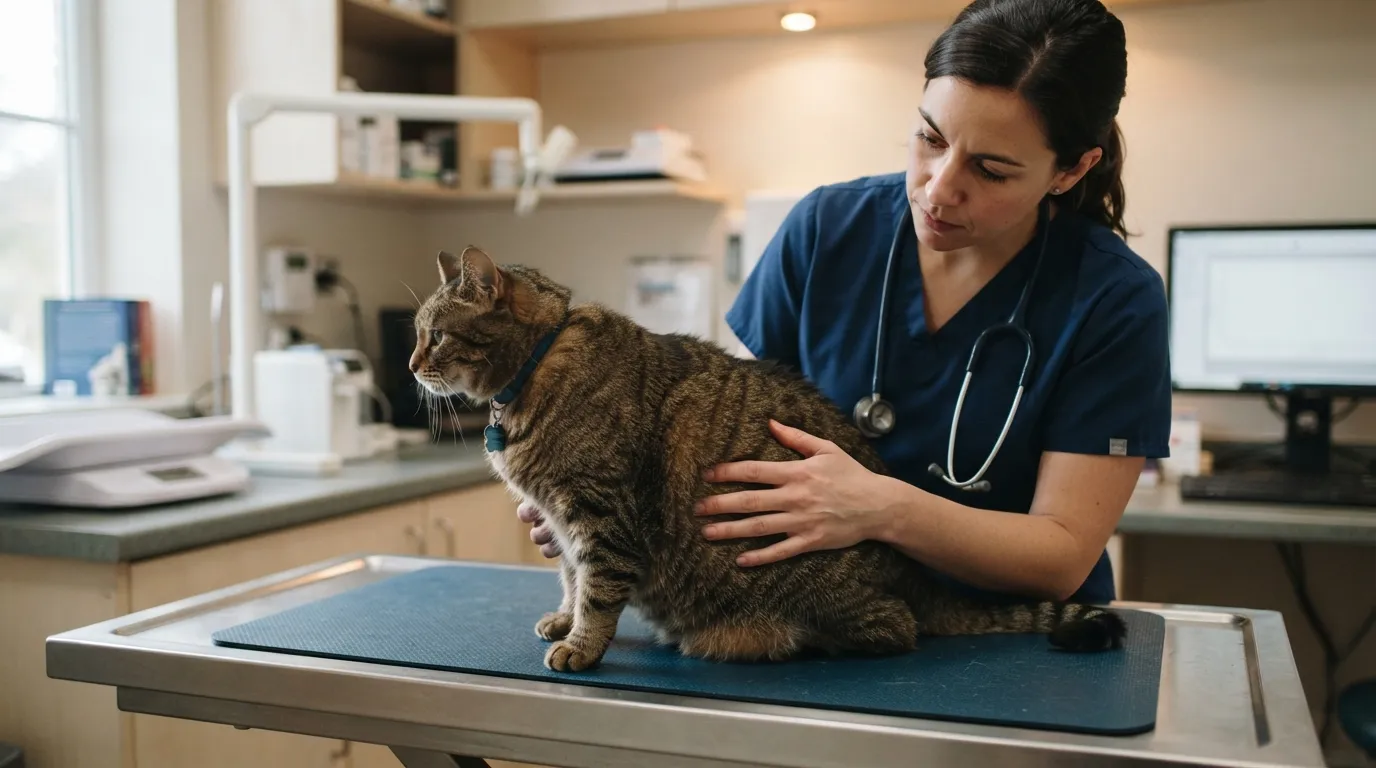
61% of American cats are overweight or obese, and that number keeps climbing. Obesity is directly tied to diabetes, urinary disease, joint problems, and cancer – while quietly draining owners’ wallets and shortening cats’ lives by years, not months.
Owners of overweight cats pay up to 53% more for surgery than owners of lean cats, often without realizing their own cat qualifies as overweight in the first place. That gap between what people see and what’s actually happening is the whole problem.
The fix isn’t complicated, and it isn’t expensive compared to the alternative. It starts with one honest look at your cat’s body – the kind most owners have been avoiding for years without meaning to.
Growing up traveling and experiencing new cultures and wonders, I have had a passion for nature, adventuring, photography, and videography. I am currently working towards a BSc in Biodiversity and Ecology at Stellenbosch University, and I hope to specialise in Marine Sciences one day.
Please send any feedback to Feedback@animalsaroundtheglobe.com