Most people picture empty nest syndrome as a passing case of the blues – something a weekend trip or a new hobby quietly fixes. The research tells a harder story, and it’s why a strange trend is spreading through quiet, suddenly-too-big houses across the country.
Empty nesters are skipping the therapist’s waiting list and heading straight to the animal shelter instead. Here’s what the data actually shows about why.
#7 – The Empty Nest Mental Health Crisis Is Bigger Than Anyone Admits
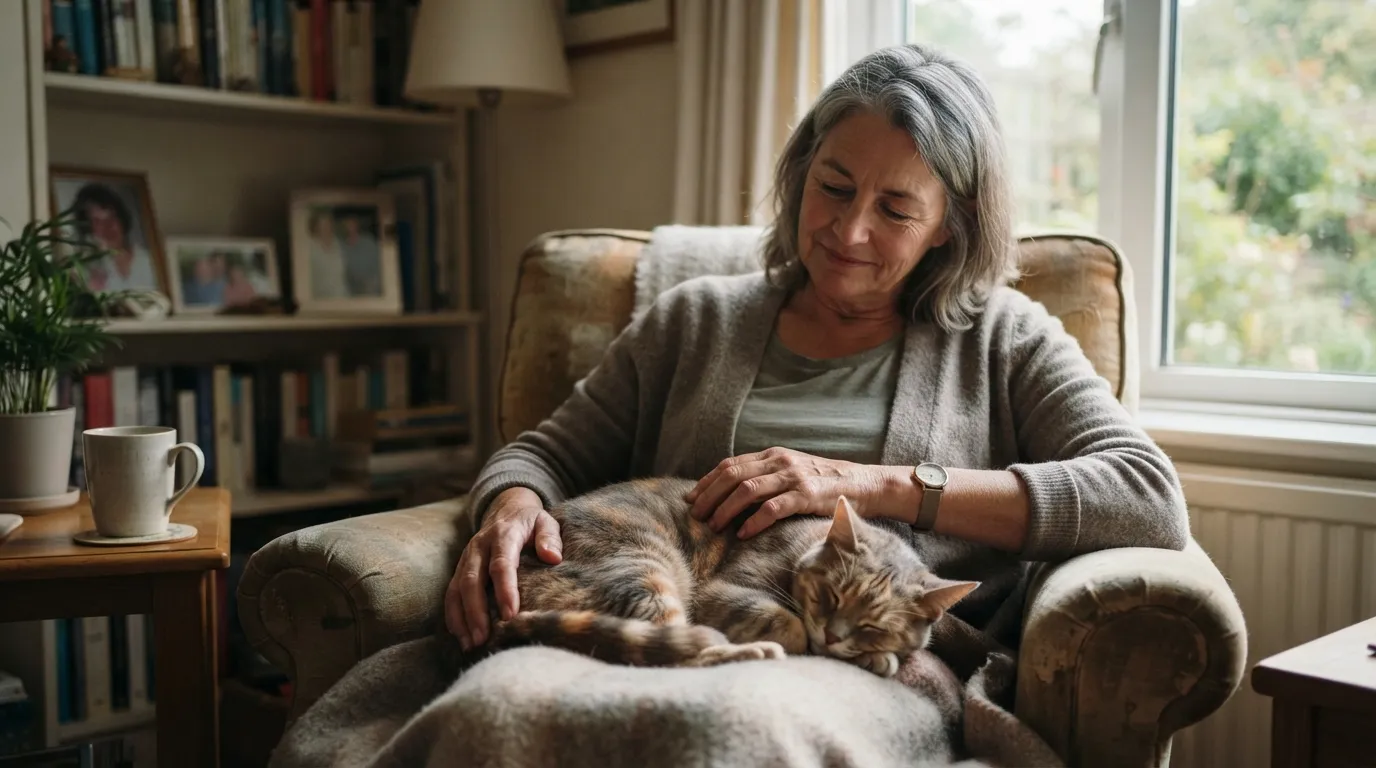
The house goes quiet, and so does everything that gave the day structure.
When grown children leave, parents can face depression, anxiety, guilt, irritability, and loneliness all at once. Most assume a rough few weeks is normal – and for many, that’s true.
But not everyone bounces back that easily. Empty nesters show higher rates of functional impairment, poor quality of life, and depression tied to the sudden loss of companionship.
The loss of a daily caregiving role hits harder than people expect. Studies link this stage of life to anxiety and loneliness risks that outweigh many physical health conditions – driven largely by the absence of children and a lack of hobbies or social support.
That’s the surface problem. What loneliness does to the body next is worse.
#6 – Loneliness in Empty Nesters Has a Physical Cost
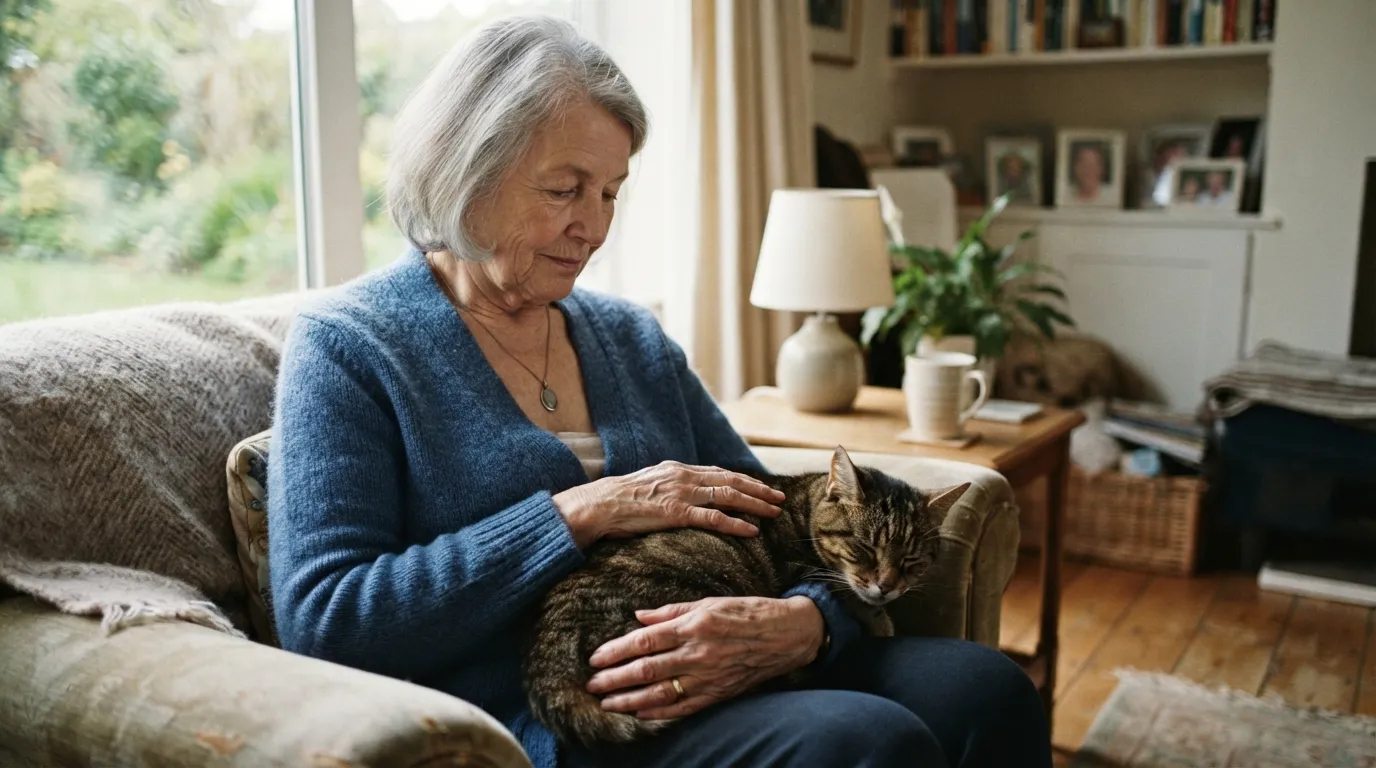
Most people treat loneliness as an emotional issue. Researchers treat it as a medical one.
For older adults, isolation raises the risk of depression – and over time, even mortality. That’s not exaggeration; it shows up consistently across studies.
Empty-nest seniors specifically report elevated loneliness, depressive symptoms, and broader mental health struggles. Living alone, without even a spouse, makes the effect noticeably worse.
Fast Facts
- Isolation raises depression risk and, over time, mortality risk in older adults.
- Empty-nest seniors report higher loneliness and depressive symptoms than peers with kids at home.
- Living alone without a spouse amplifies the emotional toll even further.
- Pet owners are 36% less likely than non-owners to report loneliness, even after adjusting for age and living situation.
That’s where pets enter the picture. After adjusting for age, living situation, and mood, pet owners were 36% less likely than non-owners to report loneliness.
That’s not a small effect. That’s a life-changing one – and the numbers only get more convincing from here.
#5 – A University of Michigan Poll Just Confirmed What Cat Owners Already Knew
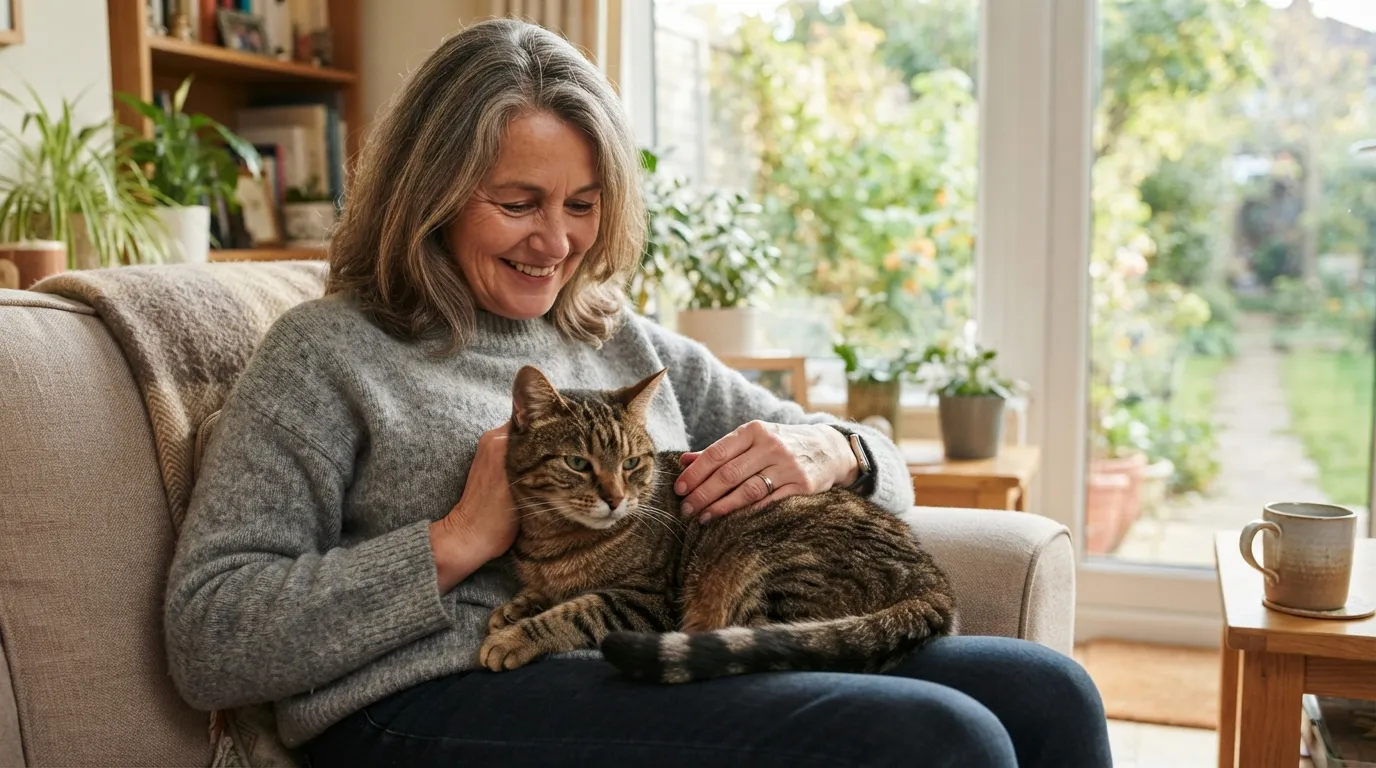
Empty nesters who adopted pets didn’t just feel better. They measured better.
More than half of adults 50 and older report having a pet, and over 80% of them say it gives them a sense of purpose. Purpose is exactly what disappears the day the last child walks out the door.
At a Glance
- The percentage of adults aged 50 to 80 who say having a pet gives them a sense of purpose has grown, to 83% today from 73% in 2018.
- 70% of current pet owners over 50 say having a pet connects them with others, in a time when rates of loneliness and isolation among older adults are high.
- 63% say having a pet helps reduce their stress, while 44% say it helps them stay physically active.
- 57% of adults ages 50 to 80 have at least one pet today, compared with 55% in 2018.
The same poll found pet owners kept steadier routines and stayed more physically active. Routine is one of the most underrated weapons against anxiety – and a cat demanding breakfast at 6 a.m. delivers it without fail.
Researchers concluded pets played a critical role in cutting depression, anxiety, and isolation for most owners, while boosting purpose and the ability to cope with uncertainty.
That’s already remarkable. But the biology behind it is where things get strange.
#4 – Petting a Cat for 10 Minutes Actually Changes Your Stress Hormones
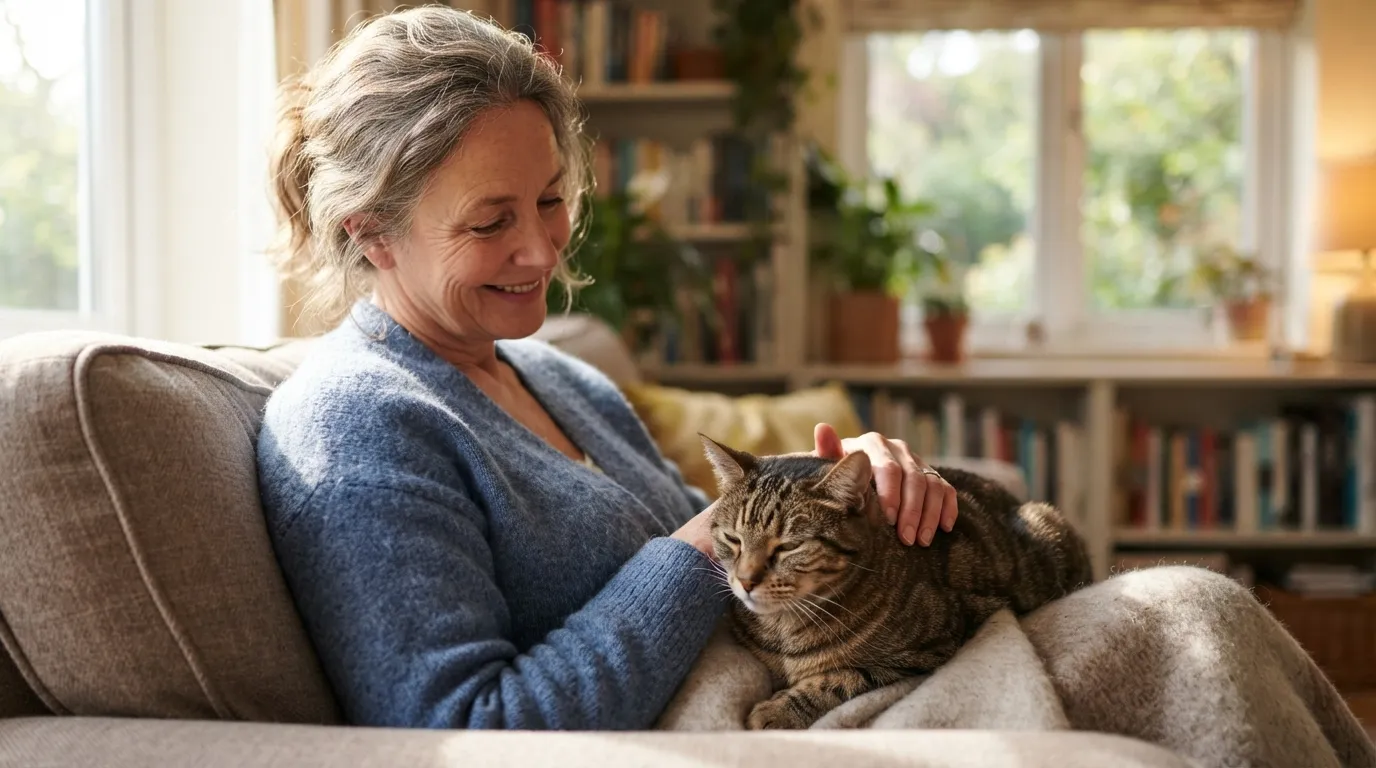
This isn’t feel-good folklore. This is measurable biochemistry.
In a 2023 Japanese study, just 10 minutes of feline interaction lowered cortisol and raised oxytocin – the so-called “love hormone” tied to reduced stress, depression, and anxiety.
Ten minutes. That’s less time than scrolling social media – and the effects run in exactly the opposite direction.
Oxytocin also appears to calm activity in the amygdala, the brain’s alarm center. Repeated positive time with a cat may reinforce a calmer baseline over time.
If that sounds like a coincidence, the next finding makes it much harder to dismiss.
#3 – The Science of Cat Ownership Cuts Anxiety at the Source
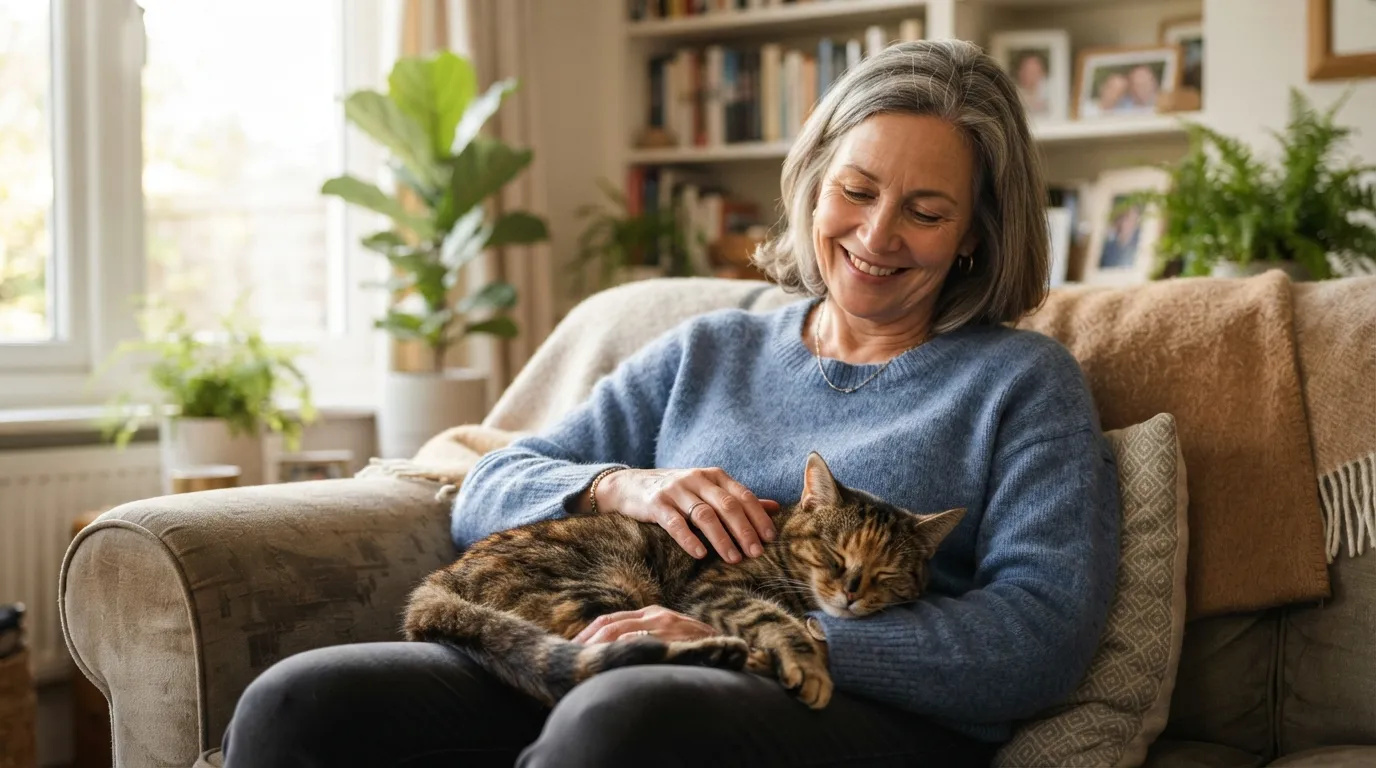
Most anxiety treatments just manage symptoms. Cats may actually shift the underlying biology.
People who care for cats report lower stress, better emotional regulation, and a greater ability to handle hard circumstances. The caregiving itself seems to be part of the medicine.
A systematic review found pet therapy – especially with dogs and cats – significantly reduced anxiety and improved overall mental health. Cat-specific research is still rare; most pet studies focus almost entirely on dogs.
More than 85% of stress-relief pet studies only include dogs, which means the real cat effect is likely undercounted. What’s already measured is striking enough on its own.
And the strangest part of the whole story isn’t even about behavior. It’s about sound.
#2 – The Purr Is Basically Vibration Therapy You Can Hold in Your Lap
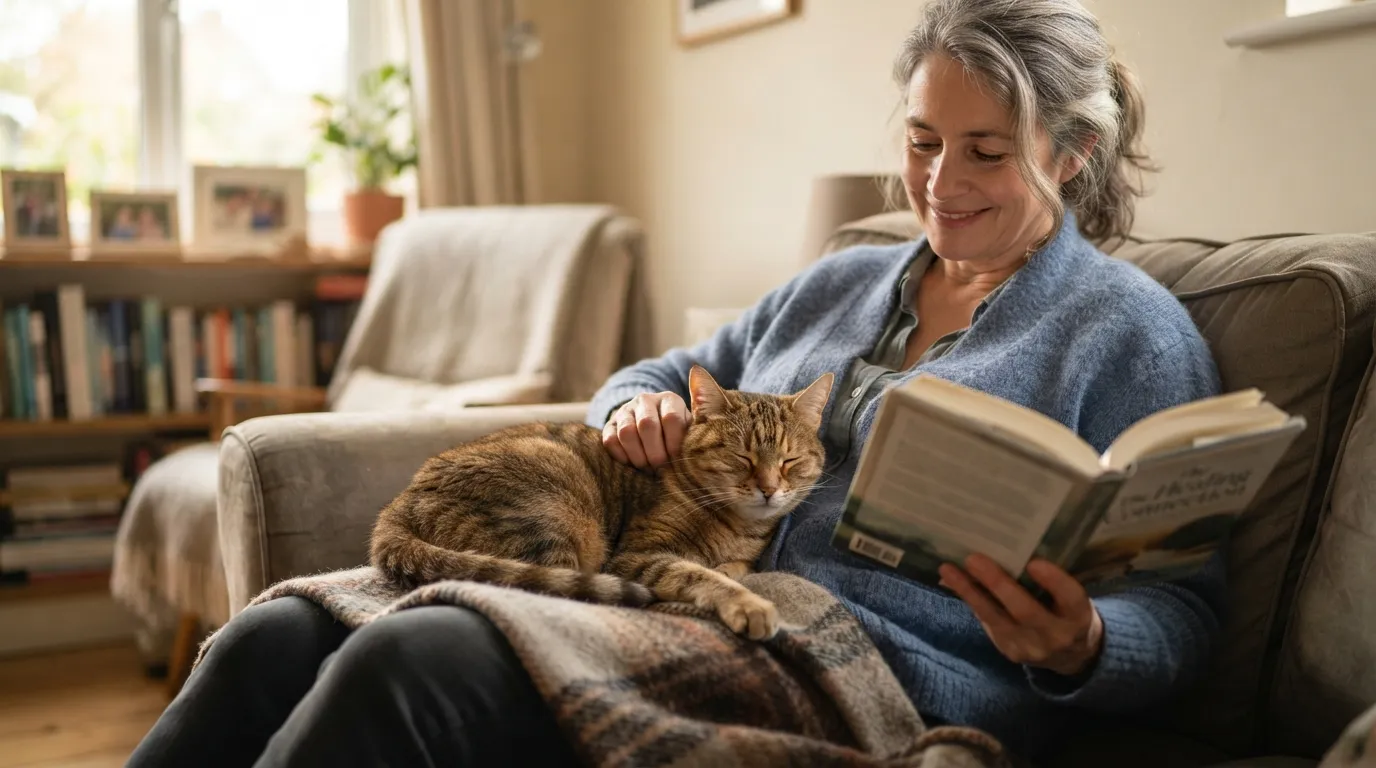
Here’s the detail that stops people mid-sentence when they hear it.
A cat’s purr falls between 25 and 140 Hz – the same frequency range shown to aid healing in broken bones, joints, and wounds. That’s not a metaphor. That’s physics.
Worth Knowing
- The frequency of cat purring has been shown to fall between 25 and 140 Hz, and that same frequency has been shown to aid in the healing of broken bones, joint and tendon repair, and wound healing.
- A study by Dr Clinton Rubin and his team showed that bones of older sheep started showing signs of repair after being exposed to 30 Hz of vibrations for 20 minutes, five days a week.
- In humans, vibrational therapy with a frequency between 10 and 50 Hz has been found to benefit bone repair and strengthen tendons and joints.
- A cat curled on your lap is, quite literally, running that same frequency range on a loop.
Those vibrations help regulate the autonomic nervous system, which controls heart rate and breathing. Lowering stress this way can trigger the body’s natural relaxation response.
Empty nesters dealing with anxiety are essentially getting low-frequency vibrational therapy every time the cat settles onto their chest. The resonance stimulates the parasympathetic nervous system, easing stress at a physical, not just emotional, level.
Every mechanism so far explains how a cat calms the body. The last one explains why it matters so much to this specific group of people.
#1 – Cats Fill the Exact Emotional Void the Empty Nest Creates
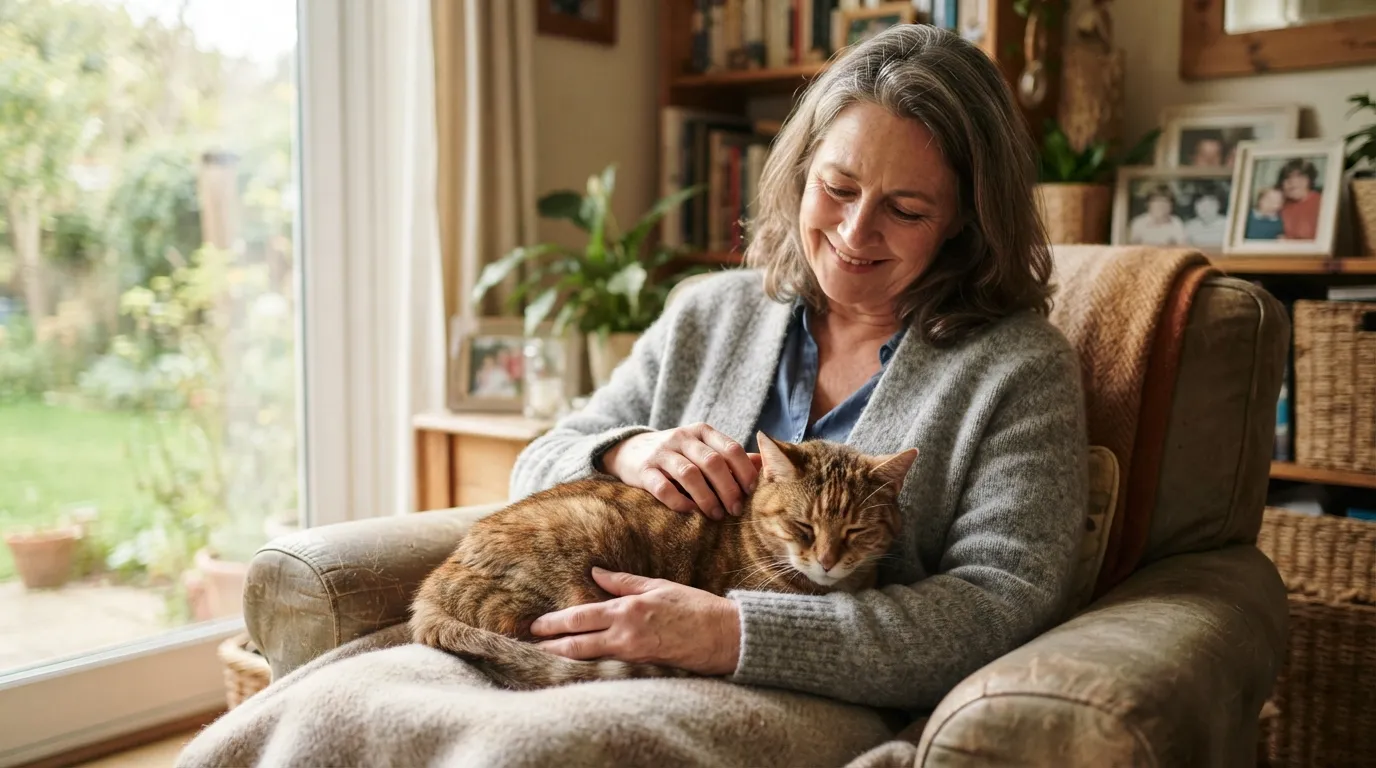
Every item on this list is a mechanism. This one is the reason.
Cats ease anxiety by making people feel loved, calm, and close – through petting, quiet moments, and the sound of a purr. That’s nearly the emotional vocabulary of parenting itself.
For empty nesters, that vocabulary lands differently than it does for anyone else. Having a cat has been linked to lower loneliness and social isolation, both common companions of depression and anxiety.
The cruel irony of empty nest syndrome is that it removes the one relationship that gave life its daily meaning. A cat can’t replace a child – but it restores routine, grounding physical touch, and quiet, non-judgmental company.
There are two means of refuge from the misery of life: music and cats.
Albert Schweitzer
For many empty nesters, that’s not nothing. That’s everything.
The Bottom Line
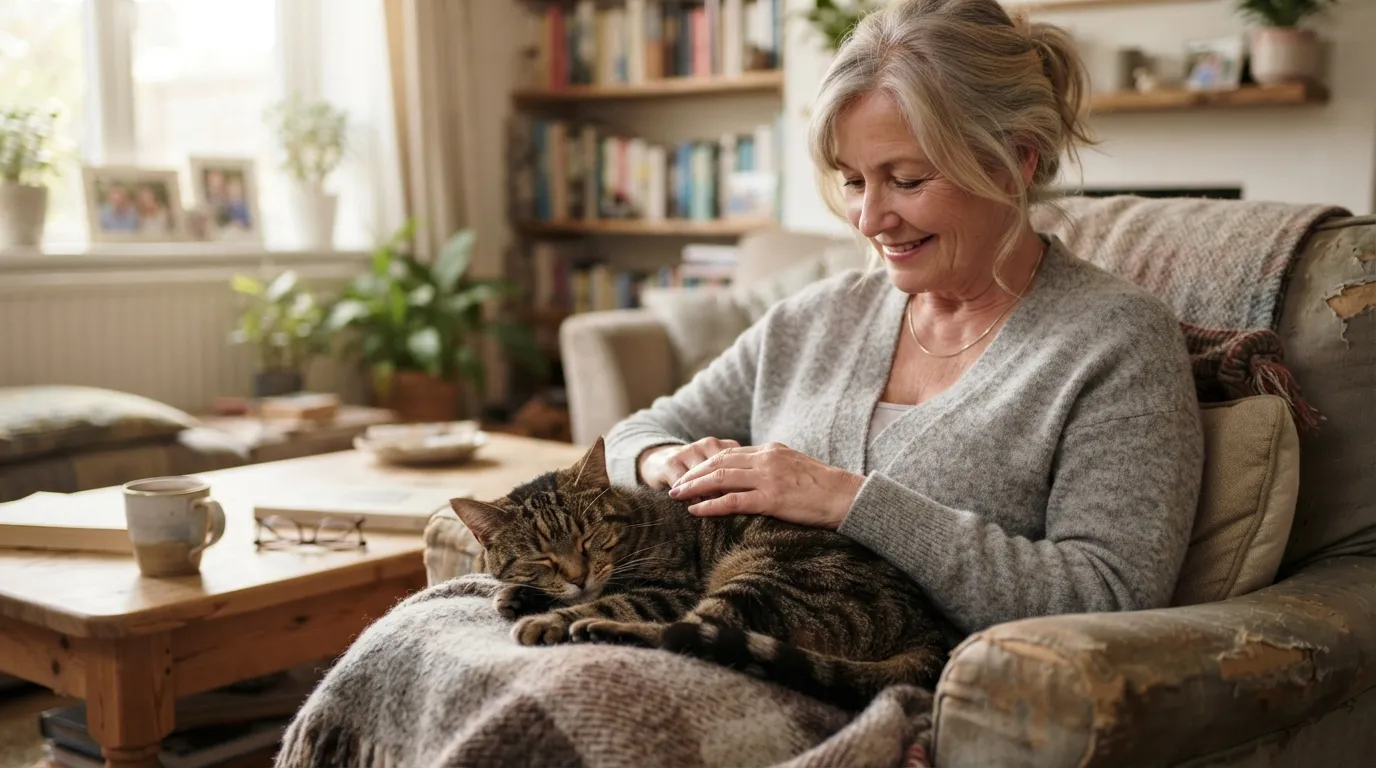
Empty nest syndrome is a real, documented transition – and it cuts deeper than most people admit. The mechanisms behind the cat effect are now well mapped: cortisol drops, oxytocin rises, and the nervous system settles.
More than 80% of older pet owners say their animal gives them a sense of purpose. That number speaks for itself.
The empty nest doesn’t have to mean an empty life. Sometimes the answer walks in on four paws and starts purring.
Have you – or someone you know – found that a cat made a real difference after the kids left? Drop your story in the comments.
Growing up traveling and experiencing new cultures and wonders, I have had a passion for nature, adventuring, photography, and videography. I am currently working towards a BSc in Biodiversity and Ecology at Stellenbosch University, and I hope to specialise in Marine Sciences one day.
Please send any feedback to Feedback@animalsaroundtheglobe.com