Most pet owners assume they’re covered – until the bill arrives and the insurer says otherwise. That confidence has a way of collapsing fast.
The pet insurance industry pulled in $4.7 billion in premiums last year alone, and it keeps growing. Buried inside that growth are policy traps, claim tripwires, and premium time-bombs that quietly cost ordinary owners thousands.
Most people sign up based on a headline price and a glossy brochure, never reading the fine print until it’s too late. Here’s what the data – and insurance industry insiders – actually say.
#7 – The Waiting Period Trap Nobody Warns You About
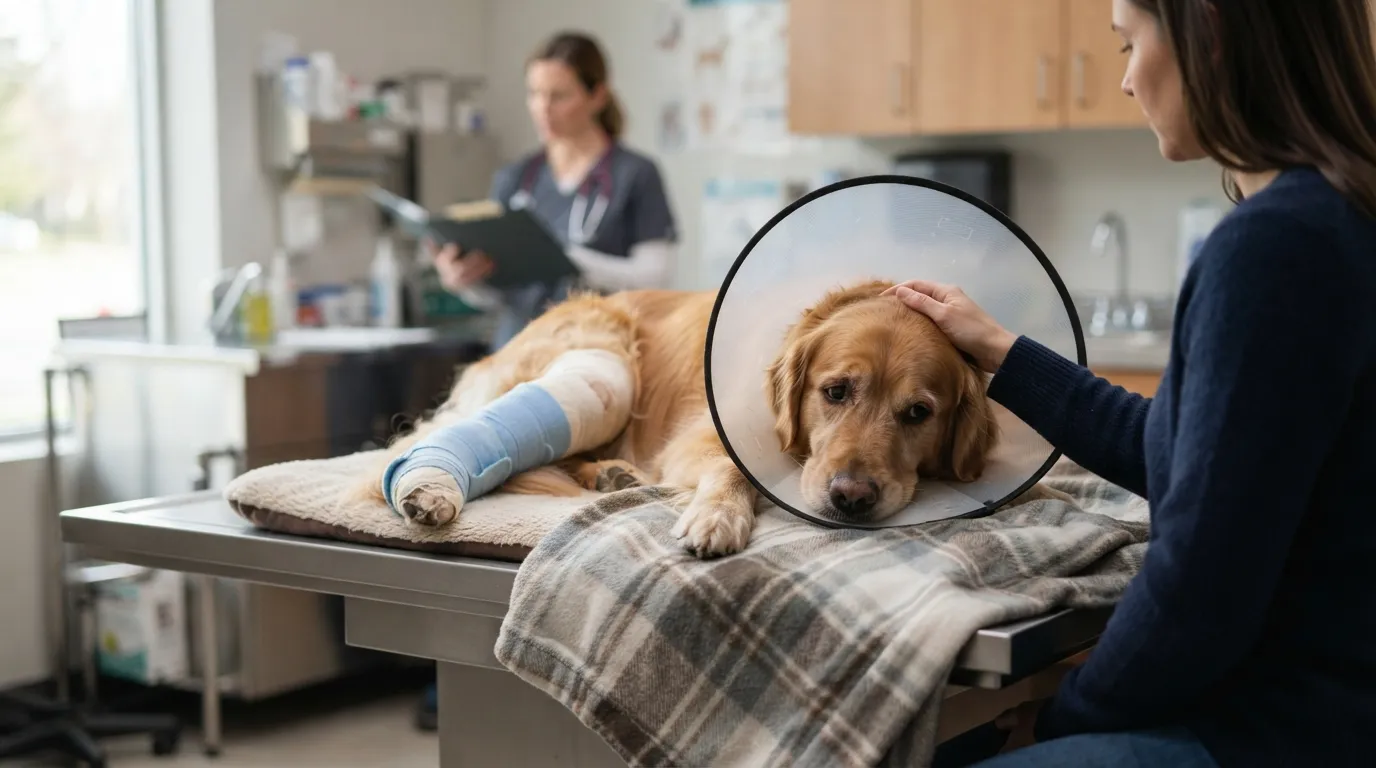
Most new policyholders don’t realize their coverage doesn’t start on day one – and that gap can cost a fortune.
Insurers build in a waiting period between purchase and active coverage, and any treatment during that window gets rejected. That sounds obvious until your dog breaks a leg in week two.
For 32% of denied claimants, the top reason for rejection is filing before their waiting period ended – the single biggest cause of claim denials. Waiting periods run 14-30 days for illness, but stretch to 6-12 months for orthopedic conditions.
Orthopedic waits hit hardest. Tear an ACL at month four and you could face a $5,000 surgery bill with zero reimbursement, policy or not.
At a Glance
- Illness coverage: usually kicks in after 14-30 days.
- Orthopedic conditions: often locked out for 6-12 months.
- Top reason for denied claims: filing before the waiting period ends.
- Ask for your exact coverage start date in writing before you pay.
- Always check orthopedic-specific waiting periods before signing.
- Ask directly: “When does orthopedic coverage begin?”
But the waiting period is just the beginning. Red flag #6 is where things get truly expensive…
#6 – “Pre-Existing Condition” Means More Than You Think

You already know pre-existing conditions aren’t covered. What you probably don’t know is how broadly insurers define them.
The most common exclusion covers any condition where a vet gave advice, treatment happened, or symptoms showed up before your coverage started. Symptoms. Not a diagnosis. Symptoms.
Insurers comb through your pet’s full veterinary history at claim time, not at sign-up. That offhand vet note about your dog’s “stiff gait” two years ago could disqualify an entire joint-related claim today.
- Request your pet’s complete vet records before shopping for a policy.
- Look for insurers with clearly defined, time-limited lookback windows.
The pre-existing trap is bad. But red flag #5 quietly drains your wallet every single year…
#5 – Annual Premium Hikes That Accelerate as Your Pet Ages
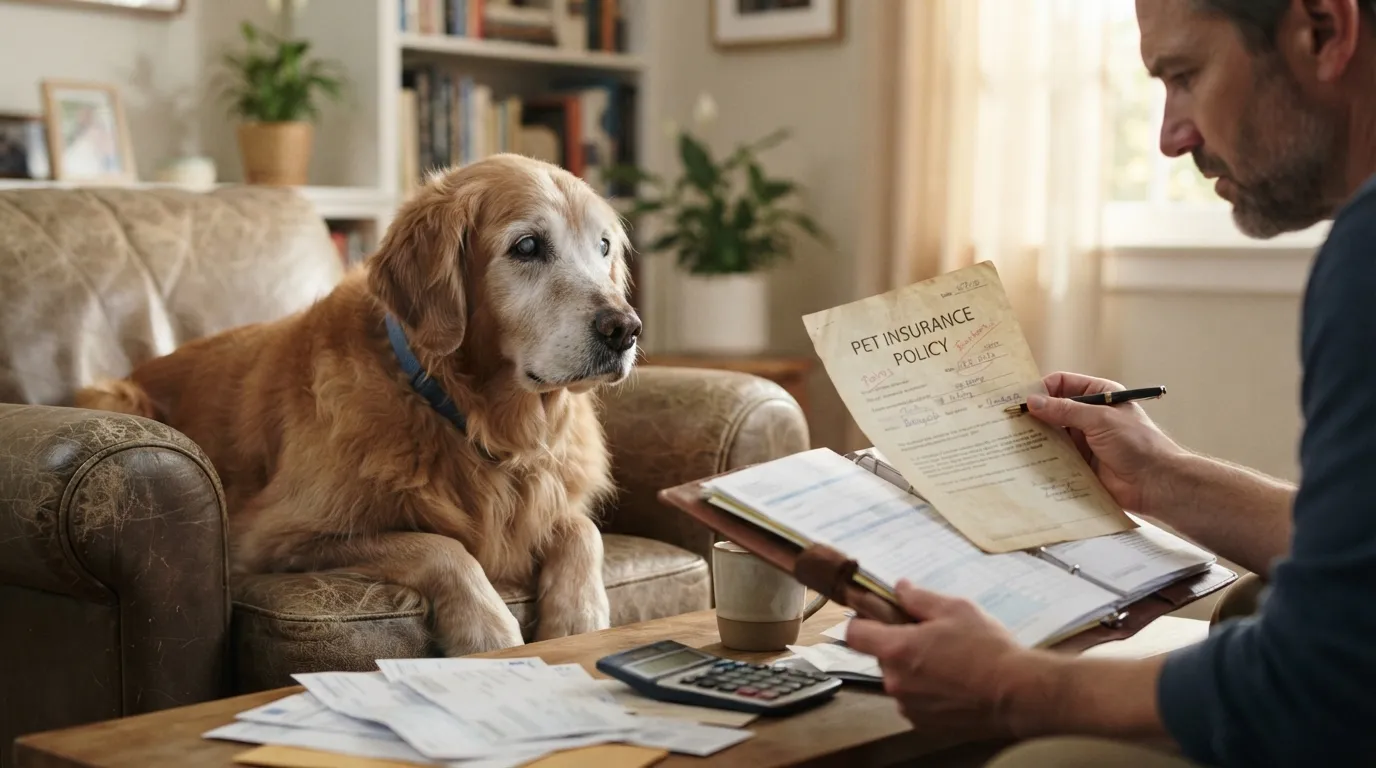
That affordable monthly premium you locked in when your puppy was eight weeks old? It won’t look the same at age seven.
Premiums commonly climb 10-30% or more at renewal, and the increases get steeper as pets enter their senior years. Major insurers are now raising rates 25-40% at renewal heading into 2026.
California has already approved a 56% rate increase for Metropolitan General and 23% for American Modern Home. One policyholder documented a single-year jump of 46.7%.
The cruelest part: increases accelerate right around age 8-9 – exactly when switching providers becomes most costly, since a new policy won’t cover anything your dog has already been treated for.
Quick Compare
| Increase Type | Approved / Reported Rate |
|---|---|
| Metropolitan General (CA) | 56% |
| American Modern Home (CA) | 23% |
| Industry-wide renewals (2026 outlook) | 25-40% |
- Get a 5-year premium estimate before committing to any policy.
- Ask: “What was your average renewal increase over the last three years?”
That premium creep is painful. But red flag #4 means you might not even get fully reimbursed when you do claim…
#4 – “Reasonable and Customary” Fees: The Clause That Quietly Underpays You

Many policies promise to reimburse 80-90% of your vet bill. What they don’t advertise is that the payout is based on their idea of a fair charge – not your actual invoice.
Watch for vague language like “reasonable and customary” fees with no clear definition. In practice, insurers pay out the smallest of several numbers: your actual charge, the provider’s usual rate, a negotiated rate, or the average charge in your area.
You think you’re getting 90% back. You might be getting 90% of 60% of the real bill. That gap comes straight out of your pocket.
Worth Knowing
- Payouts are often based on the lowest of four numbers, not your real bill.
- A vague “reasonable and customary” clause can quietly shrink a 90% promise.
- A sample Explanation of Benefits reveals more than any sales pitch.
- Demand a sample Explanation of Benefits (EOB) before buying.
- Ask directly whether reimbursement is based on your actual invoice or a fee schedule.
That reimbursement gap stings. But red flag #3 can make things even worse if you ever need specialist care…
#3 – Hereditary and Breed-Specific Conditions Buried in the Exclusions

Bought a French Bulldog? A Golden Retriever? A Maine Coon? The conditions most likely to affect your specific pet may be quietly excluded.
Hereditary disorders, dysplasia, cataracts, and congenital anomalies are common exclusions – and these aren’t rare edge cases for purebreds. They’re statistically likely outcomes, rarely flagged during the sales pitch.
A French Bulldog’s brachycephalic surgery can run $5,000-$8,000 – and some policies exclude it entirely as a breed-specific hereditary condition. That’s a policy paying zero on one of the most common claims for that exact breed.
- Cross-reference your breed’s common conditions against the policy’s exclusion list.
- Look for policies that explicitly cover hereditary conditions with no extra clause.
Breed exclusions are infuriating. But red flag #2 means you may not even realize you’re underpaid until it’s too late to appeal…
#2 – No Clear Appeals Process, and a Tight Window to Fight Back

A denial isn’t automatically final. But most owners don’t know they can fight it, and the window to do so is narrow.
Warning signs something’s wrong: the denial reason keeps changing, you’re asked for the same records repeatedly, or a sudden illness gets labeled “pre-existing” with no clear basis. Most insurers give you just 30-60 days from the payout letter to file a formal appeal.
Miss that window and your case is closed, regardless of merit. If a representative can’t clearly explain the appeals process – or pressures you to sign up immediately – treat that as a red flag on its own.
- Before buying, ask: “What is your formal appeals process and timeline?”
- Get the answer in writing.
All of that is serious. But the #1 red flag is the one most pet owners only discover when they need their insurance the most…
#1 – Insurers Who Won’t Renew Your Policy When Your Pet Needs It Most
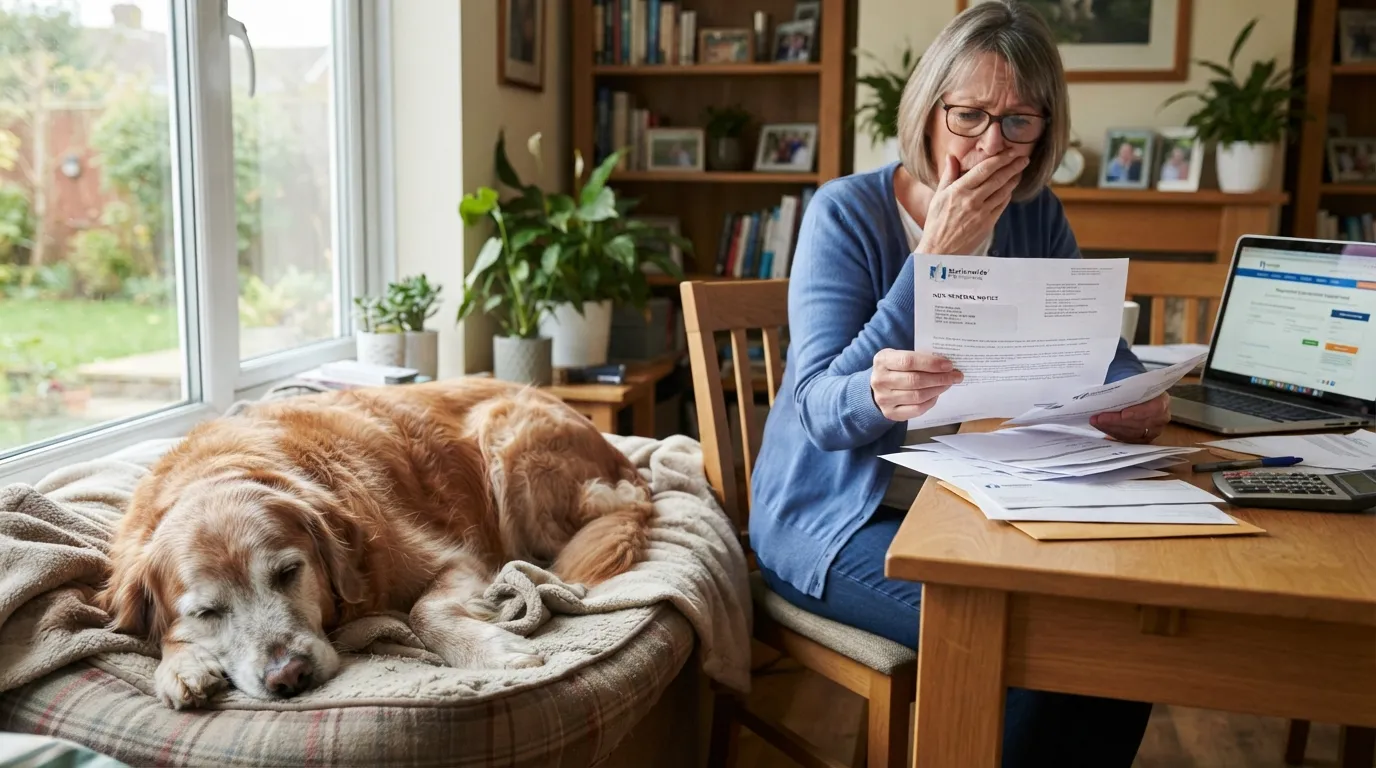
This is the red flag nobody mentions at the point of sale: the insurer’s right to simply not renew you.
Nationwide, one of the largest pet insurers in the country, announced it would not renew 100,000 policies. Nationwide said age, breed, and claims history weren’t factors in the decision – but for owners with senior pets, the timing still felt impossible.
Fast Facts
- Nationwide announced the non-renewals in June 2024, citing rising veterinary costs.
- The rollout stretched from spring 2024 through summer 2025, affecting roughly 10% of its pet insurance customers.
- Affected owners had to shop for new coverage – often with existing conditions no longer eligible anywhere else.
Switching after a non-renewal can make your pet effectively uninsurable for anything that actually matters. Every condition your old policy paid for is now “pre-existing” everywhere else you turn.
- Check your policy for non-renewal clauses and what triggers them.
- Ask your insurer: “Under what circumstances would you choose not to renew my policy?”
The Bottom Line

Pet insurance can be a genuine financial lifeline. But the fine print can just as easily turn it into an expensive illusion.
Claim rejection rates sit around 12-18%, and most denials trace back to preventable issues – missing records, waiting periods, missed deadlines. The biggest danger was never really the insurer; it’s a policy you never fully understood before you needed it.
Read every exclusion. Ask the hard questions before you sign, not after the bill arrives.
Did we miss a red flag that burned you? Drop it in the comments – other pet owners need to hear it.
Growing up traveling and experiencing new cultures and wonders, I have had a passion for nature, adventuring, photography, and videography. I am currently working towards a BSc in Biodiversity and Ecology at Stellenbosch University, and I hope to specialise in Marine Sciences one day.
Please send any feedback to Feedback@animalsaroundtheglobe.com