Most cat owners over 50 assume their indoor cat is basically safe – a little slower, maybe pickier about food, but fine. They’re wrong.
Senior cats are experts at hiding illness, and by the time you notice something’s off, the damage is often already done.
The conditions that land older cats in the ER don’t appear overnight. They build quietly for months, sometimes years, before that $3,000 bill shows up.
Here’s exactly how it happens – and where the warning signs were hiding the whole time.
#7 – The Emergency Room Price Tag Nobody Expects
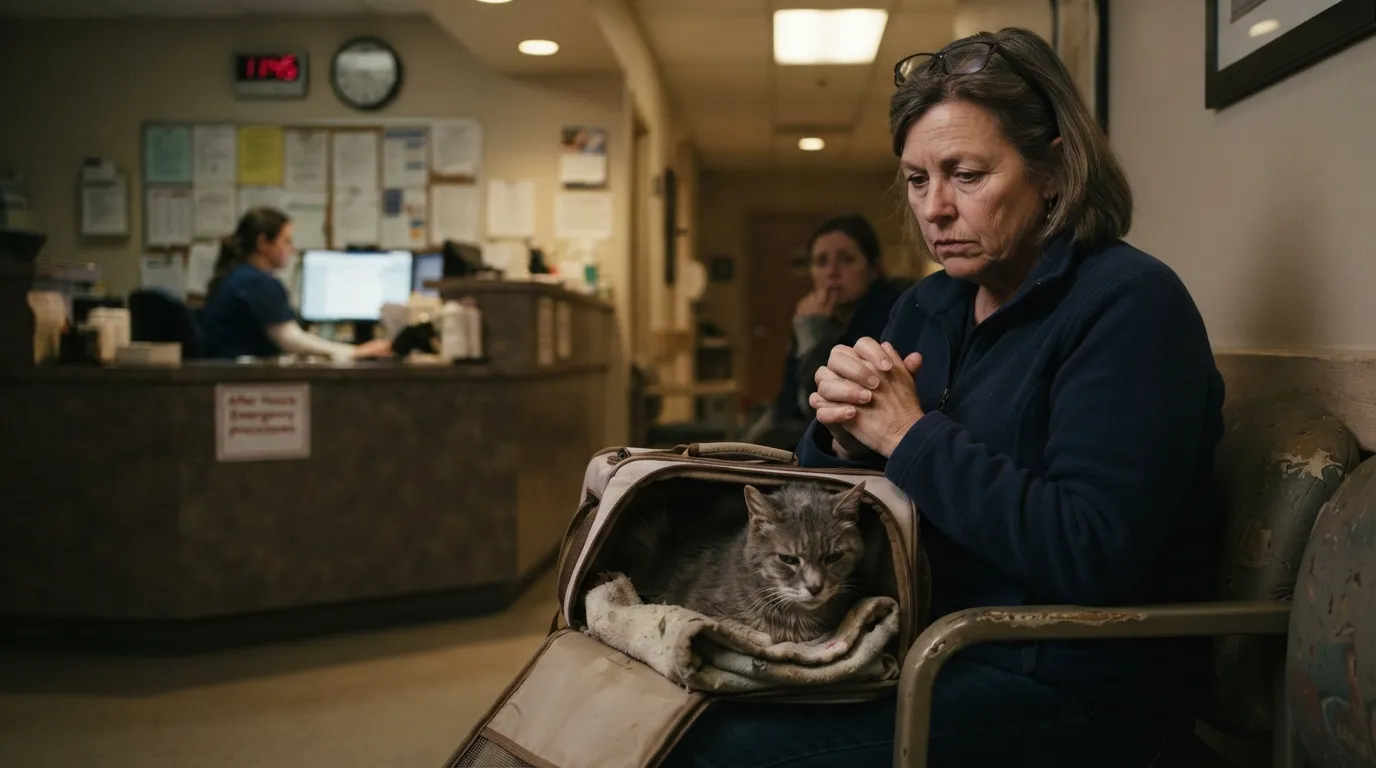
Most people picture a vet bill in the low hundreds. Emergency care lives in a completely different universe.
Emergency vet visits typically run $800–$1,500 on average. Complex cases can blow past $5,000 fast.
That number climbs once you add diagnostics ($180–$450), hospitalization ($600–$2,500), and possible surgery ($1,500–$5,000+). Each piece stacks on top of the last.
Senior cats make this worse because they rarely show distress until things turn critical. ER clinics run overnight with specialized staff and equipment, and that overhead is exactly why the bill balloons compared to a regular daytime visit.
So the $3,000 bill? It’s not even the worst-case scenario – it’s closer to the average once hospitalization gets added in.
Fast Facts
- Average ER visit: $800–$1,500
- Diagnostics (bloodwork, X-rays): $180–$450
- Hospitalization: $600–$2,500
- Emergency surgery: $1,500–$5,000+
But that’s nothing compared to what we found about #6 – the silent killer most cat owners mistake for normal aging.
#6 – Chronic Kidney Disease: The Slow Drain on Your Savings
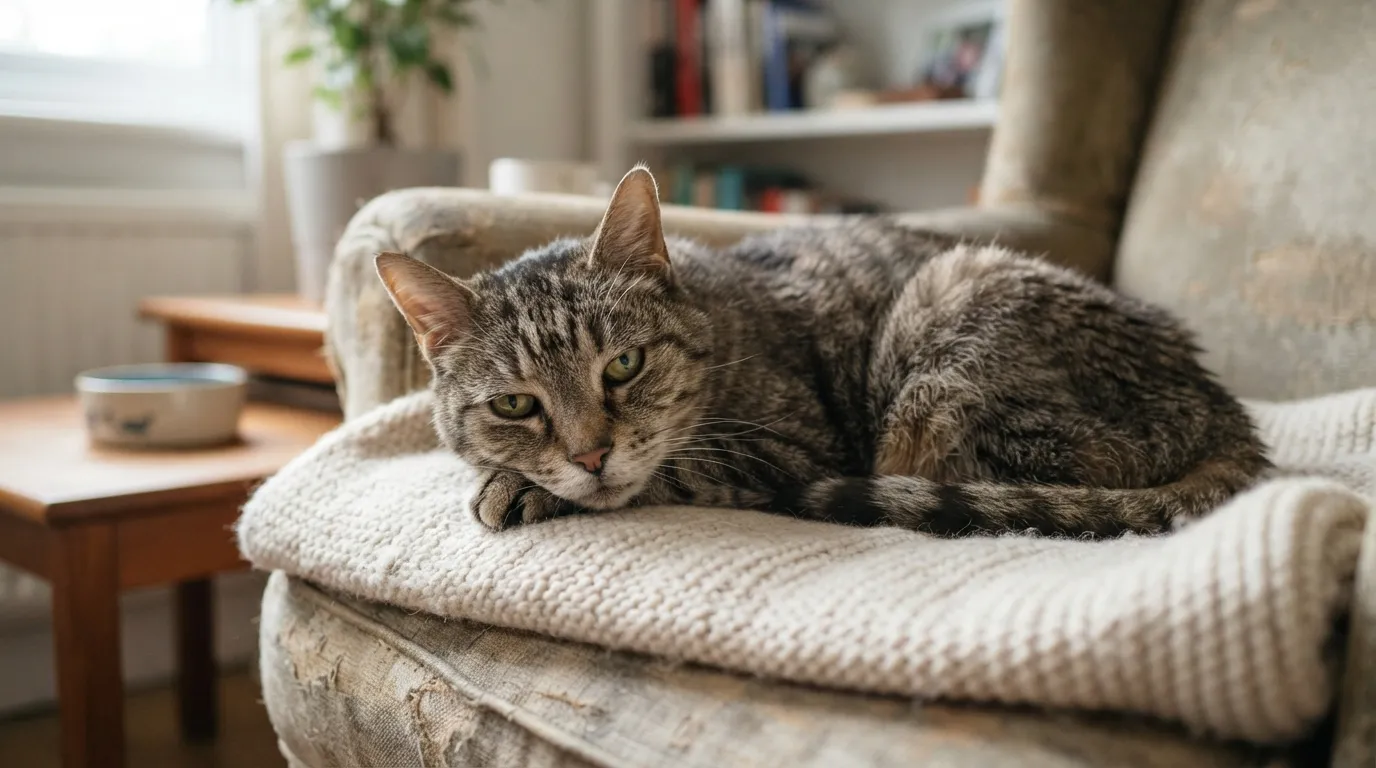
Kidney disease is the single most common serious illness in senior cats. Most owners have no idea their cat already has it.
Roughly 1 in 3 cats over 12 are affected. It develops slowly and silently, often for months or years before any outward sign appears.
By the time symptoms show up, the damage is already advanced. Standard tests can only detect CKD after the majority of kidney function is gone.
Worth Knowing
- At least two-thirds of kidney function is typically gone before symptoms appear
- CKD affects an estimated 30–40% of cats over age 10, and up to 81% of cats over 15
- Twice-yearly bloodwork after age 7 is the most reliable way to catch it early
- Prescription kidney diets can meaningfully slow progression once diagnosed
The costs climb right alongside the disease. Stage 2 runs $1,200–$2,500 a year, Stage 3 jumps to $2,500–$5,000, and Stage 4 can hit $4,000–$10,000 or more.
There’s real hope, though. Caught early, progression can be slowed and quality of life improved – twice-yearly bloodwork after age 7 is the closest thing to a safety net.
But that’s nothing compared to what we found about #5 – the urinary emergency that can kill within 48 hours.
#5 – Urinary Blockage: The $3,000 Bill That Arrives on a Friday Night
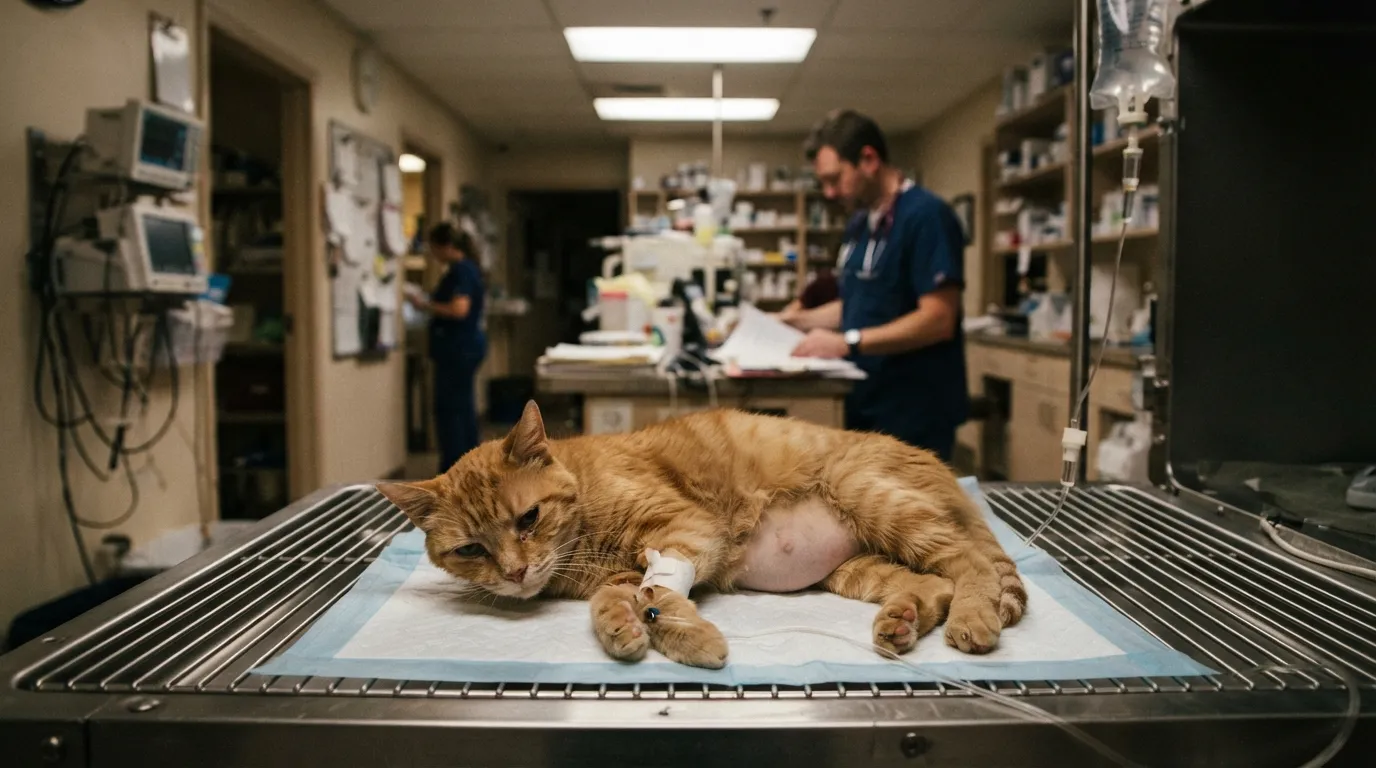
A cat that hasn’t urinated in 24 hours isn’t constipated. It may be dying.
When urine can’t leave the bladder, toxins build up fast – sometimes causing kidney damage or dangerous electrolyte imbalances within 24 to 48 hours. Left untreated, it can lead to kidney failure or a ruptured bladder.
Treating a urinary blockage generally runs $1,000 to $4,000, and that’s before any preventive surgery. The scarier number is what happens next.
As many as 40–50% of cats will have another urinary blockage episode within a year.
American Veterinary Medical Association
Each recurrence can cost another $1,500–$4,000. Seek care after hours, and the bill jumps 30-50% higher.
Cats that don’t drink enough water face a higher risk. A water fountain and a switch to wet food can cut that risk considerably.
But that’s nothing compared to what we found about #4 – a dental problem that most owners never connect to a $2,000 liver crisis.
#4 – Dental Disease: The Mouth Problem With a $2,000 Twist
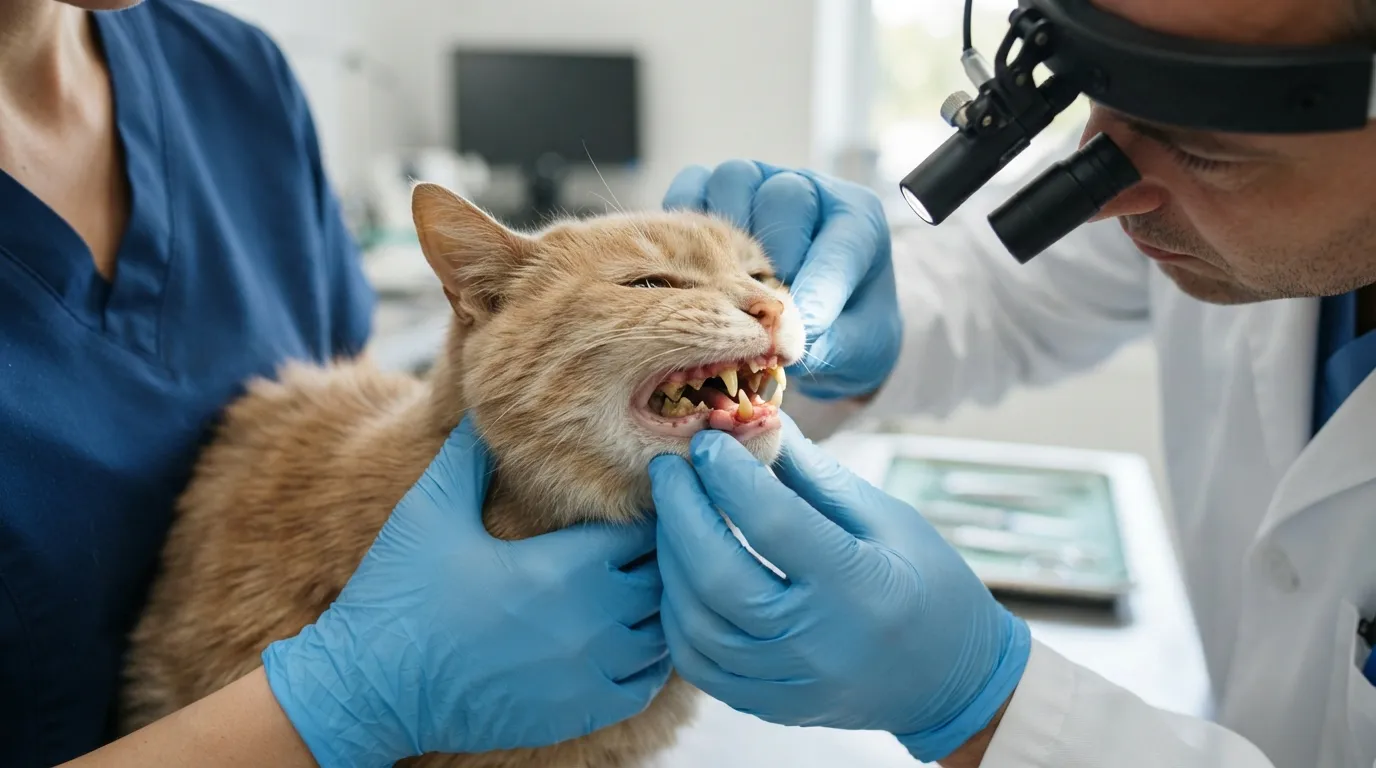
Most owners write off bad breath as just a cat thing. It’s actually an early warning flare.
Studies show 50 to 90% of cats over age 4 have some form of dental disease. In senior cats, it compounds fast – gingivitis, periodontal disease, tooth loss, infections that spread beyond the mouth.
Here’s the twist almost nobody hears: dental disease can cause a cat to stop eating, which can trigger hepatic lipidosis – fatty liver disease. A cat that stops eating because its mouth hurts can be in liver failure within days.
At a Glance
- Bad breath that suddenly gets worse
- Drooling or pawing at the mouth
- Dropping food or chewing on one side
- Sudden disinterest in dry food
Daily brushing with a cat-safe enzymatic toothpaste, plus routine dental cleanings, is the fix. That $20 tube is a far better investment than what comes next on this list.
But that’s nothing compared to what we found about #3 – the weight-loss symptom almost everyone gets wrong.
#3 – Hyperthyroidism: When “Eating Well” Is Actually a Red Flag
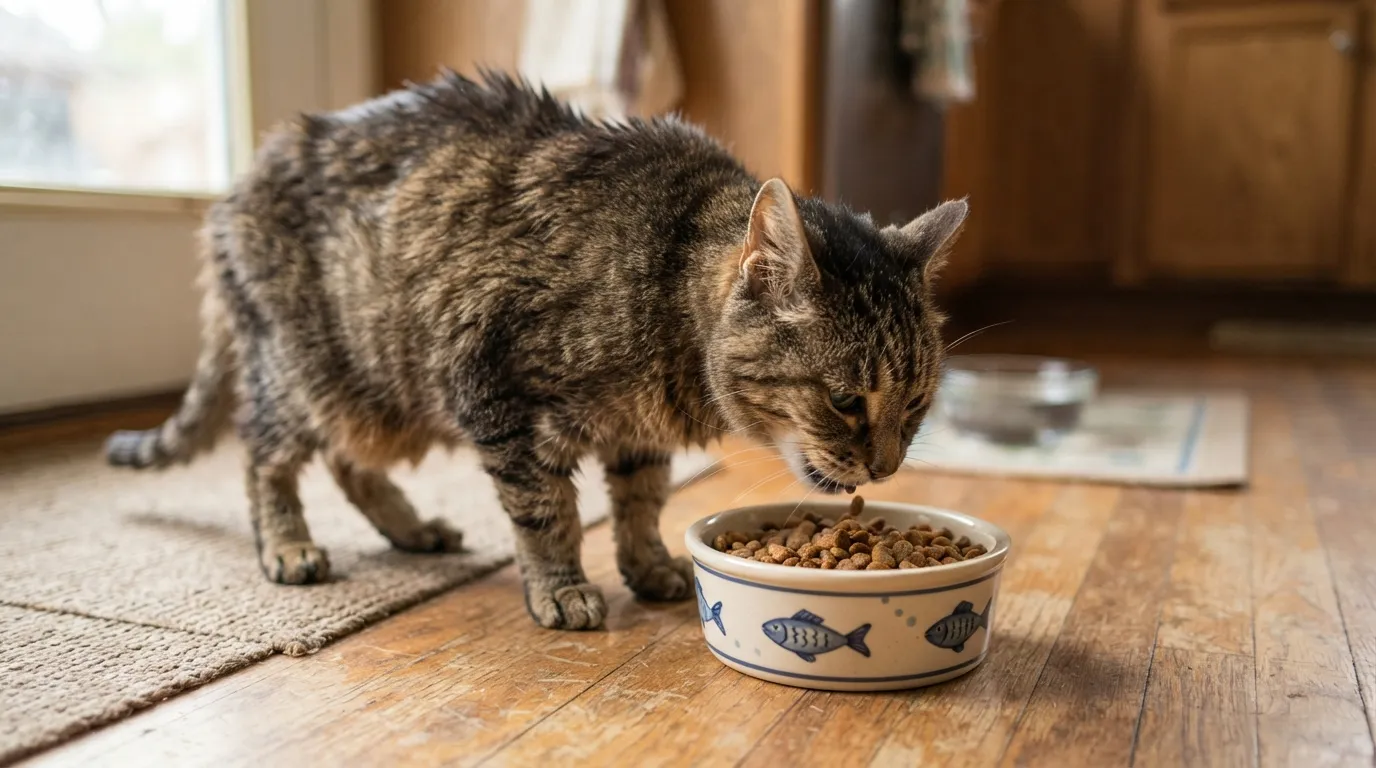
Here’s a counterintuitive one: a senior cat eating well but losing weight is not “doing fine.” It’s likely sick.
The most common sign of hyperthyroidism is weight loss despite a healthy, sometimes ravenous appetite. Owners see enthusiastic eating and assume health, while the thyroid is quietly burning the cat from the inside out.
Left untreated, it stresses the heart and kidneys, often triggering secondary organ failure. Radioactive iodine treatment is the only cure, and it typically runs $1,500–$2,500 in a single session.
Expensive, sure – but far cheaper than managing cascading organ failure later. A simple thyroid panel during a twice-yearly senior checkup is all it takes to catch this before it spirals.
But that’s nothing compared to what we found about #2 – the condition hiding in plain sight every time your cat visits the litter box.
#2 – Urinary Tract Infections That Spiral Into Something Far Worse
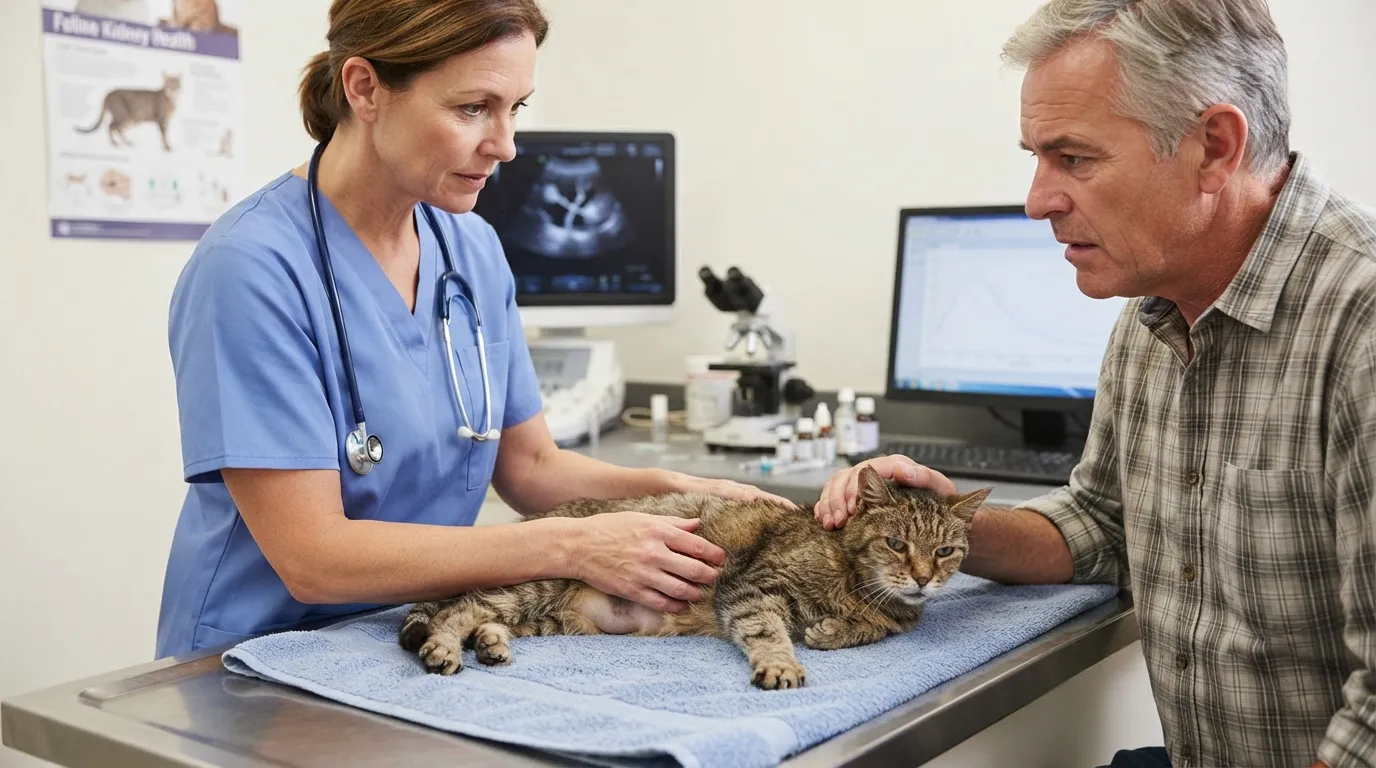
A UTI sounds minor. In an older cat, it rarely stays that way.
Watch for blood in the urine, more frequent trips to the litter box, and smaller amounts each time. Most owners assume one round of antibiotics clears it up completely.
Cats with kidney disease, diabetes, arthritis, or extra weight face higher UTI risk – and those same conditions make treatment harder. Based on Lemonade claims data, pet parents spent $1,700 to $3,600 treating feline UTIs.
Severe cases can escalate into a life-threatening urinary blockage – the same emergency from #5. Fresh water, wet food, and watching litter box habits are the cheapest insurance you’ll ever buy.
But that’s nothing compared to what we found at #1 – the mistake nearly every cat owner over 50 makes, and the one that drives the biggest bills.
#1 – Waiting Too Long: The Most Expensive Decision Cat Owners Make
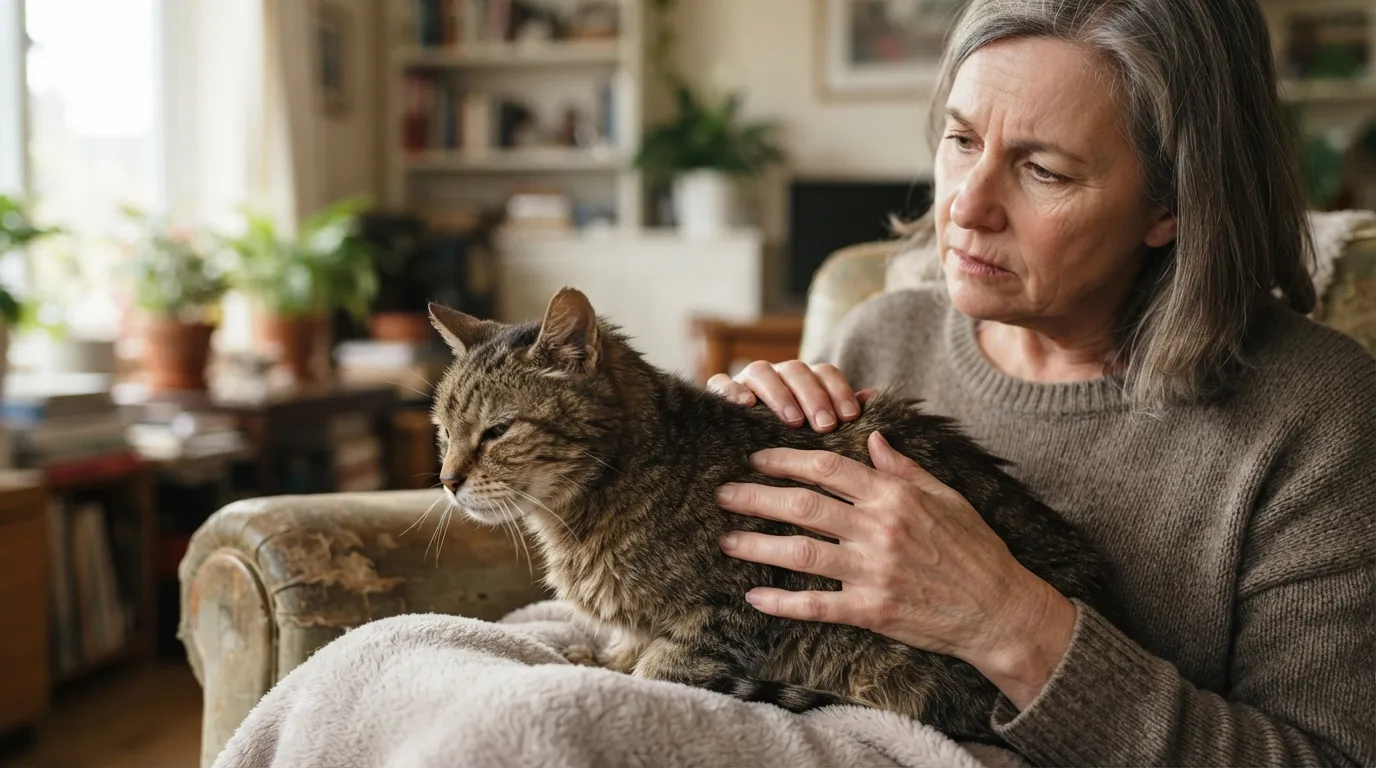
No condition on this list became a $3,000 emergency overnight. Every single one had weeks, sometimes months, of quiet warning signs that got waved off as “just getting older.”
Sudden weight loss and dull coat quality are easy to mistake for normal aging. That’s exactly the trap.
Cats are biologically wired to mask pain and illness – a survival instinct that works against the people who love them. By the time behavior changes are obvious, you’re often already looking at an advanced-stage diagnosis.
The fix is simple: twice-yearly vet visits for any cat over 7, a healthy weight, and a balanced diet. It won’t guarantee nothing ever goes wrong, but it stacks the odds heavily in your favor.
Quick Compare
- Senior bloodwork panel (2x/year): $180–$400 per visit
- Routine dental cleaning (1x/year): $300–$700
- Advanced-stage ER treatment: $800–$5,000+
The $3,000 bill isn’t bad luck. In most cases, it’s the price of a missed appointment – or two.
The Bottom Line
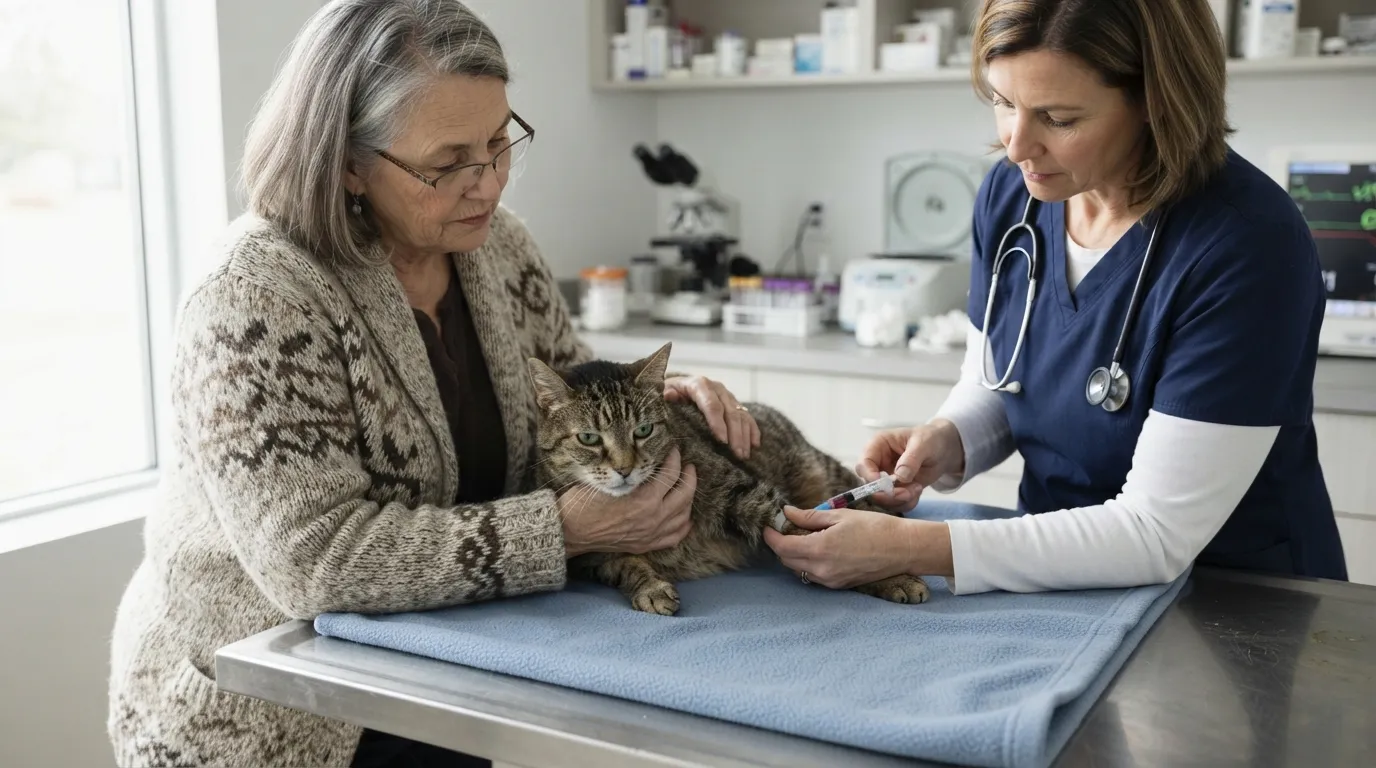
Emergency vet visits cost $800–$1,500 on average, with complex cases blowing past $5,000. The conditions behind those bills – kidney disease, urinary blockages, hyperthyroidism, dental disease, UTIs – share one thing in common: cheap to catch early, brutal to treat in crisis.
Roughly 1 in 3 cats over 12 will develop chronic kidney disease alone. The single most powerful move any cat owner over 50 can make is booking twice-yearly bloodwork for a cat over age 7.
Not because something is wrong. Because that’s how it stays that way.
Growing up traveling and experiencing new cultures and wonders, I have had a passion for nature, adventuring, photography, and videography. I am currently working towards a BSc in Biodiversity and Ecology at Stellenbosch University, and I hope to specialise in Marine Sciences one day.
Please send any feedback to Feedback@animalsaroundtheglobe.com